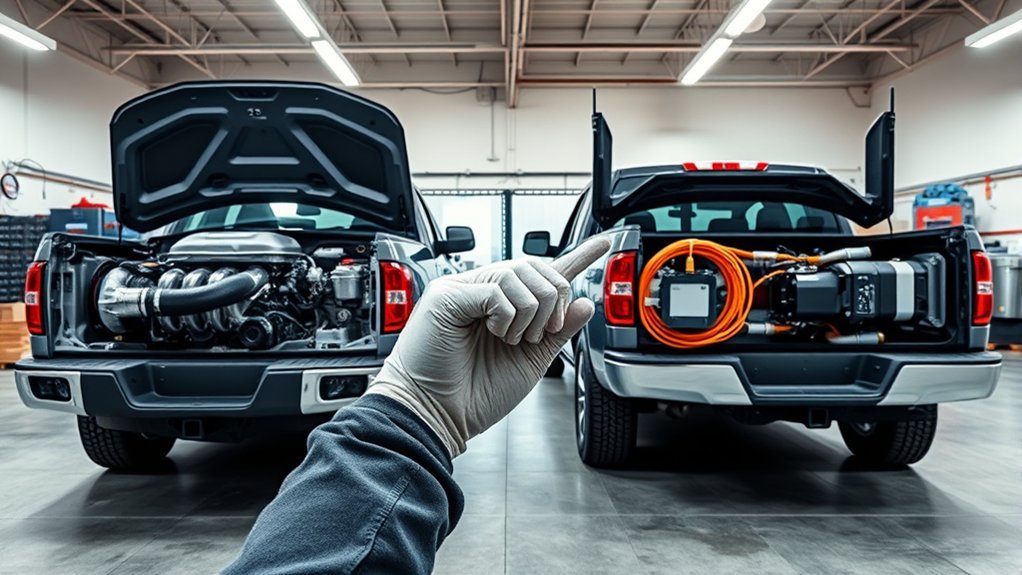
Choosing between a Ford hybrid pickup and a gasoline Ford pickup comes down to your daily route, towing needs, budget, and tolerance for added technology. The F-150 PowerBoost hybrid is the better fit when you want strong torque, better city efficiency, and available onboard power. A gas F-150, Ranger, or gas Maverick makes more sense when you want the lowest upfront cost, the highest F-150 tow rating, or simpler long-term service.
Quick Answer
Pick the F-150 PowerBoost hybrid if you do lots of city driving, want 430 hp and 570 lb-ft of torque, or need available Pro Power Onboard. Pick a gas Ford pickup if you want the lowest starting price, maximum F-150 towing, simpler servicing, or mostly highway miles.
Key Takeaways
- The 2026 F-150 PowerBoost full hybrid makes 430 hp and 570 lb-ft of torque, giving it excellent low-speed pull and confident daily performance.
- EPA ratings list the 2026 F-150 2WD HEV at up to 24 mpg combined, while the 4WD HEV is rated at 23 mpg combined.
- For current 2026 specs, the PowerBoost does not have the highest F-150 tow rating; the gas 3.5L EcoBoost V6 can tow more when properly equipped.
- The Maverick Hybrid is the best Ford pickup for city commuting and fuel economy, while the F-150 is the better choice for heavier towing, payload, family space, and worksite power.
- Always compare the actual truck’s window sticker, payload label, axle ratio, tow package, and warranty coverage before buying.
Quick Recommendation: Which Ford Pickup Powertrain Fits You?
If your driving includes traffic, job sites, school runs, short trips, or city errands, the hybrid advantage is real. The 2026 Ford F-150 PowerBoost Full Hybrid V6 combines a 3.5L EcoBoost engine with an electric motor for strong launch torque, smooth low-speed response, and up to 24 mpg combined in 2WD form. It also opens the door to available high-output Pro Power Onboard, which matters if you run tools, camping equipment, or backup essentials.
Choose a gas Ford pickup if your main priorities are a lower purchase price, simpler servicing, maximum F-150 conventional towing, or steady highway driving. Gas F-150 engines still offer strong output, and the 3.5L EcoBoost V6 can out-tow the PowerBoost when properly equipped. The Ranger also remains a smart gas-only midsize choice if you want useful truck capability without full-size F-150 cost or size.
| Your main need | Best fit | Why it fits |
|---|---|---|
| City commuting and low fuel use | Maverick Hybrid | EPA-estimated 42 mpg city for FWD HEV, compact size, easy parking. |
| Full-size truck with better city MPG | F-150 PowerBoost | Strong torque, up to 24 mpg combined in 2WD HEV, available onboard power. |
| Maximum F-150 towing | Gas F-150 3.5L EcoBoost | Higher current max tow rating than PowerBoost when correctly configured. |
| Lower upfront cost | Gas F-150, Ranger, or gas Maverick | Fewer hybrid components and more entry-level configurations. |
| Worksite power and mixed driving | F-150 PowerBoost | Best match when fuel economy, torque, and available Pro Power Onboard all matter. |
[Products Worth Considering]

This dual filter kit helps keep your vehicle running and riding cleaner by replacing both the engine air filter and cabin air filter at the same time. It is designed for a range of Toyota and Lexus hybrid models, helping support engine performance while reducing odors and airborne particles inside the cabin. Built with high-quality filtration materials, it offers a convenient maintenance solution for routine filter replacement.
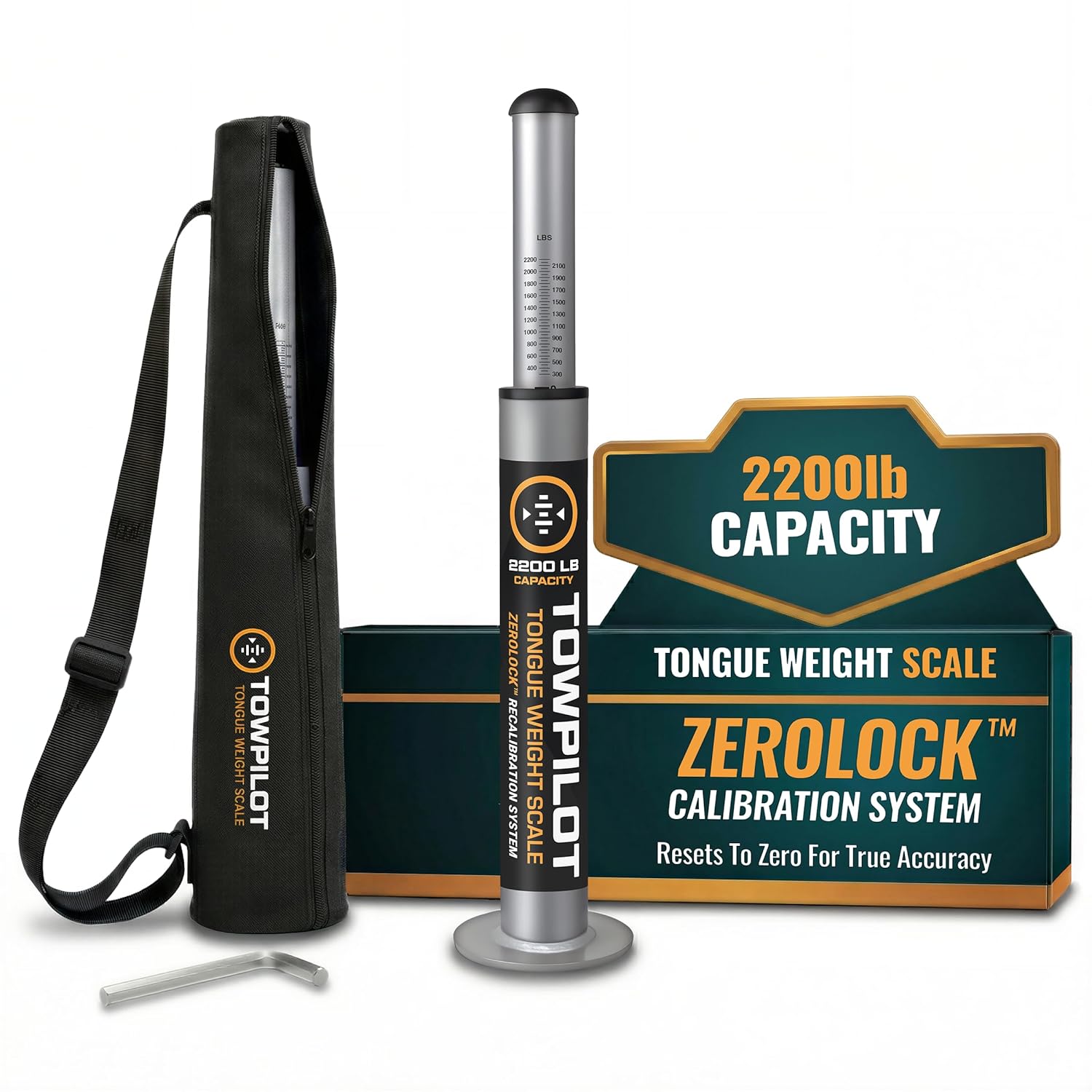
This trailer tongue weight scale helps you check hitch weight quickly and accurately before towing, reducing sway and improving overall safety. Built with durable steel and a spring mechanism, it works without batteries and includes a recalibration feature to maintain true-zero accuracy over time. It is designed for RVs, campers, and utility trailers, with a top plate that helps protect your coupler during use.

This proportional trailer brake controller provides smooth, responsive braking by automatically matching your tow vehicle’s stopping force for safer trailer control. The bright LED digital display makes it easy to monitor voltage output in real time, while adjustable braking and sync settings help tailor performance to different trailers and road conditions. Designed for quick installation and broad compatibility, it supports 1 to 4 axle trailers for dependable towing confidence.
How Hybrid and Gas Ford Pickups Compare for Performance and Towing
The F-150 PowerBoost is not a weak economy option. It is one of the strongest mainstream F-150 powertrains, with 430 hp and 570 lb-ft of torque. That torque helps from a stop, especially when pulling away with cargo or a trailer. The important correction is towing: for current 2026 specs, the PowerBoost maxes out at up to 12,400 pounds of conventional towing in 4×2 form, while the gas 3.5L EcoBoost V6 can reach up to 13,500 pounds when properly equipped.
| Powertrain | Horsepower / torque | Max conventional towing | Best reason to choose it |
|---|---|---|---|
| 2.7L EcoBoost V6 gas | 325 hp / 400 lb-ft | Up to 8,400 lb | Lower-cost F-150 daily driving and light towing. |
| 5.0L V8 gas | 400 hp / 410 lb-ft | Up to 12,800 lb | Traditional V8 feel, strong payload, familiar servicing. |
| 3.5L EcoBoost V6 gas | 400 hp / 500 lb-ft | Up to 13,500 lb | Best F-150 choice when max conventional towing is the priority. |
| 3.5L PowerBoost Full Hybrid V6 | 430 hp / 570 lb-ft | Up to 12,400 lb | Best blend of torque, city efficiency, and available onboard power. |
Warning: Do not buy based on a single “max tow” number. Trailer rating depends on engine, drivetrain, wheelbase, axle ratio, cab, box, tow package, passengers, cargo, accessories, hitch equipment, GVWR, GAWR, GCWR, and the payload label on that exact truck.
The short version for towing is simple: choose the gas 3.5L EcoBoost if you need the highest F-150 tow rating. Choose PowerBoost if you tow within its rating and also want better city efficiency, strong launch torque, and available power export from the truck.
Everyday Efficiency for Ford Pickups: MPG, Regenerative Braking, City vs Highway
The EPA lists the 2026 Ford F-150 Pickup 2WD HEV at 24 mpg combined, 23 city, and 25 highway. The 4WD HEV is rated at 23 mpg combined, 22 city, and 24 highway. Comparable gas F-150 ratings vary by engine and drivetrain; for example, the 2026 3.5L gas F-150 is rated at 20 mpg combined in 2WD and 19 mpg combined in 4WD.
Hybrid efficiency is strongest in town because braking and idling matter more. A hybrid electric vehicle uses regenerative braking and the gas engine to charge its battery; during braking, the electric motor acts as a generator and stores energy that would otherwise be lost as heat. That is why stop-and-go routes usually favor the hybrid more than long, steady highway trips.
For 2026, the EPA rates the F-150 2WD HEV at 24 mpg combined, compared with 20 mpg combined for the 3.5L gas F-150 2WD.
If fuel economy is your main goal and you do not need a full-size truck, the 2026 Ford Maverick HEV FWD is the standout. It is EPA-rated at 42 mpg city, 35 highway, and 38 combined. The Maverick HEV AWD is rated at 40 city, 34 highway, and 37 combined. That makes the Maverick Hybrid the best Ford pickup for commuting, delivery routes, and light-duty utility.
True Ownership Costs: Fuel, Maintenance, and Resale for Ford Pickups
Gas pickups usually cost less up front because they are available in more entry-level configurations and use fewer hybrid-specific parts. The PowerBoost often costs more because it is an added powertrain and may require a higher trim or package. Do not use old base-price numbers; compare current window stickers, incentives, destination charges, and local dealer pricing.
Fuel savings depend on annual miles, fuel price, and your real MPG. A simple way to compare two trucks is:
Annual fuel cost = annual miles ÷ real-world MPG × fuel price per gallon.
For example, at 15,000 miles per year, a truck averaging 24 mpg uses about 625 gallons. A truck averaging 20 mpg uses about 750 gallons. That is a 125-gallon annual difference before you multiply by your local fuel price. If most of your miles are city miles, the hybrid gap may be larger. If most of your miles are steady highway miles, the savings may shrink.
Maintenance is also more nuanced than “hybrid is cheaper” or “gas is cheaper.” Regenerative braking can reduce friction-brake use, especially in city driving, but a hybrid adds high-voltage components and more specialized diagnostics. Ford states that hybrid and electric vehicle unique components, including the high-voltage battery, are covered for 8 years or 100,000 miles from the warranty start date, whichever comes first. That warranty helps reduce risk, but it does not make every future repair cheaper.
Resale value depends on fuel prices, local buyer demand, mileage, warranty status, service records, and the exact configuration. A clean, well-equipped PowerBoost may appeal to buyers who want fuel economy and onboard power. A clean gas F-150 may appeal to buyers who want max tow, lower complexity, or a familiar engine.
Pro Tip: When comparing a hybrid and gas F-150, write down the actual EPA rating, payload label, axle ratio, tow package, and price difference from each window sticker. Those five numbers matter more than broad hybrid-versus-gas claims.
[Products Worth Considering]

The REDARC Tow-Pro Liberty delivers smooth proportional braking for confident everyday towing on roads and highways. Its compact remote design helps preserve cabin space while supporting 1 to 2 axle trailers and integrating with compatible vehicle wiring harnesses for a factory-style fit. Built for demanding towing conditions, it offers reliable control for RVs, campers, trailers, and boats.

The OXILAM jump starter delivers powerful emergency starting performance for gas engines and up to 12L diesel engines, helping revive dead batteries in seconds. It also doubles as a portable power bank and LED flashlight, with USB and Type-C ports for convenient device charging. Built with multiple safety protections, a clear LED display, and a rugged portable design, it is a reliable roadside companion for cars, trucks, motorcycles, and more.

This proportional electric brake controller automatically applies trailer brakes based on your vehicle's braking force and speed for smoother, more responsive stopping. It is compatible with a wide range of tow vehicles and trailer setups, and includes an LED display for easy setup, diagnostics, and manual braking control. The included mounting hardware and plug-and-play port help make installation simple and convenient.
Which Ford Pickup to Buy: Best Models for Commuting, Towing, Work, and Family
For commuting, the Maverick Hybrid is the easiest recommendation. It delivers the best Ford pickup fuel economy, has a compact footprint, and still gives you a useful bed for weekend projects and light work.
For heavier towing, the F-150 is the better platform. Choose the gas 3.5L EcoBoost if you need the highest F-150 conventional tow rating. Choose the PowerBoost if your trailer fits within its rating and you want stronger low-speed torque, better city MPG, and available onboard power.
For traditional work reliability and simpler maintenance, a gas F-150, gas Ranger, or gas Maverick can be the safer choice. Fewer hybrid-specific components may matter if you keep trucks for a long time, work far from hybrid-qualified service, or prioritize the lowest purchase price.
For family use, the F-150 SuperCrew is the most flexible Ford pickup body style. It can seat up to six when configured with a front bench, offers more rear-seat space than Maverick or Ranger, and works well with either gas or PowerBoost depending on your budget and driving pattern.
| Buyer type | Recommended model/powertrain | Main tradeoff |
|---|---|---|
| High-mile city commuter | Maverick Hybrid | Less towing and payload than F-150. |
| Full-size daily driver | F-150 PowerBoost | Higher purchase price and more complex systems. |
| Maximum tow buyer | F-150 3.5L EcoBoost gas | Lower MPG than PowerBoost in mixed driving. |
| Budget-first truck buyer | Gas Maverick, gas Ranger, or gas F-150 | Less hybrid efficiency and no PowerBoost system. |
| Worksite power user | F-150 PowerBoost with available Pro Power Onboard | Confirm outlet capacity and equipment startup wattage before relying on it. |
[Products Worth Considering]

The CURT Venturer NEXT is a compact, time-delay electric trailer brake controller designed for dependable braking control from inside your vehicle. Its low-profile design, adjustable power and ramp time, and plug-and-play friendly setup make it a practical choice for towing with confidence. Built for 12-volt systems and compatible with electric over hydraulic brakes, it offers flexible installation without leveling or internal moving parts.
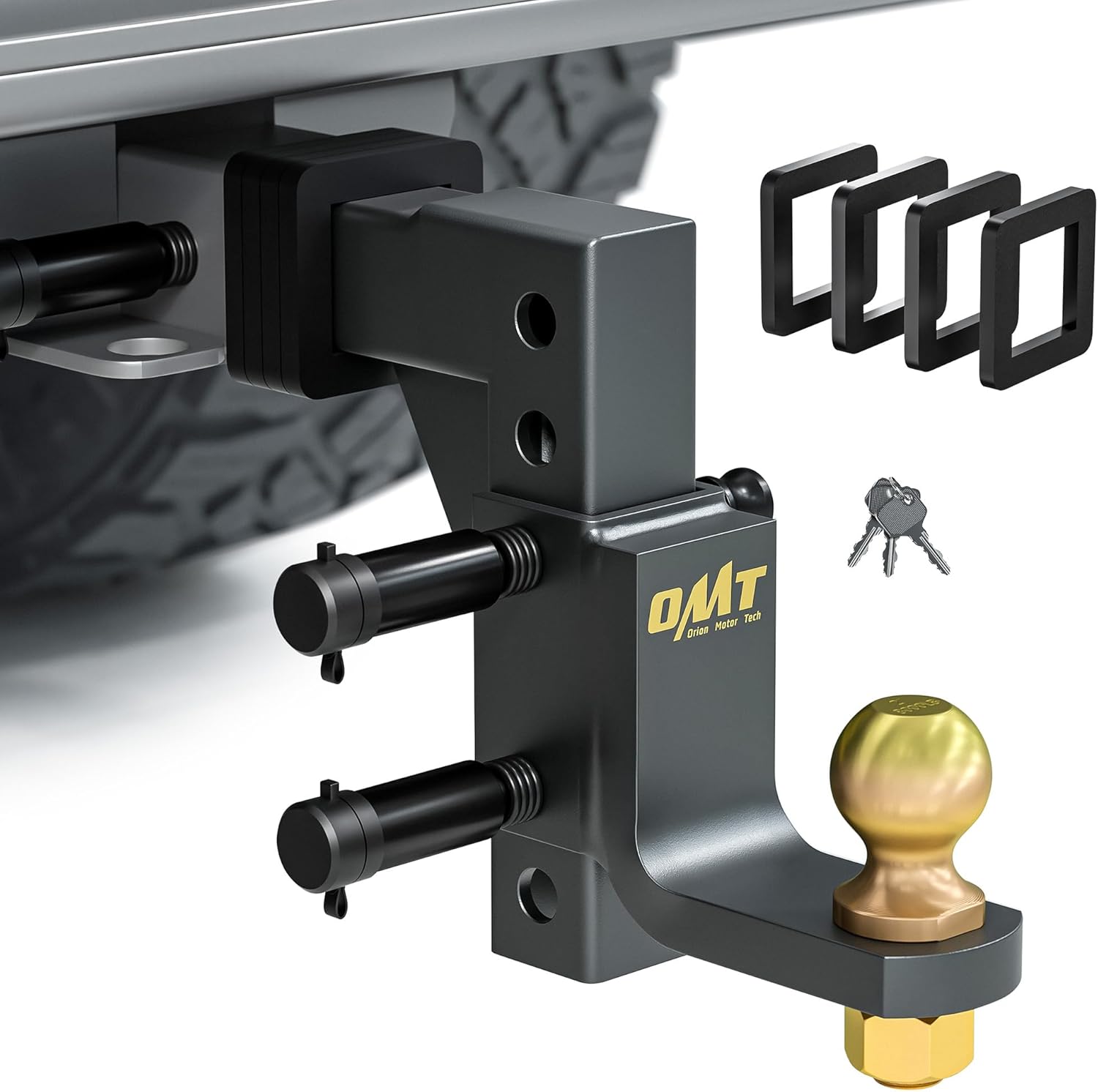
This adjustable trailer hitch ball mount is built for secure, versatile towing with a standard 2 inch receiver, a 2 inch ball, and both drop and rise adjustment for better fitment. Rated for heavy-duty towing and designed with anti-theft locking pins, it helps keep your trailer secure while resisting harsh weather and road conditions. The pre-assembled design makes installation fast and tool-free, so you can get hooked up and ready to tow with confidence.
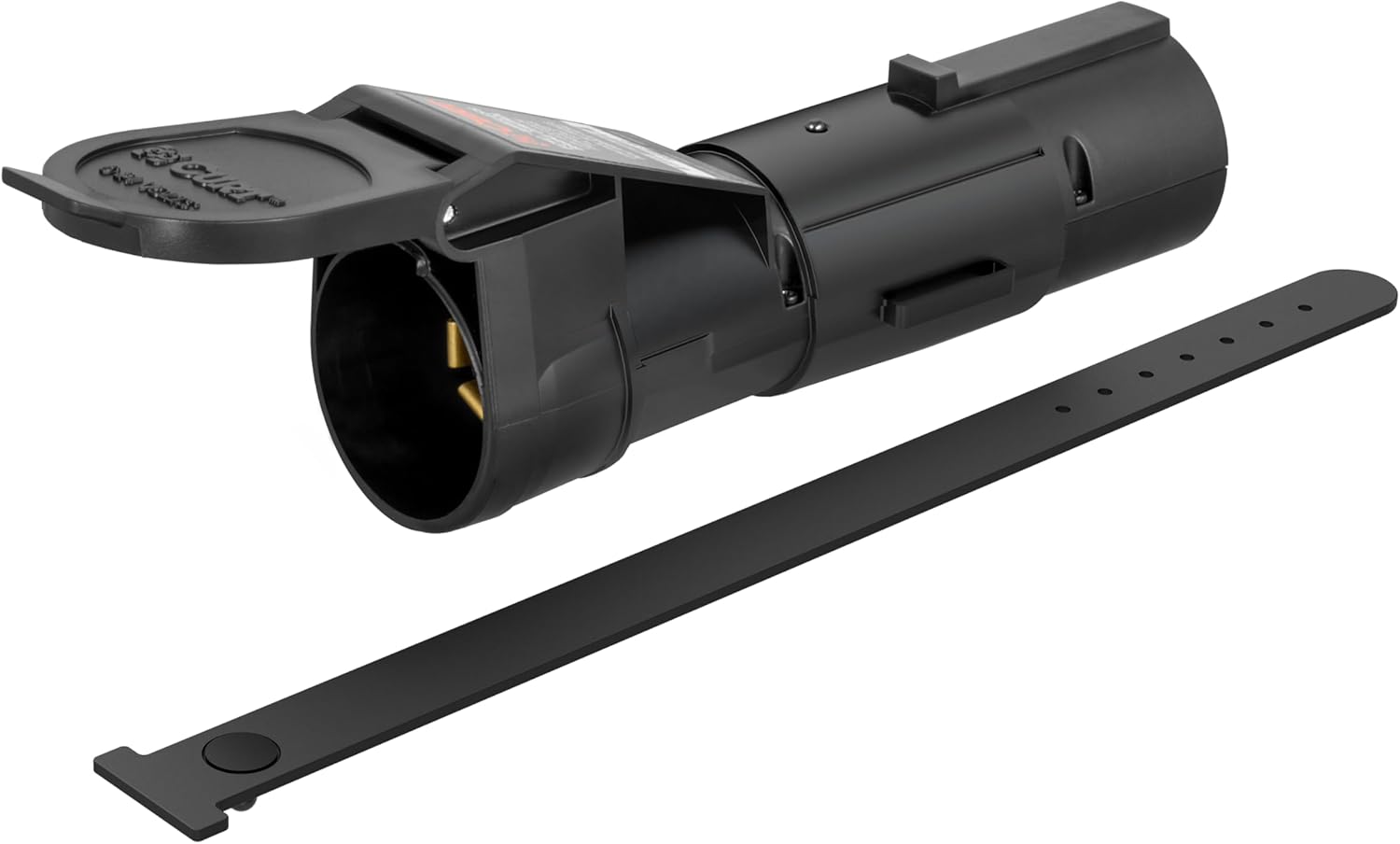
The CURT Echo mobile trailer brake controller offers smart, smartphone-based brake control with a simple plug-and-play design that connects between your vehicle and trailer 7-way plugs. Its portable construction makes it easy to transfer between compatible towing setups, while the durable potted enclosure helps protect against weather and vibration. With proportional braking support and app-based profile management, it delivers a modern, responsive towing experience.
Hybrid Disadvantages and Caveats Before You Choose
A hybrid Ford pickup can be the better truck, but it is not automatically the right truck. The main disadvantages are higher upfront cost, more complex diagnostics, possible payload differences, and smaller fuel-economy gains on long highway routes. Cold weather and short trips can also reduce MPG because the engine and cabin still need heat.
The PowerBoost battery and hybrid components are designed for truck use, but high-voltage systems require trained service. That matters if you keep vehicles far beyond warranty or work in areas with limited Ford hybrid service access.
Payload is another overlooked point. A hybrid system adds hardware, and payload varies by cab, drivetrain, bed length, options, and accessories. Before you buy, open the driver door and read the payload label on the exact truck. A truck with a higher tow rating can still be the wrong truck if passengers, tools, and tongue weight push it over payload limits.
Note: The F-150 PowerBoost is a traditional hybrid, not a plug-in hybrid. You fuel it with gasoline, and the battery is charged by the engine and regenerative braking.
How to Compare Two Ford Pickups on a Dealer Lot
Use this checklist before choosing between a hybrid and a gas Ford pickup:
- EPA label: Compare the exact city, highway, and combined MPG on the window sticker.
- Payload label: Read the yellow-and-white door-jamb sticker on the exact truck.
- Tow equipment: Confirm axle ratio, hitch equipment, tow package, trailer brake controller, and whether a Max Tow setup is required.
- Real trailer weight: Use loaded trailer weight, not empty trailer weight.
- Driving pattern: Count your city miles, highway miles, towing miles, and winter short trips separately.
- Power needs: If you want Pro Power Onboard, confirm the output level and whether it supports your tools or appliances.
- Warranty and service: Ask what hybrid-component coverage remains and confirm local dealer service capability.
Frequently Asked Questions
Is a hybrid Ford pickup better than gas?
A hybrid Ford pickup is better if you want stronger low-speed torque, better city fuel economy, and available onboard power. A gas Ford pickup is better if you want the lowest upfront cost, maximum F-150 tow rating, simpler servicing, or mostly highway driving.
Does the F-150 PowerBoost tow as much as a gas F-150?
No, not at the top end for current 2026 specs. The PowerBoost can tow up to 12,400 pounds when properly equipped, but the gas 3.5L EcoBoost F-150 can reach up to 13,500 pounds. Always check the exact truck’s towing guide, axle ratio, payload label, and tow package.
What are the disadvantages of a hybrid pickup?
The main disadvantages are higher purchase price, more complex diagnostics, possible payload differences, and smaller fuel savings on steady highway trips. Cold weather and short trips can also reduce fuel economy. Battery and hybrid-component warranty coverage helps, but long-term service costs still depend on use and mileage.
What is the difference between a powertrain and a hybrid?
A powertrain is the complete system that creates and sends power to the wheels, including the engine, transmission, driveshafts, axles, and related controls. A hybrid is a type of powertrain that combines a gasoline engine with one or more electric motors and a battery.
Is the Maverick Hybrid better than the F-150 PowerBoost for commuting?
Yes, for fuel economy and city convenience. The Maverick Hybrid is smaller, easier to park, and rated much higher in city MPG. The F-150 PowerBoost is better if you need a full-size cabin, more towing capability, more payload capacity, or available onboard power.
Do you plug in the F-150 PowerBoost?
No. The F-150 PowerBoost is a full hybrid, not a plug-in hybrid. It uses gasoline, regenerative braking, and engine charging to keep the hybrid battery working. You do not need a home charger.
Conclusion
Choose the Ford hybrid pickup when your driving pattern rewards electric assist: city miles, stop-and-go routes, job-site idling, family errands, and worksite power needs. Choose a gas Ford pickup when you want the lowest upfront cost, the highest F-150 tow rating, simpler service, or a truck that spends most of its time cruising on the highway. The right answer is not “hybrid” or “gas” in general; it is the truck whose MPG, payload, tow rating, price, and warranty match the way you actually drive.
Sources
- Ford 2026 F-150 Tech Specs — horsepower, torque, payload, and maximum conventional towing figures.
- Ford 2026 F-150 Towing Guide — towing configuration limits and safety caveats.
- FuelEconomy.gov 2026 Ford F-150 — official EPA MPG ratings for gas and hybrid F-150 models.
- FuelEconomy.gov 2026 Ford Maverick — official EPA MPG ratings for Maverick gas and hybrid models.
- U.S. Department of Energy AFDC: Hybrid Electric Vehicles — explanation of hybrid systems and regenerative braking.
- Ford Hybrid and Electric Vehicle Warranty Support — hybrid unique components and high-voltage battery warranty coverage.