
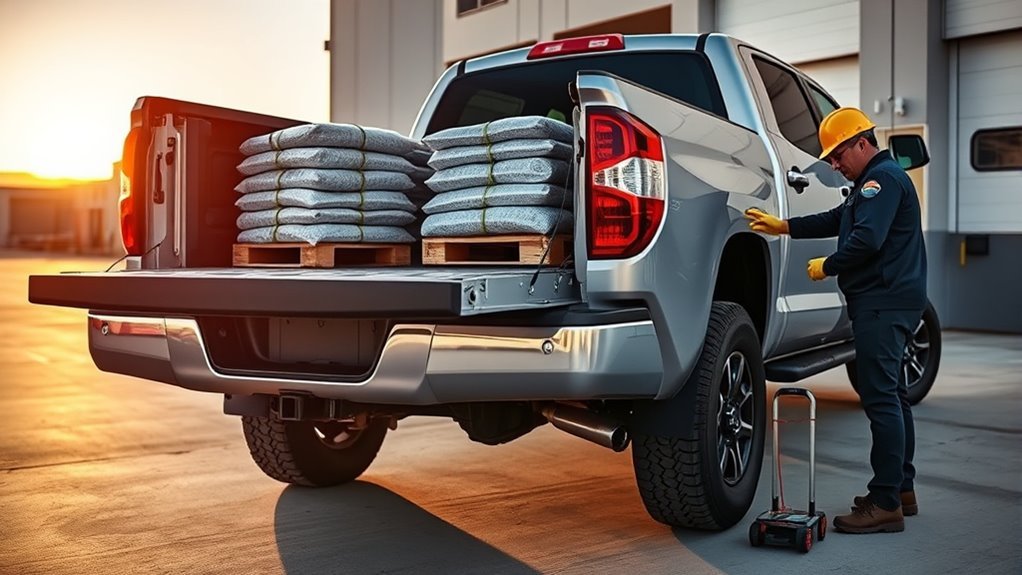
Before you load a Toyota Tundra with tools, camping gear, mulch, passengers, or trailer tongue weight, check the truck’s actual payload limit. The safest number is not a generic online rating; it is the vehicle-specific capacity printed on your driver-side door-jamb label. That number changes with model year, trim, cab, bed length, drivetrain, engine, factory options, and accessories.
Quick Answer
Toyota Tundra payload capacity varies by configuration. Toyota lists a maximum payload of up to 1,940 pounds for 2024–2025 Tundra models and up to 1,850 pounds for 2026 models. For your exact truck, use the Tire and Loading Information label on the driver’s door jamb, then subtract people, cargo, accessories, and trailer tongue weight.
Key Takeaways
- Payload is the weight carried by the truck: passengers, cargo, luggage, accessories, hitch hardware, and trailer tongue weight.
- The highest published Tundra payload is not available on every trim; heavier luxury, hybrid, off-road, and 4×4 configurations usually carry less.
- Your door-jamb payload sticker is more useful than a brochure number because it reflects that exact truck as built.
- A weight-distribution hitch or load-leveling suspension can improve balance, but it does not increase payload, GVWR, GAWR, or tire ratings.
At a Glance
| Time Required | 10–30 minutes for a sticker check; longer if you visit a certified scale |
| Difficulty | Easy |
| Tools Needed | Door-jamb label, calculator, cargo/tongue-weight scale or certified public scale |
| Cost | Free for sticker math; usually a small fee for a certified scale ticket |
Toyota Tundra Payload Ranges and What Affects Them
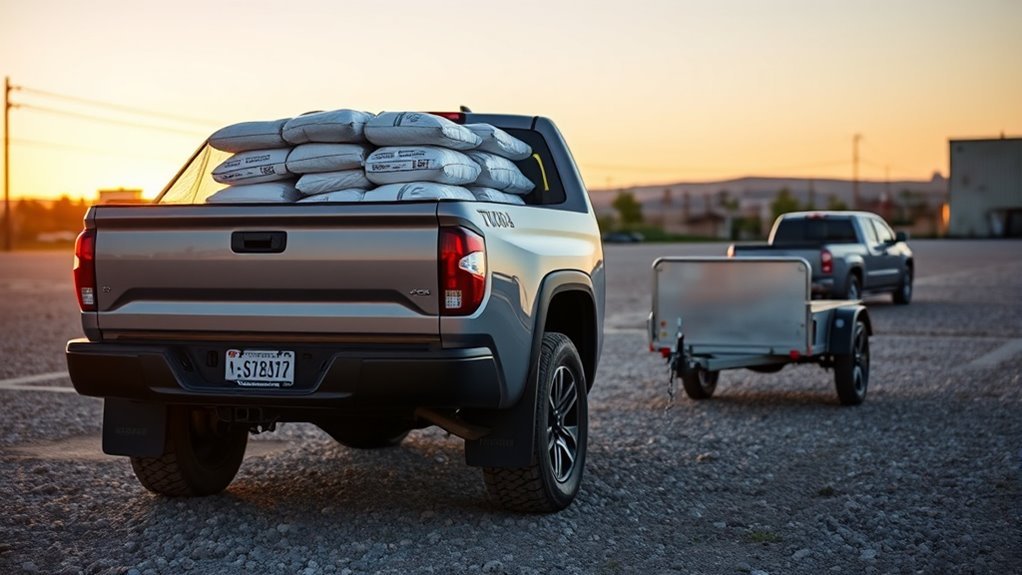
The Toyota Tundra’s payload capacity is configuration-specific. Toyota lists the 2024 Tundra and 2025 Tundra with a maximum payload of 1,940 pounds. Toyota’s current 2026 Tundra page lists a maximum payload of 1,850 pounds.
| Model Year | Highest Published Payload | What to Know |
|---|---|---|
| 2024 | Up to 1,940 lb | Highest ratings are generally on lighter, lower-option configurations. |
| 2025 | Up to 1,940 lb | Toyota lists SR/SR5 i-FORCE configurations among the highest-payload setups; Capstone and some hybrid/luxury builds carry less. |
| 2026 | Up to 1,850 lb | Use current Toyota specs and your door sticker because model-year changes can affect the headline number. |
Why do the numbers move so much? Added equipment increases curb weight. A panoramic roof, hybrid system, 4×4 hardware, off-road suspension, luxury seating, larger wheels, running boards, bed accessories, and dealer-installed parts can all reduce the payload left for people and cargo.
Note: The highest published payload is not the payload of every Tundra. Your exact truck’s Tire and Loading Information label is the number to plan around.
[Products Worth Considering]

These heavy-duty running boards are designed to improve access to your Toyota Tundra CrewMax while maintaining ground clearance for off-road use. Built from durable aluminum with a high weight capacity, they provide stable step-up support for daily driving, cargo loading, and outdoor adventures. The no-drill installation makes setup simple, and the included customer support adds extra peace of mind.
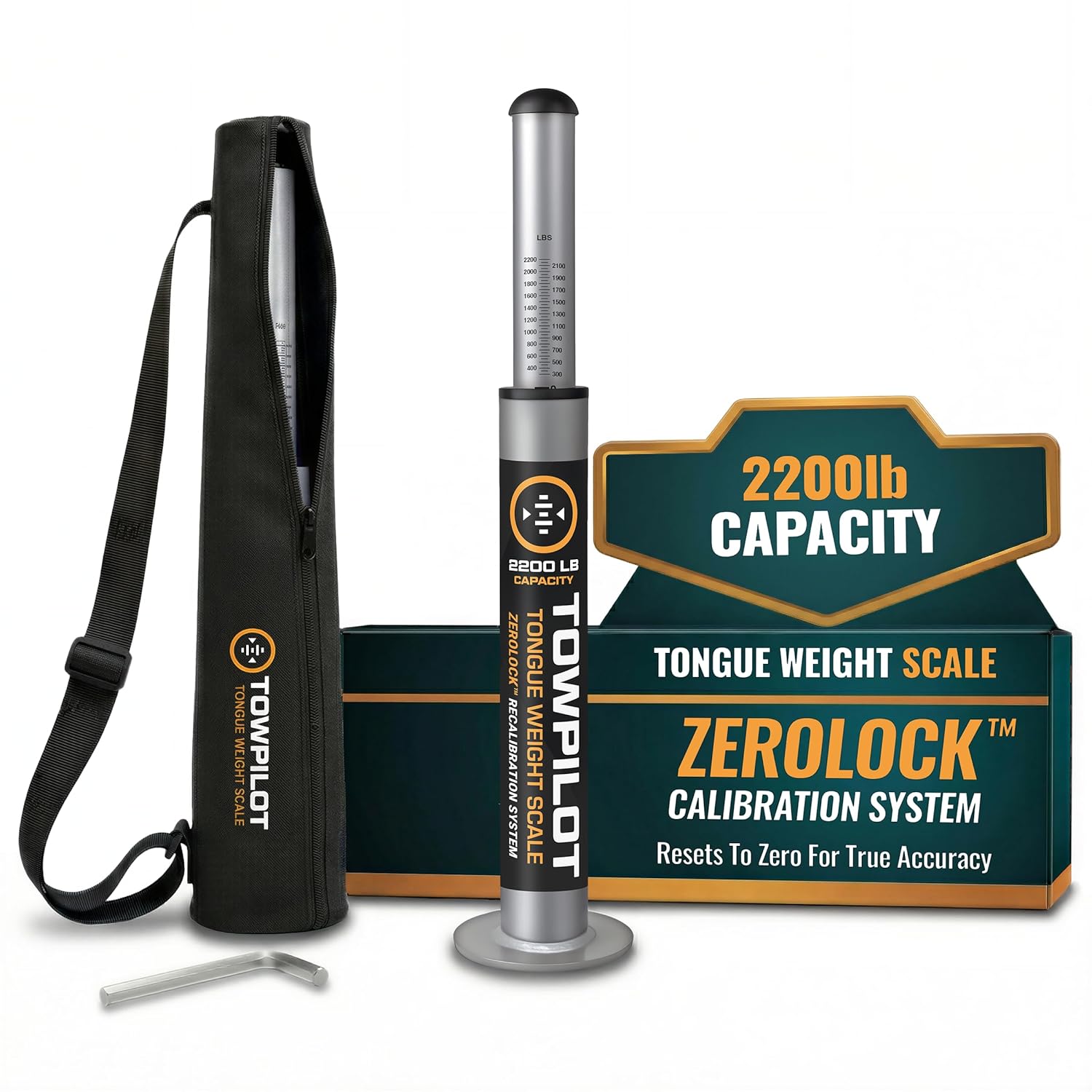
This trailer tongue weight scale helps you check hitch weight quickly and accurately before towing, reducing sway and improving overall safety. Built with durable steel and a spring mechanism, it works without batteries and includes a recalibration feature to maintain true-zero accuracy over time. It is designed for RVs, campers, and utility trailers, with a top plate that helps protect your coupler during use.

These heavy-duty running board side steps are designed to improve access to your Toyota Tundra without reducing ground clearance. Built for Double Cab and CrewMax front door applications, they offer practical convenience for everyday entry, roof loading, and off-road use. The durable iron construction and easy no-drill installation make them a reliable upgrade for rugged driving.
What Payload Means vs. Towing, GVWR, GAWR, and GCWR
Payload is the total weight your Tundra carries on its own chassis. That includes the driver, passengers, pets, tools, luggage, bed cargo, aftermarket accessories, hitch hardware, and any trailer tongue weight pressing down on the hitch.
- Payload / total load capacity: The combined weight of occupants, cargo, and luggage carried by the truck. Toyota’s owner’s manual uses this “total load capacity” concept for vehicle load limits.
- GVWR: Gross Vehicle Weight Rating. This is the maximum allowed weight of the truck itself when loaded.
- GAWR: Gross Axle Weight Rating. This is the maximum allowed load on each axle. You can be within total payload but still overload the rear axle.
- GCWR: Gross Combined Weight Rating. This is the maximum combined weight of the loaded truck and loaded trailer. Some owners call this GCVWR, but Toyota commonly uses GCWR or gross combined weight tow rating.
- Towing capacity / TWR: The maximum trailer weight the truck can pull when properly equipped. It is not the same as payload.
A simple estimate is:
Estimated payload = GVWR minus curb weight. For real-world loading, the door-jamb payload label is faster and more accurate for your exact truck.
Warning: Do not exceed payload, GVWR, GAWR, tire load ratings, receiver rating, or published towing limits. Overloading can reduce steering control, increase stopping distance, overheat tires, damage suspension parts, and create liability after a crash.
Payload by Year, Trim, Cab, Bed, and Powertrain
Trim is only one part of the payload story. Cab style, bed length, 4×2 vs. 4×4, i-FORCE vs. i-FORCE MAX, factory packages, wheels, and accessories all matter. In general, lighter gas-powered SR and SR5 configurations tend to provide the most payload. Heavier Capstone, Platinum, 1794 Edition, TRD Pro, hybrid, and 4×4 builds usually reduce usable payload.
For 2025, Toyota product information lists examples such as SR/SR5 i-FORCE Double Cab 4×2 models reaching 1,940 pounds in certain 6.5-foot-bed configurations, while the Capstone i-FORCE MAX CrewMax 4×4 configuration is much lower at about 1,485 pounds. That wide spread is why a single “Tundra payload” number can be misleading.
| Configuration Factor | Typical Payload Effect |
|---|---|
| Lower trims with fewer options | Usually higher payload because curb weight is lower. |
| Hybrid i-FORCE MAX powertrain | Often lowers payload because hybrid components add weight. |
| 4×4 drivetrain | Often lowers payload compared with a similar 4×2 build. |
| Luxury/off-road packages | Can reduce payload through added equipment, wheels, suspension parts, skid plates, running boards, and interior features. |
| Aftermarket accessories | Bed racks, tonneau covers, toolboxes, bumpers, winches, and steps subtract from remaining payload. |
[Products Worth Considering]

This Andersen Hitches weight distribution hitch kit is designed to improve towing stability with a grease-free friction cone and tension chain system that helps reduce sway and bounce. It features a universal setup with a 2-inch ball and 4-inch drop/rise to suit many bumper-pull trailer applications, while making hitching and unhitching faster and easier than traditional spring bar systems. Built in the USA, it offers dependable performance for travelers, workers, and outdoor enthusiasts who need confident towing control.

These heavy-duty running boards are designed to improve access to your 2024-2026 Toyota Tacoma while preserving off-road clearance. Built for Double Cab and Crew Cab models, they provide a sturdy step for daily entry, loading roof gear, and rugged trail use. With a no-drill installation and durable construction, they deliver dependable support and long-lasting convenience.

This Titan Series cargo net is designed to help secure gear in the short bed of compatible Toyota Tacoma trucks with factory deck rails. It features a tighter grid, oversized premium bungee, upgraded carabiners, and patented bed rail integration for a strong, reliable hold. Built for heavy-duty use and backed by a lifetime warranty, it offers a no-hardware solution for organizing cargo with confidence.
How to Verify Your Tundra’s Payload: Door Sticker and Weighing Steps
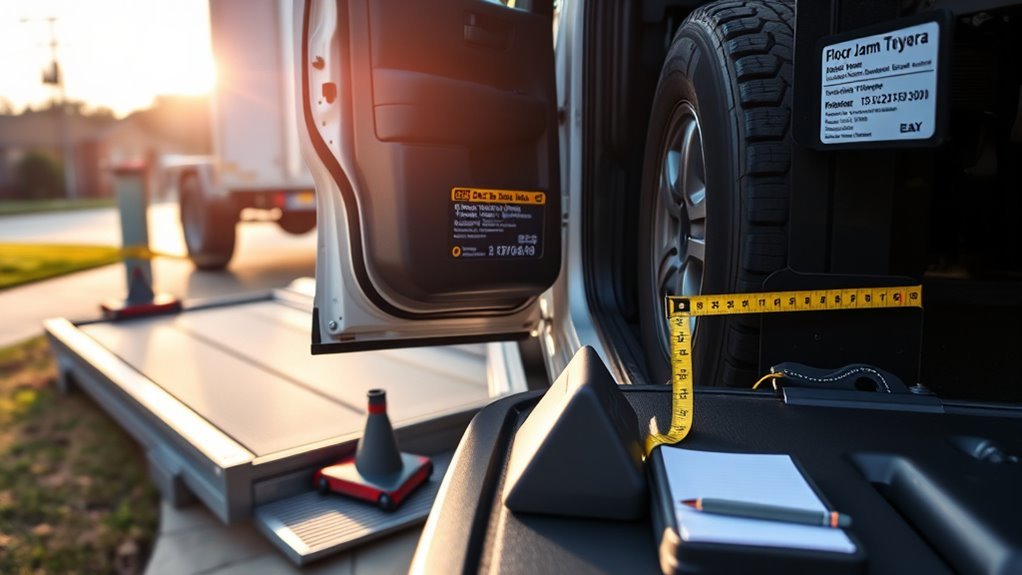
The most reliable workflow is simple: read the label, add up every load, then weigh the truck when the load is heavy or towing is involved.
[Products Worth Considering]

These replacement support brackets are designed to secure the spring bars on a trailer frame for CURT TruTrack weight distribution hitches. Their adjustable mounting holes help achieve precise leveling while the rigid construction supports integrated sway control for a steadier towing experience. A durable powder coat finish adds long-lasting protection, and the package includes two replacement brackets.

This custom-fit truck bed mat is designed for the Toyota Tacoma 5FT model from 2024 to 2026, offering complete coverage without trimming. Made from durable TPE material, it helps protect the bed from mud, water, snow, scratches, and shifting cargo while remaining flexible in harsh weather. The raised edges and anti-slip texture make it a practical all-weather solution that is easy to remove and clean.
This pair of front axle shaft nuts is designed to secure CV joints and wheel bearings on compatible Toyota and Lexus front drive axles. Built from heat-treated carbon steel for durability and corrosion resistance, it helps maintain proper torque and reliable power transfer. It is a direct replacement for several factory part numbers and is recommended for paired replacement.
Locate the Door Sticker
Open the driver’s door and look for the Tire and Loading Information label. It normally includes wording like “The combined weight of occupants and cargo should never exceed…” followed by a pound and kilogram rating. That number is your vehicle-specific payload limit as built at the factory.
- Record the combined occupants-and-cargo limit.
- Record tire size and recommended cold tire pressures.
- Find the certification label for GVWR and front/rear GAWR.
- Subtract the weight of all people, pets, gear, accessories, and hitch load from the payload number.
- Keep a margin instead of loading to the last pound.
Pro Tip: Keep a note in your phone with your Tundra’s payload, front GAWR, rear GAWR, tire pressure, and receiver rating. It saves time when you rent a trailer, buy mulch, or plan a road trip.
Weigh at a Certified Scale
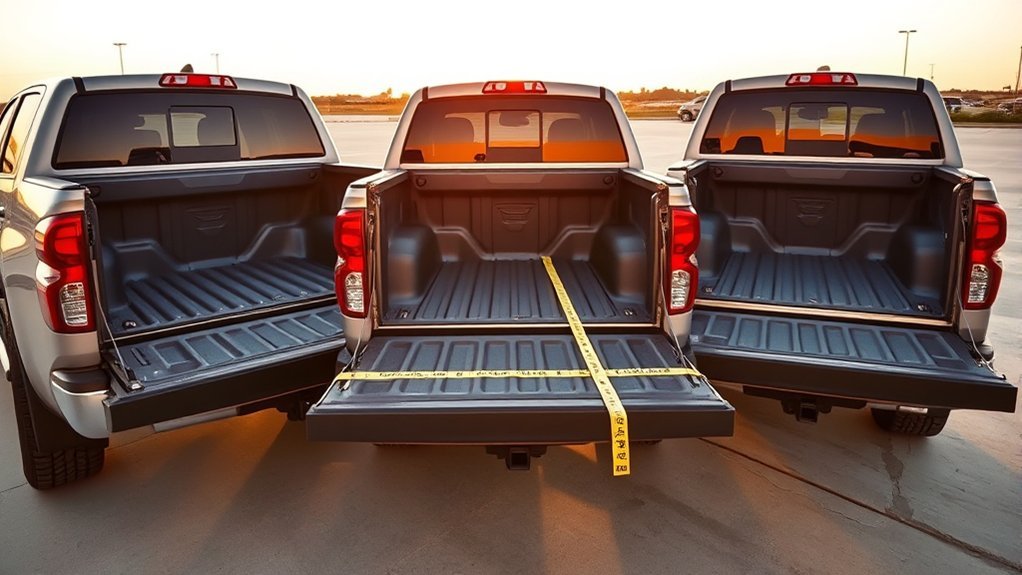
Use a certified public scale when you are near the limit, carrying dense cargo, towing, or unsure how much weight your accessories added. A CAT Scale-style three-platform layout can show front axle, rear axle, trailer axle, and gross weight when positioned correctly.
- Fill fuel and load the truck the way you will actually drive it.
- Put passengers, cargo, hitch hardware, and the trailer in place.
- Weigh the truck and record front axle, rear axle, trailer axle, and gross weights.
- Compare the loaded truck weight with GVWR.
- Compare front and rear axle weights with GAWR.
- Compare combined truck-and-trailer weight with GCWR.
- Move or remove cargo if any rating is exceeded.
Payload Math Examples for Real-World Loading
Payload disappears faster than many owners expect. Here are two simple examples.
Example 1: Bed Cargo Without a Trailer
- Door-sticker payload: 1,700 lb
- Driver and passengers: 520 lb
- Cooler, bags, tools, and bed gear: 430 lb
- Bed cover and rack: 140 lb
- Total payload used: 1,090 lb
- Remaining payload: 610 lb
This setup is still within payload, but you would also want to confirm that heavy items are low, secured, and not overloading the rear axle.
Example 2: Trailer Tongue Weight
- Door-sticker payload: 1,550 lb
- People and in-cab items: 600 lb
- Hitch hardware: 80 lb
- Bed cargo: 250 lb
- Trailer tongue weight: 750 lb
- Total payload used: 1,680 lb
This combination is over payload by 130 pounds before checking axle ratings. The fix is to remove cargo, reduce trailer tongue weight only if it remains within the safe tongue-weight range, use a lighter trailer load, or choose a higher-payload configuration.
How Payload Changes Tongue Weight, Load Balance, and Hitch Choice
Tongue Weight Basics
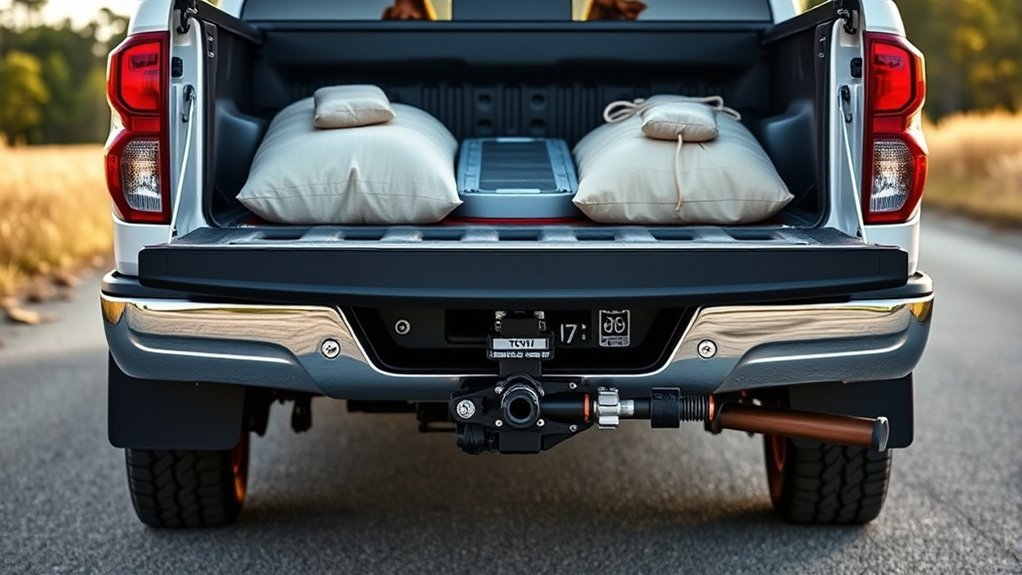
Tongue weight is the downward force a trailer places on the hitch. For a conventional bumper-pull trailer, a common target is 10–15% of the loaded trailer weight. A 6,000-pound loaded trailer, for example, may place about 600–900 pounds on the truck. That entire amount counts against payload.
- Measure tongue weight; do not guess by trailer size.
- Add hitch hardware weight to your payload math.
- Check receiver rating and maximum tongue weight.
- Confirm rear GAWR after the trailer is connected.
- Never reduce tongue weight so much that trailer sway becomes more likely.
Load Distribution Effects
Weight placement changes how the Tundra behaves. Heavy cargo behind the rear axle increases rear-axle load and can lighten the front axle. That can reduce steering grip, headlight aim, braking balance, and stability. Heavy items should sit low, centered, and as close to the axle area as practical.
A weight-distribution hitch can help restore front-axle load when towing a compatible trailer, but it does not raise the Tundra’s payload, GVWR, GAWR, tire rating, or receiver rating.
Hitch Selection Guidance
Choose a hitch based on the loaded trailer weight, tongue weight, receiver rating, and Toyota’s towing guidance for your exact configuration. If tongue weight is close to the truck’s payload limit, a stronger hitch alone does not solve the problem. You still need enough remaining payload and axle capacity.
Warning: Load-leveling rear suspension may improve ride height, but it does not increase legal or mechanical payload capacity. Always use the posted ratings.
Practical Loading Checklist: People, Cargo Placement, and Weight Limits
Use this checklist before any heavy trip, dump run, camping load, job-site haul, or towing day.
- Start with the payload number on the driver-side Tire and Loading Information label.
- Add the weight of the driver, passengers, pets, and car seats.
- Add cargo inside the cab and bed.
- Add aftermarket accessories such as racks, bed covers, toolboxes, sliders, bumpers, winches, and steps.
- Add hitch hardware and trailer tongue weight if towing.
- Place dense cargo low and centered.
- Secure cargo so it cannot shift during braking or cornering.
- Check rear axle weight if the load is dense or positioned behind the axle.
- Inflate tires to the recommended cold pressure for the load.
- Reweigh the truck if you change the setup.
Safety, Legal Limits, and Maintenance When Carrying Heavy Payloads
Payload limits are safety ratings, not suggestions. Overloading can strain the frame, springs, shocks, tires, brakes, wheel bearings, and drivetrain. It can also change crash behavior and create problems with insurance or liability if an overloaded vehicle is involved in a collision.
When carrying heavy loads often, inspect and maintain the truck more carefully:
- Check tire pressure before driving, not after the tires are hot.
- Inspect tires for uneven wear, bulges, age cracking, or load-rating mismatch.
- Look for sagging, leaking shocks, damaged bump stops, or bent brackets.
- Inspect the hitch receiver, safety-chain points, and trailer wiring.
- Use the maintenance schedule for severe use if your driving pattern qualifies.
- Keep scale tickets and service records if you haul for work.
What to Do If Your Tundra Is Over Payload
If your math or scale ticket shows the truck is over payload, do not rely on suspension upgrades to “fix” the rating. Reduce the actual load.
- Move cargo from the truck bed into the trailer only if trailer weight, tongue weight, and trailer axle ratings remain safe.
- Remove dense items such as water, firewood, tools, and extra fuel cans.
- Use a lighter hitch, rack, or accessory setup.
- Carry fewer passengers or split the load into another vehicle.
- Rent a heavier-duty truck for one-time heavy loads.
- Choose a higher-payload Tundra configuration if you regularly haul near the limit.
Frequently Asked Questions
What does payload capacity mean on a pickup?
Payload capacity is the maximum weight the pickup can safely carry on its own chassis. It includes people, pets, cargo, luggage, accessories, hitch hardware, and trailer tongue weight.
Which Toyota Tundra has the highest payload?
For 2024–2025, the highest published Tundra payload is up to 1,940 pounds, typically found on lighter SR or SR5 configurations. For 2026, Toyota lists the maximum payload at 1,850 pounds. Always confirm with the door-jamb sticker on the exact truck.
Are Toyota Tundras 1/2-ton or 3/4-ton trucks?
The Tundra is commonly discussed as a light-duty, “half-ton” pickup competitor, not a heavy-duty 3/4-ton truck. Do not rely on the old half-ton label for loading decisions; use the actual payload, GVWR, GAWR, and tow ratings for your truck.
Does trailer tongue weight count against Tundra payload?
Yes. Tongue weight presses down on the hitch and is carried by the truck, so it counts against payload along with passengers, cargo, and hitch hardware.
Does a weight-distribution hitch increase payload?
No. A weight-distribution hitch can improve axle balance with a compatible trailer, but it does not increase payload, GVWR, GAWR, tire ratings, receiver rating, or Toyota’s published limits.
How do I find the exact payload for my Tundra?
Open the driver’s door and read the Tire and Loading Information label. Use the combined occupants-and-cargo number printed there, then subtract people, cargo, accessories, hitch hardware, and tongue weight.
Conclusion
The Toyota Tundra can carry serious weight, but the safe number depends on the exact truck. Use Toyota’s published payload figures only as a starting point. For real loading, read the door-jamb label, account for every passenger and accessory, include trailer tongue weight, and verify axle weights at a certified scale when the load is heavy. Do that, and your Tundra will haul more predictably, stop better, and stay within its engineered limits.
Sources
- Toyota 2026 Tundra official page — current maximum payload and towing headline figures.
- Toyota USA Newsroom: 2025 Toyota Tundra — 2025 maximum payload, towing, powertrain, and configuration context.
- Toyota USA Newsroom: 2024 Toyota Tundra — 2024 maximum payload context.
- Toyota Owners Manual: Vehicle Load Limits — total load capacity, cargo capacity, and trailer weight definitions.
- CAT Scale: How to Weigh — certified-scale positioning and axle-weight verification.
- SAE J2807 Tow-Vehicle Rating Practice — towing-rating methodology for GCWR and trailer weight rating.



[…] door-jamb federal safety label and hitch receiver. Check the Tundra’s towing capacity, payload capacity, and GCWR, GVWR, and GAWR limits. In every towing setup, the lowest-rated component (receiver, ball […]
[…] the payload label on your truck and review the site’s Toyota Tundra payload guide before towing a heavy trailer. For the percentage calculation and scale methods, use the dedicated […]
[…] also presses down on the truck and uses part of that available carrying capacity. See the separate Toyota Tundra payload capacity guide for a deeper payload […]