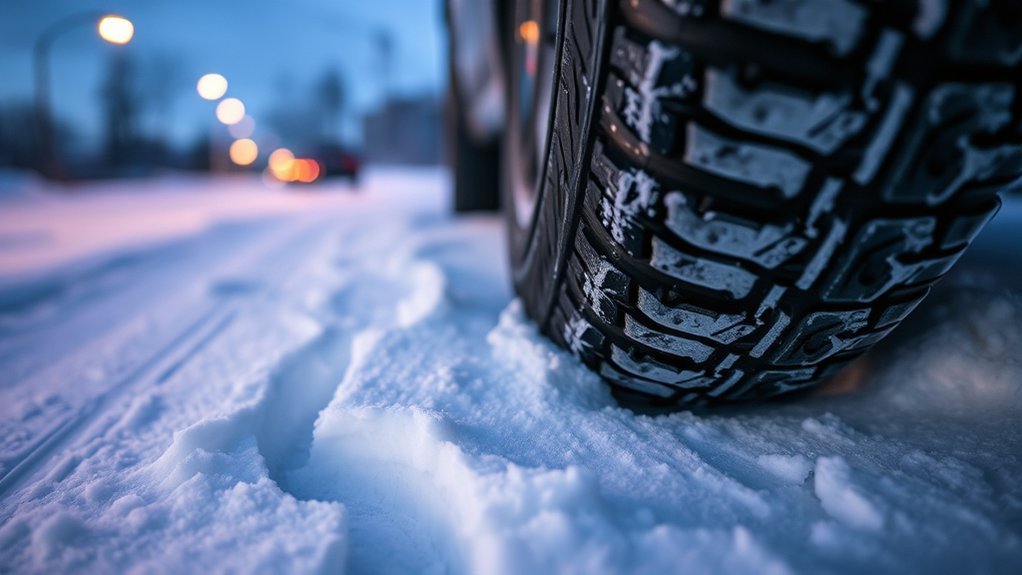
You need winter-specific rubber because cold roads change how tires grip. Once temperatures regularly fall near or below 7°C (45°F), many summer and all-season compounds become less flexible, which can reduce braking, cornering, and control. Winter tires use cold-weather rubber, high sipe density, and deeper tread channels to stay more pliable and create more biting edges on snow, slush, and ice.
Quick Answer
Winter-specific rubber matters because it stays flexible in cold weather, helping the tread conform to rough pavement, snow crystals, and icy surfaces. If your area regularly sees temperatures below 7°C (45°F), snow, slush, freezing rain, or icy hills, dedicated winter tires usually give safer, more predictable grip than all-season tires.
Key Takeaways
- Use winter tires when temperatures regularly stay near or below 7°C (45°F), even before the first big snowfall.
- Look for the Three-Peak Mountain Snowflake symbol, not just M+S, when you need true severe-snow capability.
- Install four matching winter tires for balanced braking, steering, and stability.
- Replace tires before winter grip disappears: 2/32 inch is a minimum legal-style threshold, but snow performance often drops much earlier.
- Check pressure cold and do not rely only on TPMS, because cold air lowers tire pressure and TPMS may warn late.
At a Glance
| Best Time to Install | When daily temperatures regularly approach 7°C / 45°F |
| Best Tire Marking | Three-Peak Mountain Snowflake / 3PMSF |
| Basic Tools Needed | Tire pressure gauge and tread-depth gauge |
| Main Safety Rule | Use four matching winter tires and follow your vehicle placard for pressure |
Do You Need Winter Tires? Quick Decision Guide
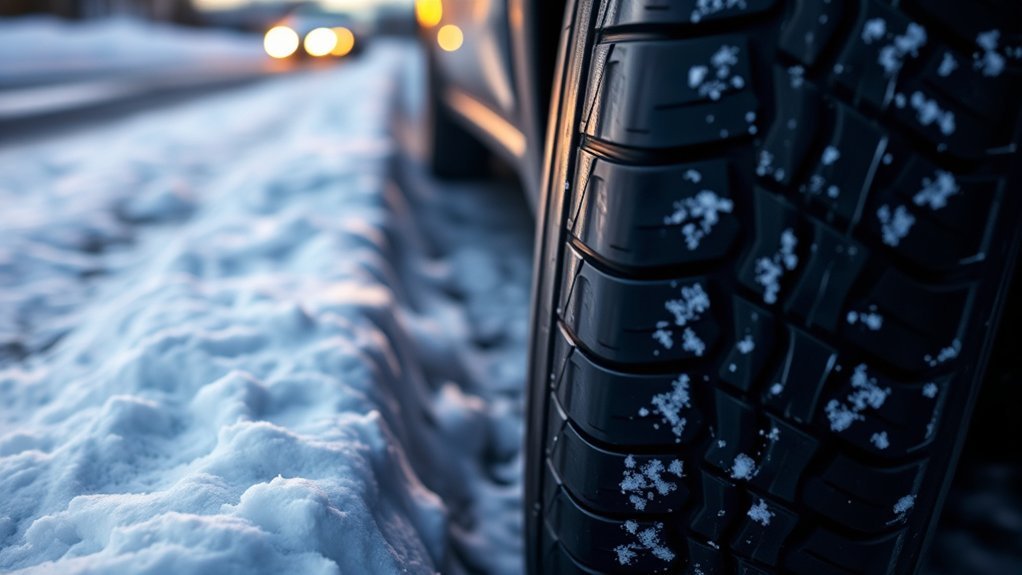
You should consider winter tires if your normal driving includes freezing mornings, packed snow, slush, icy bridges, steep grades, or fast temperature swings. The decision is not only about snowfall. Cold pavement alone can reduce the flexibility and grip of many non-winter compounds.
A helpful rule of thumb is the 7°C / 45°F threshold. Transport Canada advises that all-season and summer tires begin to lose elasticity below 7°C, while winter tires are designed to keep their elasticity and grip in cold conditions. You can review that guidance in Transport Canada’s winter tire safety advice.
Use this quick checklist:
- Choose dedicated winter tires if you regularly drive below 7°C / 45°F, through snow, or on icy roads.
- Choose studless winter tires for mixed winter roads: snow one day, wet pavement the next, and occasional ice.
- Choose studded winter tires only where sustained ice is common and local laws allow studs.
- Consider all-weather tires only for mild winters where roads are usually cold and wet rather than deeply snowy or icy.
Warning: Winter tires improve grip, but they do not make ice safe at normal dry-road speeds. Slow down, increase following distance, and avoid sudden steering or braking.
Why 7°C / 45°F Matters for Winter Tires
Tire rubber is viscoelastic, meaning it needs some flexibility to grip the road. In cold weather, many summer and all-season tire compounds become stiffer. When the rubber stiffens, the tread has a harder time conforming to tiny road surface details, snow texture, and thin water films on ice.
Winter tires are built with compounds that stay more flexible in cold weather. That flexibility helps the tire keep a more useful contact patch and lets tread blocks and sipes do their job. The result is more predictable braking, steering, and cornering when roads are cold, snowy, slushy, or icy.
Temperature Threshold Importance
The 7°C / 45°F guideline is not a magic chemical switch for every tire model. It is a practical seasonal signal. If your morning and evening temperatures are consistently near that range, winter tires are usually the safer choice because they are designed for the conditions you are actually driving in.
Do not wait for the first storm. Tire shops get busy when snow appears in the forecast, and the tires help on cold dry pavement as well as snow-covered roads.
Rubber Flexibility Drop
When rubber loses flexibility, it cannot press into small surface roughness as effectively. That reduces the tire’s ability to create friction. On ice, where grip is already limited, that small loss of conformity can make braking and turning feel less controlled.
Winter-specific compounds use different rubber blends, silica, and additives to help the tread stay pliable. The exact formula varies by brand and tire model, but the goal is the same: maintain useful grip when ordinary compounds become too firm.
Traction and Braking
Winter traction comes from three things working together: the compound, the tread pattern, and the tire’s ability to clear snow, slush, and water.
- Flexible compound: helps the tread stay in contact with cold road surfaces.
- Sipes: create many small biting edges for snow and ice.
- Grooves and channels: move slush and water away from the contact patch.
The colder and slicker the road gets, the more tire compound matters. Tread design helps, but it cannot fully make up for rubber that has become too stiff.
How Rubber Chemistry Affects Winter Grip
Winter tire chemistry is about balance. The tire needs to stay soft enough for cold grip, but not so soft that it wears out too quickly. That is why winter tires use specialized polymer blends, silica, and other additives rather than simply using “softer rubber” everywhere.
Cold-Flexible Compounds
Cold-flexible compounds help the tread remain responsive in low temperatures. This matters most during braking and cornering, when the tire must deform slightly, grip the road, and recover its shape quickly.
- Polymer blends help control how the rubber behaves as temperatures drop.
- Silica can improve wet and cold grip while helping manage rolling resistance.
- Filler systems and additives help balance grip, durability, and wear.
Because each manufacturer tunes compounds differently, compare independent test results when possible instead of judging winter tires by tread appearance alone.
Sipe Density Effects
Sipes are the thin cuts molded into tread blocks. In winter tires, they create hundreds or thousands of small biting edges. Those edges flex, grab snow texture, and help the tire resist sliding.
More siping is not automatically better. Too many cuts can make tread blocks feel squirmy on dry pavement. A good winter tire balances sipe density, block stiffness, and rubber flexibility so it grips without feeling vague.
Silica and Additives
Silica and other additives help tune the compound’s cold-weather behavior. They can help the tire stay more flexible, maintain wet-road grip, and reduce the loss of traction that comes from stiff rubber.
- Silica-rich compounds support cold and wet traction.
- Functional additives help tune braking, handling, and wear resistance.
- Compound blends balance snow grip, ice grip, road noise, and tread life.
How Tread Design and Siping Work With Soft Compounds
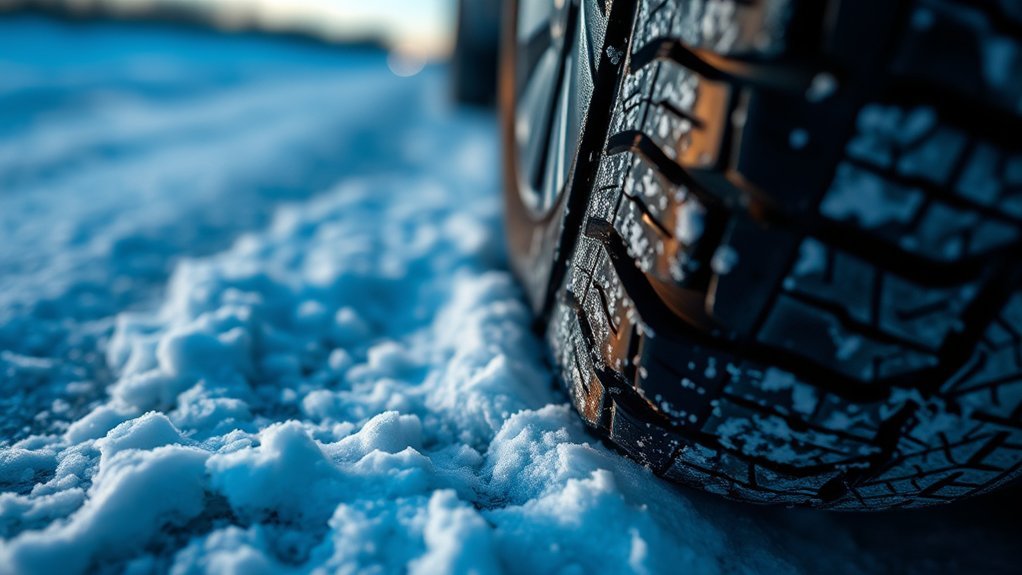
Winter tire tread is designed to work with the compound. The rubber stays flexible, while the tread pattern manages snow, slush, water, and ice contact.
| Feature | Function | Why It Helps |
|---|---|---|
| Deep grooves | Evacuate slush and water | Helps keep the tread from floating over slush |
| High sipe density | Adds biting edges | Improves grip on snow and ice |
| Flexible compound | Conforms to cold surfaces | Maintains usable contact with the road |
| Open tread blocks | Bite into packed snow | Improves acceleration and braking in snow |
| Directional or asymmetric pattern | Controls water and slush flow | Improves stability in mixed winter conditions |
Pro Tip: Do not judge a winter tire only by how aggressive the tread looks. A quieter studless winter tire with a strong compound and good siping can outperform a rugged-looking tire that lacks severe-snow testing.
Studded vs Studless: When Each Outperforms the Other
Studded tires use small metal pins to bite into hard ice. They can be valuable in places where roads stay icy for long periods. Their tradeoffs are noise, rougher ride quality, reduced comfort on dry pavement, and road-surface wear.
Studless winter tires use compound technology, siping, and tread design instead of metal studs. They are usually the better everyday choice for drivers who face a mix of snow, slush, wet pavement, and cleared roads.
- Use studded tires for frequent hard ice, rural roads, mountain passes, or steep icy driveways where laws allow them.
- Use studless winter tires for most mixed winter commuting.
- Check local rules before buying studs. For example, Washington allows studded tires only from Nov. 1 through Mar. 31 according to WSDOT, while Québec requires vehicles to be winter-ready from Dec. 1 to Mar. 15 under Québec winter tire rules.
[Products Worth Considering]

This smart tire tread depth gauge provides quick, accurate readings from 0 to 1 inch in 1/32-inch increments, helping drivers assess tire wear with confidence. Its color-coded display makes it easy to see tread condition at a glance, while the pocket clip adds convenient portability for garages, glove boxes, and on-the-go inspections. Designed for use on trucks, motorcycles, automobiles, and other passenger vehicles, it is a simple tool for safer tire maintenance.

This dial type tire tread depth gauge helps you quickly check tread wear on motorcycles, cars, trucks, and buses with easy-to-read 1/32-inch increments. Its colorful zone markings make it simple to assess tire condition for safer driving in different weather, while the durable zinc cast body and legible dial provide dependable everyday use.

This color coded tire tread depth gauge helps you quickly check tire wear and monitor when replacement is needed. Calibrated in easy-to-read 32nds with clear red, yellow, and green ranges, it offers fast visual results for cars, trucks, motorcycles, and other passenger vehicles. The pocket clip makes it simple to keep on hand for routine maintenance and safety checks.
How Tire Wear Hurts Winter Traction and Lifespan
Winter tire performance drops as tread depth falls and rubber ages. The tire may still look usable, but the sipes can become shallower, tread blocks can lose their snow-biting shape, and the compound can harden over time.
NHTSA’s winter driving guidance says tire tread should be at least 2/32 inch or greater, but that is a minimum threshold, not an ideal winter-performance target. Tire Rack recommends replacing tires at about 5/32 inch for snow driving, 4/32 inch for wet roads, and 2/32 inch for dry roads. You can compare those recommendations with NHTSA’s winter driving tips and Tire Rack’s tire replacement guidance.
| Tread Depth | What It Means | Winter Action |
|---|---|---|
| 6/32 inch or more | Good remaining winter capability if the tire is not aged or damaged | Inspect and rotate normally |
| Around 5/32 inch | Snow performance is starting to become a concern | Plan replacement before severe winter driving |
| Around 4/32 inch | Wet and slush performance is reduced | Replace if winter roads are common |
| 2/32 inch | Minimum tread threshold, not suitable for confident winter grip | Replace immediately |
Also inspect for cracks, bulges, cuts, uneven wear, and vibration. If you see sidewall damage or exposed cords, stop using the tire and have it inspected by a tire professional.
Which Winter Tires to Choose for Your Driving Conditions
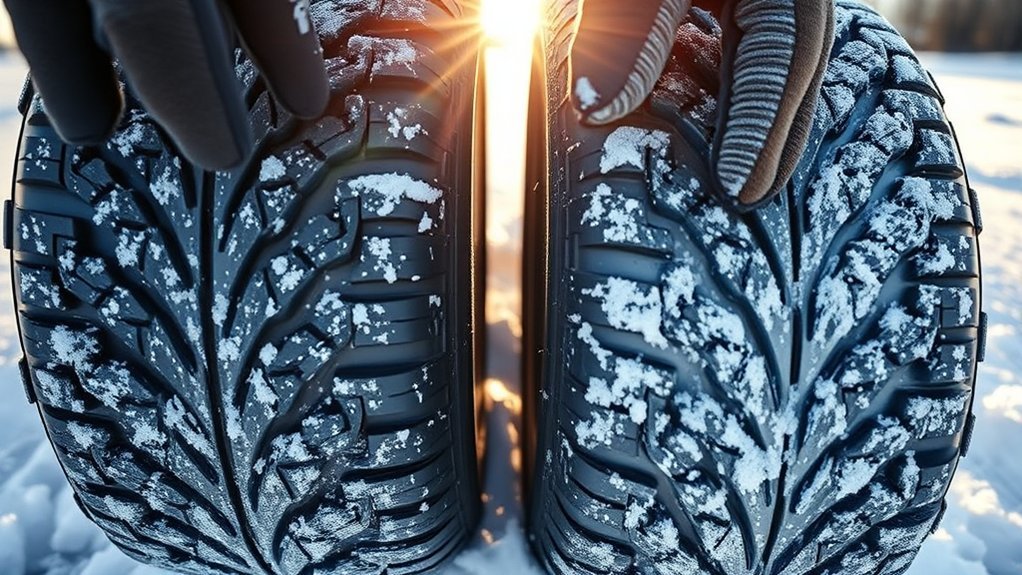
The right winter tire depends on your roads, vehicle, and driving style. Start with your real conditions, not the most extreme tire on the shelf.
- City and suburban mixed roads: choose a studless winter tire with good wet, slush, and snow ratings.
- Rural snowbelt roads: choose a tire with deeper grooves and strong packed-snow traction.
- Frequent hard ice: consider studded tires only if legal and practical for your roads.
- EVs and hybrids: check load rating, size, speed rating, and EV suitability because instant torque and extra vehicle weight can increase slip and wear.
- Performance vehicles: choose a performance winter tire if dry-road steering response matters, but understand that deep-snow traction may differ from a more aggressive snow tire.
Note: Install winter tires in a complete set of four. Mixing two winter tires with two all-season tires can create uneven grip between the front and rear axle, making the vehicle harder to control during braking or turning.
[Products Worth Considering]

This LUMITECO tire tread depth gauge set makes it easy to monitor tire wear and maintain safer driving performance. The color-coded scale provides quick, easy-to-read measurements, while the compact pocket-size design and included clip make it convenient to keep in your vehicle or toolbox. Suitable for cars, trucks, motorcycles, and more, it offers a simple reusable way to check tread depth whenever needed.

This digital tire tread depth gauge helps you check tire wear quickly and accurately with fractional inch, decimal inch, and millimeter readouts. Its large LCD screen, zero reset function, and automatic shutoff make it easy to use for cars, motorcycles, SUVs, trucks, and pickups. Designed for clear readings and dependable measurement, it is a practical tool for routine tire safety checks.

This smart color coded tire tread depth gauge makes it easy to check tread wear at a glance with clear red, yellow, and green ranges. Calibrated from 0 to 1 inch in 1/32 inch increments, it helps you quickly assess tire condition for safer driving and timely replacements. The pocket clip design makes it convenient to carry and use on trucks, motorcycles, cars, and other passenger vehicles.
How to Read Winter Tire Markings and Ratings
Winter tire markings help separate true winter capability from marketing language.
- Three-Peak Mountain Snowflake / 3PMSF: indicates the tire meets specific snow-traction performance requirements. Transport Canada recommends looking for this symbol when shopping for winter tires.
- M+S, M/S, or Mud and Snow: describes tread style, but it does not prove the same severe-snow performance as 3PMSF.
- Size, load index, and speed rating: must match your vehicle’s requirements unless a tire professional or manufacturer-approved fitment guide says otherwise.
- UTQG ratings: can help compare some tire traits, but they are not a winter traction test. NHTSA explains tire safety ratings and pressure guidance through its TireWise tire safety resource.
The snow-traction test behind the severe-snow symbol is based on standardized traction measurement methods, including ASTM F1805 for single-wheel driving traction on snow. You can view the standard overview at ASTM International.
Tire Pressure, TPMS, and Cold Weather Checks
Cold weather lowers tire pressure because the air inside the tire contracts. Check pressure when the tires are cold, ideally before driving, and inflate to the PSI listed on your vehicle’s door-jamb placard or owner’s manual, not the number molded into the tire sidewall.
TPMS is helpful, but it is not a substitute for checking pressure. AAA notes that drivers should regularly check tire pressure even if the TPMS light is not illuminated, because some systems only warn after a tire is significantly underinflated.
- Check pressure at least monthly during winter.
- Check again before long trips or major temperature drops.
- Recheck after seasonal installation because stored tires can lose pressure.
- Do not ignore a TPMS light that appears on a cold morning and then disappears after driving.
[Products Worth Considering]

This 50-pack of tire tread depth gauges offers a simple way to check tire wear quickly and accurately. Color-coded reading zones make it easy to see tread condition at a glance, while the compact design and pocket clip support convenient everyday carry. Built for repeated use, these gauges help drivers monitor tire safety with confidence.

This tire inflator attachment combines accurate pressure reading and easy inflation in one heavy-duty tool for maintaining tire pressure with less hassle. A longer hose and 360-degree swivel air chuck help create a secure seal while giving you better control during use. Designed for universal compressor compatibility, it measures, inflates, and deflates without batteries.

The Masoll M13 Tire Pressure Monitoring System helps monitor tire pressure for sedans, SUVs, pickup trucks, RVs, and travel trailers with four tires. It features automatic reference pressure calibration, alerting you when pressure changes fall outside the set range, while solar charging and auto wake-up support convenient everyday use. With precise pressure detection, an easy-to-read color LCD, and adaptive backlighting, it is designed to improve driving safety and help protect tire life.
Maintenance & Storage to Preserve Cold-Weather Compounds
Winter tire rubber lasts longer when it is protected from heat, sunlight, ozone, petroleum products, and poor storage habits. Michelin recommends storing tires indoors in a clean, cool, dark location away from direct sunlight, heat sources, and ozone sources such as electric generators.
| Action | Purpose | Best Practice |
|---|---|---|
| Clean and dry tires | Remove salt, dirt, and debris | Wash with water and dry before storage |
| Store cool, dry, and dark | Slow rubber aging | Use an indoor space away from sunlight |
| Avoid ozone and chemicals | Reduce cracking and rubber damage | Keep away from generators, motors, fuels, and solvents |
| Rotate seasonally | Promote even wear | Mark tire positions before removal |
| Inspect before reinstalling | Catch cracks, bulges, and low tread | Replace questionable tires before winter starts |
How to Evaluate Winter Tires: Labels, Tests, and Ratings
Use objective information whenever you can. Marketing terms such as “snow ready” or “cold weather grip” are less useful than sidewall symbols, independent tests, and measured performance categories.
- Start with the 3PMSF symbol if you need serious winter capability.
- Compare independent test results for braking on snow, ice traction, wet braking, hydroplaning resistance, road noise, and wear.
- Match the tire to your vehicle by size, load index, speed rating, and wheel fitment.
- Read the date code and avoid buying old stock unless the tire has been stored properly and still meets the manufacturer’s guidance.
- Check local regulations for chains, traction laws, studded tire dates, and winter tire requirements.
A winter tire is not automatically better in every category. Some prioritize ice braking, others deep snow, wet-road stability, low rolling resistance, or quiet highway comfort. Choose the tire that matches your route, not just the one with the most aggressive tread pattern.
Frequently Asked Questions
Can aftermarket rubber treatments restore winter compound flexibility?
No. Rubber dressings or treatments may temporarily change the surface feel, but they cannot restore the original low-temperature chemistry of an aged winter tire. If the tread is worn, cracked, hardened, or past its useful life, replacement is the safe fix.
Do tire pressure monitoring systems compensate for cold compound changes?
No. TPMS monitors tire pressure; it does not measure rubber stiffness, tread grip, or stopping distance. It may also warn only after pressure is already low. Check tire pressure cold with a gauge and use the vehicle placard PSI.
How do electric vehicle torque characteristics affect winter compound choice?
EVs can deliver instant torque, which can make wheel slip easier on snow or ice. Choose winter tires with the correct load index, size, and speed rating for your EV, and consider models designed for heavier vehicles, low rolling resistance, and controlled winter traction.
Are run-flat tires available with dedicated winter rubber compounds?
Yes, but options are more limited than standard winter tires. If your vehicle requires run-flats, compare the exact size, load rating, speed rating, 3PMSF marking, and manufacturer fitment notes before buying.
Can recycled rubber compounds match new winter compound performance?
Recycled and sustainable materials are improving, but winter tires still need tightly controlled compound chemistry for cold grip, wear, and braking. Judge any tire by independent winter tests and official markings rather than by material claims alone.
Should I buy two winter tires or four?
Buy four matching winter tires. Installing only two can create different grip levels between the front and rear of the vehicle, which may cause unpredictable handling during braking, turning, or emergency maneuvers.
When should I remove winter tires?
Remove winter tires when temperatures consistently stay above about 7°C / 45°F and winter road hazards are unlikely. Driving winter tires in warm weather can increase wear and reduce crisp handling.
Conclusion
You do not need to become a tire engineer to make a smart winter choice. Focus on the basics: winter-specific rubber stays more flexible in cold weather, sipes add biting edges, grooves clear slush, and the 3PMSF symbol is the key winter-performance marking to look for. Install four matching tires before winter conditions arrive, monitor pressure and tread depth, and store the set properly when the season ends.
The best winter tire is the one matched to your real roads: studless for mixed winter commuting, studded only for frequent hard ice where legal, and all-weather only for mild winter climates. Keep the rubber fresh, the tread deep, and the pressure correct, and you will get the safety benefit winter tires are designed to deliver.
Sources
- Transport Canada — Using winter tires — 7°C guidance and Three-Peak Mountain Snowflake explanation.
- NHTSA TireWise — tire pressure, tire safety ratings, and general tire maintenance guidance.
- NHTSA Winter Weather Driving Tips — winter inspection and minimum tread guidance.
- ASTM F1805 — standardized snow traction test method reference.
- Tire Rack — When should tires be replaced? — practical tread-depth replacement guidance for snow, wet, and dry conditions.
- Michelin — Storing my tires — cool, dry, dark tire storage and ozone/heat precautions.