Last updated: July 31, 2026 — corrected model-year gear guidance, added 2020 versus 2024 transmission differences, and clarified cruise-control and slippery-road cautions.
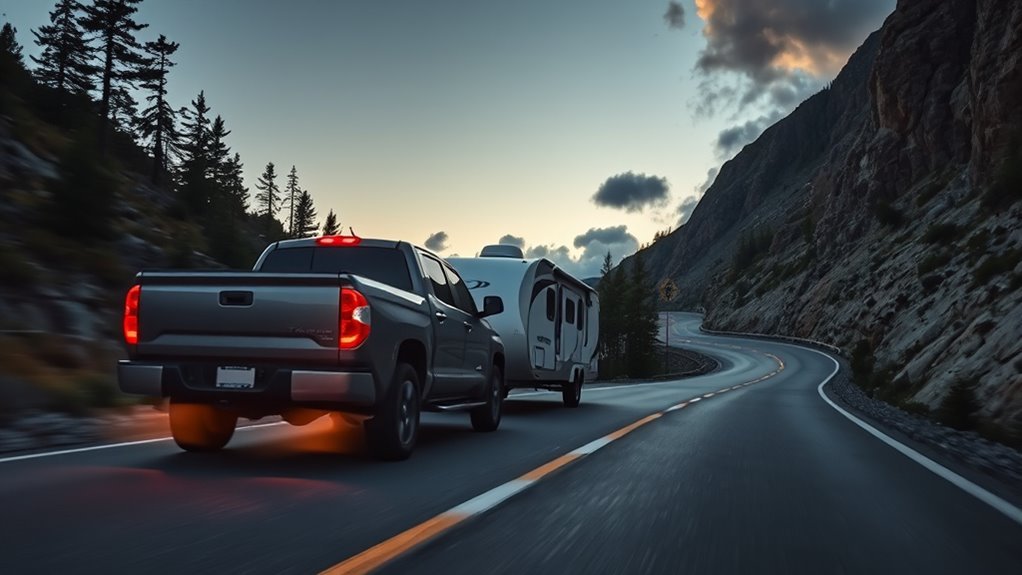
Use Toyota Tundra engine braking before a long downhill while towing, not after the trailer has already pushed the truck above your target speed. Slow before the crest, select the towing mode your model provides, and choose a lower S-mode range only as needed to hold a controlled speed. Do not copy one fixed range such as S3 across every Tundra year: a 2020 six-speed manual gives S4 as the trailer-towing engine-braking range, while a 2024 ten-speed Tundra offers S1 through S10 and states that lower ranges provide stronger engine braking.
Engine braking reduces the amount of work the service brakes must do, but it does not replace them. Use the brake pedal for controlled speed reductions, then release it enough to avoid continuous heat buildup. Confirm the exact shift procedure, towing mode, and allowable range in the owner’s manual for your truck.
Quick Answer
Before the descent, reduce speed, activate TOW/HAUL or TOW+ if your Tundra provides it, and select an S-mode range that holds speed without continuous brake pressure. Use the exact range in your model-year manual. Do not assume S3 is correct for every Tundra, and cancel cruise control before relying on a manual downshift for engine braking.
Key Takeaways
- Slow before the downgrade and select the range before speed builds.
- Use TOW/HAUL or TOW+ according to your exact Tundra manual.
- Choose a lower S range only as needed; the correct number varies by transmission and model year.
- Use controlled brake applications instead of holding constant pedal pressure.
- Cancel cruise control before relying on a manual S-mode downshift for engine braking.
- On wet, icy, gravel, or otherwise slippery roads, avoid sudden downshifts that can reduce traction.
Tundra Engine Braking by Model Year: Why One Gear Number Does Not Fit All
Tundra transmission controls changed substantially between generations. The safest instruction is not “always use S3.” It is “use the model-specific range that holds a safe speed without over-revving or requiring continuous brake pressure.”
| Example | Transmission and Controls | Downhill Towing Guidance |
|---|---|---|
| 2020 Tundra example | Six-speed automatic with S-mode ranges and TOW/HAUL | Toyota’s trailer-towing guidance specifies range 4 in S mode to maintain engine-braking efficiency. Do not substitute S3 unless the manual and conditions support a lower range. |
| 2024 Tundra example | Ten-speed automatic with S1 through S10 plus TOW/HAUL and TOW+ | A lower selected range gives stronger engine braking. Toyota does not prescribe one universal S3 setting for every hill, speed, and load. |
| Other Tundra years | Control logic, number of ranges, and towing modes vary | Check the owner’s manual for the exact truck before selecting a range on a long descent. |
What’s in This Article
- When to Use Engine Braking on Long Downhills
- How Tundra S Mode Affects Engine Braking
- When to Use Tow/Haul Mode
- Which S Range to Select on a Downhill
- How Load and Trailer Type Change Braking Needs
- Road, Weather, and Grade Factors
- How to Combine Downshifts and Service Brakes
- Confirm Your Model and Manual
- Safety Checklist
- What to Do If the Brakes Feel Hot
- Why Engine Braking May Feel Ineffective
- Frequently Asked Questions
When Should You Use Engine Braking on a Long Downhill?
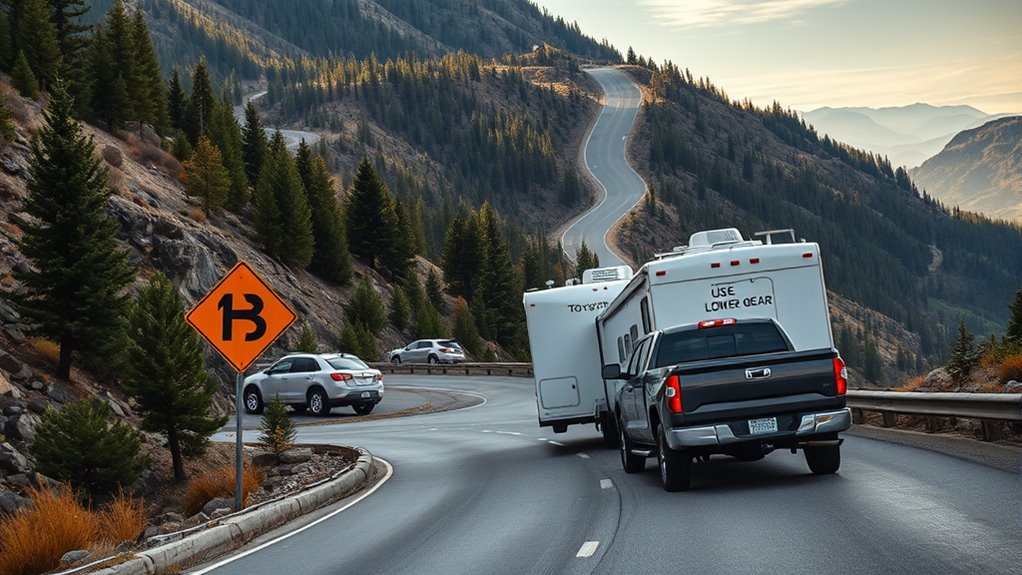
Use engine braking before a long or steep descent whenever the trailer’s weight could make the Tundra gain speed faster than normal. Enter the grade at a controlled speed, select the correct towing mode, and choose an S-mode range that helps hold that speed.
Toyota explains that S mode restricts the highest available gear range, controls engine-braking force, and prevents unnecessary upshifts. On a 2024 ten-speed Tundra, lower selected ranges provide more engine braking and higher engine speed. The transmission may also downshift automatically on a decline.
Keep extra following distance and monitor road speed, engine speed, and trailer behavior. Engine braking should reduce how often you need the service brakes, but it should not be expected to stop the truck-trailer combination by itself.
Warning: Do not wait until speed has built before making a large downshift. Toyota warns that sudden changes in engine braking on a slippery surface can cause a skid or spin.
Practice the control sequence with the loaded trailer in a safe area and on moderate grades before using it on a mountain descent.
Before a mountain trip, confirm the truck and trailer are within the limits in the Toyota Tundra towing capacity guide.
How Does Tundra S Mode Affect Engine Braking?
S mode is a selectable range system, not always a command to remain in one fixed gear. It limits the highest gear the transmission may use while still allowing lower gears within that selected range.
A lower S-mode number generally allows stronger engine braking, but the correct selection depends on transmission design, vehicle speed, grade, trailer weight, traction, and engine-speed limits. A range that suits a 2020 six-speed Tundra cannot be copied automatically to a 2024 ten-speed truck.
On the 2024 Tundra, the display can show S1 through S10. Toyota also states that the transmission may reject a requested downshift or upshift automatically to protect the engine and transmission. Treat that protection as a limit, not as permission to make a late, aggressive shift.
Important: On the 2024 Tundra, Toyota states that engine braking will not activate as intended from certain manual S-mode downshifts while dynamic radar cruise control or cruise control remains active. Cancel cruise control before relying on a manual downshift.
Choose the highest range that holds the desired speed with limited service-brake use. If the truck still accelerates, reduce speed with the brakes and select the next lower range when road conditions and the owner’s manual allow it.
When Should You Use Tow/Haul or Tow+ Mode?
Use TOW/HAUL or TOW+ when the owner’s manual directs you to use it for a trailer or heavy load. On a 2024 Tundra, Toyota says these modes change engine, transmission, and steering behavior to better suit towing. TOW+ is available when more towing power is needed than TOW/HAUL provides.
Earlier Tundra Tow/Haul systems also change throttle and transmission behavior and can downshift on a downhill to use engine braking. This may be enough on a mild grade, but a longer or steeper descent may still require a manually selected S-mode range.
Activate the towing mode before the pass, not after the transmission begins hunting or the trailer starts pushing the truck. Review the model-specific steps in the Toyota Tundra Tow/Haul and Tow+ guide.
Do not treat a towing mode as a substitute for safe entry speed, correct loading, working trailer brakes, or the right S-mode range.
Which S Range Should You Select on a Downhill?
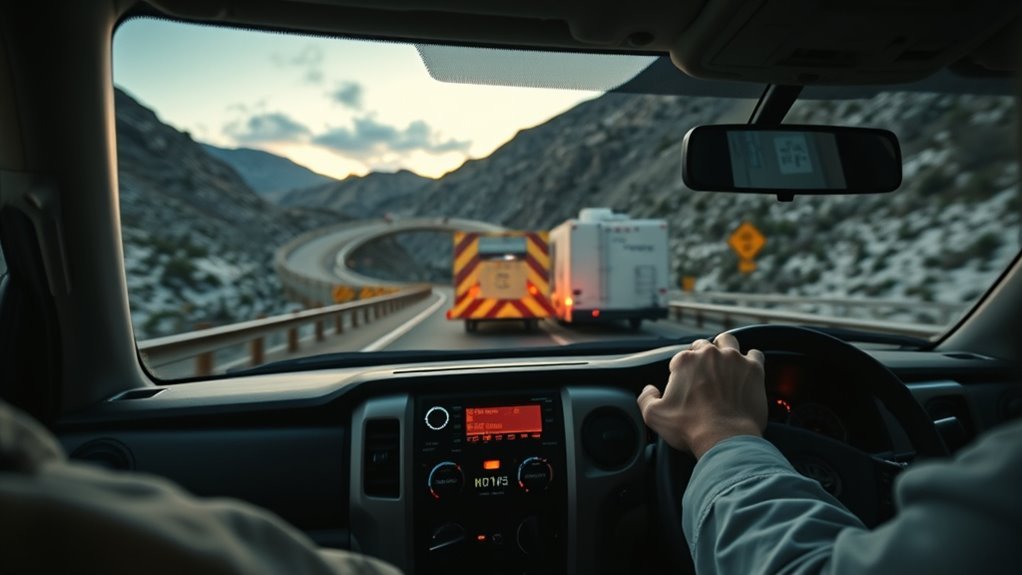
Select the range that holds a safe downhill speed without continuous brake pressure and without forcing an abrupt increase in engine speed. Do not use S3 as a universal starting point.
- Before the crest: Reduce speed while the truck and trailer are straight.
- Set the towing mode: Use TOW/HAUL or TOW+ when specified for your model.
- Choose the range: Shift into S mode and select the model-appropriate range.
- Adjust gradually: Move one range lower if the truck still gains speed and the manual permits the shift.
- Watch engine speed: A controlled increase is normal, but harsh operation, warning messages, or abnormal noise requires attention.
- Cancel cruise: Do not depend on cruise control during a long towing descent.
For a 2020 Tundra example, Toyota’s trailer-towing guidance identifies S4 for engine-braking efficiency. For a 2024 ten-speed example, Toyota provides S1 through S10 and explains that lower ranges give stronger engine braking. That difference is why one fixed internet answer cannot safely cover every Tundra.
Pro tip: Record the range, entry speed, trailer load, and road grade that worked on a familiar route. Use the note as a reference, not as a substitute for adapting to weather, traffic, and the current load.
How Do Load and Trailer Type Change Braking Needs?
A heavier loaded trailer carries more downhill momentum, so it normally requires a lower entry speed, more following distance, and earlier speed control. The truck must also remain within its tow rating, payload, axle, tire, receiver, hitch, and tongue-weight limits.
Tall travel trailers and enclosed cargo trailers have more side area for crosswinds. Poor cargo distribution or insufficient tongue weight can also increase sway risk. Secure cargo and check the loaded combination rather than relying on the trailer’s empty weight.
- Confirm actual loaded trailer weight and tongue weight.
- Count passengers, cargo, hitch hardware, and tongue weight against payload.
- Set trailer brake gain for the current load and road conditions.
- Test the tow vehicle and trailer brakes before reaching the grade.
- Reduce speed further when the trailer has no independent brakes and towing is legal for that setup.
Use the Tundra trailer brake gain procedure before the descent. Gain is load- and condition-specific; it should not be copied from another trailer.
For load placement, review how to set Toyota Tundra trailer tongue weight and confirm the result with the limits for the exact truck and hitch.
[Products Worth Considering]
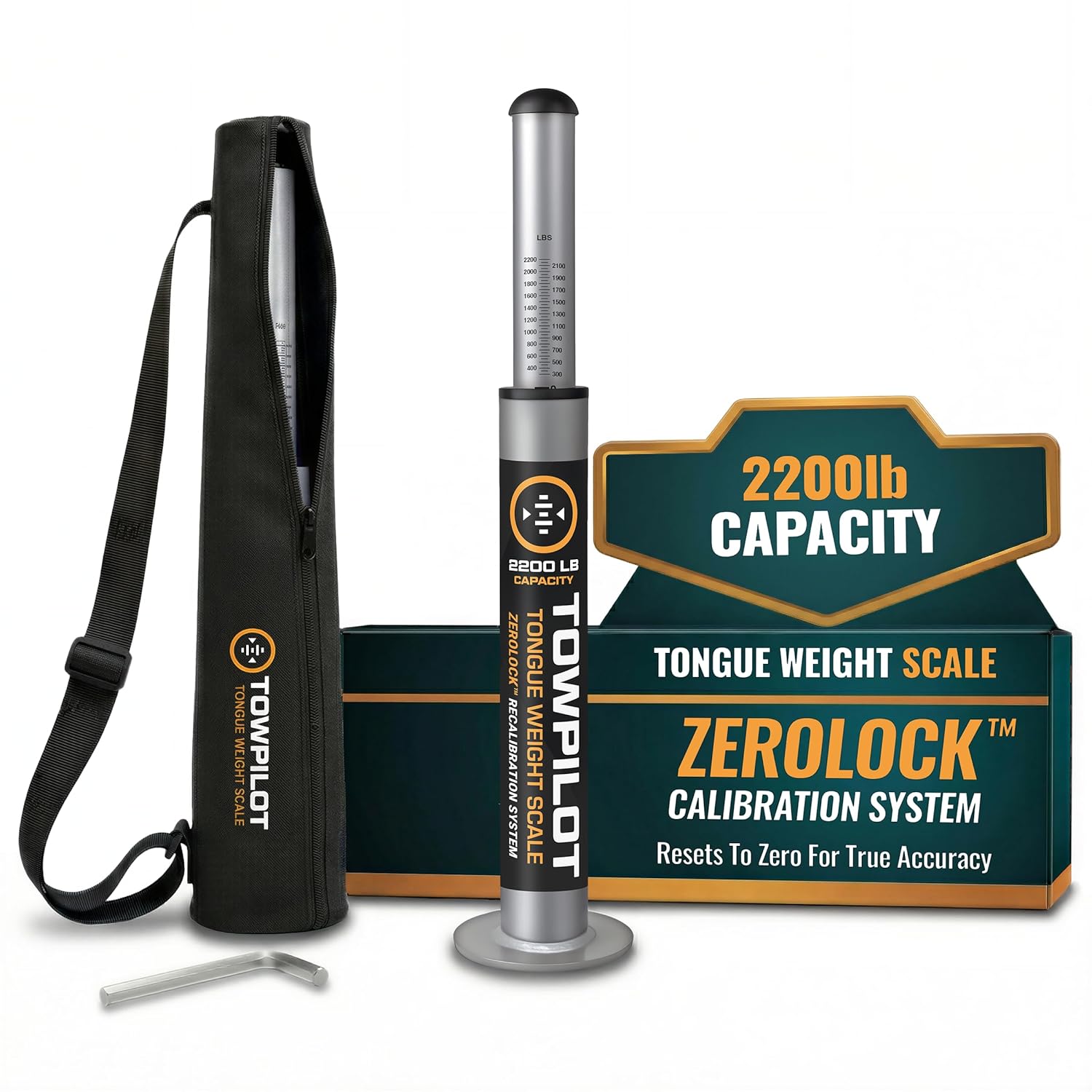
This trailer tongue weight scale helps you check hitch weight quickly and accurately before towing, reducing sway and improving overall safety. Built with durable steel and a spring mechanism, it works without batteries and includes a recalibration feature to maintain true-zero accuracy over time. It is designed for RVs, campers, and utility trailers, with a top plate that helps protect your coupler during use.

This proportional trailer brake controller provides smooth, responsive braking by automatically matching your tow vehicle’s stopping force for safer trailer control. The bright LED digital display makes it easy to monitor voltage output in real time, while adjustable braking and sync settings help tailor performance to different trailers and road conditions. Designed for quick installation and broad compatibility, it supports 1 to 4 axle trailers for dependable towing confidence.

This proportional electric brake controller automatically applies trailer brakes based on your vehicle's braking force and speed for smoother, more responsive stopping. It is compatible with a wide range of tow vehicles and trailer setups, and includes an LED display for easy setup, diagnostics, and manual braking control. The included mounting hardware and plug-and-play port help make installation simple and convenient.
How Do Road, Weather, and Grade Affect Engine Braking?
Grade length matters as much as steepness. A short decline may need only the towing mode and occasional braking, while a long mountain descent can build brake heat even at a moderate grade.
Rain, snow, ice, gravel, tight curves, crosswinds, and traffic reduce the margin for correction. Use a lower entry speed and smoother inputs. Do not make a sudden downshift on a slippery surface because the abrupt change in engine braking can reduce tire grip.
- Read warning signs for grade percentage, descent length, curves, and truck restrictions.
- Reduce speed before the first curve or steep section.
- Leave more following distance than you would without a trailer.
- Use the highest S range that controls speed, then step lower only when needed.
- Use designated pullouts if the brakes, transmission, weather, or traffic conditions become unsafe.
If the truck continues to gain speed after a controlled brake reduction and a safe range selection, slow further and reassess. Do not continue at a speed that requires constant braking.
How Do You Combine Downshifts With the Service Brakes?
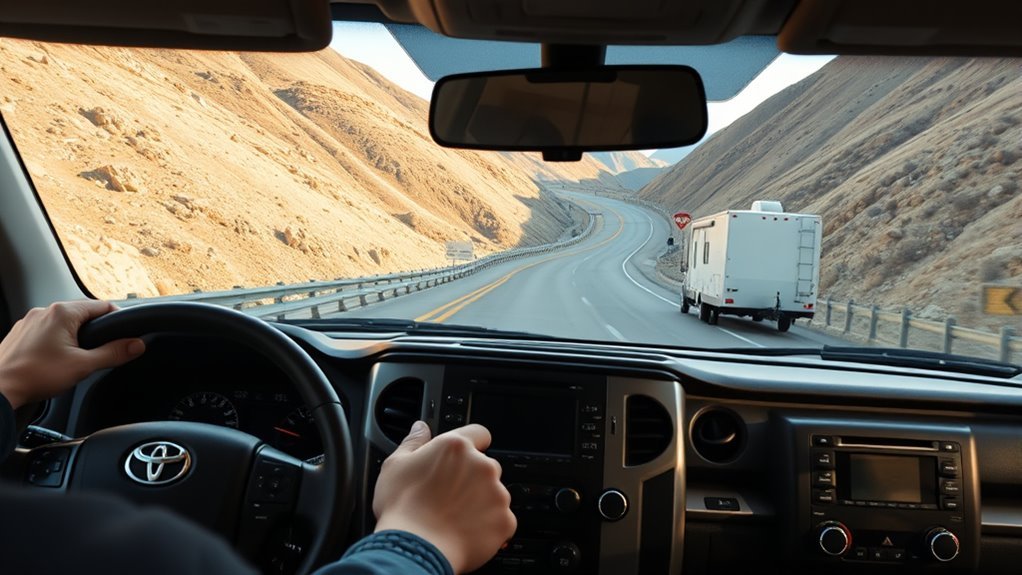
Use the transmission to resist acceleration and the service brakes to reduce speed when the combination moves above your target. The two systems should share the work.
[Products Worth Considering]
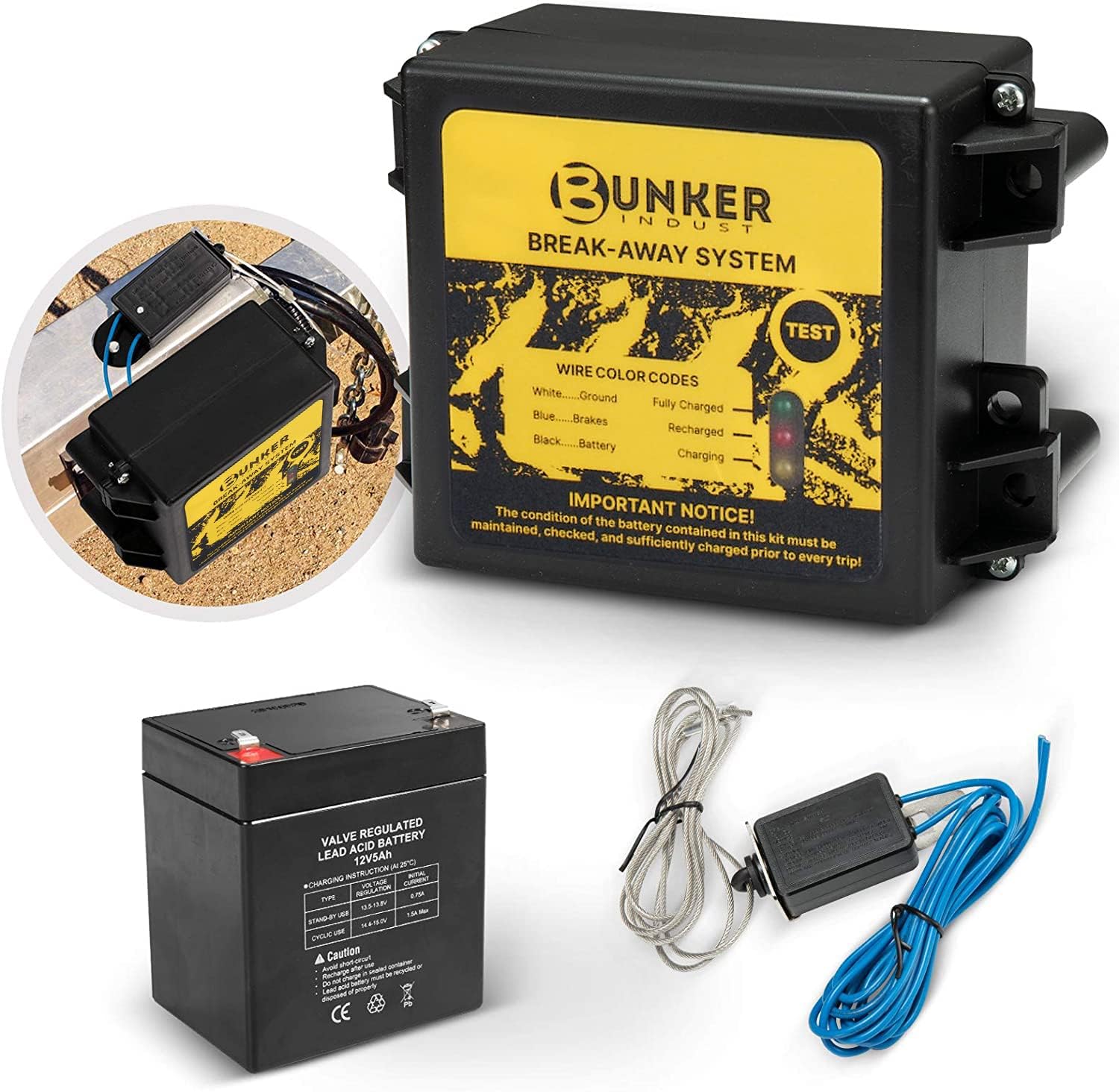
This trailer breakaway kit is designed for trailers with an existing electric brake system, helping activate the brakes if the trailer separates from the tow vehicle. It includes a battery, breakaway switch, and charger with an LED display for easy status checks, making it a practical safety upgrade for caravans and trailers. The side-mount design supports quick installation, while weather and corrosion resistance help it stand up to outdoor use.

The CURT Venturer NEXT is a compact, time-delay electric trailer brake controller designed for dependable braking control from inside your vehicle. Its low-profile design, adjustable power and ramp time, and plug-and-play friendly setup make it a practical choice for towing with confidence. Built for 12-volt systems and compatible with electric over hydraulic brakes, it offers flexible installation without leveling or internal moving parts.
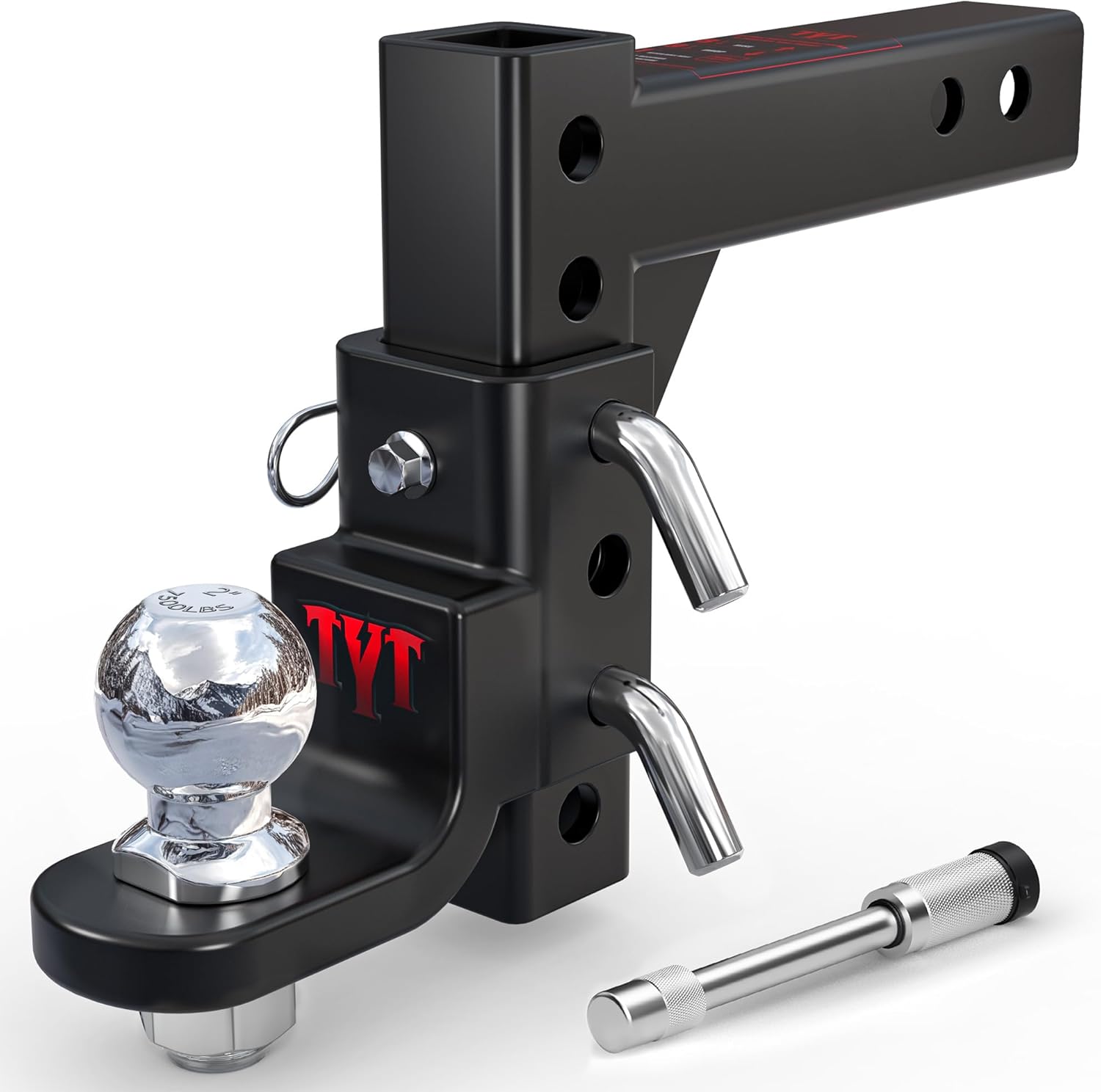
This adjustable trailer hitch ball mount is built for dependable towing with a standard 2-inch receiver and a high-capacity design suited for trucks, campers, boats, and utility trailers. Its adjustable rise and drop settings help you achieve a level tow, while the anti-rattle design supports a smoother, quieter ride. Complete with pins, clips, and a premium pin lock, it offers an easy installation and secure connection for everyday hauling needs.
Match the Range to the Grade
Begin with a safe entry speed and the correct towing mode. Select an S range that lets the engine hold or nearly hold that speed. If the truck keeps accelerating, apply the brakes to reduce speed first, then choose the next lower permitted range.
- Downshift before the trailer builds excessive speed.
- Change one range at a time when practical.
- Do not force a downshift that the transmission rejects.
- Return to a higher range or Drive after the grade ends and towing conditions allow it.
Use Controlled Brake Applications
Release the accelerator smoothly and let engine braking resist the descent. When speed rises above the target, use the brake pedal to bring it back down, then reduce pedal pressure so the brakes are not held continuously.
Do not pump the brake pedal as a substitute for proper technique, and do not make abrupt steering, throttle, or gear changes. The owner’s manual for the exact truck remains the final authority.
Before You Begin: Confirm Your Tundra Model and Manual
Check the owner’s manual before towing in steep terrain. Confirm the transmission range display, TOW/HAUL or TOW+ procedure, cruise-control cautions, trailer brake controller settings, and any towing-specific maintenance requirements.
Also confirm the exact truck’s towing limit, payload limit, axle ratings, tire limits, receiver rating, hitch rating, and loaded trailer weight. A headline maximum tow rating does not apply to every cab, bed, drivetrain, trim, or option package.
Trailer-brake laws vary by jurisdiction. Check the rules for every state, province, or local area on the route, and follow the stricter equipment or speed requirement that applies.
Safety Checklist Before a Long Towing Descent
Complete these checks before the grade starts. Engine braking cannot compensate for worn brakes, an overloaded truck, poor tongue weight, or a trailer brake fault.
- Truck brakes: Confirm normal pedal feel and inspect pads, rotors, fluid condition, and warning lights.
- Trailer brakes: Confirm the correct brake type, connection status, gain, and manual-slider response.
- Weights: Verify loaded trailer weight, payload, tongue weight, axle limits, and hitch ratings.
- Tires: Check pressure, load rating, condition, and lug-nut torque on the truck and trailer.
- Route: Review grade length, curves, weather, construction, and safe pullout areas.
- Controls: Set the towing mode, cancel cruise control, and choose the initial range before the descent.
- Warning signs: Brake odor, smoke, reduced braking response, or a transmission-temperature warning means you need a safe stop.
The National Highway Traffic Safety Administration advises using the manufacturer-recommended towing gear, driving at moderate speeds, avoiding sudden maneuvers, and allowing substantially more stopping distance while towing.
[Products Worth Considering]
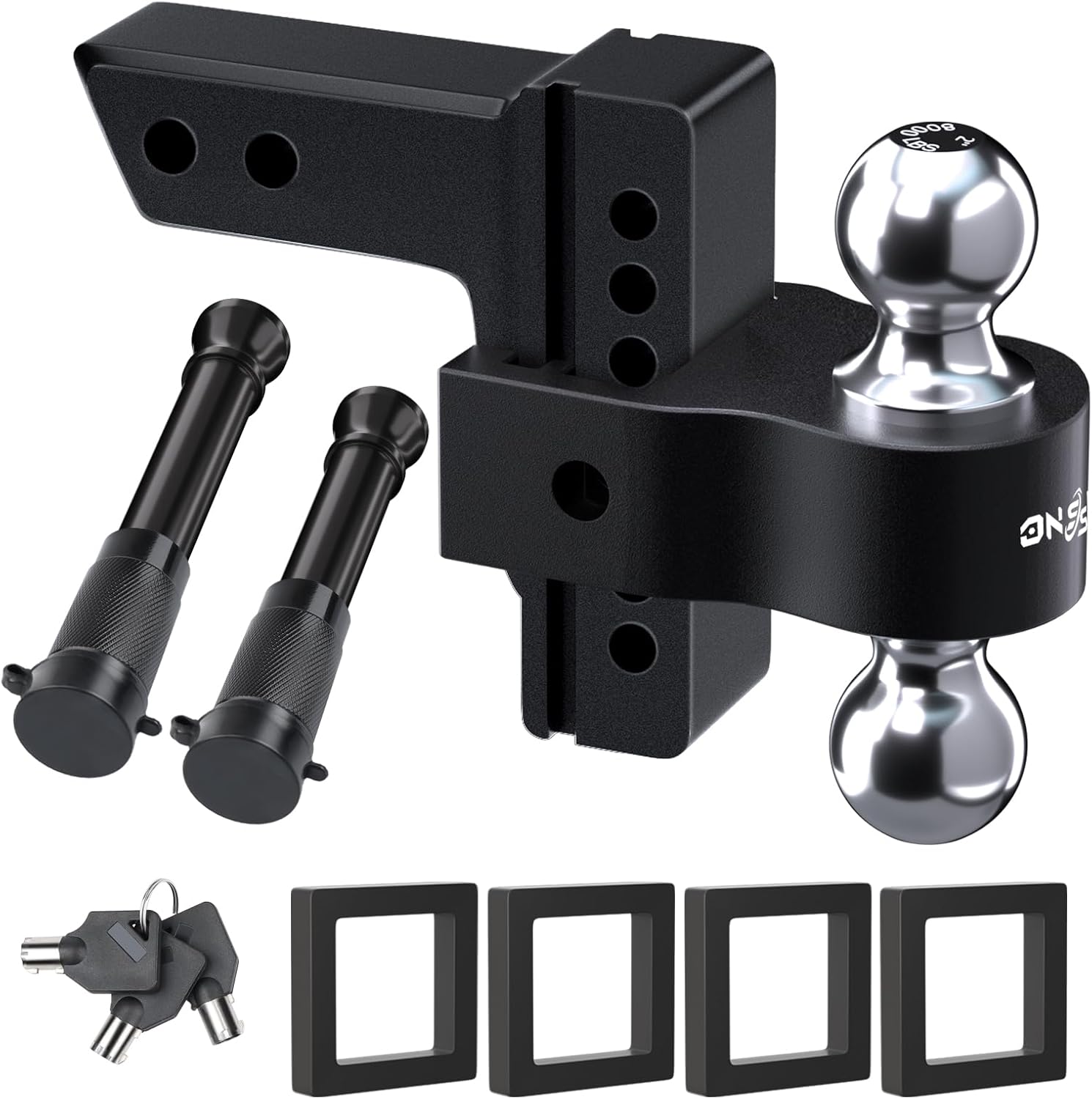
This adjustable trailer hitch is designed for 2-inch receivers and offers flexible towing with a 6-inch drop and rise range. Dual ball sizes help support different trailer setups, while the high-strength aluminum construction is built for dependable performance on tough jobs. Included hitch locks and silencers add security and help reduce noise for a smoother towing experience.

This Andersen Hitches weight distribution hitch kit is designed to improve towing stability with a grease-free friction cone and tension chain system that helps reduce sway and bounce. It features a universal setup with a 2-inch ball and 4-inch drop/rise to suit many bumper-pull trailer applications, while making hitching and unhitching faster and easier than traditional spring bar systems. Built in the USA, it offers dependable performance for travelers, workers, and outdoor enthusiasts who need confident towing control.

This Toyota hitch cover helps protect your trailer hitch receiver from dirt and debris while adding a clean factory-style look to your vehicle's rear end. Designed for easy use, it offers a simple way to finish off your towing setup when the hitch is not in use. Its lightweight design makes it convenient to handle and install.
What Should You Do If the Brakes Feel Hot?
If you smell strong brake odor, see smoke, or notice reduced braking response, reduce speed carefully and use the next safe turnout. Keep the truck and trailer straight and avoid abrupt steering or braking.
Do not continue down a long grade with fading or smoking brakes. Stop in a safe area, secure the combination according to the owner’s manual, keep people away from hot brake parts, and allow the system to cool. If braking remains abnormal, arrange inspection or roadside assistance instead of continuing the descent.
A transmission-temperature warning also requires the model-specific response in the owner’s manual. On the 2024 Tundra, Toyota instructs the driver to stop safely, shift to Park, and wait for the warning to clear; contact a Toyota dealer if it does not clear.
Why Might Tundra Engine Braking Feel Ineffective?
Weak downhill control usually comes from entering the grade too fast, selecting a range that is too high, leaving cruise control active, carrying more load than expected, or relying on engine braking to do the service brakes’ job.
The Selected Range Is Too High
A higher S range allows more upper gears and less engine-braking force. Reduce speed with the brakes, then select the next lower range when the manual and road conditions allow it.
- Do not jump directly to S3 because another driver used it.
- Use the range display to confirm the selection.
- Listen for a controlled rise in engine speed, not a harsh shock.
- Expect the transmission to restrict a downshift that could be unsafe.
Cruise Control or Automatic Logic Is Affecting the Response
Automatic downhill logic may take time to react, and cruise control can prevent the manual S-mode engine-braking response expected on some Tundra models. Cancel cruise control before the descent and choose the range early.
If the transmission does not display the selected range, refuses normal shifts repeatedly, shows a temperature warning, or behaves harshly under load, stop towing until the fault is diagnosed.
Trailer Brakes or Gain Are Not Correct
Engine braking acts through the truck’s drivetrain. It does not apply the trailer brakes. A trailer with weak brakes or incorrect gain can still push the Tundra during a speed reduction, so test and adjust the brake controller before mountain travel.
Frequently Asked Questions
What Is Engine Braking in Tow/Haul Mode?
Engine braking uses drivetrain resistance and lower transmission ranges to help limit downhill speed. TOW/HAUL or TOW+ can change engine and transmission behavior for towing, but the exact response varies by Tundra year and may still require a manually selected S-mode range.
Should You Use S3 or S4 When Towing Downhill?
Use the range specified or permitted by the owner’s manual and the conditions. A 2020 Tundra trailer-towing example specifies S4 for engine-braking efficiency. A 2024 ten-speed Tundra uses S1 through S10, with lower ranges providing stronger engine braking, so neither S3 nor S4 is a universal answer.
Can Engine Braking Replace the Service Brakes?
No. Engine braking helps resist downhill acceleration. Use the service brakes for controlled speed reductions and stopping, and keep the trailer brakes correctly adjusted for the current load and road conditions.
Why Does the Engine Sound Louder During Engine Braking?
A lower range raises engine speed, so a louder but smooth engine sound can be normal. Reduce load and stop safely if the sound is harsh, a warning appears, the transmission shifts abnormally, or the engine speed approaches a prohibited range in the owner’s manual.
Should You Use Cruise Control on a Long Downhill While Towing?
Do not rely on cruise control for a long towing descent. On the 2024 Tundra, Toyota states that certain manual S-mode downshifts will not activate engine braking as intended while cruise control remains active. Cancel cruise before selecting the downhill range.
What Should You Do If the Trailer Starts to Sway Downhill?
Hold the steering wheel firmly, steer straight, and release the accelerator gradually. Avoid abrupt steering and vehicle-brake inputs. Follow the exact Tundra and brake-controller instructions before using the manual trailer-brake slider because sway procedures can depend on the equipment and situation.
Safety Disclaimer: This article is for informational purposes only and does not replace your Toyota owner’s manual, trailer manual, hitch instructions, brake-controller instructions, local towing laws, or advice from a qualified technician. Follow the instructions and limits for the exact truck, trailer, hitch, tires, and brake system.
Conclusion
Tundra engine braking works best when you slow before the descent, select the correct towing mode, cancel cruise control, and use the model-specific S range that holds a controlled speed. Do not treat S3 as a universal answer across six-speed and ten-speed Tundras.
Use the service brakes for controlled speed reductions, keep the trailer brakes properly adjusted, and stop safely if braking or transmission performance becomes abnormal. Before the trip, verify the owner’s manual, loaded weights, tire limits, hitch ratings, brake gain, and route conditions.
References
- 2024 Tundra Automatic Transmission Owner Information — Toyota Motor Sales, U.S.A.
- When should I use Tow/Haul mode in my vehicle and how do I operate it? — Toyota Customer Service
- 2020 Toyota Tundra Owner’s Manual, transmission and trailer-towing sections — Toyota manual mirror
- Towing a Trailer: Being Equipped for Safety — National Highway Traffic Safety Administration