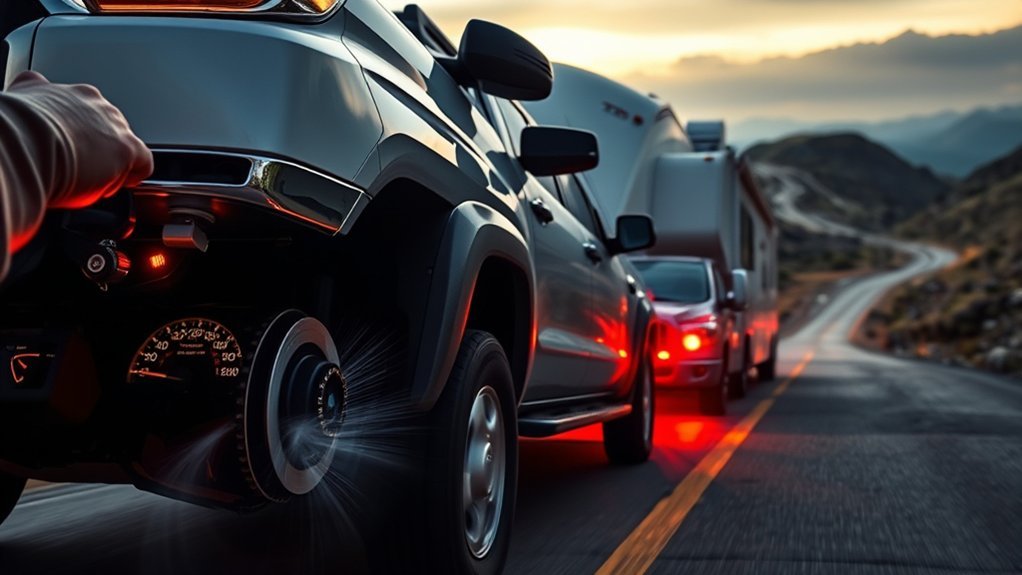
When you tow heavy with a Toyota Tundra, brake fade can turn a normal downhill drive into a safety problem fast. Fade usually means the pads, rotors, calipers, trailer brakes, or brake fluid are being pushed beyond their heat range. The right response is simple: slow down with the drivetrain, use short firm brake applications instead of riding the pedal, pull off safely, let the system cool, and do not keep towing if the pedal stays soft, the brake warning light is on, or the truck will not stop predictably.
Quick Answer
If your Toyota Tundra’s brakes fade while towing, downshift immediately, turn on hazards, stop riding the brake pedal, and use firm spaced braking while moving toward a safe turnout or escape ramp. Let the brakes cool completely. If the pedal is soft, sinking, leaking fluid, or warning lights remain, stop towing and get service.
Key Takeaways
- A firm pedal with poor slowing usually points to friction fade; a soft, sinking, or spongy pedal points to overheated or contaminated brake fluid.
- Use engine braking and firm, spaced brake applications on long grades. Do not ride the brakes downhill.
- Check your exact Tundra’s GCWR, GVWR, GAWR, trailer weight rating, payload, tongue weight, and trailer brake requirements before blaming the truck’s brakes.
- Trailer brake gain, wiring, grounds, breakaway battery, hitch setup, and weight distribution can affect Tundra brake temperatures as much as pad and rotor choice.
- Upgrades help only after the system is healthy and the load is legal. Start with correct fluid, good pads, clean hardware, working trailer brakes, and proper setup.
At a Glance
| Time Required | Immediate response: seconds to minutes; roadside cooling and checks: usually 30–60 minutes or longer if the pedal remains abnormal |
| Difficulty | Emergency response: beginner; brake diagnosis, bleeding, rotor/pad work, and trailer wiring: intermediate to professional |
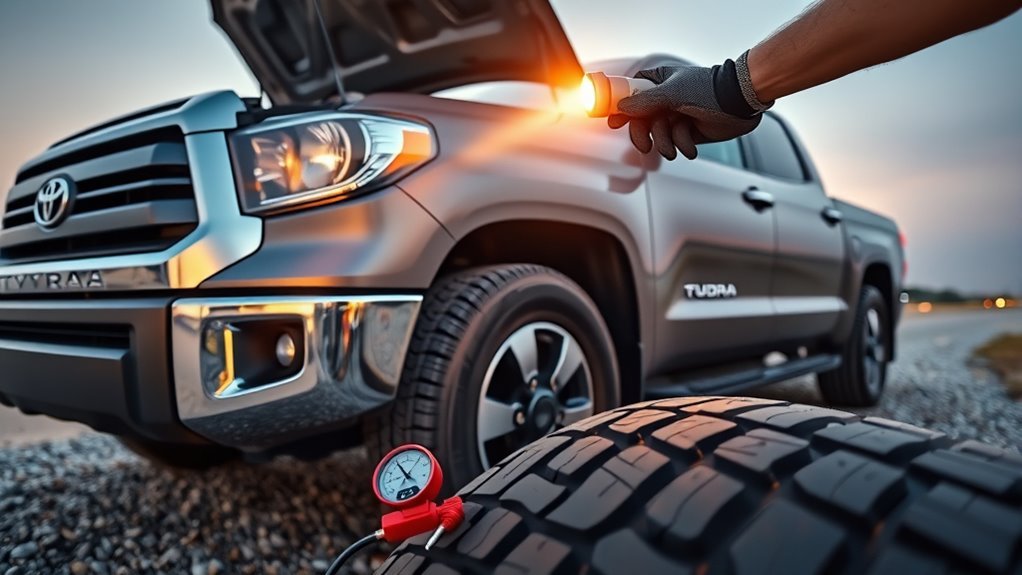
| Tools Needed | Flashlight, gloves, wheel chocks, tire pressure gauge, trailer brake controller instructions, owner’s manual, and service records |
| Cost | Driving technique and inspection are free; brake service, fluid flushes, trailer brake repairs, and towing-rated upgrades vary by parts and labor |
Warning: Do not keep towing if the brake pedal sinks, feels spongy after cooling, shows a brake warning light, leaks fluid, smells burnt repeatedly, or cannot slow the truck and trailer normally. Park safely, use wheel chocks if available, and arrange professional service or roadside help.
Emergency Steps If Your Tundra’s Brakes Fade
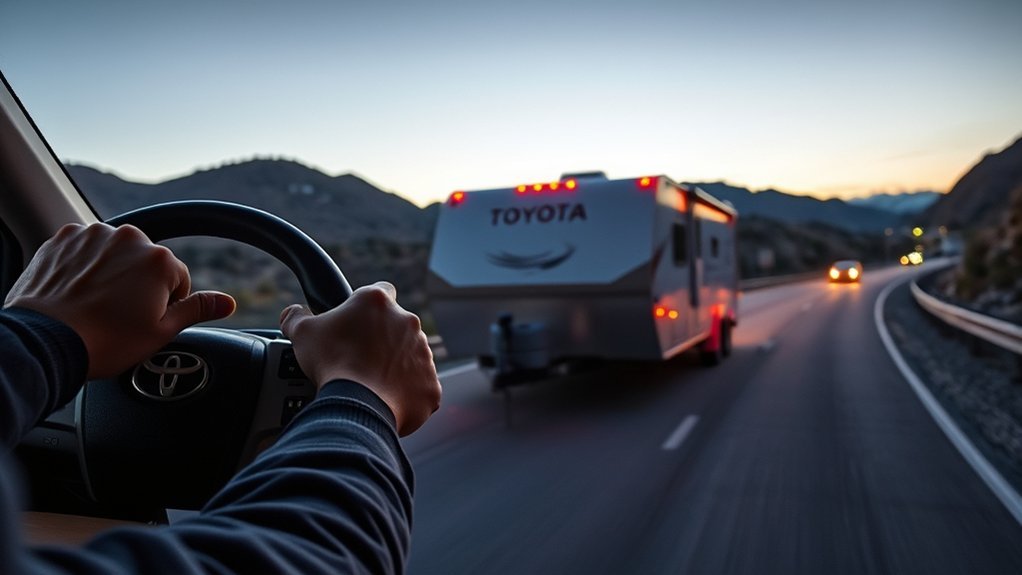
If your Tundra’s brakes start to fade while you’re towing, your goal is to reduce heat and keep the truck-trailer combination straight. Stay calm, look far ahead, and do not make abrupt steering inputs.
- Come off the throttle and downshift. Use Tow/Haul mode, manual shift mode, or a lower gear to let the engine help control speed. Do not shift to neutral and do not turn the engine off.
- Turn on hazard lights and create space. Signal early, increase following distance, and avoid sudden lane changes.
- Use firm, spaced brake applications. If you still have braking, slow the rig with a firm application, then release the pedal so the rotors and pads can shed heat. Constant light pressure builds heat and can make fade worse.
- Use the trailer brake manual control only if appropriate. If the trailer is stable and the trailer brakes are working, a careful manual trailer-brake input can help share the load. If the trailer starts to skid, sway, or lock up, release and regain control.
- Use a turnout, wide shoulder, rest area, or escape ramp. Choose the safest available place. A level area is best, but do not pass a safe escape option just to find a perfect spot.
- Let the brakes cool naturally. Once stopped, keep people away from traffic, do not touch the brakes, and do not pour water on hot rotors or drums. Rapid cooling can damage components.
- Inspect before moving again. Look for fluid leaks, smoke, burning odor, rotor discoloration, damaged lines, dragging trailer brakes, loose wiring, and warning lights. If the pedal remains soft or travel is longer than normal, do not resume towing.
Pro Tip: On a long downgrade, pick your safe speed before the hill. It is easier to enter a grade slowly in a lower gear than to recover after the brakes are already overheated.
How to Recognize Brake Fade vs. a Soft Boiled Pedal
Brake fade and brake-fluid boil can feel different, and the fix is not the same. Friction fade happens at the pad-and-rotor surface. Vapor lock happens in the hydraulic system when brake fluid gets hot enough to form compressible vapor bubbles. Brembo explains that fading comes from overheated pad friction material, while vapor lock occurs when brake fluid reaches its boiling point and forms bubbles in the hydraulic circuit.
| Indicator | Friction Brake Fade | Soft Pedal / Fluid Boil |
|---|---|---|
| Pedal feel | Pedal may still feel firm, but the truck does not slow as expected | Pedal feels soft, spongy, low, or sinks under steady pressure |
| Common smell | Burning or hot-brake odor from pads, rotors, or trailer brakes | May have little smell, or may follow severe overheating |
| Likely cause | Overheated pads, glazed rotors, dragging caliper, overloaded truck, or too much brake use downhill | Old or moisture-contaminated fluid, overheated calipers, low-quality fluid, or recent severe braking |
| Immediate response | Downshift, use spaced braking, stop safely, and let components cool | Stop towing, let the system cool, and have the fluid and hydraulic system inspected or flushed |
You can have both problems at the same time. A heavy trailer on a long grade can overheat the pads and transfer heat into the calipers and fluid. Treat any abnormal pedal as a serious warning.
Why Brake Fade Happens When Towing a Tundra
Towing adds mass. More mass means the braking system must convert more motion into heat every time you slow down. Long downhill grades add another problem: gravity keeps feeding speed into the truck and trailer, so the brakes may never get enough cooling time between applications.
Heat can cause several failures at once. Brake pads can lose friction, rotor surfaces can glaze, calipers can transfer heat into the fluid, and old moisture-laden fluid can boil. When fluid boils, vapor bubbles compress and the pedal can feel soft or sink. When friction fade dominates, the pedal may feel normal but the Tundra simply will not slow as hard as it should.
Trailer setup can make the truck brakes work harder than they should. Low trailer brake gain, corroded wiring, poor grounds, worn trailer brake linings, wrong tongue weight, missing sway control, or an overloaded trailer can push too much braking demand onto the Tundra.
Brake fade is not just a “bad pad” problem. It is usually a heat-management problem involving speed, load, grade, trailer brakes, fluid condition, and driving technique.
Confirm Your Tundra Is Within Towing Ratings First
Before buying brake upgrades, confirm the combination is legal and within Toyota’s limits for your exact model year, cab, drivetrain, engine, axle, tow package, and trailer type. Do not assume the advertised maximum tow rating applies to your truck.
- Check GCWR: the maximum combined weight of the truck, trailer, people, cargo, fuel, hitch equipment, and accessories.
- Check GVWR and payload: tongue weight, passengers, cargo, and accessories all count against payload.
- Check GAWR: do not overload the front or rear axle.
- Check TWR: the trailer weight rating for your exact configuration.
- Check tongue weight: Toyota’s 2025 Tundra towing information states conventional trailer tongue weight should be 9% to 11% of gross trailer weight.
- Check required equipment: Toyota’s 2025 Tundra towing information says trailer service brakes are required when gross trailer weight exceeds the unbraked trailer weight rating, sway control is required over 2,000 lb, and a weight-distributing hitch is required over 5,000 lb.
Use your owner’s manual, driver-door certification label, tire/loading placard, hitch label, trailer VIN plate, and scale weights. If any rating is exceeded, brake upgrades are not the fix. Reduce weight, redistribute the load, or use a tow vehicle rated for the trailer.
Driving Techniques to Prevent Brake Fade on Long Trips
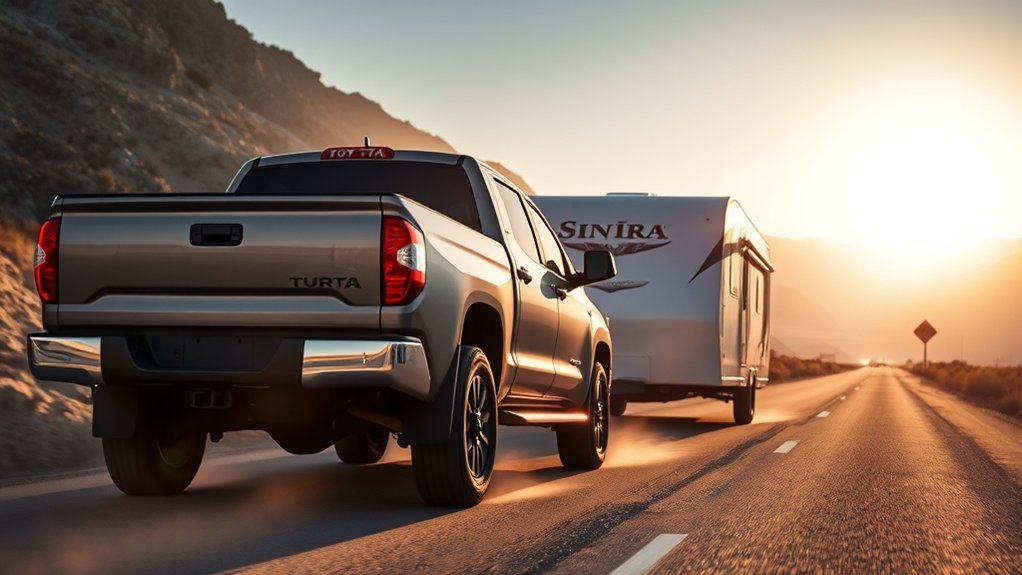
Use engine braking and measured, intermittent brake inputs to keep temperatures under control on long descents. The safest habit is to slow before the hill, choose a lower gear early, and let the drivetrain help hold speed.
- Downshift before the grade. Waiting until the truck is already running away makes the brakes work harder.
- Use Tow/Haul mode or manual gear selection. Follow your Tundra owner’s manual for the correct mode and gear range.
- Avoid constant light braking. Light pressure feels gentle, but it keeps the pads against the rotors and builds heat.
- Use firm, spaced applications. Slow the rig, release the pedal, let speed build slightly, then repeat as needed.
- Control speed early. Brake heat rises quickly when speed is high because the brakes must absorb much more energy.
- Increase following distance. A heavy trailer needs more space even when everything is working correctly.
- Stop before you smell trouble. A hot-brake odor, longer stopping distance, or pedal change is a reason to pull over and cool the system.
Note: Modern ABS is designed for hard emergency braking. In a panic stop, press firmly and steer. The firm-spaced technique above is for speed control on a downgrade when you still have time and space to manage heat.
Pre-Trip and In-Trip Brake Checks for Safe Towing
Good driving habits only work if the brake system and trailer are healthy. Do these checks before you hitch up and repeat quick checks during fuel, food, and rest stops.
[Products Worth Considering]
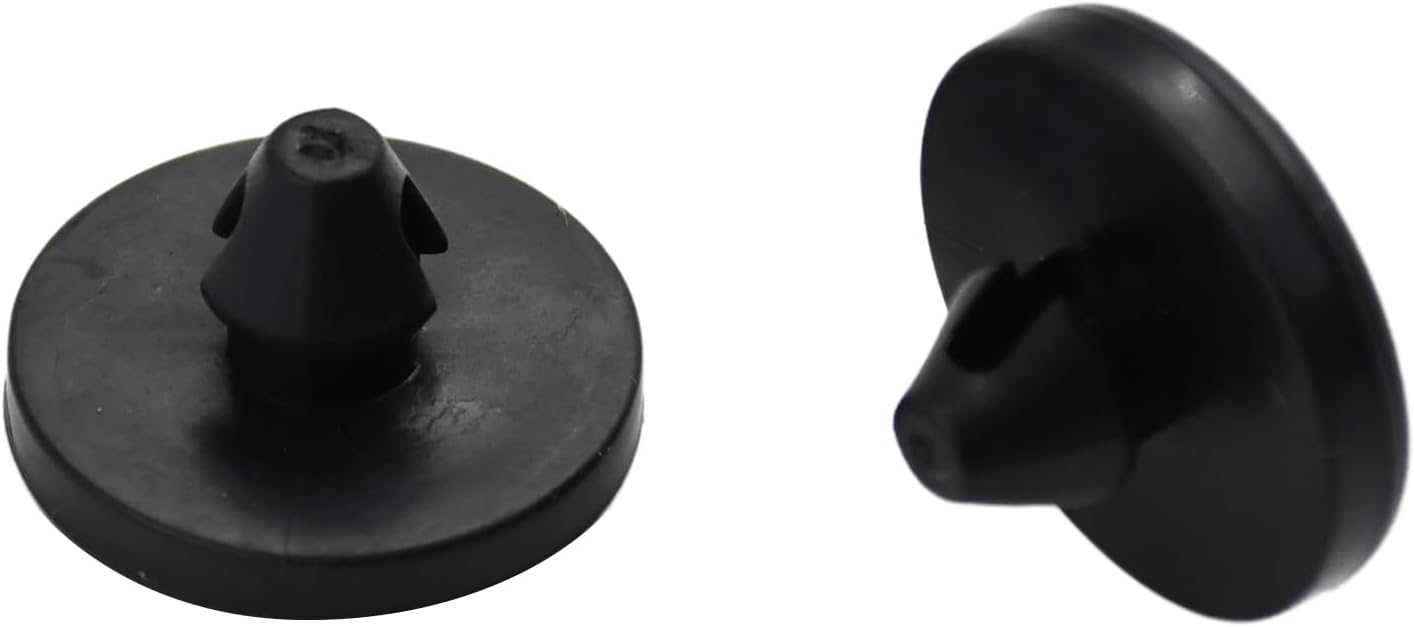
This brake switch stopper set helps restore proper brake pedal and brake light switch operation on a wide range of Toyota, Lexus, and Scion vehicles. Designed as a direct replacement part, it supports reliable pedal contact and can help fix worn or missing stoppers that affect brake light function. The package includes two stoppers for convenient replacement or spare use.
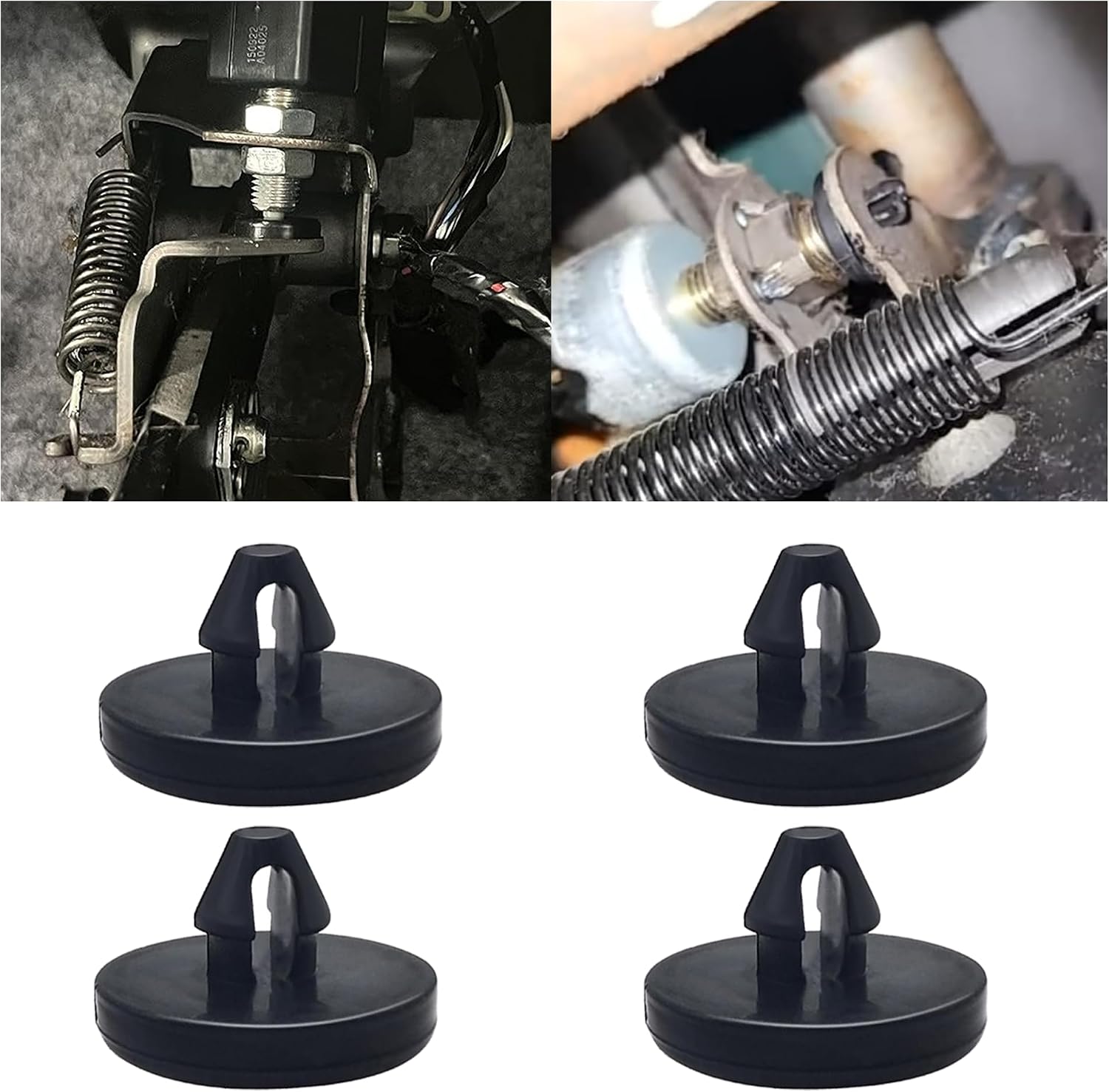
This brake pedal stop pad set is designed as an OEM replacement for compatible Toyota, Lexus, and Scion models, helping restore proper brake light switch function when the brake light stays on. Made from durable nylon, these compact stoppers are built for reliable long-term use and quick, tool-free installation. The set includes multiple pieces for convenient replacement and sharing.

This Toyota hitch cover helps protect your trailer hitch receiver from dirt and debris while adding a clean factory-style look to your vehicle's rear end. Designed for easy use, it offers a simple way to finish off your towing setup when the hitch is not in use. Its lightweight design makes it convenient to handle and install.
Before You Leave
- Inspect Tundra pads and rotors. Look for thin pads, grooves, cracks, blue/purple heat spots, uneven wear, or vibration during normal braking.
- Check brake fluid level and condition. Toyota’s 2025 Tundra owner information lists FMVSS No. 116 DOT 3 or DOT 4 brake fluid and warns that moisture can cause dangerous loss of braking efficiency.
- Look for leaks. Check calipers, flexible hoses, hard lines, master cylinder area, and the inside of wheels.
- Confirm trailer brakes work. Test electric or electric-over-hydraulic brakes at low speed in a safe, traffic-free area.
- Set trailer brake gain for this load. Gain should change when trailer load, road conditions, or weather change. Start low, test at low speed, and adjust until the trailer brakes help without locking.
- Check breakaway system. Confirm the battery is charged, the switch is secure, and the cable is attached independently from the safety chains.
- Check tire pressure and load rating. Underinflated truck or trailer tires add heat and instability.
During the Trip
- Watch pedal feel. A pedal that changes during a trip is a warning sign.
- Smell for hot brakes. Burning odor after a grade means you need a cooling stop and inspection.
- Feel for pull, vibration, or shudder. These can point to overheated rotors, sticking calipers, uneven trailer braking, or warped/drum issues.
- Do not touch hot parts. Use caution near wheels, hubs, rotors, and trailer drums. They can burn skin.
- Recheck the 7-pin connector. A loose, dirty, or corroded connector can reduce trailer brake output.
What to Inspect After Brake Fade
After the brakes cool, a visual check can tell you whether the trip should continue. This is not a substitute for professional diagnosis, but it can help you decide whether the rig is safe to move.
| Part | What to Look For | What It Means |
|---|---|---|
| Brake fluid | Low level, dark color, leaks, soft pedal | Possible leak, old fluid, air, or boiling; stop towing until inspected |
| Pads | Thin friction material, crumbling, glazing, uneven wear | Worn or overheated pads; replace with towing-rated parts if needed |
| Rotors | Blue spots, cracks, deep scoring, heavy vibration | Heat damage or runout; professional measurement needed |
| Calipers and hoses | One wheel much hotter, dragging smell, cracked hose, wet fitting | Possible sticking caliper, collapsed hose, or hydraulic leak |
| Trailer brakes | Weak braking, locked wheel, hot drum/hub, uneven response | Bad adjustment, worn linings, wiring fault, bearing issue, or wrong gain |
| Wiring | Corroded 7-pin, loose ground, damaged brake wire | Trailer brakes may not be sharing stopping load |
Best Brake Upgrades for Heavy Tundra Towing: Pads, Rotors, and Fluid
The best upgrade is a healthy, correctly set up system. Do maintenance first, then upgrade parts that are matched to towing heat and your exact Tundra model year.
- Brake fluid: Use the fluid grade listed for your model year. For the 2025 Tundra, Toyota lists FMVSS No. 116 DOT 3 or DOT 4. Choose a quality fluid that meets the correct spec and has strong wet boiling-point performance. Do not use DOT 5 silicone fluid. Do not use DOT 5.1 unless your exact Toyota documentation or a qualified technician confirms compatibility.
- Pads: Choose severe-duty, truck-and-tow, or towing-rated pads from a reputable manufacturer. The goal is stable friction at higher temperatures, not just aggressive cold bite.
- Rotors: Quality vented rotors with proper metallurgy and thickness matter. Slotted rotors can help evacuate gases and debris, but drilled rotors are not automatically best for heavy towing. Use rotors specifically rated for truck towing duty.
- Calipers and hardware: Replace sticking calipers, seized slide pins, worn clips, and old rubber hoses before blaming pad material.
- Trailer brake upgrades: If the trailer brakes are weak, out of adjustment, or under-sized, upgrading only the Tundra brakes will not solve the heat problem.
If you tow near the upper end of your Tundra’s rating, consider a professional brake inspection before mountain trips. Ask the shop to check pad thickness, rotor condition, caliper operation, fluid condition, trailer brake output, and controller gain with the trailer attached.
[Products Worth Considering]

Bosch QuietCast premium ceramic rear brake pads are engineered for quiet, reliable stopping power with low dust performance. Featuring pre-attached multilayer shims, corrosion-resistant backing plates, and OE-style slots and chamfers, this set is designed for smooth fitment and long-lasting durability. It includes pads for one axle, plus hardware and lubricant where available, making installation easier for compatible Lexus, Pontiac, and Toyota vehicles.
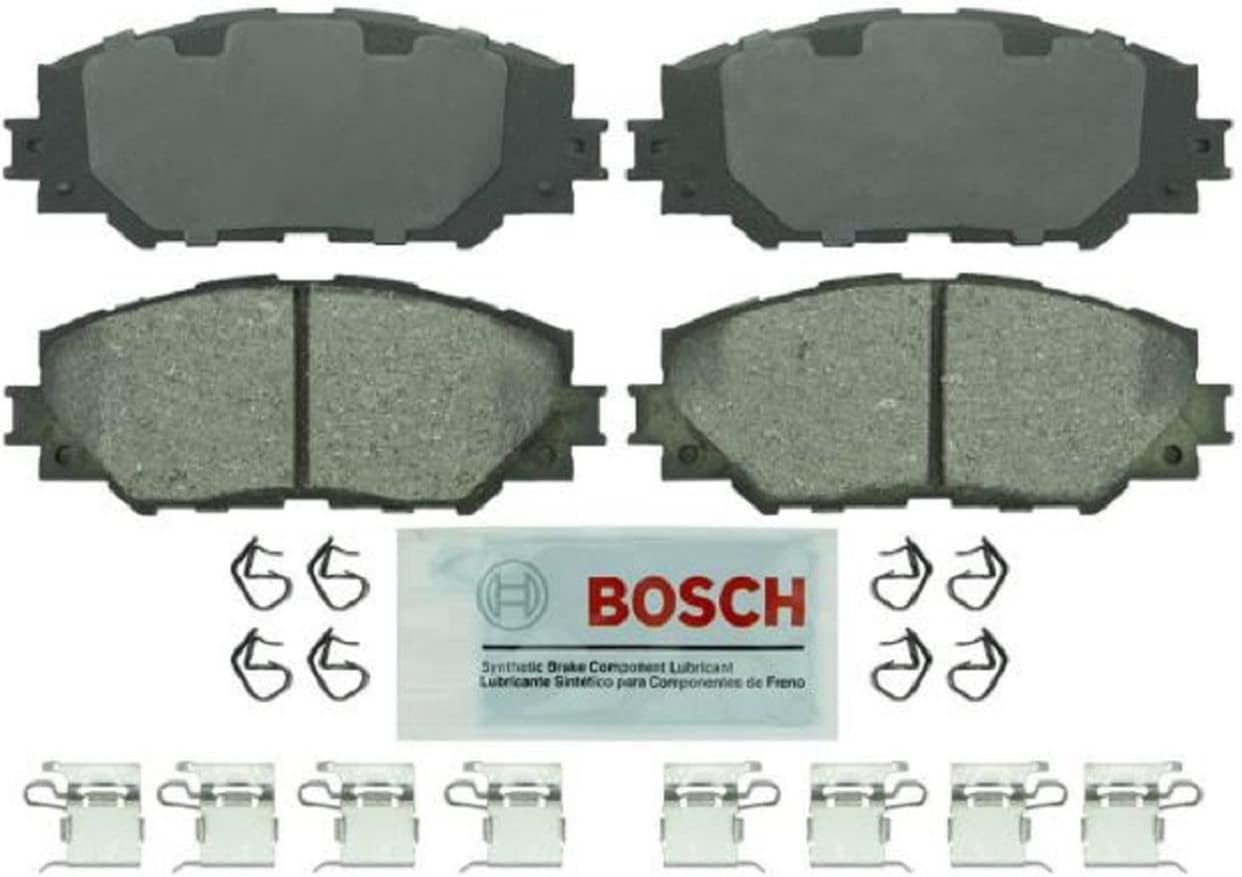
Bosch Blue ceramic front brake pads deliver dependable stopping power with platform-specific friction material designed for select Lexus, Pontiac, Scion, and Toyota vehicles. OE-style shims, slots, and chamfers help promote quiet braking, while the rust-inhibitive coating supports long-lasting performance and cleaner operation. The set includes hardware and synthetic lubricant for easier installation on one axle.

This custom-fit 4-pin trailer wiring harness adds reliable towing light connectivity for compatible Toyota RAV4 and RAV4 Prime models, with plug-and-play installation into the vehicle's rear wiring. It powers trailer tail lights, brake lights, and turn signals, while the included dust cover helps protect the connector when not in use. Built with durable bonded wire and corrosion-resistant terminals, it is designed for dependable performance on everyday towing setups.
Trailer, Hitch, and Wiring Checks That Affect Tundra Braking
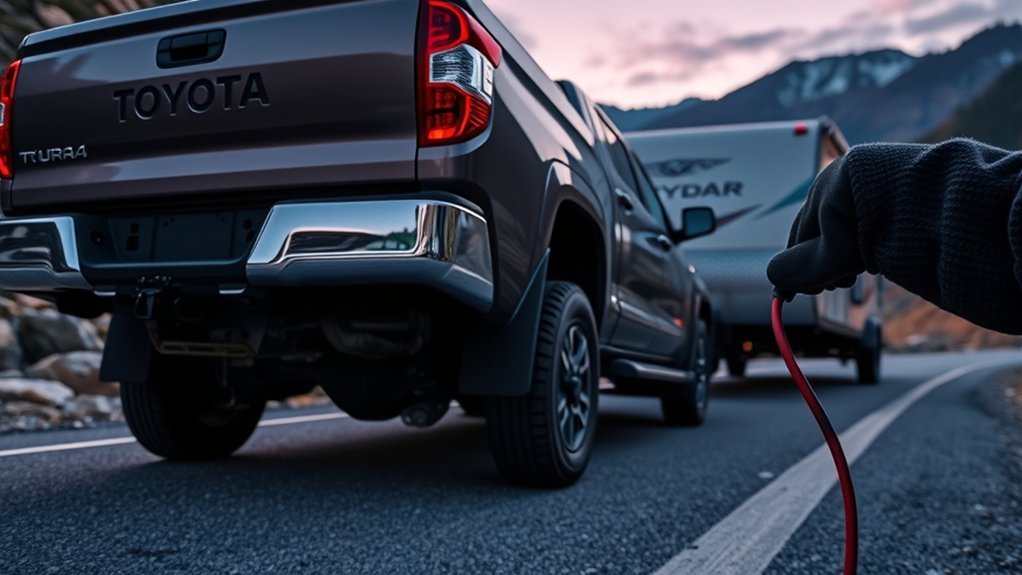
Trailer setup directly changes load transfer and brake demand. A properly loaded trailer with working brakes can reduce stress on the Tundra. A poorly loaded trailer or weak brake circuit can make the truck do too much of the work.
- Hitch and coupler: Verify correct ball size, coupler latch engagement, safety pin, receiver rating, hitch rating, and mounting hardware condition.
- Safety chains: Cross chains under the tongue and leave enough slack for turns without dragging.
- Breakaway cable: Attach it to the tow vehicle independently from the chains so it can activate if the trailer separates.
- Weight distribution: Use a properly rated weight-distributing hitch when required. Follow the hitch maker’s setup steps and Toyota’s towing requirements.
- Sway control: Use sway control when required and when trailer behavior calls for it. Sway adds steering corrections and can increase brake demand.
- 7-pin connector: Clean corrosion, confirm tight fit, and inspect the brake output pin and ground circuit.
- Trailer brake linings and adjusters: Worn or misadjusted trailer brakes force the Tundra brakes to absorb more heat.
- Brake gain: Recheck gain when trailer weight, road surface, tire condition, or weather changes.
[Products Worth Considering]

This windshield sun shade umbrella is designed for Toyota Tundra models from 2007 to 2026, helping block harsh sunlight and reduce interior heat buildup. Its reflective cooling coating and high-density fabric work together to protect dashboards, seats, and trim while keeping the cabin more comfortable. The umbrella-style design installs quickly, folds down easily, and stores neatly for everyday convenience.

Bendix Premium Ceramic Front Brake Pads are engineered to match original equipment fit, form, and function for a straightforward replacement. Built with durable materials to help resist wear and corrosion, they support consistent braking performance and reduced brake fade for everyday driving. These pads are a dependable choice for compatible Pontiac, Scion, Toyota, and related vehicles.

This AstroAI digital tire pressure gauge delivers factory-calibrated readings with dependable ±1 PSI accuracy, helping you keep cars, trucks, motorcycles, and spare tires at the right pressure. Its bright backlit LCD and illuminated nozzle make nighttime checks easy, while the one-button unit switch and auto-off design add convenience and battery efficiency for routine maintenance.
How to Document a Brake-Failure Incident for Your Dealer
If you experience brake fade, vapor lock, or suspected brake failure while towing, document the incident as soon as you are safe. Clear details help the dealer, repair shop, warranty administrator, or safety agency understand what happened.
- Record vehicle details: VIN, model year, trim, mileage, tire size, brake parts installed, and recent brake service.
- Record trailer details: gross trailer weight, tongue weight if known, cargo load, axle count, brake type, brake controller gain, hitch type, sway control, and weight-distribution setup.
- Record conditions: road name, grade, speed, outside temperature, weather, traffic, length of descent, and how often you used the brakes.
- Describe symptoms: firm pedal with poor slowing, soft pedal, pedal sinking, brake smell, smoke, vibration, ABS activation, warning lights, trailer brake messages, or brake pull.
- Take photos and video: brake fluid reservoir, rotors, calipers, pads if visible, trailer connector, trailer brakes, dash warnings, and hitch setup.
- Save evidence: service records, parts receipts, dealer invoices, scale tickets, campground or trip receipts, and any roadside-assistance documentation.
- Ask for written findings: request measured pad thickness, rotor measurements, fluid condition, diagnostic trouble codes, trailer brake output findings, and the technician’s conclusion.
If the dealer finds a safety-related defect, keep copies of everything. In the United States, you can also file a vehicle safety complaint with the National Highway Traffic Safety Administration if you believe the issue is a defect, not normal wear, overload, or maintenance.
Frequently Asked Questions
What is the main cause of Toyota Tundra brake fade when towing?
The main cause is excessive heat. Heavy trailer weight, long downhill grades, too much constant braking, weak trailer brakes, wrong brake gain, old fluid, and overloaded ratings can all raise brake temperature until pads, rotors, or fluid stop performing normally.
How do I know if it is brake fade or boiled brake fluid?
A firm pedal with poor slowing usually points to friction fade at the pad and rotor. A soft, spongy, low, or sinking pedal points to overheated or moisture-contaminated brake fluid. Both require cooling and inspection before you continue towing.
Can I pour water on hot Tundra brakes to cool them faster?
No. Let the brakes cool naturally. Pouring water on hot rotors, drums, or calipers can cause thermal shock, warping, cracking, or other damage. Park safely, keep people away from traffic, and wait until the system cools.
Can I use DOT 4 brake fluid in a Toyota Tundra?
For the 2025 Tundra, Toyota owner information lists FMVSS No. 116 DOT 3 or DOT 4 brake fluid. Always check your exact model-year manual and reservoir cap. Do not use DOT 5 silicone fluid, and do not use DOT 5.1 unless your exact Toyota documentation or a qualified technician approves it.
Are drilled and slotted rotors the best upgrade for towing?
Not always. Towing needs heat capacity, proper metallurgy, correct fitment, and stable pad friction. Some slotted rotors and towing-rated pads can help, but drilled rotors are not automatically better for heavy loads. Choose parts rated for truck towing and inspect the trailer brakes first.
What trailer brake gain should I use with a Tundra?
There is no single gain number for every trailer. Set gain for the current trailer load, road surface, and weather. Test at low speed in a safe, traffic-free area and adjust until the trailer brakes contribute strongly without locking or jerking.
Can I keep driving after the brakes cool down?
Only if pedal feel returns to normal, there are no warning lights, no leaks, no smoke, no severe vibration, and the truck and trailer stop normally during a cautious low-speed test. If the pedal remains soft or braking still feels weak, stop towing and get professional help.
Should I report brake fade to the dealer?
Yes, if the fade was severe, repeated, involved warning lights, caused a near-crash, or happened while the truck and trailer were within ratings. Bring documentation: VIN, mileage, trailer weight, grade, weather, symptoms, photos, service records, and any trailer brake controller information.
Conclusion
Tundra brake fade while towing is a heat-management problem, not something to ignore or “drive through.” Downshift early, use firm spaced braking, keep speed under control, and pull off before the pedal changes. For prevention, verify the truck and trailer are within Toyota’s ratings, set trailer brake gain correctly, keep the fluid fresh, inspect pads and rotors, and use towing-rated parts when upgrades are justified. If the pedal stays soft, the truck will not slow normally, or warning lights appear, stop towing and have the full truck-and-trailer brake system inspected.
Sources
- Toyota Owners — 2025 Tundra Trailer Towing — towing limits, trailer brake, sway control, weight-distributing hitch, and tongue-weight guidance
- Toyota Owners — 2025 Tundra Engine Compartment — Toyota-listed DOT 3/DOT 4 brake-fluid specification and moisture warning
- Toyota Owners — 2025 Tundra Trailer Brake Controller — trailer brake controller compatibility and safe low-speed testing guidance
- 49 CFR § 571.116 — Motor Vehicle Brake Fluids — FMVSS 116 brake-fluid performance and labeling requirements
- Safe Trailering Driver Education Program — trailer loading, tongue weight, stability, and trailering safety fundamentals
- Brembo — Brake Fading and Vapour Lock — symptoms and differences between friction fade and brake-fluid vapor lock