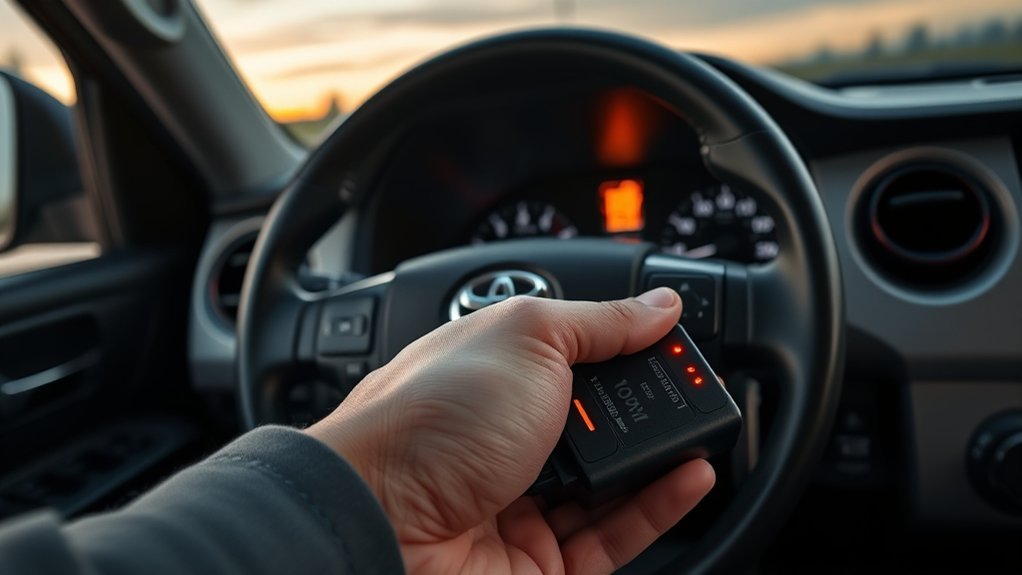
A Toyota Tundra check engine light is not something to “delete” first and diagnose later. The safest way to clear it is to read the OBD-II trouble codes, record the data, fix the cause, and then erase the codes with a scanner. A battery reset can turn the light off in some cases, but it can also erase useful diagnostic data and reset emissions readiness monitors.
Quick Answer
To clear a Toyota Tundra check engine light, plug an OBD-II scanner into the under-dash diagnostic port, read and save all stored, pending, and permanent codes, repair the cause, then use the scanner’s erase function. Do not clear codes before diagnosis, and confirm readiness monitors afterward.
Key Takeaways
- A scanner reset is the best method because it lets you read the codes before clearing them.
- A loose or damaged fuel cap is worth checking first, but it is not the only common cause.
- Battery disconnects can reset readiness monitors and may not clear permanent diagnostic trouble codes.
- A flashing check engine light, rough running, fuel smell, overheating, or power loss means you should stop driving and get professional help.
- Before an emissions test, use a scanner to confirm the light is off, no codes are stored, and readiness monitors are complete.
At a Glance
| Time Required | 10–30 minutes to scan and clear codes; several trips may be needed to reset readiness monitors |
| Difficulty | Easy for scanning; moderate if diagnosis or repairs are needed |
| Tools Needed | OBD-II scanner or trusted Bluetooth OBD-II adapter and app; 10 mm wrench only if disconnecting the 12-volt battery |
| Cost | Free parts-store code read to about $25–$150 for a DIY scanner; professional diagnostics often run about $100–$250 depending on shop and location |
Before You Reset the Light, Check How Serious It Is
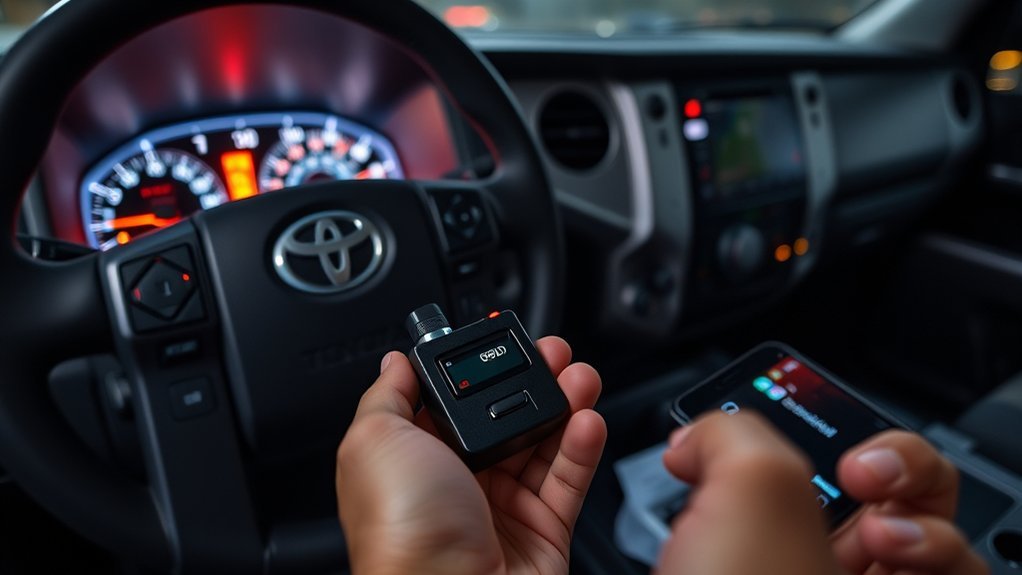
First, look at how the light behaves. A steady check engine light usually means the truck has detected an emissions, fuel, ignition, or sensor fault that needs diagnosis. A flashing check engine light is more urgent, especially if the Tundra shakes, misfires, smells like fuel, loses power, overheats, or makes unusual noises.
Warning: Do not keep driving hard with a flashing check engine light. A misfire can overheat and damage the catalytic converter. Reduce speed, avoid towing or heavy throttle, and have the truck diagnosed as soon as possible.
Toyota’s owner information explains that the Tundra’s OBD system monitors the emission control system, and if the malfunction indicator lamp comes on, the vehicle may not pass an inspection and may need service. You can review Toyota’s owner guidance on emission inspection and maintenance programs.
Best Method: Read and Clear Codes With an OBD-II Scanner
An OBD-II scanner is the cleanest way to clear a Toyota Tundra check engine light because it shows what the truck is reporting before you erase anything. Use this order:
- Park safely and turn the truck off. Set the parking brake. If the truck is running poorly, do not continue driving just to finish a reset.
- Find the OBD-II port. On most Tundras, the diagnostic port is under the driver-side dashboard near the steering column or knee panel.
- Plug in the scanner. Turn the ignition or power switch to ON without starting the engine unless your scanner tells you otherwise.
- Read every code. Save stored codes, pending codes, permanent codes, and freeze-frame data. Take a photo of the scanner screen if needed.
- Look up the codes. The code points to a system, not always the failed part. For example, a lean code could come from a vacuum leak, dirty MAF sensor, low fuel pressure, or exhaust leak.
- Fix the cause first. Tighten the fuel cap, repair wiring, replace failed parts, clean or test sensors, or have a shop diagnose the fault.
- Clear the codes. After the repair, use the scanner’s “Erase,” “Clear DTCs,” or “Reset MIL” function.
- Confirm the repair. Restart the truck, drive normally, and re-scan. The light should stay off and no active codes should return.
Pro Tip: Do not clear the codes before a warranty visit or paid diagnostic appointment. The stored codes and freeze-frame data help the technician prove what happened and when it happened.
[Products Worth Considering]

The FOXWELL NT301 is a plug-and-play OBD2 code reader designed to help drivers and home mechanics diagnose check engine light issues with ease. It reads fault codes, clears emissions-related warnings, displays live sensor data in graph form, and shows I/M readiness so you can quickly check vehicle status before an emissions test. With broad compatibility across many OBD2 vehicles and a clear color screen, it offers a practical, user-friendly way to monitor and troubleshoot engine performance.

This replacement gas cap is designed to restore a tight fuel-tank seal, helping reduce vapor leaks, prevent check engine light issues, and maintain proper fuel system performance. Built in OE-style form for a wide range of Toyota and Lexus vehicles, it offers a direct DIY fix with durable materials for reliable, long-lasting use.

This replacement gas cap is designed for a wide range of Toyota and Lexus models, offering a direct-fit solution for restoring a proper seal at the fuel tank. It helps address check engine light issues related to the fuel cap while providing easy installation and dependable performance. Built from durable materials and rigorously tested before shipping, it is a practical replacement for worn or damaged fuel caps.
Common Tundra Check Engine Codes and What to Check First
The exact cause depends on the year, engine, mileage, recent repairs, and symptoms. Still, these are common OBD-II code families Tundra owners may run into:
| Code or Code Family | What It Usually Points To | First Checks |
|---|---|---|
| P0440, P0442, P0455, P0456 | EVAP leak or evaporative emissions fault | Fuel cap, cracked hoses, purge valve, vent valve, fuel-filler neck |
| P0171, P0174 | System too lean | Vacuum leaks, dirty MAF sensor, intake boot, fuel pressure, exhaust leaks |
| P0300, P0301–P0308 | Random or cylinder-specific misfire | Spark plugs, coils, injector, compression, wiring |
| P0420, P0430 | Catalyst efficiency below threshold | Exhaust leaks, oxygen/A/F sensors, misfires, catalytic converter condition |
| P0130–P0167 | Oxygen sensor or air-fuel ratio sensor circuit issue | Sensor wiring, exhaust leaks, sensor heater circuit, connector corrosion |
| P0101–P0103 | Mass airflow sensor range or circuit fault | MAF sensor contamination, intake leaks, air filter box sealing, wiring |
Do not replace a part just because a code names it. A P0420 code, for example, does not automatically mean the catalytic converter is bad. A misfire, exhaust leak, or sensor fault can trigger a catalyst-efficiency code too.
[Products Worth Considering]

This OEM replacement fuel tank gas cap is designed for a wide range of Toyota, Lexus, and Scion vehicles, helping restore a proper seal for reliable everyday driving. It helps reduce fuel vapor leakage, may prevent check engine light issues caused by a faulty cap, and offers durable construction for long-lasting performance. Installation is simple with a direct-fit design that twists into place quickly.

This plug-and-play OBD2 scanner helps drivers quickly read and clear engine error codes while providing live data, freeze frame information, I/M readiness, and MIL status for more confident troubleshooting. It adds a built-in voltage test and clear status indicators to support electrical checks and faster diagnostics, making it a practical choice for home users, car enthusiasts, and repair professionals. Compatible with most OBDII vehicles since 1996 and designed with an easy-to-use interface, it offers broad coverage and simple operation in one compact tool.

This enhanced OBD2 scanner helps drivers quickly diagnose check engine light issues, read and clear trouble codes, and check emissions readiness before a smog test. It also adds EVAP and O2 sensor testing, live data, freeze frame capture, and a one-click battery health check in a simple plug-and-play tool with a bright color screen.
Fast DIY Checks Before Clearing the Light
Before paying for diagnostics, check the simple items that can trigger a Toyota Tundra check engine light:
- Fuel cap: Toyota says to close the Tundra fuel cap until you hear a click. See Toyota’s fuel tank cap instructions. If the cap seal is cracked, hardened, missing, or aftermarket and loose-fitting, replace it with a proper cap.
- Recent refueling: If the light came on soon after getting fuel, inspect the cap first. Do not top off the tank after the pump clicks off.
- Loose intake parts: Check that the air filter box, intake tube, and clamps are seated correctly, especially after an air-filter change.
- Battery voltage: A weak 12-volt battery can create odd electrical symptoms. Test it if the truck has been slow to crank or recently sat unused.
- Obvious wiring damage: Look for chewed wires, loose connectors, or sensor plugs left disconnected after maintenance.
Note: A free code read from a parts store is a helpful starting point, not a full diagnosis. AutoZone’s Fix Finder can read codes for free, but a repair shop can perform deeper tests such as smoke testing, live-data analysis, electrical checks, and component testing.
Should You Disconnect the Battery to Reset a Tundra Check Engine Light?
A battery disconnect can turn off the check engine light temporarily on some Tundras, but it is not the best first choice. It can erase adaptive memory, reset radio or window settings on some vehicles, and make emissions readiness monitors show “not ready.” It also may not clear permanent diagnostic trouble codes.
Use a battery reset only after you have recorded the codes and fixed the cause, or when you do not have scanner access and understand the trade-off. If you decide to do it:
- Turn the truck off and remove the key or keep the smart key away from the vehicle.
- Open the hood and locate the 12-volt battery.
- Loosen the negative battery terminal with the correct wrench, usually 10 mm.
- Move the negative cable away from the battery post so it cannot spring back and touch.
- Wait about 10–15 minutes.
- Reconnect the negative terminal firmly.
- Start the truck and let it idle normally, then drive gently while the systems relearn.
Warning: On Tundra Hybrid models, do not touch orange high-voltage cables or hybrid components. A basic 12-volt battery disconnect is different from hybrid-system service. If you are unsure, stop and use a qualified technician.
Why the Light May Return After You Clear It
If the check engine light comes back immediately, the fault is still active. If it returns after one or more trips, the truck’s computer reran a self-test and detected the same problem again. That usually means the root cause was not fixed.
Common reasons the light returns include:
- The original repair did not fix the actual cause.
- A connector was left loose after the repair.
- A related problem exists in the same system.
- The code was cleared before the monitor finished testing.
- A permanent DTC remains until the OBD system verifies the repair.
The California Bureau of Automotive Repair explains that readiness monitors are self-tests used to verify emission-control functionality and that monitor completion depends on specific operating conditions. It also notes that permanent DTCs cannot be erased with a scanner or battery disconnect; the OBD II system clears them only after it verifies the fault is no longer present. You can review the BAR On-Board Diagnostic Test Reference for the inspection-focused details.
Verify the Fix: Drive Cycles, Readiness Monitors, and When the Light Returns
After clearing codes, the Tundra needs time to rerun its emissions self-tests. These tests are called readiness monitors. Some complete quickly during normal driving. Others may require a cold start, steady cruising, stop-and-go driving, certain fuel levels, or specific temperature conditions.
| Task | Target | Purpose |
|---|---|---|
| Drive normally | Several mixed city/highway trips | Allows OBD self-tests to run |
| Check readiness | Applicable monitors show “ready” or “complete” | Confirms emissions systems have been tested |
| Re-scan codes | No active stored or pending codes | Verifies the fault has not returned |
| Check permanent DTCs | No permanent codes after OBD verification | Helps avoid inspection surprises on newer vehicles |
If you need an emissions test soon, do not clear the codes in the inspection line. Clearing codes can make monitors “not ready,” which can cause a rejection or failure depending on your state’s rules. Drive the truck through normal operating conditions and scan it again before the test.
Clearing a check engine light is only the last step. The real fix is confirmed when the code does not return and the readiness monitors complete.
When to See a Mechanic for Your Tundra Check Engine Light: Typical Costs and Options
See a mechanic if the light is flashing, the truck runs rough, the same code returns, the repair requires smoke testing or electrical testing, or you see codes related to misfires, catalytic converter efficiency, fuel trim, transmission, hybrid systems, or communication faults.
A parts-store scan may be free, but it usually only identifies the code and possible causes. A professional diagnostic visit costs more because the technician tests the system before replacing parts. Kelley Blue Book’s Toyota check engine light cost guide lists a national diagnostic average around the low-to-mid $100s to low $200s, while actual prices vary by market, dealer, and repair complexity.
- Free or low-cost option: Get the codes read, save the printout, and research the code family.
- Independent shop: Good for most diagnostics, smoke tests, sensor testing, EVAP leaks, and misfires.
- Toyota dealer: Best when the Tundra is under warranty, has software updates, has hybrid-system faults, or needs Toyota-specific service information.
- Before approving repairs: Ask what tests confirmed the failed part, whether any codes are pending or permanent, and whether readiness monitors will need more drive time.
If your Tundra is still under warranty, avoid erasing codes right before the appointment. Clearing codes does not automatically void a warranty, but it can make a covered problem harder to document. Keep repair invoices, scanner reports, and photos of the codes. For general warranty-law background, see the FTC’s Magnuson-Moss Warranty Act information.
[Products Worth Considering]

This replacement gas cap is designed to fit a wide range of Toyota and Lexus models, helping restore a secure seal for the fuel tank. It is built as a direct replacement for easy installation and reliable everyday use, with compatibility verified by part number to help ensure the right fit. Backed by warranty support and customer service, it is a practical solution for replacing a worn, cracked, or failing fuel cap.

FOXWELL NT201 is an easy-to-use OBD2 scanner designed to help drivers quickly read and clear check engine codes, view live engine data, and check emissions readiness. Its color screen, one-key I/M readiness test, and broad compatibility with most gasoline vehicles since 1996 make it a practical tool for everyday diagnostics and maintenance. With plug-and-play operation and lifetime free updates, it offers a simple way to understand vehicle issues without expensive shop visits.

The ANCEL AD410 PRO combines engine diagnostics and 12V battery testing in one easy-to-use tool, helping you read and clear check engine codes while checking battery health, cranking, and charging performance. It also provides live data, freeze frame details, and I/M readiness checks to help you diagnose issues faster and prepare for emissions testing. With plug-and-play operation, a clear screen, and broad vehicle compatibility, it is a practical solution for home mechanics and everyday drivers.
Frequently Asked Questions
Can a smartphone OBD-II adapter clear codes reliably?
Yes, a good Bluetooth OBD-II adapter and a trusted app can read and clear many standard check engine light codes. Avoid very cheap adapters with poor app support, and make sure the app can show stored, pending, permanent, and readiness-monitor data. Do not clear codes until you record them.
Will clearing codes affect my vehicle warranty?
Clearing codes does not automatically void a Toyota warranty, but it can remove diagnostic evidence that helps prove when a problem happened. If the truck is under warranty or you plan to visit the dealer, save the codes and freeze-frame data before clearing anything.
Can an emissions test fail after I clear the light?
Yes. After codes are cleared or the battery is disconnected, readiness monitors may show “not ready.” Some newer vehicles may also keep permanent DTCs until the OBD system confirms the repair. Scan the truck before testing to confirm the light is off, monitors are ready, and no codes are active.
Does a check engine light reset after replacing a catalytic converter?
It may reset after the code is cleared and the Tundra completes the needed catalyst monitor tests, but do not assume the converter was the only issue. Misfires, exhaust leaks, oxygen sensors, or fuel-trim problems can trigger catalyst-efficiency codes and damage a new converter if not fixed.
Can repeated battery disconnects harm my Tundra’s electronics?
A careful 12-volt battery disconnect is usually safe, but repeated resets are not a good troubleshooting strategy. They can erase useful diagnostic data, reset readiness monitors, and force systems to relearn. On hybrid models, never touch orange high-voltage wiring or hybrid components.
How long does it take for a Tundra check engine light to turn off after tightening the gas cap?
If the loose fuel cap was the only problem, the light may turn off after the truck runs its EVAP checks during normal driving. That can take more than one trip. If the light stays on, scan the codes because the EVAP leak may be from a hose, valve, seal, or other component.
Is it safe to drive a Toyota Tundra with the check engine light on?
If the light is steady and the truck drives normally, you can usually drive gently long enough to get the codes read. If the light flashes, the truck shakes, power drops, temperatures rise, or you smell fuel, stop driving and arrange service.
Conclusion
The best way to clear a Toyota Tundra check engine light is simple: scan first, save the codes, fix the cause, clear the codes with the scanner, and verify the repair with readiness monitors. Tightening the fuel cap is a smart first check, but do not rely on battery disconnects or unsupported key-cycle tricks as your main fix. If the light comes back, the truck is telling you the problem still needs diagnosis.
Sources
- Toyota Owners — Emission inspection and maintenance programs — supports the OBD/MIL and emissions-inspection guidance.
- Toyota Owners — Opening the fuel tank cap — supports fuel-cap tightening guidance.
- Toyota Owners — Warning lights and indicators — supports warning-light interpretation and inspection advice.
- California Bureau of Automotive Repair — On-Board Diagnostic Test Reference — supports readiness monitor and permanent DTC guidance.
- Federal Trade Commission — Magnuson-Moss Warranty Act — supports warranty-documentation guidance.
- Kelley Blue Book — Toyota check engine light prices and estimates — supports diagnostic-cost context.