
Use Tow/Haul whenever a trailer or heavy bed load changes how your Toyota Tundra accelerates, shifts, steers, or slows. On equipped U.S.- and Canada-market 2022-and-newer Tundras, Toyota recommends TOW HAUL for a loaded trailer under 5,000 lb (2,268 kg) and TOW+ for a loaded trailer over 5,000 lb. Toyota’s published wording does not expressly assign exactly 5,000 lb, so check the owner’s manual for the truck’s model year and market at that boundary. Earlier Tundras generally use one Tow/Haul setting. No towing mode increases the truck’s tow, payload, axle, hitch, or tire ratings.
By Ryker Calloway · Last updated: July 31, 2026 — the third-generation 5,000-lb mode split, switch sequence, mode availability, and towing-safety guidance were rechecked against Toyota and NHTSA materials.
Quick Answer
For an equipped 2022-and-newer Tundra, use TOW HAUL below 5,000 lb of loaded trailer weight and TOW+ above 5,000 lb. At exactly 5,000 lb, follow the manual tied to the truck because Toyota’s less-than/more-than wording does not expressly assign the boundary. Use the single Tow/Haul mode on an older equipped Tundra when a trailer or heavy load changes acceleration, shifting, or downhill control. Use S or sequential shift range separately on grades only as the exact manual directs.
Which weight controls the mode? The 5,000-lb division applies to the trailer’s actual loaded weight, not dry weight, tongue weight, truck payload, or combined truck-and-trailer weight. Fluids, batteries, propane, equipment, and cargo must be included.
Key Takeaways
- For equipped U.S.- and Canada-market 2022-and-newer trucks, use TOW HAUL below 5,000 lb of loaded trailer weight and TOW+ above 5,000 lb.
- At exactly 5,000 lb, check the exact model-year manual because Toyota’s published wording uses “less than” and “more than.”
- Many 2007–2021 Tow Package trucks have one selectable Tow/Haul mode rather than TOW HAUL and TOW+.
- Use S or sequential shift range only when your model-year manual supports it, and never select a range that causes lugging or excessive engine speed.
- Check loaded trailer weight, tongue weight, payload, axle ratings, hitch ratings, tire ratings, and trailer brakes before relying on any drive mode.
At a Glance
| Best For | Choosing the correct Toyota Tundra towing mode before driving |
| 2022+ Weight Rule | TOW HAUL below 5,000 lb of loaded trailer weight; TOW+ above 5,000 lb on equipped U.S./Canada trucks |
| Mode Availability | Older trucks may have one Tow/Haul mode; equipped 2022-and-newer trucks may offer TOW HAUL and TOW+ |
| Difficulty | Easy, but you must know the loaded trailer weight and the truck’s actual ratings |
| Tools Needed | Owner’s manual, door-jamb payload label, hitch label, trailer certification label, and a scale when load weight matters |
| Cost | Usually free, except for public-scale fees or repairs needed to make the towing setup safe |
What’s in This Article
- Should You Use Tow/Haul or Tow/Haul+?
- Which Tundra Model Years Have Tow/Haul+?
- How Do You Turn Tow/Haul On and Off?
- What Does Tow/Haul Change?
- When Should You Use Tow/Haul for Light Towing?
- When Should You Use Tow/Haul+ or S Range?
- Does Tow/Haul Affect Fuel Economy?
- When Should You Leave Tow/Haul Off?
- How Should You Tow on Hills, in Wind, and on Highways?
- How Do Modifications and Trailer Shape Affect Mode Choice?
- How Do You Troubleshoot Poor MPG or Harsh Shifts?
- Which Ratings Must You Check?
- Pre-Trip Checklist
- Frequently Asked Questions
Should You Use Tow/Haul or Tow/Haul+?
Start with the truck’s generation and actual equipment. On an equipped U.S.- or Canada-market 2022-and-newer Tundra, Toyota’s owner guidance recommends TOW HAUL for a loaded trailer weighing less than 5,000 lb (2,268 kg) and TOW+ for a loaded trailer weighing more than 5,000 lb. TOW+ is also described publicly as the more aggressive setting for larger trailers.
Toyota describes standard Tow/Haul as increasing throttle response for lighter to moderate needs, including small box trailers, utility trailers, and small boats. Toyota describes Tow/Haul+ as more aggressive for larger trailers such as RVs, larger box trailers, and larger boats.
Exactly 5,000 lb: Toyota’s U.S./Canada manual wording uses “less than 5,000 lb” for TOW HAUL and “more than 5,000 lb” for TOW+. It does not expressly assign exactly 5,000 lb. Check the exact model-year manual rather than inventing a universal answer for that boundary.
The 5,000-lb division refers to the trailer’s loaded weight. It does not refer to tongue weight, payload, GCWR, or the combined weight of the truck and trailer. Trailer shape still affects driving demand: a tall enclosed trailer or travel trailer can create more aerodynamic drag than a low flatbed at the same scale weight. Wind and grades can make the truck work harder, but they do not change the truck’s ratings or the manufacturer’s loaded-weight definition.
| Driving Situation | Recommended Starting Point |
| Equipped 2022+ Tundra with a loaded trailer under 5,000 lb | TOW HAUL |
| Equipped 2022+ Tundra with a loaded trailer over 5,000 lb | TOW+ |
| Loaded trailer exactly 5,000 lb | Check the exact model-year and market manual; Toyota’s published less-than/more-than wording does not assign the boundary |
| 2007–2021 Tow Package truck with one selectable towing mode | Use Tow/Haul for a trailer or heavy load as the exact manual directs |
| Long climb or steep descent | Select the correct towing mode by weight; use S or sequential range separately if the exact manual permits it |
| Empty truck on level roads | Normal mode |
Before driving, check loaded trailer weight, tongue weight, payload, axle loads, hitch rating, tire ratings, trailer brakes, and cargo security. A towing mode changes vehicle response; it cannot repair poor loading, weak brakes, worn tires, or an overloaded combination.
Which Tundra Model Years Have Tow/Haul+?
Mode availability changes by generation and equipment. First-generation trucks may use different controls or may not have Tow/Haul. Many 2007–2021 Tundras equipped with the Tow Package use one selectable Tow/Haul mode. Toyota introduced the available TOW HAUL and TOW+ modes with the redesigned 2022 Tundra.
| Model-Year Group | What to Verify |
| 2000–2006 | Check the exact manual and dashboard controls; do not assume later Tow/Haul behavior applies |
| 2007–2021 | Many Tow Package trucks use one Tow/Haul mode; verify whether the feature is installed |
| 2022 and newer | TOW HAUL and TOW+ may be equipped; U.S./Canada manuals use the under/over-5,000-lb trailer-weight split |
Trim and package availability also matter. In Toyota’s 2025 U.S. Tundra sourcebook, the TOW/HAUL Mode Select feature is not listed for the SR configurations shown in the initial equipment table but is standard on the SR5 configuration shown. Check the actual controls, window sticker, equipment list, and owner’s manual for your truck rather than assuming every 2022-and-newer Tundra has both modes.
Open the owner’s manual and look under the automatic-transmission or driving-procedures section. Toyota’s current Tundra materials also confirm that the 10-speed transmission uses sequential shift mode, uphill/downhill shift logic, and TOW/HAUL driving modes.
How this guide was checked: The revision compared Toyota’s third-generation 5,000-lb mode split, control sequence, indicators, mode-deactivation conditions, prior-generation shift strategy, current equipment information, and NHTSA towing-weight and trailer-control guidance. It is not a substitute for the manual tied to your truck’s model year, VIN configuration, and market.
Warning: Never use Tow/Haul, TOW+, or an S/sequential shift range to justify exceeding the truck’s tow rating, payload rating, axle ratings, tire ratings, hitch rating, or the trailer’s ratings.
How Do You Turn Tow/Haul On and Off?
On an equipped 2022-and-newer Tundra, Toyota describes this basic sequence:
- Start the truck and press the TOW HAUL switch.
- Confirm that the TOW HAUL indicator appears.
- Turn the mode-select switch to change between TOW HAUL and TOW+.
- Confirm the matching indicator before driving under load.
- Press the TOW HAUL switch again to cancel the selected towing mode.
The exact control location and display design vary by trim and model year. Select the mode while stopped or before entering traffic whenever practical so you are not searching for controls during a merge, climb, or descent.
Third-generation owner guidance also says TOW HAUL and TOW+ deactivate when the transfer-case control is in 4L or when Drive Mode Select or Multi-Terrain Select is selected. Recheck the dashboard indicator after changing another vehicle mode. Other drive-mode interactions can vary, so follow the exact manual.
On many 2007–2021 Tow Package trucks, press the single TOW/HAUL switch and confirm the indicator. Press the switch again to turn it off. Button location, reset behavior after restarting, and indicator design can vary.
After towing or hauling is finished, return to normal mode unless the manual gives a different instruction. Tow/Haul is intended for a trailer or heavy load rather than as the default unloaded setting.
What Does Tow/Haul Change on a Toyota Tundra?
On many 2007–2021 Tundras with the Tow Package, Toyota describes Tow/Haul as adjusting throttle sensitivity and transmission shift control. It favors and holds lower gears while accelerating or decelerating under load.
On equipped 2022-and-newer trucks, activating TOW HAUL or TOW+ changes engine, transmission, and steering response to suit towing. Toyota describes standard TOW HAUL as increasing throttle response and TOW+ as using a more aggressive response for larger trailers.
These changes can reduce repeated shifting and improve control while merging, climbing, or descending. Higher engine speed and firmer or more noticeable shifts can be normal in a towing mode. Warning lights, severe clunks, overheating, burning smells, or loss of power are not normal and require inspection.
Transmission Shift Strategy
Where Tow/Haul changes transmission control, the truck can hold useful lower gears longer, delay selected upshifts, or downshift sooner as load and road conditions change. Toyota’s current 10-speed also includes uphill/downhill shift logic.
If automatic control does not provide enough grade control, use the S or sequential shift range only as the exact manual directs. S range is a separate transmission control, not a higher-capacity towing mode. Watch engine speed, avoid lugging, and do not request a downshift that would over-rev the engine.
Engine Throttle Mapping
Standard TOW HAUL increases throttle response for lighter towing on the third-generation Tundra. TOW+ uses a more aggressive response for trailers above the manual’s weight division. The stronger setting is for load control, not for making an unloaded truck feel quicker.
When Should You Use Tow/Haul for Light Towing?
On an equipped 2022-and-newer U.S./Canada Tundra, use TOW HAUL when the loaded trailer weighs less than 5,000 lb (2,268 kg). Common examples may include a small utility trailer, personal-watercraft trailer, motorcycle trailer, small boat, or compact box trailer, provided its actual loaded weight remains below the threshold.
On an older equipped Tundra with one towing mode, use Tow/Haul when a trailer or heavy load changes acceleration, shift behavior, or downhill control. The earlier system is not divided into TOW HAUL and TOW+.
Select the mode before the route becomes demanding. A light trailer can still create substantial drag if it is tall or wide, but aerodynamic drag does not change its measured loaded weight or raise any rating.
If the truck repeatedly shifts, lugs at low engine speed, or needs frequent service-brake input on a grade, confirm that the correct mode is selected and reduce speed. If the combination sways, steers poorly, or brakes weakly, stop and fix the loading or equipment problem; changing modes is not the remedy.
When Should You Use Tow/Haul+ or S Range?
Use TOW+ on an equipped U.S.- or Canada-market 2022-and-newer Tundra when the loaded trailer weighs more than 5,000 lb (2,268 kg). Larger travel trailers, boats, enclosed trailers, and cargo trailers are common examples, but their scale weight—not the trailer label or appearance—controls the mode choice.
At exactly 5,000 lb, check the owner’s manual tied to the truck. Toyota’s published wording assigns TOW HAUL to less than 5,000 lb and TOW+ to more than 5,000 lb without expressly assigning the exact boundary.
Use the S or sequential shift range separately when the manual permits it and a long climb or descent requires steadier gear control. It can help limit unwanted upshifts or increase engine braking, but it does not replace the trailer brakes. Select an appropriate range before speed builds on a descent and reduce road speed early.
Do not force a high range while the engine lugs, and do not request a downshift that produces excessive engine speed. If the truck cannot hold a safe speed without repeated hard braking or excessive heat, stop in a safe place and reassess the route, load, and equipment.
Drive modes change vehicle response, but they do not raise a tow rating. The lowest verified limit among the truck, payload, axles, tires, hitch, and trailer still controls the setup.
Does Tow/Haul Affect Shifts, Throttle, and Fuel Economy?
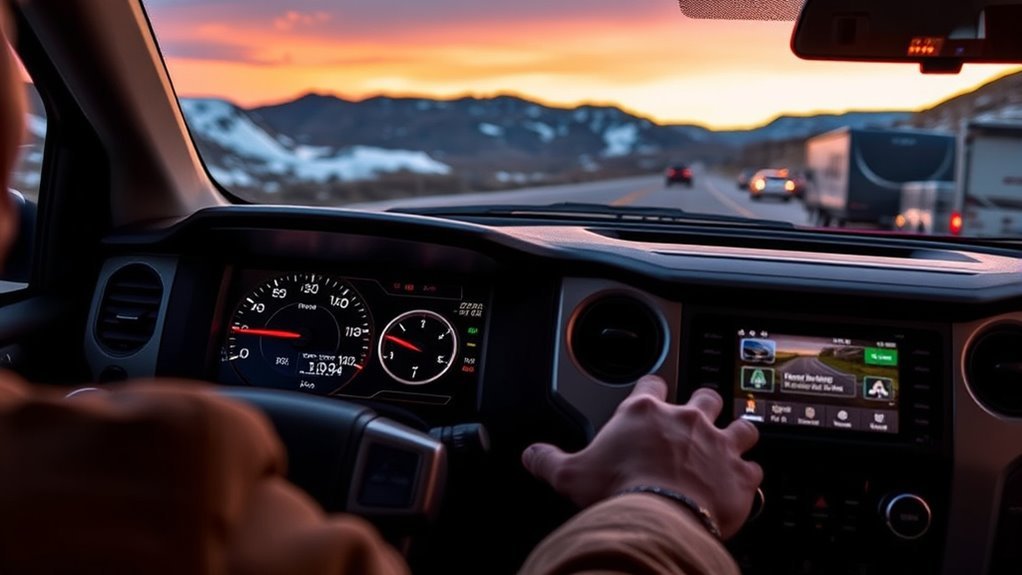
Tow/Haul can hold useful lower gears longer, change upshift or downshift timing, and increase throttle response, depending on the generation. The engine may run at a higher speed and sound louder than it does in normal mode. That can be expected when the transmission is keeping the engine in a useful range under load.
Tow/Haul does not guarantee better fuel economy. Holding lower gears and using more responsive throttle can increase fuel consumption, while reducing repeated gear hunting may improve drivability. Trailer weight, frontal area, road speed, wind, grade, tire pressure, and stop-and-go driving usually have a larger effect on total fuel use.
Judge the mode by control rather than by the dashboard economy number alone. If the truck holds speed with fewer unwanted shifts and predictable throttle input, the mode is serving its purpose. If it shifts violently, overheats, loses power, or displays a warning, stop towing and diagnose the cause.
When Should You Leave Tow/Haul Off?
Leave Tow/Haul off for normal unloaded driving on level roads unless the owner’s manual gives a specific reason to use it. Normal mode usually provides smoother response and earlier upshifts when the truck is not pulling or carrying a heavy load.
Do not use Tow/Haul to mask a mechanical or setup problem. Stop towing if the truck shifts violently, overheats, smells hot, loses power, or displays a warning. Also stop if trailer sway, weak braking, severe rear sag, or light steering develops. Check the drivetrain, tires, load balance, hitch, and trailer brakes before continuing.
When towing is finished, return to normal mode. If the indicator remains on unexpectedly or the switch does not respond, consult the exact manual or have the truck inspected rather than assuming the system is working correctly.
How Should You Tow on Hills, in Wind, and on Highways?
Select the correct towing mode before a sustained climb or descent. On equipped third-generation trucks, choose TOW HAUL or TOW+ by loaded trailer weight. On descents, slow before the grade, leave more following distance, and use the S or sequential shift range only as the manual permits. Engine braking helps manage speed, but the truck and trailer brakes must still be correctly rated and adjusted.
- Select the correct towing mode before a sustained climb or descent.
- Use TOW+ above 5,000 lb of loaded trailer weight on an equipped U.S./Canada third-generation truck.
- Reduce speed when crosswinds or passing vehicles move the trailer.
- Do not use cruise control where the manual advises against it or when grades, traffic, or wind require frequent speed changes.
- Stop if sway persists, steering feels light, or braking performance changes.
Speed control is more important than selecting a more aggressive mode. Slow before curves, construction zones, gusty open areas, and long descents. A high-profile trailer can require a lower speed even when every measured weight is within its rating.
How Do Modifications and Trailer Shape Affect Mode Choice?
Larger tires, lift kits, heavy bumpers, roof equipment, tools, and added cargo can change rolling resistance, effective gearing, payload use, braking feel, and stability. Toyota does not recommend changing the original tire size or suspension, so any modified truck needs extra care and a fresh ratings check.
Trailer shape matters too. A tall enclosed trailer, camper, or high-profile cargo trailer creates more aerodynamic drag than a low trailer at the same scale weight. That extra drag can increase downshifting and fuel use, but the third-generation TOW HAUL/TOW+ division still uses loaded trailer weight.
Reweigh and recheck the combination after any major truck or trailer change. Added accessories consume payload, and a tire-size change can affect speedometer accuracy and powertrain behavior. Use only properly rated parts and follow the truck, tire, hitch, and trailer manufacturers’ instructions.
[Products Worth Considering]
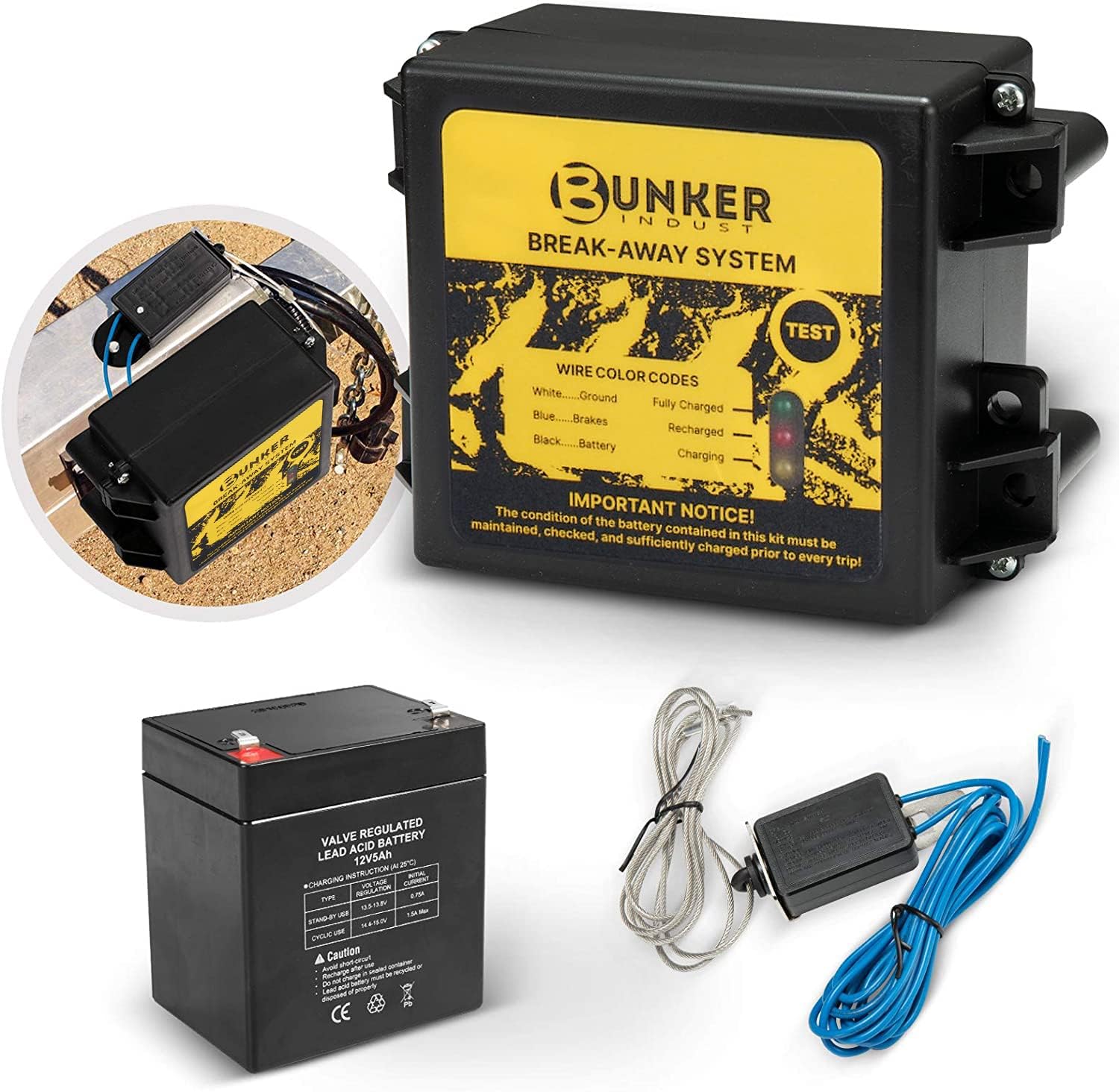
This trailer breakaway kit is designed for trailers with an existing electric brake system, helping activate the brakes if the trailer separates from the tow vehicle. It includes a battery, breakaway switch, and charger with an LED display for easy status checks, making it a practical safety upgrade for caravans and trailers. The side-mount design supports quick installation, while weather and corrosion resistance help it stand up to outdoor use.
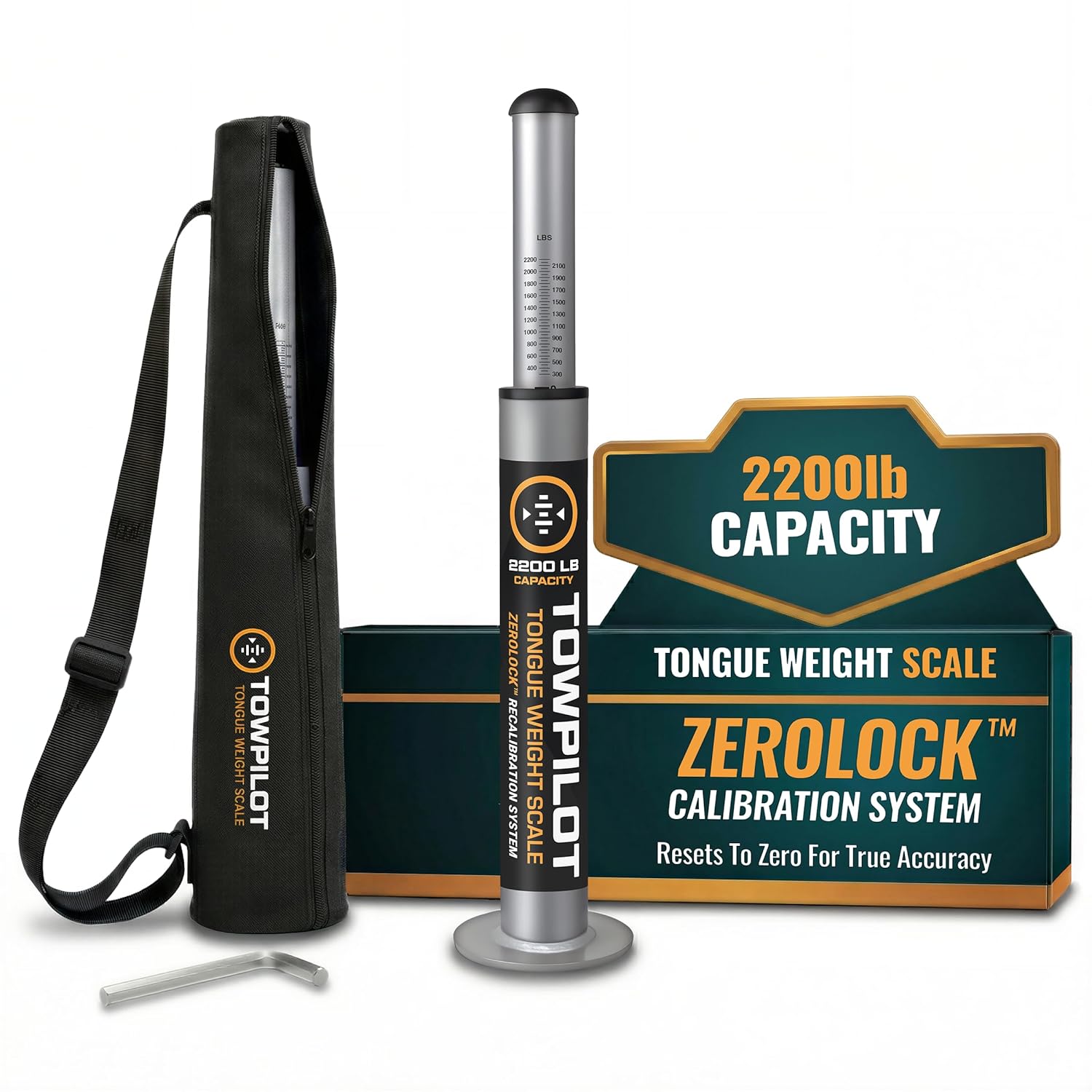
This trailer tongue weight scale helps you check hitch weight quickly and accurately before towing, reducing sway and improving overall safety. Built with durable steel and a spring mechanism, it works without batteries and includes a recalibration feature to maintain true-zero accuracy over time. It is designed for RVs, campers, and utility trailers, with a top plate that helps protect your coupler during use.

This proportional electric brake controller automatically applies trailer brakes based on your vehicle's braking force and speed for smoother, more responsive stopping. It is compatible with a wide range of tow vehicles and trailer setups, and includes an LED display for easy setup, diagnostics, and manual braking control. The included mounting hardware and plug-and-play port help make installation simple and convenient.
How Do You Troubleshoot Poor MPG, Harsh Shifts, or Unstable Towing?
Start with the symptom and change one variable at a time. Poor fuel economy, frequent shifting, a hard clunk, brake smell, sway, and weak acceleration do not share one cause. Record the road, speed, loaded trailer weight, selected mode, and warning messages before testing again.
- Confirm the selected mode matches the truck’s generation and loaded trailer weight.
- Check that the correct TOW HAUL or TOW+ indicator remains illuminated.
- Check truck and trailer tire pressures against their labels, not a generic internet number.
- Verify loaded trailer weight, tongue weight, cargo security, and axle loads.
- Inspect and test the trailer brakes if stopping feels weak or the truck brakes smell hot.
- Use S or sequential shift range on grades only if the manual supports it.
- Stop and reload the trailer if it sways, bounces, or makes steering feel light.
If harsh shifts continue in the correct mode, schedule a drivetrain or transmission inspection. For active sway, release the accelerator and keep a firm, steady grip on the wheel. If the trailer has an electric brake controller, apply the trailer brakes manually as the controller and vehicle manuals direct; do not use the tow vehicle brakes to fight the sway. Stop in a safe place and correct the loading, tire, hitch, or brake problem before continuing. See the related Toyota Tundra trailer-sway guide for a focused checklist.
Which Tundra Ratings Must You Check Before Towing?
Tow/Haul and TOW+ do not raise any legal or mechanical rating. The safe limit depends on the truck’s exact configuration, loaded trailer weight, payload, gross axle weight ratings, gross combined weight rating, tire ratings, hitch rating, and trailer-brake requirements. Use the owner’s manual and the labels on the actual truck, hitch, tires, and trailer.
Warning: If the trailer sways, the rear suspension sags severely, steering feels light, braking feels weak, or any rating is exceeded, stop and correct the setup before driving farther.
Use the tongue-weight range specified in the exact Tundra manual and the trailer, hitch, and weight-distribution-system instructions. Measure the loaded setup rather than relying on a generic percentage. Use the Tundra tongue-weight guide for calculation and scale methods.
Payload is often the limiting number. Passengers, bed cargo, hitch hardware, tongue weight, tools, and accessories all consume payload. A trailer may be below the advertised tow rating while still overloading the truck’s payload or rear axle. Review the Tundra GVWR, GCWR, and GAWR guide and the door-sticker towing guide before working close to a limit.
[Products Worth Considering]

This proportional trailer brake controller provides smooth, responsive braking by automatically matching your tow vehicle’s stopping force for safer trailer control. The bright LED digital display makes it easy to monitor voltage output in real time, while adjustable braking and sync settings help tailor performance to different trailers and road conditions. Designed for quick installation and broad compatibility, it supports 1 to 4 axle trailers for dependable towing confidence.
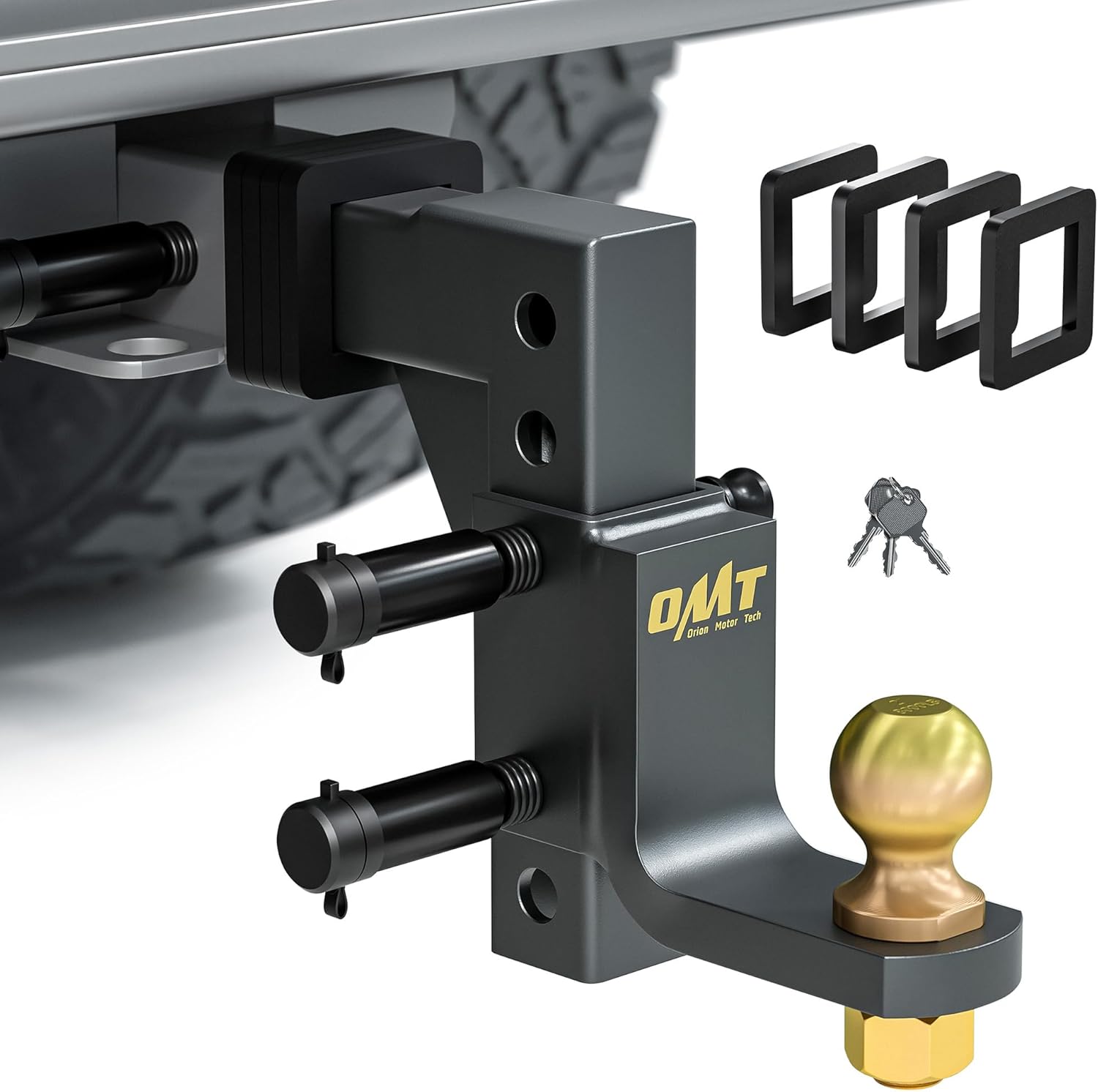
This adjustable trailer hitch ball mount is built for secure, versatile towing with a standard 2 inch receiver, a 2 inch ball, and both drop and rise adjustment for better fitment. Rated for heavy-duty towing and designed with anti-theft locking pins, it helps keep your trailer secure while resisting harsh weather and road conditions. The pre-assembled design makes installation fast and tool-free, so you can get hooked up and ready to tow with confidence.

This Andersen Hitches weight distribution hitch kit is designed to improve towing stability with a grease-free friction cone and tension chain system that helps reduce sway and bounce. It features a universal setup with a 2-inch ball and 4-inch drop/rise to suit many bumper-pull trailer applications, while making hitching and unhitching faster and easier than traditional spring bar systems. Built in the USA, it offers dependable performance for travelers, workers, and outdoor enthusiasts who need confident towing control.
Pre-Trip Checklist: Pick the Right Mode Before You Tow
Before leaving, confirm the truck’s model year, actual mode equipment, and loaded trailer weight. On an equipped U.S./Canada 2022-and-newer truck, select TOW HAUL below 5,000 lb or TOW+ above 5,000 lb. At exactly 5,000 lb, use the exact manual’s instruction. On an older truck with one mode, use Tow/Haul as its manual directs.
Inspect the hitch, coupler, safety chains, breakaway cable, wiring, trailer brakes, tires, wheel fasteners, mirrors, and cargo security. Confirm that the selected towing-mode indicator appears and remains on after any other drive-mode change. A short low-speed check near home is safer than discovering a problem at highway speed.
Pro Tip: Make a controlled test stop in a safe area before entering the highway. Listen for clunks, confirm the trailer brakes engage smoothly, and recheck the coupler, chains, cargo, and mode indicator after the first few miles.
[Products Worth Considering]
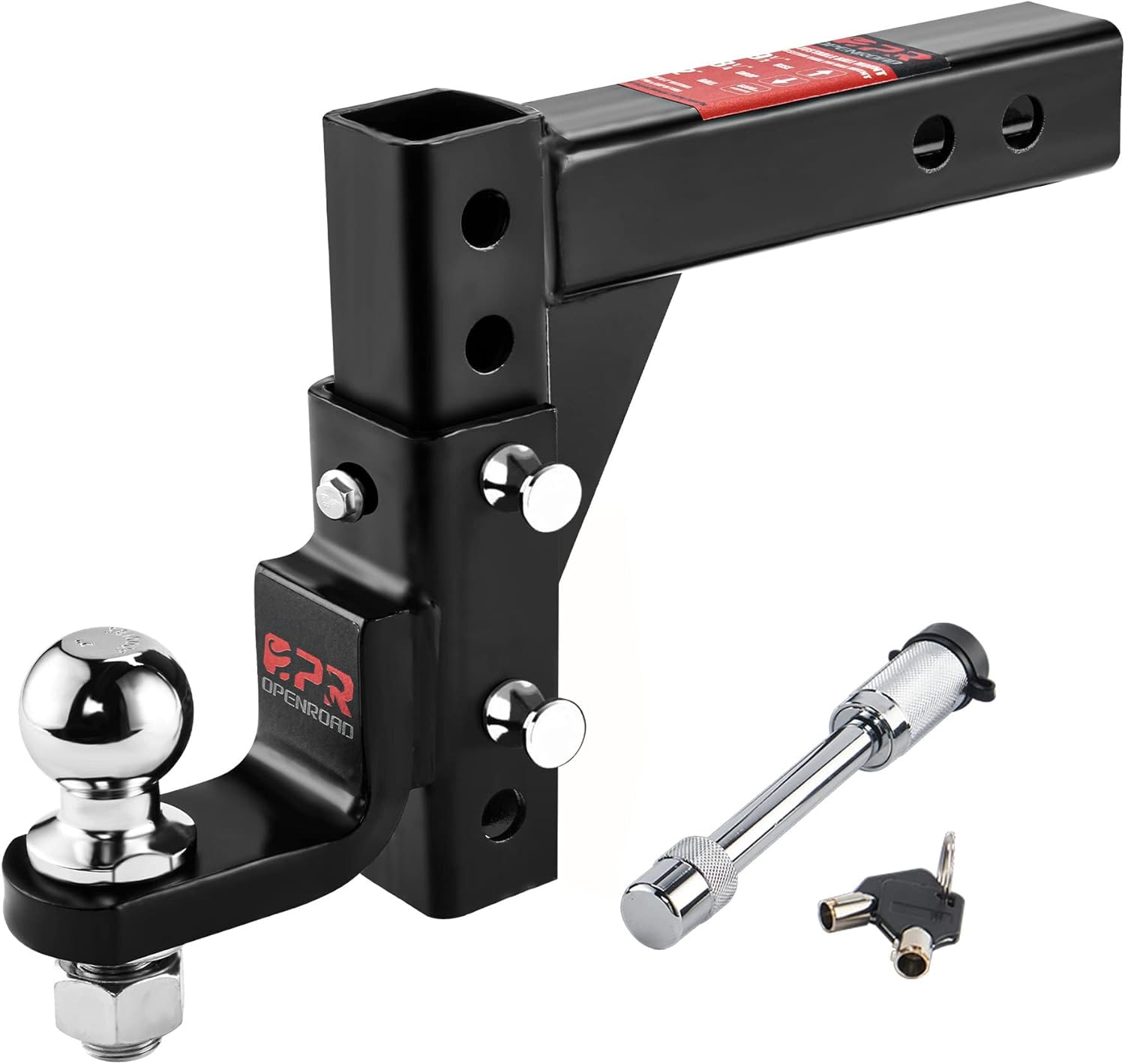
This adjustable trailer hitch ball mount is built for dependable towing with a strong steel construction and a versatile fit for 2-inch receivers. Its adjustable drop and rise settings help you dial in the right towing height, while the lock and keyed anti-theft design add security. A black powder-coated finish helps resist rust and wear for lasting performance on trucks and other towing setups.

The CURT Venturer NEXT is a compact, time-delay electric trailer brake controller designed for dependable braking control from inside your vehicle. Its low-profile design, adjustable power and ramp time, and plug-and-play friendly setup make it a practical choice for towing with confidence. Built for 12-volt systems and compatible with electric over hydraulic brakes, it offers flexible installation without leveling or internal moving parts.

The CURT 52010 Trailer Breakaway Switch helps keep towing safer by automatically engaging trailer brakes if the trailer disconnects from the tow vehicle. It features silver contact points for a dependable electrical connection, plus a nylon case and pull pin assembly designed to handle outdoor use and secure activation. The included metal mounting tab makes installation simple on trailers with electric brakes.
Confirm Trailer Weight
Do not use the trailer’s empty or advertised dry weight as the loaded towing weight. Weigh the trailer with its normal cargo, fluids, batteries, propane, and accessories. Compare the scale result with the Tundra’s tow rating, payload, axle ratings, hitch rating, tire ratings, and the trailer’s GVWR.
Measure or verify tongue weight and cargo distribution according to the exact vehicle, trailer, and hitch instructions. Too little tongue weight can contribute to sway. Too much can overload the receiver, rear axle, tires, or payload rating and can reduce weight on the truck’s front axle.
- Weigh the trailer as it will be driven.
- Check tongue weight with a suitable scale or verified weighing method.
- Verify truck and trailer axle loads when the setup is heavy or close to a limit.
- Confirm tow, payload, axle, tire, hitch, and trailer ratings.
- Select the correct towing mode and confirm its indicator.
Select Appropriate Mode
Use the generation and equipment first, then the loaded trailer weight. A single-mode Tundra uses Tow/Haul when towing or hauling requires the altered response. An equipped U.S./Canada third-generation Tundra uses TOW HAUL below 5,000 lb and TOW+ above 5,000 lb.
Use S or sequential shift range separately on a grade only when the manual supports it. Select the towing mode and any needed range before traffic and road speed make the change difficult, then verify the correct indicator in the instrument display.
| Scenario | Recommended Starting Point |
|---|---|
| Older Tundra with one Tow/Haul mode | Use Tow/Haul for a trailer or heavy load as the exact manual directs |
| Equipped U.S./Canada 2022+ truck; loaded trailer under 5,000 lb | TOW HAUL |
| Equipped U.S./Canada 2022+ truck; loaded trailer over 5,000 lb | TOW+ |
| Loaded trailer exactly 5,000 lb | Follow the exact model-year and market manual |
| Long climb or steep descent | Correct towing mode by weight; use S/sequential range separately if the exact manual supports it |
| Empty truck on level roads | Normal mode |
Inspect Hitch and Connections
Inspect the receiver, ball mount, ball, coupler, fasteners, and welds before every tow. Confirm that each component’s rating covers the actual loaded trailer and tongue weight. Replace damaged or severely corroded parts; a drive mode cannot compensate for a weak connection.
Test the running lights, brake lights, turn signals, trailer brakes, and breakaway system. Confirm that the coupler matches the hitch-ball size, closes fully, and is secured. Attach the safety chains and breakaway cable according to the truck, hitch, and trailer manufacturers’ instructions.
- Verify every hitch component’s rating.
- Inspect for cracks, deformation, corrosion, loose fasteners, and damaged welds.
- Test lights, trailer brakes, and the breakaway system.
- Confirm the coupler and hitch ball match and lock correctly.
- Attach safety chains and the breakaway cable correctly.
Frequently Asked Questions
When should I turn on Tow/Haul mode in a Tundra?
Use Tow/Haul when a trailer or heavy load changes acceleration, shifting, or downhill control. On an equipped U.S./Canada 2022-and-newer Tundra, use TOW HAUL when the loaded trailer weighs less than 5,000 lb. Confirm the indicator after selecting it.
What is the difference between Tow/Haul and Tow/Haul+?
On equipped third-generation Tundras, TOW HAUL is Toyota’s setting for loaded trailers below 5,000 lb, while TOW+ is used above 5,000 lb and has a more aggressive response for larger trailers. The modes change engine, transmission, and steering behavior.
Is the Tundra Tow/Haul+ cutoff 5,000 lb?
Yes for equipped U.S.- and Canada-market third-generation Tundras: Toyota recommends TOW HAUL for loaded trailers weighing less than 5,000 lb and TOW+ for loaded trailers weighing more than 5,000 lb. Verify the exact manual for other markets and model configurations.
Which mode should I use at exactly 5,000 lb?
Check the owner’s manual tied to your model year and market. Toyota’s published U.S./Canada wording assigns TOW HAUL below 5,000 lb and TOW+ above 5,000 lb, but it does not expressly assign exactly 5,000 lb.
Can I turn Tow/Haul on while driving?
Use the TOW HAUL switch and mode-select control as described in the exact owner’s manual. To reduce distraction, select and confirm the mode before a hill, merge, or busy traffic situation whenever practical.
Why did Tow/Haul or TOW+ turn off?
On third-generation trucks, the towing modes deactivate when 4L is selected or when Drive Mode Select or Multi-Terrain Select is used. Recheck the indicator after changing another vehicle mode and follow the exact manual for your truck.
Does Tow/Haul mode save fuel?
Tow/Haul does not guarantee better fuel economy. It may reduce repeated shifts under load, but holding lower gears and using more responsive throttle can increase fuel use. Trailer weight, drag, road speed, grades, and wind usually have a larger effect.
Can I use Tow/Haul when the truck is empty?
Tow/Haul is intended for a trailer or heavy load. Normal mode is the better default for an empty truck on level roads because it usually provides smoother response and earlier shifts.
Should I use S or sequential shift range on hills?
Use S or sequential shift range only when the model-year manual permits it and you need steadier gear control or engine braking. It is separate from the Tow/Haul mode decision. Reduce speed before the descent, avoid engine lugging, and do not request a downshift that causes excessive engine speed.
Does Tow/Haul increase towing capacity?
No. Tow/Haul changes vehicle response, but it does not increase tow rating, payload, axle ratings, tire ratings, hitch rating, braking capacity, or trailer rating. The lowest applicable verified limit still controls.
What should I do if the trailer sways with Tow/Haul on?
Release the accelerator and keep a firm, steady grip on the wheel. If an electric trailer brake controller is installed, apply the trailer brakes manually as the manuals direct; do not use the tow vehicle brakes to fight sway. Stop safely and check loading, tires, hitch setup, and trailer brakes.
Conclusion
For an equipped U.S.- or Canada-market 2022-and-newer Tundra, use TOW HAUL below 5,000 lb of loaded trailer weight and TOW+ above 5,000 lb. At exactly 5,000 lb, check the exact model-year manual because Toyota’s published less-than/more-than wording does not expressly assign the boundary. On an older truck with one Tow/Haul mode, use it when a trailer or heavy load changes acceleration, shifting, or downhill control.
Before every trip, verify loaded trailer weight, tongue weight, payload, axle loads, hitch ratings, tire ratings, lights, brakes, and cargo security. Confirm the selected indicator after changing any other drive setting. If the truck shifts violently, overheats, sways, smells hot, or becomes hard to steer or stop, pull over safely and correct the cause before continuing.
Sources
- Toyota USA Newsroom: Next-Generation 2022 Toyota Tundra — supports the lighter/moderate TOW HAUL and larger-trailer TOW+ distinction.
- Toyota USA Newsroom: 2021 Toyota Tundra — supports prior-generation throttle-sensitivity and transmission-shift-control behavior.
- Toyota USA Newsroom: 2026 Toyota Tundra — supports current 10-speed sequential shift, uphill/downhill logic, and TOW/HAUL driving modes.
- Toyota: 2024 Tundra Owner’s Manual, Short Version — supports the under/over-5,000-lb TOW HAUL and TOW+ division.
- Toyota: 2024 Tundra Quick Reference Guide — supports the switch, indicators, and engine, transmission, and steering changes.
- Toyota: 2025 Tundra Sourcebook — supports trim/configuration availability and current towing-mode equipment.
- Toyota Support: When Should I Use Tow/Haul Mode? — supports use when pulling a heavy trailer or hauling a heavy load.
- Toyota Support: Changing Tire Size or Suspension — supports the modification warning.
- National Highway Traffic Safety Administration: Towing a Trailer, Being Equipped for Safety — supports loaded-weight checks, hitch compatibility, trailer-brake use, speed control, and sway response.


[…] Tow mode: On equipped models, use TOW/HAUL or TOW+ only as your exact owner’s manual directs. These modes can change powertrain behavior but do not increase GVWR, GAWR, GCWR, TWR, payload, or hitch ratings. See when to use Tundra Tow/Haul mode. […]