By [VERIFY: add real author name/credentials] · Last updated: [VERIFY: confirm actual publish/update date]
You should not tow with a new Toyota Tundra during the first 500 miles unless it is truly unavoidable. Toyota’s break-in guidance for current-generation Tundra models says to wait until the truck has been driven over 500 miles before towing, then take the next 500 towing miles gently: stay under 50 mph when towing and avoid full-throttle acceleration.
Quick Answer
Do not tow with a brand-new Toyota Tundra for the first 500 miles. After that, tow lightly at first, keep towing speed below 50 mph for the next 500 miles, avoid full-throttle starts, and stay within the payload, axle, hitch, and trailer ratings for your exact truck.
Key Takeaways
- Toyota recommends no trailer towing until a new Tundra has been driven more than 500 miles.
- For the next 500 miles while towing, keep speed below 50 mph and avoid full-throttle acceleration.
- The 2026 Toyota Tundra is advertised with up to 12,000 lb of max towing (gas SR5) and up to 1,850 lb of max payload, but your exact limit depends on trim, cab, drivetrain, bed, equipment, cargo, and passengers. i-FORCE MAX hybrid trims cap lower, at up to 11,450 lb of towing.
- Tongue weight counts against payload, so a trailer can overload the truck even when it is under the advertised tow rating.
- Use your owner’s manual, driver-side certification label, hitch label, and a public scale before towing near any limit.
At a Glance
| Time Required | 500 miles before towing; another 500 gentle towing miles after that |
| Difficulty | Moderate: you need to check labels, weights, hitch ratings, and trailer setup |
| Tools Needed | Owner’s manual, tire gauge, torque wrench for hitch hardware, trailer brake controller, public truck scale, and tongue-weight scale if available |
| Cost | Usually $15–$30 for public scale weighing; more if you need a brake controller, hitch parts, mirrors, or a weight-distribution hitch |
Official Toyota Break-In Rule for Tundra Towing
The safest answer is simple: wait. Toyota’s Tundra owner’s manual guidance says that if the vehicle is new, or if it has new powertrain components such as an engine, transmission, differential, or wheel bearing, you should not tow a trailer until the truck has been driven for over 500 miles.
That first 500 miles is for normal break-in driving, not trailer work. Use varied speeds, avoid hard launches, avoid sustained high engine load, and give the brakes a chance to bed in normally. After you pass 500 miles, do not jump straight into your heaviest trailer. Toyota’s towing guidance says that for the next 500 miles when towing, you should drive below 50 mph and avoid full-throttle acceleration.
Warning: Do not treat “half of the tow rating” as an official Toyota-approved shortcut during the first 500 miles. The safer and manual-aligned rule is no towing until the truck is past the initial break-in mileage.
For current specs, Toyota lists the 2026 Tundra at up to 12,000 lb of maximum towing and up to 1,850 lb of maximum payload. Those are advertised maximums, not a promise that every Tundra can tow or carry that much. Your exact truck may be lower — the top 12,000 lb figure applies to gas-engine SR5 configurations; i-FORCE MAX hybrid trims are rated up to 11,450 lb. `[VERIFY: confirm current hybrid max against your exact model-year press kit]`
Why the First 500 Miles Matter
Towing changes almost everything the new truck is trying to settle into. The engine sees more load, the transmission shifts under more heat, the rear axle works harder, and the brakes have to slow both the truck and trailer. That is why the break-in period matters.
During early mileage, you want controlled, varied driving instead of long, heavy pulls. A trailer can force the engine to hold load for longer, make the transmission build heat, and make new brake pads and rotors work harder than they need to. Waiting helps reduce the chance of heat stress, uneven brake bedding, and early wear.
The break-in goal is not speed; it is controlled load. Give the truck 500 normal miles before asking it to pull a trailer.
What If You Have to Tow Before 500 Miles?
If towing before 500 miles is avoidable, avoid it. If you are in a situation where moving a trailer is unavoidable, keep the trip short, keep the trailer as light as possible, drive slowly, avoid steep grades, avoid full-throttle acceleration, and stop if you see warning lights, smell hot brakes, feel sway, or notice abnormal shifting.
This is not the same as saying early towing is recommended. It is a risk-reduction approach for an unavoidable situation. If the load is heavy, the route is long, or the truck has any warning light or abnormal behavior, use another tow vehicle or delay the tow.
Note: If you accidentally towed during the first 500 miles, do not panic. Stop heavy towing, complete the rest of the break-in gently, check fluids and tires, and ask a Toyota dealer to inspect the truck if you noticed overheating, brake odor, harsh shifting, or warning lights.
Calculate Safe Towing Loads for Your Tundra
The advertised tow rating is only one limit. Before towing, check the numbers for your exact Tundra. Start with the driver-side certification label, the owner’s manual towing section, the hitch receiver label, the trailer’s VIN/weight label, and the tire placards on both the truck and trailer.
Use Toyota’s public maximums only as a ceiling. Toyota advertises the 2026 Tundra with up to 12,000 lb of towing and up to 1,850 lb of payload, but passengers, cargo, optional equipment, accessories, bed cargo, hitch equipment, and tongue weight all reduce what you can safely tow.
| Rating or weight | What it means | Where to verify it |
|---|---|---|
| Payload | How much weight the truck can carry, including people, cargo, hitch hardware, and trailer tongue weight | Driver-side door label |
| GVWR | Maximum loaded weight of the truck itself | Certification label and owner’s manual |
| GAWR | Maximum weight allowed on each axle | Certification label and scale ticket |
| GCWR | Maximum combined loaded weight of truck and trailer | Owner’s manual towing tables |
| Trailer weight rating | Maximum trailer weight allowed for your exact truck setup | Owner’s manual and Toyota towing data |
| Tongue weight | Downward force from the trailer coupler on the hitch; it counts against payload | Tongue-weight scale or public scale method |
For most conventional bumper-pull trailers, target about 10–15% of the loaded trailer weight on the tongue unless the trailer maker gives a different range. A 5,000 lb loaded trailer would usually need about 500–750 lb of tongue weight. Fifth-wheel and gooseneck setups use different ranges, so follow the trailer and hitch manufacturer’s instructions.
Put those numbers in context: a 6,500 lb loaded trailer at 12% tongue weight puts roughly 780 lb on the hitch. On a Tundra rated for a maximum 1,850 lb payload, that alone uses about 42% of the payload budget before passengers, fuel, or bed cargo are counted — which is why a trailer well under the advertised tow rating can still overload the truck. `[VERIFY: treat this as an illustrative example, not a guaranteed figure for any specific trim]`
Pro Tip: Weigh the truck and trailer loaded exactly as you will travel: passengers inside, fuel onboard, cargo packed, water tanks set the way you plan to drive, and the hitch installed. Dry trailer weight is not enough.
[Products Worth Considering]

This proportional electric brake controller automatically applies trailer brakes based on your vehicle's braking force and speed for smoother, more responsive stopping. It is compatible with a wide range of tow vehicles and trailer setups, and includes an LED display for easy setup, diagnostics, and manual braking control. The included mounting hardware and plug-and-play port help make installation simple and convenient.
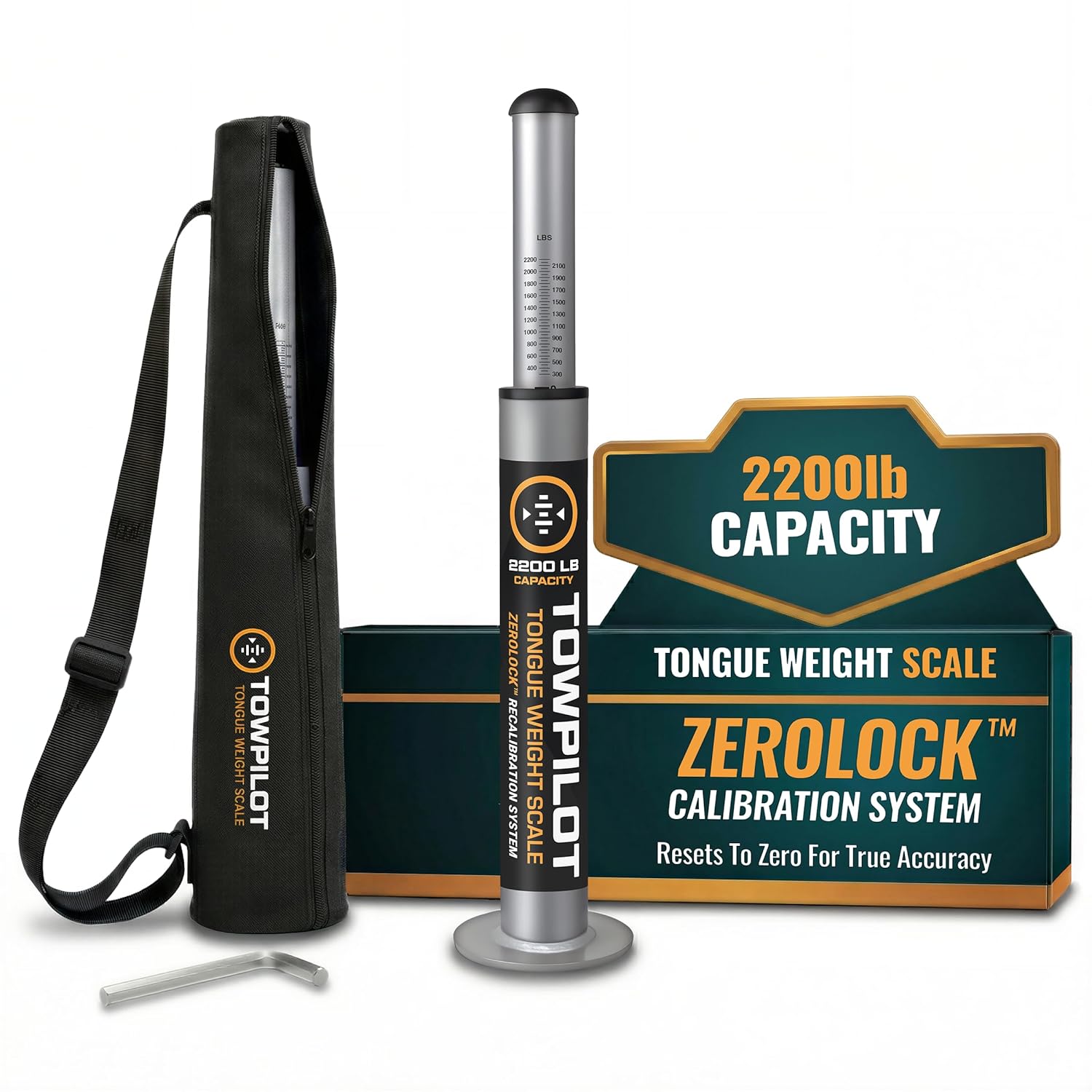
This trailer tongue weight scale helps you check hitch weight quickly and accurately before towing, reducing sway and improving overall safety. Built with durable steel and a spring mechanism, it works without batteries and includes a recalibration feature to maintain true-zero accuracy over time. It is designed for RVs, campers, and utility trailers, with a top plate that helps protect your coupler during use.

This Andersen Hitches weight distribution hitch kit is designed to improve towing stability with a grease-free friction cone and tension chain system that helps reduce sway and bounce. It features a universal setup with a 2-inch ball and 4-inch drop/rise to suit many bumper-pull trailer applications, while making hitching and unhitching faster and easier than traditional spring bar systems. Built in the USA, it offers dependable performance for travelers, workers, and outdoor enthusiasts who need confident towing control.
Pre-Tow Checklist for a New Tundra
Before the first towing trip after break-in, run a full check instead of relying on the hitch alone. Toyota notes that the 2026 Tundra includes a Class-IV tow hitch receiver and 7-pin/4-pin wiring harness on all grades, but you still need to verify the hitch rating, trailer wiring, brake controller setup, and loaded weight.
- Confirm the truck’s exact ratings. Check payload, GVWR, GAWR, GCWR, and trailer weight rating for your specific Tundra.
- Inspect the hitch system. Confirm the receiver, ball mount, hitch ball, coupler, safety chains, and breakaway cable are correctly rated and secured.
- Check trailer lights. Test brake lights, turn signals, running lights, reverse lights if equipped, and the 7/4-pin connection.
- Set trailer brakes. Use the integrated trailer brake controller if equipped and adjust gain in a safe area before driving at road speed.
- Check tires. Set truck and trailer tire pressures to the loaded-pressure recommendations on the placards or tire sidewalls, and inspect tread and sidewalls.
- Measure or verify tongue weight. Keep it in the trailer maker’s recommended range and below the lowest-rated hitch component.
- Use TOW/HAUL mode when appropriate. This helps the transmission shift for towing load and terrain.
- Do a short shakedown drive. Recheck the coupler, chains, wiring, tires, and cargo straps after a few miles.
Warning: Never exceed the lowest rating in the system. The safe limit may be set by the truck, trailer, hitch receiver, ball mount, hitch ball, tires, axle rating, or payload label—not just the advertised tow rating.
[Products Worth Considering]

This proportional trailer brake controller provides smooth, responsive braking by automatically matching your tow vehicle’s stopping force for safer trailer control. The bright LED digital display makes it easy to monitor voltage output in real time, while adjustable braking and sync settings help tailor performance to different trailers and road conditions. Designed for quick installation and broad compatibility, it supports 1 to 4 axle trailers for dependable towing confidence.
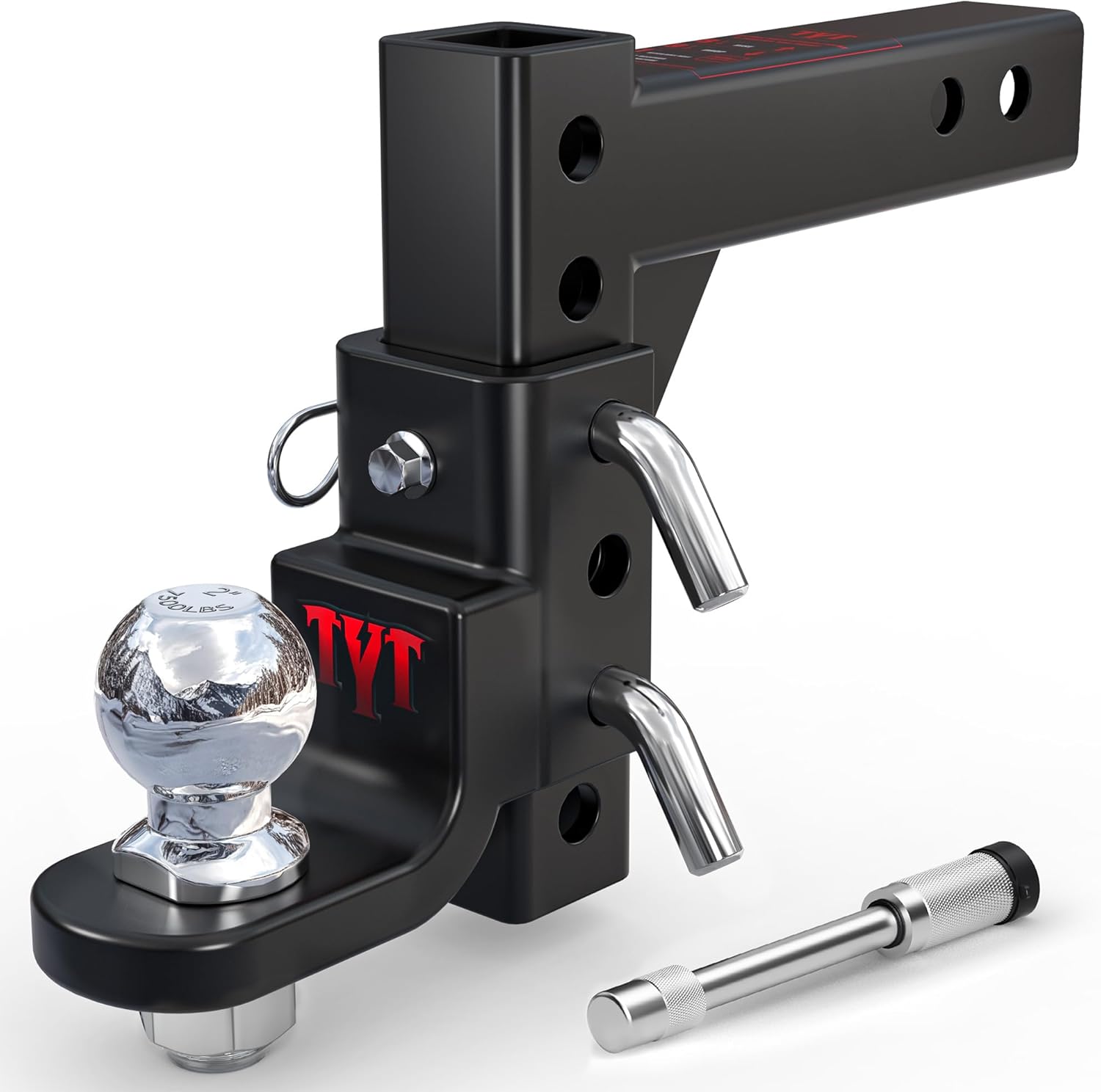
This adjustable trailer hitch ball mount is built for dependable towing with a standard 2-inch receiver and a high-capacity design suited for trucks, campers, boats, and utility trailers. Its adjustable rise and drop settings help you achieve a level tow, while the anti-rattle design supports a smoother, quieter ride. Complete with pins, clips, and a premium pin lock, it offers an easy installation and secure connection for everyday hauling needs.
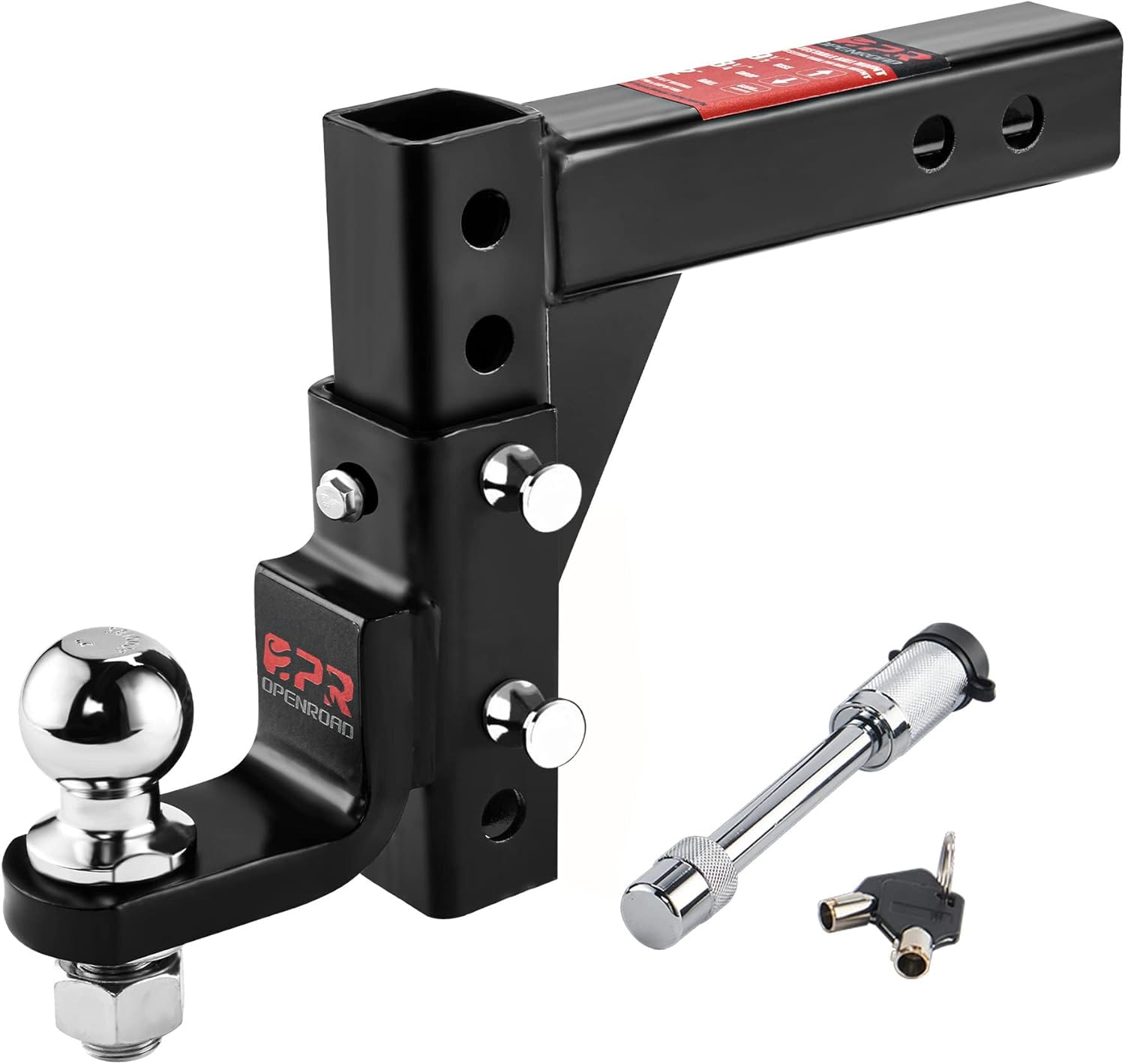
This adjustable trailer hitch ball mount is built for dependable towing with a strong steel construction and a versatile fit for 2-inch receivers. Its adjustable drop and rise settings help you dial in the right towing height, while the lock and keyed anti-theft design add security. A black powder-coated finish helps resist rust and wear for lasting performance on trucks and other towing setups.
How to Increase Towing Load After 500 Miles
Once the Tundra has more than 500 miles, you can begin towing, but the next 500 towing miles should still be gentle. Keep speed below 50 mph while towing, avoid full-throttle acceleration, and choose short routes with room to stop, turn, and correct the trailer if needed.
Miles 501 to 1,000: Tow Light and Slow
Start with a light, stable trailer if possible. Avoid steep grades, heavy traffic, strong crosswinds, and high-speed interstate driving. Watch engine coolant temperature, transmission behavior, brake feel, and trailer stability. Stop and inspect if anything feels wrong.
After 1,000 Miles: Build Up Gradually
After the first 1,000 miles, you can move closer to the truck’s rated towing range if all systems feel normal and your scale weights are within limits. Increase weight gradually instead of making your first serious tow a maximum-load trip. A public scale ticket is the best way to confirm the truck, trailer, and axles are all within rating.
| What you notice | What it may mean | What to do |
|---|---|---|
| Trailer sway | Poor loading, low tongue weight, wind, speed, or undersized equipment | Slow down smoothly, do not jerk the wheel, stop and rebalance the load |
| Hot brake smell or soft pedal | Brake overheating or poor trailer brake setup | Pull over safely, let brakes cool, inspect trailer brake gain and load |
| Harsh shifting or high temperatures | Too much load, grade, heat, or speed | Reduce speed, reduce load, use TOW/HAUL, and inspect before continuing |
| Light steering or rear squat | Too much tongue weight or poor weight distribution | Reweigh, redistribute cargo, and use a properly rated weight-distribution hitch if required |
Weight-Distribution Hitch and Trailer Brakes
A weight-distribution hitch does not increase the Tundra’s tow rating, payload rating, or axle ratings. Its job is to help distribute tongue load across the tow vehicle and trailer axles when the trailer and hitch setup call for it. Use the owner’s manual, hitch label, and trailer manufacturer’s instructions to decide when one is required.
Trailer brakes are just as important. If the trailer has brakes, set up and test the brake controller before heading into traffic. If the gross trailer weight exceeds the unbraked trailer rating, use trailer brakes that meet applicable federal, state, and provincial rules. `[VERIFY: confirm the current state/provincial gross-trailer-weight threshold that triggers a legal requirement for trailer brakes before citing a specific number — this varies by jurisdiction and changes over time]`
[Products Worth Considering]

This custom-fit 4-pin trailer wiring harness adds reliable towing light connectivity for compatible Toyota RAV4 and RAV4 Prime models, with plug-and-play installation into the vehicle's rear wiring. It powers trailer tail lights, brake lights, and turn signals, while the included dust cover helps protect the connector when not in use. Built with durable bonded wire and corrosion-resistant terminals, it is designed for dependable performance on everyday towing setups.

The CURT Venturer NEXT is a compact, time-delay electric trailer brake controller designed for dependable braking control from inside your vehicle. Its low-profile design, adjustable power and ramp time, and plug-and-play friendly setup make it a practical choice for towing with confidence. Built for 12-volt systems and compatible with electric over hydraulic brakes, it offers flexible installation without leveling or internal moving parts.
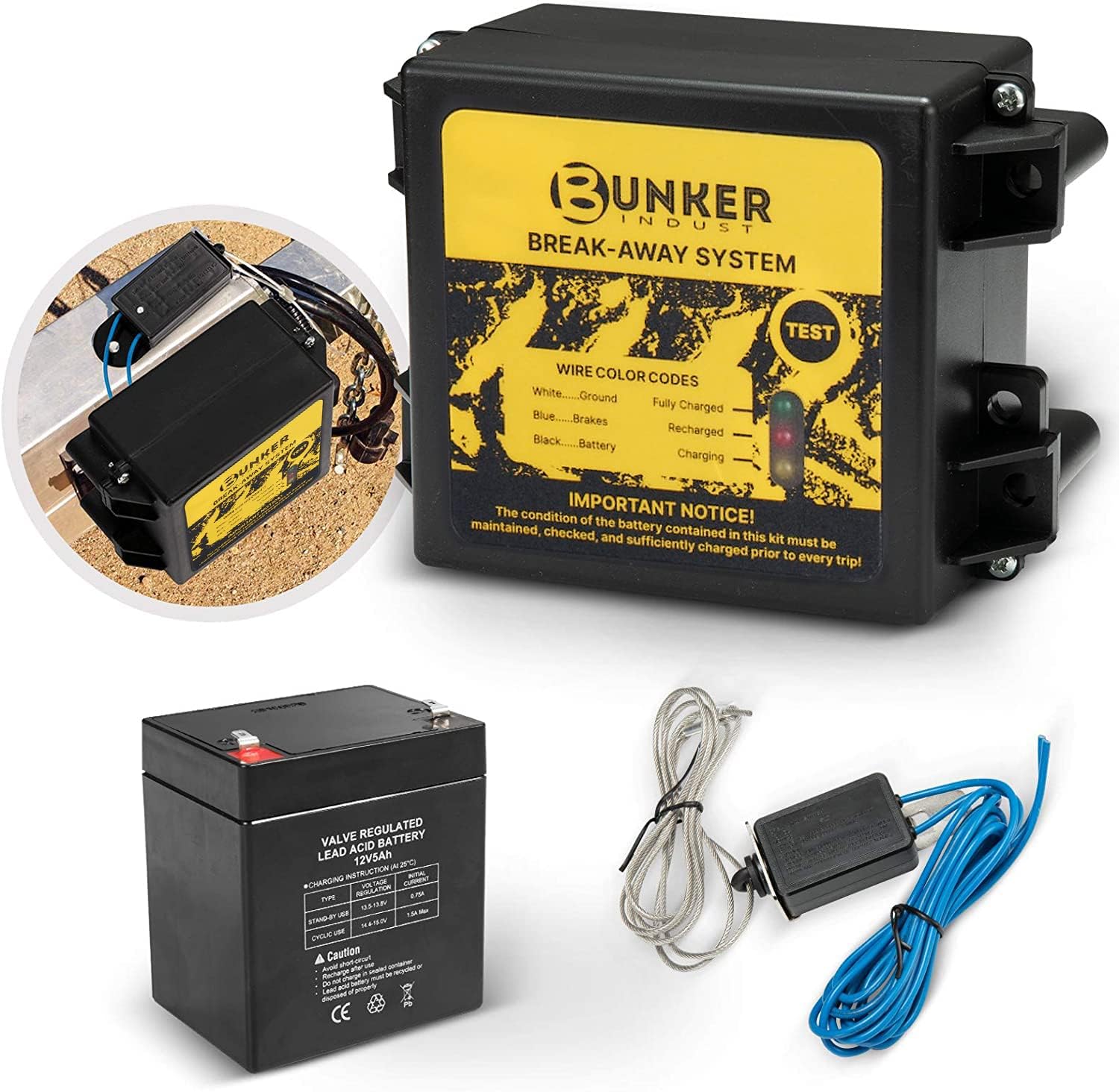
This trailer breakaway kit is designed for trailers with an existing electric brake system, helping activate the brakes if the trailer separates from the tow vehicle. It includes a battery, breakaway switch, and charger with an LED display for easy status checks, making it a practical safety upgrade for caravans and trailers. The side-mount design supports quick installation, while weather and corrosion resistance help it stand up to outdoor use.
Frequently Asked Questions
How do you break in a new Toyota Tundra?
Drive normally but gently. Vary your speed, avoid hard launches, avoid sustained high engine load, avoid towing for the first 500 miles, and follow the owner’s manual for your exact model year. If you tow after 500 miles, keep the next 500 towing miles gentle and avoid full-throttle acceleration.
Can I tow a small trailer before 500 miles?
Toyota’s guidance is to avoid towing until the truck has more than 500 miles. A small trailer is still a trailer because it adds load to the engine, transmission, brakes, tires, and rear axle. If towing is unavoidable, keep the trip short and light, but do not treat it as recommended break-in practice.
How is the Tundra i-FORCE MAX for towing?
The i-FORCE MAX hybrid powertrain is strong for towing because Toyota lists it at 437 hp and 583 lb-ft of torque. That power does not remove the break-in rule, and the tow rating still depends on the truck’s exact trim, drivetrain, cab, bed, equipment, payload, hitch, and loaded weight — hybrid trims max out at 11,450 lb, below the 12,000 lb gas-engine peak.
Do new Toyotas need a break-in period?
Yes. Toyota break-in guidance commonly includes gentle driving, varied speeds, no trailer towing during the early mileage, and avoiding sudden high-load driving. For the Tundra, the key towing rule is no trailer towing until the truck has been driven over 500 miles.
Can I use cruise control while breaking in a Tundra?
It is better to avoid long periods at one steady speed during break-in. Varying speed and load helps the truck settle in more naturally. When towing after break-in, use extra care with cruise control on hills because it can command aggressive throttle or downshifts to hold speed.
Does a new engine or transmission restart the towing break-in period?
Yes, Toyota break-in guidance applies when the vehicle is new or equipped with new powertrain components such as an engine, transmission, differential, or wheel bearing. If major driveline parts were replaced, treat the truck like it needs another careful break-in before towing.
Conclusion
You can protect a new Toyota Tundra by giving it the break-in period Toyota calls for: no trailer towing for the first 500 miles. After that, tow gently for the next 500 miles, stay below 50 mph while towing, avoid full-throttle acceleration, and build load gradually. Before every trip, confirm your exact truck’s payload, axle, hitch, and trailer limits instead of relying only on the advertised max tow number.
Sources
- Toyota 2026 Tundra specs — advertised max towing, max payload, and i-FORCE / i-FORCE MAX output.
- Toyota vehicles for towing — Toyota towing-capacity warnings, trailer compatibility, loading, and owner’s manual guidance.
- Toyota Tundra owner’s manual: trailer towing — Toyota towing terms, trailer towing precautions, and break-in towing guidance for current-generation Tundra.
- Toyota Tundra Hybrid owner’s manual: trailer towing — hybrid Tundra towing precautions, trailer brake guidance, and post-break-in towing speed guidance.
- Oregon DOT towing safety guide — trailer loading, hitching, weight distribution, pre-departure checklist, and safe towing basics adapted from public safety guidance.