
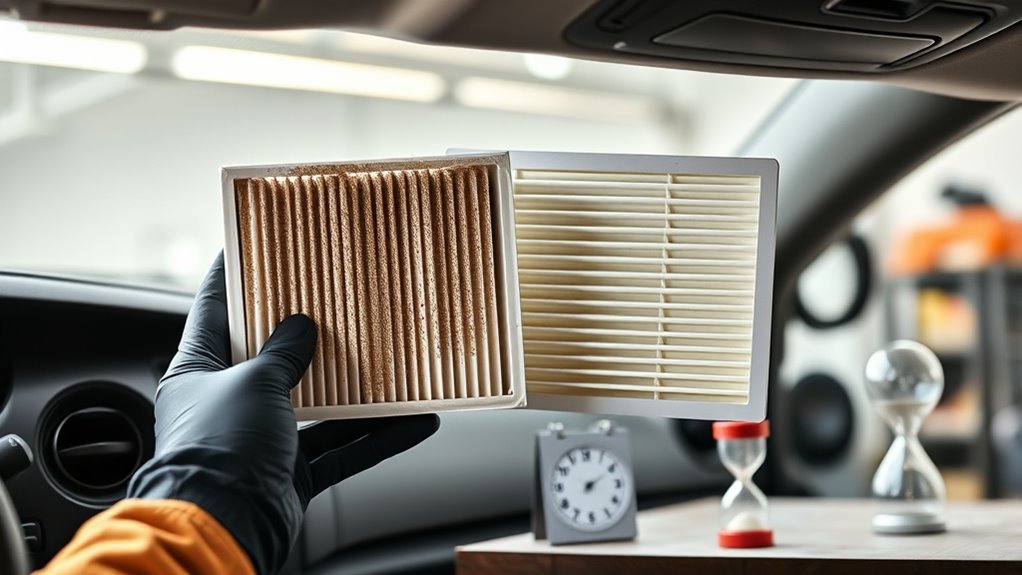
How Often to Replace a Tundra Cabin Air Filter
What’s in This Article
- How Often to Replace a Tundra Cabin Air Filter
- When Should You Replace a Tundra Cabin Filter Sooner?
- What Signs Tell You the Filter Needs Replacement?
- How to Check Your Tundra Cabin Filter in Minutes
- Which Cabin Air Filter Type Works Best for a Tundra?
- How to Replace the Cabin Filter Yourself
- When to Get Dealer Service or Professional Inspection
A clogged cabin air filter can make your Tundra feel stuffy before you notice the filter itself. Dust, pollen, and road debris can reduce vent airflow and bring stale odors into the cab. This guide explains when to replace the filter, when to check it sooner, and how to handle the job without guesswork.
How Often to Replace a Tundra Cabin Air Filter (Short Answer)
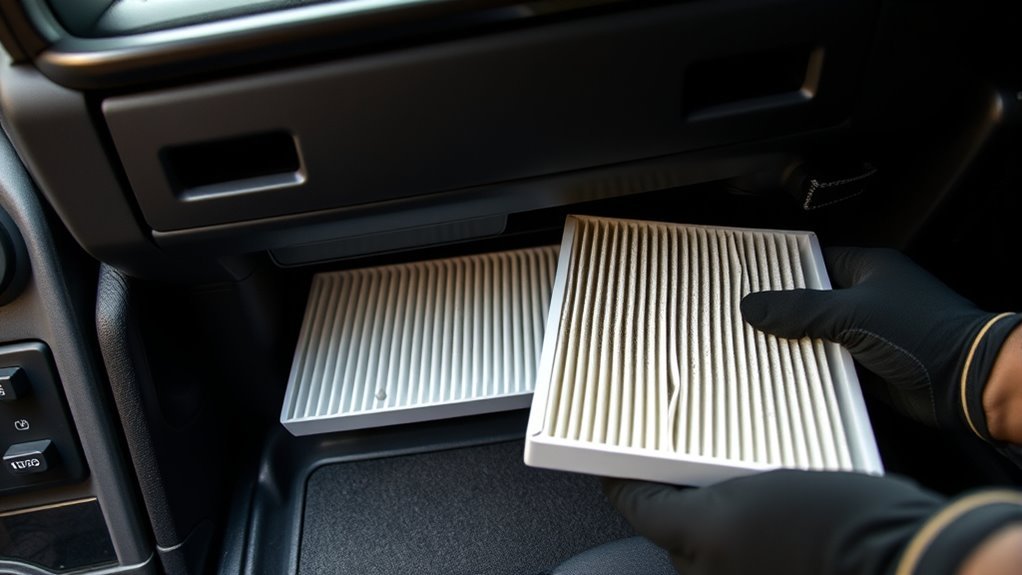
Replace your Tundra’s cabin air filter about every 30,000 miles or 36 months under normal driving, based on Toyota Tundra maintenance guide language. Check it sooner if you drive on dirt roads, tow in dusty areas, park under trees, or deal with heavy pollen. Many owners inspect the filter every 10,000 miles because the part sits behind the glove box and only takes a few minutes to check.
Key Takeaways
- Use 30,000 miles or 36 months as the normal replacement target for many Tundra model years.
- Inspect the filter every 10,000 miles if you drive in dust, pollen, smoke, or off-road conditions.
- Replace the filter sooner when you notice weak airflow, musty smells, visible dirt, or collapsed pleats.
- Choose the filter type by your needs: OEM fit, activated carbon odor control, or washable reuse.
- Confirm the airflow arrow and housing seal before you close the glove box area.
When Should You Replace a Tundra Cabin Filter Sooner?
You should replace the cabin filter sooner when your driving conditions load the filter faster than normal. Dusty roads, construction zones, wildfire smoke, heavy pollen, and off-road trips can pack debris into the filter well before 30,000 miles. Check it after long dusty trips and at routine service if your Tundra often works in dirty air.
Heavy Towing Impact
Towing itself does not make the cabin filter pull more engine air. But many towing trips happen on dusty roads, job sites, campgrounds, and farm lanes. Those places can clog the cabin air filter faster and reduce airflow from the vents.
Inspect the filter at each service visit or about every 10,000 miles when you tow in dirty conditions. Replace it when you see packed dust, dark staining, leaves, odor, or weak airflow. This simple check helps the heating, ventilation, and air conditioning (HVAC) system move air through the cabin with less strain.
Dusty Road Conditions
If you often drive on gravel roads or dry trails, check the filter during each oil change. A clean filter has open pleats and light-colored media. A dirty filter often has packed dust, dark streaks, or debris stuck between the pleats.
A 10,000-mile inspection schedule works well for many dusty-use Tundras. You may need to replace the filter even sooner after long off-road trips or high-pollen drives. Keep the old date and mileage in your maintenance log so you can spot your own pattern.
Frequent Off-Roading
Your Tundra may handle rough trails, but the cabin filter still catches the dust that enters the intake path. Recirculation can reduce outside-air intake at times, but it cannot stop all dust from reaching the system. You still need visual checks after dry trail days.
- Inspect the filter every 10,000 miles or at each oil change in dusty use.
- Replace it sooner when towing or hauling in dirty air.
- Look for dust cake, odor, weak airflow, or bent pleats.
- Choose early replacement after off-road trips if the filter looks loaded.
What Signs Tell You the Filter Needs Replacement?
Your Tundra often gives clear signs before the cabin filter fully clogs. Weak airflow from the vents, a musty smell, louder blower noise, or dust on the dash can point to a loaded filter. A dirty filter can also make the cabin feel less fresh during pollen season.
Remove the filter and check it under bright light. Replace it if the pleats look packed, the media has heavy dark spots, or leaves and grit cover the surface. Do not tap a disposable filter and reinstall it if the media looks damaged or damp.
How to Check Your Tundra Cabin Filter in Minutes
If you want fresher air in your Tundra, start behind the glove box. Open the glove box, release the stops or clips, and find the rectangular filter cover. Pull the cover off gently, then slide the filter straight out.
Check the filter under good light. A usable filter should still show open pleats and a clear airflow path. Replace it if you see heavy dirt, stuck debris, crushed pleats, or odor from the media.
Slide the filter back in with the airflow arrow facing the correct direction. Secure the cover, return the glove box to place, and test the fan. This quick check helps you protect cabin airflow and avoid paying for a filter you may not need yet.
Which Cabin Air Filter Type Works Best for a Tundra?
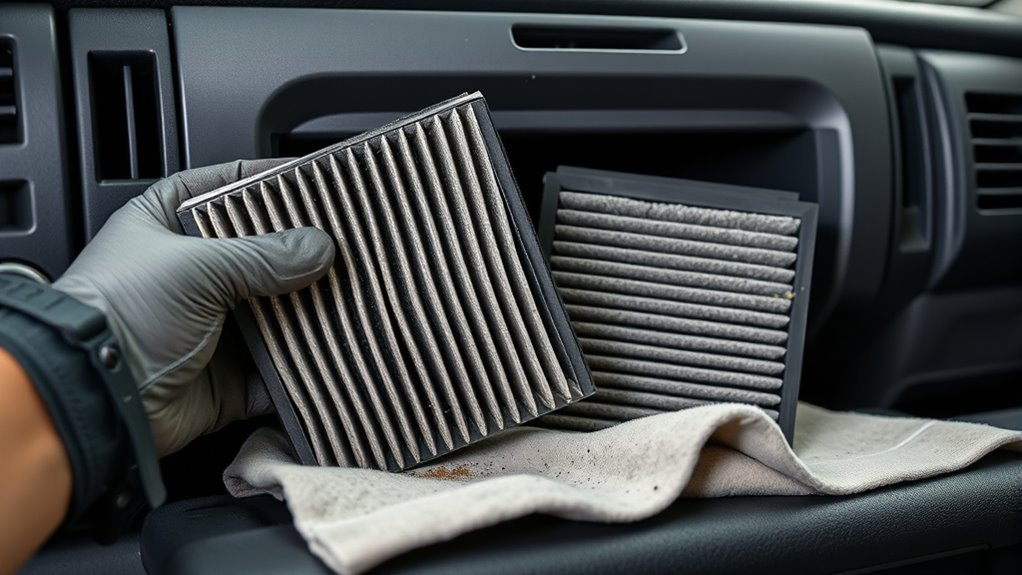
The best Tundra cabin air filter depends on your driving conditions and how much upkeep you want. Genuine Toyota filters focus on correct fit. FRAM Fresh Breeze uses Arm & Hammer baking soda with carbon for odor control. K&N sells washable Tundra cabin filters for reuse, while WIX offers cabin filters that target airborne contaminants and HVAC performance.
[Products Worth Considering]

This Puroma cabin air filter uses activated carbon and a close-meshed filter layer to help trap odors, smog, smoke, and microscopic particles before they enter the cabin. It supports fresher air, helps reduce window fogging, and can improve comfort while also helping maintain HVAC airflow and performance. Designed for a straightforward installation, it is a practical replacement filter for a wide range of compatible Hyundai, Kia, Chevrolet, GMC, and Saturn vehicles.

This cabin air filter combines MERV 13 filtration with activated carbon to help trap fine particles and reduce unwanted odors inside your vehicle. Built with four-layer filtration and OEM-sized fitment, it supports cleaner airflow and straightforward installation for a wide range of compatible Hyundai, Kia, GMC, Chevy, and Saturn models. Replace it on schedule to help maintain fresh, comfortable air for everyday driving.

This Puroma cabin air filter uses activated carbon and a close-meshed non-woven layer to help block airborne particles and reduce unwanted odors inside the vehicle. It supports cleaner cabin air and improved HVAC airflow, helping maintain comfortable heating and cooling performance. Designed for quick installation, it is compatible with a wide range of Toyota, Lexus, Mazda, and Subaru models.
Washable Vs Disposable
Choose a washable filter if you want reuse and don’t mind cleaning it. K&N lists washable cabin air filters for Tundra models and markets them as reusable. This option can lower waste, but it only works well if you clean and dry the filter as directed.
Choose a disposable filter if you want a simple swap. Paper, carbon, and OEM-style filters give you predictable service with less upkeep. Replace them when they look dirty or when your maintenance schedule calls for it.
- Use washable filters when you prefer reuse and regular cleaning.
- Use disposable filters when you want fast, low-effort replacement.
- Use activated carbon filters when odor control matters most.
- Use Genuine Toyota filters when exact fit gives you the most confidence.
Top Brand Options
Pick by fit, filtration need, and maintenance style. Genuine Toyota works well when you want an original-equipment fit. FRAM Fresh Breeze can help with odors because it uses carbon and Arm & Hammer baking soda. K&N suits drivers who want a washable unit. WIX cabin filters suit drivers who want a conventional replacement filter built for cabin contaminants.
| Brand | Type | Best Fit |
|---|---|---|
| Genuine Toyota | OEM replacement | Factory-style fit |
| FRAM Fresh Breeze | Carbon and baking soda | Odor control |
| K&N | Washable | Reuse |
| WIX | Cabin filtration media | Dust and debris control |
| MicroGard | Aftermarket replacement | Budget-friendly swaps |
Before You Buy a Replacement Cabin Filter
Match the filter to your Tundra’s exact model year and trim before you buy. Cabin filter sizes can change across generations, and a close-looking filter may not seal the housing correctly. Check the part finder, your owner’s materials, or a trusted parts counter if you feel unsure.
Also check whether the filter includes an airflow arrow. That arrow matters because the filter media often works best in one direction. A backward filter can fit in the slot but still reduce performance.
How to Replace the Cabin Filter Yourself
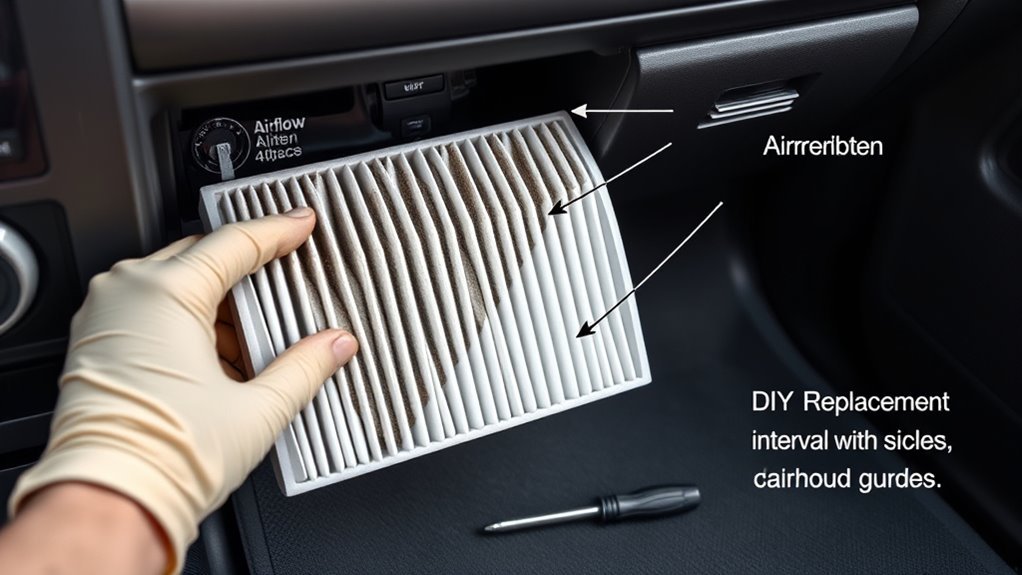
Start by opening the glove box and clearing out loose items. Release the glove box stops or damper as your model requires, then lower the box enough to reach the filter cover. Remove the cover and pull the old filter straight out.
Locate the filter compartment behind the glove box, remove the cover, slide out the old filter, and inspect orientation before replacing.
- Check the airflow arrow on the old filter before you remove it fully.
- Vacuum loose leaves or grit from the housing if you can reach them safely.
- Slide the new filter in with the airflow arrow in the correct direction.
- Seat the filter flat so the edges do not fold or bind.
- Reattach the cover, raise the glove box, and test the vents.
Warning: Do not force the cover closed because a bent filter can leak dust around the edges.
This DIY job usually needs little more than patience and a clean work area. Work slowly, keep track of clips, and avoid bending the new filter. A correct install helps the HVAC system move cleaner air through the cabin.
[Products Worth Considering]

PurolatorBOSS Premium Cabin Air Filter helps keep the air inside your vehicle cleaner by capturing dust, odors, fumes, and other tiny particles. Its activated carbon and microfiber filtration support fresher cabin air while helping protect your vehicle’s HVAC system and maintaining strong airflow. Designed for a precise OEM-style fit, it installs easily and is compatible with a wide range of Toyota models.

This cabin air filter with activated carbon is designed to help keep vehicle interiors fresher by filtering airborne dust, pollen, and odors from the HVAC system. It serves as a replacement for CF10285 and multiple OEM part numbers, with broad fitment across many Toyota, Lexus, Scion, Subaru, Land Rover, Jaguar, and Pontiac models. Built for compatibility and dependable performance, it is a practical maintenance part for improving cabin air quality.
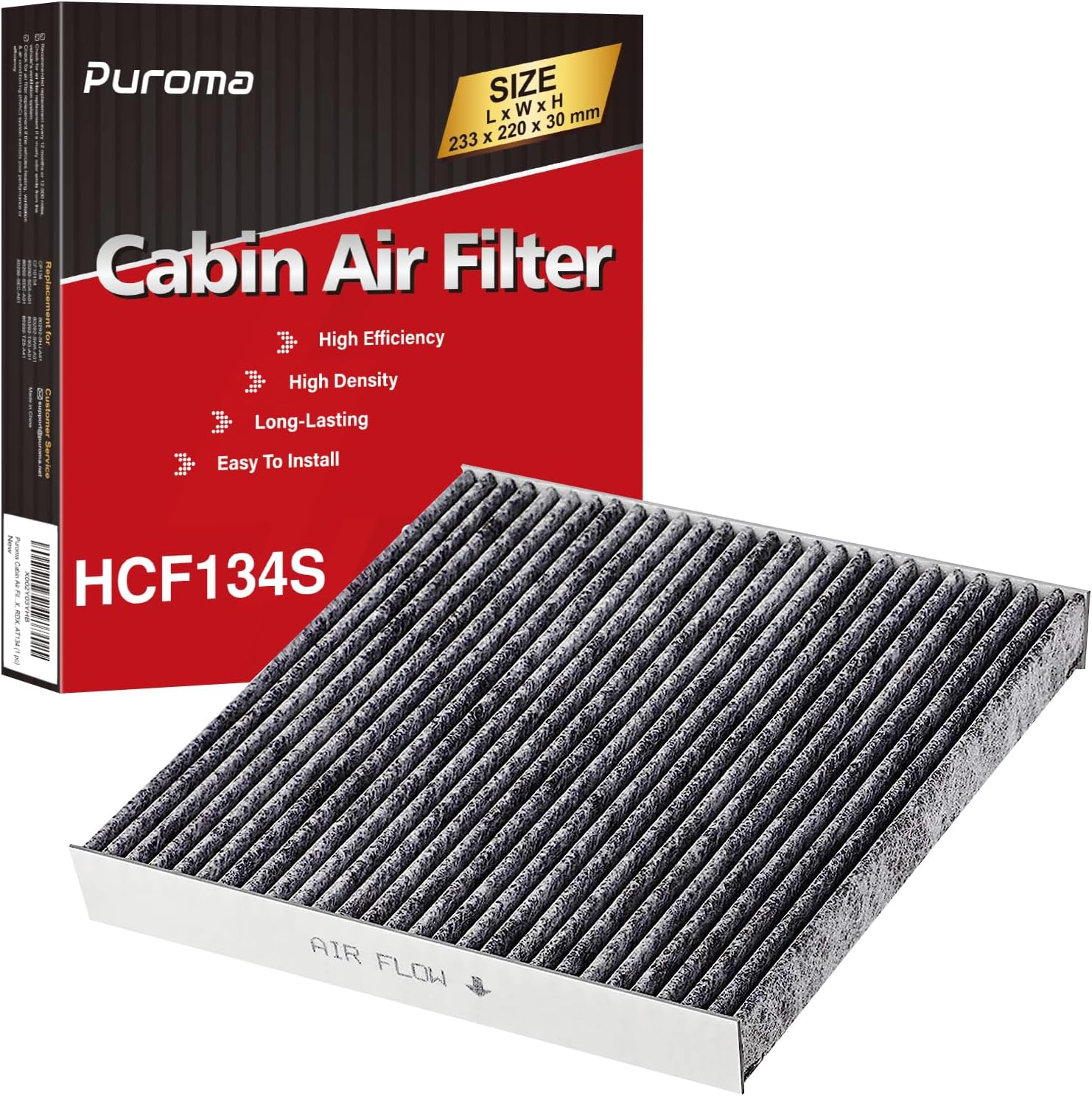
Puroma cabin air filter helps keep your vehicle interior fresher by capturing odor-causing contaminants and supporting cleaner airflow through the HVAC system. Its close-meshed filter layer and activated carbon design improve filtration performance while helping maintain efficient heating and air conditioning. Designed for a wide range of Honda and Acura models, it offers a straightforward installation and reliable passenger compartment protection.
When to Get Dealer Service or Professional Inspection
Get dealer service or a professional inspection if the filter cover does not close, the glove box hardware feels stuck, or airflow stays weak after a new filter. A technician can confirm the correct part, inspect the housing, and check for leaves or debris near the blower intake.
ToyotaCare can help with normal factory scheduled maintenance for many new Toyota vehicles during the covered period. Toyota’s current maintenance plan page lists ToyotaCare as 2 years or 25,000 miles for many new Toyota vehicles. ToyotaCare Plus may extend paid coverage up to 5 years or 75,000 miles, but that is not the same as the standard no-cost ToyotaCare plan.
Note: Ask the service advisor whether your specific plan covers cabin air filter replacement before you approve the work.
Keep a simple maintenance log with date, mileage, filter brand, and driving conditions. That record helps you decide whether your Tundra needs a normal 30,000-mile interval or a shorter severe-use schedule.
[Products Worth Considering]

This cabin air filter is designed to fit a wide range of Toyota, Lexus, Subaru, Scion, Land Rover, Jaguar, and Pontiac vehicles, making replacement simple and convenient. Its activated carbon construction helps capture dust and pollen while reducing odors for a fresher cabin environment. The filter also supports smoother HVAC airflow and helps maintain comfortable temperature control during everyday driving.

This Puroma cabin air filter helps keep your vehicle’s interior air cleaner by trapping particles and reducing unwanted odors with an activated carbon layer. It supports efficient HVAC airflow for improved heating and cooling performance while offering a simple, quick installation. Designed for a wide range of Toyota, Lexus, Mazda, and Subaru models, it is a practical replacement filter for maintaining a fresher driving experience.

This cabin air filter replacement is designed to help keep your vehicle’s interior air fresher and cleaner by capturing dust, odors, and fine particles with a multi-layer filtration structure. The activated carbon layer helps reduce unwanted smells, while the extended service life makes it a practical maintenance part for many compatible Toyota, Lexus, Subaru, Scion, and Jaguar models.
Frequently Asked Questions
How Frequently Does a Cabin Air Filter Need to Be Replaced?
You should replace many Tundra cabin air filters about every 30,000 miles or 36 months under normal use. Check it closer to every 10,000 miles if you drive in dust, pollen, smoke, or off-road conditions.
What Is the Maintenance Schedule for the 2026 Toyota Tundra?
Your 2026 Tundra schedule can vary by engine, drivetrain, market, and use. Use your Toyota maintenance guide or the Toyota Owners maintenance tool for the exact schedule, then shorten filter checks if your truck sees severe dust.
What Is the 100,000 Mile Service on a Toyota Tundra?
A 100,000-mile service usually focuses on major inspections, fluids, filters, brakes, tires, belts, and drivetrain items. Check your model-year guide because Toyota service items can change by year and powertrain.
Can You Drive With a Dirty Tundra Cabin Air Filter?
You can usually drive with a dirty cabin filter, but you should not ignore it. A clogged filter can reduce vent airflow, trap odors, and make the blower work harder to move air.
Does a Tundra Cabin Air Filter Affect Engine Performance?
No, the cabin air filter does not feed air to the engine. It filters air for the passenger cabin, so it mainly affects HVAC airflow, cabin odor, and comfort.
Conclusion
Use 30,000 miles or 36 months as your normal Tundra cabin air filter target, then inspect sooner when dust, pollen, smoke, or off-road use adds more load. Check the filter behind the glove box when airflow drops, odors show up, or the media looks packed with debris. Replace it with the right fit, follow the airflow arrow, and write down the mileage. A few minutes of filter care can keep your Tundra cabin cleaner and more comfortable on every drive.
References
- 2025 Toyota Tundra Warranty and Maintenance Guide – Toyota Motor Sales, U.S.A., 2025
- Maintenance Plans – Toyota Motor Sales, U.S.A., 2026
- Cabin Air Filters – Toyota Auto Parts, 2026
- FRAM Fresh Breeze Cabin Air Filter – FRAM, 2026
- Toyota Tundra Replacement Cabin Air Filters – K&N, 2026
- WIX Cabin Air Filters – WIX Filters, 2026


[…] Replace it sooner when dust, leaves, heavy traffic, or off-road use causes visible restriction. See how to inspect and replace a Tundra cabin air filter for the separate airflow […]
[…] airflow. Inspect the cabin filter if the truck has a serviceable filter (see the Tundra cabin air filter replacement guide), confirm every blower speed, and check the intake and vents for […]