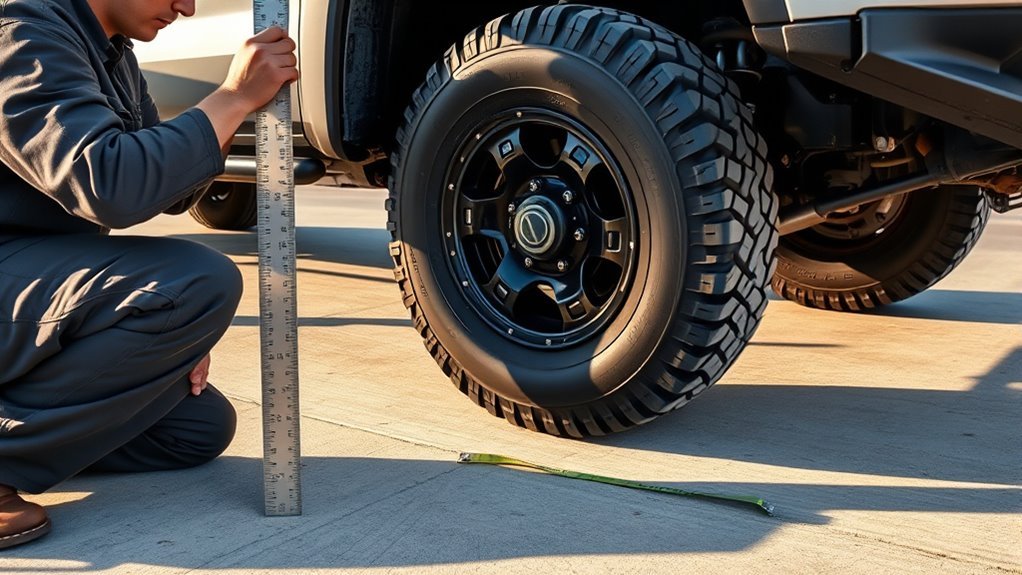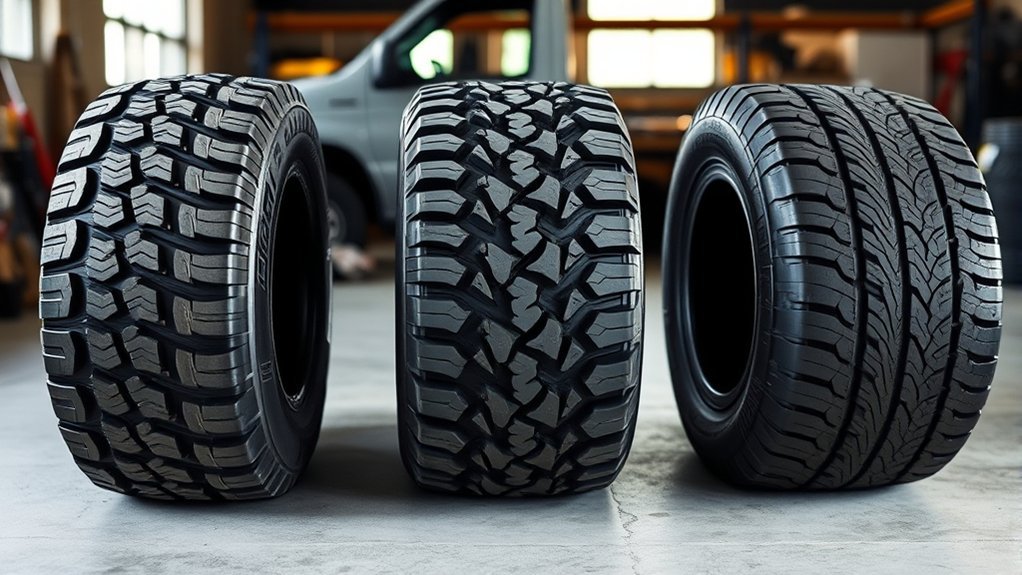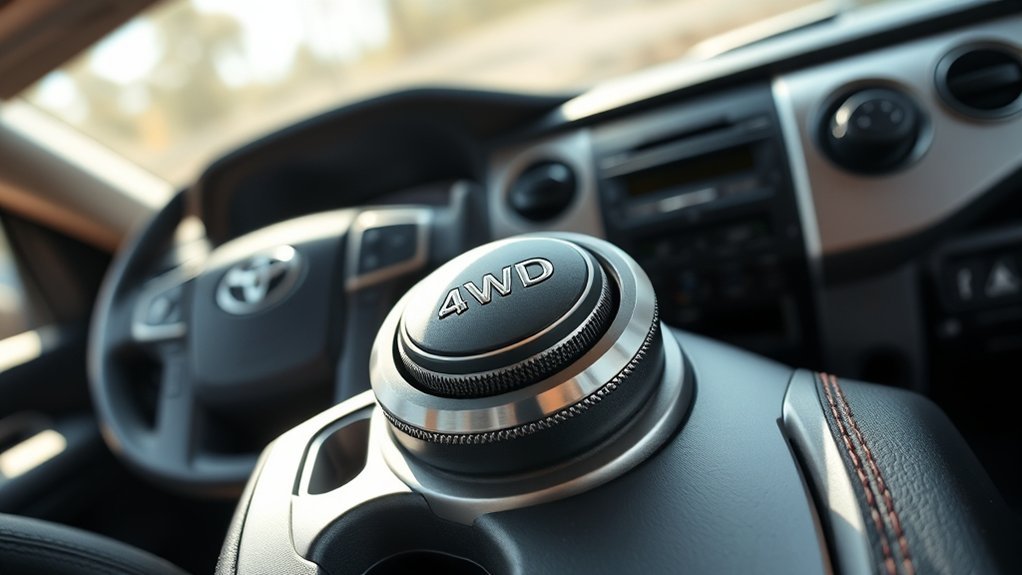
The Toyota Tundra 4WD system is easiest to understand when you separate the hardware from the helper systems. Most Tundra 4×4 models use a selectable part-time four-wheel-drive setup with 2H, 4H and 4L. Depending on year, trim and package, the truck may also add traction aids such as Multi-Terrain Select, Crawl Control, Downhill Assist Control, Auto LSD, A-TRAC-style brake intervention, a Multi-Terrain Monitor and an electronically locking rear differential. Always confirm the exact procedure in your owner’s manual, because controls and feature availability vary by model year and package.
Quick Answer
The Tundra 4WD system lets you drive normally in 2H, shift to 4H for snow, mud, gravel or loose trails, and use 4L for slow, high-torque work such as steep climbs, deep sand or controlled descents. Current Tundra 4×4 models should be treated as part-time 4WD unless your owner’s manual says otherwise.
Key Takeaways
- 2H is for normal dry pavement and daily driving.
- 4H is for slippery or loose surfaces where the tires can slip, such as snow, mud, dirt roads or gravel.
- 4L is for low-speed, high-torque situations such as steep grades, deep mud, sand, rocks or careful off-road crawling.
- Do not use part-time 4WD on dry, high-traction pavement because drivetrain binding can damage components.
- The rear locker, Multi-Terrain Select and Crawl Control are helpful off-road, but they are trim/package-dependent and have speed and surface limits.
Tundra 4WD Configurations: Part-Time, Not Full-Time
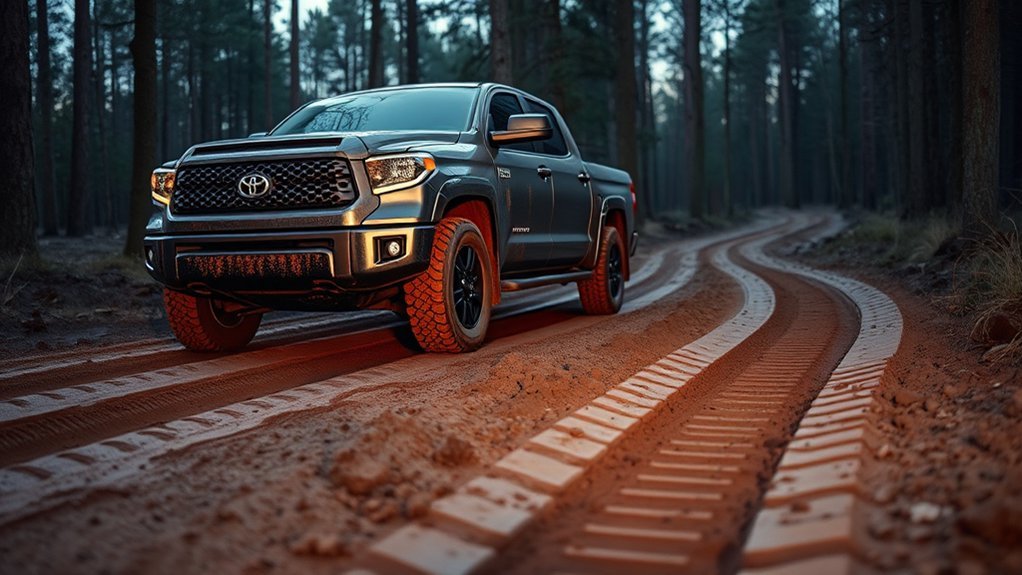
For current U.S. Toyota Tundra 4×4 models, the practical setup to understand is part-time 4WD. That means you normally drive in rear-wheel drive, then select 4H or 4L when the road or trail surface is loose enough to let the tires slip.
This matters because part-time 4WD does not work like an all-wheel-drive crossover. When 4H or 4L is engaged, the front and rear drivetrains are tied together through the transfer case. On loose surfaces, tire slip relieves stress. On dry pavement, that stress can build up as driveline windup or binding.
Warning: Do not use 4H or 4L on dry, high-traction pavement unless your owner’s manual specifically allows it. Binding can make the truck hop, resist turning, wear tires, or damage drivetrain parts.
You may see Toyota full-time 4WD and Torsen center differential discussions online, but those references often apply to other Toyota models or older/different drivetrains. For a Tundra, verify your exact year, trim and transfer-case controls before assuming it has full-time 4WD.
Tundra 2H, 4H and 4L: What Each Mode Does
The Tundra’s 4WD modes are built for different surfaces and speeds. Use the table below as a practical guide, then follow the exact owner’s-manual steps for your truck.
| Mode | Best Use | Avoid |
|---|---|---|
| 2H | Normal dry roads, highways, commuting and best fuel economy. | Deep snow, mud, sand or loose climbs where rear tires spin. |
| 4H | Snow, ice, gravel, wet dirt roads, sand, mud and light trails where you need more traction at moderate speeds. | Dry pavement, tight paved turns and high-traction surfaces. |
| 4L | Slow, high-torque work: steep climbs, descents, deep sand, deep mud, rocks, recovery and controlled crawling. | High-speed driving, dry pavement and normal road use. |
Think of 4H as the mode for traction at travel speed and 4L as the mode for control at low speed. If the truck is moving easily and you only need extra grip, 4H is usually the right choice. If you need slow crawling, stronger engine braking or more torque multiplication, choose 4L.
How to Engage Tundra 4WD Modes Safely
At a Glance
| Time Required | Less than 1 minute once you know the controls |
| Difficulty | Easy, but surface and speed matter |
| Tools Needed | No tools; use the 4WD selector and owner’s manual |
| Cost | Free if used correctly; expensive if forced or used on the wrong surface |
Shift From 2H to 4H
- Confirm the surface is slippery or loose enough for 4WD, such as snow, ice, gravel, mud, sand or a dirt trail.
- Reduce speed according to the owner’s manual for your model. Toyota’s general 4WDemand guidance says to slow to under 62 mph before shifting into 4H.
- Turn or move the 4WD selector to 4H.
- Wait for the 4H indicator to confirm engagement before relying on the added traction.
- Drive smoothly. Avoid sharp throttle inputs that can break traction.
Shift From 4H Back to 2H
- Return to a straight, stable path if possible.
- Reduce speed according to your owner’s manual.
- Move the selector from 4H to 2H.
- Confirm the 4H indicator is off before resuming normal dry-road driving.
Shift Into 4L
- Bring the truck to a complete stop.
- Keep your foot on the brake.
- Shift the transmission to Neutral.
- Move the 4WD selector to 4L. On some Toyota systems, you may need to push the selector while turning it.
- Wait for the 4L indicator to confirm engagement.
- Shift back into Drive or the gear your owner’s manual recommends, then proceed slowly.
Shift Out of 4L
- Stop the truck completely.
- Hold the brake and shift the transmission to Neutral.
- Move the selector from 4L back to 4H or 2H, depending on the surface.
- Wait for the indicator light to confirm the change.
- Resume driving only after the system finishes shifting.
Pro Tip: Shift into 4H before the truck is badly stuck. 4WD works best when it prevents wheelspin, not after the tires have already dug deep holes.
Tundra Traction Tech: MTS, CRAWL, Auto LSD, A-TRAC and the Rear Locker
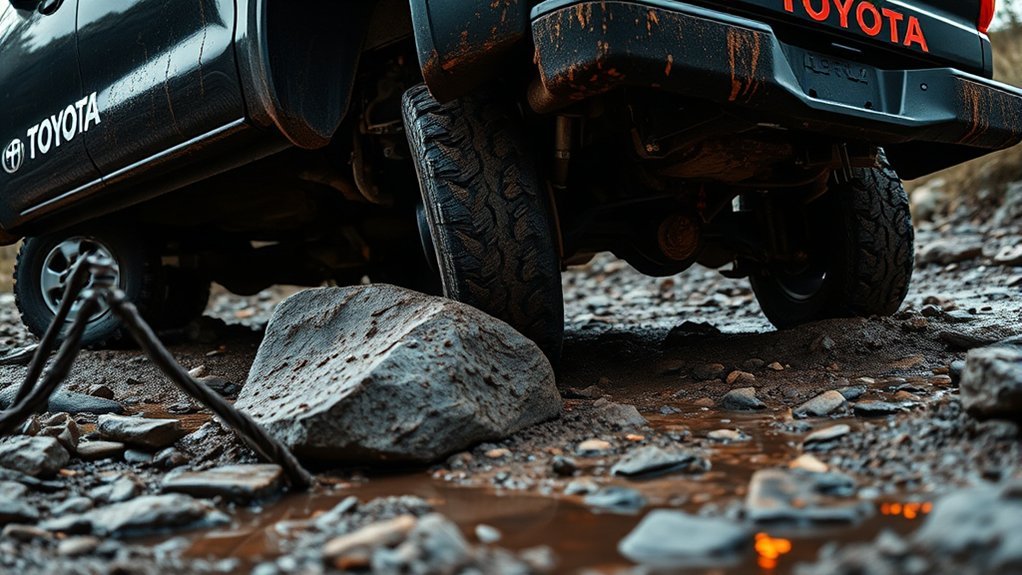
The 4WD selector is only one part of the Tundra’s traction story. Depending on model year and equipment, the truck may also use brake-based traction control, Multi-Terrain Select, Crawl Control, Downhill Assist Control, a Multi-Terrain Monitor and an electronically locking rear differential.
[Products Worth Considering]

The MaxxHaul Solid Rubber Wheel Chock 2-Pack provides dependable vehicle stabilization for cars, trucks, trailers, and RVs in garages, driveways, job sites, and campgrounds. Its solid rubber construction, non-slip traction surface, and built-in handle make placement easy while delivering long-lasting grip and all-weather durability for safer parking and storage.

This full set seat cover package delivers a custom-fit upgrade for compatible Toyota models, helping refresh worn interiors with a clean, premium look. Thickened foam and heavy-duty faux leather provide supportive comfort, stain resistance, and improved durability, while the quick-install design helps keep the covers secure during daily driving. Front seat protection includes air bag compatible construction, and the rear bench design uses dual zippers for flexible fit across split seat configurations.

These foldable emergency tire traction pads help give your vehicle the grip it needs to get unstuck from snow, ice, mud, or sand. Each lightweight pad is easy to carry and designed with a honeycomb surface and adjustable angle to improve traction across different road conditions. Built to support heavy loads, they make a practical roadside recovery tool for unexpected driving emergencies.
Multi-Terrain Select
Toyota describes Multi-Terrain Select as a system that adjusts throttle and brake control to help manage wheelspin on different terrain. Where equipped, it can make the truck easier to manage on loose surfaces because it changes how aggressively the truck responds to tire slip.
Crawl Control
Crawl Control acts like low-speed off-road cruise control. Where equipped, it can help manage throttle and braking so you can focus on steering through rough terrain. It is not a replacement for judgment; it is a helper for slow technical driving.
Auto LSD and A-TRAC-Style Brake Intervention
Some Tundra years and trims use brake-based traction aids that slow a spinning wheel so torque can help move the truck through the wheel with more grip. This can feel like an electronic limited-slip effect, but it is not the same as a mechanical limited-slip differential. Use the feature names in your owner’s manual for your exact truck.
Electronically Locking Rear Differential
Toyota says 2026 Tundra TRD Pro models and Tundras equipped with the TRD Off-Road package include an electronically locking rear differential for added traction in 4WD Low applications. When engaged, the rear locker makes both rear wheels turn at the same speed, which can help in ruts, mud, rocks or situations where one rear tire is unloaded.
Warning: Use the rear differential lock only in the conditions described by Toyota. The owner’s manual warns not to lock it while the wheels are spinning and not to drive over 5 mph with the rear differential locked. Some stability and braking assist systems may not operate while the locker is engaged.
Does the Tundra Have Full-Time 4WD or a Torsen Center Differential?
For current Toyota Tundra shopping and ownership questions, do not assume the truck has full-time 4WD or a Torsen center differential. The safer answer is: check your exact year, trim, package and owner’s manual. Current Toyota Tundra materials focus on selectable 4WD, TRD Off-Road/Pro features and the available electronically locking rear differential.
A Torsen center differential is a different type of full-time 4WD hardware used in some Toyota and Lexus applications. It allows front and rear drivetrain speed differences during normal driving, which is why some full-time systems can be used on dry pavement. A part-time Tundra 4WD system is different: it is meant for surfaces where tire slip can occur.
Note: If your Tundra has a 2H/4H/4L selector and no “Auto” or center-differential lock control, treat it as part-time 4WD. Do not use 4H or 4L as an all-weather pavement mode.
Terrain Guide: Which Tundra 4WD Setting Should You Use?
| Situation | Recommended Setting | Why |
|---|---|---|
| Dry highway or city street | 2H | Best for normal handling, fuel economy and drivetrain protection. |
| Snow-covered road | 4H | Adds front-axle drive for better traction where tires can slip. |
| Gravel or dirt road | 2H or 4H | Use 4H if traction is loose, steep or washboarded; use 2H if grip is stable. |
| Deep mud, sand or ruts | 4H or 4L, depending on speed | 4H helps preserve momentum; 4L helps with slow control and torque. |
| Rocky trail or steep climb | 4L | Low range gives better throttle control and engine braking. |
| One rear wheel lifting or spinning | 4L + rear locker, if equipped | The locker forces both rear wheels to turn together for maximum rear traction. |
[Products Worth Considering]

These Tomatoman seat covers are designed to fit Tacoma models across multiple years and trims, giving your front seats a refreshed look with added protection. Made from faux leather with a non-slip backing, they are waterproof, comfortable, and built to resist wear while maintaining compatibility with side airbags for safety. Installation is straightforward with guidance from the manual or video, making them a practical upgrade for daily driving and long-term interior protection.

This windshield sun shade is designed to fit Toyota RAV4 models from 2019 to 2025 and RAV4 Prime models from 2021 to 2024. It helps block UV rays, reduce interior heat buildup, and protect your dashboard, seats, and steering wheel from sun damage. The accordion-folding design makes it easy to set up, store, and carry, while the durable triple-laminate construction adds long-lasting performance.

Reduce Friction: Our shifter cable bushing can reduce friction of the shift rod linkage, making shifting smoother. You don't need to replace the entire shift cable to repair it, which really saves money and time
Common Tundra 4WD Problems and Quick Diagnostics
If your Tundra will not shift into or out of 4WD, do not force the selector. Start with simple checks, then move to mechanical and electronic diagnosis.
Most Tundra 4WD problems are easier to diagnose when you separate driver-input issues, indicator-light behavior, actuator movement, fluid condition and mechanical noise.
- Flashing 4H or 4L light: The system may be waiting to complete the shift. Stop, shift to Neutral if required, roll slightly if the manual allows, and try again gently.
- Won’t shift into 4L: Confirm the truck is fully stopped, the brake is applied and the transmission is in Neutral.
- Binding or hopping in turns: You may be using 4H or 4L on a surface with too much traction. Return to 2H when safe.
- Grinding or clunking: Stop using the system until the transfer case, driveshafts, mounts and fluids are inspected.
- No actuator sound: A fuse, wiring issue, actuator fault or control switch problem may be preventing engagement.
- Repeated failures after correct operation: Have the transfer case fluid, front differential, rear differential, actuator system and diagnostic trouble codes checked.
Note: If a 4WD warning light stays on, the truck makes unusual drivetrain noises, or the system will not disengage, stop guessing and schedule service. Driving with a partially engaged or malfunctioning 4WD system can make damage worse.
Maintenance Tips for Tundra 4WD Reliability
Four-wheel drive works best when the supporting parts are healthy. Add these checks to your normal maintenance routine, especially if you tow, drive through water, or go off-road often.
- Use 4WD periodically: If your manual recommends exercising the system, shift into 4H on a suitable loose surface from time to time so actuators and internal parts do not sit unused for months.
- Check transfer case and differential fluids: Low, contaminated or water-filled fluid can damage gears and bearings.
- Match tire size and wear: Mismatched tires can stress the driveline, especially in 4WD.
- Inspect underbody parts after trails: Look for damaged skid plates, leaking seals, dented housings, torn CV boots and bent brackets.
- Do not spin tires aggressively: Wheelspin followed by sudden traction can shock the drivetrain.
- Follow severe-use intervals: Off-road driving, towing, water crossings and dusty conditions may require more frequent service.
Choosing the Right Tundra 4WD Setup for Your Driving Needs
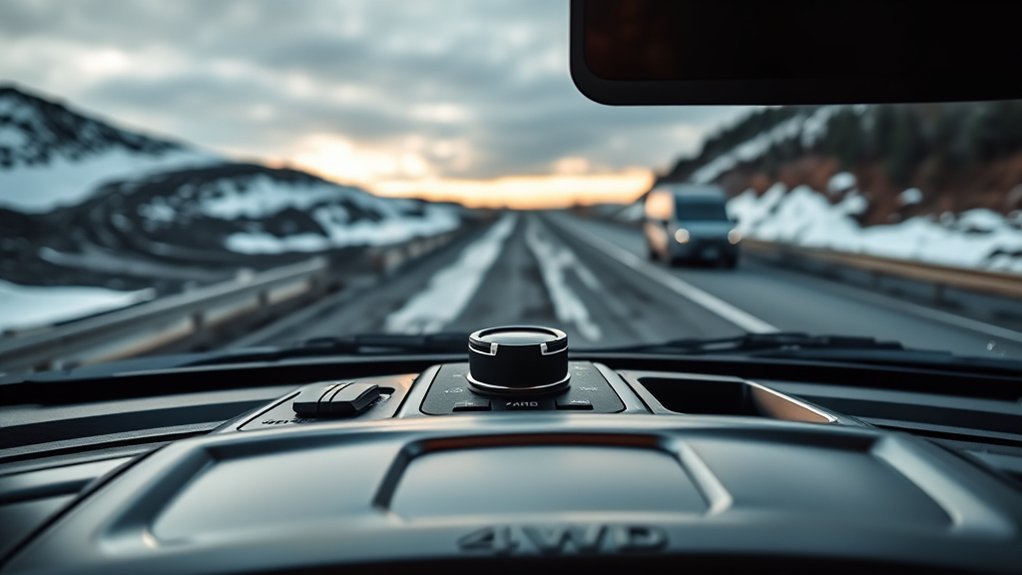
The right Tundra setup depends on where you drive most often. If you mainly commute on pavement and only see occasional snow or gravel, a standard 4×4 Tundra with 2H, 4H and 4L may be enough. If you regularly explore trails, tow into muddy job sites, or drive in deep snow, look for TRD Off-Road or TRD Pro equipment.
[Products Worth Considering]

VEHICLE FITMENT: Compatible with select 2012-2020 Toyota 4Runner, 2005-2017 Toyota Tacoma and 2000-2006 Toyota Tundra 4WD models. Use as a Tacoma transfer case actuator or Tundra transfer case actuator only when the OE number, connector layout, housing shape and transfer case configuration match the original part.

【Vehicle Compatibility】Transfer Case Motor Compatible with Toyota Tundra 2000 2001 2002 2003 2004 2005 2006 4.7L 4663CC 285Cu. In. V8 GAS DOHC Naturally Aspirated;Compatible with Toyota 4Runner 2012 2013 2014 2015 2016 2017 4.0L 3956CC 241Cu. In. V6 GAS DOHC Naturally Aspirated.

【Vehicle Fitment】Compatible with Toyota 4Runner 2004-2009 V6 4.0L(4000CC 1GRFE 24-VALVE), 2014-2019 V6 4.0L(4WD or RWD), Tacoma 2002 L4 2.4L/L4 2.7L/V6 3.4L(4700CC 2UZFE 32-VALVE DOHC), 2005-2010 L4 2.7L(2700CC 16-VALVE 2TRFE / 4000CC 24-VALVE 1GRFE), 2011-2015 L4 2.7L/V6 4.0L(4WD, M/T RWD, RWD), 2016 V6 3.5L (4WD, RWD, M/T 4WD), Tundra 2000-2001 2003-2006 V8 4.7L (4700CC 2UZFE 32-VALVE DOHC)
Daily Driving and Winter Roads
For mostly paved use, 2H is your normal mode. Use 4H when roads are snow-covered, icy, muddy or loose enough for tire slip. Shift back to 2H once the road returns to dry pavement.
Towing and Work Sites
For towing on dry pavement, stay in 2H unless the owner’s manual says otherwise. Use 4H for slippery boat ramps, muddy job sites or loose gravel climbs. Use 4L only when you need slow, controlled torque and the surface allows tire slip.
Off-Road and TRD Packages
If you want the most trail-ready factory setup, prioritize TRD Off-Road or TRD Pro equipment. Those packages can add useful hardware and software such as an electronically locking rear differential, Multi-Terrain Select, Crawl Control, Downhill Assist Control, skid plates, off-road suspension tuning and camera views, depending on year and trim.
Frequently Asked Questions
Can you switch to 4H while driving a Tundra?
Yes, on Toyota 4WDemand part-time 4WD systems, Toyota’s general guidance says to slow to less than 62 mph before shifting into 4H. Always follow your exact owner’s manual, keep the wheels pointed straight if possible, and use 4H only on slippery or loose surfaces.
Do you have to stop to shift a Tundra into 4L?
Yes. For 4L, stop completely, keep your foot on the brake, shift the transmission to Neutral, then select 4L and wait for the indicator to confirm engagement. Do not force the selector if the system does not engage.
Can you drive a Tundra in 4H on dry pavement?
Do not use part-time 4H on dry, high-traction pavement unless your owner’s manual specifically allows it. Dry pavement can cause drivetrain binding because the front and rear drivetrains cannot release speed differences through tire slip.
When should you use the rear differential lock?
Use the rear locker only for low-speed, low-traction off-road situations where one rear tire may spin or lift. Stop wheelspin before locking it, keep speed very low, and unlock it when the obstacle is cleared.
Does the Toyota Tundra have full-time 4WD?
Current Tundra 4×4 models should be treated as selectable part-time 4WD unless your owner’s manual for your exact vehicle states otherwise. Do not assume the Tundra has a full-time Torsen-style center differential just because other Toyota models use that type of system.
Conclusion
The Toyota Tundra 4WD system is built around choosing the right mode before the truck loses traction. Use 2H for normal dry roads, 4H for loose or slippery surfaces, and 4L for slow, high-torque work. If your truck has Multi-Terrain Select, Crawl Control or the rear locker, use those tools only in the situations Toyota designed them for. The most important rule is simple: match the mode to the surface, confirm engagement, and shift back to 2H when traction returns.
Sources
- Toyota 2026 Tundra official page — current Tundra specs, trims, powertrains and capability overview.
- Toyota USA Newsroom: 2026 Toyota Tundra — TRD Off-Road/Pro features, Multi-Terrain Select, Crawl Control, Downhill Assist Control and rear locker availability.
- Toyota Support: How do I operate On-Demand 4 Wheel Drive? — general Toyota 4WDemand 2H, 4H and 4L operation guidance.
- Toyota Owners: Tundra four-wheel drive system — owner-manual guidance for 4H and 4L usage.
- Toyota Owners: Tundra rear differential lock system — rear locker operation, warnings and speed limitations.
- Toyota Support: Multi-Terrain Select and Crawl Control — Toyota explanation of MTS and CRAWL functions.