You need both systems, but they solve different problems. Traction control helps when the tires spin during acceleration. Stability control, usually called ESC, helps when the vehicle starts to skid, plow wide, or rotate more than your steering input calls for. Both use the braking system and engine-torque control to help you stay in control, but neither can overcome worn tires, excessive speed, or poor road judgment.
Quick Answer
Traction control prevents drive-wheel spin when you accelerate on wet, icy, snowy, sandy, or loose surfaces. Stability control helps prevent skids by comparing where you steer with how the vehicle is actually moving, then applying individual wheel braking and reducing engine power to correct understeer or oversteer.
Key Takeaways
- Traction control is mainly about getting moving without wheelspin during acceleration.
- Stability control is mainly about keeping the vehicle pointed where you intended during turns, swerves, and skids.
- ABS, traction control, and ESC work together through shared wheel-speed sensors, brake hydraulics, and control logic.
- Leave both systems on for normal driving, rain, snow, highway use, and public roads.
- Only switch traction control off briefly when controlled wheelspin is needed to free a stuck vehicle from deep snow, mud, or sand.
Quick Decision: Which System Helps You When?

Use the threat to tell the systems apart. If you press the accelerator and a drive wheel spins faster than the others, traction control steps in. If you are cornering, swerving, or skidding and the vehicle is no longer following your steering input, electronic stability control steps in.
| Situation | System That Helps Most | What It Does |
|---|---|---|
| You accelerate from a stop on ice and one tire spins. | Traction control | Reduces engine torque or applies brake pressure to the spinning wheel. |
| You enter a corner too fast and the vehicle pushes wide. | Stability control | Corrects understeer by adjusting braking and power to help the vehicle follow the intended path. |
| The rear of the vehicle starts to slide outward in a turn. | Stability control | Corrects oversteer by applying targeted braking and reducing torque as needed. |
| You brake hard and the tires are about to lock. | ABS | Pulses brake pressure to help maintain steering control during hard braking. |
In everyday driving, keep all three systems active. Traction control helps with propulsion, stability control helps with directional control, and ABS helps you steer while braking hard.
IIHS reports that ESC reduces fatal single-vehicle crash risk by about half for cars and SUVs, while a 2025 NHTSA evaluation found ESC-equipped vehicles were about 51.6% less likely to be in a single-vehicle, first-event rollover crash under the study model.
[Products Worth Considering]
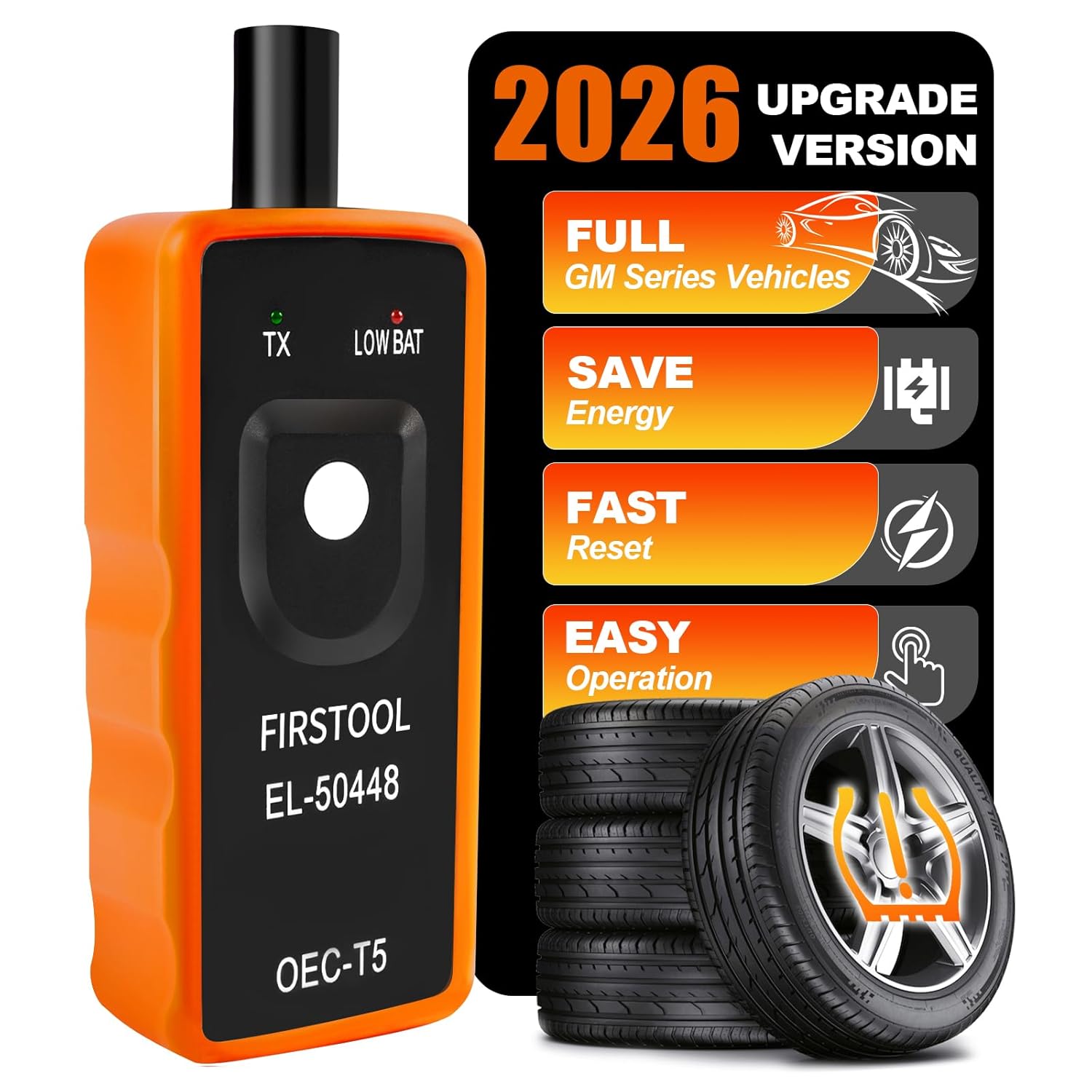
This EL-50448 TPMS relearn tool helps quickly activate and reset tire pressure sensors so your vehicle’s monitoring system stays accurate after tire rotations, sensor replacement, or seasonal tire changes. Designed for many GM-related vehicles and compatible with common 315 and 433 MHz TPMS systems, it offers simple one-button operation and reliable performance for clearing warning lights and relearning sensor positions.

These X-BULL recovery traction tracks help drivers get unstuck from sand, snow, mud, or ice with a stable U-shaped elastic design and a wavy ramp that makes tire entry easier. Built from reinforced nylon, they are flexible, impact-resistant, and designed to perform in extreme temperatures while providing reliable emergency traction for a wide range of vehicles.

This proportional trailer brake controller provides smooth, responsive braking by automatically matching your tow vehicle’s stopping force for safer trailer control. The bright LED digital display makes it easy to monitor voltage output in real time, while adjustable braking and sync settings help tailor performance to different trailers and road conditions. Designed for quick installation and broad compatibility, it supports 1 to 4 axle trailers for dependable towing confidence.
Traction Control: What It Does and When It Activates
Traction control, often labeled TCS, TRAC, ASR, or TC, prevents excessive drive-wheel spin during acceleration. It monitors wheel-speed sensors and looks for a drive wheel turning faster than the others. When the system sees slip beyond its programmed limit, it intervenes automatically.
Depending on the vehicle, traction control may:
- Reduce engine torque by closing the throttle, changing ignition timing, adjusting fuel delivery, or limiting electric motor output.
- Apply brake pressure to the spinning drive wheel so more usable force can go to the tire with grip.
- Work with the transmission, all-wheel-drive system, or differential controls to smooth power delivery.
- Flash a dashboard traction light while it is actively controlling wheelspin.
Traction control is most useful during low-traction acceleration: pulling away from a stop on wet pavement, climbing an icy driveway, accelerating on gravel, or applying too much throttle while turning on a slick road. The goal is not maximum speed; the goal is controlled forward motion.
Pro Tip: If the traction light flashes briefly while you accelerate, ease off the throttle. The system is telling you the tires are near their grip limit.
Stability Control: How ESC Corrects Yaw and Keeps the Car on Course
Electronic stability control watches more than wheelspin. Under FMVSS No. 126, an ESC system must be able to apply brake torques individually to the wheels, use a closed-loop algorithm to limit oversteer and understeer, monitor steering input, determine yaw behavior, and modify engine torque when needed to help the driver maintain control.
In plain English, ESC compares two things:
- Your intended path, based mainly on steering angle and vehicle speed.
- The vehicle’s actual motion, based on wheel speed, yaw rate, lateral acceleration, and related sensor data.
If those two paths do not match, ESC acts quickly. For example, if the vehicle understeers and turns less than you asked, the system may brake an inside rear wheel to help the vehicle rotate. If the vehicle oversteers and rotates too much, it may brake an outside front wheel to counter the spin. Exact strategies vary by vehicle, road surface, and speed, but the purpose is the same: help the vehicle follow the direction you are steering.
ESC is most useful during high-speed cornering, sudden avoidance maneuvers, slippery curves, hydroplaning events, and loss-of-control skids. A blinking stability-control light usually means the system is actively intervening. A light that stays on may mean the system has been switched off or has a fault.
Warning: ESC helps reduce skid risk, but it does not cancel physics. If you enter a corner too fast, drive on bald tires, or brake suddenly on ice, the system may not have enough tire grip available to save the vehicle.
[Products Worth Considering]

This GM TPMS relearn tool helps reset tire sensors, clear warning lights, and match tire positions after rotation quickly at home. Designed for Chevrolet, GMC, Cadillac, and Buick vehicles, it offers one-button operation, fast activation, and broad compatibility with many GM models. It is best suited for OE/OEM sensors and includes paper instructions plus video guidance for easier DIY use.

TOPDC heavy duty jumper cables are designed to help drivers get a dependable boost when a battery runs down. The 20-foot length offers added reach for cars, SUVs, and trucks, while insulated serrated clamps provide a secure connection to top-post and side-terminal batteries. A flexible PVC jacket, carry bag, and included guide make these cables practical for everyday emergency use.
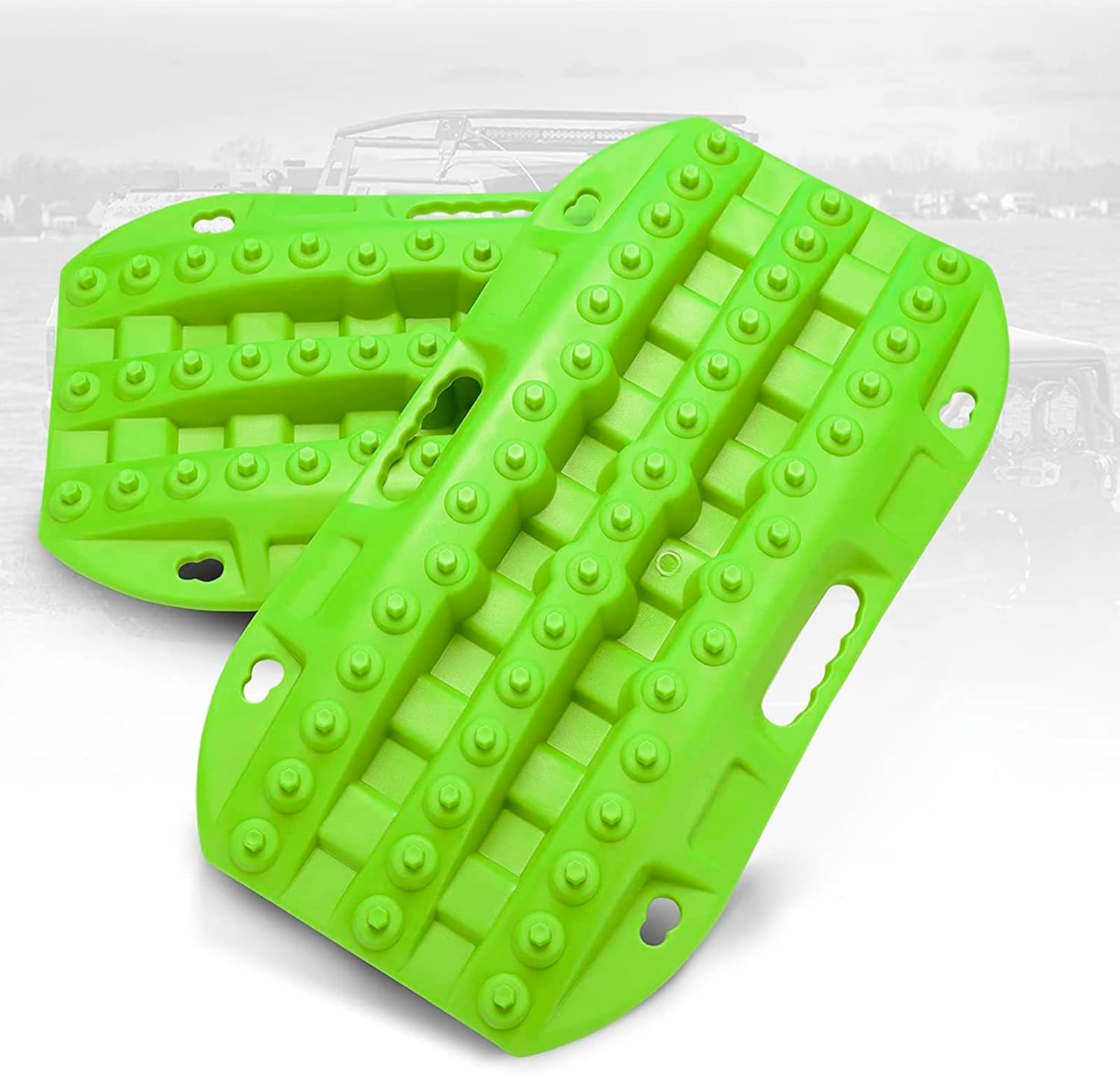
These short recovery traction boards are designed to help ATVs, UTVs, and other off-road vehicles regain grip in mud, sand, and snow. Built with strengthened teeth and a durable polypropylene construction, they provide reliable traction, easy handling, and year-round performance in tough conditions. Their nested, space-saving design and integrated shovels make them practical for carrying and using on remote adventures.
Traction Control vs. Stability Control: The Simple Difference
The easiest way to remember the difference is this: traction control manages wheelspin; stability control manages vehicle direction.
Traction control mostly cares about whether a drive wheel is spinning too fast during acceleration. Stability control cares about whether the whole vehicle is rotating or sliding away from the path you intended. That is why ESC uses additional sensors such as steering-angle, yaw-rate, and lateral-acceleration sensors.
Traction control can feel like the engine suddenly lost power because the system is cutting torque to regain grip. Stability control can feel like one corner of the vehicle is braking by itself because the system is creating a correcting yaw moment. Both sensations are normal when the systems are active.
[Products Worth Considering]

The Masoll M13 Tire Pressure Monitoring System helps monitor tire pressure for sedans, SUVs, pickup trucks, RVs, and travel trailers with four tires. It features automatic reference pressure calibration, alerting you when pressure changes fall outside the set range, while solar charging and auto wake-up support convenient everyday use. With precise pressure detection, an easy-to-read color LCD, and adaptive backlighting, it is designed to improve driving safety and help protect tire life.

This color coded tire tread depth gauge helps you quickly check tire wear and monitor when replacement is needed. Calibrated in easy-to-read 32nds with clear red, yellow, and green ranges, it offers fast visual results for cars, trucks, motorcycles, and other passenger vehicles. The pocket clip makes it simple to keep on hand for routine maintenance and safety checks.

This Yuirote universal car motor diagnostic tool helps drivers quickly detect engine fault codes and identify system issues for routine inspections and maintenance. It also supports electronic parking brake reset and emergency release functions, making it useful for handling EPB-related problems without a repair shop visit. Its compact, ergonomic design and broad vehicle compatibility make it a practical choice for car owners and DIY repair enthusiasts.
How ABS, Traction Control, and ESC Work Together

ABS, traction control, and ESC are separate functions, but they are built on much of the same foundation. A NHTSA functional-safety report describes modern conventional hydraulic braking systems as including antilock brakes, traction control, and electronic stability control as related safety-critical braking functions. Bosch also describes its stability program as comprising ABS and traction-control functions while adding skid detection and correction.
- ABS helps prevent wheel lock during hard braking so you can keep steering.
- Traction control uses wheel-speed data and brake/torque control to reduce wheelspin during acceleration.
- ESC adds steering-angle, yaw-rate, and lateral-acceleration information to detect understeer or oversteer.
- The brake hydraulic unit lets the system pulse or apply brake pressure at individual wheels.
- The engine or motor controller can reduce torque when the tires are asking for more grip than the road can provide.
These systems are not a replacement for safe driving. They are a safety net that works best when you drive smoothly, use good tires, leave space, and slow down before the road surface changes.
Dashboard Lights: What They Mean
The exact symbols vary by brand, so your owner’s manual is the final authority. In general, these meanings apply:
| Dashboard Behavior | Likely Meaning | What You Should Do |
|---|---|---|
| Traction or stability light flashes briefly | The system is actively controlling slip or skid. | Drive smoothly and reduce throttle or speed. |
| “TC Off,” “ESC Off,” or similar message | A traction or stability function has been disabled or put into a reduced mode. | Turn it back on unless you are freeing a stuck vehicle or following a closed-course procedure. |
| Traction, ESC, ABS, or brake warning stays on | The system may have a fault, disabled sensor, low voltage issue, or braking-system problem. | Drive cautiously and have the vehicle inspected. Treat red brake warnings as urgent. |
Note: Brand names differ. GM uses StabiliTrak, Toyota often uses VSC, BMW uses DSC, Honda uses VSA, and Mercedes-Benz/Bosch commonly use ESP. These names usually refer to stability-control systems that also work with traction control and ABS.
When to Keep Them On: And When Safely to Switch Them Off
Keep traction control and ESC on for normal driving, highways, rain, snow, ice, gravel, and public roads. That is the safest default, and it is how the vehicle was designed to operate.
You may need to turn traction control off briefly when the vehicle is stuck and needs controlled wheelspin to move through deep snow, mud, loose sand, or a rutted surface. In those cases, TC may cut power so aggressively that the vehicle cannot rock forward and backward. Turn it off only long enough to recover the vehicle, use gentle throttle, avoid spraying debris, and turn the system back on as soon as you are moving again.
Turning off ESC is different. ESC should stay on for public-road driving. Some vehicles offer a sport, track, sand, snow, or off-road mode that reduces ESC intervention without fully disabling it. Fully disabling ESC should be reserved for experienced drivers in controlled environments such as closed courses, manufacturer-approved off-road procedures, or motorsport settings where run-off space and recovery support exist.
Warning: Do not switch off ESC to “have more control” on public roads. You are removing a system designed to correct loss-of-control events faster than a human driver usually can.
Common Mistakes Drivers Make With These Systems
Many drivers overestimate what traction and stability systems can do. Avoid these mistakes:
- Thinking AWD replaces traction control or ESC. All-wheel drive can help you accelerate, but it does not shorten stopping distance or prevent every skid.
- Driving too fast for the tires. Winter tires, tire tread depth, and tire pressure often matter more than the electronic aids.
- Panicking when the light flashes. A flashing light usually means the system is working, not failing.
- Ignoring a steady warning light. If the ABS, traction, or stability warning stays on after restart, get the vehicle scanned and repaired.
- Leaving TC off after getting unstuck. Once the vehicle is free, reactivate the system before returning to normal driving.
How to Drive When Traction or Stability Control Activates
When the system intervenes, help it instead of fighting it. Keep your eyes where you want to go, steer smoothly, and avoid sudden throttle or brake inputs. If traction control cuts power, ease off the accelerator until the tires regain grip. If ESC activates in a corner or emergency maneuver, stay calm and continue steering toward your safe path.
Do not pump the brake pedal in a modern ABS-equipped vehicle during emergency braking. Press firmly and let ABS modulate the brake pressure. You may feel pulsing through the pedal; that is normal.
Frequently Asked Questions
What happens when you turn off traction control and stability control?
You reduce or remove the electronic help that limits wheelspin and corrects skids. With traction control off, the drive wheels can spin more easily during acceleration. With stability control off, the vehicle is less able to correct understeer or oversteer automatically. That increases risk on wet, icy, snowy, or uneven roads.
Is it okay to drive with traction control on all the time?
Yes. For normal driving, traction control should stay on. It works quietly in the background and only intervenes when the drive wheels begin to spin. The main exception is brief self-recovery from deep snow, mud, or sand, where controlled wheelspin may be needed.
Is StabiliTrak the same as traction control?
No. StabiliTrak is GM’s name for its stability-control system. It works with traction control and ABS, but it does more than stop wheelspin. It helps correct vehicle yaw, understeer, and oversteer so the vehicle follows the driver’s intended path more closely.
Does traction control help in snow?
Yes, traction control helps prevent wheelspin when accelerating on snow. However, if the vehicle is stuck in deep snow, the system may cut too much power. In that specific case, briefly turning traction control off may help you rock the vehicle free. Turn it back on afterward.
Can stability control fix every skid?
No. Stability control can reduce the risk and severity of many skids, but it cannot create grip where none exists. Speed, tires, road surface, steering input, vehicle load, and braking all affect whether the system has enough traction available to recover the vehicle.
Why does the traction control light come on after tire or wheel work?
A steady light after tire, brake, alignment, or wheel-speed-sensor work can point to a damaged sensor wire, mismatched tire size, low battery voltage, steering-angle calibration issue, or stored fault code. Have the vehicle scanned with a tool that can read ABS and stability-control codes.
Conclusion
Keep traction control and stability control on for everyday driving. Traction control helps stop wheelspin when you accelerate; stability control helps correct skids and yaw when the vehicle is not following your intended path. ABS supports both by controlling brake pressure during hard braking. Together, these systems reduce loss-of-control risk, especially on wet, snowy, icy, or loose surfaces.
Only consider switching traction control off briefly when you need controlled wheelspin to free a stuck vehicle. Leave ESC on unless you are in a controlled off-road or closed-course setting and understand the added risk. Good tires, smooth inputs, and safe speed still matter most.
Sources
- eCFR — 49 CFR § 571.126, Electronic Stability Control Systems for Light Vehicles — federal ESC definition, required equipment, oversteer/understeer language, and system requirements.
- NHTSA — Evaluation of Electronic Stability Control: FMVSS No. 126, an Update — 2025 evaluation of ESC effectiveness for single-vehicle, first-event rollover crashes.
- IIHS — Life-saving benefits of ESC continue to accrue — crash-risk reduction estimates for ESC-equipped vehicles.
- NHTSA — Functional Safety Assessment of a Generic, Conventional, Hydraulic Braking System With Antilock Brakes, Traction Control, and Electronic Stability Control — relationship between ABS, traction control, ESC, and braking-system safety functions.
- Bosch Mobility — Electronic Stability Program — manufacturer explanation of ESP, ABS, traction control integration, sensors, and skid correction.