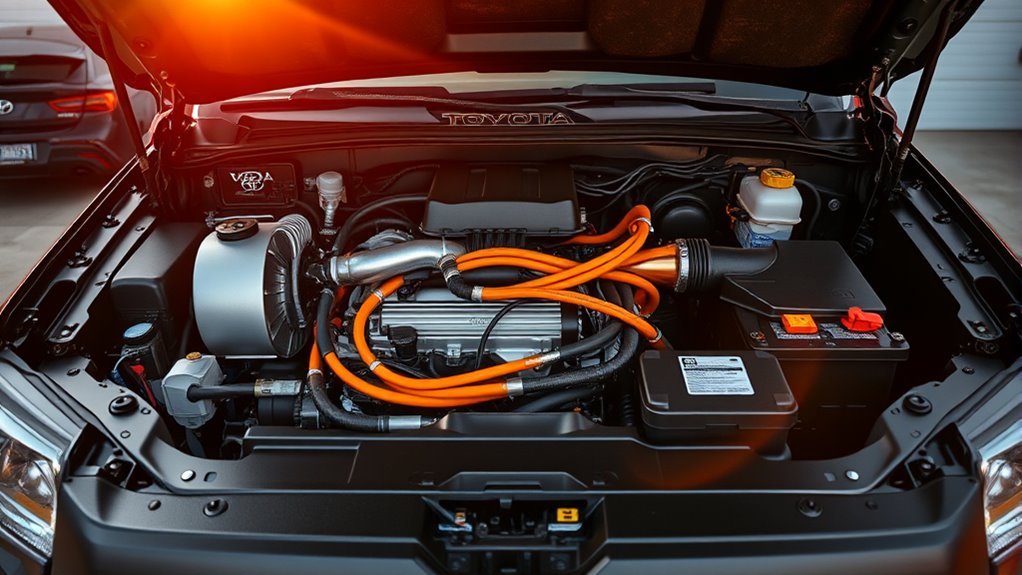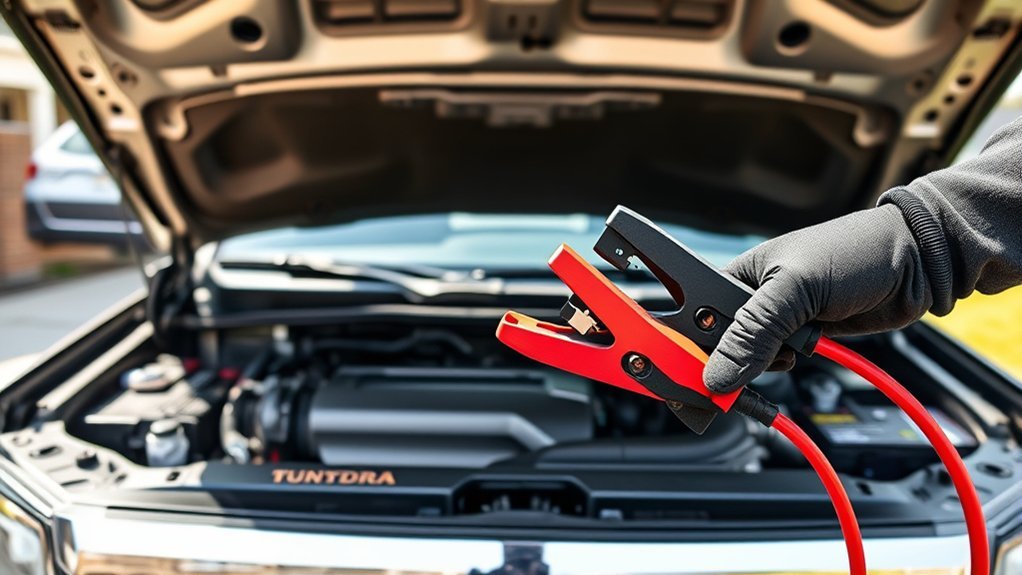
If your Toyota Tundra Hybrid will not wake up or go into READY mode, the problem may be a discharged 12-volt battery. The safe fix is not to touch the high-voltage hybrid battery. Use the under-hood jump-start terminal, follow the owner’s manual sequence, and stop if anything looks damaged, leaking, frozen, or unfamiliar.
Quick Answer
To jump-start a Toyota Tundra Hybrid, open the hood and fuse box cover, use the exclusive positive jump-starting terminal, connect the donor vehicle’s 12-volt battery in the correct order, attach the final negative clamp to solid unpainted metal, start the donor vehicle, then start the Tundra Hybrid in READY mode.
Key Takeaways
- The 12-volt battery is under the rear seat, but the jump-start connection point is under the hood at the exclusive jump-starting terminal.
- Connect positive first: Tundra jump terminal, donor positive, donor negative, then Tundra unpainted metal ground point.
- Never connect jumper cables to orange high-voltage hybrid cables or high-voltage battery components.
- Remove cables in exact reverse order after the hybrid system starts.
- If warning lights stay on, the truck will not enter READY mode, or the battery dies again, get the 12-volt battery and charging system tested.
At a Glance
| Time Required | 10-20 minutes, not counting diagnosis or roadside help |
| Difficulty | Moderate; easy steps, but strict safety sequence |
| Tools Needed | Jumper cables or a 12-volt automotive jump starter, gloves, safety glasses, owner’s manual |
| Cost | Usually $0 if you already have cables or a booster; battery testing/replacement varies |
Warning: This guide is for the 12-volt system only. Do not open, probe, disconnect, or jump anything marked with orange high-voltage hybrid wiring. If the battery is leaking, swollen, frozen, smoking, or damaged, stop and call Toyota Roadside Assistance, a Toyota dealer, or a qualified repair shop.
Locate the 12-Volt Jump Terminal on a Tundra Hybrid
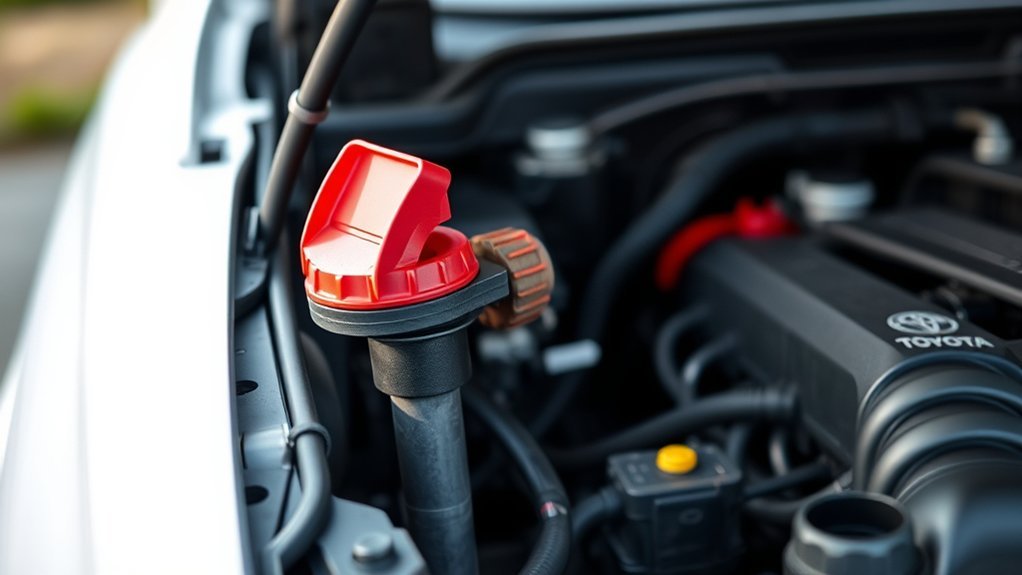
On a Toyota Tundra Hybrid, do not start by lifting the rear seat to find a “jump terminal.” The 12-volt battery itself is located under the rear seat, but Toyota’s jump-start procedure uses the under-hood exclusive jump-starting terminal.
Open the hood, open the fuse box cover, and find the covered positive jump-starting terminal. Depending on your model year and trim, you may also need to remove the engine cover to access the correct point. Use your exact model-year owner’s manual if the layout differs.
Note: The rear-seat 12-volt battery location matters for inspection, replacement, and charging procedures, but the normal emergency jump-start connection is made under the hood.
Quick Jump How-To
Use this quick overview only after you have confirmed the battery and cables look safe. If you are not sure which terminal is correct, stop and use the owner’s manual or call for service.
| Step | Action |
|---|---|
| 1 | Park safely, set the parking brakes, and turn off lights and accessories |
| 2 | Open the hood and fuse box cover to access the exclusive jump-starting terminal |
| 3 | Connect the red positive clamp to the Tundra’s jump terminal |
| 4 | Connect the other red clamp to the donor vehicle’s positive 12-volt terminal |
| 5 | Connect black to donor negative, then black to solid unpainted metal on the Tundra |
| 6 | Start the donor vehicle, then start the Tundra Hybrid and remove cables in reverse order |
The goal is to bring the Tundra Hybrid into READY mode, not necessarily to hear the gasoline engine run immediately. Hybrids can behave differently from conventional trucks, so use the instrument cluster as your guide.
Tools and Safety Gear You Need Before Jumping
Before touching the fuse box or cables, gather the right gear and create a safe workspace. A 12-volt battery can produce flammable hydrogen gas and contains corrosive sulfuric acid, so eye protection is not optional.
- Jumper cables or a 12-volt automotive jump starter: Use equipment rated for automotive 12-volt systems and follow the booster pack instructions.
- Safety glasses and gloves: Protect your eyes and hands from acid, sparks, and sharp edges.
- Owner’s manual: Confirm the jump-start terminal, fuse box cover, and ground point for your exact model year.
- Good lighting: Do not guess at terminal markings in the dark.
- Clear workspace: Keep jewelry, loose clothing, tools, and flammable materials away from the battery and engine bay.
Warning: Do not smoke, create sparks, or let metal tools bridge battery terminals. Toyota warns that the 12-volt battery may produce flammable hydrogen gas and contains poisonous, corrosive sulfuric acid.
[Products Worth Considering]

These Energizer jumper cables are built to help start dead or weak batteries quickly and safely for a wide range of vehicles, including cars, SUVs, and trucks. The 16-foot length and flexible cable design make it easier to reach battery connections, while the protective coating and sturdy handles support secure placement. A carrying bag is included for convenient transport and storage.

This roadside emergency kit helps drivers handle common breakdowns and winter travel issues with confidence. It includes jumper cables, a shovel, tow rope, warning triangle, first aid kit, gloves, and repair tools in a compact bag that fits easily in a trunk or storage compartment. Designed for cars, trucks, SUVs, motorcycles, and RVs, it is a practical safety companion for commuting, road trips, and everyday preparedness.

NOONE jumper cables are designed to help get 12V and 24V vehicles back on the road with reliable boosting power. The 10-foot length, insulated rubber covering, and copper-clad aluminum conductors support dependable performance in extreme temperatures, while the strong clips help ensure a secure connection. Ideal for family cars and vehicles up to 3.0L gas engines, this kit offers a practical emergency starting solution backed by a two-year service promise.
Before You Connect Anything
A safe jump starts with a short inspection. Do not rush this part.
- Make sure both vehicles are in Park and the parking brakes are set.
- Turn off headlights, audio, climate control, chargers, and other accessories.
- Confirm the donor vehicle or booster pack is a 12-volt source.
- Check that jumper cables are not frayed, melted, loose, or corroded.
- Keep cable ends from touching each other once connected to power.
- Confirm the electronic key is with you; alarms and door locks may behave unexpectedly during a jump.
Pro Tip: Take a phone photo of the cable setup before starting the donor vehicle. It gives you a quick reference for removing the clamps in the exact reverse order.
How to Connect Jumper Cables Step by Step
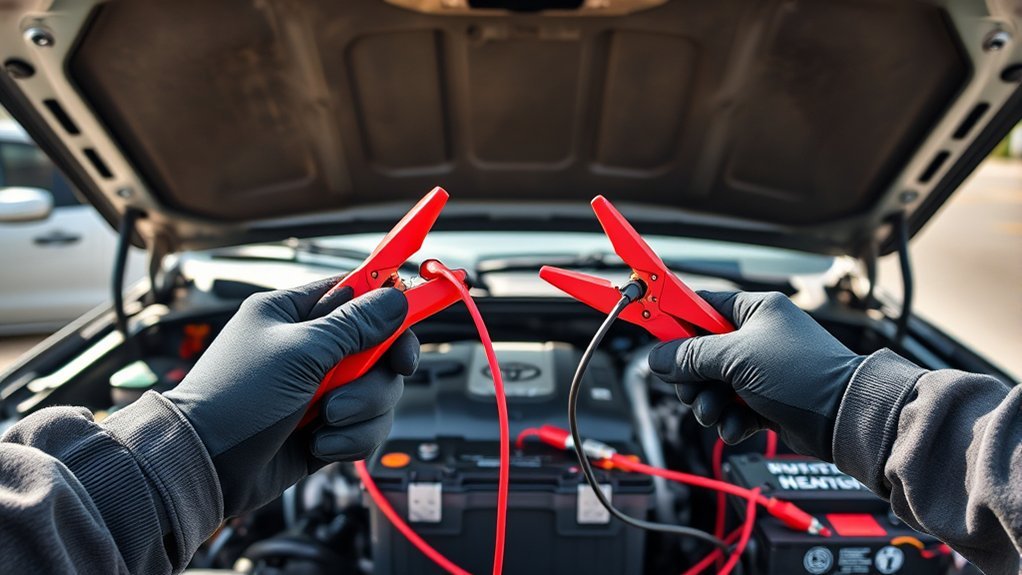
Follow the sequence carefully. The order matters because it reduces spark risk and helps protect sensitive electronics.
[Products Worth Considering]

This portable jumper cable adapter is designed for seamless compatibility with Milwaukee M18 batteries, helping you jump-start a dead or weak vehicle battery quickly and conveniently. Built with 8 AWG cables and simple clamp connections, it supports a range of vehicles including cars, SUVs, and trucks. It offers a practical, tool-battery-powered solution for emergency starting, with clear usage steps and safety guidance for dependable operation.

The S ZEVZO ET03 is a powerful 12V jump starter designed to revive gas and diesel vehicles quickly, including cars, trucks, motorcycles, lawnmowers, and boats. It also doubles as a portable power bank with USB charging ports, a bright LED flashlight, and an LCD display for added convenience during roadside emergencies. Built with multiple safety protections and included carrying case, it offers dependable backup power whenever you need it.

The OXILAM jump starter delivers powerful emergency starting performance for gas engines and up to 12L diesel engines, helping revive dead batteries in seconds. It also doubles as a portable power bank and LED flashlight, with USB and Type-C ports for convenient device charging. Built with multiple safety protections, a clear LED display, and a rugged portable design, it is a reliable roadside companion for cars, trucks, motorcycles, and more.
Identify the Positive Jump-Starting Terminal
Open the hood and fuse box cover. Find the covered positive jump-starting terminal marked with a plus sign. Open the terminal cover only after you have confirmed it is the correct 12-volt jump point.
- Attach the red positive clamp to the Tundra Hybrid’s exclusive positive jump-starting terminal.
- Attach the other red positive clamp to the positive terminal of the donor vehicle’s 12-volt battery or to the positive output on a booster pack.
Secure the Ground Connection
Now make the negative-side connections. Do not attach the final negative clamp to the Tundra’s 12-volt battery case, to painted metal, or to anything near moving belts, fans, or pulleys.
| Task | Action |
|---|---|
| Donor negative | Connect black clamp to donor battery negative terminal |
| Tundra ground | Connect final black clamp to solid, stationary, unpainted metal |
| Location check | Keep clamp away from the battery and moving parts |
| Contact check | Confirm the clamp is tight and will not slip |
Confirm Cable Order
Before starting anything, check the cable path one more time:
- Red clamp on the Tundra Hybrid’s positive jump-starting terminal.
- Red clamp on the donor vehicle’s positive 12-volt terminal.
- Black clamp on the donor vehicle’s negative 12-volt terminal.
- Black clamp on a solid, stationary, unpainted metallic point on the Tundra, away from the battery and moving parts.
If that order is not exactly what you see, disconnect carefully and start over.
Start the Vehicle and Immediate Aftercare Steps
Start the donor vehicle and let it run for several minutes. If the donor vehicle’s manual allows a slightly raised idle, maintain a steady idle; do not rev aggressively.
With your foot on the brake, press the Tundra Hybrid’s power switch and watch for READY mode. If the hybrid system starts, remove the jumper cables in exact reverse order:
- Remove the black clamp from the Tundra ground point.
- Remove the black clamp from the donor vehicle’s negative terminal.
- Remove the red clamp from the donor vehicle’s positive terminal.
- Remove the red clamp from the Tundra Hybrid’s positive jump-starting terminal.
Close the jump-starting terminal cover and reinstall the fuse box cover. If you removed the engine cover, reinstall it correctly.
After the truck enters READY mode, keep unnecessary electrical loads off while the low-voltage charging system stabilizes the 12-volt battery. Many hybrids use a DC-DC converter to support and recharge the low-voltage system rather than a conventional alternator, so “engine running” is not always the best sign of charging.
Note: A jump start is a temporary recovery step. If the 12-volt battery is old, repeatedly discharged, or weak under load, it may need charging, testing, or replacement.
[Products Worth Considering]
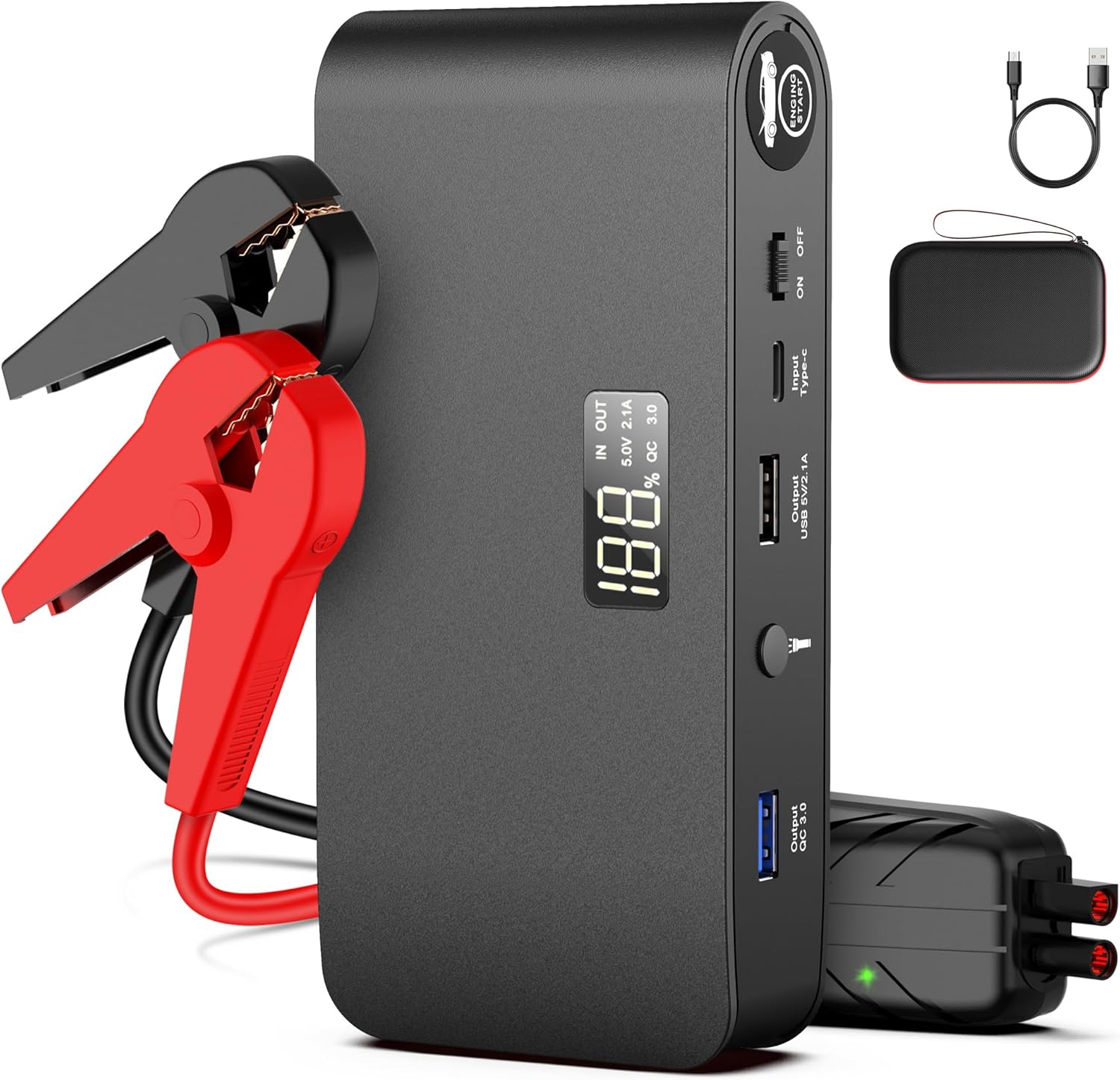
This portable jump starter delivers powerful 12V starting support for cars, trucks, boats, motorcycles, and more, helping you restart dead batteries in seconds. It also doubles as a high-capacity power bank with USB charging, plus a built-in LED flashlight with emergency modes for roadside and outdoor use. Smart safety protections and a rugged waterproof case make it a reliable companion for emergencies.

These heavy duty jumper cables are designed to help you get back on the road quickly with strong, insulated clamps and extended reach for easier battery access. The flexible cable jacket stays dependable in a wide range of temperatures, while the included storage bag keeps everything organized and ready for emergencies. Built for cars, SUVs, and trucks, they offer a practical roadside solution backed by quality assurance and after-sales support.
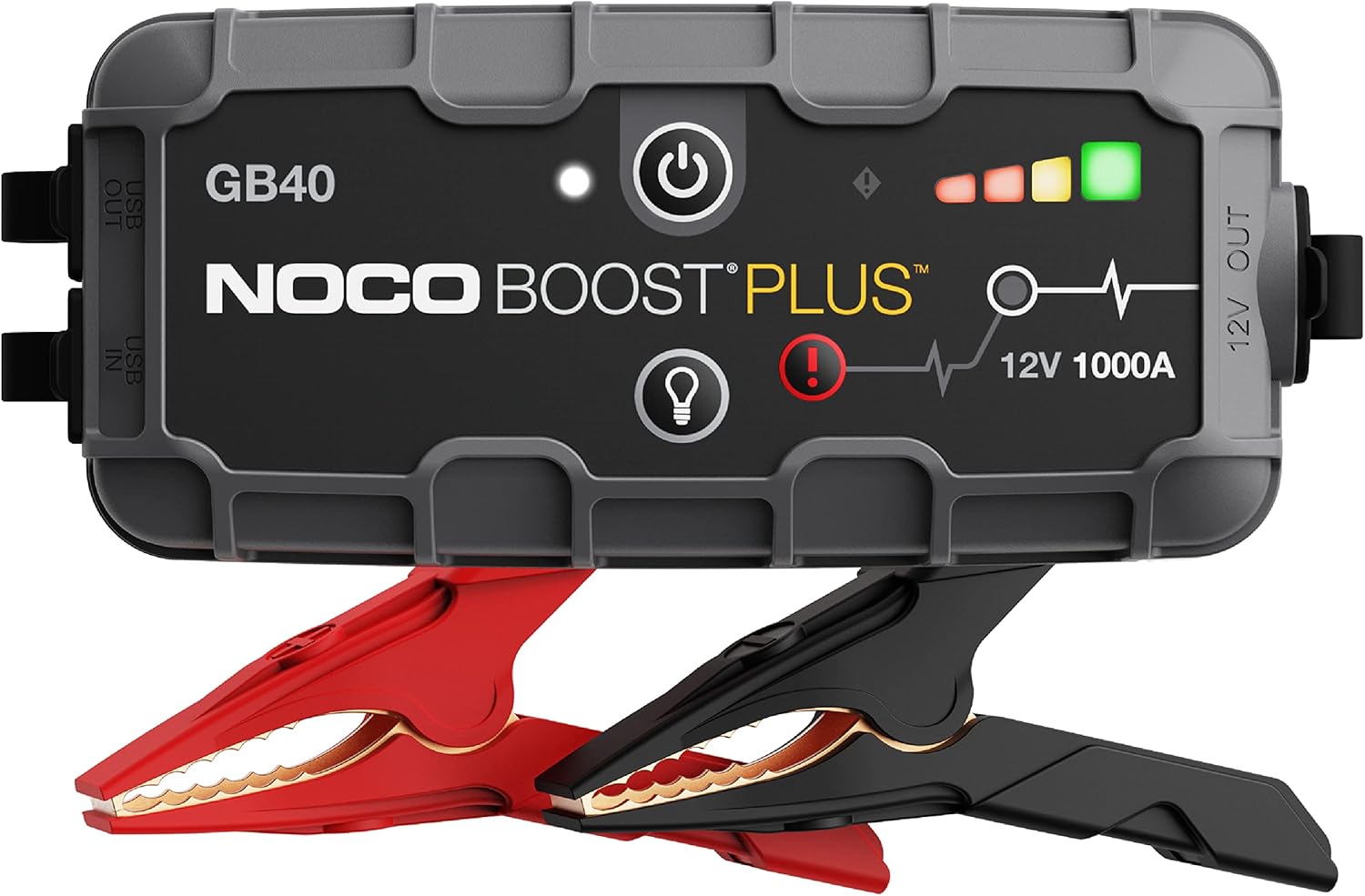
The NOCO Boost GB40 is a compact lithium jump starter designed to safely revive dead 12V batteries in seconds, with enough power for cars, trucks, motorcycles, boats, and more. It also functions as a portable power bank and includes a built-in LED flashlight with multiple modes, making it a versatile emergency tool for roadside use and everyday preparedness.
Troubleshoot Common Post-Boost Issues
If the Tundra Hybrid still will not start, avoid repeated attempts. Repeated failed starts can overheat cables, drain the donor source, or hide the real problem.
No READY Mode or No Start
If the truck does not enter READY mode after a careful jump-start attempt, check the simple items first:
- Confirm the electronic key is inside the vehicle.
- Confirm the shift position is Park.
- Press the brake pedal firmly while pressing the power switch.
- Recheck every jumper cable connection for the correct point and firm metal-to-metal contact.
- Look for loose, corroded, or disconnected 12-volt battery terminals.
- Stop and call for service if the hybrid system still will not start after multiple attempts.
Toyota also notes that extremely low hybrid-battery temperature can prevent the hybrid system from starting. If the vehicle has been sitting in severe cold, professional diagnosis may be the safest next step.
MIL or Warning Lights After a Jump
Warning lights may appear after a low-voltage event because control modules saw unstable voltage. Do not assume every light is harmless. Note the warning messages, confirm the truck drives normally, and avoid heavy electrical loads.
If the malfunction indicator lamp, hybrid system warning, brake warning, or charging warnings stay on after the truck has stabilized, have diagnostic trouble codes read with a scan tool. If drivability changes, the truck will not shift normally, or a red warning appears, stop driving and contact a Toyota dealer or qualified repair shop.
Cold-Weather and Stiff Pedal Checks
In severe cold, a stiff brake pedal, iced floor mat, frozen linkage, or low 12-volt battery can all make a no-start situation more confusing. Do not force the brake pedal, do not use a heat gun on interior components, and do not drive until the pedal moves normally.
- Check that the floor mat is not trapped under or behind the pedal.
- Warm the cabin safely with the vehicle in a protected area if possible.
- Brush away visible snow or ice around the driver footwell.
- If the pedal still feels stuck, call for service instead of forcing it.
Hybrid-Only Precautions: What Not to Do
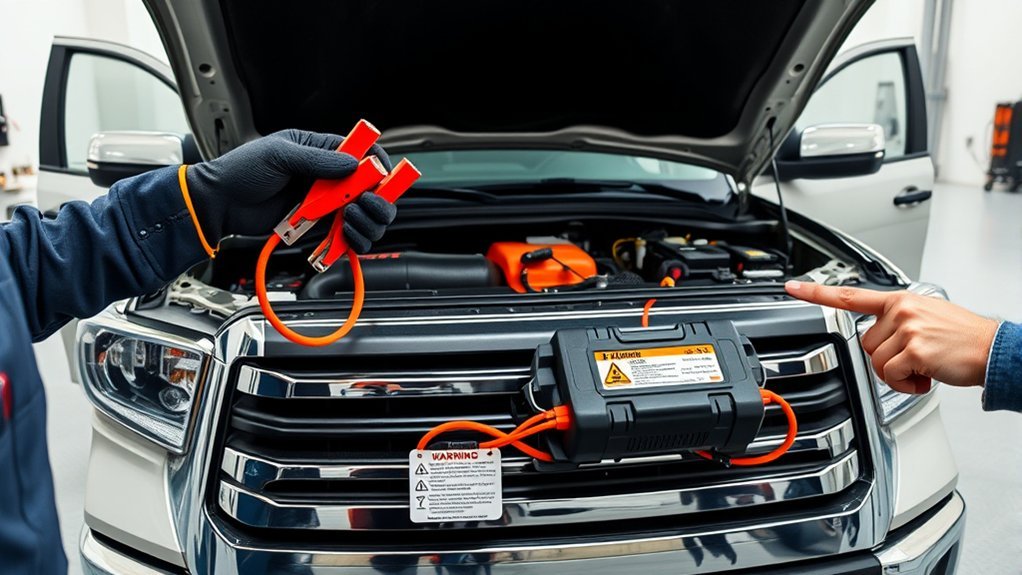
A Tundra Hybrid has both a 12-volt electrical system and a high-voltage hybrid system. The jump-start procedure is only for the 12-volt side.
- Do not touch orange cables. Orange wiring identifies high-voltage hybrid components.
- Do not connect to the high-voltage battery. It is not a jump-start point.
- Do not push-start the truck. Toyota states the hybrid system cannot be started by push-starting.
- Do not guess at ground points. Use a solid, stationary, unpainted metallic point away from the battery and moving parts.
- Do not jump a damaged battery. Stop if you see leaking, swelling, cracks, corrosion damage, smoke, or smell sulfur/rotten eggs.
- Do not leave clamps connected unattended. Stay with the vehicles until the cables are removed.
The safest hybrid jump start is boring: correct 12-volt terminal, correct cable order, no high-voltage contact, no improvising.
12-Volt Battery Care and Preventing Future Boosts
Once the truck is running again, focus on why the 12-volt battery discharged. A one-time event, such as leaving lights on, is different from a battery that fails repeatedly.
- Test the battery: Have the 12-volt battery load-tested, especially if it is several years old or has been deeply discharged.
- Inspect terminals: Look for loose clamps, corrosion, or signs that the rear-seat battery cover has been disturbed.
- Reduce parasitic drain: Turn off lights, audio, chargers, and accessories before shutting the truck down.
- Use a smart maintainer: If the truck sits for long periods, use a compatible smart maintainer according to Toyota and charger instructions.
- Address repeat failures: If it needs another jump soon, do not keep boosting it. Diagnose the battery, low-voltage charging system, and possible electrical drain.
When the 12-volt battery is reconnected or replaced, Toyota advises starting the hybrid system, pressing the brake pedal, and confirming the vehicle can shift into each position. If it will not start after multiple attempts, contact a Toyota dealer.
Frequently Asked Questions
Can a dead 12-volt battery damage hybrid battery components?
A dead 12-volt battery usually does not mean the high-voltage hybrid battery is damaged. However, incorrect jump-starting, reversed polarity, sparks, or voltage spikes can damage control modules and related electronics. Use only the 12-volt jump-start procedure and avoid all high-voltage components.
How long can I leave jumper cables connected?
Leave them connected only long enough to start the hybrid system, then remove them in exact reverse order. Do not walk away with cables attached. If the Tundra Hybrid does not enter READY mode after a few careful attempts, stop and troubleshoot instead of leaving the vehicles connected indefinitely.
Can I jump start a Tundra Hybrid with a motorcycle battery?
Do not rely on a motorcycle battery to jump-start a Tundra Hybrid. Use a proper 12-volt automotive donor vehicle or a jump starter rated for automotive use. A small battery may not supply enough current and can create avoidable risk.
Will jump-starting void my vehicle warranty?
A correct 12-volt jump start should not automatically void warranty coverage. Damage caused by misuse, reversed cables, improper repairs, or ignoring the owner’s manual may be treated differently. Check your Warranty and Maintenance Guide or ask a Toyota dealer if a warning light or damage appears after a jump.
Can a portable jump starter reprogram vehicle electronics?
No. A normal 12-volt portable jump starter should not reprogram the truck. However, a poor-quality booster, reversed polarity, loose clamps, or voltage spikes can trigger warning lights or damage electronics. Use a reputable automotive booster and follow its instructions.
Is the Tundra Hybrid’s 12-volt battery the same as the hybrid battery?
No. The 12-volt battery powers low-voltage electronics and helps the vehicle wake up. The high-voltage hybrid battery supports the hybrid drive system. Jump-starting is done through the 12-volt procedure only, not through the high-voltage battery.
Should I replace the 12-volt battery after one jump start?
Not always. If the battery discharged because lights or accessories were left on, charging and testing may be enough. If the battery is old, fails a load test, or needs repeated jumps, replacement is usually the smarter fix.
Conclusion
Jump-starting a Toyota Tundra Hybrid is straightforward when you use the correct 12-volt procedure: work under the hood, use the exclusive positive jump-starting terminal, connect the cables in the right order, and keep the final negative clamp on solid unpainted metal away from moving parts. The rear-seat battery location is important, but it is not the normal place to begin an emergency jump start.
After the truck enters READY mode, remove the cables in reverse order, close all covers, limit electrical loads, and get the 12-volt battery tested if the problem returns. When in doubt, the safest move is to stop and call a Toyota dealer, qualified repair shop, or roadside assistance.
Sources
- Toyota Owners — 2025 Tundra Hybrid: If the vehicle 12-volt battery is discharged — backs the official jump-start procedure, terminal location, cable sequence, no push-start warning, and after-start guidance.
- Toyota Owners — 2025 Tundra Hybrid: 12-volt battery — backs rear-seat 12-volt battery location and battery acid/hydrogen safety warnings.
- Toyota Owners — Tundra Hybrid manuals and warranties — backs using the correct model-year owner’s manual and warranty guide.
- NHTSA — Electric and Hybrid Vehicles: Battery, Charging & Safety — backs hybrid/EV low-voltage system context and DC-DC converter explanation.
- AAA — How to Jump a Battery and Get Yourself Back on the Road — backs general jump-start safety and battery-service context.
- Toyota — Electrified Vehicle Warranty and Battery Info — backs Toyota hybrid battery warranty context.