By Ryker Calloway · Last updated: September 1, 2026
How this guide was checked: Towing-capacity and Tow Package claims were checked against Toyota’s 2021 Tundra materials. The 2019–2021 high-transmission-temperature warning guidance was checked against Toyota TSB T-SB-0087-21. For fluid types, service intervals, warning messages, and towing limits, use the manual and labels for your exact truck.
What’s in This Article
- Why Tundra Overheating Happens When Towing
- Before You Begin: Tools and Safety Checks
- Quick Tundra Checks Before Every Tow
- How to Monitor Engine and Transmission Temperatures Safely
- Maintenance Checklist to Prevent Overheating
- Driving Techniques to Lower Temps on Grades and Long Hauls
- Trailer and Load Setup to Reduce Strain on Your Tundra
- When to Upgrade Tundra Cooling Gear
- Common Failure Modes and Step-by-Step Troubleshooting
- Immediate Actions If Temps Climb While Towing
- Frequently Asked Questions
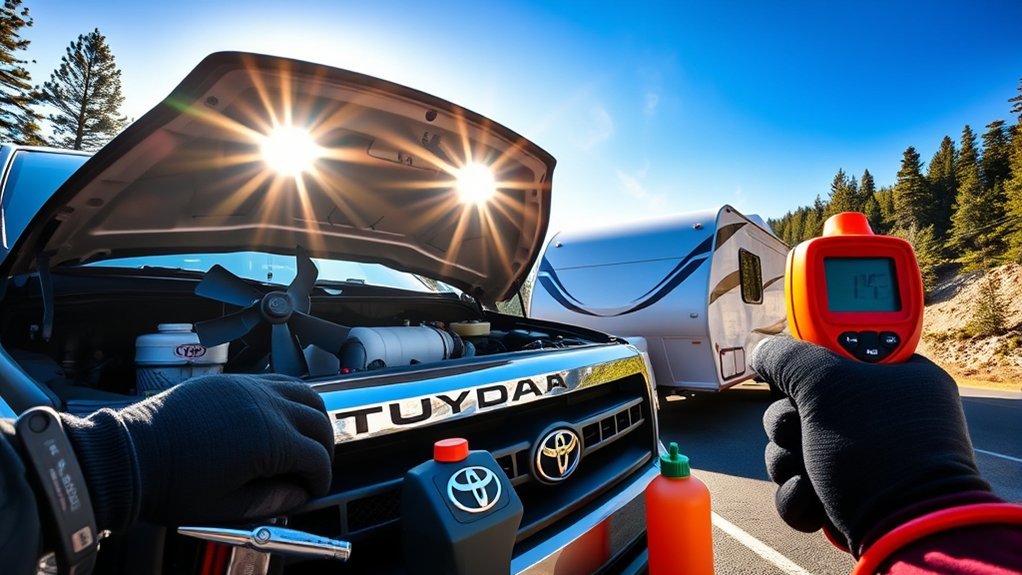
Tundra overheating when towing is usually a load-and-heat problem that becomes dangerous when a cooling, airflow, transmission, or trailer-setup issue leaves too little margin. Before a trip, verify coolant level and condition, airflow through the cooling stack, fan operation, tire pressure, trailer weight, tongue weight, and payload. On the road, use the towing mode and gear strategy specified for your model year, watch for a steady temperature rise, and stop safely if a factory warning appears or heat keeps climbing after you reduce load.
Quick Answer
Prevent Tundra overheating while towing by starting with a healthy stock cooling system, a correctly loaded trailer, and the right towing mode for your truck. Clean blocked radiator/condenser airflow, follow Toyota’s fluid and maintenance guidance, downshift before the transmission hunts on grades, and react to rising temperatures early. If a warning light or “High Transmission Fluid Temp” message appears, reduce load and pull over safely rather than trying to finish the climb.
Key Takeaways
- Check coolant, hoses, belts, fan operation, and radiator/condenser airflow before a heavy tow.
- Use a scan tool as a trend monitor; factory warning lights and your exact owner’s manual take priority over generic internet temperature charts.
- Use Tow/Haul and lower gear ranges only as your model-year manual describes, especially on long grades.
- Keep trailer weight, tongue weight, payload, axle loads, and Tundra tire pressure within their applicable limits.
- Stop towing if temperatures continue to rise after you reduce speed and load, or if you see steam, coolant loss, slipping, or a factory temperature warning.
| Heat Pattern or Warning | First Checks | Best Next Step |
|---|---|---|
| Temperature rises mainly on long grades or in hot weather | Trailer/load limits, cooling-stack airflow, coolant level, gear hunting, fan operation | Reduce speed/load early; inspect the cooling system if the pattern repeats |
| Temperature rises in slow traffic or low-speed towing | Fan operation, blocked condenser/radiator fins, coolant condition | Correct airflow or cooling faults before another heavy tow |
| “High Transmission Fluid Temp” on a 2019–2021 Tundra at highway towing speeds | Warning history, diagnostic codes, ECM calibration status | Ask a Toyota dealer whether T-SB-0087-21 applies to your VIN and calibration |
| Steam, coolant loss, repeated warning, slipping, or harsh shifting | Do not continue diagnosing under load | Stop towing and arrange professional diagnosis or roadside help |
Estimated time: Plan about 15 to 25 minutes for a basic pre-tow visual check. Diagnosis, leak testing, fluid service, or cooling-stack cleaning can take longer.
Why Tundra Overheating Happens When Towing
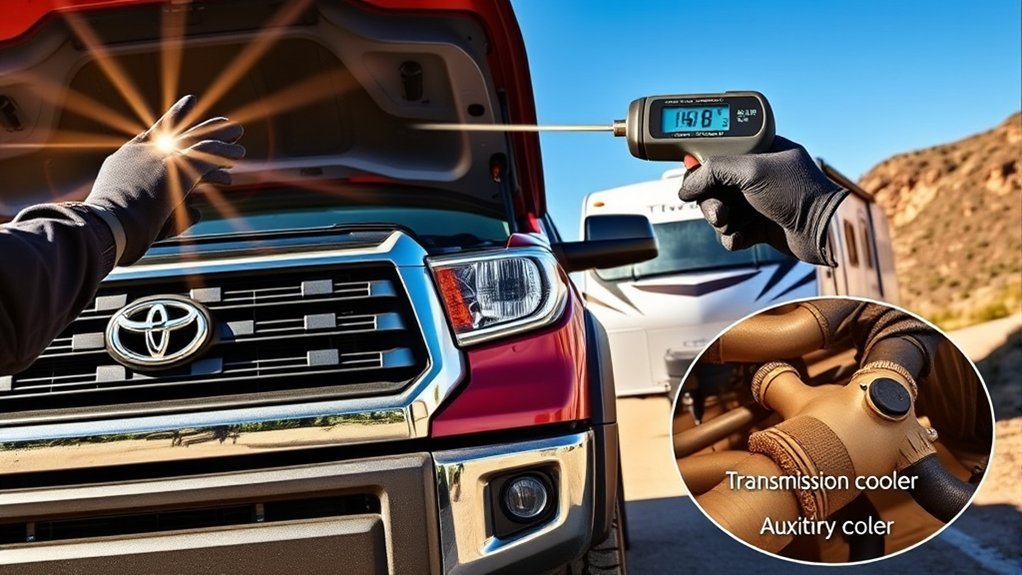
When you tow heavy loads, the engine and transmission must move more mass and reject more heat. Long grades, high ambient temperature, headwinds, repeated acceleration, and stop-and-go traffic can increase thermal load. A dirty cooling stack, low coolant, weak fan operation, incorrect trailer loading, or transmission slip can remove the safety margin that the truck normally has.
One model-year-specific issue deserves special attention. Toyota TSB T-SB-0087-21 says some 2019–2021 Tundras may show a High Transmission Fluid Temp warning while towing in tow/haul mode at highway speeds. The bulletin directs technicians to check ECM calibration and reprogram the ECM when the listed condition and outdated calibration are present. That bulletin does not apply to every overheating complaint, and it should not be carried over to 2022-and-newer Tundras with different powertrains and towing controls.
The practical goal is to reduce heat before a warning becomes a breakdown. Keep the stock cooling system healthy, use the towing strategy in your owner’s manual, and learn what your truck normally does on comparable trips. A repeated change from that baseline is more useful than treating one generic temperature number as a universal Toyota limit.
Before You Begin: Tools and Safety Checks
Before you tow, gather the basic items that help you inspect, monitor, and react quickly. You do not need a full shop setup for a simple pre-trip check. You do need the correct specifications and procedures for your exact Tundra.
- Your Tundra owner’s manual, maintenance guide, and towing/load labels
- A compatible real-time scan tool or temperature monitor
- A tire pressure gauge for the truck and trailer
- A flashlight for hose, belt, leak, and cooling-stack checks
- The correct coolant and transmission-fluid information for your model year
- Gloves and clean rags for visual checks
Warning: Never open a hot radiator cap or another pressurized cooling-system cap. Hot coolant and steam can cause severe burns.
For manual and maintenance information, start with Toyota Owners for the model year you are checking. Do not substitute another Tundra owner’s fluid, pressure, towing, or service specification for your own truck.
[Products Worth Considering]
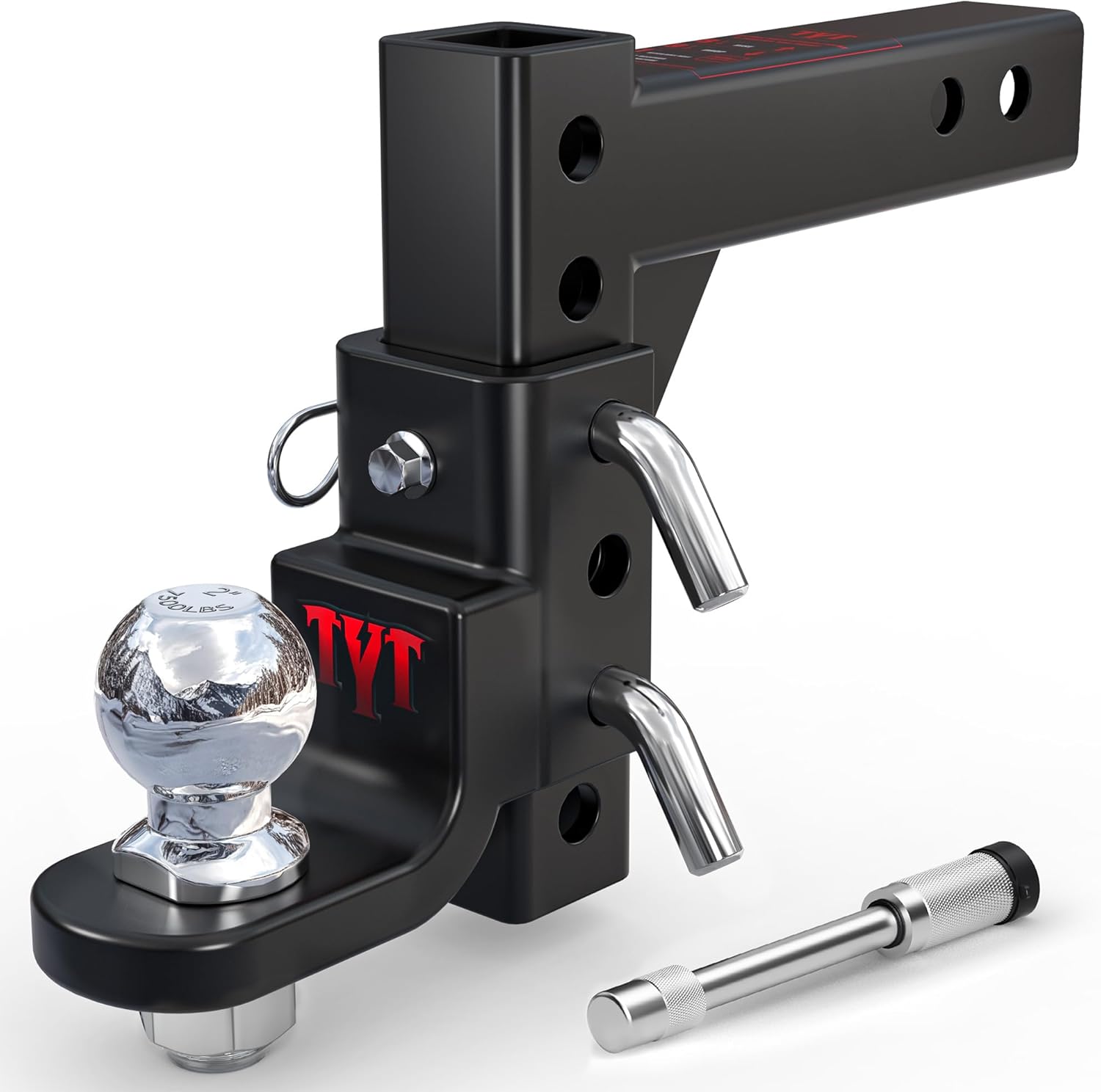
This adjustable trailer hitch ball mount is built for dependable towing with a standard 2-inch receiver and a high-capacity design suited for trucks, campers, boats, and utility trailers. Its adjustable rise and drop settings help you achieve a level tow, while the anti-rattle design supports a smoother, quieter ride. Complete with pins, clips, and a premium pin lock, it offers an easy installation and secure connection for everyday hauling needs.
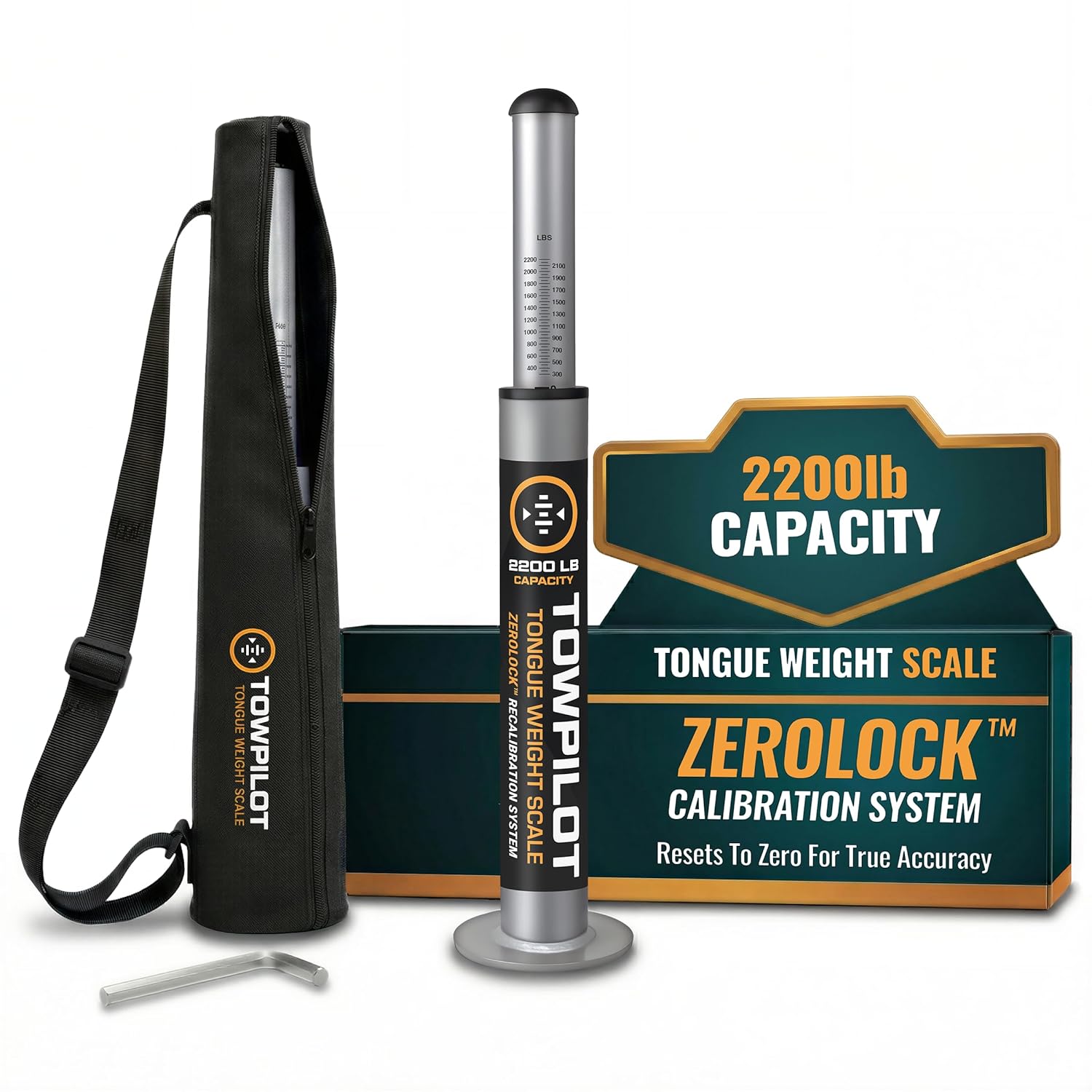
This trailer tongue weight scale helps you check hitch weight quickly and accurately before towing, reducing sway and improving overall safety. Built with durable steel and a spring mechanism, it works without batteries and includes a recalibration feature to maintain true-zero accuracy over time. It is designed for RVs, campers, and utility trailers, with a top plate that helps protect your coupler during use.

This Andersen Hitches weight distribution hitch kit is designed to improve towing stability with a grease-free friction cone and tension chain system that helps reduce sway and bounce. It features a universal setup with a 2-inch ball and 4-inch drop/rise to suit many bumper-pull trailer applications, while making hitching and unhitching faster and easier than traditional spring bar systems. Built in the USA, it offers dependable performance for travelers, workers, and outdoor enthusiasts who need confident towing control.
Quick Tundra Checks Before Every Tow
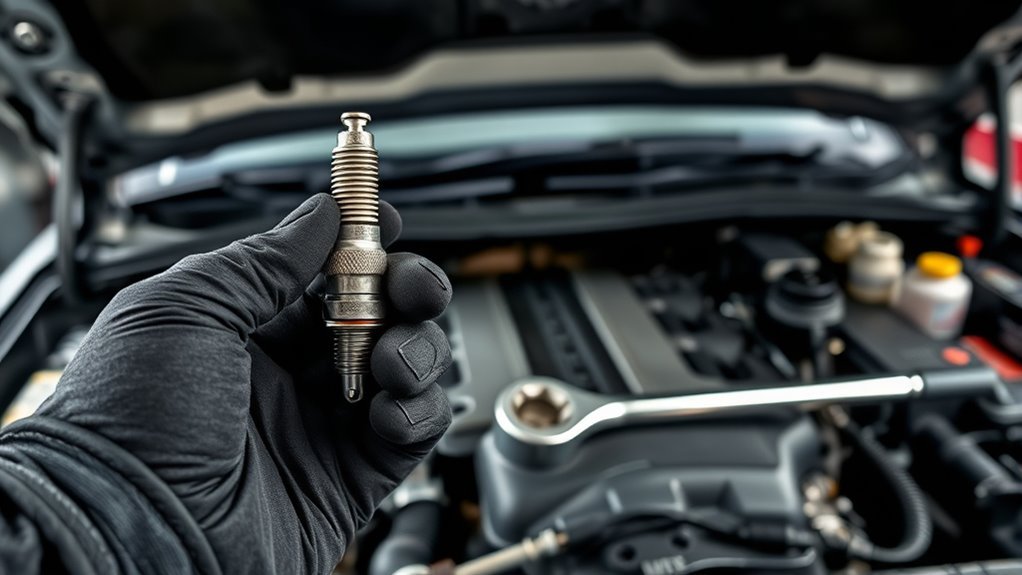
Start with the simple faults that can make towing heat rise quickly. Check coolant only when the engine is cool, look for fresh leaks, inspect the cooling stack for blocked airflow, and make sure the fan and drive belts do not show obvious problems.
| Item | Action |
|---|---|
| Coolant level | Verify the level and look for contamination or unexplained loss when the engine is cool |
| Radiator cap | Inspect the seal and use only the pressure rating specified for your truck |
| Cooling stack | Clear debris from the grille, condenser, and radiator fins without damaging them |
| Fan operation | Check for normal operation and investigate abnormal noise or weak airflow |
| Visual leaks | Inspect hoses, clamps, water-pump area, radiator, and the ground under the truck |
Run the checks in the same order before a demanding tow so changes are easier to notice. If coolant keeps disappearing, a hose is swollen or soft, the cap seal is damaged, or fan operation is abnormal, correct the problem before adding trailer load.
How to Monitor Engine and Transmission Temperatures Safely
A scan tool can show coolant and transmission-temperature trends before the dashboard reaches a warning state. Its best use is comparison: note what your truck normally shows on a familiar route, then watch for a sustained rise under similar load and weather. Do not use a scan-tool number to override a factory warning message.
What Temperature Is Too High When Towing?
There is no single generic internet temperature chart that should be treated as the Toyota limit for every Tundra. Model year, powertrain, sensor location, calibration, ambient temperature, trailer load, and driving conditions all affect the reading. If the temperature rises steadily after you reduce throttle, if a factory temperature warning appears, or if the truck shows steam, coolant loss, slipping, or harsh shifting, stop safely and diagnose the cause. For 2019–2021 Tundras with the specific high-transmission-fluid-temperature warning at highway towing speeds, check the Toyota bulletin rather than guessing from an aftermarket threshold.
Use scan-tool temperatures to spot a change from your truck’s normal pattern. Use factory warnings and the owner’s manual to decide when to stop.
- Confirm that your scan tool is reading the intended coolant or transmission parameter.
- Watch the trend over several minutes rather than reacting to one brief spike.
- Reduce throttle or select the appropriate lower range before repeated gear hunting builds more heat.
- Pull over safely if readings keep climbing after you reduce load.
- Log route, outside temperature, trailer weight, and readings when you want a useful comparison for future trips.
Maintenance Checklist to Prevent Overheating
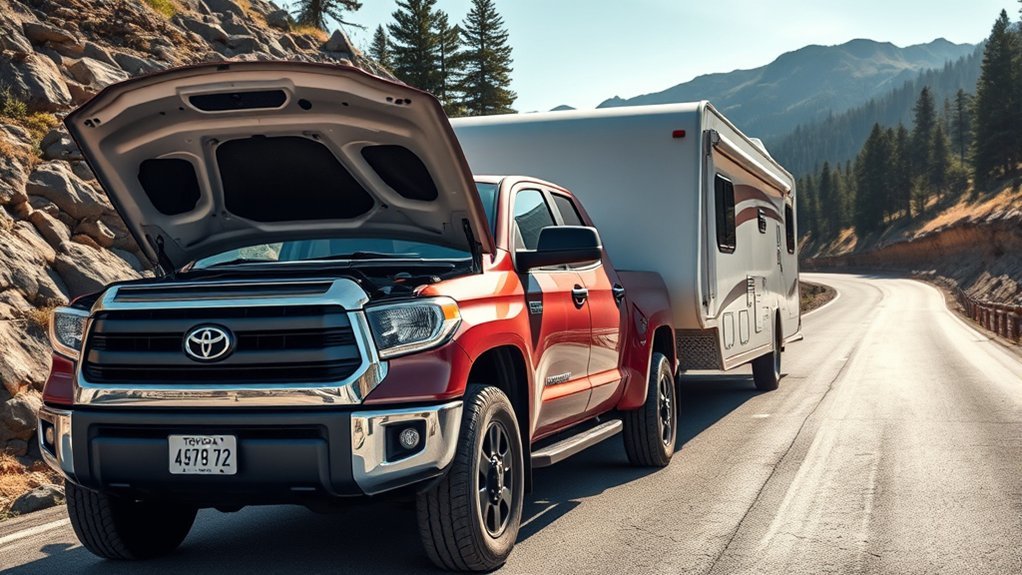
Use temperature data to support maintenance, not postpone it. Cooling performance depends on coolant condition, pressure control, clean airflow, fan operation, belt-driven components, and a transmission that is serviced correctly for its use.
Check the radiator cap against the pressure rating Toyota specifies for your model. Do not install a higher-pressure cap as an overheating fix. If the system has weak hoses, leaks, or aging plastic parts, extra pressure can create another failure instead of solving the cause.
| Task | When to Do It |
|---|---|
| Radiator cap | Inspect during cooling-system service and replace with the correct rating if the seal or cap fails inspection |
| Coolant level and condition | Check before demanding trips and service at the interval specified for your model year |
| Hoses, belts, and water-pump area | Inspect during routine service and before a heavy tow if condition is uncertain |
| Cooling-stack cleaning | Clean when bugs, mud, dust, leaves, or debris restrict airflow |
| Transmission fluid | Follow the exact Toyota maintenance guide, including any special-operating-condition schedule for towing or heavy loading |
Use Toyota’s manual and maintenance resources for the year you own. For a deeper service discussion, see the site’s Toyota Tundra transmission fluid service guide. Record service dates and repeat towing-temperature patterns so a technician has more than one isolated reading to diagnose.
Driving Techniques to Lower Temps on Grades and Long Hauls
Drive deliberately when you tow in heat or hills. Avoid unnecessary throttle spikes and repeated gear hunting. Slow before the grade becomes severe, use the towing mode your Tundra provides, and select a lower transmission range when the owner’s manual calls for it. The goal is controlled engine speed and less transmission slip, not simply the lowest possible gear.
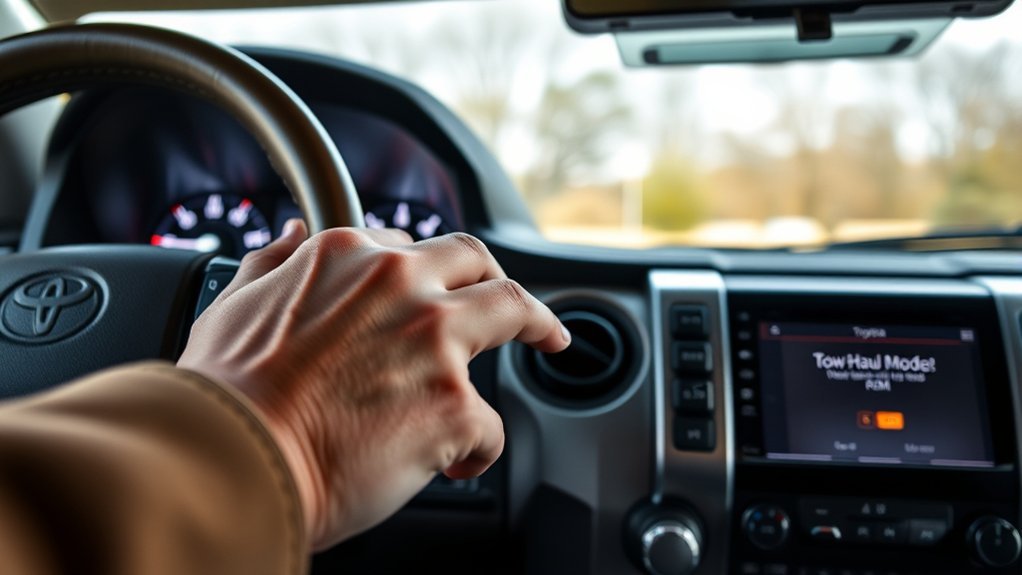
Toyota’s 2021 Tundra Tow Package includes TOW/HAUL mode, and Toyota describes it as changing throttle and transmission shift control to favor and hold lower gears during acceleration or deceleration. For later trucks with different Tow/Haul controls, follow the manual for that model year rather than copying 2021 guidance. See the site’s Toyota Tundra Tow/Haul guide for the model-year differences.
If the engine temperature gauge indicates overheating during a hard climb, turn off the air conditioning if it is running and move to a safe place to stop. Do not use 4Lo as a highway cooling technique.
4Lo note: On 4WD models, 4Lo is for low-speed conditions where the owner’s manual permits it. Using it on dry pavement or at inappropriate speed can bind or damage driveline parts.
- Cancel cruise control if it causes repeated throttle or gear changes on a grade.
- Reduce speed before heat becomes a warning.
- Downshift early enough to avoid repeated gear hunting, following the manual for your transmission.
- Turn off air conditioning if the engine is overheating and you are moving toward a safe stop.
- Stop early if temperatures keep climbing after you reduce speed and load.
Trailer and Load Setup to Reduce Strain on Your Tundra
Cooling upgrades cannot compensate for an overloaded or unstable combination. Before the trip, confirm the truck’s trailer weight rating, payload, GVWR, GAWR, GCWR, receiver/hitch ratings, trailer ratings, and tire limits. Tongue weight and hitch hardware also consume payload, so an advertised tow rating is not the only number that matters. The site’s Tundra GVWR, GCWR, and payload guide explains how those limits interact.
Toyota lists up to 10,200 pounds of towing capacity for the 2021 Tundra when properly equipped, but that maximum does not apply to every cab, bed, drivetrain, or trim. Newer Tundras use different configurations and can have different ratings. For year-by-year context, see the site’s Toyota Tundra towing capacity guide, then verify the final limit against the documentation for your exact truck.
| Load Area | Check | Why It Matters |
|---|---|---|
| Trailer cargo | Keep heavy items low, secure, and positioned to meet the trailer maker’s tongue-weight guidance | Reduces load shift and instability |
| Truck payload | Count passengers, cargo, accessories, hitch hardware, and tongue weight | Prevents payload and axle overload |
| Hitch | Confirm receiver, ball mount, ball, coupler, and weight-distribution ratings where applicable | Keeps every towing component within its own rating |
| Tires | Set cold pressure from the correct vehicle/trailer guidance and confirm tire load capacity | Supports stability, load capacity, and heat control |
Secure cargo so it cannot shift during braking or cornering. Recheck tire pressure when the tires are cold. If the truck sags excessively, the trailer sways, or any calculated limit is exceeded, correct the setup before you continue. The Tundra door-sticker towing guide shows which ratings come from the door labels and which must come from Toyota’s towing data.
[Products Worth Considering]
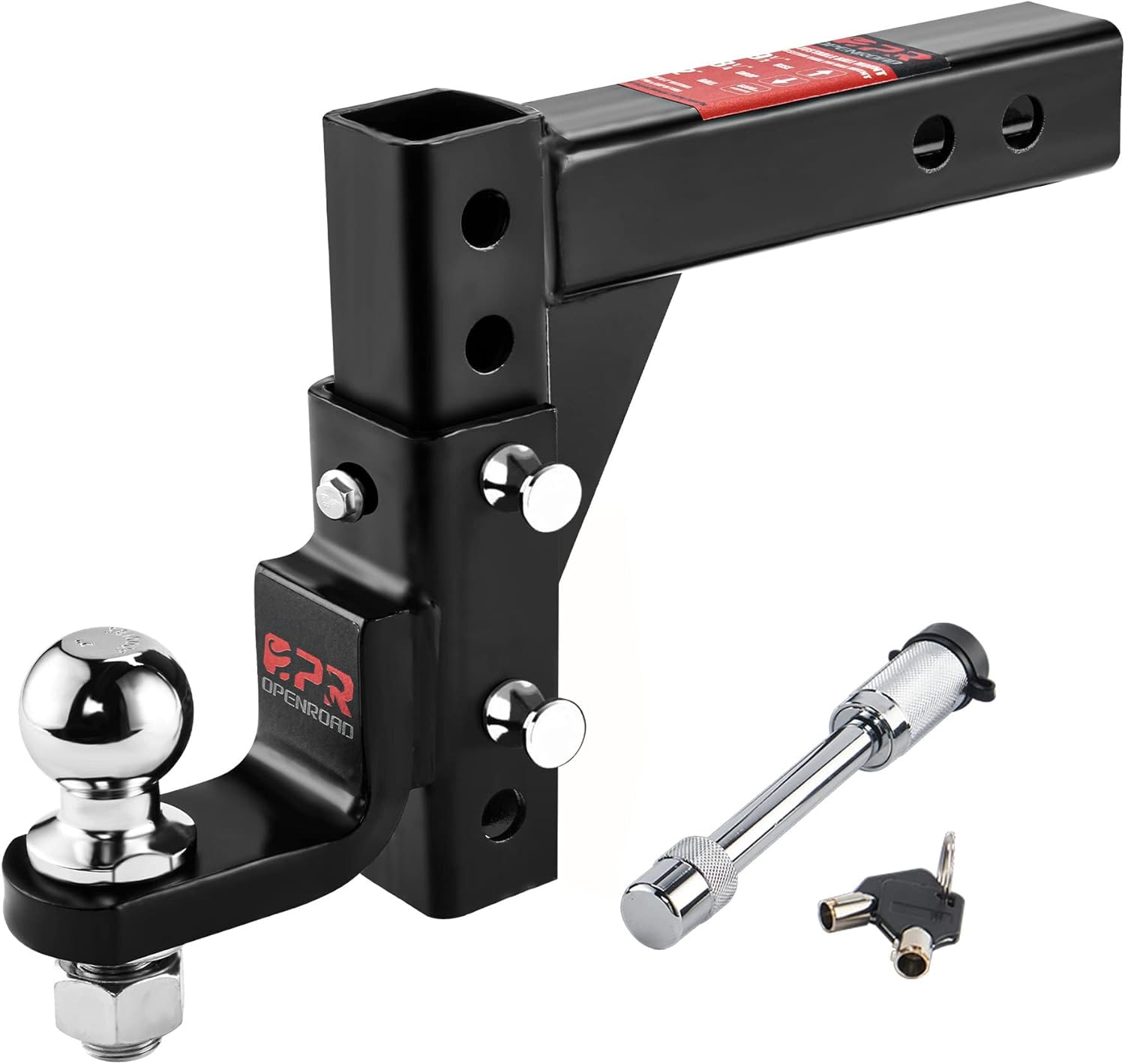
This adjustable trailer hitch ball mount is built for dependable towing with a strong steel construction and a versatile fit for 2-inch receivers. Its adjustable drop and rise settings help you dial in the right towing height, while the lock and keyed anti-theft design add security. A black powder-coated finish helps resist rust and wear for lasting performance on trucks and other towing setups.

This coolant thermostat is a direct replacement designed for a wide range of Toyota, Lexus, and Scion vehicles. It helps maintain proper engine temperature, supports reliable cooling system performance, and installs easily without special tools or programming. Built to meet OEM standards, it offers durable, stable operation and dependable fitment for compatible models.
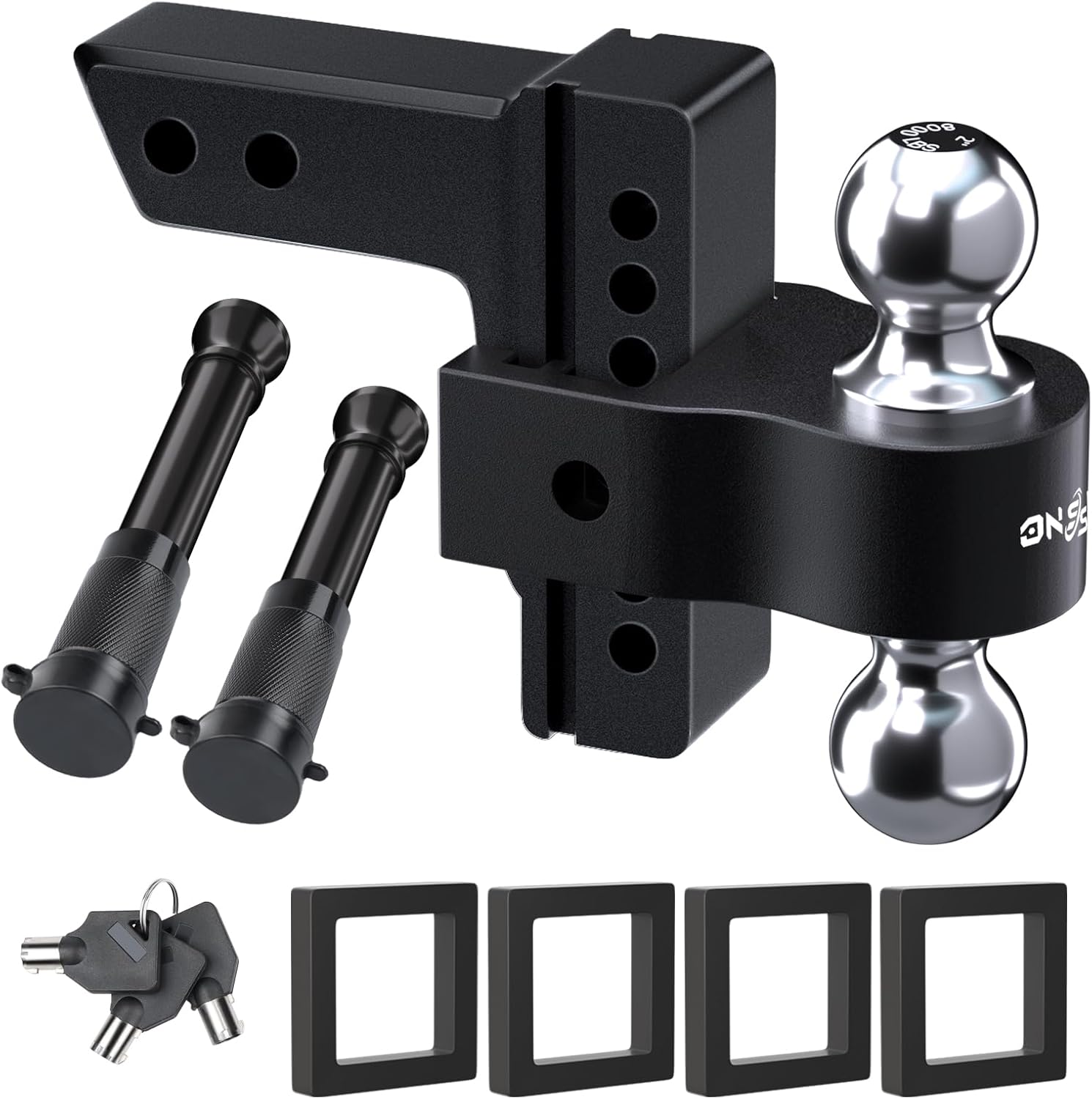
This adjustable trailer hitch is designed for 2-inch receivers and offers flexible towing with a 6-inch drop and rise range. Dual ball sizes help support different trailer setups, while the high-strength aluminum construction is built for dependable performance on tough jobs. Included hitch locks and silencers add security and help reduce noise for a smoother towing experience.
When to Upgrade Tundra Cooling Gear
Upgrade cooling parts only after you confirm the stock system works as designed. A clogged radiator, weak cap, low coolant, dirty condenser, fan problem, fluid issue, or incorrect trailer setup can make an aftermarket cooler look necessary when the real problem is maintenance or diagnosis.
If you tow near the truck’s verified limits often, climb long grades, or get repeat warnings, ask a Toyota dealer or qualified towing mechanic to diagnose the truck first. On an affected 2019–2021 Tundra, that includes checking whether T-SB-0087-21 applies. If the factory system is healthy but temperatures still rise abnormally for your use, then discuss a model-specific radiator, fan, transmission-cooling, or engine-oil-cooling solution.
- Use the correct pressure-rated radiator cap for your exact model.
- Consider an external transmission cooler only after confirming compatibility, routing, fluid-level procedure, and the reason it is needed.
- Replace thermostats, hoses, belts, and pumps based on diagnosis and service guidance rather than guesswork.
- Keep the grille, condenser, and radiator area clear enough for normal airflow.
- Use a compatible scan tool to document before-and-after temperature trends if you change the cooling system.
[Products Worth Considering]

The ETENWOLF T300 digital tire pressure gauge delivers accurate readings across a wide pressure range, making it ideal for cars, trucks, and other vehicles. It is built to perform reliably in extreme temperatures and features replaceable AAA batteries plus an LED light for easier checks in low-light conditions. Designed for durability, it can withstand tough use while maintaining dependable performance.

This adjustable tri-ball trailer hitch gives you flexible towing support with three hitch ball sizes and a 4.5-inch rise and drop for level hauling across different vehicles and trailers. Built for durability and convenience, it includes a tow hook, D-ring shackle, and a secure locking system for dependable towing, recovery, and off-road versatility.

This all-in-one radiator pressure tester and vacuum refill kit helps diagnose cooling system leaks, measure temperature, and refill coolant efficiently. It includes a wide range of adapters for broad vehicle compatibility, plus a pressure tester, vacuum refiller, thermometer, and storage case for organized use. Designed for DIY mechanics and professionals, it simplifies coolant service while reducing guesswork and unnecessary repairs.
Common Failure Modes and Step-by-Step Troubleshooting
Start with faults that are easy to verify and common under load: blocked airflow, low coolant, pressure loss, fan problems, leaks, and transmission-cooling or calibration issues. Work from visible checks toward pressure testing, scan data, and dealer-level diagnosis. That order helps you avoid replacing parts that have not failed.
Cooling System Blockages
Debris in the grille, condenser, or radiator can reduce airflow and make towing heat worse. Internal restriction, trapped air after service, a thermostat problem, or poor coolant circulation can also cause repeat overheating. Check the outside first because it is quick and noninvasive, then move to pressure and flow diagnosis if the problem remains.
- Inspect the grille, condenser, and radiator fins for dirt, leaves, mud, and bugs.
- Check coolant level only when the engine is fully cool.
- Look for dried coolant residue, wet areas, or repeated reservoir-level loss.
- Pressure-test the system if a leak or cap fault is suspected.
- Inspect the thermostat, hoses, clamps, belts, fan system, and water-pump area as the diagnosis requires.
- Flush or repair the cooling system only when the service history or testing supports that action.
Transmission Cooling Issues
After you verify engine cooling, check the transmission side of the problem. A transmission can generate extra heat when it repeatedly unlocks the torque converter, hunts between gears, has a fluid/cooling fault, or is operated under a load that exceeds the truck’s limits. Scan data, warning history, service history, and model-year-specific Toyota information are more useful than a generic ATF temperature chart.
For the specific 2019–2021 highway-towing warning condition, Toyota’s bulletin tells technicians to check the ECM calibration and reprogram it when required. Do not pin or bypass a transmission thermostat based only on forum advice; changing factory temperature control without diagnosis can create new operating or warranty concerns.
| Component | Checkpoint |
|---|---|
| Lines and hoses | Check for leaks, rubbing, kinks, corrosion, or damaged fittings |
| Heat exchanger/cooler | Inspect airflow, mounts, contamination, and the model-specific flow path |
| Fluid | Check service history and use Toyota’s correct level-setting and fluid procedure |
| Temperature controls | Do not modify thermostatic or bypass components without qualified diagnosis |
| Diagnostics | Read warning messages, codes, calibration status, and temperature trends |
What Should You Do With a High Transmission Fluid Temp Warning?
Reduce load and get to a safe place rather than trying to force the truck through the condition. If the warning appears on a 2019–2021 Tundra during highway towing in tow/haul mode, save the circumstances if you can do so safely—speed, trailer load, outside temperature, grade, and whether the warning clears after cooling—then ask a Toyota dealer to check T-SB-0087-21 and the truck’s current calibration. If the warning appears in a different model year or under different conditions, it still needs diagnosis, but that bulletin should not be assumed to be the cause.
Immediate Actions If Temps Climb While Towing
If temperatures climb while towing, reduce speed and throttle first. Cancel cruise control if it is adding throttle or causing repeated shifts. Use the model-appropriate gear range to reduce hunting, and turn off the air conditioning if the engine is overheating while you move toward a safe place to stop.
Reduce Load Immediately
Act on a steady rise before it becomes a warning. Smooth inputs reduce extra heat and give you more time to choose a safe turnout or parking area.
- Ease off the throttle and reduce speed.
- Cancel cruise control if it is increasing load on the grade.
- Select the appropriate lower transmission range if the manual calls for it.
- Turn off air conditioning if the engine is overheating.
- Move to the right lane, turnout, or another safe stopping area.
- Stop towing if the temperature keeps rising or a warning appears.
Monitor Engine and Transmission Warnings
After you reduce load, keep watching the factory gauge, warning messages, and scan-tool trend. A brief rise that falls after load reduction is different from a sustained climb that keeps moving toward a warning. Do not continue just because the truck still has power.
If the truck loses power, smells unusually hot, leaks coolant, steams, shifts harshly, slips, or shows a transmission-temperature warning, move to a safe stopping point. Follow the owner’s manual for the warning that actually appeared.
Find a Safe Pull-Over
Choose a wide shoulder, turnout, rest area, or parking lot where the truck and trailer can get completely out of traffic. Secure the combination before inspecting anything. Do not remove a hot cooling-system cap.
- Set the parking brake and secure the truck and trailer.
- Use wheel chocks when needed and when it is safe to place them.
- Shut the engine off if the warning or temperature continues to rise, following the owner’s manual.
- Wait for the cooling system to cool before checking the reservoir or cap area.
- Do not restart and resume towing if you see an active coolant leak, steam, severe shifting problem, or repeated warning.
When to Stop Towing and Get Professional Help
Stop towing if the temperature rises again after a cool-down or after you reduce load. Also stop for coolant leaks, steam, repeated coolant loss, a slipping transmission, harsh shifting, or a repeat high-transmission-temperature warning. Use roadside help or a repair shop instead of trying to finish the trip under heavy load. For non-towing diagnosis, see the site’s Toyota Tundra overheating causes and fixes guide.
Frequently Asked Questions
How do you prevent overheating when towing with a Tundra?
Start with a healthy cooling system and a trailer that is within every applicable weight limit. Check coolant, airflow, fan operation, tires, and leaks before the trip. On the road, use the towing mode and gear strategy for your model year, watch for a sustained temperature rise, and slow or stop before a factory warning becomes a breakdown.
How do you keep transmission temperature down when towing?
Avoid repeated gear hunting and unnecessary throttle, use the towing mode described in your owner’s manual, and keep the transmission serviced for the conditions in which you use the truck. If temperatures or warnings change from your normal towing pattern, diagnose fluid condition, cooling, load, and model-specific service information rather than relying on one generic temperature target.
Do you need to add a transmission cooler for towing?
Not automatically. First confirm that the factory cooling system, transmission fluid, trailer setup, and towing strategy are correct. If a healthy truck still shows repeat abnormal heat under a verified load, ask a qualified Toyota or transmission technician whether a model-specific auxiliary cooler is appropriate and how it affects fluid routing and level-setting.
What causes a Toyota Tundra to overheat while towing?
Common first checks include low coolant, blocked radiator or condenser airflow, fan problems, pressure loss, leaks, poor coolant circulation, excessive trailer or payload load, repeated transmission slip, and incorrect towing strategy. The cause depends on when the heat appears, so separate highway-grade, low-speed, coolant-loss, and transmission-warning patterns before replacing parts.
Should you turn off A/C if your Tundra gets hot while towing?
If the engine is overheating, turning off the air conditioning can reduce accessory load while you move to a safe place to stop. It is an emergency load-reduction step, not a repair. Repeated overheating still needs diagnosis.
What should you do if a 2019–2021 Tundra shows “High Transmission Fluid Temp” while towing?
Reduce load and stop safely if the warning persists. Toyota TSB T-SB-0087-21 covers some 2019–2021 Tundras that show this warning while towing in tow/haul mode at highway speeds. A Toyota dealer can check whether the bulletin applies to the truck and whether its ECM calibration is current.
Can towing over a Tundra’s limits contribute to overheating?
Yes. Excess trailer weight, payload, tongue weight, or axle load can make the powertrain work harder and reduce the thermal margin available on grades or in hot weather. Stay within the truck, hitch, tire, axle, and trailer limits rather than relying only on the advertised maximum tow rating.
Safety Disclaimer: This article is for informational purposes only and does not replace your Toyota owner’s manual, maintenance guide, towing labels, a qualified mechanic, or roadside-safety guidance. Always follow the warnings and limits for your exact vehicle and trailer.
Conclusion
The best way to prevent Tundra overheating when towing is to protect the truck’s heat margin before the climb starts: keep the cooling system healthy, load the trailer within every applicable rating, use the correct towing mode, and watch for a sustained change from the truck’s normal behavior. If heat keeps rising after you reduce load—or a factory temperature warning appears—stop safely and diagnose the cause instead of trying to finish the trip.
References
- 2021 Toyota Tundra Manuals and Warranties — Toyota Owners
- T-SB-0087-21: High Transmission Fluid Temperature Warning Message — Toyota Motor Sales, USA via NHTSA, 2021
- 2021 Toyota Tundra Revs Up Big-Pickup Fun — Toyota USA Newsroom, 2020