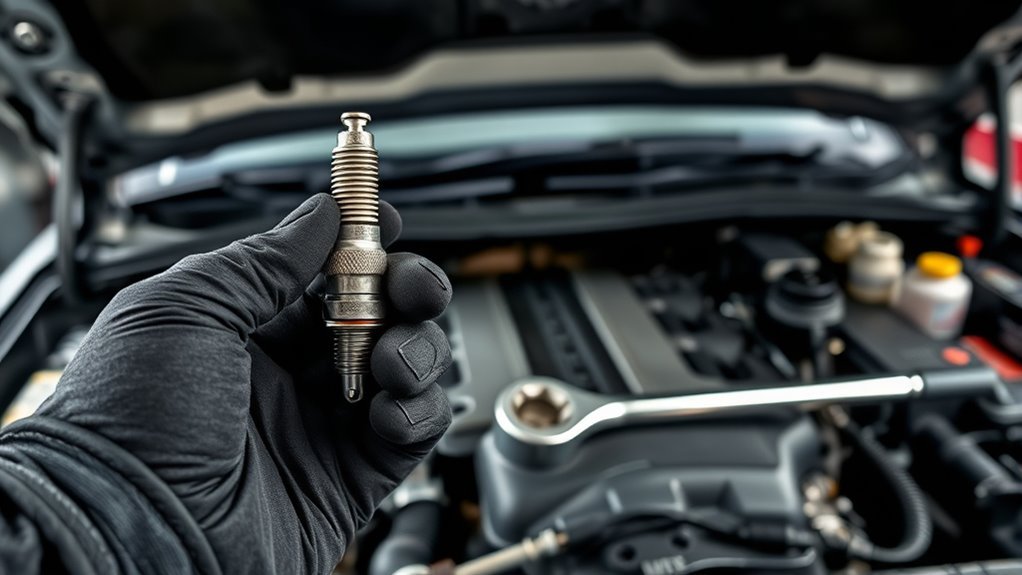
You should plan spark-plug service by engine, model year, and use. Older V6 Tundras with non-iridium plugs often need shorter service intervals, while many 5.7L V8 models with long-life iridium plugs can run much longer.
Heavy towing, rough trails, frequent short trips, and misfire symptoms can shorten plug life. Use the intervals below as a planning guide, then confirm the exact schedule in your Toyota Warranty and Maintenance Guide.
Quick Answer
Most Toyota Tundra spark plug intervals depend on the engine. Older V6 models may need service near 30,000 miles, many 5.7L V8 models can reach about 120,000 miles with iridium plugs, and newer twin-turbo V6 models may follow a different schedule. Check your VIN-specific maintenance guide before you buy parts or start the job.
Key Takeaways
- Use your engine code and model year before you choose a spark plug interval.
- Inspect plugs sooner if you tow, drive off-road, idle often, or notice misfires.
- Match the spark plug part number to your VIN, not just the engine name.
- Check the preset gap carefully, but don’t force-adjust fine-electrode iridium plugs.
- Use a torque wrench and hand-thread each plug to protect the aluminum cylinder head.
Tundra Spark Plug Intervals by Engine
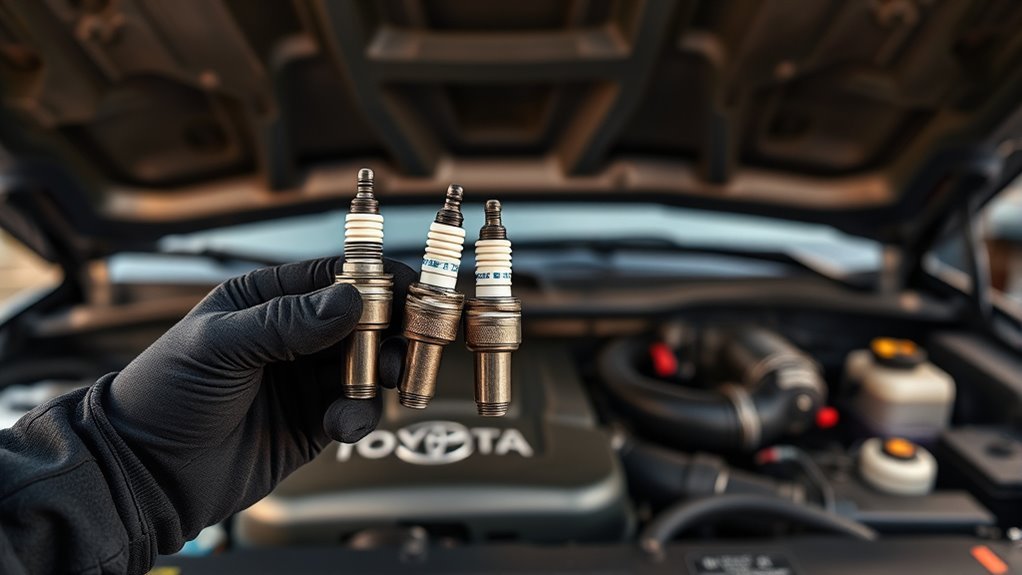
If you own a Toyota Tundra, start with the engine family. Toyota schedules vary by model year, market, and emissions rules, so the owner’s maintenance guide should overrule any general chart.
| Tundra engine group | Planning interval | What you should check |
|---|---|---|
| Older 1GR-FE V6 | Often around 30,000 miles for older non-iridium schedules | Verify the exact year, plug type, and emissions schedule. |
| 4.7L and 5.7L V8 engines | Many iridium-equipped V8 schedules reach about 120,000 miles | Inspect sooner if you tow, idle often, or see misfire symptoms. |
| 2022 and newer twin-turbo V6 models | Use the VIN-specific Toyota maintenance guide | Do not use older V8 intervals for newer turbo engines. |
According to Toyota’s general spark plug guidance, plug life depends on the vehicle schedule and driving conditions. Toyota also notes that towing heavy loads and stop-and-go driving can justify earlier attention.
Inspect plugs near the midpoint of a long interval if you use your truck hard. Look for electrode erosion, gap growth, oil, fuel smell, carbon buildup, cracked porcelain, or uneven wear.
How Driving, Towing, and Terrain Affect Plug Life
Driving habits and load conditions change how fast ignition parts wear. Steady highway cruising often keeps combustion stable, but towing raises heat and cylinder pressure.
Off-road use adds dust, vibration, water exposure, and low-speed load. Keep the air filter sealed, clean dirt from the engine bay, and inspect coil boots when you service plugs.
If you regularly tow or drive rough trails, inspect plugs sooner than a normal-use schedule. Check the gap, deposit color, electrode shape, and porcelain condition before you decide on replacement timing.
5 Quick Signs Your Tundra Needs New Spark Plugs
Worn plugs usually warn you before they fail. Track symptoms over a few drives so you don’t replace good parts or ignore a real ignition problem.
- Falling fuel economy: You refuel more often under the same route and load.
- Rough idle: The engine shakes at stoplights or feels uneven after startup.
- Frequent misfires: The truck stumbles under load, during towing, or during hard acceleration.
- Hard starts: The engine cranks longer, especially after sitting overnight.
- Check-engine light: Misfire or ignition codes point to a problem that needs diagnosis.
These signs do not prove the spark plugs caused the issue. Bad coils, vacuum leaks, fuel problems, or sensor faults can create similar symptoms.
[Products Worth Considering]

This ignition coil and iridium spark plug kit is designed to restore smooth engine performance, reliable starts, and efficient combustion for compatible Toyota models. Built for a precise fit across select Camry, RAV4, Sienna, Highlander, and Venza applications, it helps improve idle stability, fuel economy, and emissions. The kit includes durable replacement parts backed by a one-year unlimited-mileage guarantee for added confidence on the road.

Walker exhaust pipe flange gasket is designed to help complete exhaust repairs with a reliable seal for compatible vehicles. Built to work with OE exhaust components and Walker replacement parts, it features heat-deflecting construction, durable materials, and slotted bolt holes where applicable for easier installation. Engineered and tested for real-world performance, it supports long-lasting exhaust system service.

This ignition coil and iridium spark plug set is designed to restore smooth engine performance and reliable starts for compatible Toyota, Lexus, Scion, and Pontiac vehicles. It features durable coil construction for dependable electrical connection and long-lasting iridium plugs for extended service life. The set includes four matched coils and plugs, making it a convenient replacement solution backed by a one-year warranty.
Inspect & Replace Spark Plugs: Tools, Steps, and Time
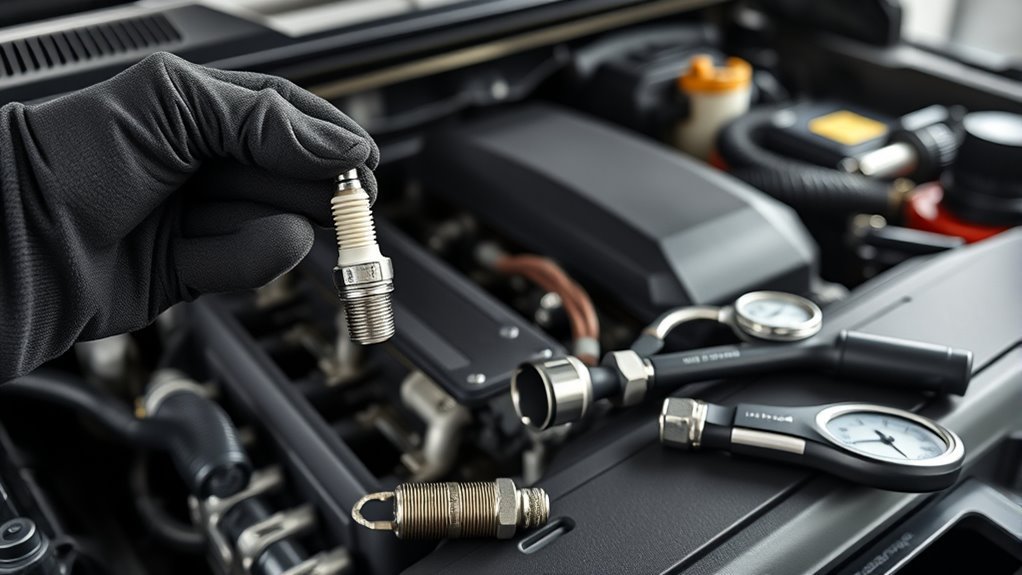
Estimated time: Plan for 30 minutes to two hours on many older layouts. Tight access, stuck coils, or newer turbo packaging can take longer.
[Products Worth Considering]

This cabin air filter replacement is designed to help keep your vehicle’s interior air fresher and cleaner by capturing dust, odors, and fine particles with a multi-layer filtration structure. The activated carbon layer helps reduce unwanted smells, while the extended service life makes it a practical maintenance part for many compatible Toyota, Lexus, Subaru, Scion, and Jaguar models.

NGK Iridium IX spark plugs are designed to deliver a stable spark, reliable ignition, and long-lasting performance for compatible Toyota Camry 2.5L engines. The fine-wire iridium center electrode helps improve durability and efficient combustion, making these plugs a smart replacement choice for maintaining smooth engine operation. Sold in a convenient four-pack, they are built for consistent performance and dependable fitment.

Wide range of professional automotive specialy tools
What You’ll Need
- 3/8-inch ratchet and extension
- Spark plug socket with rubber insert or magnet
- Torque wrench that reads low foot-pound values
- Feeler gauge for careful gap verification
- Compressed air or a clean brush for plug wells
- VIN-matched OEM or equivalent spark plugs
Basic Inspection Steps
- Let the engine cool before you remove any ignition parts.
- Disconnect the ignition coil connector for one cylinder at a time.
- Clean dirt around the plug well before you loosen the plug.
- Remove the plug with a spark plug socket and extension.
- Inspect the electrode, porcelain, threads, and deposits.
- Compare the old plug to your maintenance interval and symptoms.
- Hand-thread the new plug before you use a ratchet.
- Tighten the plug with a torque wrench to the correct spec for your engine.
Warning: Cross-threading a spark plug can damage the cylinder head, so stop if the plug does not thread smoothly by hand.
Best Spark Plugs, Gap, Torque, and Coil Care Tips
Choose the spark plug by VIN, engine, and model year. Toyota parts data lists different Tundra plugs across V6 and V8 years, so don’t treat Denso SK20HR11 or Toyota 90919-01191 as a universal fit.
For many SK20HR11 applications, the preset gap equals about 1.1 mm, or 0.043 inch. DENSO warns that you can damage fine-electrode iridium and platinum plugs if you adjust the gap carelessly.
Use the factory torque spec for your exact engine. Many 3UR-FE service references place spark plug torque near 13 to 15 lb-ft, but your repair manual should control the final number.
Inspect coil packs while the plugs are out. Replace coils or boots that show carbon tracks, cracks, brittle rubber, oil contamination, or arcing marks.
Frequently Asked Questions
How often should I change the spark plugs on my Toyota Tundra?
Use your engine and model year first. Older V6 engines may need shorter intervals, many 5.7L V8 models can run much longer with iridium plugs, and newer twin-turbo V6 models need their own maintenance schedule.
What does the 100,000-mile service include on a Toyota Tundra?
The 100,000-mile service often includes major fluid, filter, belt, hose, brake, and inspection items. Spark plug service may fall before, at, or after that point, depending on your engine and maintenance guide.
Should I gap iridium spark plugs before installing them?
You should verify the preset gap with care, but you should not force-adjust fine-electrode iridium plugs. DENSO warns that gap adjustment can damage the center electrode.
Can bad coils look like bad spark plugs?
Yes. A weak coil can cause misfires, rough idle, poor power, and a check-engine light, so inspect coils and boots during plug service.
Conclusion
Your Tundra’s spark plug interval depends on the engine, model year, plug type, and how you use the truck. Check the Toyota maintenance guide for your VIN before you order parts.
Inspect plugs sooner if you tow, drive off-road, idle often, or notice misfires, hard starts, poor fuel economy, or a check-engine light. Use the right plug, verify the preset gap, hand-thread each plug, and torque it to spec.
A careful spark plug service protects throttle response, fuel economy, coils, and long-term engine reliability. Keep records after the job so your next service decision feels simple.
References
- How Often To Change Spark Plugs — Toyota, accessed 2026
- Scheduled Maintenance Guide — Toyota, accessed 2026
- Toyota Spark Plugs Parts and Service Guide — Toyota Parts and Service, 2020
- Spark Plug Warnings and Precautions — DENSO, accessed 2026