
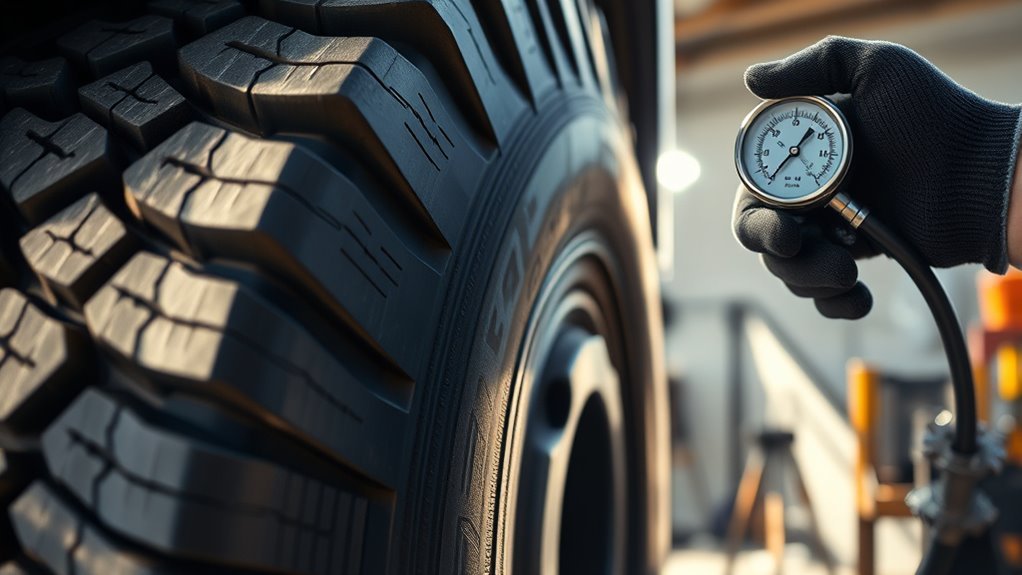
The right truck tire PSI is not one universal number. For most trucks, the safest answer is the cold tire pressure listed on the driver-side tire and loading label or in the owner’s manual. Light pickups often land near 35–45 PSI, while heavy-duty pickups, delivery trucks, trailers, and semis can require much higher pressure based on load, tire size, and axle position.
Quick Answer
For most light pickups, the right truck tire pressure is the cold PSI on the driver-door tire label, often around 35–45 PSI. Heavy-duty pickups and commercial trucks may need much higher pressures based on axle load and tire size. Never use the tire sidewall’s maximum PSI as the normal setting.
Key Takeaways
- Use the truck’s tire and loading label or owner’s manual as your first source for PSI.
- Check pressure when tires are cold, before driving or after the truck has been parked for at least three hours.
- Increase pressure only when the manufacturer or tire load/inflation table calls for it, especially when towing or hauling.
- TPMS is helpful, but it is not a replacement for monthly checks with a tire gauge.
At a Glance
| Time Required | 5–10 minutes |
| Difficulty | Easy |
| Tools Needed | Accurate tire pressure gauge, air compressor, valve-stem caps, and the truck’s tire/loading label or owner’s manual |
| Cost | Usually free after buying a gauge; many gas stations and shops provide air |
What’s the Right PSI for Your Truck Tires?
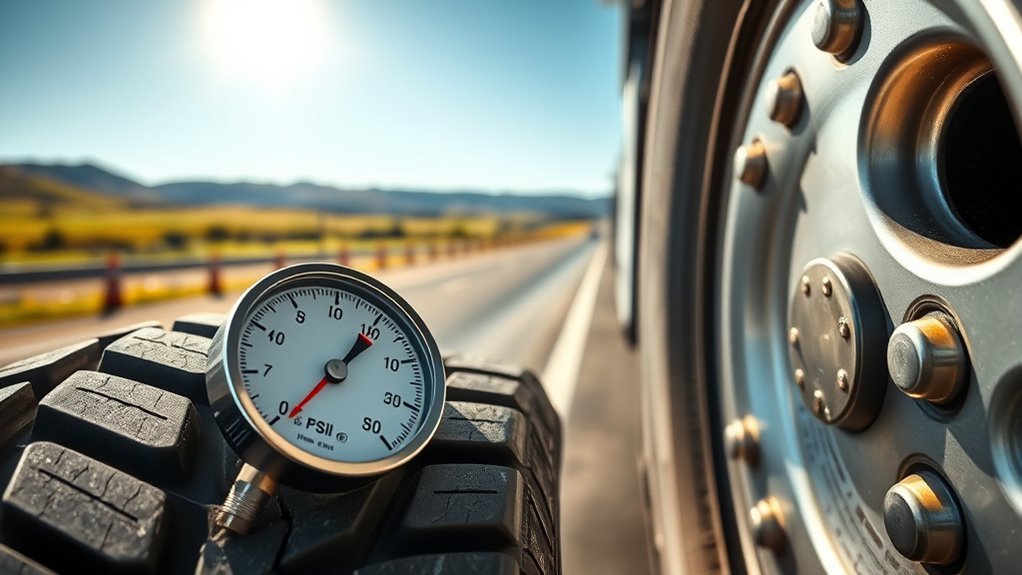
The right PSI for your truck tires is the recommended cold inflation pressure set by the vehicle manufacturer. You can usually find it on the tire and loading information label on the driver-side door edge or door jamb, or in the owner’s manual. The National Highway Traffic Safety Administration explains that the correct pressure is the manufacturer-listed cold PSI, not the pressure molded into the tire sidewall.
Warning: Do not treat the tire sidewall’s “maximum pressure” as your normal operating PSI. That number is a tire limit, not a vehicle-specific recommendation. Also never exceed the tire or wheel rating.
As a general reference, many light-duty pickups use about 35–45 PSI for original-size tires under normal loading. Heavy-duty pickups, vans, delivery trucks, trailers, and semi-trucks may use much higher pressures, but those pressures must match the tire size, load range, axle weight, and manufacturer guidance.
| Truck Type | Common PSI Range | Best Source for the Exact PSI |
|---|---|---|
| Light pickup / 1500 truck | Often 35–45 PSI | Door label or owner’s manual |
| Heavy-duty pickup / cargo van | Often 50–80 PSI, depending on tire and axle load | Door label, owner’s manual, and load rating |
| Medium-duty delivery truck | Often 70–95 PSI | Fleet spec, axle weights, and tire load table |
| Semi-truck / tractor-trailer | Often 85–120+ PSI, depending on axle, load, and tire size | Tire manufacturer load/inflation table and fleet maintenance policy |
For commercial trucks, the safest method is to weigh the truck by axle and match the tire size and load to a manufacturer load/inflation table, such as the tables provided by Continental Truck Tires or the Michelin commercial truck tire documents. This matters because the correct pressure for a steer tire, drive tire, trailer tire, single tire, or dual tire can differ.
[Products Worth Considering]
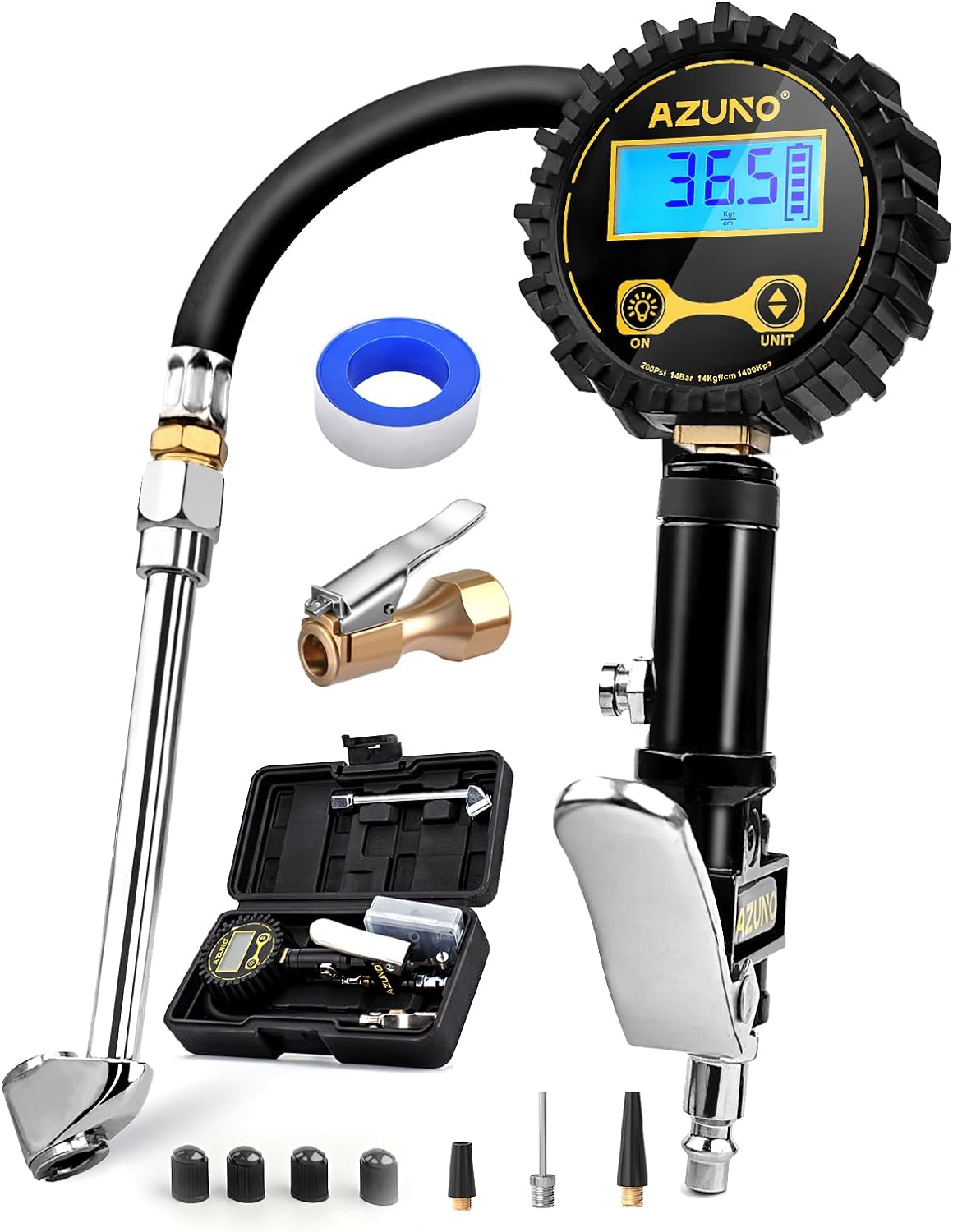
This digital tire inflator delivers accurate, easy-to-read pressure measurements with a bright backlit LCD and precise 0.1 resolution for confident inflation. Designed for single-handed use, it makes it simple to inflate or deflate tires while staying organized in the included portable carrying box. Built for a wide range of vehicles, it is a practical air compressor accessory for cars, trucks, SUVs, motorcycles, and more.

This upgraded Dorman OE FIX oil filter housing replaces failure-prone plastic on select Chrysler, Dodge, Jeep, and Ram vehicles with a durable aluminum design. It includes the oil cooler, filter element, cap, and required gaskets to help deliver a complete repair and updated fitment. Engineered for reliable sealing and long-term leak resistance, it is designed to help solve recurring oil filter housing failures.

This smart color coded tire tread depth gauge makes it easy to check tread wear at a glance with clear red, yellow, and green ranges. Calibrated from 0 to 1 inch in 1/32 inch increments, it helps you quickly assess tire condition for safer driving and timely replacements. The pocket clip design makes it convenient to carry and use on trucks, motorcycles, cars, and other passenger vehicles.
Consequences of Incorrect Tire Pressure on Truck Performance
Incorrect tire pressure can hurt handling, braking, tread life, fuel economy, and tire safety. Under-inflation is especially risky on trucks because heavier loads create more heat and stress in the tire.
Handling and Stability Issues
Under-inflated tires can feel soft, slow to respond, and unstable during turns, lane changes, and braking. The tire flexes more than it should, which creates extra heat and rolling resistance. On a loaded truck or trailer, that extra heat can increase the chance of tire failure.
Over-inflated tires can also cause problems. They may ride harshly, reduce the contact patch, and wear more heavily near the center of the tread. Either direction—too low or too high—can reduce control when you need traction most.
Increased Wear and Tear
Low pressure often wears the outer shoulders of the tread. High pressure can wear the center faster. Uneven wear shortens tire life and can also point to alignment, suspension, or load-distribution problems.
FuelEconomy.gov reports that under-inflated tires can lower gas mileage by about 0.2% for every 1 PSI drop in the average pressure of all tires, while proper inflation can improve mileage by up to 3% in some cases.
That may sound small, but on a truck that tows, hauls, or drives long distances, tire pressure affects both fuel cost and tire replacement cost.
How Load and Weather Affect Tire Pressure
Load and weather are two of the biggest reasons tire pressure changes or needs closer attention.
Load Weight Considerations
A heavier load can require higher pressure, but you should not guess. For a light pickup, follow the owner’s manual and tire/loading label for normal and loaded conditions. For commercial trucks, use actual axle weights and a tire manufacturer’s load/inflation table.
Note: If you tow or haul near the truck’s rated capacity, check the owner’s manual for loaded tire-pressure guidance. If the truck has dual rear wheels, check both tires in each dual pair because the inner tire is easy to miss.
Temperature Adjustments Needed
Air pressure changes with temperature. The U.S. Tire Manufacturers Association notes that inflation pressure can rise or fall about 1–2 PSI for every 10°F change. That is why a truck that was correct in warm weather may read low after a cold night.
Always adjust pressure based on a cold reading. If you check after driving, the tires are warm and the reading will usually be higher than the true cold pressure.
How to Maintain Optimal Tire Pressure
Maintaining the right tire pressure is simple, but it works best when you use the same process every time.
[Products Worth Considering]

This portable tire inflator delivers fast, convenient inflation for cars, bikes, motorcycles, and balls with dual power options from a rechargeable battery or a 12V car cord. Its digital LCD pressure gauge and automatic shutoff help prevent over-inflation, while multiple preset modes and a custom setting make it easy to use for different inflation tasks. Built-in flashlight and USB power ports add extra emergency utility on the road.

These off-road traction boards are designed to help vehicles recover from mud, sand, and snow with reliable grip and easier ramp-up. Their double-sided diamond construction, cross-shaped teeth, and contoured ramps improve traction while the durable polypropylene build stays flexible in harsh conditions. Convenient mounting points, ergonomic handles, and a visible leash make them practical to carry, store, and retrieve when recovery is needed.

【EXTENDED REACH DUAL HEAD】LUMITECO 12" pencil-style pressure gauge is designed with the Integrated Straight foot air chuck and 30°reverse chuck. Ideal for dual wheels and other difficult reached valves. Your good choice for checking tire pressure as well as a great father's day gift.
How to Check Truck Tire Pressure Step by Step
- Find the correct PSI. Look at the driver-side tire/loading label or owner’s manual. For commercial trucks, confirm the fleet spec or tire load/inflation table.
- Check the tires cold. Check before driving or after the truck has been parked for at least three hours.
- Use an accurate gauge. Press it firmly onto the valve stem until the hissing stops and the reading stabilizes.
- Add or release air as needed. Match the recommended cold PSI for each axle or tire position.
- Recheck after adjusting. Small changes matter, especially on high-pressure truck tires.
- Replace valve caps. Caps help keep dirt and moisture out of the valve stem.
- Log the reading. A tire that repeatedly loses air should be inspected for a puncture, leaking valve stem, rim issue, or tire damage.
Pro Tip: Keep a tire gauge in the truck. Check pressure at least once a month, before long trips, before towing, and before carrying heavy cargo.
What to Do If Pressure Is Too Low or Too High
If a tire is low, add only enough air to reach the recommended cold PSI. If it is high while cold, release air slowly and recheck. If it is high only because you just drove, do not bleed it down to the cold spec; let the tire cool and check again.
If one tire is much lower than the others, or if it keeps losing more than a small amount of pressure, have it inspected. A slow leak can become a major safety issue under load.
Tools and Technology for Monitoring Tire Pressure
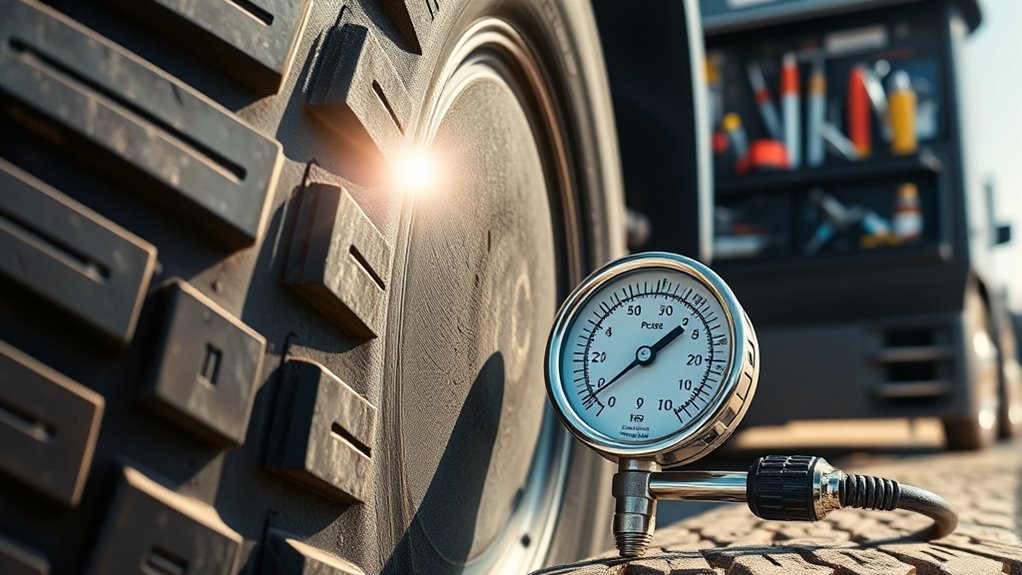
The right tool depends on the truck, tire pressure range, and how often you drive loaded.
| Tool/Technology | Best Use | Important Limit |
|---|---|---|
| Manual tire gauge | Most accurate routine checks | Must match the truck’s PSI range |
| TPMS | Warning when pressure drops significantly | Not a replacement for monthly gauge checks |
| Dual-head truck gauge | Checking dual rear wheels and high-pressure tires | Cheap gauges can drift out of accuracy |
| Automatic tire inflation system | Fleet trailers and commercial use | Still requires inspection and maintenance |
TPMS is a valuable backup, but it should not be your only tire-pressure habit. Many systems warn only after pressure is already significantly low, so a monthly gauge check is still the better first line of defense.
[Products Worth Considering]

1. LONG ZINC ALLOY DUAL HEAD DESIGN : Straight foot air chuck are deisghed for inner wheels or difficult reached valve as well as the 30°reverse chuck are for outer wheels.A good choice for testing your tire pressure also a great father's day gift

【EXTENDED REACH DUAL HEAD】LUMITECO 12" pencil-style pressure gauge is designed with an integrated straight foot air chuck and 30° reverse chuck. Perfect for dual wheels and other hard-to-reach valves. Also comes with 4 extra valve stem caps for replacement, your great choice for checking tire pressure and a fantastic Father's Day gift.
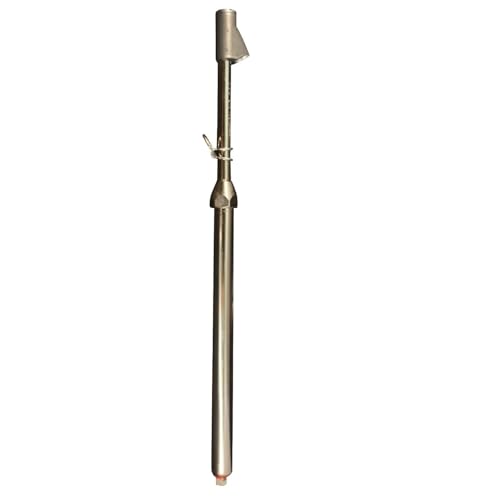
Milton precision engineered service gages provide accurate, long life trouble free performance
Best Practices for Ongoing Tire Maintenance and Safety
Correct PSI is only one part of truck tire safety. Use these habits to protect the tires, wheels, load, and passengers:
- Check pressure monthly. Add a check before long trips, towing, or carrying heavy cargo.
- Inspect tread and sidewalls. Look for cuts, bulges, exposed cord, sidewall cracks, nails, or uneven wear.
- Watch tread depth. Commercial vehicle rules require at least 4/32 inch on front tires of buses, trucks, and truck tractors, and at least 2/32 inch on other tires. Passenger-use pickups should also replace tires before tread is unsafe for rain, snow, or towing.
- Do not drive on a flat or leaking tire. Federal commercial tire rules prohibit operating with flat tires, audible leaks, exposed ply or belt material, tread or sidewall separation, or cuts that expose ply or belt material.
- Rotate and align as recommended. Irregular wear can come from pressure problems, alignment issues, worn suspension parts, or unbalanced loads.
- Match tires correctly. Use the correct tire size, load rating, and speed rating for the truck and job.
- Document pressure trends. Repeated pressure loss means the tire needs inspection, not just more air.
Frequently Asked Questions
Is 40 PSI good tire pressure for trucks?
Forty PSI can be correct for some light-duty pickups, but it is not automatically right for every truck. Check the tire and loading label on the driver-side door area or the owner’s manual. If the placard says 35 PSI, 40 PSI may be too high for normal driving. If the truck is loaded or uses LT tires, the recommended pressure may be higher.
What PSI should 1500 truck tires be?
Many 1500-series pickups use about 35–45 PSI with original-size tires, but the exact number depends on the model, tire size, trim, and load rating. Use the cold PSI on the driver-door label first. Do not use a random online chart or the maximum PSI on the tire sidewall as your normal setting.
What PSI should my tires be at on my truck?
Your truck tires should be set to the manufacturer’s recommended cold PSI. Find it on the tire and loading label, certification label, or owner’s manual. If your truck has aftermarket tires, oversized tires, a camper, heavy tools, or a trailer, ask a tire professional or use the tire manufacturer’s load/inflation data to confirm the safe pressure.
What is the best PSI for big truck tires?
Big truck tires often run much higher pressures than pickup tires, commonly in the 85–120+ PSI range, but the correct number depends on tire size, axle position, single or dual fitment, and actual load. Commercial trucks should use axle weights and tire manufacturer load/inflation tables rather than a universal PSI rule.
How often should I check truck tire pressure?
Check truck tire pressure at least once a month, before long trips, before towing, and before carrying heavy loads. Always check when tires are cold. If one tire repeatedly loses pressure, have it inspected for a puncture, valve leak, rim leak, or tire damage.
Conclusion
Maintaining the correct PSI for your truck tires is one of the simplest ways to improve safety, tire life, handling, and fuel economy. The key is to use the truck’s recommended cold tire pressure, not a guess and not the sidewall maximum. Check pressure monthly, adjust for temperature and load when the manufacturer calls for it, and inspect the tires for damage every time you air them up. A few minutes with a gauge can prevent uneven wear, poor handling, and expensive tire problems later.
Sources
- National Highway Traffic Safety Administration: TireWise Tire Safety — supports placard-first PSI guidance, cold tire checks, and tire-pressure safety.
- FuelEconomy.gov: Keeping Your Vehicle in Shape — supports fuel-economy impact of under-inflated tires and the correction to the 0.2% per 1 PSI statistic.
- U.S. Tire Manufacturers Association: Tire Care Essentials — supports monthly checks, cold pressure checks, temperature effects, and TPMS limitations.
- eCFR 49 CFR 393.75: Tires — supports commercial truck tire-condition and tread-depth safety rules.
- Continental Truck Tires: Load and Inflation Tables — supports commercial truck pressure selection by tire size and load.
- Michelin Commercial Tires: Brochures, Manuals & Load/Inflation Resources — supports manufacturer load/inflation table use for commercial truck tires.



[…] the trailer. Use the tow vehicle’s door-jamb label or manual for the truck or SUV. See the truck tire pressure guide for tow-vehicle load and PSI […]