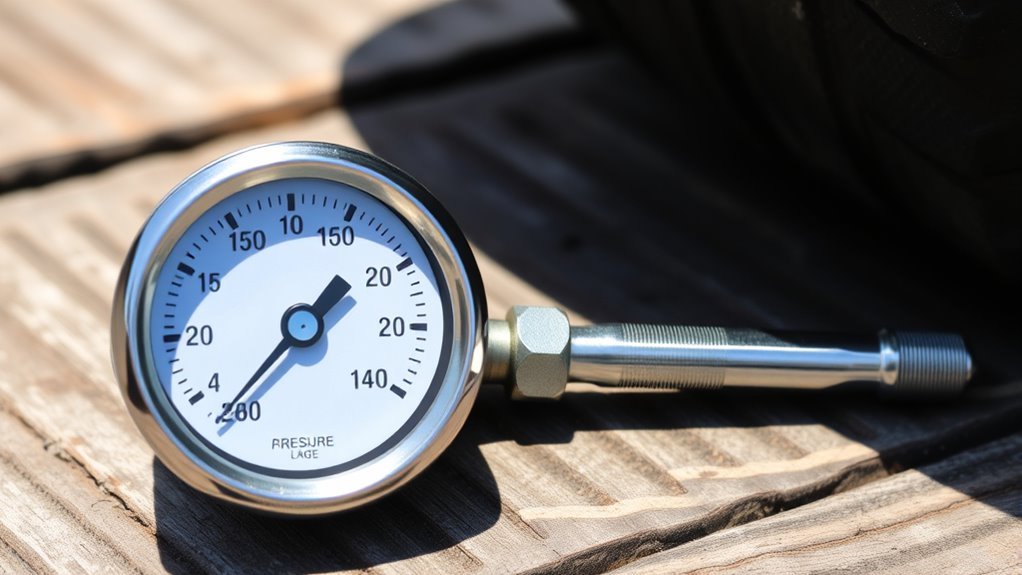
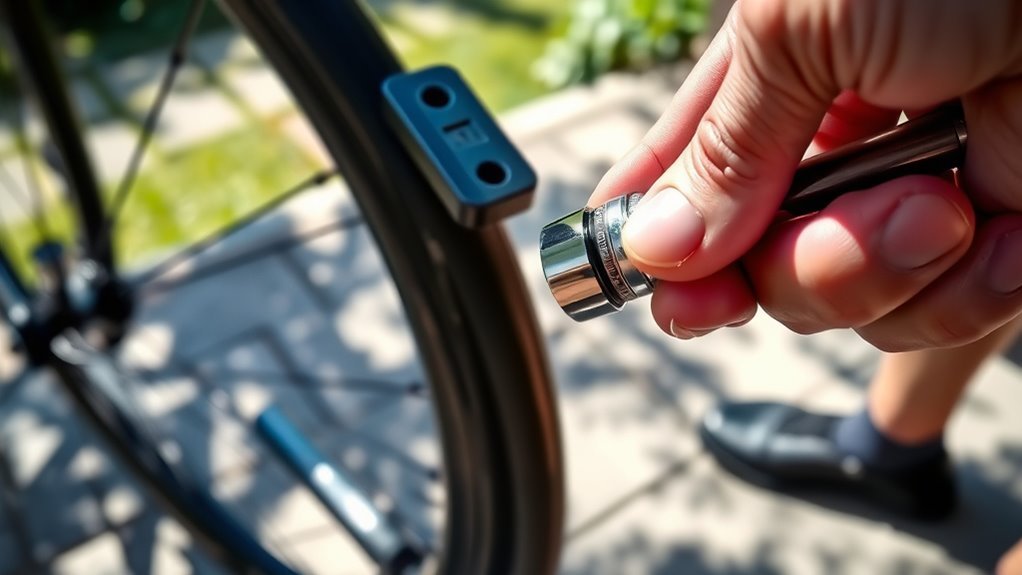
Cold weather can make your tire pressure drop overnight, even when there is no puncture or visible leak. That happens because colder air contracts, lowering the pressure inside the tire. The safest response is simple: check the tires when they are cold, inflate them to the vehicle maker’s recommended PSI, and inspect any tire that keeps losing air.
Quick Answer
Tire pressure drops in cold weather because the air inside the tire contracts as temperature falls. A practical rule is about 1 PSI for every 10°F drop. Check pressure when the tires are cold and inflate to the PSI listed on your driver-side door placard or owner’s manual.
Key Takeaways
- Expect about 1 PSI of pressure loss for every 10°F temperature drop, though real-world readings can vary.
- Use the recommended cold PSI on your vehicle’s tire placard or owner’s manual, not the maximum PSI molded into the tire sidewall.
- Check tire pressure before driving, or after the vehicle has been parked for at least three hours.
- A TPMS light may be caused by normal cold-weather pressure loss, but it can also signal a leak or damage.
- If one tire keeps dropping after you inflate it, have it inspected for a puncture, valve-stem leak, bead leak, or wheel damage.
At a Glance
| Time Required | 5 minutes for a pressure check; 10–15 minutes if all four tires need air |
| Difficulty | Easy |
| Tools Needed | Tire pressure gauge, air compressor or gas-station air pump, valve-stem caps |
| Cost | Usually free to a few dollars for air; about $5–$20 for a basic gauge |
Why Proper Tire Pressure Matters in Winter
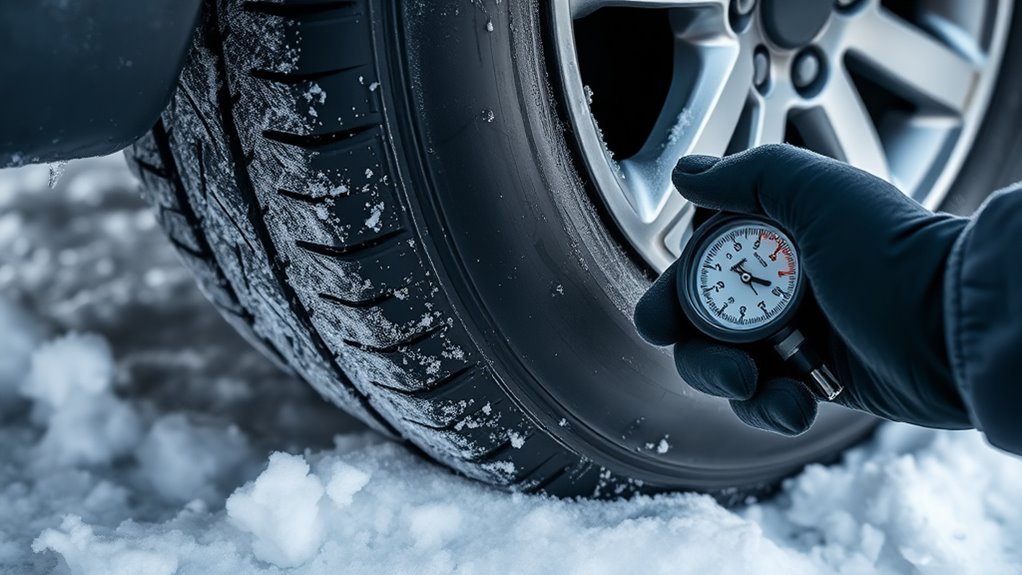
Proper tire pressure matters all year, but winter makes low pressure easier to miss. Cold air can reduce PSI quickly, and underinflated tires can affect traction, steering response, braking distance, tread wear, and fuel economy.
The U.S. Department of Energy’s FuelEconomy.gov says underinflated tires can lower gas mileage by about 0.2% for every 1 PSI drop in the average pressure of all tires. Properly inflated tires are also safer and last longer.
Warning: Do not drive on a tire that looks visibly flat, has a bulge, has deep cracks, or loses air again soon after inflation. Put on the spare if it is safe to do so, use roadside assistance, or have the tire inspected before driving farther.
How Cold Weather Affects Your Tire Pressure
As temperatures drop, the air molecules inside your tires move less and exert less pressure against the tire walls. A useful rule of thumb from AAA is that tire pressure can drop about 1 PSI for every 10°F decrease in temperature.
That means a tire set to 35 PSI on a mild 70°F day may read about 31 PSI after the temperature falls to 30°F. The tire may not be punctured; the pressure may simply be responding to the colder air. Still, the pressure should be corrected to the recommended cold PSI.
Tire Pressure Drop Factors
The 1 PSI per 10°F rule is an estimate. Your actual reading can vary based on tire size, starting PSI, gauge accuracy, altitude, vehicle load, and whether the tire was recently driven.
| Temperature Drop | Approximate PSI Loss | What to Do |
|---|---|---|
| 10°F | About 1 PSI | Check if your tires were already near the low end |
| 20°F | About 2 PSI | Top up if below the placard PSI |
| 30°F | About 3 PSI | Recheck all four tires before a trip |
| 40°F | About 4 PSI | Inflate to the recommended cold PSI |
A 40°F cold snap can lower tire pressure by about 4 PSI, enough to affect handling, tread wear, and fuel economy.
Monitoring Cold Weather Changes
Check tire pressure at least once a month, before long drives, and after major temperature swings. Cold mornings are often the best time because the tires have usually been parked long enough to give an accurate cold reading.
Do not wait for the tire pressure monitoring system light to do all the work. TPMS is a safety backup, not a replacement for a gauge. A small winter pressure drop can happen before the system triggers a warning.
How to Accurately Measure Tire Pressure
The right tire pressure is the vehicle manufacturer’s recommended cold inflation pressure. According to NHTSA, a cold tire is one that has not been driven for at least three hours. You can find the recommended PSI on the tire information placard, usually on the driver-side door jamb, or in the owner’s manual.
Note: Do not use the “maximum PSI” number on the tire sidewall as your normal inflation target. That number is the tire’s maximum cold pressure rating, not necessarily the correct pressure for your vehicle.
- Park long enough for a cold reading. Check before driving or after the vehicle has been parked for at least three hours.
- Find the correct PSI. Look at the driver-side door placard or owner’s manual. Front and rear tires may have different recommended pressures.
- Use a reliable gauge. Digital and pencil-style gauges both work, but keep one in the vehicle so you are not relying only on a gas-station gauge.
- Remove the valve-stem cap. Press the gauge firmly onto the valve stem until the hissing stops and the gauge gives a reading.
- Add air in short bursts. Recheck the pressure after each burst so you do not overinflate.
- Release air if needed. If the tire is over the recommended PSI, press the valve core briefly and recheck.
- Replace the valve cap. A cap helps keep dirt and moisture out of the valve stem.
- Repeat for all tires, including the spare. A neglected spare may be unusable when you need it most.
Pro Tip: If you must add air after driving, inflate to the recommended PSI for now, then recheck and adjust again when the tires are cold.
[Products Worth Considering]

This smart color coded tire tread depth gauge makes it easy to check tread wear at a glance with clear red, yellow, and green ranges. Calibrated from 0 to 1 inch in 1/32 inch increments, it helps you quickly assess tire condition for safer driving and timely replacements. The pocket clip design makes it convenient to carry and use on trucks, motorcycles, cars, and other passenger vehicles.

The NOCO Boost X GBX155 is a powerful portable jump starter designed to deliver reliable starts for large gas and diesel engines with advanced UltraSafe 2.0 protection. It also doubles as a USB-C power bank and includes a bright LED flashlight with multiple modes, making it a versatile emergency tool for roadside use, travel, and everyday charging needs.
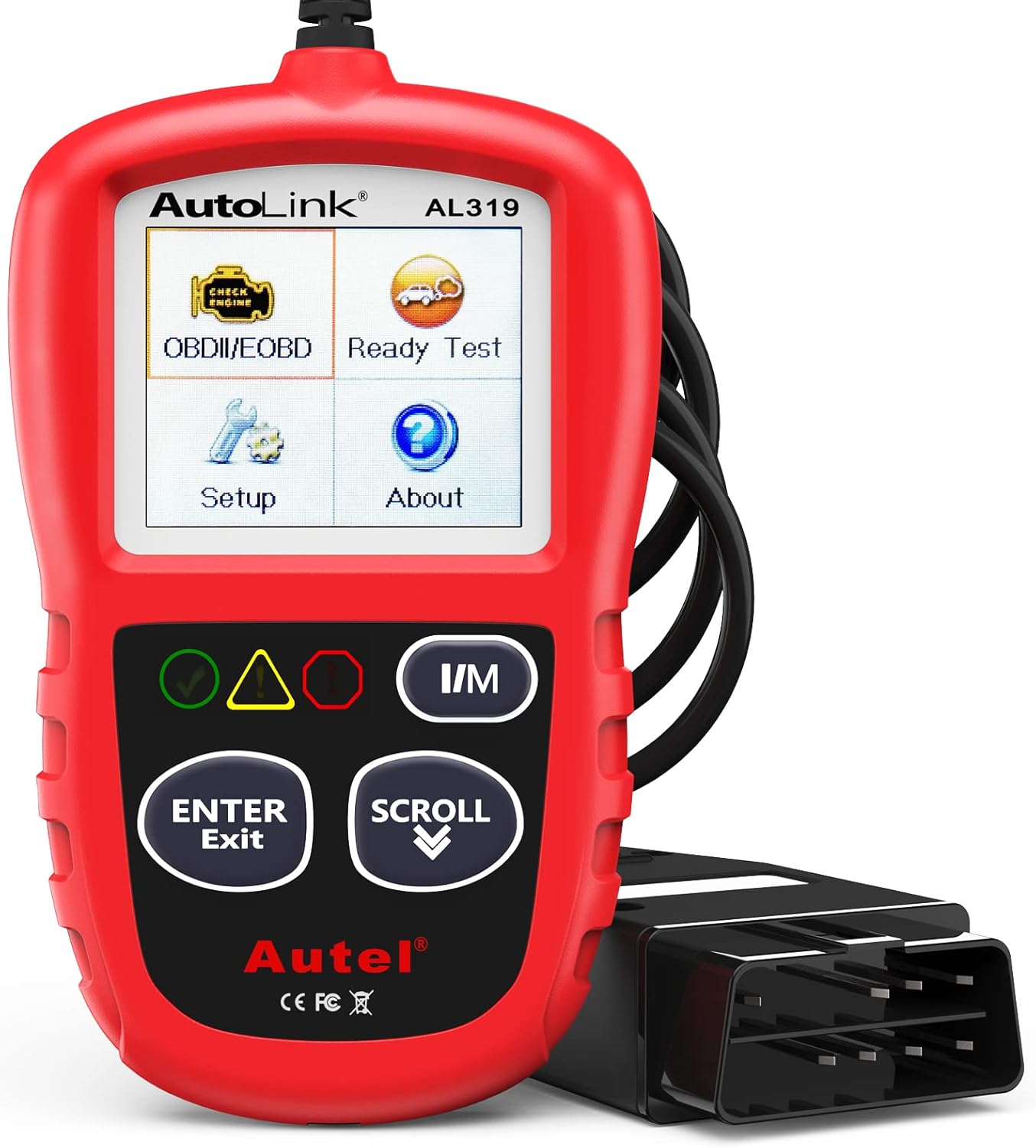
The Autel AL319 is a user-friendly OBD2 scan tool designed to help drivers quickly diagnose check engine light issues and understand vehicle fault codes. It supports reading and clearing DTCs, live data, freeze frame, I/M readiness, and vehicle information, making it a practical choice for DIYers and everyday car owners. With plug-and-play operation, a color display, built-in speaker, and broad vehicle compatibility, it delivers fast, reliable diagnostics without complicated setup.
Signs Your Tire Pressure Is Too Low
Low tire pressure is not always obvious by sight, especially on modern radial tires. Use a gauge for confirmation, but watch for these warning signs:
- TPMS warning light: The dashboard tire-pressure light may come on after a cold night or during a sudden temperature drop.
- Soft or sluggish handling: The vehicle may feel less responsive during turns or lane changes.
- Pulling to one side: One low tire can make the vehicle drift or pull.
- Visible tire sag: A tire that looks flatter than the others may be severely underinflated.
- Uneven tread wear: Excessive wear on both outer edges often points to chronic underinflation.
- Repeated air loss: A tire that needs air again within days may have a leak, puncture, valve issue, or rim sealing problem.
What to Do If Your Tire Pressure Drops?
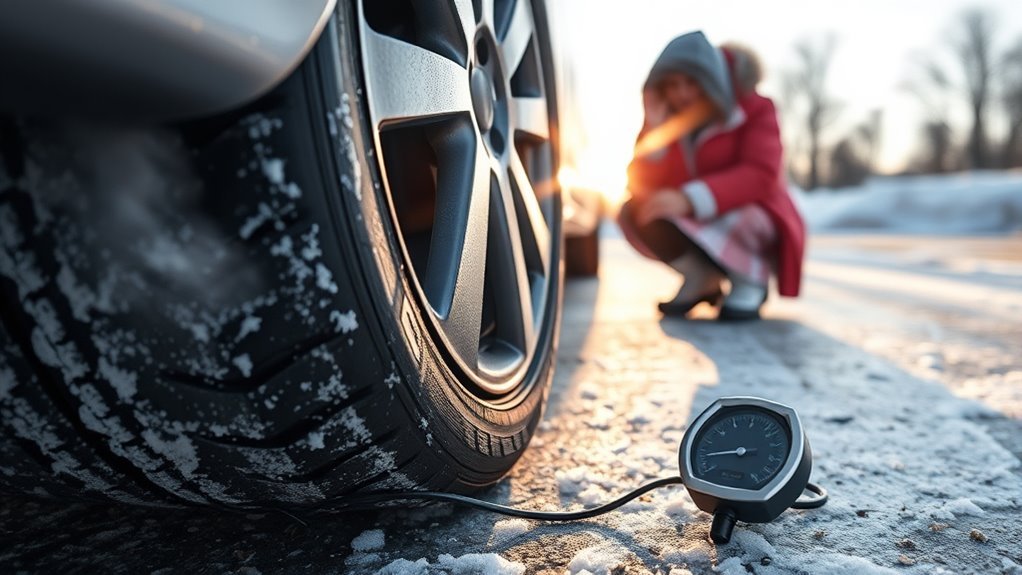
If your tire pressure drops during cold weather, act based on how low it is and whether the tire appears damaged.
- If all tires are slightly low: This is common after a temperature drop. Inflate each tire to the recommended cold PSI.
- If one tire is much lower than the others: Inspect for nails, screws, sidewall damage, a loose valve cap, or a leaking valve stem.
- If the tire is visibly flat or damaged: Do not keep driving on it. Use the spare if safe, call roadside assistance, or visit a tire professional.
- If the TPMS light stays on after inflation: Drive a short distance if your owner’s manual says the system needs time to reset. If the light remains on, recheck with a gauge and inspect for leaks.
- If the TPMS light blinks: A blinking light often points to a TPMS malfunction rather than simple low pressure. Check your owner’s manual and schedule service.
[Products Worth Considering]

The AICEL TPMS Relearn Tool helps quickly reset and relearn tire pressure sensors on compatible GM vehicles after tire rotation, sensor replacement, or warning light issues. Designed for easy handheld use, it works with most cars, SUVs, and pickup trucks and can save time by eliminating unnecessary trips to the auto store. Its durable ABS housing and simple activation process make it a practical tool for keeping the tire pressure monitoring system operating properly.

This all-in-one recovery kit provides a reliable towing solution for roadside emergencies and off-road adventures. It includes a heavy-duty tow strap, two D-ring shackles, and a storage bag for convenient transport and quick access. Built for demanding recovery tasks, it is designed to help with towing trucks, SUVs, ATVs, UTVs, and boats in tough weather conditions.

TPMS RELEARN TOOL FOR GM: This tire pressure monitor system relearn tool is compatible with most General Motors equipped with 315 MHz or 433 MHz sensor, including Chevy, Buick, GMC, Opel, Cadillac, etc, from 2006-2024, Cars, SUV, Pickup, Not for Heavy Truck
Debunking Common Tire Pressure Myths for Cold Weather
Myth 1: A TPMS Light Always Means a Puncture
A tire pressure warning light does not always mean you ran over a nail. In cold weather, all four tires can drop enough to trigger the light. Still, you should never ignore it. Check each tire with a gauge and inflate to the recommended cold PSI.
Myth 2: Cold Weather Alone Means the Tire Is Damaged
A pressure drop after a cold night is often normal. However, pressure that keeps dropping after you add air is not normal. That pattern can point to a puncture, damaged valve stem, corroded wheel, bead leak, or other repair issue.
Myth 3: TPMS Replaces Manual Pressure Checks
TPMS is helpful, but it is not a substitute for a tire pressure gauge. Federal TPMS rules are designed to warn drivers when a tire is significantly underinflated. Minor pressure loss, uneven readings, or slow leaks may need a manual gauge check before the warning light appears.
Myth 4: The Tire Sidewall Shows the Correct PSI
The PSI on the sidewall is the tire’s maximum cold inflation pressure, not the everyday pressure target for your specific vehicle. Use the tire placard or owner’s manual instead. Tire Rack also recommends using the vehicle manufacturer’s pressure recommendation rather than the tire’s sidewall maximum.
How Temperature Changes Impact Tire Performance
Tire pressure affects the shape of the tire’s contact patch: the part of the tire that touches the road. When pressure is too low, the tire can flex more than designed. That can increase heat buildup, reduce fuel economy, accelerate shoulder wear, and make handling feel less precise.
In winter, the risk feels sharper because roads may already be wet, icy, or covered with slush. Proper pressure will not turn a worn tire into a safe winter tire, but it helps your tires perform as designed.
Year-Round Tire Pressure Tips

Cold weather gets most of the attention, but tire pressure changes year-round. Hot weather can raise pressure, cold weather can lower it, and tires can naturally lose air over time even without damage.
| Maintenance Task | Frequency | Why It Matters |
|---|---|---|
| Check tire pressure | At least monthly | Helps maintain safety, fuel economy, and tread life |
| Check after temperature swings | After major cold snaps or warmups | Pressure changes with outside temperature |
| Inspect tire tread | Monthly | Worn tread reduces wet, snow, and slush traction |
| Check for cuts, cracks, nails, and bulges | Monthly and before trips | Visible damage can signal tire failure risk |
| Rotate tires | Follow your owner’s manual | Promotes even wear and longer tire life |
| Check the spare tire | Monthly or before road trips | A flat spare cannot help during an emergency |
When to Seek Professional Help for Tire Issues
Some cold-weather pressure drops are normal. Others point to a problem that needs repair. Do not keep topping off a tire without finding the cause if the same tire repeatedly loses pressure.
[Products Worth Considering]
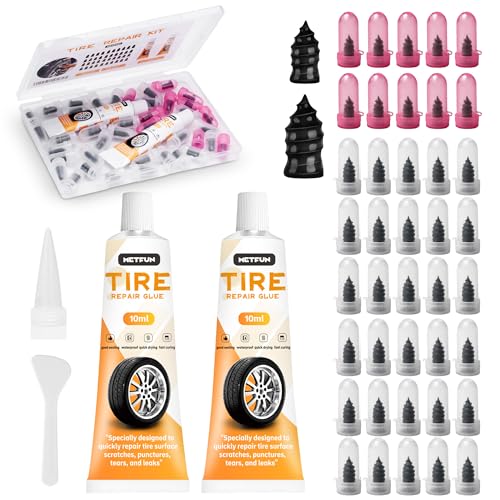
【Perfect Emergency Repair Solution】This kit includes 40 durable rubber repair screws (2 sizes for different punctures) and 2 tubes of fresh tire sealant—everything you need to fix tubeless tire punctures fast, and it’s definitely a great car tire repair kit to keep in your car for emergencies

DURABLE AND COMFORTABLE: The T-handle tools in the tire plug kit are made of stainless steel, allowing you to easily repair most tires on the market. Featuring ergonomic, rubber-coated handles, they provide greater torque and make it easier to apply force while reducing hand fatigue

16 Oz LiQuiTube Premium - The perfect size for a front lawn mower tire, golf cart tires, or wheelbarrow tires. It can also be used in small trailer tires. Not for use in light automobile tires or installed through valve stems with TPMS sensors. For lawn mowers and ATVs, consider purchasing the 1 Gallon for all four tires and never worry about tire repairs again.
Persistent Low Pressure
If a tire remains low after inflation or loses several PSI again within a few days, have it inspected. Common causes include a nail or screw, valve-stem leak, bead leak, cracked wheel, corrosion around the rim, or previous repair failure.
Uneven Tire Wear
Uneven wear can be a pressure problem, but it can also come from poor alignment, worn suspension parts, improper rotation, or wheel imbalance. If the outer edges are worn, the tire may have been underinflated. If the center is worn, the tire may have been overinflated.
Visible Tire Damage
Bulges, deep cuts, exposed cords, sidewall cracks, or vibration while driving deserve immediate attention. A damaged tire can fail without much warning, especially at highway speeds or under heavy loads.
Essential Tire Maintenance Practices for Winter Safety
Winter tire safety is not only about adding air. It also means checking the whole tire before the weather gets harsh.
- Start winter with correct cold PSI. Set pressure using the door placard or owner’s manual.
- Inspect tread depth. Replace tires that are worn to unsafe levels before winter storms arrive.
- Look for sidewall damage. Cold weather can make existing cracks and damage easier to notice.
- Keep a gauge in the vehicle. A small gauge makes it easier to check pressure after a cold snap.
- Check before long drives. Highway driving on an underinflated tire can increase heat and stress.
- Use winter tires where conditions justify them. If you regularly drive in snow, ice, or extended freezing weather, dedicated winter tires can improve cold-weather traction compared with worn or unsuitable tires.
Frequently Asked Questions
Why does my tire pressure drop in the cold?
Tire pressure drops in cold weather because the air inside the tire contracts as temperature falls. A common estimate is about 1 PSI for every 10°F drop. The tire may not have a leak, but you should still adjust it to the recommended cold PSI.
Do I need to put air in my tires when it is cold?
Yes, add air if the pressure is below the recommended cold PSI listed on your vehicle’s placard or owner’s manual. Do not ignore low pressure just because the drop was caused by cold weather.
How do I keep my tires from deflating in the cold?
You cannot stop pressure from changing with temperature, but you can manage it. Check PSI monthly, check again after big temperature drops, use a reliable gauge, replace missing valve caps, and repair any tire that keeps losing air.
Can a tire lose pressure without a leak?
Yes. A tire can lose pressure without a puncture because cold air contracts. Tires can also lose small amounts of air naturally over time. If one tire loses pressure much faster than the others, have it checked for a leak or damage.
Should I inflate my tires to the PSI on the sidewall?
No. The sidewall shows the tire’s maximum cold inflation pressure, not the correct everyday pressure for your vehicle. Use the PSI on the driver-side door placard or in the owner’s manual.
Why did my TPMS light come on after a cold night?
A cold night can lower tire pressure enough to trigger the TPMS light. Check all tires with a gauge and inflate them to the recommended cold PSI. If the light remains on or one tire is much lower, inspect for a leak.
Conclusion
Cold-weather tire pressure loss is normal, but it should not be ignored. A drop of about 1 PSI for every 10°F can leave your tires underinflated after a sharp temperature swing. Check your tires when they are cold, inflate to the door-placard PSI, and take repeated pressure loss seriously. A five-minute pressure check can improve safety, protect your tires, and make winter driving more predictable.
Sources
- NHTSA TireWise — cold tire definition, placard pressure, and tire safety guidance
- FuelEconomy.gov: Gas Mileage Tips — fuel economy impact of underinflated tires
- AAA: Understanding Tire Pressure and Temperature Change — temperature-related PSI changes
- Tire Industry Association: Tire Inflation Pressure — gauge use and cold-pressure checking
- Tire Rack: How to Check Tire Air Inflation Pressure — vehicle placard pressure versus sidewall maximum pressure
- NHTSA TPMS Final Rule — TPMS underinflation warning thresholds and system purpose