Proper tire pressure is essential for safe towing, directly influencing stability and preventing blowouts. Check your trailer tires’ PSI regularly, especially when cold, and follow the load ratings printed on the sidewall. Use the Proportional Load Formula and adjust for varying loads using the 10% Buffer Rule. Overloading or underinflating tires increases risks, while correct inflation enhances traction and prolongs tire life. Discover more about maintaining ideal pressure and ensuring safety during your trips.
Why Proper Tire Pressure Is Critical for Safe Towing
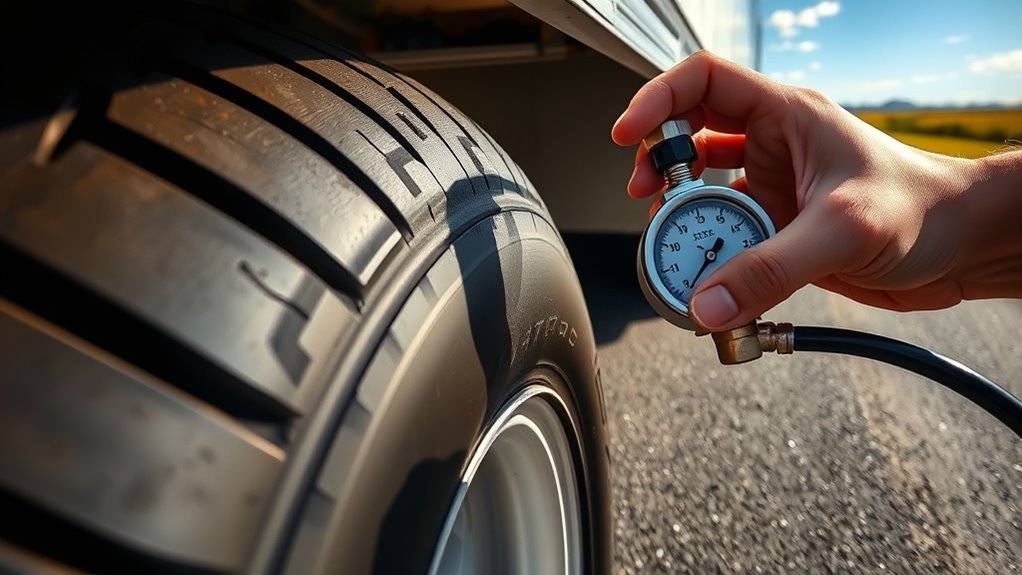
When you’re towing a heavy load, maintaining proper tire pressure isn’t just a recommendation; it’s a necessity for safety. Each trailer tire has a specified load rating, which dictates the necessary PSI for peak performance. Underinflated tires increase sidewall flex and heat buildup, considerably raising the risk of blowouts. Conversely, over-inflation can lead to reduced traction and a harsher ride. To guarantee safe towing, you must check tire pressure before every trip, ideally when the tires are cold, as pressure fluctuates with temperature changes. Regular inspection of tire condition and adherence to manufacturer recommendations not only enhances blowout prevention but also prolongs tire longevity, allowing you to navigate the road with confidence and freedom.
Determining the Right PSI for Your Trailer Tires
To guarantee ideal performance and safety while towing, determining the right PSI for your trailer tires is essential. Start by checking the maximum PSI printed on the tire sidewall; this indicates the highest pressure your tire can manage safely under load. Utilize the Proportional Load Formula: (Actual Load / Max Load Rating) x Max Cold PSI = Target PSI to calculate your appropriate tire pressure based on the actual load. Remember the 10% Buffer Rule: for every 10% increase in load, add 2–3 PSI to your cold inflation pressure. Always check tire pressure when cold, preferably after a three-hour rest, to maintain accuracy. Adjust warm tires to 4–5 PSI above the target cold pressure for peak safety and blowout prevention.
How Load Ratings Affect Your Trailer’s Safety
Understanding your trailer tire’s load rating is essential for safe towing. Overloading beyond this rating can lead to tire failure and instability, greatly increasing the risk of accidents. You must also guarantee proper load distribution and tire inflation to maintain ideal performance and safety on the road.
Understanding Load Ratings
Load ratings play a vital role in guaranteeing your trailer’s safety by directly influencing its stability and performance on the road. Each tire’s load rating, marked on the sidewall, indicates the maximum weight it can support at the maximum PSI listed. Adhering to these ratings is essential; exceeding them increases the risk of tire failure and blowouts. Proper weight distribution across your tires is important to prevent uneven wear and overheating. When towing near this limit, inflate your tires to the correct pressure to minimize flexing. Regular checks and maintenance not only guarantee compliance with safety standards but also extend tire lifespan by reducing the risks of overloading, keeping your trailer safe on every journey.
Impact of Overloading Tires
Overloading tires can severely compromise your trailer’s safety, leading to dangerous situations on the road. Each tire’s load rating, marked on the tire’s sidewall, indicates the maximum weight it can support at the correct tire pressure. Exceeding this rating increases the risk of tire blowouts, especially during significant changes in elevation, where stress on the tires escalates. Underloaded or overloaded tires create instability, making the trailer difficult to control. Regularly check the combined weight of your vehicle and trailer against the Gross Axle Weight Rating (GAWR) to prevent exceeding load ratings. Maintaining ideal inflation pressure guarantees proper performance, longevity, and minimizes excessive flexing and heat buildup, essential for safe towing conditions.
Common Mistakes to Avoid When Inflating Trailer Tires
When inflating trailer tires, it’s essential to avoid several common mistakes that can jeopardize safety and performance. Trailer owners often ignore the manufacturer’s recommended tire pressure printed on the sidewall, leading to dangerous blowouts. Always use a tire pressure gauge when tires are cold, as failing to check can yield inaccurate readings and contribute to this common problem. Don’t over-inflate based on appearance; stick to the maximum PSI to prevent excessive stiffness. Additionally, neglecting to check and adjust tire pressure for varying loads, including Tongue Weight, compromises stability. Finally, mixing different tire pressures on the same axle disrupts weight distribution, increasing the risk of blowouts. Adhering to the right tire pressure can greatly enhance towing safety.
Troubleshooting Tire Pressure Issues
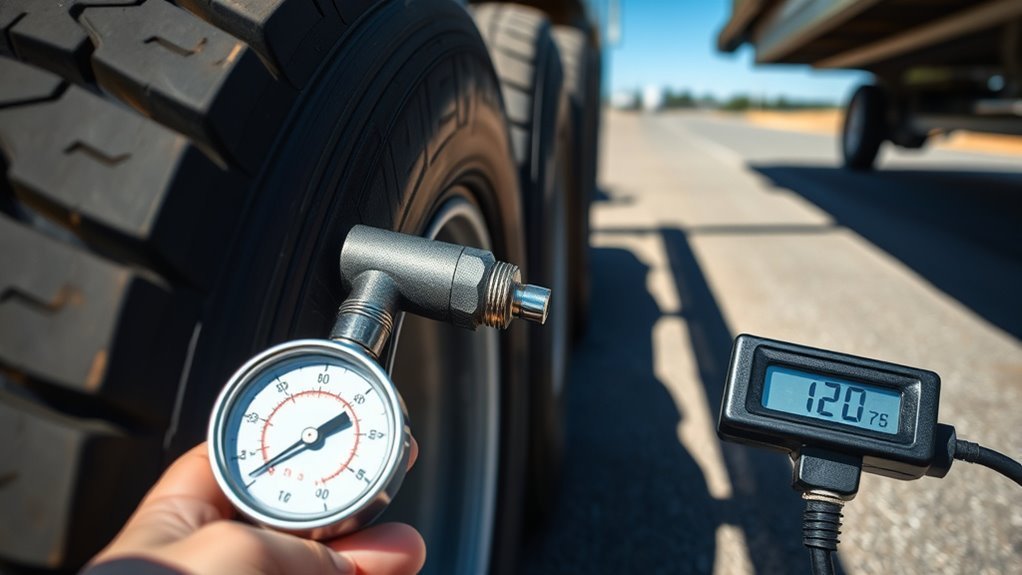
While maintaining proper tire pressure is essential for safe towing, troubleshooting issues can often feel intimidating. To guarantee your trailer tires are in peak condition, follow these steps:
- Check Pressure When Cold: Always check tire pressure before driving, as heat can impact readings and lead to incorrect inflation.
- Utilize the Proportional Load Formula: Determine the right pressure based on the actual load on your tires. This guarantees safe weight distribution and maximum performance.
- Inspect for Wear: Regularly examine your tires for cracks or bulges. These signs can indicate problems that may lead to blowouts.
Adjusting Tire Pressure for Temperature Changes
To maintain ideal tire performance and safety, it’s vital to adjust tire pressure in response to temperature fluctuations. Each 10°F increase in ambient temperature can raise tire pressure by about 1 PSI. Always check your tires when they’re cold—preferably after three hours of non-use—to guarantee accurate readings. If you must adjust warm tires, increase the cold tire pressure by 4–5 PSI above the target stated on the tire’s sidewall to accommodate heat generated during driving. Regularly monitoring tire pressure during seasonal shifts is important, as neglecting to adjust for temperature changes can lead to over-inflation or under-inflation, greatly heightening the risk of blowouts and uneven tire wear. Stay vigilant for maximum performance and safety.
Essential Steps for Maintaining Optimal Tire Pressure
Maintaining ideal tire pressure is essential for guaranteeing safety and performance on the road. Here are essential steps to keep your trailer tires optimized:
Proper tire pressure is crucial for safety and performance; follow these steps to optimize your trailer tires.
- Regular Monitoring: Check tire pressure before each trip, ideally when tires are cold. This guarantees accurate readings to prevent blowouts.
- Use a Reliable Gauge: Measure tire pressure in pounds per square inch (PSI) and adjust according to the maximum load specified on the tire sidewall.
- Adjust for Load: Utilize the Proportional Load Formula to calculate PSI based on your actual load versus the gross vehicle weight rating.
Frequently Asked Questions
What Is the 4 Psi Rule?
The 4 PSI rule means adjusting tire pressure 4-5 PSI above the cold target when warm, ensuring ideal load capacity and tire maintenance. It prevents blowout causes, enhances trailer safety, and accounts for seasonal changes affecting tire wear.
What Is the 5 Psi Rule?
Ah, the 5 PSI Rule: for every 10°F temperature rise, expect a 1 PSI increase. You must adjust tire pressure accordingly, ensuring load capacity and safety, mitigating blowout risks, especially with seasonal changes and trailer weight.
What Psi Should I Keep My Trailer Tires At?
Keep your trailer tires at the manufacturer-recommended PSI, typically around 80. Use tire pressure gauges for accurate readings, assess trailer weight distribution, and perform seasonal tire checks to guarantee safety and peak performance while driving.
What Is the Best Load Range for a Trailer Tire?
The best load range for your trailer tire combines appropriate load ratings, tire types, and weight distribution. Follow inflation guidelines, consider road conditions, seasonal changes, and implement maintenance tips for enhanced safety and performance.
Conclusion
Maintaining proper tire pressure isn’t just a recommendation; it’s crucial for your safety and the longevity of your trailer. Have you considered the consequences of under-inflated tires on your towing experience? By understanding the right PSI, load ratings, and seasonal adjustments, you can prevent blowouts and guarantee a smoother ride. Regularly checking and adjusting your tire pressure can save you from costly repairs and dangerous situations, so make it a priority. Your safety depends on it.