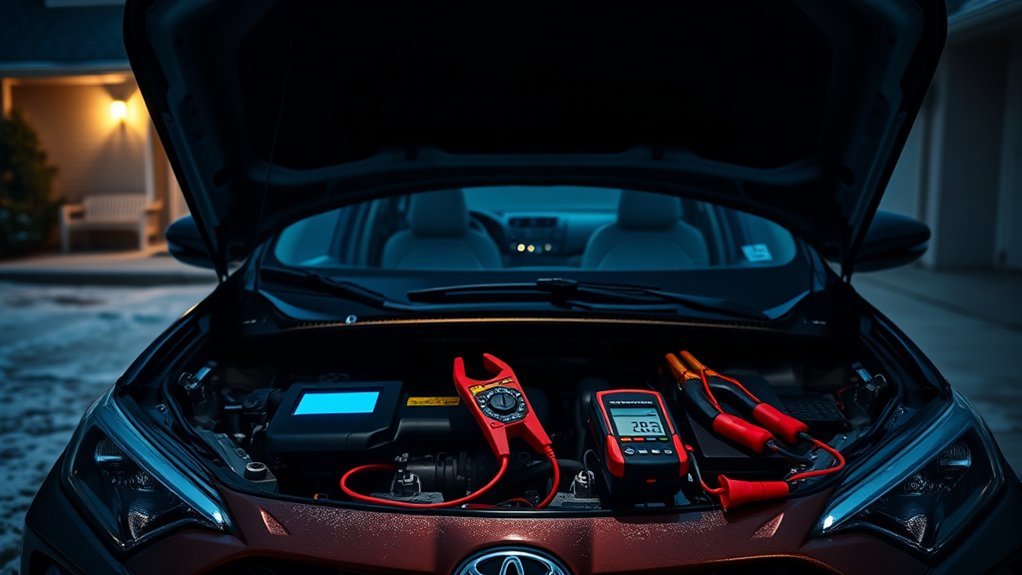
Last updated: July 31, 2026 · Original publication date:
A Toyota RAV4 suspension clunk most often comes from play in a sway bar link or bushing, control arm bushing, ball joint, strut mount, brake component, or loose fastener. The trigger matters: small bumps point first to sway bar and mount hardware; turns can involve steering or CV joints; braking or Drive-to-Reverse shifts can expose control arm, brake, axle, or mount movement. Rule out cargo and loose panels before lifting the vehicle. Stop driving and arrange a tow if the steering is loose, the RAV4 wanders or pulls, a wheel visibly tilts, or a load-bearing joint has clear play.
Quick Answer
Use four steps: remove loose cargo and accessories, match the clunk to the exact trigger, inspect the whole affected corner, and confirm the repair with Toyota information for the exact year and drivetrain. Do not replace a part from sound alone. A light clunk can come from brake hardware or a loose panel, while wheel play, steering looseness, pulling, or visible damage can indicate an unsafe suspension or steering fault.
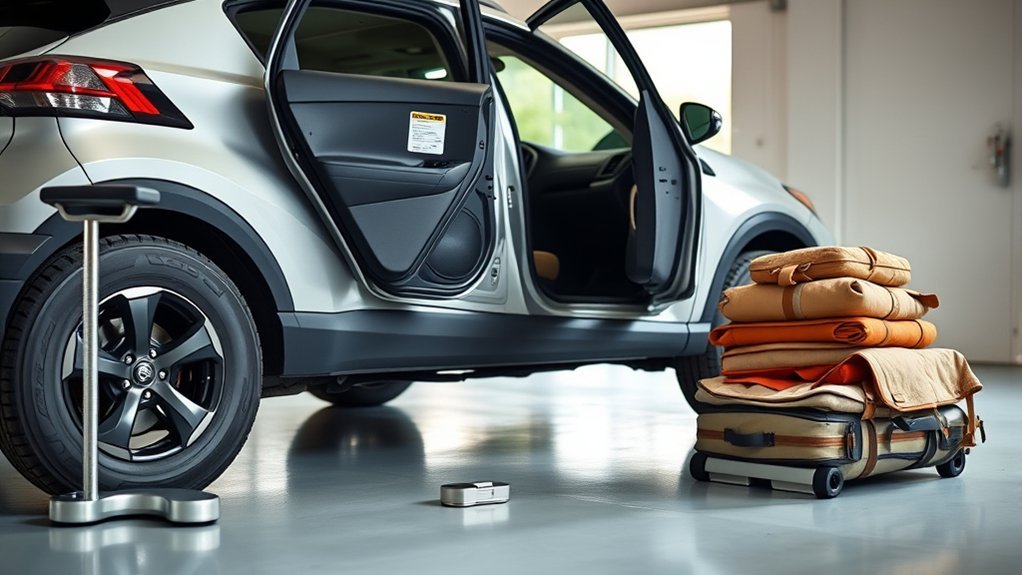
Warning: Never work under a RAV4 supported only by a jack. Use wheel chocks and properly rated jack stands, follow the jack instructions, and use the correct jack points shown in your Toyota owner’s manual.
What Causes a Toyota RAV4 Suspension Clunk?
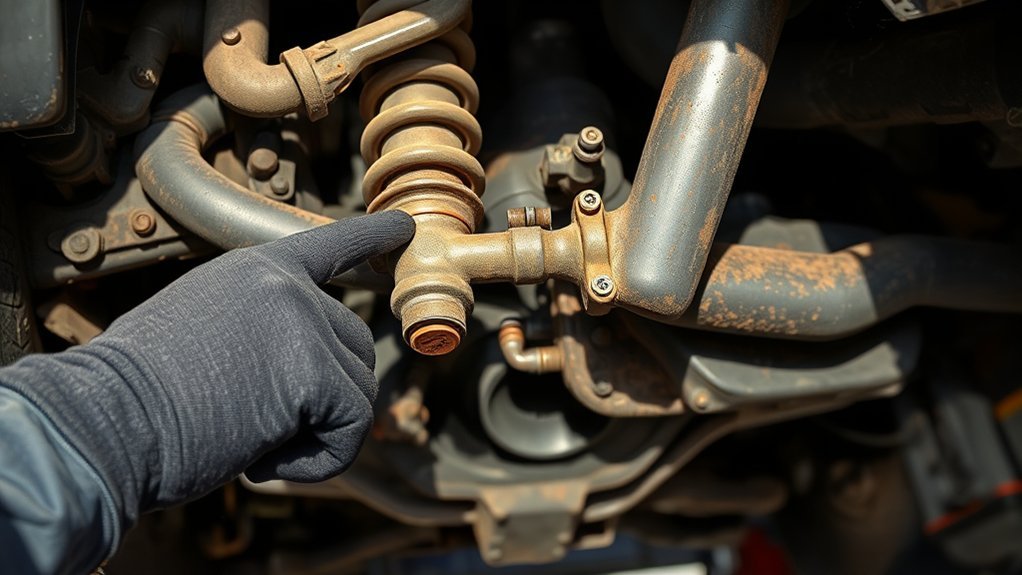
The timing of the clunk is the strongest first clue. Bumps load the suspension vertically, turns load steering and body-roll parts, braking shifts weight forward, and Drive-to-Reverse changes load direction through mounts and axles. Use the pattern below to choose what to inspect first, but confirm the cause before replacing a part.
| When You Hear the Clunk | Common Areas to Check | Why It Happens |
|---|---|---|
| Over small bumps | Sway bar links, sway bar bushings, strut mounts, loose brake hardware | Small, quick suspension movements expose loose or worn parts |
| During slow turns | Sway bar links, ball joints, tie rods, strut mounts, CV joints | Steering and body roll load the suspension side to side |
| When shifting Drive to Reverse | Engine mounts, transmission mounts, CV axles, control arm bushings | The drivetrain changes direction and can reveal excess play |
| When braking | Brake pads, caliper brackets, control arms, ball joints | Weight transfer loads the front suspension and brakes |
| At highway speed with vibration | Wheel bearings, CV axles, tires, loose wheels | Rotating parts become louder as speed increases |
Common causes include worn strut mounts, ball joints, control arm bushings, sway bar links, and loose CV axle or hub hardware. A clunk can also come from simple items such as a loose spare tire, loose cargo tray, exhaust heat shield, or underbody panel, so rule out the easy things before replacing suspension parts.
Use the Narrowest Matching Guide
- RAV4 clunk when turning for a knock tied mainly to steering input.
- RAV4 squeak over bumps for rubber, spring-seat, or stabilizer noise that is more squeak than clunk.
- RAV4 CV axle clicking for repeated clicks during tight turns or vibration under acceleration.
- RAV4 control arm bushing symptoms for clunks during braking, reversing, or driveway transitions.
Key Takeaways
- Clunks over small bumps commonly point to sway bar links or bushings, strut mounts, control arm bushings, brake hardware, or loose fasteners.
- Clunks while turning, braking, accelerating, or changing direction may involve CV axles, ball joints, tie rods, control arm bushings, brakes, or powertrain mounts.
- Do not drive far if the RAV4 pulls, wanders, vibrates badly, has visible wheel tilt, or makes a harsh metal-on-metal sound.
- Check the VIN, not only the model year, because RAV4 recalls and service documents apply to specific vehicle populations.
At a Glance
| Time Required | Varies by model year, access, corrosion, and inspection depth |
| Difficulty | Basic visual checks are beginner-friendly; wheel-play and fastener checks require safe lifting and correct service procedures |
| Tools Needed | Flashlight, gloves, wheel chocks, floor jack, jack stands, pry bar, torque wrench, and the correct Toyota repair information for your model year |
| Cost | A visual check may cost nothing if you already have the tools; shop diagnosis, parts, and alignment vary by location and repair |
| Guide Scope | Broad symptom triage for front, rear, steering, brake, axle, mount, and underbody noises; confirm the failed part on the vehicle |
Editorial scope: This is a symptom-based screening guide, not a diagnosis of a specific vehicle. It is grounded in Toyota owner and service resources plus NHTSA recall documents. The failed part still must be confirmed by inspection before repair.
Model-year note: RAV4 suspension layouts, fasteners, driveline parts, and inspection procedures vary by generation, drivetrain, and market. Use the owner’s manual and Toyota service information for your exact vehicle rather than applying one model year’s procedure to another.
[Products Worth Considering]
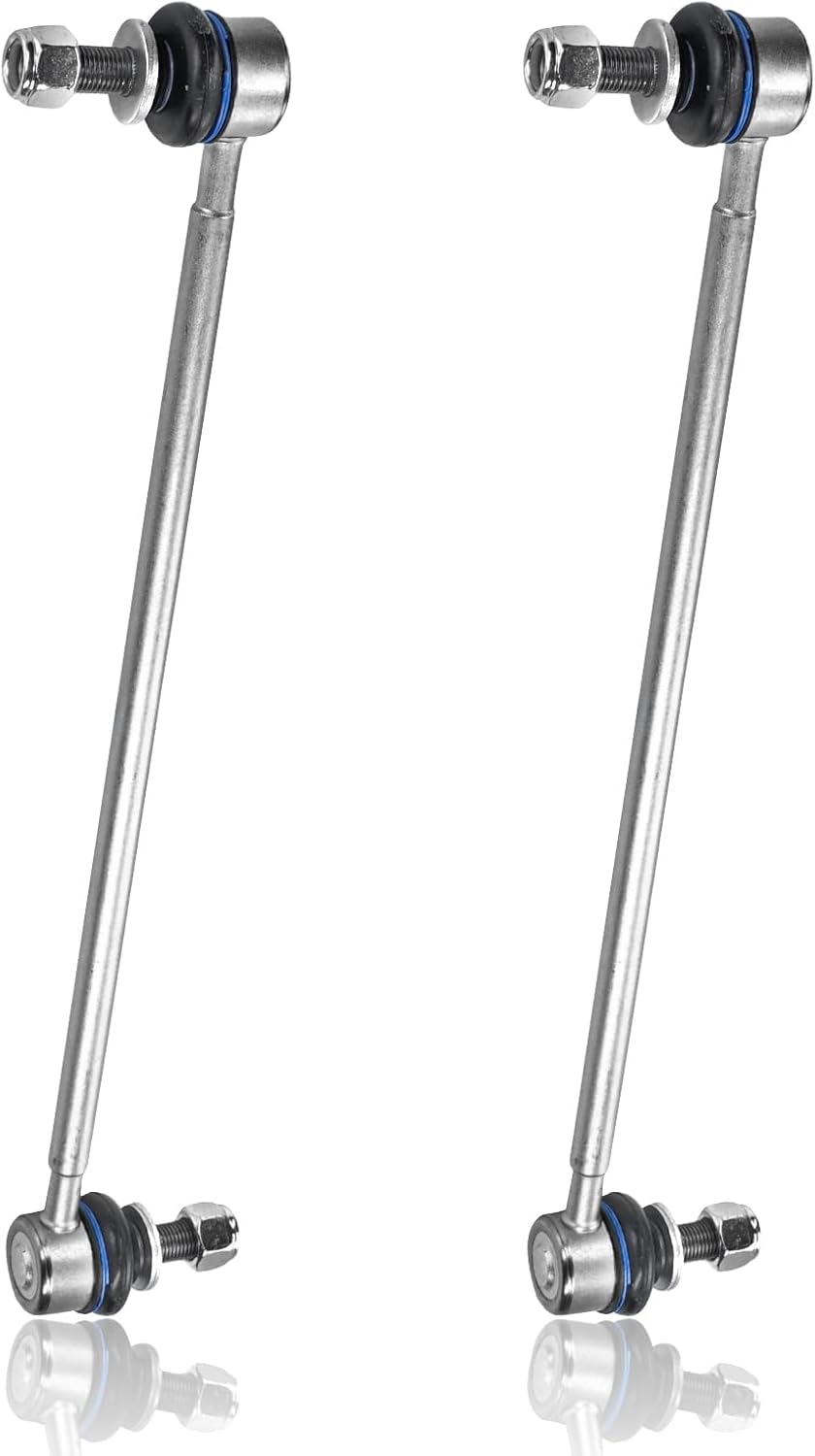
These front stabilizer sway bar end links are designed to restore smooth, stable handling and reduce noise and vibration during turns and over bumps. Compatible with select Toyota, Prius, and Scion models, they offer a reliable replacement built to meet manufacturing standards with corrosion-resistant coating and a strong, durable body.

Puroma cabin air filter helps deliver cleaner, fresher air inside your vehicle while supporting efficient HVAC airflow. Its multi-layer design helps reduce stale odors and capture airborne particles, making daily driving more comfortable. Designed for easy installation and broad fitment across many Toyota, Lexus, Mazda, and Subaru models.

This front stabilizer sway bar link set is designed to restore smooth, controlled handling and reduce clunking noises caused by worn suspension components. Built with a zinc-nickel alloy coating, carbon steel, and reinforced ball studs, it offers strong corrosion resistance and durable performance for a wide range of Toyota, Lexus, and Scion models. It is engineered for straightforward installation and reliable OE-style fitment.
Is the RAV4 Clunk Coming From the Front or Rear?
Where you hear or feel the clunk helps choose the first inspection area, but sound can travel through the body and subframe. Treat location as a clue, not proof.
| Where the Clunk Seems to Be | Clues That Support It | First Areas to Inspect |
|---|---|---|
| Front corner | Felt through the steering wheel or brake pedal; changes with turning or braking | Front sway bar links and bushings, strut mounts, tie rods, ball joints, control arms, brakes, CV axles |
| Rear corner | Heard near the cargo floor or rear seat; strongest on bumps without steering input | Cargo and spare-tire hardware, rear links and bushings, shocks and mounts, coil spring seating, rear arms, exhaust |
| Center or whole body | Occurs when shifting Drive to Reverse, accelerating, or releasing the brake | Engine and transmission mounts, axles or driveline lash, subframe or crossmember hardware, brake movement, heat shields |
A front noise can seem to come from the rear, and a rear suspension knock can travel through the floor. The strongest evidence is visible movement, contact marks, or joint play that happens at the same moment as the sound.
Which RAV4 Suspension Parts Should You Inspect?
To diagnose a RAV4 clunk, inspect these parts in a logical order:
- Sway bar links and bushings: Look for torn rubber boots, cracked bushings, rusted ball sockets, or movement when you push the bar by hand.
- Control arms and bushings: Check for split, separated, or badly deformed rubber, bent arms, contact marks, or movement where the arm mounts to the subframe.
- Ball joints: Look for torn dust boots, grease loss, rust staining, or movement. Follow the Toyota inspection method because some joints must be checked with the suspension loaded while others are checked unloaded.
- Tie rods: Check inner and outer tie rods if the clunk appears with steering input or the vehicle wanders.
- Struts, shocks, and mounts: Inspect for leaks, broken springs, loose upper mounts, worn bearing plates, or a knocking sound near the top of the strut tower.
- CV axles and boots: Look for torn boots, grease spray, axle play, or clicking and clunking during turns and acceleration.
- Brakes: Confirm caliper bracket bolts, pad clips, and anti-rattle hardware are secure.
- Wheels and hubs: Confirm the wheel hardware is installed and torqued to the specification for your exact RAV4, then check for bearing play, roughness, or grinding.
Pro Tip: Before replacing parts, remove loose items from the cargo area, glove box, center console, spare tire well, and roof rack. Many “suspension” clunks turn out to be loose accessories or cargo.
[Products Worth Considering]

These low profile jack stands provide secure vehicle support for routine garage and repair work on most cars and small vehicles. Built with a welded steel frame, adjustable ratchet design, and wide base for stability, they offer dependable lifting support with a concave saddle for safer contact. The low minimum height and compact design make them a practical choice for many automotive maintenance tasks.

These custom-fit all-weather floor mats are designed for Toyota 4Runner and Lexus GX460 models to help protect your vehicle interior from dirt, water, snow, and everyday messes. Made from durable, odorless TPE material with raised edges and anti-slip construction, they offer a secure fit, easy cleanup, and dependable coverage for front, rear, and cargo areas.
Can CV Joints Cause a RAV4 Clunk?
Yes. CV joints and axles transfer power while allowing the suspension and steering to move. Wear can cause repeated clicking on tight turns, vibration under acceleration, or a clunk when load changes. Front-wheel-drive and all-wheel-drive RAV4 models can both develop axle-related noise, while all-wheel-drive versions add rear driveline components that may also need inspection. For a turn-specific test sequence, see the RAV4 CV axle clicking guide.
Common CV Joint Failures
CV joints are protected by rubber boots packed with grease. Once a boot tears, grease escapes and dirt enters the joint. That can quickly wear the joint and lead to clicking on turns, vibration under acceleration, or a clunk when changing from acceleration to deceleration.
| Symptom | Possible Cause | Action Required |
|---|---|---|
| Clicking during sharp turns | Outer CV joint wear | Inspect boot and joint; replace axle if needed |
| Vibration under acceleration | Inner CV joint wear or axle imbalance | Inspect axle, mounts, and tires |
| Grease around wheel well | Torn CV boot | Repair promptly before the joint runs dry |
| Clunk shifting Drive to Reverse | Axle play, mount movement, or drivetrain lash | Check axles, mounts, control arm bushings, and fasteners |
How Should You Inspect RAV4 CV Axles?
Axle maintenance is mostly inspection-based. During oil changes or tire rotations, look at the CV boots for cracks, grease leakage, missing clamps, or road-debris damage. If a torn boot is found before the joint is contaminated or worn, a qualified repair may avoid replacing the complete axle.
Loose axle or hub hardware can also create noise, but torque specifications vary by RAV4 year, drivetrain, and fastener. Use Toyota service information for your exact model instead of guessing.
What CV Axle Wear Signs Matter?
Look for these wear signs during inspection:
- Clunking or clicking: Clicking during tight turns often points toward a CV joint. A dull clunk over bumps is more often suspension or brake hardware.
- Grease leakage: Grease around the CV boot, control arm, inner fender, or wheel well usually means the boot has failed.
- Wheel play: Rocking the tire at 12 and 6 o’clock or 3 and 9 o’clock is only a screening check. The movement may come from a bearing, ball joint, tie rod, steering component, or more than one part, so watch each joint and follow Toyota’s model-specific procedure.
- Uneven tire wear: Worn bushings, ball joints, or tie rods can change alignment and wear tires quickly. Compare the pattern with these RAV4 alignment symptoms.
How Do You Diagnose a Toyota RAV4 Suspension Clunk?
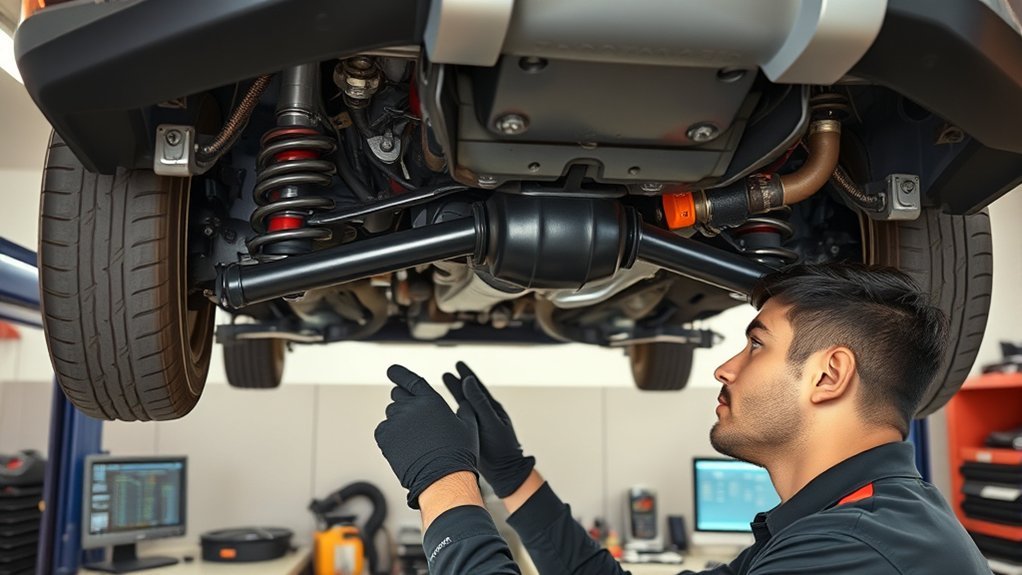
Use this sequence to narrow down the noise before buying parts.
Step 1: Note When the Noise Happens
Write down the conditions that create the clunk:
- Over bumps, potholes, speed bumps, or driveway entrances
- When one wheel crosses a bump versus when both front wheels rise together
- Only while turning left or right
- Only when braking
- Only when accelerating or shifting Drive to Reverse
- Only when the vehicle is cold, loaded, or wet
This helps separate suspension, steering, brake, and drivetrain noises. A one-wheel bump changes left-to-right suspension load more than a bump that raises both front wheels, so the comparison can help move sway bar parts higher or lower on the inspection list.
Step 2: Check the Simple Items First
Before lifting the vehicle, check for loose cargo, a loose spare tire, jack tools, roof rack hardware, mud flaps, plastic splash shields, license plate brackets, and exhaust heat shields. These can mimic a suspension clunk and cost nothing to fix.
Step 3: Perform a Careful Road Test
Drive slowly in a safe area. Try light braking, gentle acceleration, slow figure-eight turns, and small bumps. Do not perform aggressive maneuvers on public roads. If the noise is severe or the vehicle feels unstable, stop driving and have it towed or inspected by a technician.
Step 4: Lift the RAV4 Safely
Park on level ground, set the parking brake, chock the wheels, and use the correct jack points. Toyota provides model-specific owner’s manuals, and its floor-jack guidance warns that incorrect placement can damage the vehicle or cause injury. Follow the manual for your exact RAV4 model.
Step 5: Check for Wheel Play
With the vehicle safely supported, use the Toyota procedure for your model to check for wheel and joint play. Rocking the tire at 12 and 6 o’clock and at 3 and 9 o’clock can reveal movement, but it does not identify the failed part by itself. Watch the bearing, ball joint, tie rod, steering linkage, and control arm while a helper moves the wheel. Do not keep driving if you see clear looseness in a load-bearing or steering joint.
Step 6: Inspect Rubber Bushings and Boots
Use a flashlight to inspect control arm bushings, sway bar bushings, tie rod boots, ball joint boots, and CV boots. Cracked rubber, separated bushings, missing grease, or rust-colored dust around joints are warning signs.
Step 7: Check Struts, Shocks, and Mounts
Look for leaking struts or shocks, broken springs, loose mount hardware, damaged bump stops, and torn dust boots. A failed upper strut mount can clunk near the top of the wheel well, especially during low-speed steering or driveway turns.
Step 8: Inspect Brake Hardware
Loose brake pads, missing anti-rattle clips, worn caliper slide pins, or loose caliper bracket bolts can make a sharp clunk over bumps or when changing direction. Brake-related clunks often appear right as you apply or release the pedal. If the noise is tied mainly to braking, compare it with the checks in the RAV4 brake pedal and front-brake diagnosis guide.
Step 9: Confirm Fastener Torque and Alignment Needs
Loose suspension, subframe, strut, hub, or wheel fasteners can create dangerous movement. Use the correct Toyota torque specifications for your year, drivetrain, and fastener location. After replacing a part that can affect wheel geometry, have the alignment checked and adjusted as required by the repair procedure. Use the RAV4 alignment guide to track pulling, an off-center steering wheel, and abnormal tire wear after the repair.
Note: A clunk that disappears after replacing one part can still return if another worn part was hidden by the first failure. Inspect the whole corner of the suspension, not just the loudest-looking component.
What RAV4 Clunk Sources Are Easy to Miss?
Some clunk sources are easy to miss during a quick inspection. Check these before assuming the struts or control arms are bad:
- Worn sway bar bushings: These can allow the sway bar to shift and knock against its mounts.
- Loose caliper hardware: A brake clunk can sound exactly like a suspension clunk.
- Engine or transmission mounts: These often clunk when shifting from Drive to Reverse or when accelerating from a stop.
- Loose subframe or crossmember bolts: Any movement here can sound heavy and metallic.
- Exhaust hangers and heat shields: A loose shield or hanger can rattle over bumps.
- Trapped road debris: A stone or hard debris caught against a control arm, spring seat, shield, or subframe pocket can create a sharp knock. Remove it only when the vehicle is safely supported and the area is cool.
- Rear suspension parts: Rear sway bar links, rear shocks, trailing arms, and rear lower arms can clunk even when the sound seems to come from the front.
- Wheel bearing or hub play: A worn bearing may growl at speed and clunk when loaded side to side.
The best clue is not just the sound itself, but when it happens: bumps, braking, turning, acceleration, or shifting direction.
How Do You Check RAV4 Sway Bar Links and Bushings?
Sway bar links and bushings are common clunk sources because they move every time the body rolls or one wheel hits a bump. A worn link may look normal until you grab it and feel looseness in the socket.
Inspect the sway bar system for:
- Cracked or flattened sway bar bushings
- Loose link nuts or missing hardware
- Torn rubber boots on sway bar link joints
- Rust dust around the link ball socket
- Polished metal marks where the sway bar has been moving or contacting another part
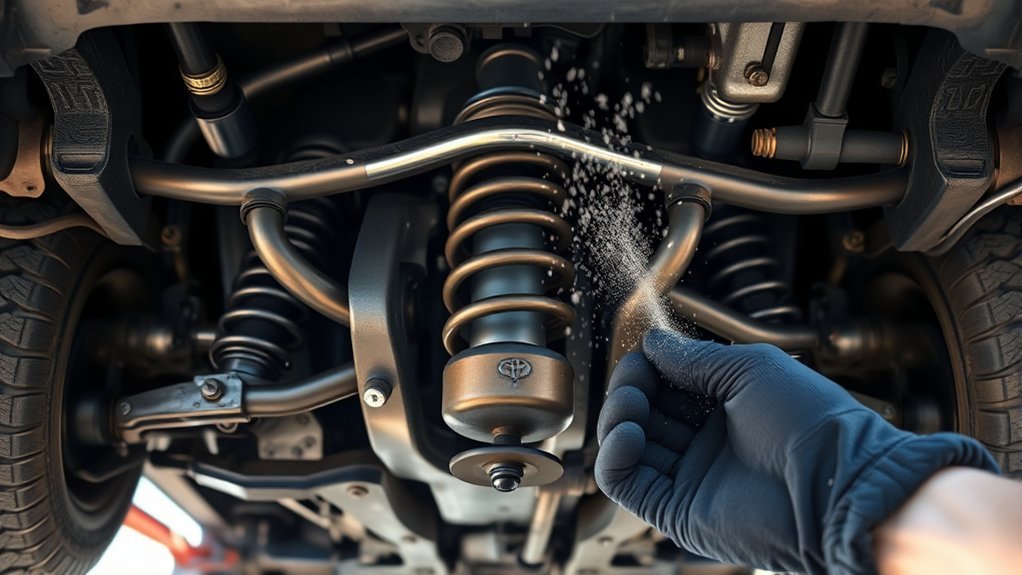
If the clunk happens over small, repeated bumps but the RAV4 still drives straight, sway bar links and bushings should be high on your inspection list. Do not treat a spray lubricant as proof of a failed bushing or as a permanent repair unless Toyota or the part manufacturer specifies the exact product and location. Replacement difficulty varies by model, corrosion, access, and tool availability.
Can Loose Bolts Cause a RAV4 Suspension Clunk?
Fastener torque matters because suspension parts rely on clamping force. A loose bolt can allow a component to shift, knock, wear oval-shaped holes, or damage nearby parts.
Pay special attention to:
- Lug nuts: Loose wheels can cause vibration, clicking, or clunking and are a serious safety risk.
- Strut and shock mounts: Loose upper or lower mounting points can knock loudly over bumps.
- Control arm bolts: These hold the arm in position and affect alignment.
- Ball joint and tie rod fasteners: Loose steering or joint hardware can cause unstable handling.
- Caliper bracket bolts: Brake hardware can clunk when changing direction or braking.
- Axle and hub nuts: Incorrect torque can create bearing or axle problems.
Do not guess torque values. Use Toyota service information for your RAV4’s exact model year, drivetrain, and fastener location.
When Should You Stop Driving and Get Professional Help?
Get professional help if the clunk is persistent, the steering feels loose, the vehicle pulls, the wheel has visible play, or the noise appears after a collision, curb hit, pothole impact, or suspension repair.
| Situation | Action Required |
|---|---|
| Clunking noise persists after basic checks | Schedule a suspension and steering inspection |
| Noise started after part replacement | Have the repair rechecked for torque, alignment, and fitment |
| Play in the front wheels | Do not ignore it; have ball joints, tie rods, bearings, and control arms checked |
| Clunking during Drive-Reverse shifts | Inspect axles, mounts, control arm bushings, and drivetrain movement |
| Vehicle wanders, pulls, or feels unstable | Avoid normal driving; arrange prompt inspection and tow it if handling is unstable |
| Recall may apply | Check your VIN through Toyota or NHTSA and contact a dealer |
Warning: If a ball joint, tie rod, control arm, or suspension arm is loose, separated, or visibly damaged, the RAV4 may be unsafe to drive. Have it towed instead of driving it to a shop.
Are There RAV4-Specific Service Documents for Suspension Noise?
Yes, but Toyota service bulletins and Tech Tips have narrow model, production, market, and symptom limits. They are not recalls, and an old document should not be treated as a universal diagnosis.
| Toyota Document | Exact Scope | What It Says to Check |
|---|---|---|
| Tech Tip T-TT-0550-19 | 2019 RAV4 and RAV4 Hybrid; abnormal rear noise over bumps; expired December 19, 2019 | Inspect the rear coil springs for rubbing on the lower arm, misalignment, or incorrect seating |
| Tech Tip T-TT-0724-23 | 2019–2021 Japan-produced RAV4 vehicles in Puerto Rico only; front squeak over bumps; expired September 23, 2023 | The document identifies the front stabilizer-bushing area as under investigation; it does not establish a universal repair |
Important: A Tech Tip or service bulletin is not proof that your RAV4 has the same fault. Match the VIN, model year, production information, market, and exact symptom, then check current Toyota service information.
RAV4 Suspension Recalls and VIN Checks
There is no single suspension recall that applies to every Toyota RAV4. Recall status depends on model year, production date, market, prior recall work, and VIN. Always check your exact VIN using the official Toyota recall lookup and the NHTSA recall lookup.
NHTSA Recall 16V-596 applies to a specific population of 2006–2011 RAV4 vehicles involved in an earlier rear lower suspension arm recall. Toyota’s notice says improperly tightened rear alignment-adjusting nuts could allow corrosion and thread wear, and the arm could separate. Vehicles that had not already received both replacement rear lower arms under the prior remedy were included in the later recall. Review the official 16V-596 owner notice.
NHTSA Recall 20V-286 covers certain 2019–2020 RAV4 and RAV4 Hybrid vehicles. Toyota’s dealer notice says affected front lower suspension arms may have been made with improperly produced material and could separate from the front wheel assembly. The notice lists a narrow late-September-to-late-October 2019 production period for the covered population. Review the official 20V-286 remedy notice, but use the VIN lookup as the final applicability check.
If your RAV4 has an open safety recall, the official recall notice will explain the remedy and the dealer process. Do recall work promptly, especially when the recall involves steering, suspension, brakes, airbags, fuel, or electrical safety.
How Can You Reduce the Risk of Future Suspension Clunks?
Preventing clunks is mostly about catching wear before it becomes looseness. Add these checks to your routine maintenance:
- Inspect suspension rubber during tire rotations: Look at bushings, boots, sway bar links, and strut mounts while the wheels are off or the vehicle is lifted.
- Watch tire wear: Uneven wear can point to worn suspension parts or poor alignment.
- Fix torn boots early: Ball joint, tie rod, and CV boots protect grease and keep dirt out.
- Verify wheel torque after wheel service: Follow the wheel-service instructions and torque specification for your exact vehicle and hardware.
- Get an alignment after suspension work: Control arms, tie rods, struts, and rear suspension arms can change alignment.
- Listen after impacts: A curb strike or pothole hit can bend parts or loosen hardware even if the vehicle still drives normally.
Regular inspections are especially useful on higher-mileage RAV4s, vehicles driven on rough roads, and vehicles exposed to road salt or corrosion.
What Should You Record Before a Shop Visit?
Good documentation helps a technician reproduce an intermittent clunk. Record the model year, drivetrain, mileage, weather, road surface, vehicle speed, steering angle, brake use, passenger or cargo load, and whether the sound comes from the front or rear.
- Note whether the sound occurs on one bump, repeated small bumps, or a driveway entrance.
- Record whether it happens while braking, accelerating, coasting, or shifting direction.
- Describe the sound as a dull knock, sharp metallic clack, click, pop, or rattle.
- Take a short video only when it is safe and a passenger can operate the phone.
- Keep repair orders, alignment reports, recall notices, and notes about any recent wheel or suspension work.
- Record the date and mileage so you can tell whether the noise is becoming more frequent or severe.
This symptom log gives the shop a repeatable test condition and reduces the risk of replacing parts based only on a vague noise description.
Frequently Asked Questions
How do I identify a suspension clunk in a Toyota RAV4?
Start by noting when the clunk happens. A noise over small bumps commonly points to sway bar links, bushings, strut mounts, or brake hardware. A clunk while turning may involve sway bar links, ball joints, tie rods, strut mounts, or CV joints. A clunk when shifting Drive to Reverse can also involve engine mounts, transmission mounts, axles, or control arm bushings.
Is there a Toyota RAV4 suspension recall?
Some RAV4 model years and VIN ranges have had suspension-related recalls, but there is no universal recall for every RAV4. Check your exact VIN through Toyota’s official recall lookup and NHTSA’s recall lookup to see whether your vehicle has an open safety recall.
How much does a RAV4 suspension diagnostic cost?
A basic visual check at home can be free if you already have the tools and know how to lift the vehicle safely. A shop diagnosis is usually billed as labor and varies by location, shop type, and how difficult the noise is to reproduce. Repairs, parts, and alignment are normally extra.
Can I drive my RAV4 with a clunking noise?
A light clunk may come from a minor part, but sound alone cannot confirm that the vehicle is safe. Do not keep driving if the RAV4 pulls, wanders, vibrates badly, has visible wheel tilt, has wheel play, or makes a harsh metal-on-metal clunk. Those signs can point to unsafe steering or suspension movement.
What causes a RAV4 clunk over small bumps?
Sway bar links and sway bar bushings are common causes of clunking over small bumps because they move whenever the body rolls and the wheels travel up and down. Strut mounts, brake pad hardware, and control arm bushings can create similar noises, so inspect the whole corner before replacing parts.
Why does my RAV4 clunk when shifting from Drive to Reverse?
A Drive-to-Reverse clunk can come from drivetrain movement rather than the suspension alone. Check engine mounts, transmission mounts, CV axles, control arm bushings, brake hardware, and any loose fasteners. If the clunk is heavy or getting worse, have a technician inspect it.
How can I tell whether the RAV4 clunk is from the front or rear?
A front clunk is more likely to change with steering or braking and may be felt through the steering wheel or pedal. A rear clunk is often strongest near the cargo floor and may occur over bumps without steering input. Sound travels through the body, so confirm the area by finding movement, contact marks, or play that occurs with the noise.
Are Toyota RAV4 Tech Tips the same as recalls?
No. A Toyota Tech Tip or service bulletin gives technicians diagnostic or repair information for a defined condition. A safety recall addresses a safety defect in a specific vehicle population and is checked by VIN. Do not assume a Tech Tip applies unless the model year, production information, market, and symptom all match.
Conclusion
Diagnose a Toyota RAV4 suspension clunk by matching it to the trigger and location, ruling out cargo, panels, and debris, and then inspecting the whole affected corner. Start with wheel hardware, sway bar parts, bushings, joints, strut mounts, brakes, axles, and mounts. Use model-specific Toyota procedures and check the VIN for recalls. Do not replace parts from sound alone. If the RAV4 pulls, wanders, has visible wheel tilt, shows clear joint or wheel play, or feels unstable, stop driving and arrange a professional inspection or tow.
Sources
- Toyota Owners Manuals and Warranties — official owner manuals and maintenance information by model year.
- Toyota Technical Information System — factory service information and model-specific repair procedures.
- Toyota Recall Lookup — official Toyota VIN lookup for open safety recalls and service campaigns.
- NHTSA Recalls — official U.S. safety recall lookup and recall information.
- Toyota Tech Tip T-TT-0550-19 — 2019 RAV4 and RAV4 Hybrid rear noise over bumps and rear coil-spring inspection guidance.
- Toyota Tech Tip T-TT-0724-23 — narrow Puerto Rico-only front suspension squeak guidance for certain 2019–2021 Japan-produced RAV4 vehicles.
- NHTSA Safety Recall 16V-596 Owner Notice — rear lower suspension arm recall details for a specific population of 2006–2011 RAV4 vehicles.
- NHTSA Safety Recall 20V-286 Remedy Notice — front lower suspension arm recall details for certain 2019–2020 RAV4 and RAV4 Hybrid vehicles.