

RAV4 Brake Pedal Pulsation: Causes, Diagnosis, and Fixes
By: Merrick Vaughn · Last updated: July 31, 2026 · Reviewed against Toyota brake-service guidance and current RAV4 owner information.
A RAV4 brake pedal pulsation is not always a failed rotor. A rapid pulse during a hard stop on wet, loose, icy, or uneven pavement may be normal anti-lock brake system operation. Keep firm pressure on the pedal and steer as needed rather than pumping the brakes.
A repeatable rhythmic pulse during ordinary braking on dry pavement more often points to disc thickness variation, rotor or hub runout, uneven pad deposits, or a dragging brake that has overheated one rotor. A fast buzz or pedal kick near the end of a gentle low-speed stop can indicate unwanted ABS activation caused by a wheel-speed sensor, tone ring, wiring, or hub problem.
Quick Answer
If the pulse happens only during a hard stop on a slippery surface, it may be normal ABS feedback. If it repeats during normal dry-road braking, inspect rotor thickness variation, rotor and hub runout, pad deposits, caliper drag, and the rear brakes. Steering-wheel shake makes the front brakes, hubs, and suspension the first inspection area. Seat or floor vibration makes the rear brakes more likely, but vibration location is a clue rather than proof.
Key Takeaways
- Separate normal ABS operation from a pulse that repeats during routine braking.
- Note whether the vibration reaches the steering wheel, pedal, seat, or entire body.
- Measure rotor thickness and runout instead of relying on appearance alone.
- Check the hub, bearing, caliper, pads, and ABS data before blaming a new rotor.
- Stop driving if braking power drops, the pedal sinks, fluid leaks, or a brake warning remains on.
What’s in This Article
- Before You Begin
- Normal ABS or a Brake Fault?
- Front, Rear, or ABS Diagnosis
- Likely Causes
- Rotor Runout and Thickness Variation
- Caliper and Slide-Pin Problems
- Home Inspection Checklist
- Resurface or Replace?
- Calipers, Sliders, and Hoses
- Brake Bedding
- Repair Costs and Parts
- When to Hire a Mechanic
- Frequently Asked Questions
[Products Worth Considering]

This comprehensive hose clamp pliers set is designed to make removal and installation work easier on automotive coolant, radiator, heater, fuel, and vacuum lines. It includes multiple specialized pliers and pinch-off tools for tight spaces, hard-to-reach clamps, and electrical connectors, helping mechanics and DIY users complete repairs more efficiently. Built from heat-treated steel with rubberized handles, it offers durability, reliable grip, and easier handling during automotive maintenance.
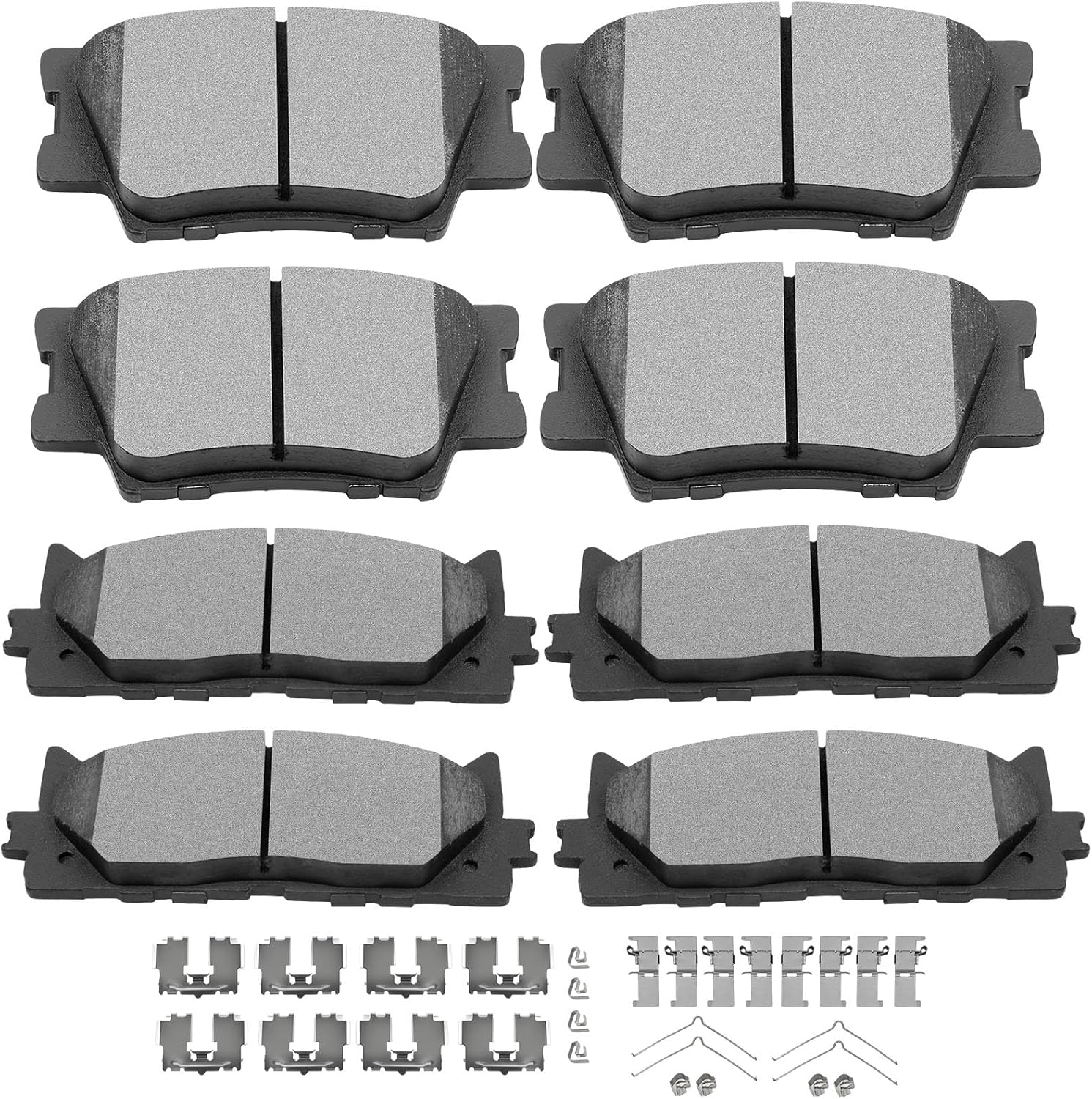
This ceramic front and rear brake pad set is designed as a direct replacement for select Lexus and Toyota models, helping restore reliable stopping performance. The pads feature a scorch-treated friction surface for quicker break-in and consistent wear, while the included gasket design helps reduce vibration and noise for quieter braking. Built for easy installation, this kit comes ready to fit compatible vehicles without modification.

This TPMS relearn tool helps GM vehicle owners quickly activate and reset tire pressure monitoring sensors after tire changes, sensor replacements, or warning light issues. Designed for many Chevy, Buick, GMC, Cadillac, and Opel models, it works with common sensor frequencies and can save time compared with dealer visits. Its simple one-button operation makes tire sensor relearning fast and easy for everyday maintenance.
Before You Begin the Brake Pedal Pulsation Check
Identify the RAV4’s model year, drivetrain, and powertrain before ordering parts or following a repair procedure. Rotor dimensions, minimum thickness, runout limits, rear-brake design, electronic parking-brake procedures, and torque specifications can vary between gas, Hybrid, and Plug-in Hybrid models.
For a basic visual and measurement check, you may need a flashlight, wheel chocks, a floor jack, correctly rated jack stands, a lug wrench, a torque wrench, a dial indicator with a stable base, a brake micrometer, brake cleaner, and the repair information for the exact vehicle.
Work only on a hard, level surface. Chock the wheels and support the vehicle with jack stands at the approved points. Never rely on a hydraulic jack alone. Do not use compressed air to blow brake dust into the air.
Warning: Stop driving and arrange professional help if the brake pedal sinks, braking power is weak, the brake warning stays on, fluid leaks, a wheel is smoking, or the RAV4 pulls hard during braking.
Any road check should be performed at low speed in an empty, legal area. Keep both hands on the steering wheel. Do not attempt to trigger ABS, make panic stops, or perform repeated hard braking in traffic.
Is RAV4 Brake Pedal Pulsation Normal ABS Operation or a Fault?
A rapid pulse accompanied by a buzzing or mechanical sound during emergency braking or on a slippery surface can be normal ABS operation. The system rapidly changes hydraulic pressure to limit wheel lock. Maintain firm pedal pressure and continue steering toward a safe path.
A slower, rhythmic pulse that repeats during ordinary braking and changes with wheel speed is more consistent with rotor thickness variation, rotor or hub runout, uneven pad deposits, or an out-of-round rear drum on an applicable older model.
| When and Where It Happens | More Likely Category | What to Check Next |
|---|---|---|
| Rapid pulse during a hard stop on wet, icy, gravel, or uneven pavement | Normal ABS operation | Confirm the sensation stops during normal dry-pavement braking and no warning remains on |
| Rhythmic pulse during routine dry-road braking | Disc thickness variation, runout, pad deposits, or rear brake variation | Measure rotor thickness and runout; inspect pads and rear brakes |
| Fast buzz or pedal kick near the end of a gentle low-speed stop | Possible unwanted ABS activation | Scan the ABS module and compare live wheel-speed data; inspect sensors, tone rings, wiring, and hubs |
| Vibration at the same road speed even without braking | Tire, wheel, bearing, axle, or suspension problem | Inspect tire condition and balance, wheel runout, bearing play, and suspension components |
| Pulsation started soon after pads or rotors were installed | Hub contamination, assembly runout, uneven wheel-nut tightening, pad transfer, or unresolved drag | Recheck the hub face, mounted rotor runout, bearing play, pad condition, caliper movement, and wheel installation |
Quick Diagnosis: Is the Pulsation Front or Rear on Your RAV4?
First determine whether the vibration appears only when the brakes are applied. Note the road speed at which it begins, whether the pulse becomes stronger with pedal pressure, and whether it continues during the final part of the stop.
Steering-wheel shake makes the front brakes, front hubs, wheel bearings, and front suspension the first inspection area. A pulse felt mainly through the seat or floor makes the rear brakes more likely. A pedal-only pulse can come from either axle or from ABS pressure modulation, so do not replace rear parts based on pedal location alone.
Older RAV4 configurations may use rear drums, while later models normally use rear discs. Inspect the actual rear-brake design before ordering rotors, drums, pads, shoes, calipers, wheel cylinders, or parking-brake hardware.
A fast pulse with buzzing during the last part of a gentle stop deserves an ABS scan. A technician can compare live wheel-speed signals to identify a sensor, tone-ring, wiring, or hub signal that drops out earlier than the others.
Check the brake-fluid level, but do not expect fluid color or age alone to explain a rhythmic pulse. Low fluid, a leak, air, or hydraulic failure more often causes a soft, sinking, inconsistent, or weak pedal. Use the correct RAV4 brake fluid guidance and the RAV4 brake maintenance schedule for the exact vehicle.
Likely Causes of Brake Pedal Pulsation in a RAV4
The most useful diagnosis starts by ranking the causes according to when the pulse appears rather than replacing the most familiar part first.
- Normal ABS operation: A rapid pulse during hard braking or on a low-traction surface may be normal.
- Disc thickness variation: Thick and thin areas around a rotor change brake torque as the wheel turns.
- Rotor or hub runout: Side-to-side movement can create uneven pad contact and may contribute to thickness variation over time.
- Uneven pad deposits: Patchy friction material can produce changing brake torque even when a rotor does not look visibly damaged.
- Caliper or pad drag: A seized piston, binding slide pin, tight pad hardware, or restricted hose can overheat one corner and damage the rotor or pads.
- Rear brake variation: Rear rotor thickness variation, parking-brake trouble, an out-of-round drum, or a leaking wheel cylinder can create pedal or body vibration.
- Unwanted ABS activation: Incorrect wheel-speed information may cause a rapid low-speed pulse.
- Hub, bearing, wheel, tire, or suspension trouble: These parts can cause or amplify vibration, especially when braking loads the front suspension.
Compare the inner and outer pads on each wheel. A large wear difference can point to a binding slide pin, a piston problem, pad hardware that does not move freely, or caliper misalignment.
Compare wheel temperatures only with caution and without touching the rotor or caliper. One wheel that is much hotter than the opposite side after similar use suggests drag. Smoke, a strong burning smell, severe discoloration, or extreme heat means the vehicle should not be driven.
- Measure rotor thickness at multiple equally spaced points.
- Measure mounted rotor runout with the rotor secured as the repair procedure specifies.
- Inspect the hub face for rust scale, dirt, damage, and runout.
- Inspect both inner and outer pads for taper, glazing, cracks, and contamination.
- Check slide-pin movement, boots, brackets, and pad-abutment areas.
- Inspect visible hose damage and obtain a hydraulic diagnosis if pressure appears trapped.
- Scan ABS codes and wheel-speed data when the pulse resembles rapid electronic modulation.
How Rotor Runout Creates Pedal Vibration
Rotor runout and disc thickness variation are related but different conditions. Runout is side-to-side movement of the rotor as it rotates. Disc thickness variation is the measurable difference between the thickest and thinnest points around the friction surface.
Runout, hub contamination, bearing movement, uneven wheel clamping, or an incorrectly seated rotor can produce changing pad contact. Over time, that contact can contribute to uneven wear or pad-material transfer. When brake torque changes once or more during each wheel rotation, the driver may feel a rhythmic pedal pulse or shudder.
Many drivers call every brake vibration a warped rotor. A more accurate diagnosis measures rotor thickness, mounted runout, hub condition, pad deposits, and bearing play before choosing a repair.
Rotor Runout and Thickness
Use a brake micrometer to measure the rotor at several equally spaced locations around the swept surface and at the same distance from the outer edge. Record the lowest thickness and the difference between the highest and lowest readings. Compare both values with the repair information for the exact RAV4.
For runout, the rotor normally must be held evenly against the hub using the procedure and hardware specified by Toyota. Place the dial indicator at the specified distance from the rotor edge and rotate the assembly slowly. Dirt under the rotor, bearing play, loose mounting, or an unstable dial-indicator base can invalidate the result.
| Finding | Next Action |
|---|---|
| Runout exceeds the model-specific limit | Check rotor seating, hub cleanliness, bearing play, hub runout, and rotor indexing before machining or replacement |
| Thickness varies beyond the allowed limit | Correct the cause and resurface or replace the rotor only if the finished thickness remains acceptable |
| Rotor is at or below minimum thickness | Replace the rotor |
| Hub face has rust scale or debris | Clean and inspect the hub before reinstalling and remeasuring the rotor |
| Runout remains after the rotor is repositioned | Measure hub runout and bearing play; do not assume another rotor will solve the problem |
Brake Pad Contact Variance
Uneven pad contact can change friction around the rotor even when the surface looks reasonably smooth. Inspect for patchy deposits, glazing, taper wear, cracks, embedded debris, oil or brake-fluid contamination, damaged shims, and pads that bind in the bracket.
Do not apply grease to a pad friction surface, rotor face, or an area the product or Toyota procedure does not identify as a lubrication point. Use only the specified brake-compatible lubricant and keep pad clips, shims, slide pins, and rubber parts within their separate lubrication requirements.
Note: Rotor diameter, standard thickness, minimum thickness, allowable variation, runout limit, and fastener torque vary by model year and brake package. Do not use a single internet specification for every RAV4.
For a focused explanation of model-specific measurement limits, see the RAV4 brake rotor thickness guide.
Sticking Calipers, Seized Pistons, and Slide-Pin Problems
A sticking caliper normally reveals itself through drag, heat, pulling, odor, noise after pedal release, or unequal pad wear. It can create or worsen pulsation by overheating a rotor and producing uneven pad deposits or thickness variation.
Before condemning the caliper, inspect the piston boot, slide pins, pin boots, bracket, pad clips, pad fit, hose routing, and the wear pattern on both pads. A restricted hose can trap pressure at the caliper even when the piston and slides are mechanically sound.
Caliper Piston Seizure
Evidence of piston trouble includes a torn or displaced dust boot, rust, brake-fluid seepage, severe inner-pad wear, a wheel that remains difficult to rotate after brake release, or a piston that cannot be compressed using the exact service procedure.
Do not press the brake pedal while a caliper is removed from the rotor or unsupported. The piston can be forced out of the bore, causing fluid loss, damage, and a need to rebuild or replace the caliper.
- Inspect the piston boot for tears, corrosion, and leakage.
- Compare inner and outer pad thickness on both sides of the axle.
- Support a removed caliper so its weight does not hang from the flexible hose.
- Follow the model-specific procedure before compressing, rotating, rebuilding, or replacing a piston.
- Bleed and test the hydraulic system correctly if any line, hose, caliper, or bleeder is opened.
Stuck Slide Pins
A floating caliper must move smoothly on its slide pins. A corroded pin, swollen rubber part, torn boot, wrong lubricant, or damaged bracket can leave one pad carrying more load than the other.
Remove and inspect the pins only after the vehicle is safely supported. Replace a deeply corroded or damaged pin and any torn boot. Clean the approved surfaces and apply only the grease specified for the pin and rubber materials. Do not use anti-seize or general-purpose grease as a substitute.
Pad Retraction Failure
Brake drag can remain even when the piston and slide pins appear serviceable. Pads may bind in rusted bracket lands, clips may be damaged or incorrectly installed, or an internally restricted hose may hold hydraulic pressure.
- Confirm that each pad fits and moves as the repair procedure specifies.
- Inspect clips, support plates, shims, and brackets for rust, deformation, and incorrect placement.
- Inspect hoses for cracking, bulging, rubbing, twisting, or other visible damage.
- Have a technician test for trapped pressure if the wheel releases only after the bleeder is opened.
- Replace heat-damaged pads or rotors after correcting the cause of the drag.
See the dedicated RAV4 sticking brake caliper guide for a symptom-focused comparison of pistons, slide pins, hoses, and pad hardware.
Home Garage Inspection Checklist: Tools, Safety, and What to Look For
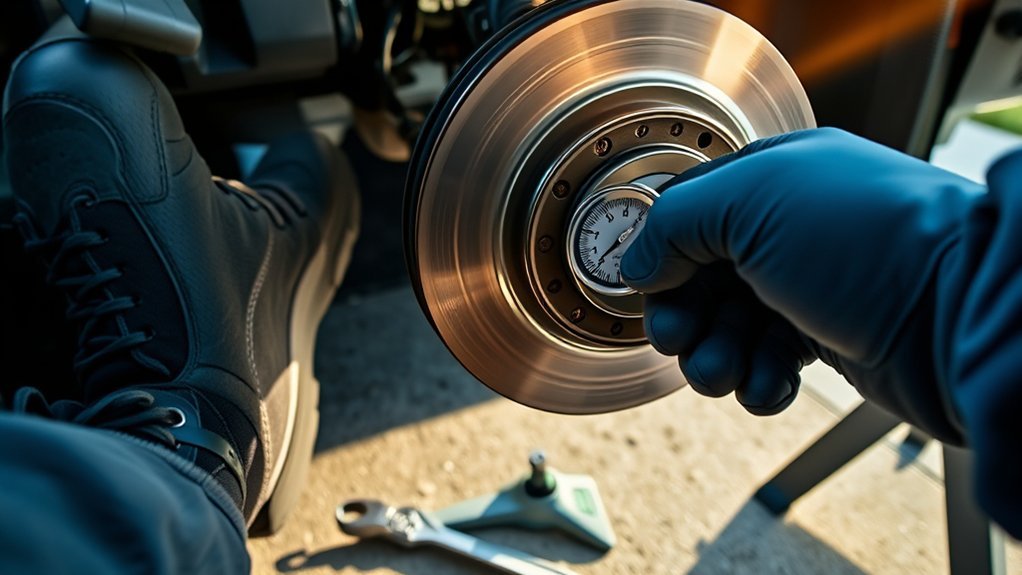
A home inspection can document visible wear and basic measurements, but it should not become an improvised hydraulic or ABS repair. Stop when the required procedure involves opening brake lines, activating an electronic brake actuator, entering a service mode, or using specifications you cannot confirm.
Wear safety glasses and gloves. Use brake cleaner in a ventilated area away from sparks, flames, hot surfaces, and painted finishes. Do not inhale brake dust or use compressed air to disperse it.
| Inspection Area | What to Record |
|---|---|
| Road-test pattern | Speed, pedal pressure, road condition, steering shake, seat vibration, buzzing, and warning lights |
| Pads | Inner and outer thickness, taper, glazing, cracks, contamination, and heat damage |
| Rotors or drums | Thickness, variation, runout, scoring, rust, cracks, deposits, and discoloration |
| Calipers and hardware | Boot condition, leakage, slide movement, bracket corrosion, pad fit, and missing or damaged clips |
| Hub and bearing | Rust scale, damage, bearing play, abnormal noise, and hub runout when required |
| ABS components | Damaged wiring, loose connectors, sensor contamination, tone-ring damage, codes, and abnormal wheel-speed data |
| Hoses and lines | Leaks, cracks, bulges, rubbing, corrosion, twisting, and evidence of trapped pressure |
If the steering wheel also vibrates when the brakes are not applied, use the RAV4 steering wheel vibration guide to check tires, wheels, bearings, axles, and suspension before treating the complaint as a rotor-only problem.
[Products Worth Considering]

This custom-fit windshield sun shade is designed for Toyota RAV4 models from 2013 to 2026, helping block sunlight and reduce interior heat for a more comfortable cabin. Its double-layer construction reflects UV rays and protects your dashboard and seats, while the foldable design makes it easy to install, remove, and store. Made with eco-friendly, odor-free materials, it offers a practical everyday solution for parking, camping, and hot-weather driving.
If You Find Rotor Runout: Resurface or Replace Rotors and Pads
Choose between resurfacing and replacing the rotors only after measuring thickness, thickness variation, mounted runout, hub condition, bearing play, and the amount of material machining would remove.
For 1996–2013 RAV4s included in Toyota Tech Tip T-TT-0132-11, Toyota identified excessive runout as a cause of pedal pulsation and preferred an on-car lathe for correcting combined rotor-and-hub runout when the rotor remained within specification. Newer RAV4s require the procedure and limits for their exact model year.
Replace a rotor that is at or below minimum thickness, would fall below the allowable finished thickness after machining, or has severe heat damage, cracks, structural damage, or scoring that cannot be corrected safely.
Do not automatically assume every rotor replacement requires discarding otherwise serviceable pads. Replace the pads when they are worn, tapered, glazed, cracked, contaminated, heat damaged, incompatible with the new surface, or when the repair procedure or pad manufacturer calls for replacement. Brake friction parts should be serviced in balanced axle sets as required by the repair procedure.
- Clean and inspect the hub face before installing the rotor.
- Check bearing play and hub runout when rotor runout remains high.
- Measure mounted runout after the rotor is secured correctly.
- Install wheels using the correct tightening sequence and a calibrated torque wrench.
- Correct caliper drag or pad-binding trouble before installing fresh friction parts.
Post-repair check: If pulsation returns soon after a brake job, recheck the hub face, mounted rotor runout, bearing play, wheel-nut installation, pad deposits, bracket corrosion, and caliper release before replacing another set of rotors.
How to Check and Service Calipers, Sliders, and Brake Hoses
Begin with the brake assembled. Compare wheel drag, pad wear, rotor condition, and heat from side to side. Once a caliper is removed and supported, do not press the brake pedal.
Inspect the piston boot and caliper body for rust, damage, and fluid leakage. Inspect the slide-pin boots, pins, bracket bores, pad lands, clips, and shims. Replace parts that are torn, seized, deeply corroded, distorted, or incompatible with the specified lubricant.
Do not allow the caliper to hang from its flexible hose. A hose may be damaged internally even when the outside looks acceptable. Visible cracking, swelling, abrasion, twisting, or leakage requires replacement, but a visual check cannot rule out an internal restriction.
A technician can distinguish a mechanical bind from trapped hydraulic pressure by following the correct pressure-release and inspection procedure. Opening a bleeder or hydraulic fitting introduces fluid-handling and bleeding requirements, so it is not an appropriate casual test.
Check the brake-fluid level and investigate any unexplained drop. Follow the maintenance guide and fluid specification for the exact model. A rhythmic brake pulse is not normally corrected by topping up or flushing fluid unless another hydraulic problem is present.
Hybrid and Plug-in Hybrid RAV4 models combine electronic brake control with conventional friction brakes. Use the correct Toyota repair information before opening the hydraulic system, servicing an actuator, or performing a bleed procedure.
How to Bed-In Your New Brakes
There is no single bedding sequence that is correct for every replacement pad and rotor. Follow the written instructions supplied by the pad, rotor, or complete brake-kit manufacturer.
Do not combine a procedure from one brand with parts from another unless the manufacturers confirm compatibility. Some procedures call for progressively stronger decelerations, while others specify ordinary driving and a period of avoiding severe stops.
Use a legal, traffic-free location when a bedding procedure requires repeated deceleration. Never compromise safety to complete a heat cycle. Avoid remaining stopped with heavy pedal pressure immediately after repeated high-energy braking unless the product instructions specifically address it.
After bedding, allow the brakes to cool as directed. Recheck pedal feel, fluid level, warning lights, unusual noise, pull, smell, and wheel heat before returning the vehicle to normal use.
DIY Costs and Parts for a RAV4 Brake Job: Estimate and Checklist
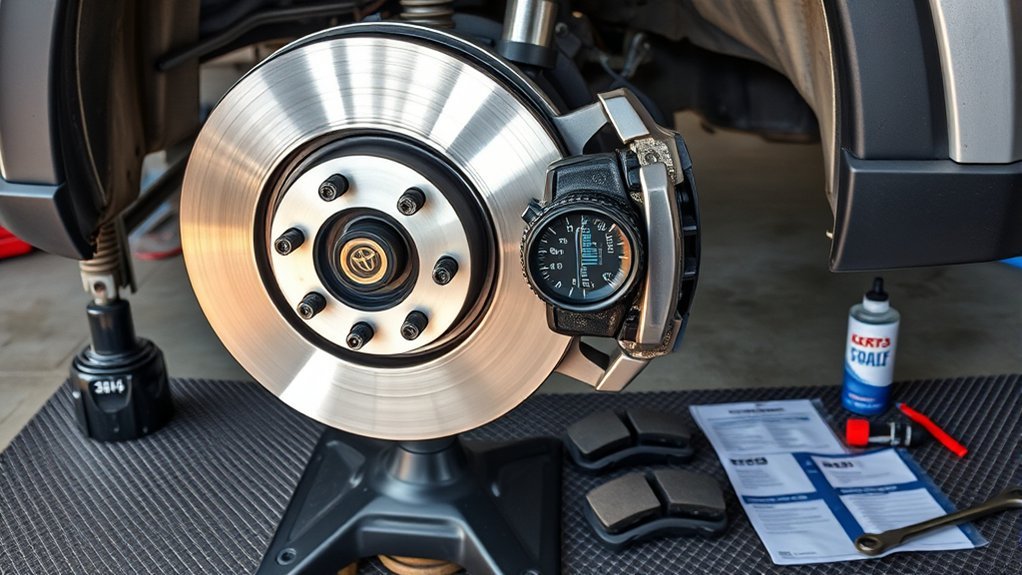
A RAV4 brake-pulsation repair may require no new friction parts if the cause is normal ABS feedback, a sensor signal, loose hardware, or hub contamination. At the other end of the range, the repair may include pads, rotors, calipers, hoses, parking-brake hardware, wheel bearings, ABS components, machining, bleeding, and professional diagnosis.
Kelley Blue Book currently gives $250 to $400 per axle as a broad average for professional pad-and-rotor replacement. That is not a RAV4-specific quote and does not include every possible pulsation cause. Local labor rates, rotor size, model year, parts quality, corrosion, and additional repairs can change the total.
- Parts checklist: VIN-matched rotors or drums, pads or shoes, required hardware, clips, boots, shims, and specified lubricant
- Measurement checklist: rotor thickness, thickness variation, mounted runout, hub condition, bearing play, and pad-wear difference
- Tool checklist: floor jack, jack stands, wheel chocks, torque wrench, micrometer, dial indicator, sockets, and brake cleaner
- Cost checklist: parts, machining, shipping, hardware, consumables, tool rental, diagnosis, labor, and alignment if suspension work is required
- Shop checklist: ask for the measured rotor thickness, runout result, hub findings, pad measurements, and the cause of any caliper drag
Do not choose a repair solely by the lowest parts price. Correct fitment, friction-material compatibility, corrosion protection, hardware quality, and an accurate diagnosis matter more than replacing multiple components by guesswork.
When to Take Your RAV4 to a Professional Mechanic?
Arrange a professional inspection when pulsation is accompanied by weak braking, a sinking or spongy pedal, fluid leakage, grinding, smoke, severe heat, pulling, a burning smell, an ABS or brake warning, or a “Braking Power Low” message.
Professional diagnosis is also appropriate when:
- The pedal rapidly pulses during gentle low-speed stops on dry pavement.
- New pads or rotors did not correct the vibration.
- Mounted rotor runout remains high after the hub is cleaned and the rotor is repositioned.
- A wheel bearing, hub, control-arm bushing, ball joint, tie rod, or other suspension part may be loose.
- A hose may be holding hydraulic pressure.
- The hydraulic system must be opened or electronically bled.
- The vehicle is a Hybrid or Plug-in Hybrid and the procedure requires electronic brake-system service.
Document when the pulse occurs, the approximate speed, road conditions, whether the steering wheel or seat shakes, recent brake work, warning messages, smells, noises, and whether one wheel becomes unusually hot. These details help a technician reproduce the symptom efficiently.
Frequently Asked Questions
How do you fix brake pedal pulsation on a RAV4?
First determine whether the pulse is normal ABS operation, unwanted ABS activation, or a mechanical vibration. For a repeatable dry-road pulse, measure rotor thickness variation and mounted runout, inspect the hub and bearing, compare pad wear, and check the calipers and rear brakes. Repair the underlying cause before resurfacing or replacing friction parts.
What is the most likely cause of brake pedal pulsation?
During ordinary braking on dry pavement, disc thickness variation or uneven rotor friction is a common cause. Rotor or hub runout, uneven pad deposits, rear brake variation, caliper drag, and unwanted ABS activation are also possible. A pulse during a hard stop on a slippery surface may simply be normal ABS operation.
Can bad brake fluid cause pedal pulsation?
Brake-fluid trouble usually causes a soft, sinking, fading, or inconsistent pedal rather than a rhythmic wheel-speed-related pulse. Check the fluid level and investigate leaks or contamination, but do not assume a flush will correct rotor or ABS-related pulsation.
Can you drive with a pulsing brake pedal?
Normal ABS pulsation during an emergency or low-traction stop does not require a repair. A repeatable pulse during routine braking should be inspected promptly. Do not drive if stopping power is weak, the pedal sinks, the vehicle pulls hard, fluid leaks, a wheel smokes, or a brake warning remains on.
Is it normal for the RAV4 brake pedal to pulse when ABS activates?
Yes. A rapid pedal pulse, vibration, or mechanical buzzing during hard braking or on a slippery surface can be normal ABS operation. Keep firm pressure on the pedal and steer as needed. A similar pulse during gentle dry-road stops may indicate unwanted ABS activation and needs diagnosis.
Why does a RAV4 brake pedal pulse only at low speed?
A slow rhythmic pulse near a stop can still come from rotor or rear-brake variation. A faster buzz or kick may be unwanted ABS activation caused by an incorrect wheel-speed signal, damaged tone ring, sensor or wiring fault, or hub problem. Scan the ABS module and compare live wheel-speed data before replacing rotors.
Do new RAV4 brakes need to be bedded in?
Many replacement pads and rotors have a break-in or bedding procedure, but the correct sequence depends on the manufacturer and friction material. Follow the instructions supplied with the parts rather than using one universal speed-and-stop routine.
Safety Disclaimer: This article is for informational purposes only and does not replace Toyota repair information or a professional brake inspection. Brakes affect vehicle control and stopping distance. Do not drive with weak braking, a sinking pedal, fluid leakage, severe pulling, smoke, or an active brake-system warning.
Conclusion
A pulsing RAV4 brake pedal requires the right first distinction. A rapid pulse during a hard or slippery stop may be normal ABS operation. A repeatable rhythmic pulse during routine dry-road braking needs inspection for rotor thickness variation, runout, hub or bearing trouble, pad deposits, rear brake variation, and caliper drag. A fast low-speed buzz may require ABS wheel-speed diagnosis instead of another set of rotors.
Measure before replacing parts. Use the repair limits and procedures for the exact model year and powertrain, correct the underlying cause, and document the readings. Arrange professional service when the hydraulic system, ABS controls, Hybrid brake system, wheel bearing, or suspension requires testing beyond a safe visual inspection.
References
- Toyota Tech Tip T-TT-0132-11, Best Practices for TCMC Front Brake Pad Installation — Toyota Motor Sales, USA, 2014; includes 1996–2013 RAV4 applications and directs technicians to model-specific repair information
- 2021 RAV4 Owner’s Manual, Driving the Vehicle and Brake Safety Guidance — Toyota Motor Sales, U.S.A.
- 2024 RAV4 Hybrid Owner’s Manual, General Maintenance — Toyota Motor Sales, U.S.A.
- Brake Pedal Pulsation and Disc Thickness Variation — Wagner Brake
- Brake Repair Prices and Cost Estimates — Kelley Blue Book
- Resurfacing Rotors vs. Replacing — J.D. Power


[…] Loose brake pads, missing anti-rattle clips, worn caliper slide pins, or loose caliper bracket bolts can make a sharp clunk over bumps or when changing direction. Brake-related clunks often appear right as you apply or release the pedal. If the noise is tied mainly to braking, compare it with the checks in the RAV4 brake pedal and front-brake diagnosis guide. […]