Last updated: July 31, 2026 | Verified against Toyota’s current 2026 RAV4 guide and U.S. specification pages.
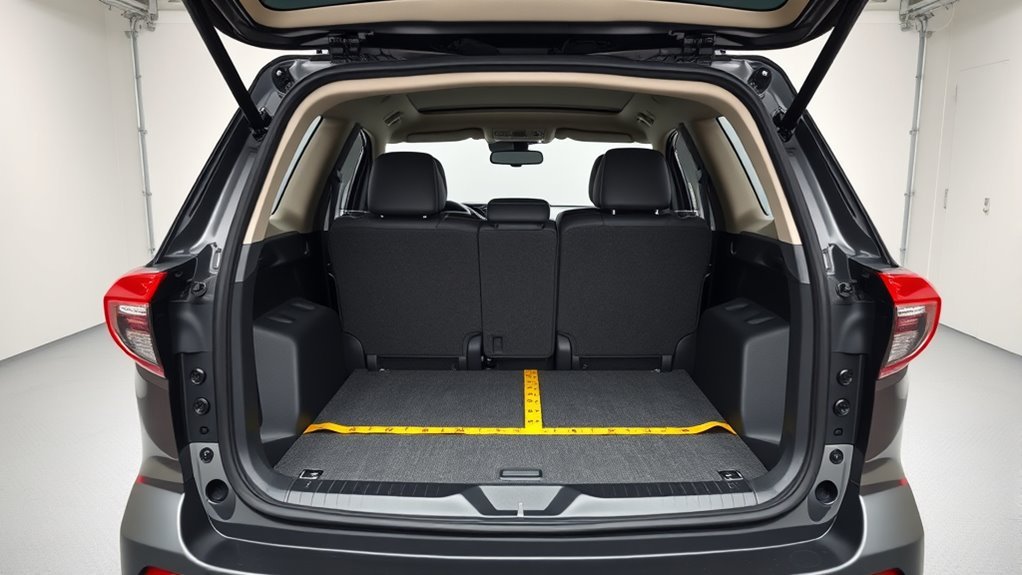
Measurement note: Toyota publishes cargo-volume figures for the redesigned 2026 RAV4 but does not publish a complete U.S. set of cargo-floor length, narrowest interior width, cargo height, or hatch-opening measurements. Measure the exact vehicle before transporting a rigid or tightly fitting item.
The verified 2026 Toyota RAV4 cargo dimensions start with cargo volume. Toyota lists 37.8 cubic feet behind the second row and 70.4 cubic feet with the second row folded for the standard RAV4 Hybrid. Toyota does not list a universal 2026 load-floor length, narrowest wheelhouse width, interior cargo height, or liftgate-opening size in its U.S. guide.
The 2026 model begins a redesigned sixth generation, so cargo measurements taken from a 2019–2025 RAV4 should not automatically be used for the new vehicle. For luggage, boards, furniture, pet crates, mattresses, or other hard-sided cargo, check the opening first and then measure the usable interior space with the liftgate closed.
Quick Answer
- Cargo volume behind the second row: 37.8 cu ft for the 2026 RAV4 Hybrid
- Maximum cargo volume: 70.4 cu ft with the second row folded
- Rear-seat configuration: 60/40 split-folding seatbacks
- Linear cargo dimensions: Toyota does not publish a complete U.S. set for the redesigned 2026 model
- Hatch opening: Measure the exact vehicle at its lower, upper, and narrowest points
- Plug-in hybrid: Do not assume the standard-hybrid cargo figure applies; confirm the selected PHEV trim separately
| Metric | Verified 2026 Information | Source or Status |
|---|---|---|
| Cargo behind second row | 37.8 cu ft | Toyota-published RAV4 Hybrid figure |
| Maximum cargo volume | 70.4 cu ft | Second row folded |
| Rear-seat split | 60/40 | Toyota-published configuration |
| Load-floor length | Not published as a universal U.S. specification | Measure the exact trim |
| Narrowest cargo width | Not published as a universal U.S. specification | Measure between the wheelhouses and trim panels |
| Cargo height | Not published as a universal U.S. specification | Check the floor position, roof trim, and cargo cover |
| Hatch-opening width and height | Not published as universal U.S. specifications | Measure the narrowest entry points |
Source: Toyota’s 2026 RAV4 Sales Consultant Guide. Cargo and load capacity remain limited by weight and weight distribution.
Official 2026 Toyota RAV4 Cargo Specifications and Measurements Toyota Does Not Publish
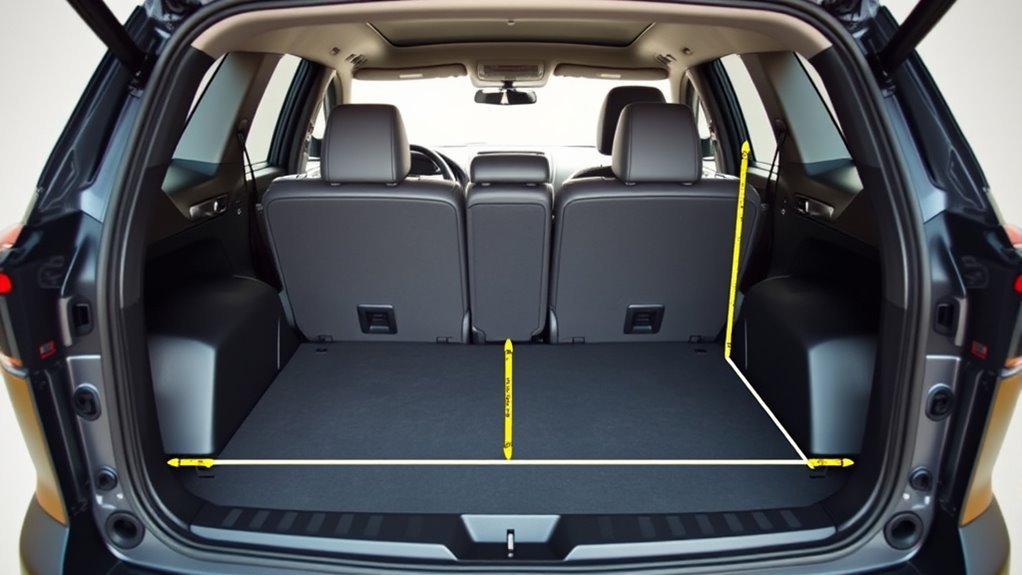
Toyota’s current 2026 guide verifies the RAV4 Hybrid’s two most useful cargo specifications: 37.8 cubic feet behind the second row and 70.4 cubic feet behind the front row when the second row is folded. The redesigned rear seatback is intended to fold flat to open the larger cargo configuration.
Toyota does not provide one complete set of U.S. linear cargo measurements for every trim and powertrain. In particular, the guide does not list a universal cargo-floor length, width between the wheelhouses, maximum interior cargo height, or liftgate aperture.
Be careful with the number 39.5 inches. Toyota’s 2026 guide lists that as rear headroom with the moonroof, not as maximum cargo-floor length. It should not be used to decide whether a board, bicycle, mattress, or furniture box will fit.
For a hard-sided item, use the official volume only as a general capacity comparison. Use tape measurements for the actual fit decision. The vehicle’s trim, powertrain, cargo-floor position, spare-wheel equipment, front-seat position, cargo cover, and interior trim can all affect usable space.
The 2026 RAV4 is available only with hybrid or plug-in-hybrid powertrains. Toyota maintains a separate 2026 RAV4 Plug-in Hybrid specification selector, so do not copy the standard-hybrid cargo figure into a PHEV buying decision without checking the selected trim.
How Do the Rear Seats Change 2026 RAV4 Cargo Space?
With the rear seatbacks upright, the standard 2026 RAV4 Hybrid provides 37.8 cubic feet behind the second row. Folding the second row increases maximum cargo volume to 70.4 cubic feet.
The 60/40 split lets you choose among three basic layouts:
- Both sections upright: Maximum passenger seating with cargo behind the second row
- One section folded: Extra length for a board, golf bag, stroller, or other narrow item while retaining part of the rear seat
- Both sections folded: Maximum cargo volume and the longest available load floor
Toyota does not publish a universal folded-floor length for the 2026 U.S. model. That measurement also changes with the front seats. Move the front seats only as far forward as occupants can use them safely, then measure from the closed liftgate to the nearest obstruction.
The redesigned seatbacks are intended to create a flatter loading surface, but “folded flat” does not always mean a perfectly level sleeping platform. Check the floor transition, seatback slope, cargo-floor position, and any gap behind the front seats before buying a mattress or building a platform.
What Is the 2026 RAV4 Hatch-Opening Size?
Toyota does not publish one universal 2026 RAV4 hatch-opening width and height in its U.S. specifications. Do not assume the widest point at the lower sill represents the entire opening. The liftgate trim normally narrows higher up, and a box may clear the bottom but catch at its upper corners.
Measure these five points on the exact vehicle:
- Lower opening width: Measure across the sill at the narrowest trim points
- Mid-opening width: Measure near the widest part of the item’s intended path
- Upper opening width: Measure between the upper trim panels or liftgate struts
- Center opening height: Measure from the sill or cargo floor to the lowest liftgate trim
- Usable diagonal: Check whether the item can be tilted through the opening without contacting glass, trim, or the headliner
The hatch opening and the interior cargo bay are separate constraints. An item must first pass through the opening, then rotate into its travel position, and finally fit with the liftgate fully closed.
For generation-specific context, see the site’s RAV4 hatch-opening measurement guide. Its older-generation planning measurements should not be treated as verified 2026 values.
How Much Cargo Volume Does the 2026 RAV4 Have?
The standard 2026 RAV4 Hybrid provides 37.8 cubic feet behind the second row and 70.4 cubic feet with the second row folded, according to Toyota’s current guide.
Cargo volume is useful when comparing vehicles, but it does not tell you whether one rigid object will fit. Two cargo areas can have similar cubic-foot ratings and very different hatch shapes, wheelhouse intrusions, roof tapers, and load-floor lengths.
Independent outlets may also produce different numbers because they use different testing methods. For example, Cars.com measured 19.4 cubic feet behind the backseat of a tested 2026 RAV4 Limited using its own physical cargo-measurement process. That result should be compared with other Cars.com-tested vehicles, not treated as a direct replacement for Toyota’s manufacturer-published 37.8-cubic-foot figure.
The plug-in-hybrid cargo area is not identical to the standard hybrid’s in every published specification table. Confirm the exact PHEV trim rather than assuming the hybrid figures apply.
What Fits in a 2026 RAV4?
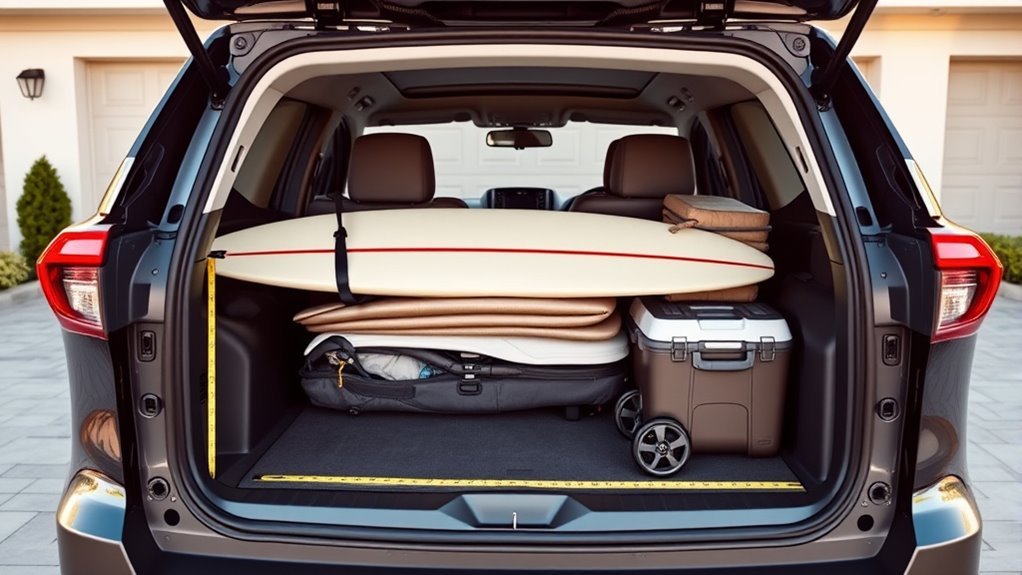
An honest fit verdict requires the item’s complete packed dimensions and measurements from the exact vehicle. Handles, wheels, club heads, packaging, furniture feet, bicycle handlebars, and pet-crate doors all count.
Use this table to identify the measurement that controls each fit decision.
| Item | Measurements to Check | Planning Guidance |
|---|---|---|
| Snowboard or skis | Overall length, widest point, and closed-hatch floor length | Fold one or both rear-seat sections and check whether the item can lie lengthwise without pressing against the liftgate |
| Checked luggage | Packed width, depth, height, wheels, and handles | Test the combined floor footprints; do not rely on a universal suitcase count |
| Golf bag | Full length with clubs installed and maximum head width | A split rear seat may provide the needed length while preserving passenger space |
| Bicycle | Wheel-to-wheel length, handlebar width, pedal width, and overall height | Folding both seatbacks or removing a wheel may be necessary; protect the interior from pedals and chain contact |
| Pet crate | Rigid outer dimensions and crate-door swing | The crate must clear the narrowest hatch point and sit level without blocking securement points or rear visibility |
| Television or furniture box | Complete boxed dimensions and required transport orientation | Check the upper hatch opening, rotation space, and the manufacturer’s transport instructions |
Use this four-stage test for any large item:
- Opening test: Can the item’s smallest safe orientation pass through the narrowest part of the liftgate opening?
- Floor-footprint test: Is the usable cargo floor long and wide enough after accounting for wheelhouses and trim?
- Rotation test: Is there enough room inside to turn the item into its travel position?
- Payload and securement test: Can the vehicle carry the total passenger-and-cargo weight, and can the item be restrained safely?
[Products Worth Considering]

This custom-fit center console organizer tray adds practical storage to the Toyota RAV4 2026, helping keep small essentials neatly separated and easy to reach. Designed with precise 3D scanning for a snug fit, it creates extra usable space in the armrest area while reducing clutter and rattling. The durable insert installs easily without tools and includes a non-slip mat to help keep items in place.

This custom-fit car phone holder is designed for Toyota RAV4 models with a 7/8-inch screen, providing a secure and convenient mounting solution without blocking vents or sightlines. It combines magnetic alignment with fast wireless charging to keep your phone powered while offering 360-degree rotation for optimal viewing in portrait or landscape mode. Built from durable ABS material and easy to install without tools, it supports safer hands-free navigation and calling on every drive.

This custom-fit center console armrest cover is designed to refresh and protect the lid on compatible Toyota RAV4 models and trims. Made to follow the console curvature for a smooth, wrinkle-free look, it helps guard against scratches, spills, dirt, and everyday wear while improving the appearance of an aging armrest. Installation is simple and the cover is tailored for a snug, secure fit across supported RAV4, RAV4 Hybrid, and RAV4 Prime vehicles.
7 Practical Tips to Maximize Toyota RAV4 Cargo Space and Load Safely
Cargo volume is only one part of safe packing. Arrange the load around its weight, shape, access order, the vehicle’s measured dimensions, and the payload figure printed on the driver’s door-jamb label.
[Products Worth Considering]

These custom-fit seat covers are tailored for Toyota RAV4 gasoline models from 2019 through 2025, giving your SUV a refined interior upgrade with a precise OEM-inspired look. The spill-resistant faux leather surface helps protect against daily messes, scuffs, and pet wear while staying easy to clean, and the reinforced airbag-compatible stitching supports safety without sacrificing style. A secure strap, zipper, and Velcro installation system helps keep the covers in place for a stable, comfortable fit in all seasons.

This windshield sun shade is designed to fit Toyota RAV4 models from 2013 to 2018 and help keep the cabin cooler after long hours in the sun. Its triple-laminate construction and silver surface block most UV rays to help protect the dashboard, seats, and steering wheel from sun damage. The accordion-folding design makes it easy to set up, store, and carry with the included bag.

Cartman 12-foot long-by-1-inch wide lashing strap in 6-pack
Pack by Size
Measure the widest, tallest, and longest rigid items before loading. Place large rectangular pieces first, then use soft bags to fill irregular spaces.
- Check the narrowest hatch measurement before lifting a bulky item
- Place wide, stable boxes on the floor rather than on top of soft luggage
- Use split-folding seats for long, narrow cargo
- Keep space around the liftgate latch and interior trim
- Do not force the power liftgate against an item that is too long
Secure With Straps
Secure cargo to installed tie-down points where equipped. Heavy objects can move toward the passenger compartment during sudden braking, even when they appear stable at normal speeds.
- Place the heaviest pieces low and near the center of the vehicle
- Use straps rated for the load rather than light household cord
- Protect straps from sharp box edges or metal furniture
- Recheck tension after the first part of the trip
- Keep loose cargo below the seatback height unless a suitable barrier is used
Use Vertical Space
Use vertical room only after establishing a stable base. Tall stacks can block rear visibility and raise the vehicle’s center of gravity.
- Place heavy, flat items on the cargo floor
- Put lighter bags or bedding above rigid boxes
- Keep fragile items away from the liftgate glass
- Remove the cargo cover only when necessary and store it securely
- Do not stack cargo where it can fall into the passenger area
Use Cargo Organizers and Dividers
Collapsible bins, nets, and dividers help stop groceries, tools, charging cables, and small gear from sliding. Choose an organizer that works with the exact cargo-floor position and does not cover access to the spare tire or underfloor storage.
The site’s guide to RAV4 cargo organizers covers options for separating soft goods, groceries, emergency supplies, and frequently accessed items.
- Use collapsible bins for groceries and soft goods
- Keep fragile items separate from tools and hard equipment
- Leave access to emergency equipment and the spare-wheel area
- Anchor organizers where compatible attachment points are available
- Avoid organizers that interfere with the liftgate latch
Protect the Cargo Floor
A fitted liner can protect the cargo floor and folded seatbacks from mud, sharp edges, bicycle components, spills, and pet hair. Confirm that the liner matches the redesigned 2026 model rather than an earlier RAV4 generation.
For additional interior protection, review these Toyota RAV4 floor-mat options.
- Use a rigid board or moving blanket beneath sharp furniture feet
- Cover bicycle pedals, chains, and axle ends
- Clean sand and grit before sliding heavy objects across the floor
- Check that a liner does not prevent the cargo floor from locking into position
Distribute Weight Evenly
Keep heavy cargo centered, low, and as close to the rear seatbacks as practical. Avoid concentrating the load on one side or stacking dense objects near the liftgate.
- Check the driver’s door-jamb label for the vehicle-specific payload limit
- Count passengers, accessories, luggage, and cargo in the total load
- Spread weight from side to side
- Do not use cubic-foot capacity as a substitute for payload capacity
- Reduce or rearrange the load if steering, braking, or ride height changes noticeably
Plan Your Load Around Your Route
Load items in reverse stop order. Equipment needed first should be nearest the hatch, while items needed last can sit farther forward.
- Keep emergency equipment accessible without unloading the vehicle
- Place frequently used bags near the liftgate
- Keep charging cables, tools, and small accessories in a labeled bin
- Do not bury a spare tire or inflation kit beneath an immovable load
- Check the load after rough roads or sudden braking
How Does 2026 RAV4 Cargo Space Compare With the CR-V and Highlander?
The standard 2026 RAV4 Hybrid has more published cargo space behind the second row than a 2026 CR-V Hybrid, but the CR-V Hybrid has a slightly larger published maximum with its rear seat folded. The three-row Highlander is substantially larger when all rear rows are folded.
[Products Worth Considering]

Large Size & Universal Fit: Featuring expansive 53" x 79" dimensions, this foldable pet cargo cover is designed for a custom fit in full-size SUVs, mid-size SUVs, compact crossovers, minivans, and sedans. Ensure your pet has ample room to sit or lie down comfortably. Please measure your vehicle's cargo area before ordering.
Cargo Volume Comparison
| Vehicle | Cargo Behind Second Row | Maximum Cargo |
|---|---|---|
| 2026 Toyota RAV4 Hybrid | 37.8 cu ft | 70.4 cu ft |
| 2026 RAV4 Plug-in Hybrid | 33.5–33.6 cu ft* | 63.5–63.6 cu ft* |
| 2026 Honda CR-V Hybrid | 36.3 cu ft | 71.8 cu ft |
| 2026 Toyota Highlander | Not directly comparable as a three-row SUV | Up to 84.3 cu ft with second and third rows folded |
The RAV4 Hybrid figures come from Toyota’s 2026 guide. Honda publishes the CR-V Hybrid figures on its 2026 CR-V specification page. Toyota publishes the Highlander’s maximum in its 2026 Highlander release. *The PHEV range is currently reported in MotorTrend’s 2026 specification table; confirm the selected trim on Toyota’s current PHEV page before purchase.
Practical Loading Differences
The RAV4 Hybrid’s 37.8 cubic feet behind the second row slightly exceeds the CR-V Hybrid’s 36.3 cubic feet. With the rear seats folded, the CR-V Hybrid’s 71.8-cubic-foot maximum is slightly higher than the RAV4 Hybrid’s 70.4 cubic feet.
Those small volume differences do not reveal which vehicle will accept a specific crate, stroller, cooler, wheelchair, television box, or sleeping platform. Compare the narrowest hatch opening, wheelhouse width, floor length, roof taper, seatback angle, and cargo-floor height in person.
The Highlander offers more maximum volume and three-row seating, but it is a larger vehicle. The RAV4 remains easier to park and may be sufficient when the load consists mainly of normal luggage or outdoor equipment rather than large furniture or cargo for seven or eight occupants.
Does the RAV4 Have an Easy-to-Use Cargo Opening?
Cargo volume alone cannot prove that the RAV4 has a wider or more accessible opening than a competitor. A fair accessibility comparison requires measurements from equivalent points on each vehicle.
During an in-person comparison, check:
- Lower and upper liftgate width
- Center opening height
- Cargo-sill height from the ground
- Floor step between the sill and cargo area
- Wheelhouse intrusion
- How far the liftgate extends overhead
- Whether the item can rotate after entering
A lower sill may make a heavy item easier to lift even when total volume is smaller. A square opening may accept a box that will not pass through a more tapered opening with a similar cubic-foot rating.
How to Measure Your Gear and Confirm It Fits
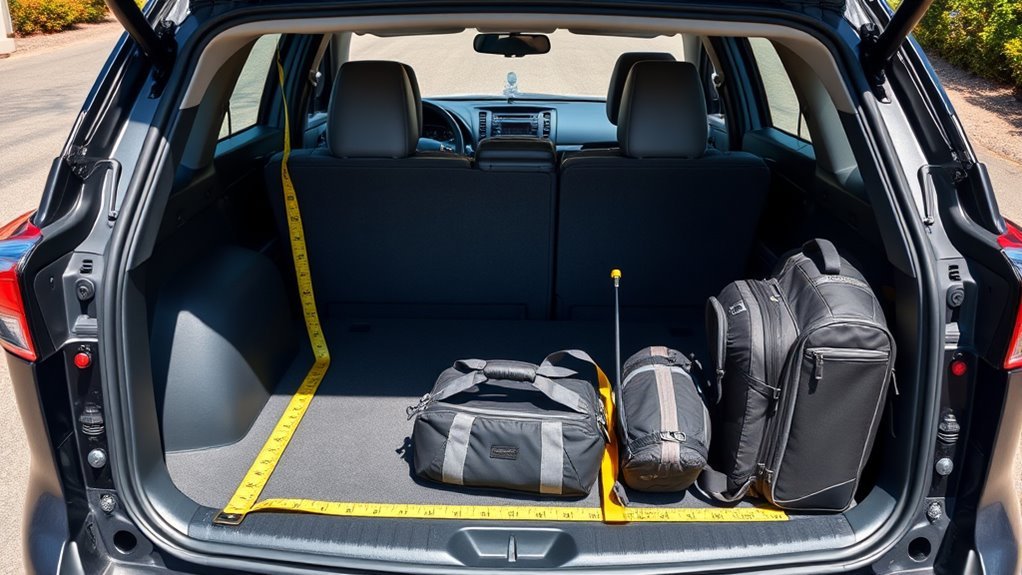
Use a tape measure on both the item and the exact RAV4. Measure with the vehicle configured exactly as it will be during transport.
- Set the seats: Place the front seats in safe occupant positions and choose whether the 40-percent, 60-percent, or full rear seat will be folded.
- Set the cargo floor: Use the floor position you intend to drive with and account for the spare tire, underfloor storage, liner, and cargo cover.
- Measure the hatch: Record the lower width, middle width, upper width, center height, and narrowest trim obstruction.
- Measure the interior: Check floor length to the closed liftgate, narrowest wheelhouse width, widest upper width, and lowest usable roof height.
- Measure the item: Include handles, wheels, packaging, protruding hardware, pedals, club heads, furniture feet, and protective wrapping.
- Check rotation room: Confirm that the item can turn from its entry angle into its final travel position.
- Check weight and securement: Confirm payload on the door-jamb label and identify how the item will be restrained.
For irregular objects, treat the item as a rectangular bounding box using its longest, widest, and tallest points. A flexible duffel may compress around trim, but a rigid crate or furniture box will not.
For a more detailed process, see the site’s guide to measuring a RAV4 cargo area for luggage and large items.
Frequently Asked Questions
What Are the Dimensions of the Back of a 2026 Toyota RAV4?
Toyota’s U.S. guide lists 37.8 cubic feet behind the second row and 70.4 cubic feet with the second row folded for the standard 2026 RAV4 Hybrid. Toyota does not publish one complete set of 2026 cargo-floor length, narrowest interior width, cargo height, and hatch-opening measurements, so measure the exact vehicle for rigid cargo.
Is RAV4 Cargo Space Bigger With the Seats Down?
Yes. Folding the second row increases the standard 2026 RAV4 Hybrid’s published cargo volume from 37.8 to 70.4 cubic feet. The 60/40 split also lets you create extra length while retaining part of the rear seat.
Does the 2026 RAV4 Plug-in Hybrid Have Less Cargo Space?
Published specification tables show less cargo volume in the 2026 plug-in hybrid than in the standard hybrid. Because PHEV figures can vary by trim, confirm the selected vehicle on Toyota’s current PHEV specification page rather than copying the standard-hybrid figures.
Can You Sleep in the Back of a 2026 RAV4?
Sleeping may be possible with the rear seatbacks folded, but comfort depends on the measured floor length, narrowest width, seatback slope, cargo-floor position, and front-seat position. Measure the exact vehicle and mattress before buying camping equipment.
How Many Suitcases Fit in a 2026 RAV4?
There is no universal suitcase count because bag shells, wheels, handles, and packed thickness vary. Compare the combined floor footprints and stacking heights of your actual bags with the measured cargo bay, and keep rear visibility and payload limits in mind.
Does the 2026 RAV4 Have a Flat Cargo Floor With the Seats Folded?
Toyota describes the redesigned rear seatback as folding flat to maximize cargo space. Before using it as a sleeping or furniture-loading platform, check the floor transition, seatback slope, gap behind the front seats, and cargo-floor position in the exact trim.
What Is the RAV4’s Cargo Payload Capacity?
Payload varies by trim and installed equipment. Use the label inside the driver’s door jamb for the specific vehicle. The combined weight of passengers, luggage, accessories, and cargo must remain within that limit.
What Is the 2026 RAV4 Hatch-Opening Size?
Toyota does not publish one universal U.S. hatch-opening width and height for the 2026 RAV4. Measure the lower, middle, and upper opening widths plus the center height and narrowest trim obstruction on the exact vehicle.
Are 2025 RAV4 Cargo Measurements the Same as 2026?
Do not assume they are the same. The 2026 RAV4 begins a redesigned sixth generation, so 2019–2025 owner measurements should not be reused unless a source has remeasured a 2026 vehicle at the same points.
Bottom Line
The verified standard-hybrid figures are 37.8 cubic feet behind the second row and 70.4 cubic feet with the second row folded. Toyota does not publish a complete set of 2026 cargo-floor and hatch-opening dimensions, so any rigid-item fit decision still requires measuring the exact vehicle.
Start with the hatch opening, then check the floor footprint, rotation room, payload, and securement. That process gives a more reliable answer than applying older RAV4 measurements or relying on cargo volume alone.