
Last updated: July 15, 2026
Verification basis: This guide was cross-checked against Toyota RAV4 owner and quick-reference material, NHTSA tire guidance, FMVSS No. 138, AAA temperature guidance, and TPMS component documentation.
A steady Toyota RAV4 TPMS light usually means one or more tires are underinflated. A light that flashes for about one minute and then remains on indicates a tire pressure warning system fault. Toyota often calls this system the tire pressure warning system or TPWS. It is a safety backup, not a replacement for checking tire pressure with a gauge.
Quick Answer
Check all four road tires cold with a reliable gauge and inflate them to the PSI on the driver-door placard. A steady RAV4 TPMS light may clear after the pressure is corrected. Initialize TPWS only when the owner’s manual calls for it. If the light flashes for about one minute and then stays on, manually verify tire pressure and arrange system diagnosis.
Key Takeaways
- Use the cold tire PSI on the driver-door placard, not the maximum PSI printed on the tire sidewall.
- A steady TPMS light usually means low tire pressure. A light that flashes for about one minute and then stays on indicates a possible TPMS fault.
- Correcting pressure, initializing TPWS, and registering sensor IDs are three different operations.
- Many newer RAV4 models use the multi-information display for TPWS initialization, while many older equipped models use a physical reset button.
- Do not initialize TPWS before correcting tire pressure because the system may store the wrong pressure reference.
- Stop repeating resets if the light flashes, a pressure reading remains missing, or the same tire loses air again.
At a Glance
| First Action | Inspect the tires and check all four road tires cold with a gauge |
| Correct Pressure Source | Tire and Loading Information label on the driver-side door jamb or B-pillar |
| Steady Light | Usually low pressure or pressure near the warning threshold |
| Flashing, Then Steady | Possible sensor, registration, communication, or TPMS system fault |
| Stop Driving If | A tire is visibly low or damaged, the RAV4 pulls or vibrates, or handling feels unstable |
RAV4 TPMS Reset vs. Initialization vs. Sensor Registration
These terms are often used as though they mean the same thing, but they describe different jobs:
- Correcting tire pressure means adding or releasing air until each tire matches the specified cold PSI. A steady warning may clear without any manual reset after the pressure is corrected.
- Initialization tells TPWS to use the current correctly adjusted pressure as its reference. Toyota may label this function Set Pressure, Setting Pressure, or Tire Pressure Setting.
- Sensor programming configures a compatible universal replacement sensor for the vehicle application.
- ID registration or relearning stores the unique transmitter IDs that belong to the vehicle and, on applicable systems, associates them with wheel positions.
Initialization cannot repair a puncture, revive a failed transmitter, make an incompatible sensor communicate, or register a missing sensor ID. If the light flashes before staying on, treat the problem as a system fault rather than repeatedly selecting Set Pressure.
How to Check, Inflate, and Reset Your RAV4 TPMS
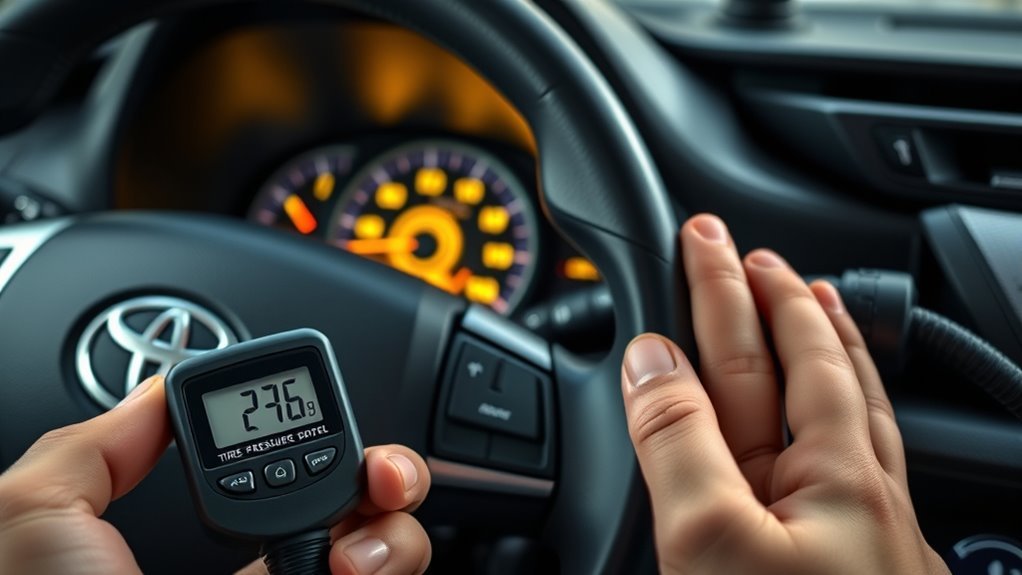
Start with the tires, not the reset control. Check all four road tires when they are cold. The National Highway Traffic Safety Administration recommends checking tire pressure at least once a month when the vehicle has not been driven for at least three hours.
- Park safely and let the tires cool. A warm tire can read higher than its true cold pressure.
- Find the correct PSI. Look at the Tire and Loading Information label on the driver-side door jamb or B-pillar. Do not use the maximum PSI on the tire sidewall.
- Inspect each tire. Look for a visibly low tire, cuts, bulges, exposed cords, embedded objects, or obvious valve damage before adding air.
- Check each tire with a gauge. Remove the valve cap, press the gauge firmly on the valve stem, and record the reading.
- Add or release air as needed. Bring each tire to the placard pressure. If front and rear pressures differ on the label, follow the label exactly.
- Recheck all tires. Replace the valve caps to help keep dirt and moisture out of the valve cores.
- Initialize TPWS only if required. Follow the owner’s manual after pressure adjustment, tire rotation, tire or wheel replacement, or sensor service. The exact requirement varies by model year.
Warning: Never initialize the RAV4 tire pressure warning system before setting the tires to the correct cold PSI. If you initialize it while the tires are low, the system may store the wrong pressure as its reference.
[Products Worth Considering]

ROBLOCK low profile car ramps are designed to give low-chassis vehicles safer access for lifting, repairs, and maintenance work. The widened, shortened ramp design helps create room for a jack while the 17-degree slope and curved shape improve vehicle placement and stability. Built from impact-resistant PP with non-slip features and a high load capacity, these ramps are a practical choice for home garages and professional service use.

This smart color coded tire tread depth gauge makes it easy to check tread wear at a glance with clear red, yellow, and green ranges. Calibrated from 0 to 1 inch in 1/32 inch increments, it helps you quickly assess tire condition for safer driving and timely replacements. The pocket clip design makes it convenient to carry and use on trucks, motorcycles, cars, and other passenger vehicles.
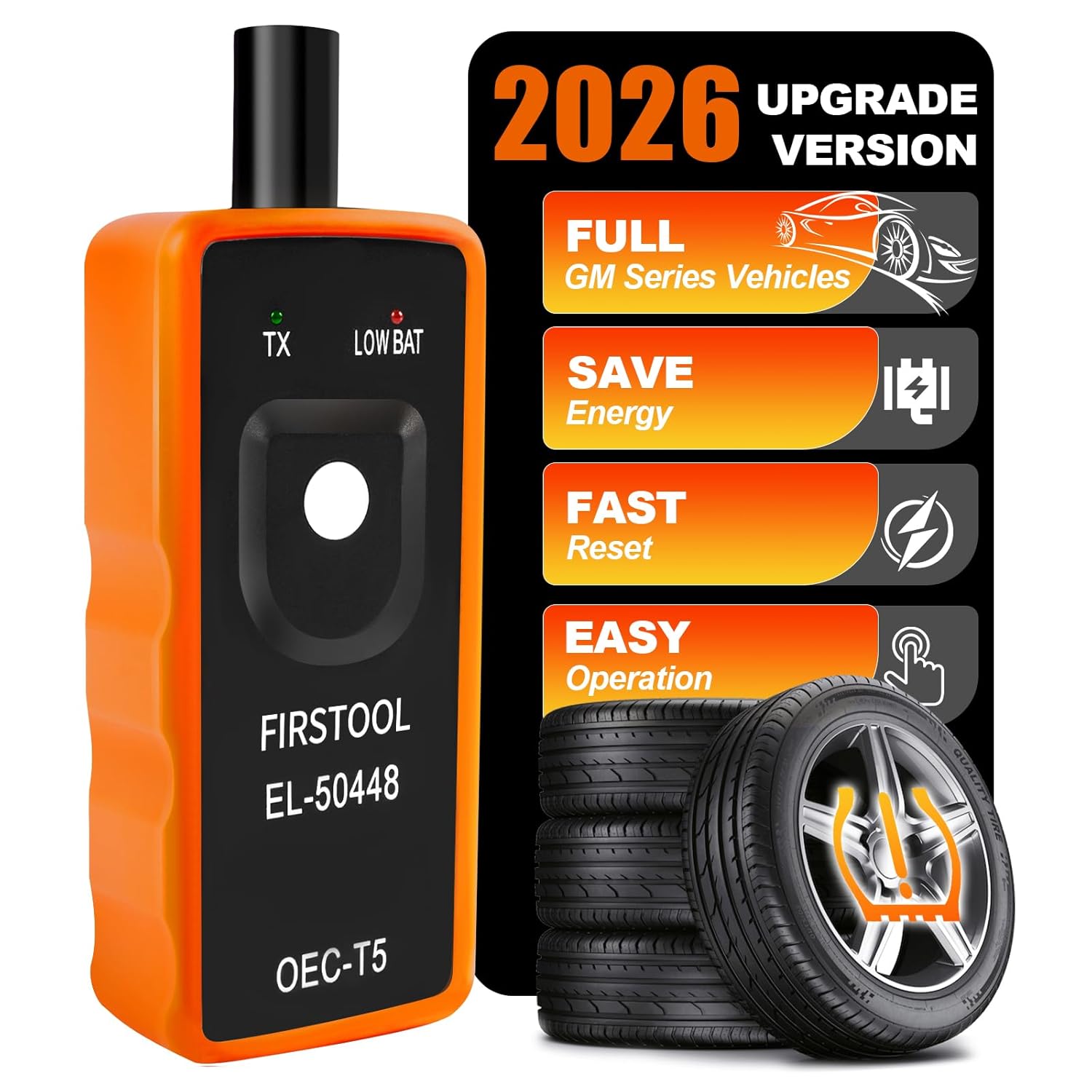
This EL-50448 TPMS relearn tool helps quickly activate and reset tire pressure sensors so your vehicle’s monitoring system stays accurate after tire rotations, sensor replacement, or seasonal tire changes. Designed for many GM-related vehicles and compatible with common 315 and 433 MHz TPMS systems, it offers simple one-button operation and reliable performance for clearing warning lights and relearning sensor positions.
How Do You Initialize TPWS on a Newer RAV4?
Many 2019 and newer U.S.-market RAV4 models use the multi-information display instead of a physical dashboard button. The exact wording varies by model year, display, trim, and market.
On the 2024 U.S. RAV4 quick-reference guide, the general path is:
Settings → Vehicle Settings → TPWS → Set Pressure, then press and hold OK until a message appears and the tire pressure warning light blinks three times.
Toyota’s 2025 RAV4 multi-information display guide also identifies TPWS and Set Pressure options on equipped vehicles. After initialization, pressure values may temporarily appear as dashes while the system receives sensor data or determines tire positions.
For a generation-specific walkthrough, see the site’s RAV4 tire pressure light reset guide.
How Do You Reset an Older RAV4 With a Physical Button?
Many older RAV4 models have a tire pressure warning reset button under the lower dash, near the steering column, or in another location shown in the owner’s manual. Do not assume every older RAV4 uses the same button location or ignition sequence.
On models equipped with the button, first set every required tire to the placard pressure. Toyota’s general support procedure calls for starting the engine, pressing and holding the reset button until the indicator blinks slowly three times, waiting several minutes with the engine running, and then switching the vehicle off. Follow the owner’s manual for your exact year if its procedure differs.
Note: Button location, menu wording, ignition position, waiting time, monitored tires, and required driving conditions vary by model year and market. Your exact owner’s manual is the final authority.
What Does a Steady or Flashing RAV4 TPMS Light Mean?
Watch how the tire pressure warning light behaves when you start the vehicle. A steady warning and a flashing-then-steady warning point to different diagnostic paths.
| What You See | Likely Meaning | What to Do |
|---|---|---|
| Light turns on and stays steady | One or more tires are underinflated, or pressure has fallen near the warning threshold after a temperature change | Stop safely, inspect the tires, check cold PSI with a gauge, and inflate to the door-jamb placard pressure |
| Light flashes for about one minute, then stays on | TPMS malfunction, missing sensor ID, damaged or failed sensor, incompatible wheel sensor, or communication problem | Check tire pressure manually, then have the system diagnosed if the flashing pattern returns |
| Light comes on in cold weather, then turns off while driving | Cold pressure may be near the warning threshold and rise as the tires warm | Check and adjust pressure when the tires are cold instead of assuming the problem has disappeared |
| Tire pressure display shows dashes | The system may still be receiving sensor data, identifying tire positions, or failing to communicate with one or more sensors | Follow the manual’s drive procedure; if readings do not return, check sensor compatibility and ID registration |
Toyota states that a RAV4 tire pressure warning light that flashes for about one minute and then remains on indicates a tire pressure warning system malfunction. The 2025 RAV4 warning-light guide directs owners to have the vehicle inspected when this pattern appears.
A TPMS light is not a tire gauge. It warns you after pressure has fallen far enough to matter, but routine gauge checks help catch smaller losses, slow leaks, and temperature-related changes earlier.
How Does the RAV4 TPMS Work?
The U.S.-market RAV4 systems covered by the cited Toyota manuals use tire pressure warning valves and transmitters mounted inside the wheels. Each transmitter measures pressure and sends identifying and pressure data to the vehicle’s tire pressure warning computer.
Federal TPMS rules require compliant systems to warn when one or more tires fall 25 percent or more below the vehicle manufacturer’s recommended cold inflation pressure, subject to the standard’s minimum activation pressure. See NHTSA’s FMVSS No. 138 final rule.
A TPMS warning may therefore not appear after a small pressure loss. If a RAV4 placard calls for pressure in the low-to-mid 30 PSI range, the federally defined warning level can be several PSI below the recommended pressure. Monthly gauge checks remain important even when the dashboard light is off.
Does a RAV4 Show Individual Tire Pressure?
Some newer RAV4 configurations display individual tire pressures in the multi-information display. Other model years or equipment levels show only a general warning light. Toyota app pressure information may also vary by model, market, vehicle equipment, account support, and connected-service availability.
On equipped vehicles, tire pressure can take time to appear after startup, initialization, pressure adjustment, or tire service. Dashboard readings may also differ slightly from a hand gauge because tire pressure changes with temperature.
Pro Tip: Use the dashboard display to spot trends and identify a possible low tire, but make final cold-pressure adjustments with a reliable tire gauge.
RAV4 TPMS Troubleshooting: Quick Fixes for Common Symptoms
Use the warning pattern, recent service history, tire condition, and actual pressure readings to narrow the cause. Start with tire pressure before assuming a sensor has failed.
[Products Worth Considering]

The VXDAS 2-in-1 TPMS relearn tool is designed to activate and reset tire pressure sensors on compatible GM and Ford vehicles with an easy model switch button for quick use. It helps complete TPMS relearning after tire rotation, sensor replacement, or warning light resets, making it a practical tool for drivers and technicians who want a fast, cost-effective solution.

The ANCEL AD410 helps drivers quickly read and clear engine-related fault codes, view live data, and understand why the check engine light is on before heading to a repair shop. With built-in code definitions, readiness checks, and support for common OBD2 functions, it makes basic diagnostics straightforward for beginners and DIY users. Powered directly from the vehicle and easy to use with no app required, it offers practical value for everyday vehicle troubleshooting.

2024 Updated GL-50448:Equipped with a round antenna and Switch button,let Open Signal Faster and Stronger than other TPMS Relearn Tool.also More sensitive and Suitable for your fingers operation
Why Did the TPMS Light Appear After a Cold Night?
Cold weather can push a marginally inflated tire below the warning threshold. AAA explains that tire pressure commonly changes by about 1 PSI for every 10°F temperature change.
Fix: Check the tires cold and inflate them to the door-jamb placard. Do not bleed air from warm tires merely because their readings rise after driving.
Why Does the TPMS Light Stay On After Adding Air?
The system may need time to receive updated readings, one tire may still be low, or the pressure may have been adjusted while the tires were warm. Check every road tire again with a gauge.
Fix: Drive only as directed in the owner’s manual. If the pressures are correct and the steady light remains, initialize TPWS only when your manual requires it.
If one tire loses pressure again after being corrected, stop treating the warning as a reset problem. Have the tire, valve, bead, and wheel inspected for a puncture or leak.
Why Does the TPMS Light Flash and Then Stay On?
A flashing light that becomes steady indicates a different condition from a normal low-pressure warning. Possible causes include a failed sensor, exhausted sensor battery, unregistered transmitter ID, damaged valve and transmitter, incompatible sensor, missing sensor, or communication fault.
Fix: Manually verify tire pressure first. Then have the system scanned by a Toyota dealer, qualified tire shop, or technician with compatible TPMS equipment.
See the focused guide to diagnosing a flashing RAV4 TPMS light for a sensor-by-sensor diagnostic sequence.
Why Did the TPMS Warning Appear After a Tire Rotation?
A rotation can require initialization or tire-position registration on some RAV4 systems. If initialization was performed with incorrect pressure, the stored reference may also be wrong.
Fix: Confirm that every tire matches the correct cold placard PSI. Follow the rotation or position-registration procedure in the owner’s manual for your exact model year.
If the dashboard shows a pressure at the wrong wheel location, the transmitters may be working while tire-position registration is incomplete or incorrect.
Why Did the Warning Appear After New Tires or Wheels?
When a new tire pressure warning valve and transmitter is installed, its ID may need to be programmed and registered. Initialization alone does not add an unknown sensor ID to the vehicle.
Fix: Ask the tire shop whether each sensor was activated, whether universal sensors were programmed for the RAV4, whether transmitter IDs were registered or cloned, and whether initialization was completed after registration.
If aftermarket wheels were installed, confirm that they use compatible sensors and valve hardware.
RAV4 TPMS Sensor Replacement and Programming: DIY vs. Shop
Replacing a RAV4 TPMS sensor involves more than swapping a valve stem. The sensor must be compatible with the vehicle, operate on the required frequency, and communicate using an ID that the vehicle recognizes.
On models that provide a sensor-ID registration function in the TPWS menu, follow the exact owner’s manual procedure. Other systems and many universal aftermarket sensors require a compatible activation, programming, or scan tool.
[Products Worth Considering]

【CUSTOMIZED for FORD】This TPMS Sensor Training Tool is customized for all Ford Lincoln Mercury vehicles that has a Tire Pressure Sensor. Train the TPMS sensors and activate Tire Pressure Programming on new vehicles or after a tire rotation(Tip: You can refer to the second vehicle compatibility diagram and the A+ content to check if your vehicle is compatible with this reset tool.)

WIDE COMPATIBLE WITH 100+ GM VEHICLES: Specifically designed to work with most GM vehicles 2004-2025(Chevy /Cadillac /GMC/ Buick etc.)equipped with 315/433 MHz , compatible more car models more years than others. BUT NOT support universal TPMS tire sensors.It is not suitable for heavy trucks with more than 4 tires or vehicles with an external TPMS system.
When Does DIY TPMS Service Make Sense?
- You are checking pressure, adding air, replacing a valve cap, or visually inspecting a tire.
- Your owner’s manual clearly provides an initialization or registration procedure that does not require tire removal.
- You have a compatible TPMS tool and understand the difference between activation, programming, registration, and initialization.
- A tire shop is replacing the sensor and can verify communication and registration before you leave.
When Should You Use a Dealer or Tire Shop?
- The light flashes for about one minute and then stays on after pressure is checked.
- New wheels or sensors were installed and pressure readings remain missing.
- A scan tool cannot activate one or more transmitters.
- Sensor IDs cannot be registered or the displayed tire positions remain incorrect.
- A valve stem, retaining nut, seal, or sensor body is corroded, leaking, cracked, or damaged.
- The tire must be removed from the wheel to inspect or replace the sensor.
Note: The battery and electronics in a factory-style TPMS sensor are normally sealed inside the sensor body. When the battery fails, standard service replaces the complete sensor rather than opening the enclosure.
How Can You Prevent RAV4 TPMS Problems?
A few consistent habits prevent many pressure warnings and make sensor faults easier to identify:
- Check pressure monthly. Measure the road tires and check the spare manually, even if the spare is not monitored by your model’s TPMS.
- Check before long trips. Correct inflation matters more when the RAV4 carries passengers or cargo for extended highway driving.
- Inspect valve stems and caps. Watch for cracks, corrosion, loose hardware, and damaged sealing components.
- Recheck after large weather changes. A 30°F temperature drop can reduce pressure by roughly 3 PSI.
- Do not bleed warm tires to the cold specification. Recheck them after they cool.
- Use compatible tires, wheels, and sensors. Incorrect components or missing transmitter IDs can prevent the warning system from operating normally.
- Keep tire-service records. Record whether sensors were retained, replaced, programmed, cloned, registered, or initialized.
Frequently Asked Questions
How does the Toyota RAV4 TPMS system work?
On equipped RAV4 models, transmitters inside the wheels measure tire pressure and send data to the vehicle’s tire pressure warning computer. A steady warning normally indicates low pressure. If the system cannot receive or process sensor data correctly, the light may flash for about one minute and then remain on.
What is the difference between a TPMS reset, initialization, and relearn?
Correcting pressure adds or releases air. Initialization stores the correctly adjusted pressure as the system’s reference. Programming configures a compatible universal replacement sensor. Registration or relearning stores the sensor IDs that belong to the vehicle and may identify their wheel positions. One procedure does not automatically perform all the others.
Does a Toyota RAV4 tell you which tire is low?
Some RAV4 configurations show individual tire pressure readings in the multi-information display. Others show only a general warning light. Display and Toyota app availability vary by model year, trim, market, vehicle equipment, and connected-service support.
Why is my tire pressure light on when the tires look fine?
A tire can be underinflated without looking visibly flat. Cold weather, natural air loss, a puncture, valve leakage, or recent tire service can trigger the warning. Check every road tire cold with a gauge. If the pressure is correct but the light flashes before staying on, diagnose the TPMS system.
Can I drive with the RAV4 TPMS light on?
Drive only far enough to stop safely and inspect the tires. Do not continue on a visibly low, cut, bulging, noisy, or damaged tire, or when the RAV4 pulls, vibrates, or feels unstable. If all tires are correctly inflated but the light is flashing, drive cautiously to a qualified service facility because the system may not warn you reliably.
Do I need to reset TPMS every time I add air?
Not always. A steady light may turn off after the tires are inflated correctly and the vehicle receives updated readings. Initialize the system only when the owner’s manual for your model year calls for it.
Why does my RAV4 tire pressure display show dashes?
Dashes can appear while the system receives sensor data, identifies tire positions, or completes initialization. They can also indicate a missing, failed, incompatible, or unregistered sensor. Follow the manual’s drive procedure and arrange diagnosis if the readings do not return.
Can the RAV4 spare tire trigger the TPMS light?
It depends on the model year, market, spare type, and whether that wheel contains a registered pressure transmitter. Do not assume the spare is monitored. Check its pressure manually and use the owner’s manual to confirm whether it is included in your RAV4’s TPMS.
Will disconnecting the battery reset the RAV4 TPMS light?
Disconnecting the vehicle battery does not inflate a low tire, repair a leak, restore a failed transmitter battery, make an incompatible sensor communicate, or register a missing sensor ID. Diagnose and repair the underlying pressure or sensor problem instead.
Conclusion
A steady RAV4 TPMS light normally sends you to the tires first. Inspect them, check every road tire cold, and inflate them to the driver-door placard pressure. Initialize TPWS only when the owner’s manual calls for it.
A light that flashes for about one minute and then remains on sends you down a different path. Check the tires manually for safety, then diagnose the sensors, transmitter IDs, valve hardware, wheel compatibility, and TPMS communication. Do not keep repeating initialization when the system is reporting a malfunction.
Use the dedicated RAV4 TPMS reset guide for model-year reset instructions or the flashing TPMS light diagnostic guide when the warning pattern indicates a system fault.
Sources
- Toyota 2024 RAV4 Owner’s Manual: Tires — TPWS initialization, sensor registration, tire pressure display notes, and operating limitations
- Toyota 2024 RAV4 Quick Reference Guide — Vehicle Settings, TPWS, Set Pressure, three-blink confirmation, pressure display, and malfunction guidance
- Toyota 2025 RAV4 Owner’s Manual: Warning Lights — steady warning and flashing malfunction pattern
- Toyota 2025 RAV4 Owner’s Manual: Multi-Information Display — TPWS and Set Pressure menu references
- Toyota Support: Tire Pressure Monitoring System — general reset-button guidance and three-blink confirmation
- NHTSA Tire Safety — monthly cold-pressure checks, door-jamb placard guidance, spare-tire checks, and TPMS limitations
- NHTSA FMVSS No. 138 TPMS Final Rule — federal underinflation threshold and malfunction-indicator requirements
- AAA: Temperature Changes and Tire Pressure — approximate pressure change per 10°F
- Schrader TPMS: Serviceable vs. Replaceable Sensor Components — sealed sensor electronics and battery guidance


[…] the inflator gauge after inflation to confirm the pressure. Monitor tire pressure closely, since a 1 PSI deviation can affect performance. Use the air compressor as directed and […]