
Editorial Team [VERIFY: replace with the real reviewer’s name and automotive credentials] · Reviewed for accuracy · Last updated: July 31, 2026
A Toyota RAV4 TPMS light that flashes for approximately 60–90 seconds and then stays on usually indicates a tire pressure monitoring system malfunction. The important exception is when you have just started a model-specific sensor-ID registration procedure such as Identify Wheel or Change Wheel. On some newer RAV4s, the light can flash and remain on temporarily while registration is in progress. A light that stays solid without the startup flash usually means one or more tires are low.
First, inspect every road tire and measure it cold with an accurate pressure gauge. Check the spare for roadside readiness if your RAV4 has one. If no registration procedure is active, every required tire matches the driver-door placard, and the flash-then-solid pattern returns at the next startup, check the wheel sensors and stored transmitter IDs. Some RAV4s can register IDs through the multi-information display; others require a TPMS-capable scan tool or Toyota-compatible diagnostic software. Pressure initialization cannot revive a dead sensor battery or make an incompatible transmitter communicate.
Scope: This guide explains the warning pattern and diagnostic order used on U.S.-market RAV4s equipped with wheel-mounted TPMS sensors. Reset switches, display menus, monitored tires, registration procedures, and learning drives vary by model year, trim, wheel set, and market. Use the owner’s manual for your exact vehicle before initializing the system.
Quick Answer
If your RAV4 TPMS light flashes for about one minute and then stays on during an ordinary startup, the vehicle has detected a TPMS malfunction. Check and correct the cold tire pressures first. If you just selected Identify Wheel or Change Wheel, follow the exact registration drive in the owner’s manual because the same temporary light pattern can be normal while learning is active. If the warning returns after that procedure or at later startups, scan the sensors and stored IDs. Do not keep repeating Set Pressure when the system has a communication or registration fault.
Key Takeaways
- A steady TPMS light usually points to low tire pressure. A one-minute flash followed by a steady light usually indicates a malfunction unless a supported ID-registration procedure is currently active.
- Low pressure and a TPMS fault can exist at the same time, so always check the tires before diagnosing sensors.
- Set Pressure or initialization establishes the pressure baseline. Identify Wheel, Change Wheel, or tool-based registration handles transmitter IDs, depending on the model year.
- Three slow confirmation blinks after Set Pressure are not the same as a 60–90 second malfunction sequence. Read the display message and note what procedure you started.
- A weak sensor battery, damaged valve assembly, incompatible wheel sensor, incomplete registration, or missing transmitter ID can trigger the flashing pattern.
- Do not bypass the warning. Restore the system so it can alert you when a tire becomes dangerously underinflated.
At a Glance
| First Action | Inspect the tires and measure every road tire cold with an accurate gauge |
| Useful Tools | Tire pressure gauge, air source, exact owner’s manual, and a TPMS-capable scan tool if flashing continues |
| DIY Stopping Point | Stop after the pressure and visual checks if a sensor will not respond, registration will not complete, or the exact procedure requires a diagnostic tool |
| Registration Exception | After Identify Wheel or Change Wheel starts, temporary flashing and “–” pressure readings can be expected on some newer models |
| Model-Year Caution | Do not assume your RAV4 has a reset button, the same display-menu labels, a monitored spare, or a drive-only relearn |
What’s in This Guide
Why Is My RAV4 TPMS Light Flashing?
Toyota describes a tire pressure indicator that flashes for approximately one minute and then remains on during an ordinary startup as a tire pressure warning system malfunction. Federal Motor Vehicle Safety Standard No. 138 defines the combined malfunction-telltale sequence as flashing for at least 60 seconds but no longer than 90 seconds before remaining illuminated. A steady light without that startup flashing pattern normally points to low inflation pressure.
Context matters. On some newer RAV4s, starting an ID-registration procedure can make the light flash for about one minute, remain on, and show “–” for tire pressures until the vehicle learns the sensors. When the malfunction indicator is active outside that expected learning period, the system may not detect or report low pressure correctly. In either case, check the tires manually. Toyota states that TPMS does not replace routine tire-pressure checks.
RAV4 TPMS Light Pattern Decoder
| Light or Display Pattern | What It Usually Means | What to Do |
|---|---|---|
| Light stays solid | One or more tires may be below the warning threshold | Measure every required tire cold, inflate to the placard PSI, and inspect for leaks |
| Light blinks slowly three times after Set Pressure | Initialization was accepted on supported models | Complete the waiting or driving procedure in the exact owner’s manual |
| Light flashes for 60–90 seconds, then stays on during a normal startup | TPMS malfunction or lost communication | Check pressure first, then scan the sensors, stored IDs, and TPMS trouble codes |
| Light flashes for about one minute and pressures show “–” after Identify Wheel or Change Wheel | ID registration may be in progress on some newer RAV4s | Follow the model-specific registration drive; diagnose a fault if learning fails or the pattern returns later |
Warning: If the TPMS light appears while driving and the RAV4 feels unstable, pulls to one side, vibrates, or produces unusual tire noise, pull over safely and inspect the tires. Do not drive on a visibly flat, cut, bulging, or otherwise damaged tire.
Common reasons for a flashing RAV4 TPMS light include:
- A weak or dead battery inside a wheel-mounted sensor
- A sensor damaged during tire removal or installation
- A corroded, cracked, loose, or leaking TPMS valve assembly
- Winter or aftermarket wheels without compatible sensors
- A replacement sensor that was programmed incorrectly or never registered
- A transmitter ID stored incorrectly or missing from the vehicle
- An ID-registration or position-learning procedure that was started but did not complete
- Learning delayed by nearby TPMS-equipped vehicles, repeated reversing, stop-and-go driving, or other model-specific conditions
- A fault in the TPMS receiver, wiring, antenna circuit, or control module
The safety value of a working system is measurable. A 2024 NHTSA report summarized an earlier evaluation that found direct TPMS 55.6% effective at reducing severe underinflation, defined in that analysis as pressure more than 25% below the vehicle recommendation. That is why the correct repair restores the warning system instead of hiding its telltale.
Diagnose the warning in this order:
- Inspect every tire for visible damage or major pressure loss.
- Measure the road tires cold and correct them to the door-placard PSI.
- Restart the RAV4 and observe whether the light stays solid or flashes before staying on.
- Note whether you just selected Set Pressure, Identify Wheel, or Change Wheel, and follow the exact display message before calling the pattern a fault.
- Note whether the problem started after tire service, a wheel swap, or sensor replacement.
- If flashing returns outside an active learning procedure, scan every wheel sensor and compare the responding IDs with the IDs stored in the vehicle.
Quick Checks: Tires, Spare, and Pressure Gauge
A flashing TPMS light points toward a system fault, but a low tire can be present at the same time. Complete the physical tire checks before resetting, programming, or replacing anything.
Check All Four Tires Cold
For an accurate reading, check the tires before driving or about three hours after driving. Compare each reading with the cold pressure printed on the driver’s door placard or tire information label. Do not use the maximum pressure molded into the tire sidewall as the normal inflation target.
- Remove each valve cap and press the gauge firmly onto the valve stem.
- Record the pressure of every road tire.
- Inflate low tires to the placard specification.
- If one tire is much lower than the others, inspect it for a puncture, bead leak, sidewall damage, or leaking valve.
- Measure the tire again after inflation and reinstall the valve cap.
Toyota recommends routine manual checks because the warning system may not illuminate until pressure has fallen significantly. A gauge can also reveal a slow leak before it reaches the warning threshold.
Check the Spare If Equipped
Check the spare for roadside readiness even when it is not part of the monitored system. Whether a RAV4 monitors the spare depends on model year, equipment, and market. Confirm the configuration in the exact owner’s manual rather than assuming the spare can or cannot trigger the warning.
A compact spare normally uses a different pressure from the road tires. Follow the specification on the spare-tire label, vehicle placard, or owner’s manual.
Note: A spare tire can lose air while sitting unused. Even when the spare is not monitored by TPMS, low spare pressure can leave it unusable during a roadside emergency.
| Check | What to Use | What to Do |
|---|---|---|
| Four road tires | Driver’s door placard | Inflate to the listed cold PSI |
| Spare tire | Placard, tire label, or owner’s manual | Use the separate spare-tire specification |
| Valve stems | Soapy water or shop inspection | Look for bubbles, cracks, loose hardware, or corrosion |
| Tread and sidewalls | Visual inspection | Look for punctures, cuts, bulges, or uneven wear |
Can You Reset a Flashing TPMS Light on a RAV4?
A pressure reset helps only when the tires are correctly inflated and the TPMS hardware is communicating. Set Pressure or initialization teaches the vehicle the pressure baseline. It does not replace a dead sensor or correct an incompatible transmitter. On some newer RAV4s, a separate Identify Wheel or Change Wheel function can handle sensor-ID learning; other model years require a TPMS tool or Toyota-compatible diagnostic software.
For detailed model-year reset instructions, use the separate RAV4 tire pressure light reset guide. If the warning flashes before staying on, diagnose the malfunction instead of repeatedly initializing the system.
Basic Reset Sequence
- Park the RAV4 safely and let the tires cool.
- Set every required tire to the cold pressure on the driver’s door placard.
- Follow the initialization procedure in the owner’s manual for the exact model year.
- Allow the system to complete any waiting or driving procedure specified by Toyota.
- If the light again flashes for about one minute before staying on outside an expected registration sequence, stop resetting and diagnose the TPMS.
What Do Set Pressure, Identify Wheel, and Change Wheel Mean?
- Set Pressure: Stores the current correctly adjusted cold tire pressures as the warning baseline.
- Identify Wheel: Starts a model-specific procedure that learns or registers the installed sensor IDs and positions on supported RAV4s.
- Change Wheel: May switch between two previously registered wheel sets or start a wheel-learning routine, depending on the model year and display wording.
Do not choose one menu item as a substitute for another. Use the exact owner’s-manual procedure for your year, powertrain, display, and market.
RAV4s With a Physical Set Button
Some RAV4 model years provide a physical tire-pressure reset switch. Others do not. When installed, the switch may be around the lower instrument panel, beneath the steering area, or in another location shown in the owner’s manual.
Adjust the tires before pressing the switch. Holding a reset switch with incorrect tire pressures can establish an incorrect warning baseline. On older button-equipped systems, the switch normally initializes pressure; it does not write a new transmitter ID into the vehicle.
RAV4s With a Settings Menu
Some newer systems provide tire-pressure initialization and wheel-ID functions through the multi-information display. Look for Vehicle Settings, TPWS, Set Pressure, Identify Wheel, or Change Wheel as described in the exact owner’s manual.
A Set Pressure confirmation does not prove that every wheel sensor is responding. If registration does not complete, pressure values remain unavailable, or the malfunction sequence returns on a later startup, scan the transmitters and stored IDs.
Pro Tip: Resetting and registration solve different problems. Set Pressure establishes the pressure reference. Identify Wheel, Change Wheel, or tool-based registration handles sensor IDs, depending on the RAV4.
Is It Low Pressure or a Bad TPMS Sensor?
The light pattern gives you the first clue, but verify the diagnosis with a pressure gauge and sensor scan. A low tire and a failed sensor can occur together.
| What You See | Likely Explanation | Next Step |
|---|---|---|
| TPMS light stays solid | One or more tires may be low | Measure pressure, inflate correctly, and inspect for leaks |
| Light flashes for roughly one minute, then stays on | TPMS malfunction or lost sensor communication | Check pressure first, then scan the sensors and stored IDs |
| Light flashes and tire pressures show “–” immediately after Identify Wheel or Change Wheel | Registration may be active on a supported newer model | Complete the exact learning drive; diagnose only if it fails or the warning returns later |
| Light starts after new tires or wheels | Damaged, incompatible, missing, or unregistered sensor | Verify each transmitter and complete the required registration |
| One tire loses pressure overnight | Puncture, bead leak, valve leak, or wheel damage | Repair the leak before initializing the system |
| Scanner cannot activate one wheel sensor | Dead battery, failed electronics, or incompatible sensor | Confirm tool compatibility, then replace and register the sensor if required |
[Products Worth Considering]
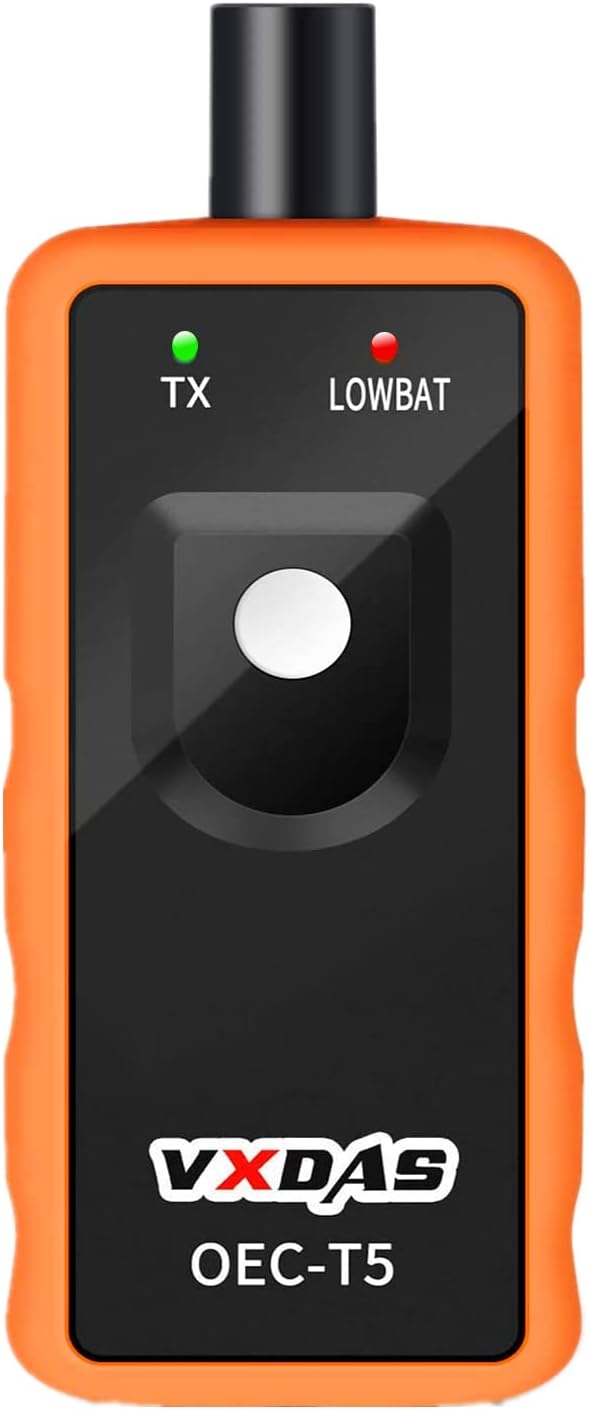
This TPMS relearn tool is designed for many GM vehicles with 315/433 MHz original sensors, helping you reset tire pressure monitoring systems quickly after sensor replacement or tire changes. It offers a simple one-button activation process that can save time and reduce trips to the dealer or tire shop. Built for easy handheld use, it supports safe, accurate TPMS relearn procedures for compatible Chevy, Buick, GMC, Opel, and Cadillac models.

The XTOOL TP150 is a universal TPMS service tool designed to activate, relearn, program, diagnose, and reset tire pressure sensors with ease. It supports dual-frequency sensors and multiple relearn modes, helping DIY users and professionals quickly clear DTCs, reset warning lights, and verify sensor health across a wide range of vehicles. Built with physical buttons and lifetime updates, it is a practical solution for efficient TPMS maintenance in the garage or on the road.

This GM TPMS relearn tool helps reset tire sensors, clear warning lights, and match tire positions after rotation quickly at home. Designed for Chevrolet, GMC, Cadillac, and Buick vehicles, it offers one-button operation, fast activation, and broad compatibility with many GM models. It is best suited for OE/OEM sensors and includes paper instructions plus video guidance for easier DIY use.
Low-Pressure Signs
Low pressure is more likely when the light stays solid, a tire looks soft, the vehicle pulls, or a gauge confirms a low reading. Cold weather can also reduce cold tire pressure enough to trigger the warning.
Inflate the tire to the placard pressure and measure it again the next day while cold. A repeated drop points to a leak that needs repair.
Faulty-Sensor Clues
A sensor or communication fault is more likely when all required tires are correctly inflated and the light flashes again at an ordinary startup. Do not condemn a sensor solely because pressures show “–” during a registration procedure that is still running. Wheel-mounted sensor batteries are normally sealed inside the assembly. Standard repair practice replaces the complete sensor when its battery can no longer power the transmitter.
DENSO states that TPMS sensors measure tire pressure and temperature and send the information wirelessly to the vehicle. Its direct-fit replacement sensors may still require a shop to complete the vehicle’s relearning process and clear the warning.
How Do You Find the Failed RAV4 TPMS Sensor?
A dedicated TPMS tool can activate each wheel sensor near its valve stem. A Toyota-compatible diagnostic tool can then compare the detected transmitter IDs with the IDs stored in the TPMS control system.
What a TPMS Scan Tool Checks
- Whether each wheel sensor responds to activation
- The transmitter ID reported by each sensor
- The pressure reading transmitted by each sensor
- Temperature data when supported
- Battery condition when the sensor and tool support that status
- Sensor frequency and vehicle compatibility
- TPMS diagnostic trouble codes stored by the vehicle
If one wheel does not respond while the others do, confirm that the tool supports the sensor before condemning it. If all sensors respond but the warning remains, compare the detected IDs with the vehicle’s stored IDs and check for registration, receiver, wiring, or control-module faults.
Step-by-Step Diagnostic Process
- Confirm that the tires are set to the placard pressure.
- Confirm that no Set Pressure, Identify Wheel, or Change Wheel procedure is still active or incomplete.
- Activate and scan each wheel sensor at the valve area.
- Record every responding transmitter ID and pressure reading.
- Read the IDs and TPMS trouble codes stored in the vehicle.
- Compare the wheel-sensor IDs with the registered IDs.
- Inspect the valves, seals, grommets, nuts, and stems for leakage or corrosion.
- Replace any confirmed failed or incompatible sensor.
- Program, clone, or register the replacement according to its design and the model-year procedure.
- Complete any required initialization or verification drive.
- Restart the vehicle and confirm that the flashing malfunction sequence does not return.
Ask the shop to document the following results instead of accepting a vague “bad sensor” diagnosis:
- Which wheel did not respond
- Which sensor IDs responded successfully
- Which TPMS trouble codes were stored
- Whether the replacement was cloned or registered as a new ID
- Whether pressure data returned for every required sensor after the repair
Note: A basic engine-code reader may not communicate with the TPMS control system. The job may require a dedicated TPMS activation tool, an OBD transfer module, or Toyota-compatible diagnostic software.
Repair Options: OEM, Aftermarket, Service Kit, or Bypass?
Choose the repair after confirming whether the fault is in the transmitter electronics, valve hardware, stored IDs, or vehicle-side receiver circuit.
[Products Worth Considering]
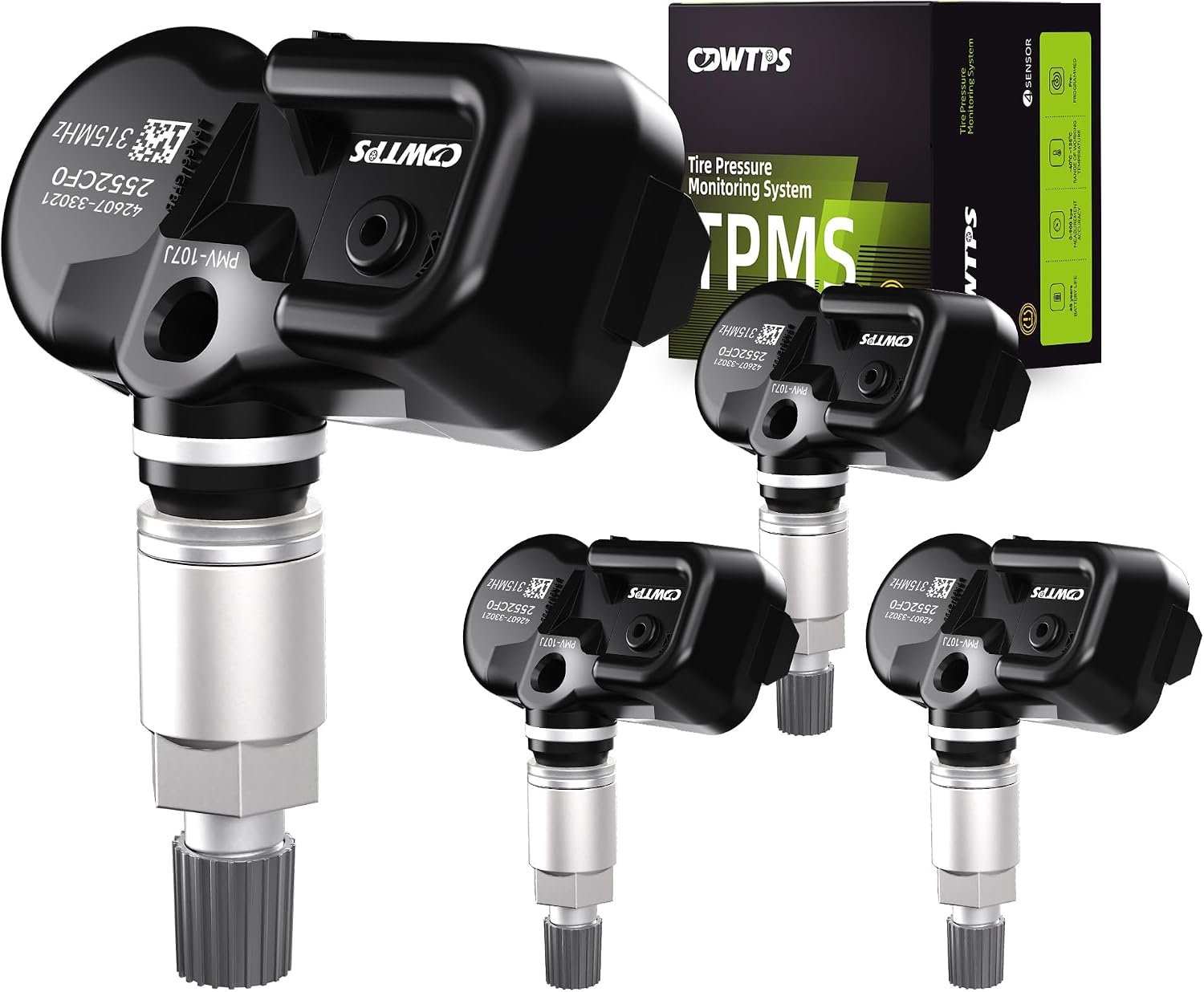
This set of four pre-programmed TPMS sensors is designed as a direct-fit replacement for compatible Toyota, Lexus, and Scion vehicles. It helps restore accurate tire pressure monitoring without sensor programming, and each unit is factory-tested for dependable performance. Built for long service life, these sensors offer a convenient solution for replacing worn or failed tire pressure monitors.

The VXDAS 2-in-1 TPMS relearn tool is designed to activate and reset tire pressure sensors on compatible GM and Ford vehicles with an easy model switch button for quick use. It helps complete TPMS relearning after tire rotation, sensor replacement, or warning light resets, making it a practical tool for drivers and technicians who want a fast, cost-effective solution.
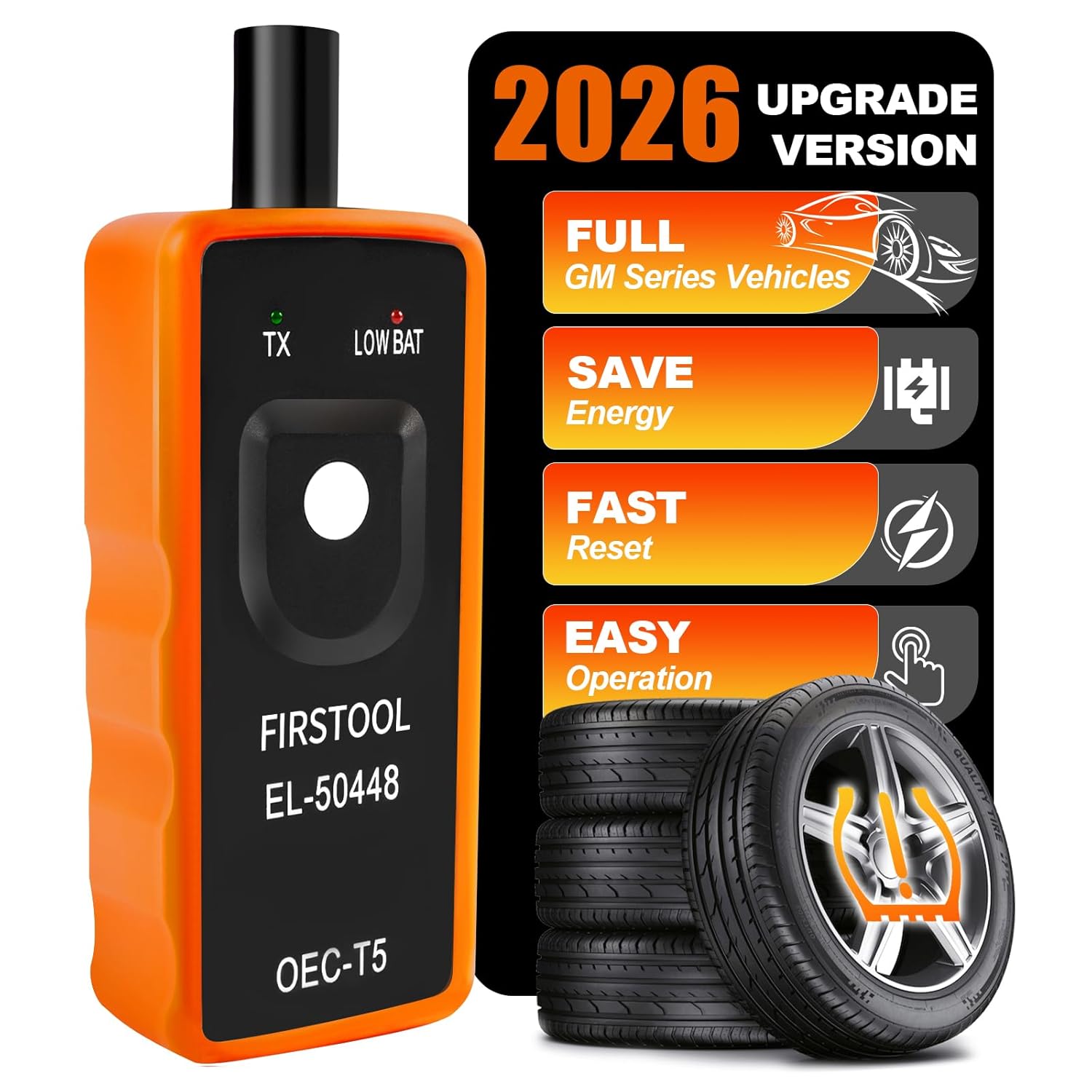
This EL-50448 TPMS relearn tool helps quickly activate and reset tire pressure sensors so your vehicle’s monitoring system stays accurate after tire rotations, sensor replacement, or seasonal tire changes. Designed for many GM-related vehicles and compatible with common 315 and 433 MHz TPMS systems, it offers simple one-button operation and reliable performance for clearing warning lights and relearning sensor positions.
What Changes the Cost of a RAV4 TPMS Repair?
The total depends on what the diagnosis proves, not just the price of a sensor. Ask for an itemized quote that separates:
- Diagnostic or TPMS scan time
- The number and type of sensors being replaced
- Valve service kits, seals, grommets, and retaining hardware
- Tire dismounting, remounting, leak testing, and balancing
- Sensor programming, ID registration, and post-repair initialization
- Additional receiver, antenna, wiring, or control-module diagnosis if all wheel sensors respond
A quote for one failed sensor should not automatically become a four-sensor replacement unless the remaining sensors are also tested and their age, response, or battery status supports that recommendation.
Option 1: OEM or Exact-Fit Replacement Sensors
An exact-fit sensor reduces uncertainty about the housing, valve design, transmission protocol, and vehicle application. DENSO describes its First Time Fit sensors as pre-programmed for the specified application, although the vehicle may still need a relearn or ID-registration procedure.
Choose an exact-fit sensor when:
- You want the closest match to the original system design
- The vehicle has rejected a universal or incorrectly programmed sensor
- You need the correct valve configuration for the wheel
- You want to reduce programming and compatibility uncertainty
Option 2: Quality Aftermarket Sensors
A compatible aftermarket sensor can work correctly when it supports the RAV4’s model year, market, transmission protocol, frequency, and valve configuration. A programmable sensor must be configured before the vehicle can use it.
Before buying an aftermarket sensor, verify:
- Exact model-year and market compatibility
- Supported sensor frequency and protocol
- Rubber snap-in or metal clamp-in valve design
- Whether the sensor will be cloned or assigned a new ID
- Which tool is required for programming and vehicle registration
- Whether the correct valve service hardware is included
Option 3: TPMS Valve Service Kit
The sensor electronics may still work while the valve hardware leaks. A TPMS service kit may include a valve core, cap, seal, grommet, washer, and retaining nut. Use components specified for the sensor and wheel rather than mixing incompatible metals or seals.
DENSO recommends servicing the sensor with the appropriate components whenever the tire is removed. Replacing disturbed seals and valve hardware can reduce slow leaks and corrosion-related failures.
Why a Resistor Mod or TPMS Bypass Is a Bad Idea
A bypass may hide the warning without restoring pressure monitoring. That can prevent the system from alerting you when a tire becomes significantly underinflated or when a transmitter stops communicating.
Warning: Do not disable TPMS to hide a flashing light. Repair the tires, sensors, registration, or vehicle-side fault so the warning system can operate as intended.
Sensor Replacement and Registration: Step-by-Step for a RAV4
Replacing an internal RAV4 TPMS sensor normally requires deflating the tire and breaking the bead away from the valve area. Most owners should leave that physical work to a tire shop with the correct mounting equipment.
[Products Worth Considering]

This TPMS sensor training tool is designed for Ford, Lincoln, and Mercury vehicles with compatible tire pressure sensors, helping activate sensors after tire rotations or sensor replacement. It supports relearning and warning light reset workflows with a simple one-button operation, making tire pressure maintenance easier and faster. Built for reliable use and broad vehicle compatibility, it is a practical accessory for TPMS service and sensor activation.

This CARORAV TPMS sensor set provides reliable tire pressure monitoring for a wide range of Toyota and Lexus vehicles with 315MHz compatibility. It is pre-programmed for easier setup, but still requires relearning or reset procedures after installation. Designed for accurate real-time pressure tracking, these sensors help support safer driving and long-lasting performance across many model years.

The VXDAS TPA01 is a 2-in-1 TPMS relearn tool and digital tire pressure gauge designed for GM vehicles and other compatible cars. It helps quickly reset tire pressure sensors, check tire pressure accurately, and maintain proper inflation for safer driving. With simple operation, multiple pressure units, and automatic shutoff, it is a practical tool for DIY tire maintenance and sensor activation.
Before Replacement
- Scan all sensors and confirm which transmitter failed.
- Check the age and response strength of the remaining sensors.
- Confirm the replacement sensor’s application, protocol, frequency, and valve type.
- Record the new transmitter ID before the sensor is hidden inside the mounted tire when the procedure requires manual ID entry.
- Confirm whether programming, vehicle registration, initialization, and leak testing are included in the service.
Physical Replacement
- Remove the wheel from the vehicle.
- Deflate the tire and move the bead away from the valve area.
- Remove the old valve and sensor assembly without damaging the wheel.
- Install the new sensor with the correct service components and specified torque procedure.
- Reseat and inflate the tire.
- Check the bead and valve assembly for leaks.
- Reinstall the wheel and tighten the lug nuts to the vehicle specification.
Relearn, Initialization, or Registration
The RAV4 must recognize the replacement transmitter. Depending on the model year and sensor design, the repair may require sensor programming, ID registration through the multi-information display or diagnostic connector, pressure initialization, and a learning drive.
- Program or clone the replacement sensor when required.
- Register the transmitter ID through the supported display-menu or diagnostic-tool procedure when a new ID is used.
- Set all required tires to the correct cold pressure.
- Initialize the pressure-warning system only when the owner’s manual calls for it.
- Complete the model-specific waiting or driving procedure.
- Read the pressure data and trouble codes again if the warning returns.
A TPMS pressure reset is not the same as sensor registration. Set Pressure establishes the pressure reference. Identify Wheel, Change Wheel, or a diagnostic tool handles transmitter IDs, depending on the vehicle.
What to Do After Tire Rotation, New Tires, or Winter Wheels
If the flashing light began immediately after tire or wheel work, focus on disturbed valve hardware, transmitter damage, wheel-set compatibility, and stored sensor IDs.
After a Tire Rotation
A normal rotation does not create new transmitter IDs. Some RAV4 systems may still require pressure initialization, position learning, or a model-specific drive procedure. If the light starts flashing after the rotation, inspect for valve damage and scan each transmitter rather than assuming the rotation itself erased the sensors.
After New Tires
Ask whether the shop reused, serviced, or replaced the TPMS sensors. A sensor can be damaged if tire equipment contacts it, while reused valve seals or hardware may begin leaking after they are disturbed.
After Installing Winter or Aftermarket Wheels
A second wheel set needs compatible sensors if you want normal TPMS operation. Those sensors must be programmed or registered according to the vehicle and sensor procedure. Some newer RAV4s can store two wheel sets and use Change Wheel to switch between them; other configurations require a tool-based ID transfer. Wheels without compatible transmitters can trigger the malfunction warning.
Preventive Maintenance to Avoid Future TPMS Problems
Monthly pressure checks and valve-hardware inspection reveal slow leaks, corrosion, and tire damage before they become larger TPMS or tire problems.
| When | Maintenance Step | Why It Helps |
|---|---|---|
| Monthly | Check all road-tire pressures cold | Finds slow leaks before pressure becomes severely low |
| Before long trips | Check the road tires and spare | Reduces the risk of discovering an unusable tire on the road |
| At tire rotation | Inspect valve stems and sensor hardware | Finds cracks, looseness, corrosion, and leakage early |
| During tire replacement | Use the correct TPMS service components | Restores seals and hardware disturbed during tire removal |
| When one old sensor fails | Scan the remaining sensors before approving the repair | Helps decide whether replacing only one sensor or several aging sensors is more practical |
Sensor batteries do not last forever. DENSO advertises a battery life of more than six years for its own replacement sensors, but that is not a universal replacement interval for every Toyota or aftermarket sensor. Temperature, transmission frequency, sensor design, use, and age can affect service life.
Frequently Asked Questions
How do you fix a blinking TPMS light on a Toyota RAV4?
Measure all required tires cold and inflate them to the driver’s door placard PSI. If you did not just start Identify Wheel or Change Wheel and the light still flashes for about one minute before staying on, scan every wheel sensor and compare the responding transmitter IDs with the IDs stored in the vehicle. Replace or register the failed, missing, incompatible, or unknown sensor, then complete the model-year initialization or verification procedure.
Can I fix a TPMS error myself?
You can measure the tires, correct their pressure, inspect for visible damage, and follow the exact initialization procedure in the owner’s manual. Sensor activation, tire removal, transmitter programming, ID registration, and TPMS trouble-code diagnosis normally require specialized tools or a qualified tire shop.
Is it safe to drive with the TPMS light blinking?
Check the tires before continuing. Do not drive on a flat, damaged, noisy, or visibly underinflated tire. If every tire is correctly inflated, no damage is visible, and the RAV4 handles normally, drive cautiously to a tire shop or Toyota service facility. The system may not warn you correctly while the malfunction is active.
Why did my RAV4 TPMS light start flashing after new tires?
A sensor may have been damaged during tire installation, the valve hardware may be leaking, the wheel may contain an incompatible sensor, or a replacement transmitter may not have been programmed and registered. Ask the shop to activate all sensors, record their IDs, and compare them with the IDs stored in the RAV4.
Will disconnecting the battery reset the TPMS light?
Disconnecting the vehicle battery is not a TPMS repair. It will not inflate a low tire, stop a valve leak, revive a dead transmitter battery, make an incompatible sensor communicate, or register a missing transmitter ID. Repair the cause and use the correct initialization or registration procedure.
Does the RAV4 TPMS reset button register a new sensor?
A physical reset button normally establishes the pressure reference for sensors the vehicle already recognizes. It does not write a new transmitter ID. Some newer RAV4s provide a separate Identify Wheel or Change Wheel menu procedure for ID learning, while other model years require a TPMS tool or Toyota-compatible diagnostic software.
Can you replace only the battery inside a RAV4 TPMS sensor?
Factory-style wheel sensors normally use a sealed battery. Standard service replaces the complete sensor assembly when the battery fails. Opening, cutting, and resealing a sensor is not the normal automotive repair procedure and may compromise durability or sealing.
Can the spare tire trigger the RAV4 TPMS light?
It depends on the model year, equipment, and market. Some systems include a registered spare transmitter, while others monitor only the road wheels. Check the exact owner’s manual or scan the registered IDs. Maintain the spare at its specified pressure even when it is not monitored.
Why does the RAV4 TPMS light flash during Identify Wheel or Change Wheel?
On some newer RAV4s, the light can flash for about one minute, remain on, and show “–” for tire pressures while sensor-ID registration is running. Follow the exact owner’s-manual drive procedure. Treat it as a fault if registration does not complete, the display reports an error, or the flash-then-solid pattern returns during later ordinary startups.
Conclusion
A flashing RAV4 TPMS light calls for diagnosis in a specific order. Inspect the tires, measure them cold, and correct the pressure first. Then check whether Set Pressure, Identify Wheel, or Change Wheel is active. If no learning procedure is running and the light still flashes for roughly one minute before staying on, scan every wheel transmitter and compare its ID with the vehicle’s stored data.
Do not treat pressure initialization as sensor registration. Repair leaks, replace failed hardware, register replacement transmitters with the supported display-menu or diagnostic-tool procedure, and complete the exact model-year verification drive. Before visiting a shop, write down the tire pressures, the startup light pattern, display messages, and any recent tire or wheel work. Those details can shorten the diagnosis and reduce unnecessary parts replacement.
Sources
- Toyota 2025 RAV4 Owner’s Manual: Warning Lights — warning-light behavior and malfunction guidance.
- Toyota 2025 RAV4 Owner’s Manual: Tires — tire-pressure checks and TPMS information.
- Toyota: How to Check Tire Pressure — cold-pressure timing, door-placard guidance, monthly checks, and spare-tire inspection.
- Toyota Support: How the Tire Pressure Monitor System Works — Toyota initialization and warning guidance.
- 49 CFR § 571.138: Tire Pressure Monitoring Systems — malfunction-telltale sequence, pressure-warning requirements, and owner-information requirements.
- NHTSA Tire-Related Surveys: Results and Implications — direct-TPMS effectiveness and severe-underinflation findings.
- DENSO TPMS Sensors — sensor function, service components, direct-fit information, battery-life claim, and relearning guidance.
- ATEQ TPMS Diagnostic Information: Toyota RAV4 (2006–2019) — sensor activation, OBD transfer, reset-switch limitations, relearn, and diagnostic-tool guidance.

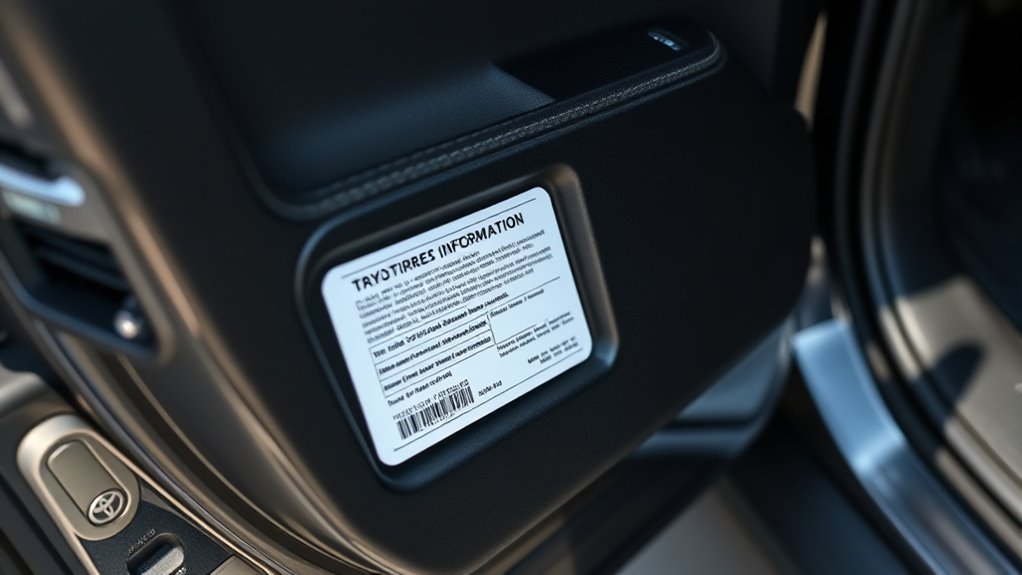


[…] TPMS light signals low tire pressure or a monitoring-system fault. Inspect all four tires and use an accurate gauge. Match the pressure […]