
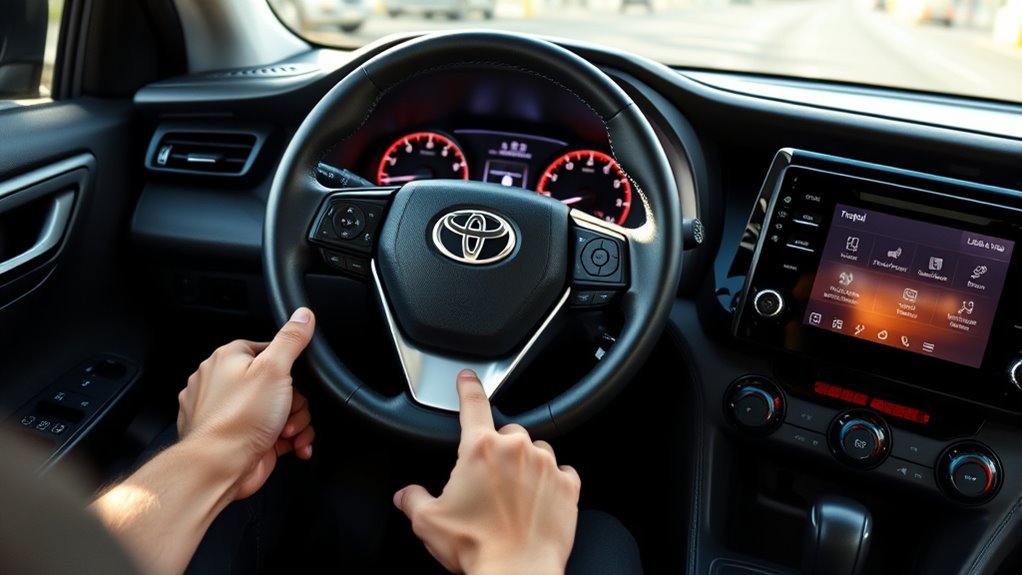
Quick Answer: How to Reset the RAV4 Tire Pressure Light
Last updated: July 31, 2026. The model-year procedures, drive cycle, and warning-light behavior were checked against Toyota owner-manual information, NHTSA guidance, and Federal Motor Vehicle Safety Standard No. 138.
To turn off a steady RAV4 tire pressure light, first check every tire when cold and adjust each one to the PSI on the driver-side Tire and Loading Information Label. Do not press a reset button just to hide the warning. On many RAV4 models, the light turns off after the pressure is corrected and the vehicle has had time to receive updated sensor readings.
Use the TPMS initialization procedure only when your owner’s manual calls for it, such as after tire rotation, tire or wheel work, a pressure-baseline change, or sensor-ID registration. The procedure differs by generation: 2013-2018 models use an under-dash reset switch, while 2019-2025 models use the TPWS menu in the multi-information display.
If the light flashes for 60 to 90 seconds and then stays on, the system is reporting a possible TPMS malfunction, not just low tire pressure. Check the tires first, then have the sensors and system diagnosed if the pattern returns.
| What the Light Does | Likely Meaning | First Action | Use Initialization? |
|---|---|---|---|
| Stays on steadily | One or more tires may be low | Check all tires cold and set the placard PSI | Usually not just to clear the light |
| Flashes for about one minute, then stays on | Possible TPMS malfunction | Check pressure, then scan or inspect the system | A reset will not repair a fault |
| Appears after rotation or tire, wheel, or sensor work | Initialization or sensor registration may be incomplete | Follow the exact owner’s-manual procedure | Yes, when the manual requires it |
Key Takeaways
- Correct the tire pressure before attempting any initialization.
- Use the driver-side placard, not the maximum pressure printed on the tire sidewall.
- The 2013-2018 switch stores a pressure baseline; it is not a repair for low pressure or a failed sensor.
- The 2019-2025 TPWS menu may require a 20-minute parked period and a 10- to 30-minute drive at about 25 mph or more, depending on the display and model.
- A flash-then-solid warning points to a possible TPMS malfunction.
Estimated hands-on time: About 10 minutes to check and adjust the tires. On 2019-2025 models, Toyota’s initialization process can also require driving at approximately 25 mph (40 km/h) or more for about 10 to 30 minutes.
What’s in This Article
- Quick Answer: How to Reset the RAV4 Tire Pressure Light
- Reset vs. Initialize vs. Register TPMS Sensors
- Why Correct Tire Pressure Matters Before Resetting
- Before You Begin: Tools, Placard PSI, and Spare Tire
- Initialize the TPMS on 2013-2018 and 2019-2025 RAV4 Models
- Troubleshooting: Light Won’t Turn Off or Initialization Fails
- When to Get Professional Help
- Frequently Asked Questions
- Conclusion
- References
Editorial note: This guide is based on Toyota owner-manual procedures and U.S. tire-safety requirements. It does not claim hands-on testing across every RAV4 trim, display, powertrain, or sales market. Use the owner’s manual for your exact vehicle if the menu wording differs.
[Products Worth Considering]

2024 Updated GL-50448:Equipped with a round antenna and Switch button,let Open Signal Faster and Stronger than other TPMS Relearn Tool.also More sensitive and Suitable for your fingers operation

【CUSTOMIZED for FORD】This TPMS Sensor Training Tool is customized for all Ford Lincoln Mercury vehicles that has a Tire Pressure Sensor. Train the TPMS sensors and activate Tire Pressure Programming on new vehicles or after a tire rotation(Tip: You can refer to the second vehicle compatibility diagram and the A+ content to check if your vehicle is compatible with this reset tool.)
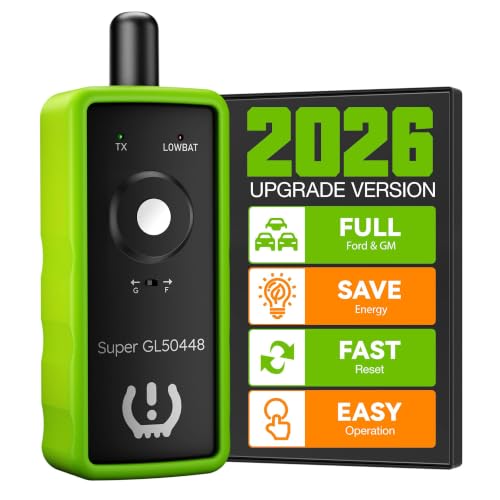
INNOVATIVE 2-IN-1 DESIGN: VXDAS TPMS relearn tool supports for GM and Ford series vehicles, (Buick, Cadillac, Chevrolet, GMC, Lincoln, Mazda, F150, F250, Focus, Fusion, and more). The added "G" and "F" model switch button on top makes it more convenient to use
Reset vs. Initialize vs. Register TPMS Sensors
Drivers often use the word “reset” for three different TPMS jobs. Knowing which job your RAV4 needs can prevent repeated resets and missed tire problems.
- Correct pressure: Inflate or deflate the tires to the cold PSI on the driver-side placard. This is the first response to a steady warning light.
- Initialize the system: Store the current correct pressures as the benchmark and, on newer models, let the vehicle determine tire positions.
- Register sensor IDs: Teach the vehicle the unique IDs of newly installed or alternate-wheel-set sensors. Initialization alone may not register an unrecognized sensor.
If new wheels or sensors were installed and the light flashes, ask whether the sensor IDs were registered. Repeating “Set Pressure” will not fix an incompatible, damaged, missing, or unregistered sensor.
Why Correct Tire Pressure Matters Before Resetting
You should correct tire pressure before you initialize the Tire Pressure Monitoring System (TPMS). The system uses the current pressure as a benchmark. Initializing it with an underinflated tire can make the warning threshold inaccurate.
The U.S. Department of Energy says properly inflated tires can improve gas mileage by 0.6% on average and by as much as 3% in some cases. It also says fuel economy can fall by about 0.2% for every 1 PSI drop in the average pressure of all tires.
NHTSA says proper inflation can extend average tire life by about 4,700 miles. Correct pressure also supports the braking, steering, handling, and wear characteristics intended for the vehicle.
| Parameter | What Correct Pressure Helps |
|---|---|
| Fuel economy | Reduces rolling losses caused by underinflation |
| Tire life | Helps limit heat buildup and uneven wear |
| Braking | Supports the intended tire contact patch |
| Handling | Supports predictable steering and cornering |
| TPMS accuracy | Gives initialization a correct pressure benchmark |
Use this order: inspect the tire, measure it cold, correct the pressure, confirm that it holds air, and initialize only when the owner’s manual calls for it.
Before You Begin: Tools, Placard PSI, and Spare Tire
Use a reliable tire pressure gauge before you touch the reset switch or TPWS menu. Toyota places the recommended cold tire pressure on the Tire and Loading Information Label in the driver-side door area.
Check the tires when they are cold. Toyota and NHTSA describe a cold reading as one taken after the vehicle has been parked for at least three hours. Toyota also says a reading is considered cold if the vehicle has not been driven more than 1 mile (1.5 km).
- Inspect all four road tires for cuts, bulges, punctures, or visible damage.
- Measure every road tire with the same gauge.
- Check the spare manually. A compact spare may not have a TPMS sensor, so do not assume the dashboard monitors it.
- Inflate a low tire to the placard PSI.
- Bleed air slowly if a tire is overinflated, then measure it again.
- Reinstall each valve cap and check any tire that loses pressure again.
Do not use the maximum PSI molded into the tire sidewall as your target. That marking is not Toyota’s recommended cold pressure for the vehicle.
If you are using a compact spare after a puncture, see the RAV4 flat-tire guide. The TPMS light may stay on until the regular wheel and tire are repaired, reinstalled, and recognized.
[Products Worth Considering]
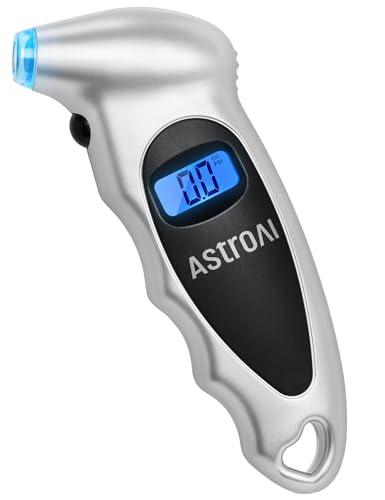
Accurate, Dependable Readings: Factory‑calibrated to ±1 PSI, so you can confidently match your vehicle’s recommended PSI (check the door jamb sticker). Ideal for monthly checks and road trips — consistent results every time, cold or warm.

PRO ACCURACY - mechanic recommended, performance tested, & calibrated accurate to professional ANSI 2A standards - with dual pressure sensors certified to ±0.50% FS (0.50 PSI), offering reliable readings up to 100 PSI w/ precise readout resolution of 0.10 PSI - so you can now maintain your tires with a shop-grade mechanic trusted tool
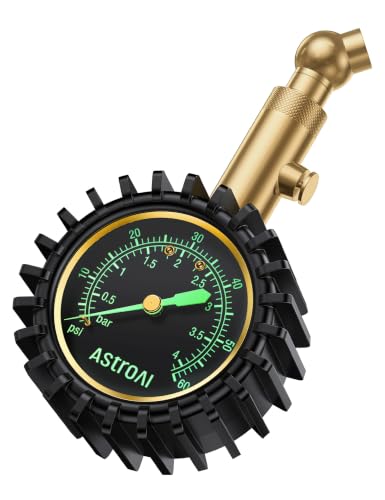
TRUSTED BY OVER 3 MILLION USERS: Based in Garden Grove, California, AstroAI serves customers across 15+ countries, providing professional-grade automotive tools for everyday drivers, mechanics, and DIYers.
Initialize the TPMS on 2013-2018 and 2019-2025 RAV4 Models
Park in a safe place and set all tire pressures before starting. Do not initialize the system to silence a warning from a leaking or damaged tire. Menu wording and required steps can vary by display, powertrain, trim, and sales market.
How do you initialize the TPMS on a 2013-2018 RAV4?
- Park the vehicle safely and turn the engine switch to LOCK or OFF.
- Adjust the tires to the specified cold pressures on the driver-side placard.
- Turn the engine switch to ON or IGNITION ON without starting the engine.
- Find the tire-pressure warning reset switch under the driver-side dash near the steering column.
- Press and hold the switch until the tire-pressure warning light blinks slowly three times.
- Keep the ignition on for a few minutes so the system can store the settings.
- Turn the ignition off, restart the vehicle, and confirm the warning status after the system receives updated readings.
Important: Toyota’s 2018 manual says pressing the reset switch does not turn off a normal low-pressure warning. Correcting the pressure is what allows that warning to clear.
How do you initialize the TPMS on a 2019-2025 RAV4?
- Park safely, stop the engine or hybrid system, and wait 20 minutes or more when your owner’s manual specifies this parked period.
- Set every tire to the specified cold pressure on the driver-side placard.
- Start the engine or hybrid system while the vehicle remains parked.
- Use the steering-wheel meter controls to open the settings screen.
- Select Vehicle Settings, then press and hold OK if the display requires a long press.
- Select TPWS, then choose Set Pressure or the equivalent pressure-setting option shown by your vehicle.
- Press and hold OK until the display confirms the setting and the tire-pressure warning light blinks three times.
- Drive straight, with occasional turns, at approximately 25 mph (40 km/h) or more for about 10 to 30 minutes if your model displays individual tire pressures.
- Confirm that the tire positions and pressures return to the display and that the warning does not return.
If initialization has not completed after one hour of driving, Toyota instructs owners of applicable models to park safely for about 20 minutes and then drive again. Reversing during initialization can reset the progress on some models.
2026 model note: The 2026 RAV4 is an all-new generation. Use the 2026 owner’s manual rather than assuming the 2019-2025 menu sequence is unchanged.
Troubleshooting: Light Won’t Turn Off or Initialization Fails
Warning: Do not keep driving on a tire that repeatedly loses air, has a bulge or sidewall damage, or looks unsafe.
If the TPMS light stays on, do not repeat the initialization blindly. Work through the warning pattern and tire condition first.
| Symptom | What to Check | Next Step |
|---|---|---|
| Steady light after inflation | All road tires, the accuracy of the gauge, cold-pressure reading, and a possible slow leak | Correct pressure and allow the vehicle time to update |
| Light flashes, then stays on | Failed or weak sensor, unregistered ID, incompatible wheel sensor, damaged valve stem, or receiver fault | Use a TPMS scan tool or get professional diagnosis |
| Pressure display shows “–” | Initialization or tire-position detection may still be active | Complete the specified drive cycle |
| Light returned after tire or wheel work | Sensor IDs, sensor compatibility, and whether initialization followed registration | Register IDs, then initialize in the correct order |
| One tire loses pressure again | Tread puncture, bead leak, valve-core or valve-stem leak, rim damage, or sidewall damage | Repair or replace the tire before resetting anything |
- Measure every tire again with a reliable gauge after the tires have cooled.
- Inspect the tread, sidewalls, valve stems, and wheel rims.
- Check whether the warning began after new tires, wheels, sensors, sealant, or a rotation.
- Use a TPMS-capable scan tool to confirm that each sensor transmits and that the IDs are recognized.
- Do not confuse the TPMS warning with the scheduled-service reminder; the RAV4 maintenance light uses a different reset procedure.
Federal TPMS rules require a combined malfunction telltale to flash for at least 60 seconds but no longer than 90 seconds and then remain illuminated while the malfunction exists. That pattern means the system may not detect low pressure as intended.
[Products Worth Considering]
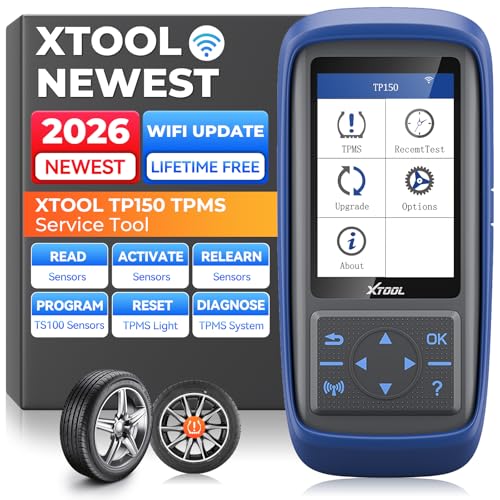
Why XTOOL TP150 TPMS Relearn Tool Stands Out: Perfect for DIYers and professional technicians, the XTOOL TP150 TPMS Reset Tool combines TPMS diagnostics, sensor activation, relearn, reset and sensor programming with XTOOL TS100 Sensors in one portable tool, making common TPMS service easier in one device. Its durable physical button interface is easy to operate with greasy gloves, making it ideal for garages, workshops, or roadside use. Check tire pressure, reset TPMS warning lights, and simplify sensor service with simple, easy-to-use controls. Supports the newest car models with frequent lifetime software updates and 13+ languages. 𝐍𝐎𝐓𝐄: TPMS Programming for XTOOL Sensors Only.

WIDE COMPATIBLE WITH 100+ GM VEHICLES: Specifically designed to work with most GM vehicles 2004-2025(Chevy /Cadillac /GMC/ Buick etc.)equipped with 315/433 MHz , compatible more car models more years than others. BUT NOT support universal TPMS tire sensors.It is not suitable for heavy trucks with more than 4 tires or vehicles with an external TPMS system.
When to Get Professional Help
Visit a qualified tire shop or Toyota service center if the light flashes and stays on, the pressures are correct but the warning returns, a tire repeatedly loses air, or initialization will not complete after the owner’s-manual drive cycle.
Professional help is also appropriate after wheel or sensor replacement, use of liquid tire sealant, visible wheel or sidewall damage, or installation of sensors that the vehicle does not recognize.
Many direct TPMS sensors contain sealed batteries with an average service life of about 5 to 10 years. When the battery fails, the sensor is normally replaced as a complete unit and its ID may need to be registered.
Frequently Asked Questions
Why won’t the RAV4 tire pressure light turn off after filling the tires?
One tire may still be below the placard pressure, the reading may have been taken while the tires were warm, or a slow leak may be present. Check every road tire with the same gauge after the vehicle has been parked for at least three hours. If the light flashes before staying on, have the TPMS checked for a sensor or registration fault.
Where is the TPMS reset button on a RAV4?
On 2013-2018 RAV4 models equipped with a physical switch, it is under the driver-side dash near the steering column. On 2019-2025 models, initialization is normally performed through the TPWS menu in the multi-information display rather than with a separate button.
How long do you drive after initializing RAV4 TPMS?
Applicable 2019-2025 models may require approximately 10 to 30 minutes of driving at about 25 mph (40 km/h) or more. If initialization does not complete after one hour, park safely for about 20 minutes and try the drive cycle again. Follow the manual for your exact model and display.
Do aftermarket tires affect TPMS operation or reset procedures?
Aftermarket tires can work with the factory TPMS when the tire size, load capacity, wheel design, and sensors are compatible. Problems usually come from missing or damaged sensors, unregistered IDs, incompatible wheels, or sensors that do not match the vehicle.
Will changing wheel size require TPMS recalibration?
Changing wheels or tire size can require sensor-ID registration and TPMS initialization. Confirm that the wheels accept compatible sensors, set the correct cold pressure for the approved tire setup, register new sensor IDs when required, and then initialize the system.
Can cold weather cause the light to come back on after resetting?
Yes. Tire pressure changes with temperature, so cold weather can reduce the measured PSI enough to trigger the warning. Check the tires cold and adjust them to the driver-side placard. Do not add extra pressure beyond the placard just to prevent a seasonal warning.
Does rotating tires require resetting the TPMS afterward?
Toyota instructs owners of applicable RAV4 models to initialize the tire pressure warning system after rotation so the system can update its benchmark and tire-position information. Check and correct all tire pressures before starting the procedure.
How long do RAV4 TPMS sensors last?
Direct TPMS sensor batteries commonly last about 5 to 10 years. Heat, driving patterns, sensor design, and transmission frequency can change the actual life. A TPMS scan tool can identify a sensor that is not transmitting or is reporting a fault.
Safety Disclaimer: This article is for informational purposes only and does not replace the owner’s manual for your exact Toyota RAV4 or advice from a qualified tire technician. If you see tire damage, a flashing TPMS light, or repeated pressure loss, stop driving when safe and get professional help.
Conclusion
The safest way to clear a RAV4 tire pressure warning starts with the tires, not the reset control. Measure every tire cold, use the driver-side placard PSI, and repair any leak or damage.
Use the under-dash initialization switch on applicable 2013-2018 models or the TPWS menu on 2019-2025 models only after the pressure is correct and when the owner’s manual calls for initialization. New or unrecognized sensors may also require ID registration.
If the light flashes for about one minute and then stays on, or the warning returns after the correct drive cycle, have the system scanned instead of repeating the reset.
References
- How does the Tire Pressure Monitoring System work in my Toyota?, Toyota Customer Service.
- 2018 Toyota RAV4 Quick Reference Guide, Toyota.
- 2019 Toyota RAV4 Tire Inflation Pressure, Toyota Owners.
- 2025 Toyota RAV4 Quick Reference Guide, Toyota.
- RAV4 Prime Tire Pressure Warning System and Initialization, Toyota Owners.
- 2026 Toyota RAV4, Toyota.
- Tire Safety Ratings and Awareness, TireWise, National Highway Traffic Safety Administration.
- Tips for Your Tank This Summer Driving Season, U.S. Department of Energy.
- 49 CFR 571.138, Tire Pressure Monitoring Systems, Electronic Code of Federal Regulations.
- Selling TPMS at the Counter: Not What But Why, Schrader TPMS Solutions.


[…] RAV4 all-wheel-drive system needs clean gear oil to control heat, friction, and wear. Old or low fluid […]
[…] you drive a Toyota RAV4 and its warning remains on after correcting tire pressure, see the RAV4 tire pressure light reset guide for model-year-specific […]
[…] driver-side door placard. Do not use the maximum pressure molded into the tire sidewall. See the RAV4 tire pressure guide for the correct check-before-reset […]
[…] detailed model-year reset instructions, use the separate RAV4 tire pressure light reset guide. If the warning flashes before staying on, diagnose the malfunction instead of repeatedly […]
[…] Note: A tire-pressure monitoring system warns about significant pressure loss, but it does not replace manual checks. Use a gauge when the tires are cold and compare the reading with the RAV4’s door placard, not the maximum pressure printed on the tire sidewall. If the warning light remains on after the pressures are corrected, review the RAV4 tire-pressure-light guide. […]