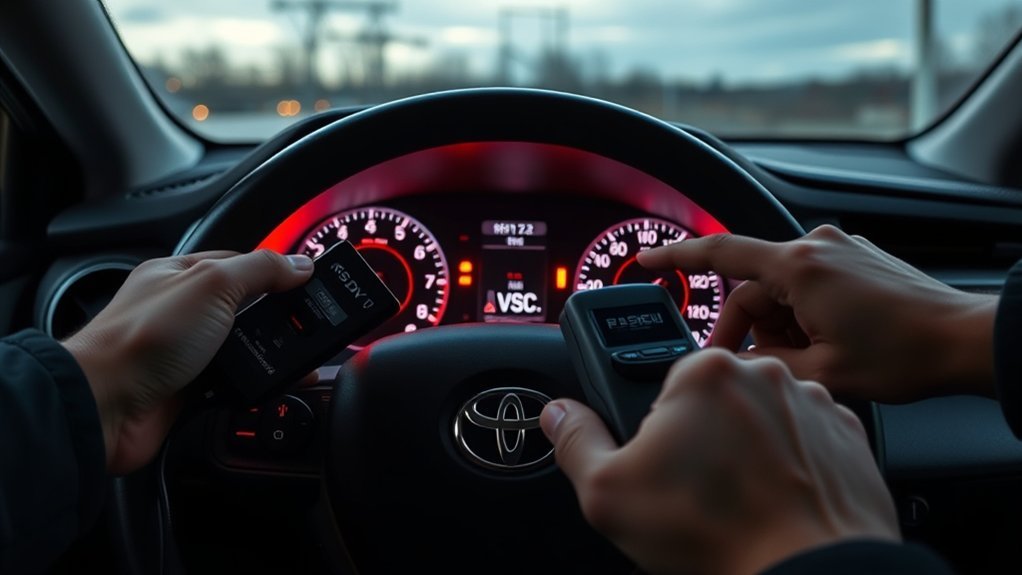
The RAV4 Pre-Collision System is Toyota’s forward-collision warning and automatic emergency braking feature. It uses a front camera and radar sensor to watch the road ahead, warn you when a frontal crash risk is high, add braking force if you press the pedal, and apply automatic braking in some situations if you do not react in time.
Quick Answer
The RAV4 Pre-Collision System works by combining camera and radar data to detect vehicles, pedestrians, bicyclists, and, on newer Toyota Safety Sense versions, some motorcyclists. It estimates crash risk from distance, speed, and object movement, then warns the driver, boosts braking, or applies automatic braking to help avoid or reduce a frontal collision.
Key Takeaways
- RAV4 PCS is a driver-assistance feature, not a self-driving or crash-proof system.
- It uses a front camera and millimeter-wave radar to judge distance, closing speed, and object type.
- The system can provide visual and audible warnings, increase brake assist, and apply automatic braking in certain high-risk situations.
- Weather, glare, dirty sensors, unusual object shapes, worn tires, and road conditions can reduce performance.
- PCS should usually stay on, but Toyota lists special situations where it may need to be disabled temporarily, such as towing, dynamometer testing, tire chains, or a sensor obstruction.
What the RAV4 Pre-Collision System Does and Who Needs It
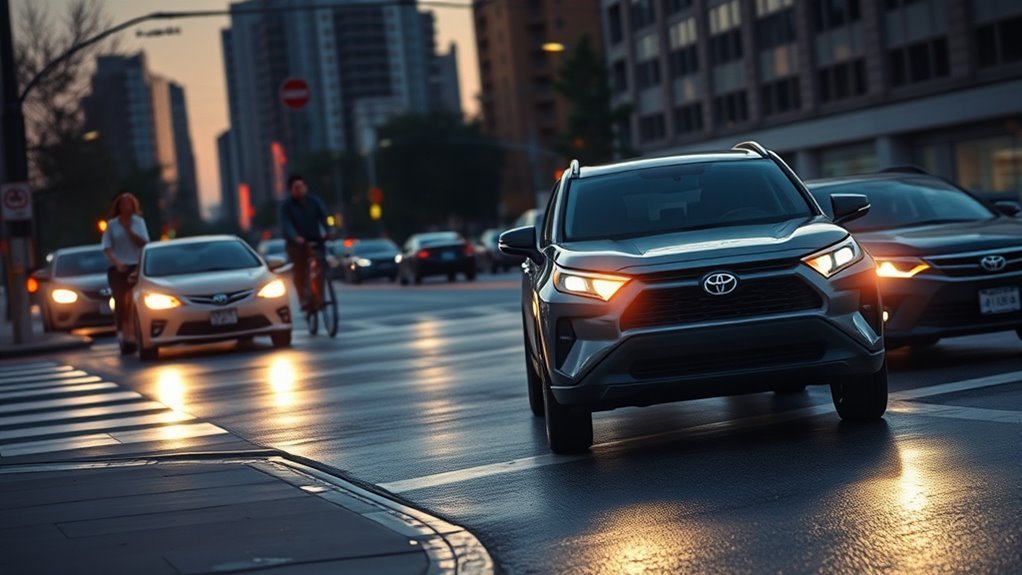
The RAV4 Pre-Collision System, often called PCS, is part of Toyota Safety Sense. Its job is to help reduce the chance or severity of some frontal collisions by watching for objects in front of the vehicle and prompting the driver to act.
When PCS decides a frontal collision risk is high, it can first show a warning on the multi-information display and sound a buzzer. If you press the brake pedal, the system can add braking force to help you slow faster. If the system decides the crash risk is extremely high and you have not reacted enough, it can apply the brakes automatically to help avoid the collision or reduce impact speed.
Warning: PCS does not make the RAV4 crash-proof. Toyota states that Toyota Safety Sense effectiveness depends on factors such as road, weather, lighting, vehicle condition, and the size, position, and movement of the detected object. Always stay ready to brake or steer.
This feature is useful for daily commuters, families, rideshare drivers, and anyone who spends time in traffic. It is especially valuable in stop-and-go driving, where rear-end risks can rise quickly. Still, it is designed to support your reaction, not replace safe following distance, speed control, and attention.
How the RAV4 Pre-Collision System Detects Hazards
The RAV4 PCS uses sensor fusion, meaning it combines information from more than one sensor instead of relying on a single input. On recent RAV4 models, the main PCS sensors are a front camera mounted near the windshield and a millimeter-wave radar sensor near the front grille or emblem area.
Sensor Fusion Overview
The camera helps identify shape, lane position, contrast, lights, pedestrians, cyclists, and other visual details. Radar helps measure distance and relative speed, even when visual detail is limited. Together, these sensors give the system a better estimate of whether an object is in your path and whether the RAV4 is closing in too fast.
| Input | What It Helps Measure | Why It Matters |
|---|---|---|
| Front camera | Shape, object type, lane position, visual movement | Helps classify vehicles, people, bicycles, and some other road users |
| Radar sensor | Distance and relative speed | Helps judge closing speed and time-to-collision |
| Vehicle data | Your speed, braking, steering, and vehicle motion | Helps decide whether a warning, brake assist, or automatic braking is needed |
Object Recognition Methods
PCS looks at object shape, size, motion, range, and closing speed. A vehicle ahead has a different profile than a walking pedestrian or a cyclist crossing the road. Newer Toyota Safety Sense versions may also support detection of additional road users, such as motorcyclists, depending on model year and market.
The system does not simply “see” an object and brake. It first estimates whether the object is likely to be in the RAV4’s path. Then it compares your speed, the object’s speed, and the distance between you. If the time-to-collision becomes too short, PCS escalates its response.
Environmental Limitations
PCS performance can drop when the camera or radar cannot read the scene clearly. Common causes include heavy rain, snow, fog, direct sun glare, darkness, mud, ice, a blocked windshield camera area, a covered front radar sensor, or a strong impact that changes sensor alignment.
Note: A “sensor blocked,” “PCS unavailable,” or similar warning usually means the system cannot confirm reliable operation. Clean the windshield area in front of the camera and the front radar area, then check the message again. If it stays on, schedule service.
How Collision Risk Is Calculated: Speed, Distance, and Object Analysis
The RAV4 Pre-Collision System calculates risk by comparing three main things: how fast your vehicle is moving, how far away the object is, and how the object is moving. This is often described as a time-to-collision estimate.
| Parameter | Measurement Source | Impact on Risk |
|---|---|---|
| Relative speed | Radar + vehicle data | Higher closing speed increases urgency |
| Distance | Radar range measurement | Shorter distance raises collision probability |
| Object profile | Camera classification | Changes confidence based on object type and movement |
| Driver input | Brake, accelerator, and steering sensors | Helps the system decide whether you are already reacting |
PCS is more likely to warn or intervene when the RAV4 is closing quickly on a detected object and the driver has not slowed enough. If the system senses that you are braking, it may add brake assist instead of immediately taking stronger action.
System Actions: Warnings, Brake Assist, and Automatic Braking
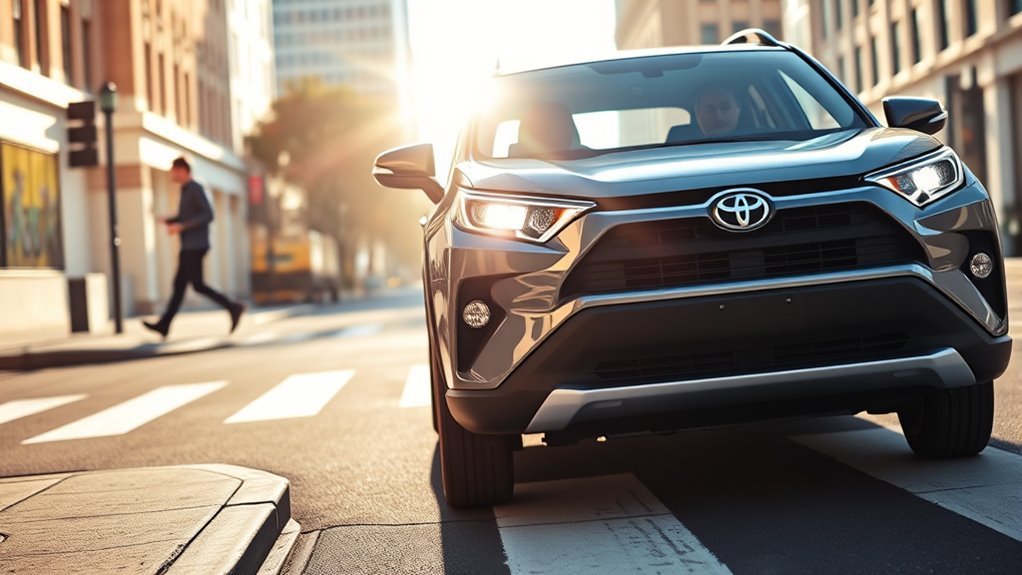
The RAV4 PCS response is layered. It starts with alerts, then supports braking, and only applies automatic braking when the system judges the risk to be high enough.
- Pre-collision warning: A buzzer sounds and a warning appears on the display to urge the driver to brake or steer away.
- Pre-collision brake assist: If you press the brake pedal and the system judges that more braking force is needed, it can increase brake pressure.
- Pre-collision braking: If the system judges that a collision is extremely likely, it can apply the brakes automatically to help avoid the crash or reduce impact speed.
- Emergency steering assist on equipped models: Some RAV4 model years and trims may add steering support if the system detects a high collision risk and there is space within the lane.
Automatic emergency braking can reduce real-world crash risk, but it works best as a backup layer. Your eyes, speed choice, and following distance still matter most.
RAV4 Pre-Collision: Pedestrian and Bicyclist Detection
Recent RAV4 models with Toyota Safety Sense can detect more than just vehicles. Depending on model year and Toyota Safety Sense version, PCS may help detect pedestrians, bicyclists, and in newer Toyota Safety Sense versions, some motorcyclists.
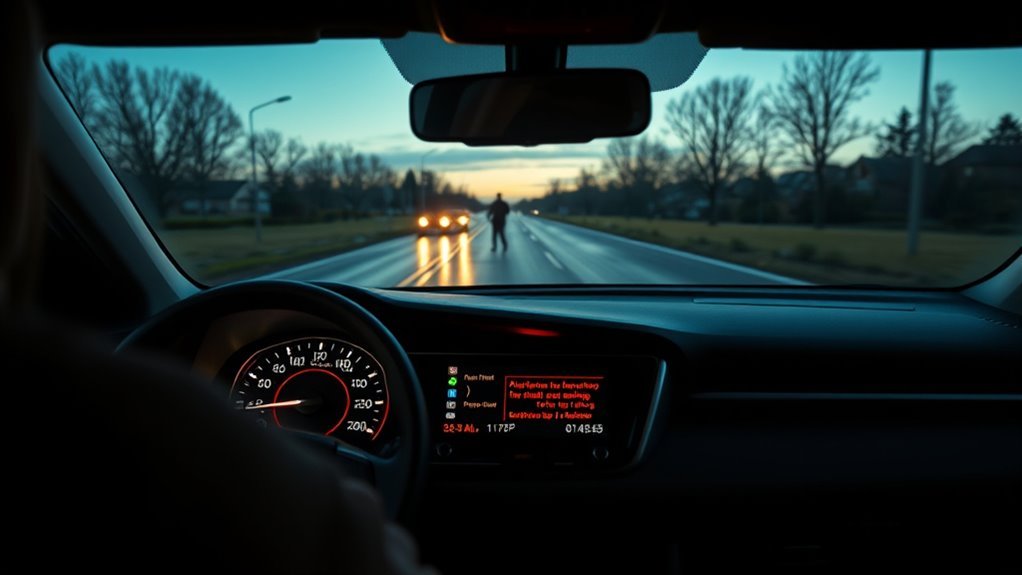
Pedestrian and cyclist detection is most helpful when the system has a clear view, good contrast, and enough time to identify the road user’s shape and motion. It may be less reliable when a person runs out from behind a parked vehicle, a cyclist appears suddenly from the side, the road is dark with poor lighting, or the person is partly hidden by another object.
That limitation is not unique to Toyota. The Insurance Institute for Highway Safety has found that pedestrian automatic emergency braking reduces pedestrian crashes in many conditions, but performance can be weaker in darkness and on higher-speed roads.
Limitations and Common Detection Failures to Watch For
PCS depends on what its sensors can detect and how much traction the tires have. Even if the system recognizes a hazard correctly, it may not be able to stop the RAV4 in time if speed is too high, the road is slick, the tires are worn, or the object moves suddenly.
- Dirty or blocked sensors: Mud, snow, ice, stickers, accessories, or windshield obstruction can reduce detection.
- Poor visibility: Heavy rain, fog, glare, low sun, darkness, and poor road lighting can affect the camera.
- Unusual object movement: A pedestrian darting from behind a vehicle or a cyclist crossing suddenly may be detected late.
- Road and vehicle angle: Steep hills, curves, uneven roads, or altered suspension can affect sensor aim.
- Reflective or confusing surfaces: Guardrails, metal plates, tunnel walls, and large trucks can sometimes create difficult readings.
- Vehicle condition: Worn tires, incorrect tire size, low tire pressure, brake issues, or a front-end impact can reduce system effectiveness.
Pro Tip: Treat every PCS warning as real until you confirm otherwise. Brake first, check your surroundings, and then decide whether it was a false alert. Waiting for automatic braking can cost valuable distance.
Settings and When to Disable the RAV4 Pre-Collision System
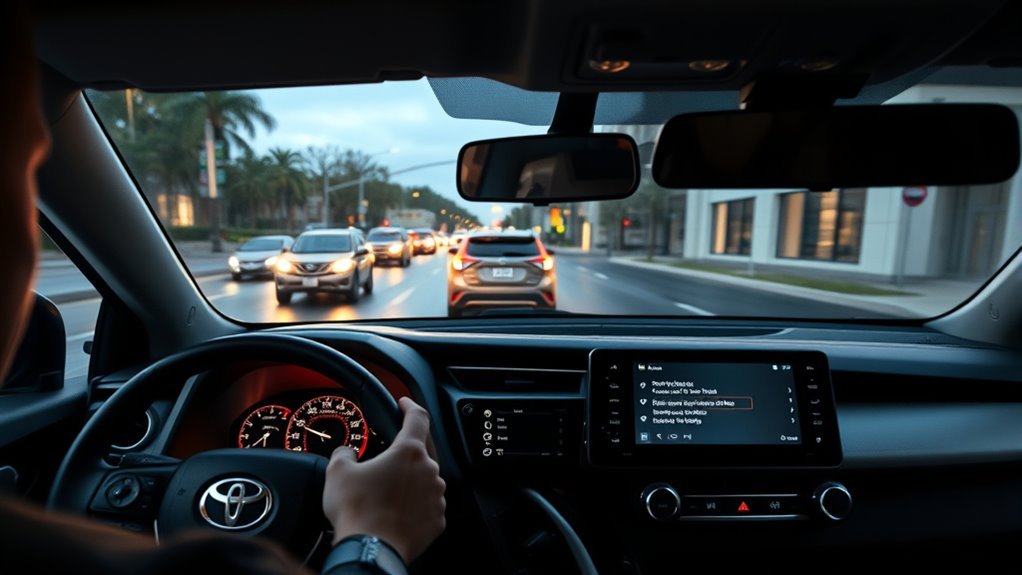
Most RAV4 drivers should leave PCS on. The system is designed to help in normal driving, and turning it off removes a safety layer. However, Toyota owner’s manuals list certain situations where PCS may need to be disabled because it may not operate properly or could react unexpectedly.
Examples include when the vehicle is being towed, when the vehicle is transporting on a truck, boat, or train, when the vehicle is on a lift with the wheels rotating, when it is being tested on a dynamometer, when tire chains are installed, when tires are badly worn or the wrong size, when a compact spare or emergency tire repair kit is being used, after a strong impact to the front bumper or grille, or when equipment blocks the radar sensor or front camera.
[Products Worth Considering]
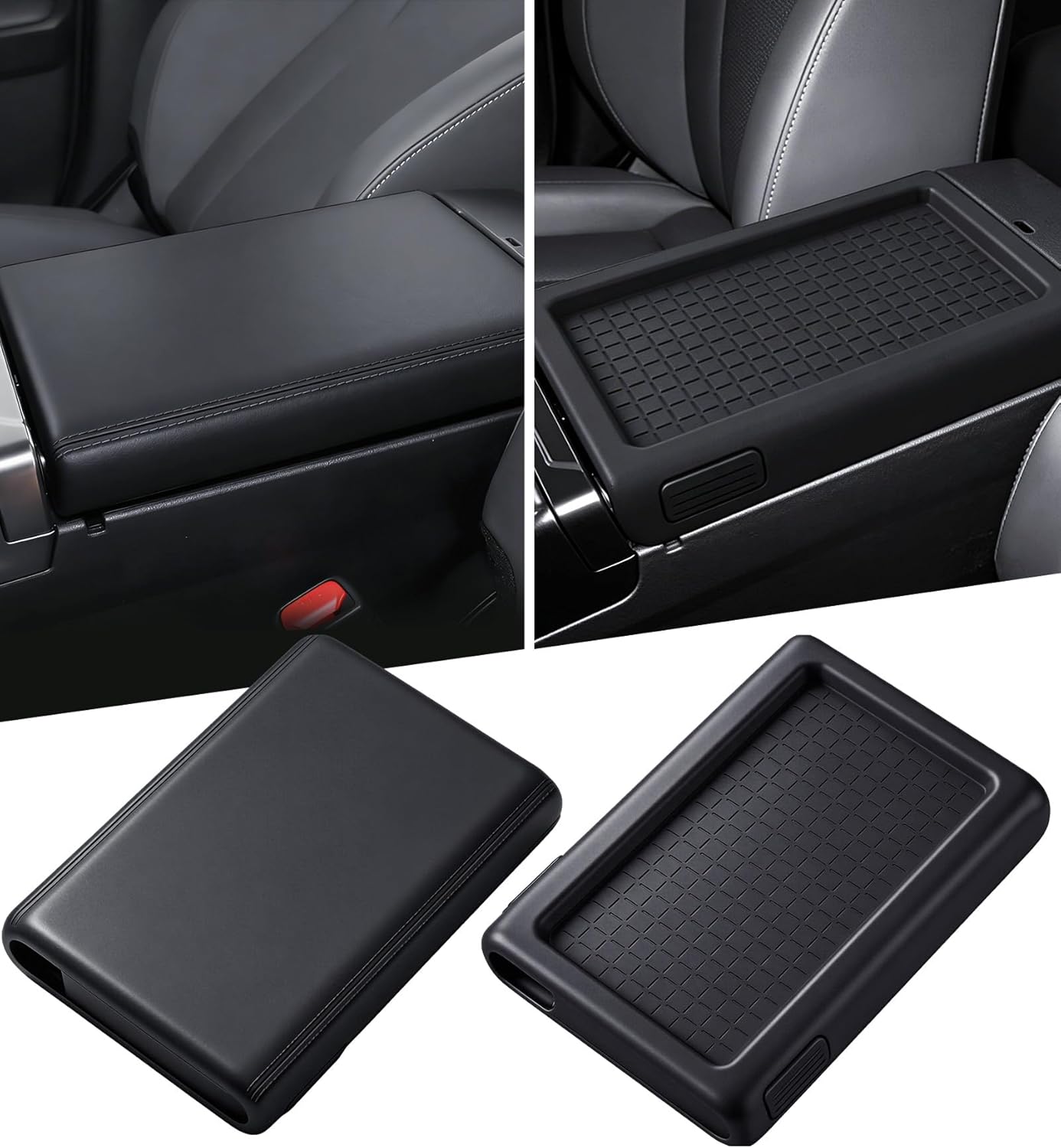
This center console cover is designed for a custom fit on the Toyota RAV4 2026, helping protect the armrest area from dirt, pet claws, and everyday wear. Made from soft silicone, it adds comfort for your arm and a clean, stylish look to the vehicle interior while being easy to install without tools.

This anti-glare matte tempered glass screen protector is designed for compatible 2026 Toyota RAV4 and RAV4 Hybrid models with a 12.9-inch touchscreen. It helps reduce glare, resists scratches and fingerprints, and maintains responsive touch performance for a clearer, cleaner driving experience.

This center console armrest cover is designed to fit the 2026 Toyota RAV4 for added comfort and a cleaner interior look. Made with breathable vegan leather and a thick cushioned feel, it helps reduce arm fatigue on long drives while protecting the console from pet paws, dirt, and sticky fingerprints. The band-secured design installs easily with no tools required and blends with the OEM-style interior.
How to Change PCS Settings
The exact menu depends on model year and display type. On many RAV4 models, PCS can be adjusted through the multi-information display or driver support settings. Newer Toyota Safety Sense 4.0 vehicles move more driver-assist settings to the audio multimedia screen.
- Park safely before changing driver-assistance settings.
- Open the vehicle settings, driver support, or Toyota Safety Sense menu.
- Select Pre-Collision System or PCS.
- Choose whether to turn the system on or off, or adjust warning timing if your model allows it.
- Confirm that the PCS warning light and display messages match the setting you selected.
On many Toyota models, PCS re-enables automatically at the next startup after being turned off. Warning timing settings may be retained, depending on model year. Always confirm with the owner’s manual for your exact RAV4.
Which RAV4 Trims Include the Pre-Collision System and TSS Integration
For recent U.S. RAV4 model years, the Pre-Collision System is part of Toyota Safety Sense, which is widely included across the RAV4 lineup. For example, 2024 and 2025 RAV4 models use Toyota Safety Sense 2.5, while Toyota’s 2026 Toyota Safety Sense 4.0 overview describes updated driver-assistance features, including Pre-Collision System with Pedestrian Detection.
Because Toyota Safety Sense versions, detection abilities, and menus can vary by model year, trim, market, and production date, the safest way to confirm your vehicle’s exact PCS features is to check the owner’s manual, Toyota’s manuals and warranties page, or your VIN-specific Toyota owner account.
| RAV4 Model Year | Typical Toyota Safety Sense Version | PCS Notes |
|---|---|---|
| 2024 RAV4 | Toyota Safety Sense 2.5 | Includes PCS as part of the driver-assist suite; exact functions depend on vehicle configuration. |
| 2025 RAV4 | Toyota Safety Sense 2.5 | PCS works with the front camera and radar sensor for frontal collision support. |
| 2026 RAV4 | Toyota Safety Sense 4.0 information published by Toyota | Toyota describes updated sensors, processing, software, and multimedia-screen settings for TSS 4.0. |
[Products Worth Considering]

This passenger storage organizer mat is designed to fit the 2026 Toyota RAV4 for a clean, factory-style look with no gaps. It helps protect the original console area from scratches and daily wear while giving you a handy place to store phones, sunglasses, wallets, coins, and cards. Made from durable silicone, it stays in place, reduces rattling, and is easy to remove and clean.
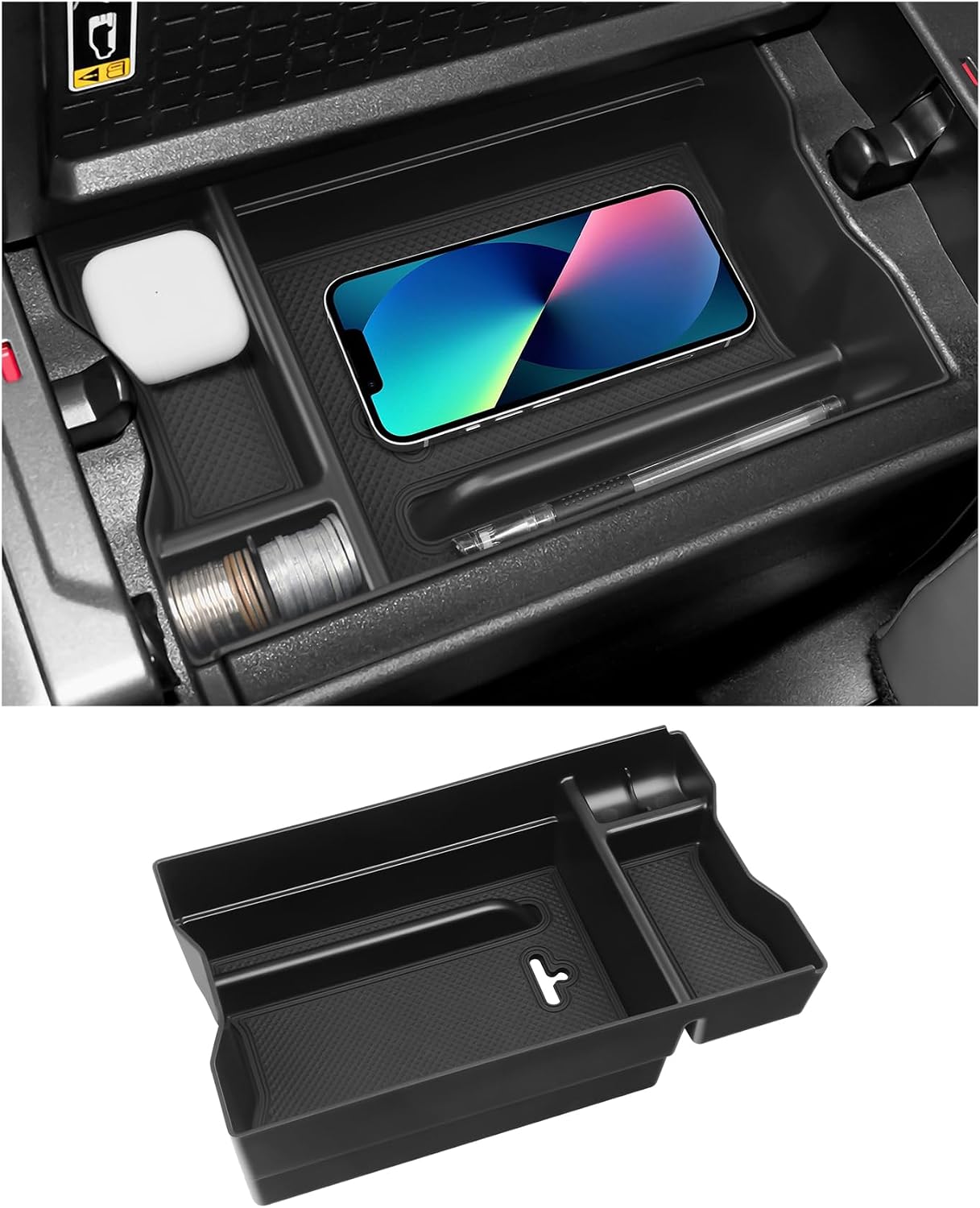
This center console organizer adds a convenient secondary storage layer to compatible Toyota RAV4 hybrid models, helping keep sunglasses, keys, coins, phones, and other small items neatly arranged. Built from durable ABS plastic with a matte finish, it fits directly into the armrest area for quick, tool-free installation and easy removal. Non-slip rubber mats help reduce sliding and noise while maximizing usable storage space inside the console.

This custom-fit cargo net is designed for the 2026 Toyota RAV4 to help keep your trunk organized and secure during everyday driving. It helps hold groceries, tools, and smaller items in place while reducing rolling and shifting, and the heavy-duty carabiners support reliable installation. The net also offers convenient storage and easy access for SUVs and other compatible vehicles.
Driver Tips: Getting the Most From the Pre-Collision System
You get the most from PCS when the sensors, tires, brakes, and windshield are in good condition. A clean sensor sees more clearly, and good tires give the braking system more grip when it needs to slow the vehicle quickly.
- Keep the windshield clean near the front camera area.
- Keep the front emblem/grille area clean so the radar sensor is not blocked.
- Do not mount accessories where they can block the camera or radar sensor.
- Check PCS messages after car washes, snowstorms, front-end repairs, or windshield replacement.
- Maintain tires and brakes because automatic braking can only work as well as the vehicle’s traction allows.
- Increase following distance in rain, snow, fog, darkness, glare, or heavy traffic.
- Use warning timing wisely if your RAV4 lets you adjust it. Earlier warnings can be helpful in city traffic or for drivers who prefer more reaction time.
What to Do If the RAV4 PCS Warning Light Comes On
A PCS warning light or message does not always mean a major failure. It can appear when the camera or radar is blocked, the system is temporarily unavailable, or a related system needs attention.
| What You See | Likely Cause | What to Do |
|---|---|---|
| PCS unavailable or sensor blocked | Dirt, snow, ice, fogging, glare, or obstruction | Clean the windshield camera area and front radar area, then restart after conditions improve. |
| PCS warning light stays on | System turned off or a malfunction may be present | Check the PCS setting. If it is on and the warning remains, schedule service. |
| PCS activates unexpectedly | Reflective object, steep driveway, close obstacle, sensor misread, or alignment issue | Drive cautiously. If it repeats in normal conditions, have the sensors inspected. |
[Products Worth Considering]

Add a bold custom touch to your front grille with this tri-color badge emblem designed to enhance the look of compatible Toyota trucks and SUVs. Made from durable, waterproof ABS material, it is built to handle outdoor conditions while staying vibrant and secure. Installation is quick and simple, making it an easy style upgrade for vehicles with grille inserts.

Keep your Toyota navigation system current with this SD card map update designed for select factory-installed GPS units. It provides updated coverage for the USA and Canada, including roads, points of interest, and key travel locations for smoother trip planning. Easy plug-and-play installation helps restore accurate guidance without complicated setup.

This front license plate bracket is a direct replacement for compatible Toyota RAV4 models, offering an easy way to restore a damaged or missing front plate holder. Built from durable ABS material with the same dimensions as the original, it installs without modification and helps maintain a clean factory look.
Frequently Asked Questions
How does the Toyota RAV4 Pre-Collision System work?
The RAV4 Pre-Collision System uses a front camera and radar sensor to detect certain objects ahead. If the system judges that a frontal collision risk is high, it warns the driver. If needed, it can increase brake assist or apply automatic braking to help avoid or reduce impact.
What triggers the RAV4 Pre-Collision System?
PCS is triggered when the system detects a likely frontal collision based on object type, distance, relative speed, vehicle speed, and driver input. It may react to vehicles, pedestrians, bicyclists, and, on newer Toyota Safety Sense versions, some motorcyclists.
Can Toyota Pre-Collision Assist stop the car before it crashes?
Yes, it can stop the RAV4 in some situations, but it is not guaranteed to prevent every crash. The outcome depends on speed, distance, road grip, object movement, weather, lighting, sensor visibility, and how quickly the driver reacts.
At what speed is RAV4 Pre-Collision Assist active?
Operating speeds vary by model year, Toyota Safety Sense version, detected object type, and driving conditions. Some functions may work at lower speeds for pedestrians and broader speed ranges for vehicles. Check your exact RAV4 owner’s manual for the official speed ranges that apply to your vehicle.
Why does my RAV4 say PCS unavailable?
A PCS unavailable message often appears when the front camera or radar sensor is blocked by dirt, ice, snow, condensation, glare, or an accessory. Clean the sensor areas and drive when conditions improve. If the message remains, the system may need inspection.
Should I turn off the RAV4 Pre-Collision System in bad weather?
Not usually. Bad weather can reduce PCS performance, but that does not automatically mean you should disable it. Slow down, increase following distance, and keep sensors clean. Disable PCS only for the special situations listed in your owner’s manual or when Toyota instructs you to do so.
Conclusion
The RAV4 Pre-Collision System is a useful safety backup because it can warn you, support braking, and apply automatic braking in certain frontal crash risks. The key is to understand both sides of the feature: it can help when milliseconds matter, but it still depends on clear sensors, good road conditions, healthy tires and brakes, and an attentive driver.
Keep PCS enabled for normal driving, clean the camera and radar areas often, respond quickly to warnings, and check your owner’s manual for model-specific limits. Used correctly, the system works best as a co-pilot: helpful, fast, and always secondary to your control.
Sources
- Toyota Safety Sense — official Toyota overview of driver-assistance features, including pre-collision detection.
- Toyota Manuals and Warranties — official source for VIN- and model-year-specific RAV4 owner’s manuals.
- 2025 Toyota RAV4 Driving Support Systems Owner’s Manual Excerpt — Toyota Safety Sense 2.5 and PCS owner guidance.
- Toyota Safety Sense 4.0 Overview — Toyota’s 2026 overview of TSS 4.0 features and limitations.
- NHTSA Driver Assistance Technologies — U.S. government explanation of automatic emergency braking and pedestrian AEB.
- IIHS Pedestrian Crash Avoidance Systems Study — real-world evidence on pedestrian AEB benefits and nighttime limitations.