Last updated: July 31, 2026 — 2026 U.S. trim availability, MSRP, fuel economy, towing, and winter-tire guidance reviewed.
Scope: U.S.-market 2026 RAV4 Hybrid and RAV4 Plug-in Hybrid models, with model-year notes for older gas-only RAV4s. This is a specification-based buying guide, not a controlled road test.
Choose a RAV4 FWD if most of your driving is on paved, maintained roads and you value the lowest purchase cost and highest available fuel economy. Choose AWD if you regularly need extra launch traction on snow, steep wet grades, gravel, boat ramps, or unpaved routes. For 2026 U.S. models, FWD is available on the Hybrid LE, SE, and XLE Premium; other Hybrid grades and every Plug-in Hybrid use AWD. Tires still determine braking and cornering grip.
What’s in This Article
- Quick Verdict: AWD or FWD for Your RAV4?
- How RAV4 AWD and FWD Work
- RAV4 AWD vs FWD: Traction in Rain, Snow, and Gravel
- RAV4 AWD vs FWD: Fuel Economy and Daily Cost
- Performance and Towing: Acceleration, Handling, and Payload
- Purchase and Ownership Costs: Price, Maintenance, and Repair Risks
- Tires and Seasons: How Winter Tires Change the Equation
- Hybrid and Plug-in Hybrid RAV4s: AWD vs FWD Differences
- Use-Case Guide: City, Mountain, Family, or Adventure
- Quick Checklist to Choose AWD or FWD for Your Next RAV4
- Frequently Asked Questions
The useful question is not whether AWD is “better.” It is whether you encounter low-traction starts often enough to justify its added price and small efficiency penalty. This guide compares the systems, current 2026 grades, fuel economy, towing limits, winter performance, and ownership trade-offs.
Quick Verdict: AWD or FWD for Your RAV4?
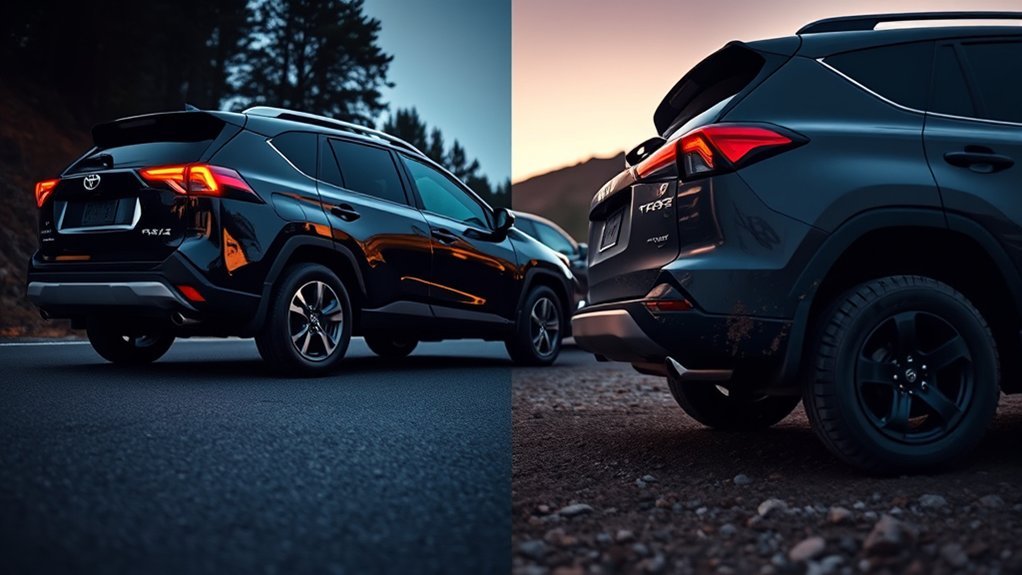
Choose FWD for paved-road commuting, mild weather, and the lowest ownership cost. Choose AWD when slippery launches, steep grades, gravel, snow, or unpaved work routes are a normal part of your driving rather than a once-a-year possibility.
Quick Answer
FWD suits most RAV4 drivers who stay on paved roads and want lower costs. AWD makes more sense when you repeatedly need rear-wheel assistance while accelerating on slick or loose surfaces. AWD does not shorten stopping distance by itself; suitable tires and safe speed remain essential. See these RAV4 winter driving tips.
Key Takeaways
- Pick FWD if you mostly drive in the city and want lower fuel and purchase costs.
- Pick AWD if you often start on snow, gravel, steep wet grades, boat ramps, or unpaved rural routes.
- Use winter tires in cold climates because AWD does not shorten braking distance by itself.
- Check the exact trim because towing and fuel economy ratings vary by RAV4 model.
- For 2026 U.S. models, Toyota lists RAV4 as hybrid or plug-in hybrid, not gas-only.
2026 RAV4 Drivetrain Options at a Glance
| 2026 U.S. configuration | Grades | System output | Best reason to choose it | Towing note |
|---|---|---|---|---|
| Hybrid FWD | LE, SE, XLE Premium | 226 net combined hp | Highest available fuel economy and lower price | 1,750 lb maximum |
| Hybrid AWD | Optional on LE, SE, XLE Premium; standard on Woodland, XSE, Limited | 236 net combined hp | Frequent slick starts, hills, gravel, and mixed roads | LE AWD: 1,750 lb; qualifying other AWD grades: up to 3,500 lb |
| Plug-in Hybrid AWD | SE, Woodland, XSE, GR SPORT | 324 net combined hp | Electric commuting, stronger acceleration, and standard AWD | Grade-specific; verify the owner’s manual and build sheet |
AWD is most valuable during acceleration when available tire grip is low. It cannot prevent hydroplaning, create shorter braking distances, or make worn tires safe. FWD remains the value choice when roads are paved, grades are mild, and snow removal is reliable.
How RAV4 AWD and FWD Work
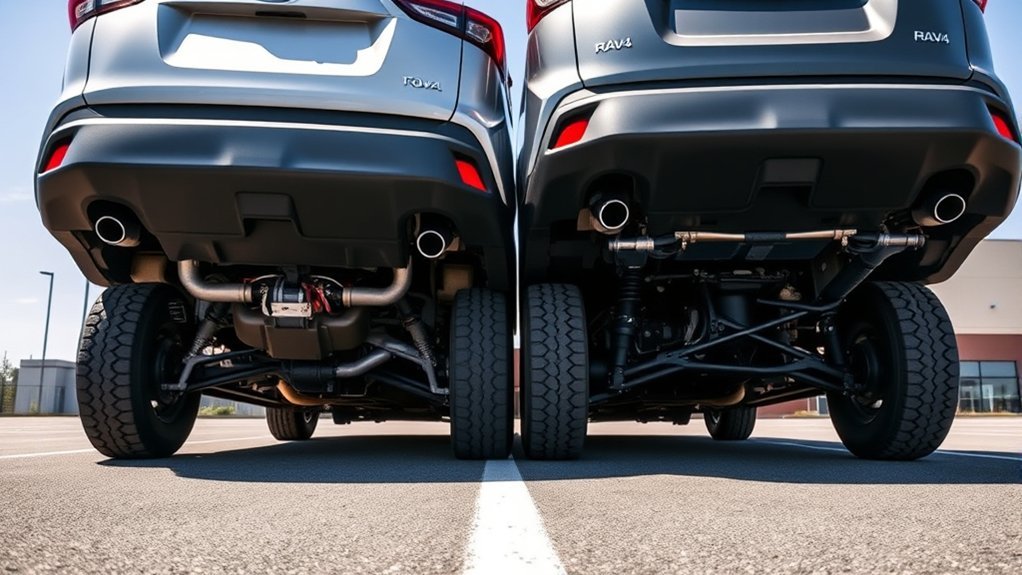
FWD sends propulsion to the front wheels only. It avoids the rear drive motor and related controls used by the 2026 AWD system, which supports lower weight, lower purchase cost, and the RAV4’s highest available fuel-economy ratings.
The 2026 RAV4 uses Toyota Electronic On-Demand AWD. A dedicated rear electric motor can add rear-wheel torque before front-wheel slip becomes obvious and can respond when slip occurs. The system uses wheel-speed, steering, accelerator, and vehicle-motion inputs to manage front-to-rear drive force. Gas-only RAV4s through 2025 may use different mechanical AWD hardware, so compare the exact model year. For a deeper system breakdown, see how the RAV4 AWD system works.
| System | How It Sends Power | Best For | Main Trade-Off |
|---|---|---|---|
| FWD | Front wheels only | Fuel economy and lower cost | Less launch grip on slick roads |
| AWD | Front wheels, plus rear power when needed | Slick starts, snow, hills, gravel, and maintained trails | Higher cost and slightly lower efficiency |
| Plug-in Hybrid AWD | Hybrid system with standard AWD on U.S. plug-in models | Strong acceleration, charging flexibility, and rear-drive assistance | Higher trim price and charging needs |
Note: Toyota lists the 2026 U.S. RAV4 with hybrid and plug-in hybrid powertrains, so older gas-only comparisons may not fit every new model.
You are most likely to notice AWD when pulling away on snow, loose gravel, wet grass, sand, or a steep slick grade. On dry pavement at steady speed, the difference is less important than trim, tires, and driving style.
RAV4 AWD vs FWD: Traction in Rain, Snow, and Gravel
AWD gives the RAV4 an acceleration advantage when available grip is low. By adding rear-wheel torque, it can reduce front-wheel spin while pulling away on packed snow, loose gravel, wet grass, or a steep slick grade.
FWD can handle ordinary rain and light winter driving with suitable tires and conservative speed. Its limitation appears when the front tires must steer and deliver all propulsion at the same time on a slippery incline or loose surface. AWD does not provide immunity from hydroplaning and does not add tire grip during braking.
Warning: AWD helps you accelerate on slick roads, but it does not shorten braking distance without enough tire grip.
Choose AWD if you regularly drive before plows clear the roads, climb steep driveways, launch a trailer on a slick ramp, or use unpaved rural routes. Choose FWD if winters are mild, roads are maintained, and these situations are rare. Keep RAV4 traction and stability control on during normal slippery-road driving; see when to use RAV4 TRAC Off only if the vehicle is stuck.
RAV4 AWD vs FWD: Fuel Economy and Daily Cost
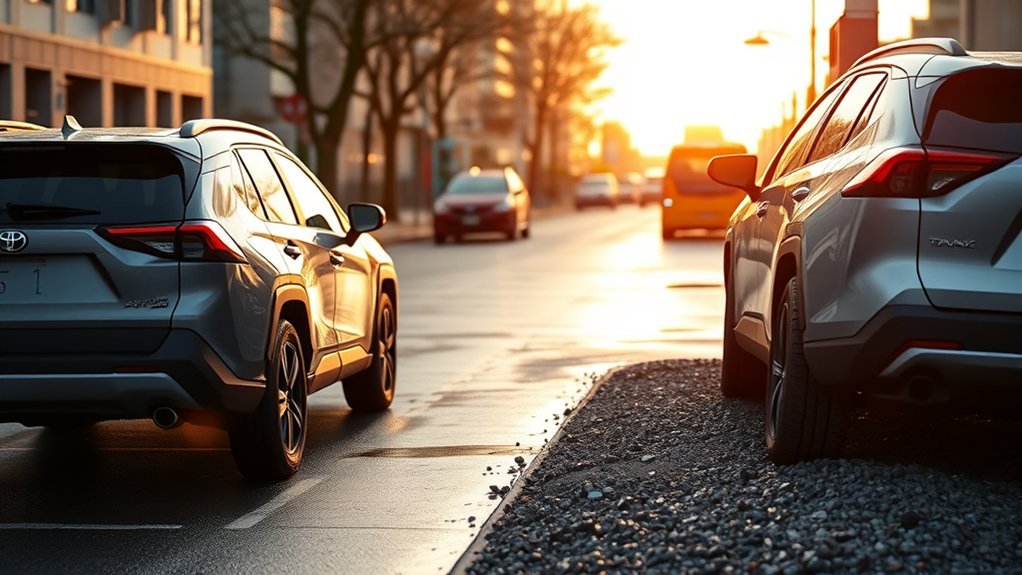
FWD gives the 2026 RAV4 its highest listed fuel economy. Toyota’s current U.S. model page shows the FWD LE, SE, and XLE Premium at up to an estimated 47 city and 40 highway MPG. AWD ratings vary by grade: the Woodland is listed at 41/35 MPG, while the XSE and Limited are listed at 43/37 MPG.
The difference is not caused by AWD alone. Grade weight, wheel and tire choices, aerodynamic details, and calibration also affect the rating. The Woodland’s all-terrain tires and rugged equipment are part of why it sits below the lighter FWD grades.
Fuel Economy Differences
Use the window sticker for the exact trim you plan to buy because the rating changes by drivetrain, grade, wheel-and-tire package, and powertrain. For a Plug-in Hybrid, compare both gasoline MPG and electric range based on how often you can charge.
- FWD RAV4 trims usually give you the highest gas mileage in the lineup.
- AWD trims may cost more at the pump because they add traction hardware and weight.
- All-terrain tires and heavier trim equipment can lower MPG even when the vehicle uses the same basic RAV4 hybrid system.
- Plug-in hybrid models can cut gasoline use when you charge often and drive shorter daily routes.
Running Cost Comparison
AWD costs more on the 2026 Hybrid grades that offer both drivetrains. Edmunds reported a $1,400 AWD option on the LE, SE, and XLE Premium at launch. Confirm the current configurator price, destination charge, regional equipment, and dealer fees before comparing totals.
Use this fuel-cost formula: annual miles ÷ the window-sticker combined MPG × your local fuel price. Compare the two exact trims rather than applying a generic AWD penalty, because tires and grade equipment can create a larger difference than the drive system alone.
Long-Term Ownership Costs
If you keep your RAV4 for many years, purchase price and fuel use are the clearest predictable differences. AWD also adds a rear motor and control hardware on 2026 models, but extra components alone do not prove that the AWD version will be unreliable or cost more to repair.
- Upfront premium: AWD usually costs more than FWD on comparable trims.
- Fuel impact: AWD can lower fuel economy, depending on trim and tire setup.
- Service needs: Follow the drivetrain-specific Toyota maintenance schedule; do not assume older mechanical-AWD fluid advice applies to 2026 electronic AWD.
- Best value: FWD wins for cost, while AWD wins for difficult road conditions.
Performance and Towing: Acceleration, Handling, and Payload
AWD helps the RAV4 put power down with less front-wheel spin when traction is limited. The 2026 Hybrid AWD system also produces 236 net combined horsepower versus 226 horsepower for Hybrid FWD, although real acceleration still depends on grade weight, tires, road surface, and test conditions.
FWD remains responsive on dry pavement and carries less rear-drive hardware. AWD is most useful when the vehicle must pull away on a slick incline, loose shoulder, wet grass, gravel, or a boat ramp.
Towing capacity is trim-specific. Toyota lists 1,750 pounds for every 2026 Hybrid FWD grade and the LE AWD. Qualifying Hybrid SE, XLE Premium, Woodland, XSE, and Limited AWD grades can tow up to 3,500 pounds. Toyota also names the Plug-in Hybrid SE, XSE, and Woodland among the 3,500-pound configurations. Confirm the owner’s manual, vehicle build, payload placard, hitch rating, tongue weight, and local trailer-brake rules before towing. See the full RAV4 towing and payload guide.
Purchase and Ownership Costs: Price, Maintenance, and Repair Risks
FWD gives you the most predictable cost advantage: lower purchase price on comparable grades and the highest available fuel-economy ratings. AWD adds capability that is valuable only when your routes use it.
Do not assume resale value will repay the AWD premium. Used-vehicle demand varies by region, season, mileage, condition, and trim. Treat resale as a possible benefit, not a guaranteed offset.
[Products Worth Considering]

This custom-fit cargo net is designed for the 2026 Toyota RAV4 to help keep your trunk organized and secure during everyday driving. It helps hold groceries, tools, and smaller items in place while reducing rolling and shifting, and the heavy-duty carabiners support reliable installation. The net also offers convenient storage and easy access for SUVs and other compatible vehicles.

This center console armrest cover is designed to fit the 2026 Toyota RAV4 for added comfort and a cleaner interior look. Made with breathable vegan leather and a thick cushioned feel, it helps reduce arm fatigue on long drives while protecting the console from pet paws, dirt, and sticky fingerprints. The band-secured design installs easily with no tools required and blends with the OEM-style interior.

This replacement filter set is designed for a range of Toyota hybrid vehicles, including popular models like RAV4 Hybrid, Camry Hybrid, Highlander Hybrid, Sienna, Venza, and more. It combines cabin and engine filtration to help support cleaner airflow, reduce dust and odors, and protect your HVAC and engine systems. Built for easy installation and extended service life, it offers a convenient maintenance upgrade for compatible hybrid and gas-only Corolla models.
Upfront Purchase Price
Toyota lists the 2026 RAV4 with a starting MSRP of $31,900 before required fees and local charges. Higher trims and AWD-equipped models raise the price from there.
- FWD savings: You usually spend less at purchase on trims that offer FWD.
- AWD cost: You pay more for extra traction hardware and capability.
- Trim effect: Some trims include AWD or plug-in hybrid power as standard equipment.
- Market effect: AWD demand can be stronger in snowy regions, but future resale value is not guaranteed.
Long-Term Maintenance Costs
FWD keeps the propulsion layout simpler because it does not use the 2026 AWD model’s dedicated rear drive motor and related electronics. Older gas AWD RAV4s use different mechanical components, so their transfer-case or rear-differential advice should not be copied to a 2026 Hybrid without checking the manual.
Follow Toyota’s maintenance schedule for the exact model year, powertrain, and drivetrain. Use the owner’s manual for tire rotation, inspection items, fluid requirements, and severe-service conditions.
Repair Risk and Complexity
AWD adds components and diagnostic paths, but there is no evidence in the cited sources that the 2026 RAV4 AWD system has a higher failure rate than FWD. The accurate conclusion is narrower: FWD has fewer drive components, while AWD has more capability and more hardware that could require diagnosis after a fault.
- AWD costs more at purchase on grades that offer a choice.
- Older gas AWD systems can include a driveshaft, coupling, and rear differential that the 2026 system does not use.
- The 2026 Hybrid AWD system uses a dedicated rear electric motor and electronic controls.
- FWD has fewer drive components, but actual repair costs depend on the fault, age, mileage, and service history.
Tires and Seasons: How Winter Tires Change the Equation
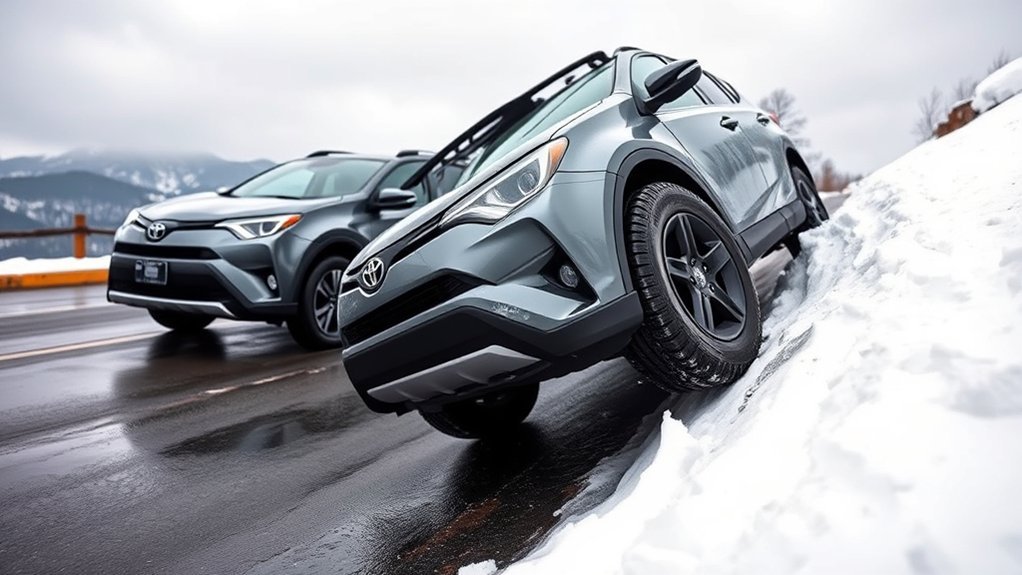
Winter tires can change the AWD-versus-FWD decision because the tires create the contact grip used for accelerating, turning, and braking. Transport Canada says all-season and summer tires begin to lose elasticity below 7°C, while winter tires remain flexible at lower temperatures.
AWD can distribute propulsion to more wheels, but it does not change the four tire contact patches used when you brake. Michelin’s winter guidance states that AWD improves acceleration, not braking or cornering on snow and ice. Install winter tires as a matched set of four and replace tires that no longer provide adequate tread or condition.
Pro tip: If your area gets regular snow or ice, price winter tires before you pay extra for AWD.
AWD with four winter tires gives the strongest launch traction and balanced cold-weather grip when your climate demands both. FWD with four winter tires is the value choice when roads are plowed quickly, hills are mild, and deep-snow starts are uncommon.
[Products Worth Considering]
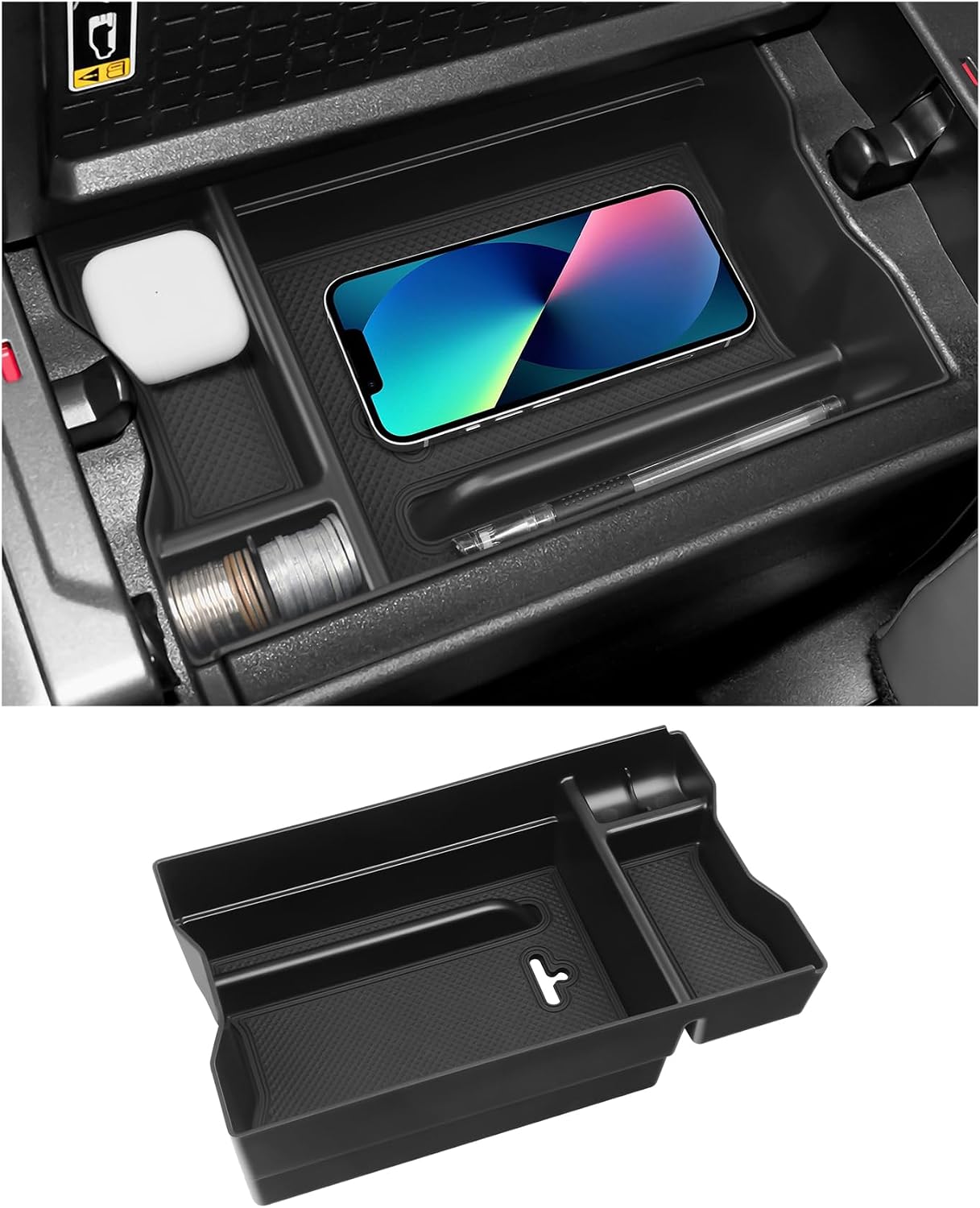
This center console organizer adds a convenient secondary storage layer to compatible Toyota RAV4 hybrid models, helping keep sunglasses, keys, coins, phones, and other small items neatly arranged. Built from durable ABS plastic with a matte finish, it fits directly into the armrest area for quick, tool-free installation and easy removal. Non-slip rubber mats help reduce sliding and noise while maximizing usable storage space inside the console.

This custom-designed cargo net helps keep the rear trunk of a 2026 Toyota RAV4 neat, secure, and organized. Its stretchable elastic mesh construction helps prevent groceries, tools, and sports gear from sliding around, while the built-in bottom pocket and smart clips add extra storage control. A top pull tab makes installation and removal quick and easy for everyday convenience.

This passenger storage organizer mat is designed to fit the 2026 Toyota RAV4 for a clean, factory-style look with no gaps. It helps protect the original console area from scratches and daily wear while giving you a handy place to store phones, sunglasses, wallets, coins, and cards. Made from durable silicone, it stays in place, reduces rattling, and is easy to remove and clean.
Hybrid and Plug-in Hybrid RAV4s: AWD vs FWD Differences
The 2026 drivetrain choice is tied directly to powertrain and grade. Hybrid LE, SE, and XLE Premium buyers can choose FWD or AWD. Hybrid Woodland, XSE, and Limited use AWD. Every 2026 RAV4 Plug-in Hybrid uses AWD.
Toyota lists 226 net combined horsepower for 2026 Hybrid FWD models, 236 horsepower for Hybrid AWD models, and 324 horsepower for the Plug-in Hybrid. The PHEV is therefore not simply an AWD upgrade; it is a different, chargeable powertrain with a higher purchase price, electric-driving capability, and more output.
- Hybrid FWD: Best fit for fuel economy, lower cost, and daily commuting.
- Hybrid AWD: Better fit for wet hills, snow, gravel, and mixed road conditions.
- Plug-in Hybrid AWD: Best fit if you want stronger acceleration and can charge often.
- Trim choice: Some features, tires, and towing ratings depend more on trim than drivetrain alone.
Compare the exact grade rather than the badge alone. A Woodland AWD includes rugged equipment and all-terrain tires, while an LE FWD prioritizes efficiency and price. A Plug-in Hybrid adds charging needs and electric range to the decision.
[Products Worth Considering]

These custom-fit mud flaps are designed for Toyota RAV4 and RAV4 Hybrid models across multiple years to help protect your vehicle from snow, salt, sand, rocks, and road debris. Made from durable black ABS plastic, they offer strong resistance to wear, cold, and aging while helping keep your lower body panels cleaner. The set includes front and rear splash guards for a complete exterior protection upgrade.
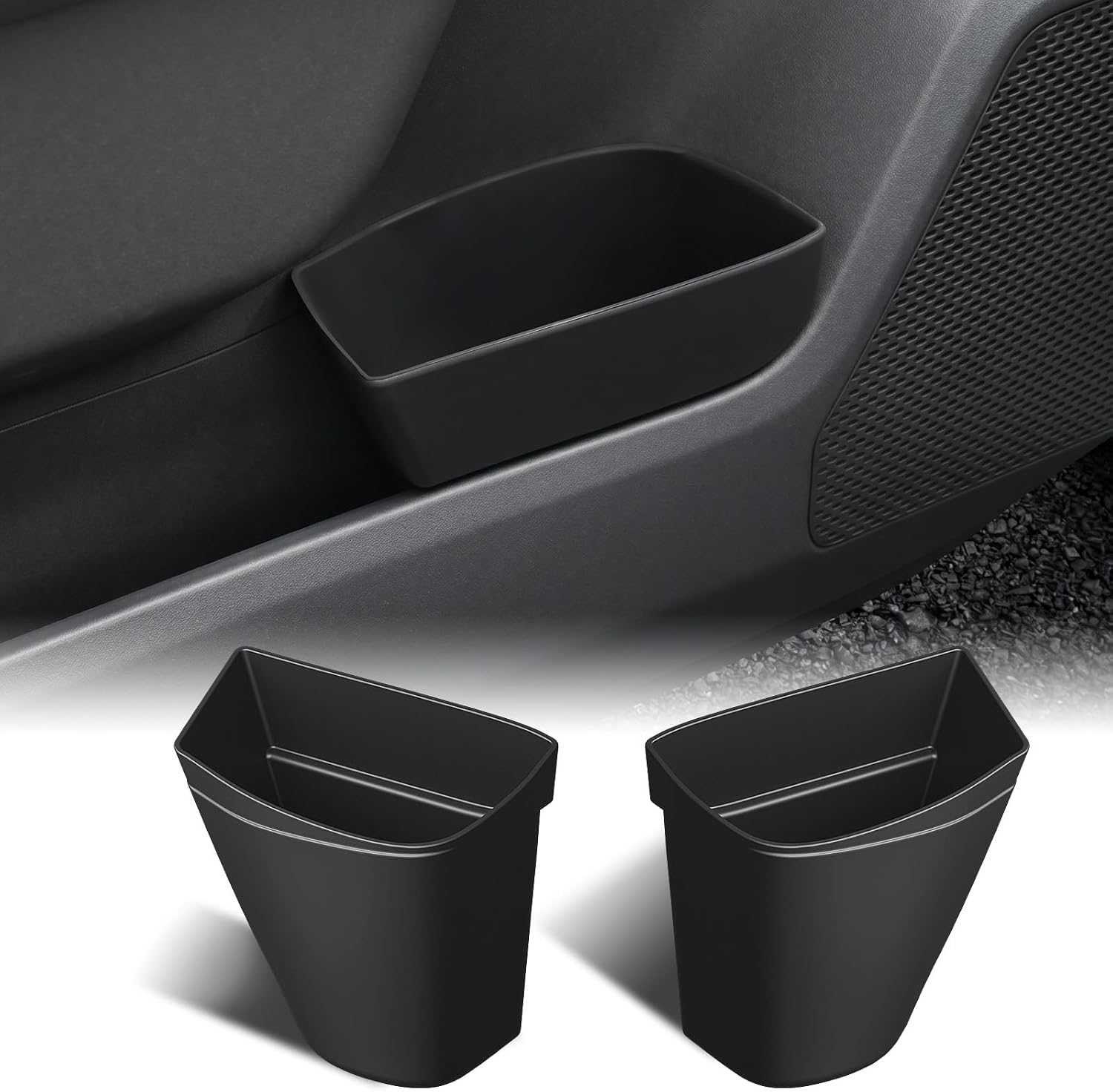
This custom-fit two-piece door side trash can set is designed for the front doors of the 2026 Toyota RAV4, helping keep the cabin organized while adding convenient extra storage. The open-top design allows quick, one-handed disposal of trash and other small items, while the snug silicone construction stays secure without glue and is easy to remove and rinse clean.

This flexible oil funnel is designed to make fluid changes cleaner and easier by guiding oil around obstacles like skid plates and crossmembers. Its shape-retaining core and silicone body can be molded for custom positioning, while the heat-resistant, leak-proof design helps prevent spills during draining and filter removal. Reusable and easy to clean, it works well for cars, trucks, motorcycles, and other hard-to-reach fluid fill or drain applications.
Use-Case Guide: City, Mountain, Family, or Adventure
Your repeated routes should decide the drivetrain. FWD fits paved city streets, mild weather, reliable snow removal, and budget-focused ownership. AWD fits frequent low-grip starts on mountain roads, snow, gravel, wet grass, rural routes, and maintained trail access.
| Use Case | FWD Strengths | AWD Strengths |
|---|---|---|
| City | Lower cost and strong fuel economy | Helpful only in frequent storms |
| Mountain | Adequate on cleared roads | More launch traction on slick slopes |
| Family | Economical and comfortable | More launch traction in harsh weather |
| Adventure | Cheaper for light dirt roads | More propulsion traction on gravel and maintained trails |
| Snow | Works well with winter tires | Best with winter tires and careful driving |
Choose FWD If…
Choose FWD if you drive mostly on paved roads, live in a mild climate, and want lower ownership costs. It also makes sense if you plan to buy quality tires and avoid rough roads.
Choose AWD If…
Choose AWD if snow, steep slick roads, gravel, wet grass, boat ramps, or remote work routes are part of normal use. It also fits drivers who regularly need more launch traction with passengers, cargo, or a trailer, while staying within all vehicle limits.
Quick Checklist to Choose AWD or FWD for Your Next RAV4
Use this checklist before you buy. Answer based on your real routes, not the worst road you might drive once a year.
- Check your weather: Pick AWD if you regularly need to start or climb on snow, ice, or steep wet roads.
- Check your roads: Pick AWD for steep, unpaved, rural, or poorly maintained routes.
- Check your budget: Pick FWD if lower purchase cost and fuel savings matter most.
- Check your tires: Buy winter tires if your area gets cold, snowy, or icy roads.
- Check your trim: Confirm MPG, towing, and drivetrain details on the exact RAV4 you plan to buy.
If two or more answers point to frequent low-traction starts, AWD deserves serious thought. If most answers point to maintained pavement, mild grades, and reliable snow removal, FWD gives you the cleaner value.
Frequently Asked Questions
What Is the Difference Between AWD and FWD RAV4?
FWD sends propulsion to the front wheels only. The 2026 RAV4’s Electronic On-Demand AWD adds a dedicated rear electric motor that can supply rear-wheel torque during starts, acceleration, cornering support, or low-grip conditions.
What Are the Disadvantages of AWD vs FWD?
AWD costs more on comparable 2026 Hybrid grades, carries additional rear-drive hardware, and usually has a lower fuel-economy rating than FWD. It does not shorten braking distance or prevent hydroplaning.
Does AWD Make a RAV4 Safer in Snow?
AWD can help a RAV4 pull away and climb with less wheel spin. Winter tires, safe speed, smooth inputs, and longer following distance remain more important for braking and cornering.
Is FWD Enough for a RAV4 in Winter?
FWD can be enough when winters are mild, roads are plowed promptly, hills are limited, and the vehicle has four suitable winter tires. AWD is the better choice for frequent deep snow, steep grades, unplowed roads, or slippery rural routes.
Does AWD Help With RAV4 Towing?
AWD can improve launch traction on wet grass, gravel, or a boat ramp, but drivetrain alone does not set the tow rating. For 2026, all Hybrid FWD grades and LE AWD are rated at 1,750 pounds, while qualifying other AWD grades reach 3,500 pounds.
Which 2026 RAV4 Trims Have FWD?
FWD is available on the 2026 RAV4 Hybrid LE, SE, and XLE Premium. Hybrid Woodland, XSE, and Limited use AWD, and every 2026 RAV4 Plug-in Hybrid has AWD.
Is RAV4 AWD Worth the Extra Cost?
AWD is worth the added cost when you use its traction advantage regularly on snow, steep slick grades, gravel, wet grass, unpaved roads, or trailer ramps. FWD is the better value when those conditions are rare.
Does RAV4 AWD Use More Fuel Than FWD?
Usually, yes. The 2026 FWD grades carry the highest listed fuel-economy ratings, while AWD ratings vary by grade, tires, and equipment. Compare the window stickers for the exact two vehicles you are considering.
Safety Disclaimer: This article gives general vehicle information only. Always follow your owner’s manual, tire manufacturer guidance, local road laws, and advice from a qualified technician before driving in severe weather or towing.
Conclusion
Pick FWD when maintained pavement, mild grades, and lower cost describe most of your driving. It gives the 2026 RAV4 its highest available fuel economy and avoids paying for traction capability you may rarely use.
Pick AWD when snow, steep slick roads, gravel, wet grass, rural access, or trailer launches are routine. Then budget for four suitable tires, not AWD alone.
Before buying, compare the exact grades side by side: current out-the-door price, window-sticker MPG, tow rating, tire type, and the road conditions you face every month.
References
- 2026 Toyota RAV4 — Toyota Motor Sales, U.S.A., 2026
- 2026 Toyota RAV4 Specifications — Toyota Motor Sales, U.S.A., 2026
- The Next Adventure Begins: 2026 RAV4 Arrives this Winter — Toyota Newsroom, 2025
- Three…Two…One: Toyota Debuts Amazing All-New RAV4 — Toyota Newsroom, 2025
- 2026 RAV4 Plug-in Hybrid — Toyota Motor Sales, U.S.A., 2026
- 2026 Toyota RAV4 Pricing — Edmunds, 2026
- Winter Weather Driving Tips — National Highway Traffic Safety Administration
- Using Winter Tires — Transport Canada, 2025
- AWD vs Winter Tires: The Truth About Safety — Michelin, 2026