You’ll prep your 4Runner like a field-ready rig: check oil, coolant, transmission and brake fluids, belts and for leaks, and fit 265/75R16 all-terrain tires with ~30–32 psi for desert traction. Load one gallon water per person per day plus extras, a 5‑gal spare fuel can, power station, jumper cables and recovery gear, and add a transmission cooler and skid plates. Organize drawers, a sleeping platform and offline maps, and keep a clear plan—more practical tips follow.
Inspect Your 4Runner Before You Go (Priority Checklist)
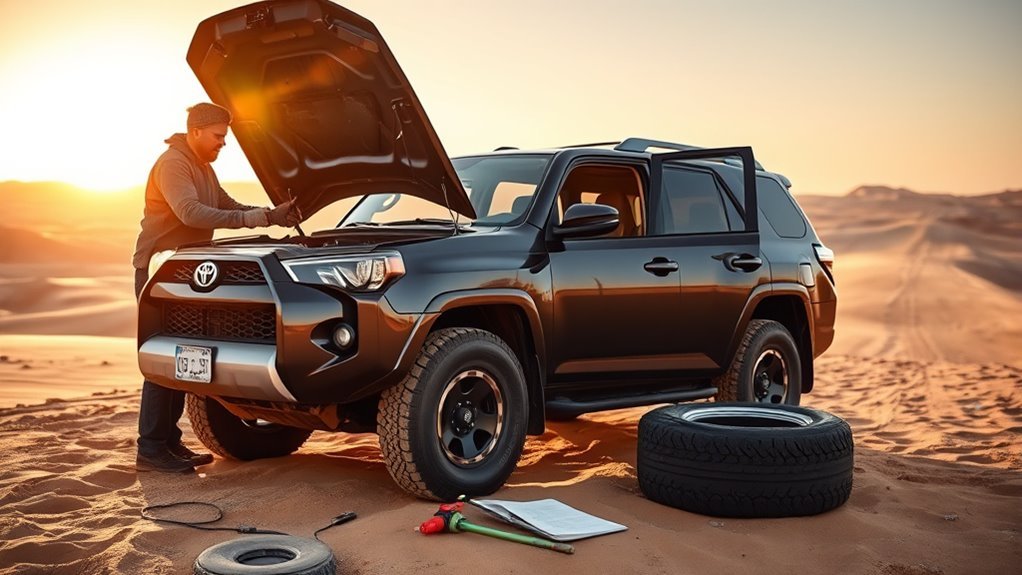
Before you head into the heat, walk your 4Runner from nose to tail and tackle a quick, focused inspection so nothing blindsides you miles from help. You’ll start with basic fluid checks — oil, coolant, brake and transmission — making sure levels and condition’ll hold under desert strain. Pop the hood, scan for leaks, and feel belts for tightness; a snapped belt out there ruins freedom fast. Next, do a thorough tire inspection: check pressure (35 psi on all road tires, 50 psi for the spare), verify tread depth, and look for cuts or bulges that’ll bite in sand or rock. Confirm lights and signals work; night or dust storms demand clear visibility. Finally, make sure your jack and tools are accessible and the spare’s ready. This checklist keeps you self-reliant, turning worry into momentum so you can chase horizons without asking for permission.
[Products Worth Considering]

This all-in-one car emergency kit helps drivers stay prepared for roadside breakdowns, flat tires, and dead batteries with essential tools in one compact package. It includes a portable air compressor, heavy-duty jumper cables, a first aid kit, and other safety items designed for year-round peace of mind. Compact enough for easy trunk storage, it makes a practical safety solution and thoughtful gift for drivers of all ages.

Upgrade your Toyota 4Runner with these heavy duty roof rack cross bars designed for raised side rails and secure cargo transport. The aluminum construction, anti-theft locking system, and tie-down loops help keep gear stable on the road while the low-profile design helps reduce wind noise. Easy to install with no drilling required, they provide a durable and convenient solution for road trips, hauling, and outdoor adventures.

This OSHA-compliant first aid kit is designed to help handle minor injuries at home, in the office, on job sites, or in vehicles. It includes 260 essential supplies such as bandages, gauze, burn cream, antiseptic towelettes, gloves, scissors, and tweezers, all organized in a durable case with a clear cover and easy-access compartments. Sized to support up to 50 people, it offers a practical, portable solution for staying prepared in everyday and emergency situations.
Pack Vehicle Survival Gear and Power (Water, Fuel, Comms, Battery)
While the desert demands respect, you’ll stay safe if you pack smart: stock at least one gallon of water per person per day plus extras for cooking and emergencies, carry fuel to cover an extra 200–300 miles beyond your planned route, and bring a high-capacity portable power station (think Goal Zero Yeti 500X) to keep phones, GPS and radios alive. You want redundancy: water bottles, collapsible bladders, and a compact water purification kit to stretch supplies if plans change. Prioritize fuel efficiency while loaded—trim weight, drive steady, and carry jerry cans secured for that 200–300 mile buffer. Add GMRS two-way radios so you can talk when cell towers sleep, and tape a laminated comms plan inside the glovebox. Stow an all-encompassing first aid kit, tire repair tools, jumper cables, and basic recovery gear within reach. Pack everything for quick access: survival gear is freedom’s backbone out here, letting you explore farther and return on your own terms.
Upgrade for Desert Conditions (Cooling, AT Tires, Skid Protection)
If you want your 4Runner to live up to the trip, upgrade its cooling, tires, and undercarriage so the desert’s heat and terrain don’t bench you; you’ll thank yourself when the mercury climbs and the track turns nasty. Fit an aftermarket transmission cooler to protect fluid integrity under heavy loads and long climbs—overheating kills gearboxes faster than a stuck wheel. Swap stock shoes for 265/75R16 all-terrain tires to gain traction and puncture resistance on sand and rock, and learn to run ~30–32 psi for better flotation without sacrificing control. Add robust skid plates to shield the oil pan, transfer case, and fuel tank from ledges and shrapnel. Consider a high-performance air intake to boost airflow, reduce intake temps, and keep the engine breathing clean in dusty conditions. These upgrades aren’t luxury—they’re liberation: they let you push farther, move faster, and come home whole.
Organize Storage, Sleeping, and Interior Comfort
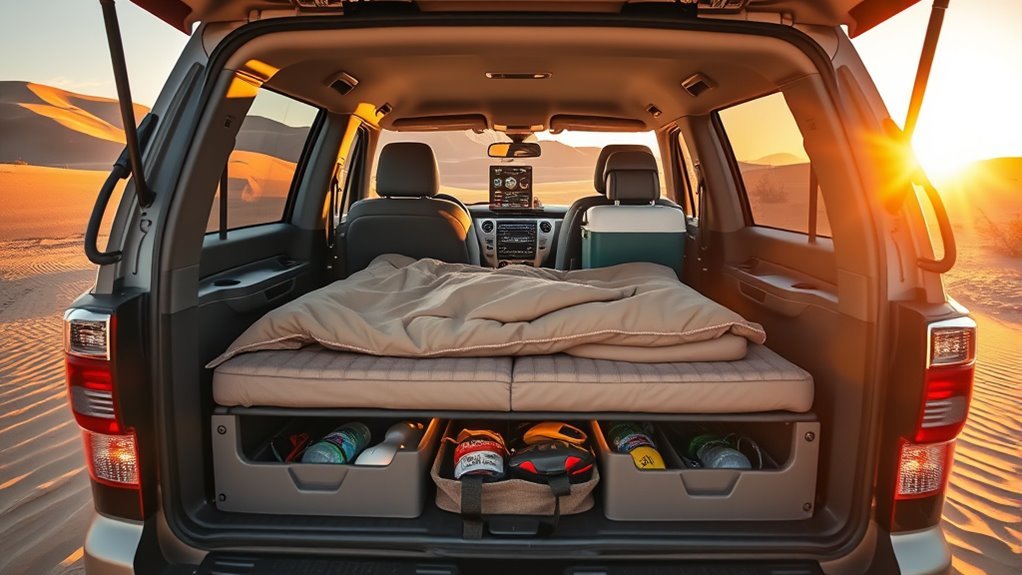
When you’re packing a 4Runner for the desert, make every inch count: a DIY drawer system between the wheel wells and a secure two-person sleeping platform turn the cargo area into a functional, organized basecamp. Build the drawer system low to keep a flat surface for a sleeping platform; anchor the platform with D-rings so you’ll sleep steady even on rough tracks. Use storage bins and organizers in the drawers to separate tools, recovery gear, and cooking supplies so nothing rattles loose. Add protective accessories like quality floor liners to keep sand out, and stash a portable cooler within reach for cold water and fresh food.
Pack smart: low DIY drawers, anchored sleeping platform, organized bins, and protective gear turn your 4Runner into a desert-ready basecamp.
- Lay out drawers and bins so daily items are front-accessible.
- Mount D-rings and test platform stability before leaving town.
- Place protective accessories and the portable cooler where they balance weight.
This setup frees you to roam—organized, rested, and ready for the trail.
[Products Worth Considering]

This emergency tire repair kit helps you quickly fix tubeless punctures without removing the tire from the rim. It includes multiple screw sizes and sealant glue for a tight, reliable seal, making it a practical solution for roadside emergencies, travel, and everyday vehicle maintenance. Compact and easy to use, it is suitable for a wide range of vehicles, including cars, motorcycles, trucks, and ATVs.

The Ipflin portable tire inflator delivers fast, reliable inflation for cars, SUVs, bikes, motorcycles, and more with powerful airflow and automatic shutoff for easier use. Its built-in battery and dual power options let you inflate cordless or from your vehicle, making it a dependable choice for emergencies, road trips, and everyday maintenance. A bright LCD display, preset modes, safety protections, and an LED light add convenience and peace of mind.

Keep your vehicle tidy with this collapsible trunk organizer designed to create extra storage and reduce clutter. It features multiple pockets, a bottle holder, and adjustable straps that secure it to headrests for quick installation and a stable fit. Made for most cars, SUVs, vans, and trucks, it folds flat when not in use and helps keep everyday essentials easy to find.
Plan Route, Fuel Stops, and Emergency Procedures
Because desert roads can change fast and cell service vanishes, plan your route with offline maps and marked fuel stops, and carry a spare 5-gallon can so you won’t be stranded between stations. Use GPS apps that let you download maps and plot waypoints, then practice route optimization by choosing fuel-friendly corridors and realistic daily distances. Mark every gas station, note hours, and top off whenever you can — conservative fuel management keeps you free to explore instead of racing for a pump.
Draft a clear itinerary with estimated times, share it with someone off-trip, and carry paper backups of critical directions. Know emergency procedures: how to stabilize a broken 4Runner, signal for help, and contact roadside services when you do have signal. Pack extra water, high-calorie food, and basic first aid. Stay self-reliant, expect delays, and plan so setbacks become manageable moments of adventure, not emergencies.
Frequently Asked Questions
Are 4runners Good for Long Drives?
Yes—you’ll find 4Runners excellent for long drives: their fuel efficiency is decent, comfort features keep you relaxed, durable suspension handles rough terrain, and you’ll feel free and confident conquering long, rugged routes.
Conclusion
You’ve checked fluids, belts, and tire pressure, loaded water and extra fuel, fitted aggressive AT tires and skid protection, and organized gear so everything’s within reach. You’ve planned your route, marked fuel stops, and agreed an emergency protocol. Now, before you pull away into that shimmering horizon, pause: one last look under the hood, one last click of the harness. The desert’s beauty’s real — and so is its edge. Be ready.
[Products Worth Considering]

This 4-port USB C car charger delivers fast, efficient charging for phones, tablets, and other mobile devices while on the road. With dual USB-C and dual USB-A ports, it can power multiple devices at once and supports a wide range of modern smartphones and accessories. Built with safety protections and a durable metal housing, it is designed for reliable everyday use in cars, trucks, SUVs, and more.

The AUTOWN Tire Repair Kit provides a complete solution for quickly fixing punctures and flats on a wide range of vehicles, including cars, motorcycles, trucks, SUVs, ATVs, tractors, and RVs. Built with durable steel tools and reliable repair plugs, it is designed to create a strong, airtight seal and handle tough roadside repairs with confidence. The included portable case keeps everything organized and easy to store for emergencies or routine maintenance.

This digital tire tread depth gauge helps you check tire wear quickly and accurately with fractional inch, decimal inch, and millimeter readouts. Its large LCD screen, zero reset function, and automatic shutoff make it easy to use for cars, motorcycles, SUVs, trucks, and pickups. Designed for clear readings and dependable measurement, it is a practical tool for routine tire safety checks.