
Last updated: September 16, 2026 — switch terminology, 2019–2025 operating guidance, 2026-generation scope, warning-light advice, and source references rechecked.
Your RAV4’s Traction Control (TRAC) should normally stay on when rain, ice, snow, or loose gravel reduces grip. Temporarily turning TRAC off can help when the vehicle is stuck and the system is cutting the wheel spin needed to move. The detailed switch procedure below is verified against recent 2019–2025 U.S.-market RAV4 guidance. Toyota redesigned the RAV4 for 2026, so confirm the switch behavior in the owner’s manual for a 2026 model before assuming the earlier procedure is identical.
Quick Answer
Keep RAV4 traction control on for normal driving on wet, icy, snowy, or loose roads. On applicable recent RAV4s, use a quick press of the VSC OFF/traction-control switch only when the vehicle is stuck and needs limited wheel spin. Turn TRAC back on as soon as the RAV4 moves free. Disabling both TRAC and VSC is a separate action and should only be done while the vehicle is stopped.
Key Takeaways
- Leave TRAC on during normal driving on rain, ice, packed snow, and other slippery roads.
- On recent RAV4s, Toyota commonly calls the traction/stability-control button the VSC OFF switch.
- A quick press can disable TRAC when you need limited wheel spin to free a stuck vehicle.
- On applicable recent models, holding the switch for more than three seconds while stopped turns off both TRAC and VSC and may also reduce Pre-Collision System functions.
- A flashing slip indicator usually means the system is actively working; an unexpectedly steady warning needs more attention.
Estimated time: 2 to 5 minutes to check the setting and confirm the correct control for your RAV4.
Editorial scope: This guide is based on Toyota owner-manual procedures and NHTSA safety data. It does not claim hands-on verification across every RAV4 model year, trim, powertrain, or sales market.
Before You Begin: Check Road Conditions and Warning Lights
Before changing any traction setting, look at the road, your dashboard, and the condition of your tires. If the RAV4 still moves normally on a slippery surface, leave TRAC on and reduce speed instead of disabling it.
Check tire condition and cold pressure before bad-weather driving. Use the pressure listed on the RAV4’s driver-side tire placard rather than guessing from the tire sidewall. See the RAV4 tire pressure guide for the correct checking method.
For deeper winter preparation, the site’s RAV4 snow-driving guide explains why AWD and traction control do not replace suitable tires, lower speed, and extra stopping distance.
If the RAV4 is already stuck, clear loose snow, mud, dirt, or sand from around the tires before trying to move it.
What RAV4 Traction Control Does on Slippery Roads

Toyota’s TRAC system helps limit drive-wheel spin when you start or accelerate on slippery surfaces. Depending on the vehicle and situation, the system can reduce drive force and use brake control to help a spinning tire regain useful traction.
TRAC works alongside Vehicle Stability Control (VSC), which is focused more on keeping the vehicle aligned with the driver’s intended path. If you want the deeper technical distinction between the two systems, see the RAV4 TRAC and VSC explainer.
NHTSA’s 2007 analysis of 1997–2004 crash data found that Electronic Stability Control was associated with a 63% reduction in fatal single-vehicle crashes among light trucks and vans. That is broad historical ESC evidence, not a RAV4-specific effectiveness estimate.
TRAC vs. VSC, Snow Mode, and Trail Mode
| System | Main Job | Normal Use |
|---|---|---|
| TRAC | Limits excessive drive-wheel spin during acceleration. | Leave on for normal road driving, especially when grip is low. |
| VSC | Helps correct vehicle instability when the vehicle begins to deviate from the intended path. | Leave on during normal driving. |
| Snow Mode, if equipped | Adjusts vehicle response for slippery winter surfaces. | Use according to the owner’s manual; it does not replace TRAC. |
| Trail Mode, if equipped | Coordinates drive force, AWD, and brake control for rough or low-traction terrain. | Use for the conditions specified in the owner’s manual; it is separate from simply switching TRAC off. |
How to Check and Use RAV4 Traction Control
The sequence below matches recent 2019–2025 U.S.-market RAV4 owner guidance. Switch names, display messages, and system interactions can vary by year and powertrain.
- Start with TRAC on. For ordinary driving, do not disable traction or stability control just because the pavement is wet, icy, or snowy.
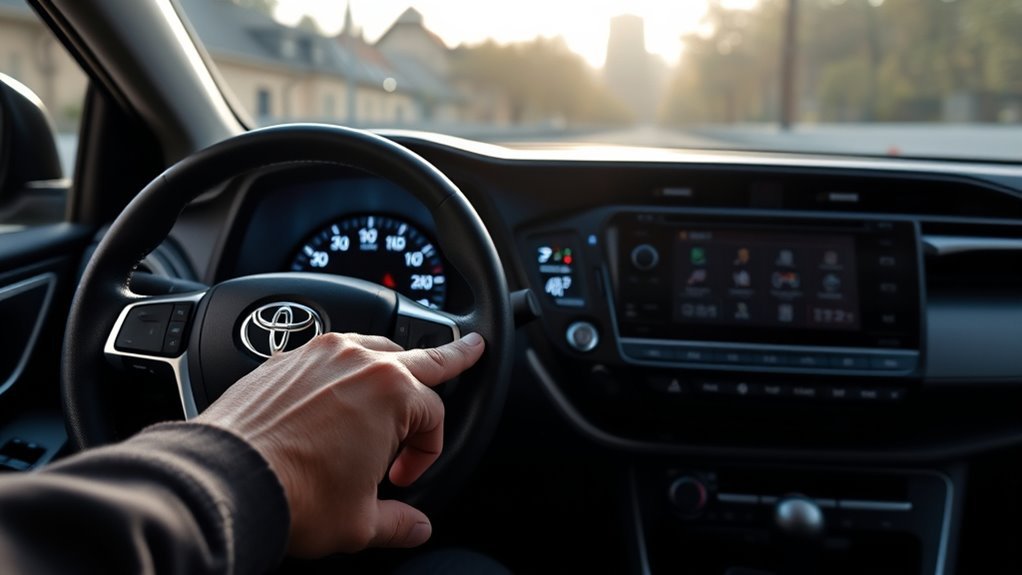
- Find the VSC OFF/traction-control switch. Toyota commonly calls the recent RAV4 control the VSC OFF switch. Its exact position and icon can vary by model year.
- Use a quick press only when TRAC is interfering with getting unstuck. On applicable recent models, quickly pressing and releasing the switch disables TRAC and shows a traction-control-off message or indicator.
- Only disable both TRAC and VSC when necessary. On applicable models, stop the vehicle and hold the switch for more than three seconds. The VSC OFF indicator should appear. Some model years also disable portions of the Pre-Collision System while TRAC and VSC are off.
- Turn the systems back on promptly. Press the switch again once the RAV4 is free or before returning to normal driving.
2026 model note: Toyota introduced an all-new sixth-generation RAV4 for 2026 and confirms that TRAC and VSC remain part of its Star Safety System. Because the generation changed, use the 2026 owner’s manual to confirm the exact switch sequence and display behavior before following a procedure written for 2019–2025 vehicles.
[Products Worth Considering]

This smart color coded tire tread depth gauge makes it easy to check tread wear at a glance with clear red, yellow, and green ranges. Calibrated from 0 to 1 inch in 1/32 inch increments, it helps you quickly assess tire condition for safer driving and timely replacements. The pocket clip design makes it convenient to carry and use on trucks, motorcycles, cars, and other passenger vehicles.
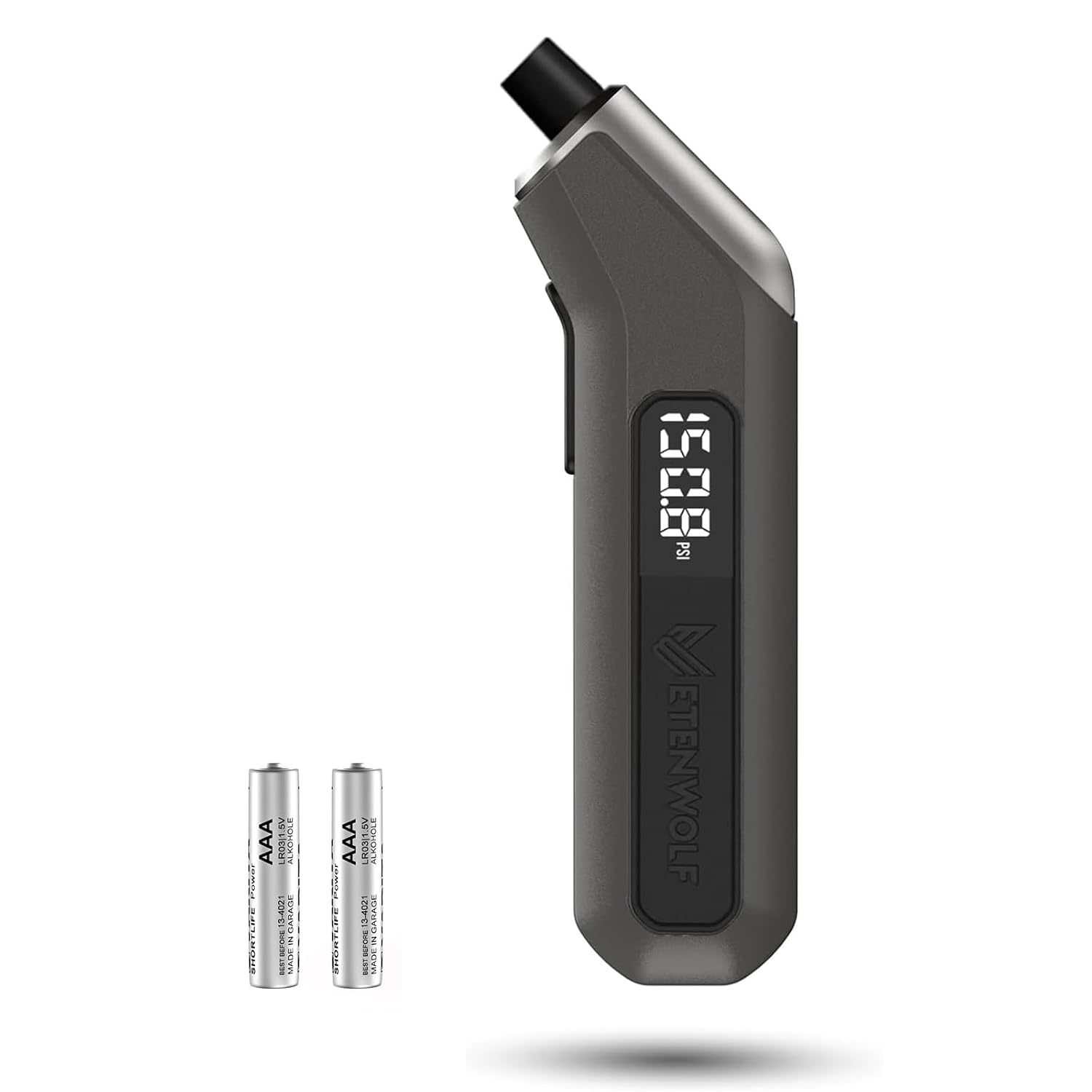
The ETENWOLF T300 digital tire pressure gauge delivers precise readings for cars, RVs, trucks, bikes, and heavy-duty vehicles with a wide measuring range and consistent accuracy. It is built to perform in extreme temperatures, includes a bright LED light for low-visibility use, and uses replaceable AAA batteries for convenient long-term operation. Durable enough to withstand rugged use, it is a practical tool for maintaining proper tire pressure across a variety of vehicles.

The KONNWEI KW208 is a versatile 12V battery tester designed to quickly analyze battery health, cranking performance, and charging system status for cars, trucks, boats, motorcycles, and more. It supports multiple battery types and provides clear guidance on whether a battery should be recharged or replaced, helping you diagnose issues before they become failures. With plug-and-play use, high accuracy, and multilingual support, it offers a convenient way to test batteries in-vehicle or out-of-vehicle.
When to Temporarily Turn Off RAV4 Traction Control
Temporarily disabling TRAC can help when the RAV4 is stuck in deep snow, mud, dirt, or similar loose material and traction control is reducing the wheel spin needed to free the vehicle. Toyota specifically describes this as a stuck-vehicle use case rather than a normal slippery-road setting.
Do not switch TRAC off simply because the road is icy or wet. During normal movement on slippery pavement, traction control is intended to help limit unwanted wheel spin.
Warning: Turn TRAC back on as soon as the vehicle is free. Do not continue normal road driving with the system intentionally disabled unless your exact owner’s manual directs otherwise.
[Products Worth Considering]

This portable tire inflator delivers fast, convenient inflation for cars, bikes, motorcycles, and balls with dual power options from a rechargeable battery or a 12V car cord. Its digital LCD pressure gauge and automatic shutoff help prevent over-inflation, while multiple preset modes and a custom setting make it easy to use for different inflation tasks. Built-in flashlight and USB power ports add extra emergency utility on the road.

Upgrade your vehicle interior with Skechers seat covers designed for comfort, protection, and a more refined look. Air-Cooled Memory Foam helps relieve pressure while breathable mesh promotes airflow for a cooler ride, and the form-fitting design suits most cars, trucks, vans, and SUVs. Advanced stitching supports side airbag compatibility for added peace of mind on the road.
What to Check Before You Turn Off RAV4 Traction Control
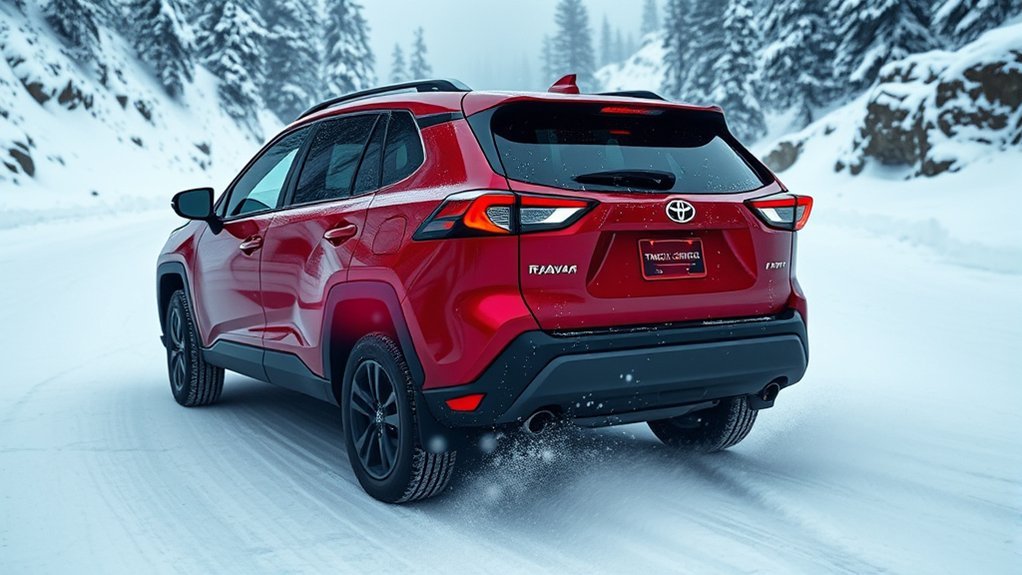
First decide whether you actually need wheel spin. If the RAV4 still moves and steers normally, keep TRAC on, reduce speed, and use smoother throttle instead.
If the vehicle will not move, clear snow, mud, dirt, or sand from around the tires. Toyota’s stuck-vehicle guidance also describes placing suitable material under the tires to improve traction. Keep people clear of the wheels and the vehicle’s path before applying power.
Stop trying if the tires spin aggressively, the vehicle begins sliding sideways, a warning message appears, or you notice an unusual smell or sound. Excessive wheel spin can dig the tires deeper rather than free the vehicle.
How to Drive Safely With TRAC on Slippery Roads
Use gentle accelerator inputs, steer smoothly, and brake earlier than you would on dry pavement. Traction control can manage some wheel spin, but it cannot create grip that the tires and road surface do not have.
A flashing slip indicator usually means TRAC, VSC, or a related stability system is actively responding to wheel slip. Ease off the accelerator and avoid abrupt steering while the system works.
Do not treat TRAC, VSC, Snow Mode, Trail Mode, or AWD as permission to drive faster. Ice, worn tires, standing water, and excess speed can exceed the available traction regardless of electronic assistance.
[Products Worth Considering]

【Fitment】Compatible with 2006-2018 Toyota Rav4 2006 2007 2008 2009 2010 2011 2012 2013 2014 2015 2016 2017 2018 ABS Wheel Speed Sensor

Perfect Fit: Fit for Front sides. Compatible with 2006-2018 RAV4. Package Included:2x ABS Wheel Speed Sensor(1x ALS2320 - Front Left, 1x ALS2319 - Front Right)

【Other part numbers】8498842050 15F698-0030 15F6980030,84988 42050.</br></br>The back cover of our product may be blue or gray, but regardless of the color, both can be used interchangeably.
Common Mistakes to Avoid With RAV4 Traction Control
- Turning TRAC off just because the road is slippery: Leave it on for normal wet, snowy, or icy-road driving.
- Looking only for a button labeled “TRAC OFF”: Recent RAV4s commonly use a VSC OFF switch for the traction-control functions.
- Holding the switch while moving: Toyota’s recent procedure for disabling both TRAC and VSC requires the vehicle to be stopped.
- Disabling VSC when only TRAC needs to be released: A quick press and a long hold perform different functions on applicable models.
- Forgetting about PCS interaction: Some model years reduce Pre-Collision System functions when both TRAC and VSC are disabled.
- Assuming every RAV4 generation works identically: The 2026 RAV4 is a redesigned sixth-generation model, so verify its controls separately.
- Forgetting to reactivate the system: Turn the system back on before returning to normal road driving.
When to Get Professional Help
If you intentionally switch TRAC or VSC off, seeing the corresponding OFF indicator is expected. That alone does not mean the system has failed.
Have the RAV4 diagnosed if a slip, VSC, ABS, or related warning stays illuminated unexpectedly, a warning message continues after restarting, the system will not return to normal operation, or the vehicle shows abnormal braking or handling behavior.
Do not replace sensors or other parts based only on the dashboard light. A Toyota-capable diagnostic scan can help identify the actual stored fault. For a deeper explanation of warning behavior, see the RAV4 traction-control light guide.
Frequently Asked Questions
Should I Have Traction Control on or off on Icy Roads?
Keep traction control on for normal driving on icy roads. TRAC helps limit excessive drive-wheel spin during acceleration, but you still need lower speed, gentle steering, suitable tires, and extra stopping distance.
When Should You Turn Off Traction Control in a RAV4?
Temporarily turn TRAC off when the RAV4 is stuck in snow, mud, dirt, or similar loose material and traction control is preventing the wheel movement needed to get free. Turn it back on as soon as the vehicle is moving normally.
Does Turning Off TRAC Also Turn Off VSC?
Not necessarily. On applicable recent RAV4s, a quick press of the VSC OFF switch turns off TRAC, while holding the switch for more than three seconds with the vehicle stopped turns off both TRAC and VSC. Exact behavior varies by model year, so confirm it in your owner’s manual.
Does TRAC Help When Driving in Rain?
Yes. TRAC can help limit unwanted drive-wheel spin during wet-road acceleration. It cannot prevent hydroplaning or overcome excessive speed, worn tires, or insufficient braking distance.
Why Does the Slip Indicator Flash?
A flashing slip indicator normally means TRAC, VSC, or another related stability function is actively responding to wheel slip. Reduce throttle and drive smoothly. A light that remains on unexpectedly is different and may require diagnosis.
What If the TRAC OFF Light Stays On?
If you intentionally disabled TRAC, the TRAC OFF indication is expected until you reactivate the system. If you did not switch it off, the system will not reactivate, or another ABS/VSC warning or message appears, check the owner’s manual and arrange diagnosis before relying on the system in poor weather.
Safety Disclaimer: This article is for informational purposes only and does not replace the owner’s manual, applicable road laws, or professional vehicle diagnosis. Always drive for the conditions and use the operating instructions for your exact RAV4 model year and market.
Final Safety Takeaway for RAV4 Traction Control
Keep RAV4 traction control on during normal driving, including on wet, icy, and snowy roads. Temporarily disable TRAC only when the vehicle is stuck and the system is preventing the limited wheel movement needed to regain traction.
If you need to disable both TRAC and VSC, stop the vehicle first and follow the procedure for your exact model year. If your switch label, display message, or system behavior differs from this guide, use the owner’s manual rather than experimenting with stability-control settings.
References
- 2020 RAV4 Driving Assist Systems — Toyota Owners
- 2020 RAV4: If the Vehicle Becomes Stuck — Toyota Owners
- 2025 RAV4 Hybrid Switches — Toyota Owners
- 2025 RAV4 Hybrid Trail Mode — Toyota Owners
- Five Things to Know About the All-New 2026 Toyota RAV4 — Toyota USA Newsroom
- Statistical Analysis of the Effectiveness of Electronic Stability Control Systems — NHTSA, 2007