Your RAV4’s tire pressure warning system only works well when it is initialized with the correct cold tire pressures. Start with the tire and loading placard on the driver’s door jamb, set every tire to the listed PSI with a reliable gauge, then use the reset method that matches your model year. Older RAV4s use a physical reset button; newer RAV4s use the TPWS menu in the multi-information display.
Quick Answer
To set your RAV4 tire pressure warning, inflate all tires cold to the driver-door placard PSI, then initialize TPWS. For most 2013–2018 RAV4s, hold the reset button until the warning light blinks three times. For most 2019–2025 RAV4s, use Settings → Vehicle Settings → TPWS → Set Pressure, then hold OK.
Key Takeaways
- Always set tire pressure when the tires are cold and use the PSI on your RAV4’s door-jamb placard, not the maximum PSI printed on the tire sidewall.
- 2013–2018 RAV4 models commonly use a physical tire pressure warning reset button under the lower dash near the steering column.
- 2019–2025 RAV4 models commonly initialize TPWS through the multi-information display under Vehicle Settings.
- A flashing tire pressure light that later stays on usually points to a TPMS/TPWS malfunction, not just a tire that needs air.
At a Glance
| Time Required | 5–15 minutes, plus a short drive if the system needs time to relearn |
| Difficulty | Easy |
| Tools Needed | Accurate tire pressure gauge, air compressor or tire inflator, flashlight for older models |
| Cost | Usually free if you already have air access; shop diagnosis may cost extra if a sensor fault remains |
Who This Guide Helps: And How to Use It
This guide helps Toyota RAV4 owners who want to monitor, adjust, and reset tire pressure warning settings without guessing. It focuses on 2013–2018 RAV4 models with a physical reset button and 2019–2025 RAV4 models that use a TPWS menu. Because trims, markets, and display layouts can vary, always confirm the exact wording in your Toyota owner’s manual.
Use the guide in order: check cold tire pressure, compare each reading to the tire and loading placard, inflate or deflate to spec, initialize the tire pressure warning system, then verify that the warning light stays off. This sequence matters because TPWS uses the current pressure as its baseline after initialization.
Warning: Do not reset TPWS to “clear the light” before correcting tire pressure. If you initialize the system with low or uneven pressures, the warning threshold can be based on the wrong baseline.
Check and Set Correct Tire Pressure First
The safest way to set your RAV4 tire pressure warning system is to begin with the manufacturer’s recommended cold tire inflation pressure. You can usually find it on the tire and loading placard on the driver’s door jamb. The recommended PSI may also appear in your owner’s manual or Toyota’s digital manual for your model year.
Check pressure when the tires are cold, meaning the RAV4 has been parked for several hours or driven only a short distance at low speed. Heat from driving raises tire pressure, so a hot-tire reading can make a low tire look normal.
- Park on level ground and let the tires cool.
- Find the recommended PSI on the driver’s door-jamb placard.
- Remove each valve cap and press a quality gauge firmly onto the valve stem.
- Add air in short bursts if the reading is low, then recheck.
- Release a small amount of air if the reading is high, then recheck.
- Reinstall the valve caps and check for visible tire damage, nails, bulges, or uneven wear.
Many RAV4 tire placards list pressures in the low-to-mid 30 PSI range, but do not rely on a general range. Use the placard for your exact vehicle, tire size, and load condition. FuelEconomy.gov notes that keeping tires at the proper pressure can improve gas mileage by 0.6% on average and up to 3% in some cases, while underinflated tires can reduce fuel economy by about 0.2% for every 1 PSI drop in the average pressure of all tires.
The number printed on the tire sidewall is the tire’s maximum pressure rating, not the recommended pressure for your RAV4. Use the door-jamb placard.
[Products Worth Considering]

This steering clock spring is designed to restore reliable steering wheel controls across a wide range of Toyota models. It supports audio, cruise control, and other multifunction commands while matching OEM part numbers for confident replacement fitment. Built for dependable signal transfer and straightforward installation, it is an effective solution for repairing steering column control issues.
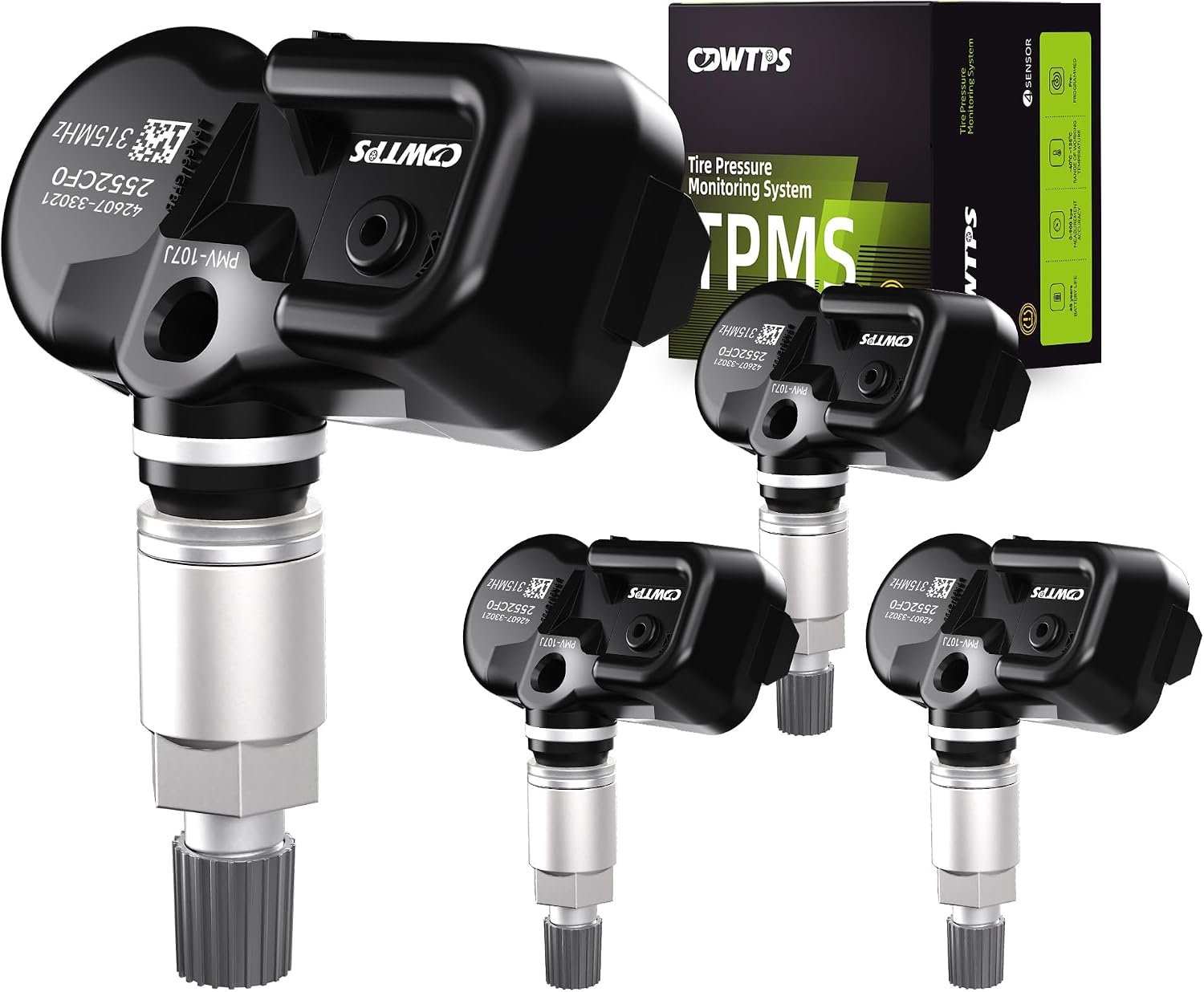
This set of four pre-programmed TPMS sensors is designed as a direct-fit replacement for compatible Toyota, Lexus, and Scion vehicles. It helps restore accurate tire pressure monitoring without sensor programming, and each unit is factory-tested for dependable performance. Built for long service life, these sensors offer a convenient solution for replacing worn or failed tire pressure monitors.

This CARORAV TPMS sensor set provides reliable tire pressure monitoring for a wide range of Toyota and Lexus vehicles with 315MHz compatibility. It is pre-programmed for easier setup, but still requires relearning or reset procedures after installation. Designed for accurate real-time pressure tracking, these sensors help support safer driving and long-lasting performance across many model years.
Quick Reset Steps for RAV4 TPMS/TPWS 2013–2025
Before any reset, correct all tire pressures first. Toyota’s support guidance says tire pressure changes, tire rotation, and tire size changes can trigger the warning, and the system should only be reset after the pressures are correct. On newer RAV4 models, the system may call this TPWS, short for Tire Pressure Warning System.
Quick Reset Steps
| Model Years | Reset Method | Basic Path |
|---|---|---|
| 2013–2018 | Physical reset button | Set cold PSI → ignition ON/engine running as directed → hold reset button until light blinks three times → wait or drive briefly |
| 2019–2025 | Multi-information display menu | Set cold PSI → start vehicle → Settings → Vehicle Settings → TPWS → Set Pressure → hold OK |
After resetting, drive normally for several minutes if the light does not go out right away. If the warning returns, recheck pressures with a gauge. If the light flashes for about a minute and then stays on, treat it as a system fault and have the TPWS inspected.
Why Pressure Matters
Correct tire pressure affects braking, handling, tire wear, fuel economy, and ride quality. Underinflation can cause heat buildup and poor handling. Overinflation can reduce the tire’s contact patch and lead to uneven wear. TPWS is a helpful warning system, but it is not a replacement for monthly manual checks.
NHTSA’s tire safety guidance recommends checking tires regularly and understanding how TPMS helps warn drivers about underinflation. Federal Motor Vehicle Safety Standard No. 138 requires TPMS to warn drivers about significant tire underinflation, but the system may not alert you to every small pressure difference. A gauge is still your best first check.
Reset Method 2013–2018: Button-Reset Steps
Most 2013–2018 RAV4 models use a physical tire pressure warning reset button under the lower dash, usually low and to the right of the steering wheel or near the driver’s knee area. It can be hard to see from the driver’s seat, so use a flashlight and look under the steering column.
Note: Some Toyota instructions say to turn the engine on before pressing the reset button, while many owner procedures use ignition ON without driving. Follow your model-year owner’s manual if it differs from the steps below.
| Step | Action | Purpose |
|---|---|---|
| 1 | Check cold PSI on the placard | Sets the correct baseline |
| 2 | Adjust all tires to spec | Prevents false initialization |
| 3 | Turn ignition ON or start the engine as directed | Enables reset mode |
| 4 | Find the reset button under the lower dash | Accesses the TPWS control |
| 5 | Hold until the warning light blinks three times | Starts system initialization |
| 6 | Wait several minutes or drive briefly | Allows the system to record the pressures |
If the light does not blink after holding the button for several seconds, release it and try again. If it still will not initialize, the wrong pressure, a low spare tire on models that monitor it, a weak sensor battery, or a TPWS fault may be the cause.
Pro Tip: Take a photo of the door-jamb placard and keep it on your phone. It saves time when you are filling tires at a gas station or checking pressure before a road trip.
Reset Method 2019–2025: Menu/TPWS Steps

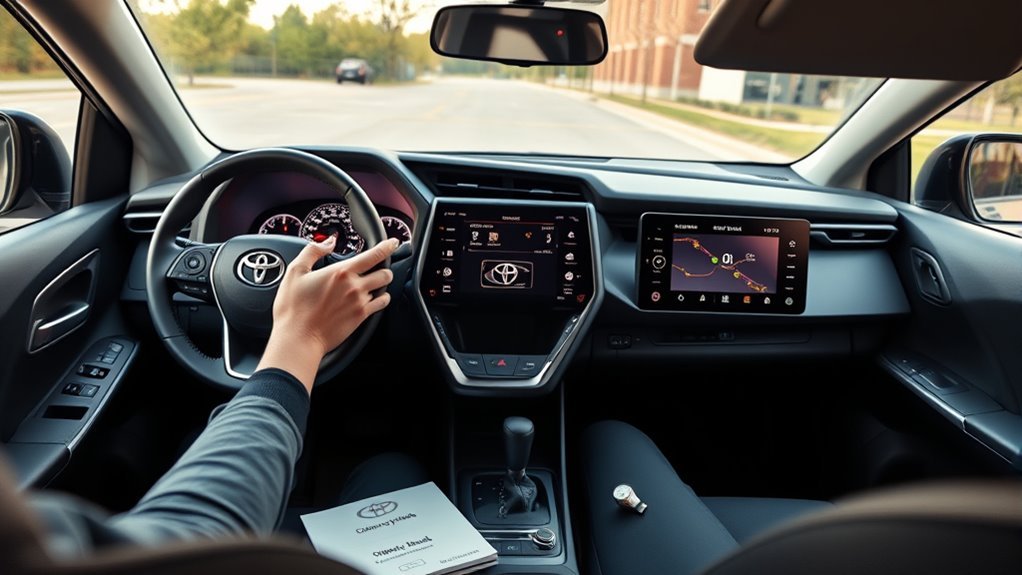
Most 2019–2025 RAV4 models moved TPWS initialization into the multi-information display instead of using a separate physical reset button. The exact menu wording can vary by display size and trim, but the process is usually built around Vehicle Settings and TPWS.
Accessing Vehicle Settings
Park the RAV4 in a safe place and adjust all tires to the specified cold PSI. If the vehicle was recently driven, let the tires cool before setting pressure. Then start the vehicle so the multi-information display is active.
- Use the steering-wheel arrow buttons to open the Settings menu.
- Scroll to Vehicle Settings and press OK.
- Select TPWS or Tire Pressure Warning System.
- Choose Set Pressure, Setting by Current Pressure, or similar wording.
- Press and hold OK until the display confirms that initialization has started or completed.
Do not perform this while the vehicle is moving. If the display does not show the TPWS option, check whether you are in the correct settings tab, then review the owner’s manual for your specific RAV4 year and trim.
Initiating TPWS Reset
When you hold OK in the TPWS menu, the RAV4 stores the current cold tire pressures as the baseline. This is why the pressure check must come first. If you recently changed tire size, replaced wheels, rotated tires, or replaced a pressure sensor, initialization alone may not be enough; the sensor ID registration may need to be confirmed by a Toyota dealer or qualified tire shop.
Note: Newer RAV4 models can display tire pressure readings on the multi-information display when equipped. Those displayed values may change as tires warm up, so use a manual gauge on cold tires when setting the baseline.
When to Reset RAV4 TPWS
You should initialize or reset the tire pressure warning system after pressure-related changes, not as routine guesswork. Resetting too often with inaccurate pressure can make the system less useful.
- After inflating or deflating tires to the placard PSI
- After a tire rotation, if the manual calls for initialization
- After changing tire size, wheel sets, or seasonal tires
- After repairing a tire leak
- After replacing a TPMS valve/transmitter, once the sensor ID is registered if required
- After the warning light remains on even though all tires have been checked and corrected
Do not reset before fixing a puncture, slow leak, damaged valve stem, or visible tire problem. Resetting cannot repair a tire, wake a dead sensor battery, or register an unprogrammed replacement sensor.
Troubleshooting TPMS Light: Common Causes and Fixes

If your RAV4 tire pressure light comes on, start with a manual pressure check. A steady light usually means one or more tires are below the warning threshold. A flashing light that later stays on usually suggests a TPWS malfunction, such as a sensor, receiver, registration, or communication problem.
| Symptom | Likely Cause | What to Do |
|---|---|---|
| Steady tire pressure light | Low tire pressure, temperature drop, slow leak | Check all tires cold, inflate to placard PSI, inspect for damage, then reset if needed |
| Light flashes, then stays on | TPMS/TPWS malfunction | Check pressure first; if it continues, have the system scanned |
| Light returns after reset | Leak, incorrect baseline, bad sensor, unregistered sensor | Recheck PSI, inspect for leaks, confirm sensor registration |
| One display reading is missing | Sensor communication or battery issue | Drive briefly after reset; if still missing, visit a qualified shop |
Temperature changes are a common trigger. A drop of about 10°F can lower tire pressure by roughly 1 PSI. That can be enough to turn on the light if your tires were already close to the lower limit.
[Products Worth Considering]

These aluminum alloy tire valve stem caps provide durable, corrosion-resistant protection for your vehicle’s valve stems while helping maintain stable tire pressure. The rubber seal design helps block dust, moisture, and debris, reducing the risk of air leakage and valve damage. Easy to install and styled for a clean look, they fit a range of cars, SUVs, trucks, and motorcycles.

This AstroAI digital tire pressure gauge delivers factory-calibrated readings with dependable ±1 PSI accuracy, helping you keep cars, trucks, motorcycles, and spare tires at the right pressure. Its bright backlit LCD and illuminated nozzle make nighttime checks easy, while the one-button unit switch and auto-off design add convenience and battery efficiency for routine maintenance.

This set of four pre-programmed TPMS sensors is designed to restore accurate tire pressure monitoring for a wide range of Toyota, Lexus, and Scion vehicles. Built to OE-quality standards with long battery life and broad compatibility, these sensors help maintain proper tire pressure, improve safety, and eliminate TPMS warning lights when installed and activated correctly.
TPMS Maintenance Tips and When to See a Shop
Check tire pressure at least once a month and before long trips. NHTSA and tire safety groups recommend regular tire maintenance because you cannot tell whether a tire is properly inflated just by looking at it. During each check, inspect tread depth, sidewalls, valve stems, and any tire that repeatedly loses pressure.
See a Toyota dealer or qualified tire shop if the tire pressure warning light keeps flashing, if a sensor was replaced, if a wheel set was changed, or if the system will not accept initialization. A shop can scan TPMS data, test sensor batteries, check transmitter IDs, inspect valve stems, and pressure-test tires for slow leaks.
- Replace missing valve caps to protect valve cores from dirt and corrosion.
- Use a gauge you trust; gas-station gauges can be inaccurate.
- Check pressure before towing or carrying heavy cargo.
- Recheck pressure after major weather changes.
- Do not ignore a repeatedly low tire, even if it reinflates easily.
[Products Worth Considering]

These metal tire valve stem caps are designed to protect tire valves from dust, moisture, corrosion, and air leakage while adding a clean, stylish look to your wheels. Made from durable aluminum alloy with rubber sealing rings, they are easy to install without tools and help support stable tire pressure for safer driving.

This dash clock spring replacement is designed for a wide range of Toyota vehicles and helps restore reliable steering wheel control functions. It supports audio controls, cruise control, and other multi-function commands while using vehicle-specific connectors for easier installation. Built with durable materials and OEM-referenced part compatibility, it is a practical solution for repairing steering wheel signal issues.

Add a touch of sparkle while helping protect your tire valves from dust, water, and sand with these handmade rhinestone valve stem caps. Designed for easy hand installation and a universal fit for many cars, trucks, motorcycles, and bicycles, they combine decorative style with practical sealing performance. The durable ABS construction with rubber seals helps support a tighter fit and helps reduce the risk of air leakage.
Frequently Asked Questions
How do I display tire pressure on a Toyota RAV4?
On equipped RAV4 models, use the steering-wheel controls to open the multi-information display and scroll to the tire pressure screen. Availability and menu wording vary by year and trim, so check your owner’s manual if you do not see individual tire readings.
Does the Toyota RAV4 tell you which tire is low?
Many newer RAV4 models can show individual tire pressure readings, but some older models may only show a general tire pressure warning light. If your RAV4 does not display each tire’s PSI, check all tires with a manual gauge.
Where is the TPMS reset button on a 2013–2018 RAV4?
It is usually under the lower dashboard near the steering column or driver’s knee area. Look low and to the right of the steering wheel, and use a flashlight because the button can be small and recessed.
Why can’t I find a TPMS reset button on my 2019–2025 RAV4?
Most 2019–2025 RAV4 models use the multi-information display instead of a separate physical button. Use Settings, Vehicle Settings, TPWS, then Set Pressure or similar wording.
Can I drive with the RAV4 tire pressure light on?
Drive cautiously only long enough to stop somewhere safe and check tire pressure. If a tire is visibly flat, damaged, or losing air quickly, do not keep driving on it. If the light flashes and then stays on, have the TPWS checked.
Should I use the PSI on the tire sidewall?
No. The sidewall number is the tire’s maximum pressure rating. Use the recommended cold tire inflation pressure on the RAV4’s tire and loading placard, usually on the driver’s door jamb.
Conclusion
Setting your RAV4 tire pressure warning system is simple when you do it in the right order. First, set every tire to the cold PSI listed on the door-jamb placard. Then use the correct reset method: the physical button for most 2013–2018 models or the TPWS menu for most 2019–2025 models. If the warning light keeps returning or flashes before staying on, do not keep resetting it. Check for leaks, sensor faults, or registration issues and have the system inspected by a qualified shop.
Sources
- Toyota Owners Manuals and Warranties — official Toyota manuals and model-specific owner information.
- Toyota Support: Tire Pressure Monitoring System — Toyota reset guidance and TPMS warning behavior.
- 2025 Toyota RAV4 Digital Manual: Tires — tire inspection and tire pressure warning system information.
- FuelEconomy.gov: Keep Tires Properly Inflated — fuel economy impact of correct tire pressure.
- NHTSA TireWise — tire safety, tire pressure, and TPMS background.
- 49 CFR § 571.138 — federal TPMS performance standard.