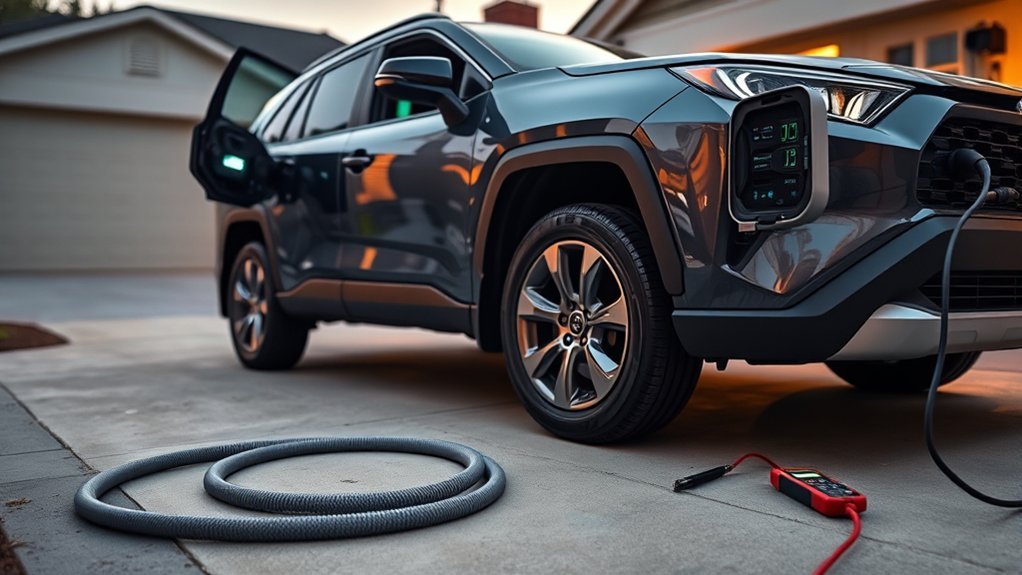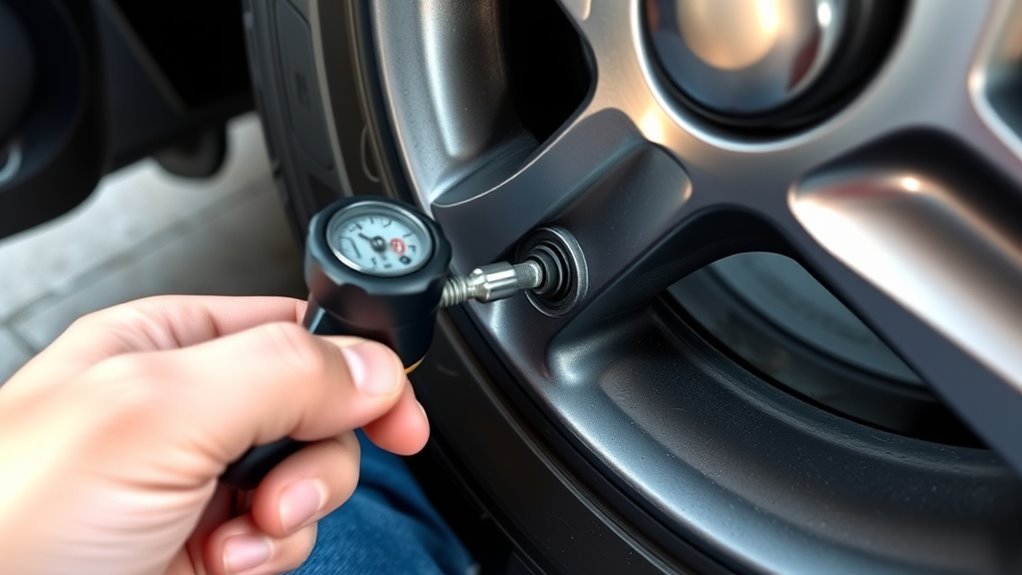
Checking tire pressure on a Toyota RAV4 is simple, but the details matter: use a handheld tire pressure gauge, check the tires when they are cold, and set the pressure to the number on your driver-side door jamb placard—not the number printed on the tire sidewall. Many RAV4 models list a cold pressure around the mid-30 PSI range, but your exact trim, tire size, and market can vary, so the placard is the number to trust.
Quick Answer
To check RAV4 tire pressure, park on level ground after the tires have been unused for at least three hours, remove the valve cap, press a tire pressure gauge firmly onto the valve stem, read the PSI, and inflate or release air until each tire matches the cold PSI listed on the driver-side door jamb placard.
Key Takeaways
- Check tire pressure at least once a month and before long trips.
- Use the driver-side door jamb placard for the correct cold PSI; the sidewall number is the tire’s maximum pressure, not your RAV4’s target pressure.
- Measure when tires are cold for the most accurate reading.
- Treat TPMS as a warning system, not a replacement for a manual gauge.
- A temperature drop of about 10°F can lower tire pressure by about 1 PSI, so check more often during seasonal changes.
At a Glance
| Time Required | 5–10 minutes |
| Difficulty | Easy |
| Tools Needed | Tire pressure gauge and an air pump, portable inflator, or home compressor |
| Cost | Free to a few dollars if using a gas-station air pump |
How to Check RAV4 Tire Pressure (Quick Steps)
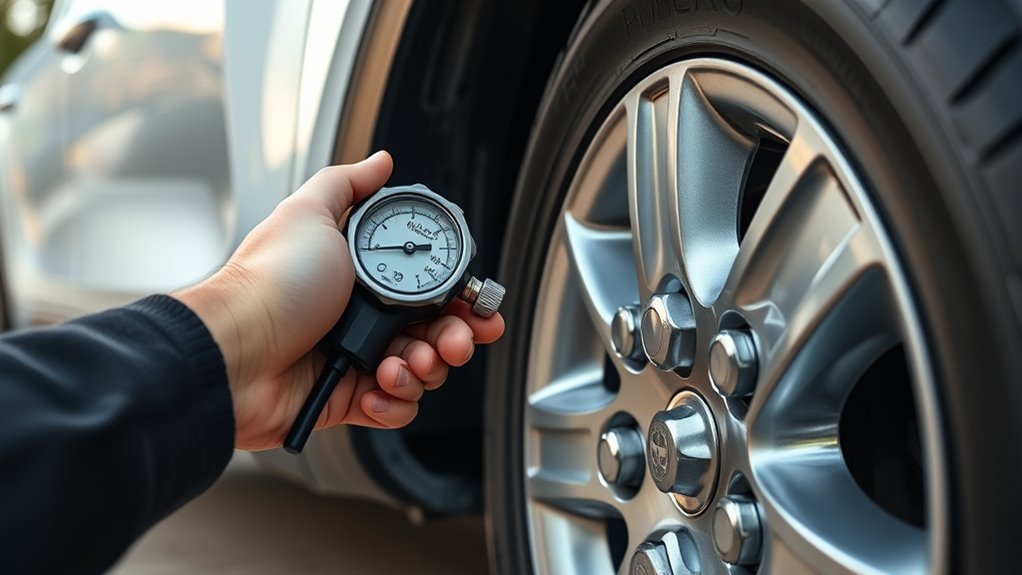
Use these quick steps when you only need the basic process:
- Park the RAV4 on level ground and let the tires cool for at least three hours if possible.
- Open the driver’s door and read the Tire and Loading Information label on the door edge or door jamb.
- Remove the valve cap from one tire.
- Press a handheld gauge straight and firmly onto the valve stem until the hissing stops.
- Read the PSI and compare it with the placard pressure for that tire position.
- Add air if the tire is low, or release a small amount of air if it is high.
- Recheck with the gauge after every adjustment.
- Replace the valve cap and repeat for all four tires. If your RAV4 has a spare tire, check it too according to the owner’s manual or spare-tire label.
Pro Tip: Keep a small digital or dial gauge in the glove box. Dashboard warnings are useful, but a gauge gives you the number you need to correct pressure accurately.
Confirm the Correct PSI for Your RAV4
Before you add or release air, confirm the correct pressure for your exact RAV4. The right source is the Tire and Loading Information label on the driver-side door jamb or door edge. Toyota also directs owners to the vehicle label or owner’s manual for tire inflation specifications.
[Products Worth Considering]
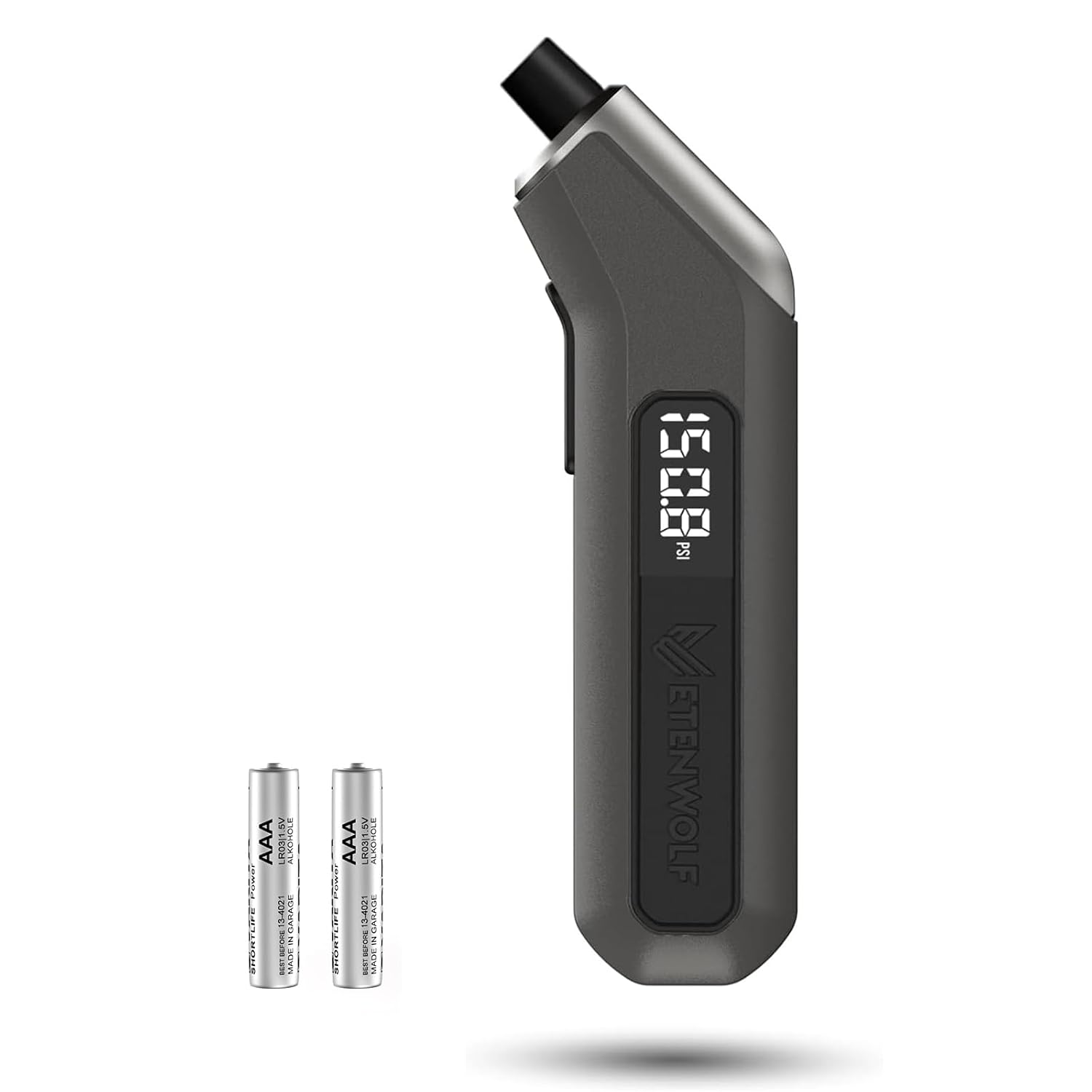
The ETENWOLF T300 digital tire pressure gauge delivers precise readings for cars, RVs, trucks, bikes, and heavy-duty vehicles with a wide measuring range and consistent accuracy. It is built to perform in extreme temperatures, includes a bright LED light for low-visibility use, and uses replaceable AAA batteries for convenient long-term operation. Durable enough to withstand rugged use, it is a practical tool for maintaining proper tire pressure across a variety of vehicles.

This versatile pickup tool set helps you retrieve lost metal items and inspect tight, hard-to-reach spaces with ease. It combines a strong magnetic pickup tool, telescoping inspection mirrors, and a bright LED flashlight to support automotive, HVAC, construction, and home repair tasks. The included portable tool bag keeps everything organized for quick access whenever you need it.

This portable tire inflator delivers fast, convenient inflation for cars, bikes, motorcycles, and balls with dual power options from a rechargeable battery or a 12V car cord. Its digital LCD pressure gauge and automatic shutoff help prevent over-inflation, while multiple preset modes and a custom setting make it easy to use for different inflation tasks. Built-in flashlight and USB power ports add extra emergency utility on the road.
Check the Door Jamb Sticker
Open the driver’s door and look for the factory tire placard. It lists the original tire size, recommended cold tire inflation pressure, seating capacity, and load information. The listed PSI is a cold pressure, meaning the tire has not been driven on for several hours.
Some 2021 RAV4 placards and tire guides list pressures around 35 PSI, but you should not assume one number fits every RAV4. Wheel size, trim, market, and replacement tires can change what your vehicle label says. Use the placard on your vehicle as the final authority.
| Where to Look | What It Tells You | Why It Matters |
|---|---|---|
| Driver-side door jamb placard | Recommended cold PSI and tire size | Best everyday reference for inflation |
| Owner’s manual | Tire care, TPMS, spare-tire, and load guidance | Helpful when the placard is damaged or unreadable |
| Tire sidewall | Maximum tire pressure and tire specifications | Not the target PSI for normal driving |
Do Not Use the Tire Sidewall as Your Target PSI
The tire sidewall shows the tire’s maximum inflation rating, not the RAV4’s recommended operating pressure. Using the sidewall number as your target can overinflate the tire, reduce ride comfort, affect traction, and increase uneven wear. Use the door-jamb placard or owner’s manual instead.
Warning: Do not bleed air out of a hot tire just because it reads higher than the placard pressure after driving. Driving warms the tire and raises pressure temporarily. Recheck and adjust when the tire is cold.
Make Sure the Placard Matches Your Tires
If your RAV4 still has the original tire size, the door-jamb placard is straightforward. If you have changed wheel size, installed non-original tires, or switched to winter tires, confirm that the tire size and load rating are appropriate for your RAV4. When in doubt, ask a Toyota dealer or tire professional to confirm the correct pressure for the tire-and-wheel setup.
When and Where to Check Tire Pressure
Check your RAV4 tire pressure at least once a month and before long trips. The National Highway Traffic Safety Administration recommends monthly checks with an accurate gauge because Tire Pressure Monitoring Systems only warn when a tire is significantly underinflated, and they are not a substitute for regular tire maintenance.
The best time to check tire pressure is in the morning before driving, or after the RAV4 has been parked for at least three hours. Choose a shaded driveway, garage, or level parking space. Try to avoid checking immediately after highway driving because warm tires can read several PSI higher than their true cold pressure.
A tire can lose pressure naturally over time, and temperature changes can shift pressure quickly. A monthly cold-pressure check is one of the simplest ways to protect handling, tire life, and fuel economy.
Check More Often During Temperature Swings
Tire pressure changes with ambient temperature. As a practical rule, tire pressure changes by about 1 PSI for every 10°F change in temperature. If the weather drops 30°F since your last check, a tire that was set correctly can read about 3 PSI lower the next cold morning.
Do not inflate above the placard number just because winter is coming. Instead, check the tires cold in the current conditions and bring them back to the placard pressure. If the TPMS light appears on a cold morning and then turns off after driving, still check the tire pressure with a gauge as soon as practical.
Step-by-Step: Read a Handheld Gauge
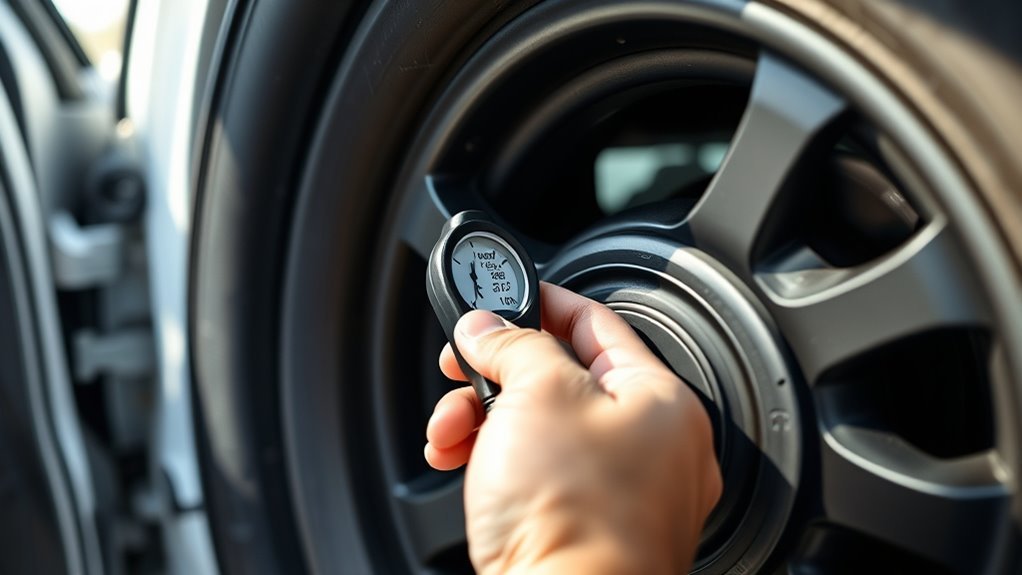
A handheld gauge is the most reliable tool for routine tire-pressure checks. Digital, dial, and pencil-style gauges can all work, but the gauge should seal cleanly on the valve stem and give repeatable readings.
- Find the target PSI. Read the driver-side door-jamb placard before you start.
- Remove the valve cap. Put it in your pocket or somewhere safe so it does not roll away.
- Press the gauge straight onto the valve stem. A brief hiss at first is normal, but continued hissing usually means the gauge is not sealed correctly.
- Read the gauge. Digital gauges show a number on the screen; dial gauges use a needle; pencil gauges push out a marked stick.
- Compare the reading to the placard. If the placard says different front and rear pressures, check each tire against its correct position.
- Adjust slowly. Add air in short bursts, or release air by gently pressing the valve pin.
- Recheck. Always remeasure after adjusting because it is easy to overshoot.
- Replace the valve cap. The cap helps keep dirt and moisture out of the valve.
| Step | Action | Purpose |
|---|---|---|
| 1 | Check when tires are cold | Gives the most accurate baseline |
| 2 | Press the gauge firmly and straight | Prevents air leaks and false readings |
| 3 | Inflate, deflate, and recheck | Gets the tire to the placard pressure |
TPMS Alerts vs. Manual Gauge: Which to Trust?
Your RAV4’s TPMS is helpful, but it should be treated as a backup warning system. Toyota explains that the system alerts you when it senses seriously low pressure, while NHTSA notes that TPMS is not intended to replace regular tire checks with a gauge.
TPMS Warning Limitations
A steady TPMS warning light usually means at least one tire is significantly underinflated. A TPMS light that flashes for about 60 to 90 seconds and then stays on usually points to a system malfunction, such as a sensor or communication issue. If the light flashes and remains on after you correct tire pressure, have the system inspected.
TPMS may not warn you about small pressure losses early enough for ideal fuel economy or tire wear. It also may not account for all real-world details, such as a spare tire without a sensor, a sensor battery issue, or pressure changes caused by temperature.
Benefits of a Manual Gauge
A manual gauge gives you an exact PSI reading at the moment you check. That lets you catch gradual leaks, seasonal pressure drops, and uneven tire pressures before they become dashboard warnings. A gauge also helps confirm that a gas-station pump or portable inflator is accurate.
Note: Some RAV4 models, trims, markets, and model years can show individual tire pressures in the multi-information display or through Toyota connected features. If your display or app provides readings, still verify with a handheld gauge when setting cold pressure.
Inflate RAV4 Tires at a Gas Station Pump
A gas-station air pump works well if you do not have a home compressor or portable inflator. For the best result, check your tire pressure at home while the tires are cold, write down how many PSI each tire needs, then drive to the nearest air pump. If the station is far away and the tires are warm by the time you arrive, add the missing air and recheck again when the tires are cold later.
- Park close enough for the hose to reach all four tires.
- Set the pump to the placard PSI if it has an automatic setting.
- Remove the valve cap and press the hose chuck firmly onto the valve stem.
- Inflate in short bursts if the pump is manual.
- Check frequently with your own gauge instead of relying only on the pump gauge.
- Replace each valve cap when finished.
If a tire is much lower than the others, listen for air escaping around the valve and inspect the tread for a nail, screw, or sidewall damage. Do not ignore a tire that repeatedly loses pressure after being inflated.
[Products Worth Considering]

K&N Select Oil Filter SO-7020 is engineered to deliver dependable engine protection and high-efficiency filtration for a wide range of compatible vehicles. Its pleated synthetic-blend media helps capture harmful contaminants while supporting use with synthetic, conventional, high-mileage, and blended motor oils. Designed for long service intervals and backed by warranty coverage, it offers premium performance for everyday maintenance.

This custom-fit windshield sun shade is designed for Toyota RAV4 models from 2013 to 2026, helping block sunlight and reduce interior heat for a more comfortable cabin. Its double-layer construction reflects UV rays and protects your dashboard and seats, while the foldable design makes it easy to install, remove, and store. Made with eco-friendly, odor-free materials, it offers a practical everyday solution for parking, camping, and hot-weather driving.

20" Extended & Flexible: This 20-inches long tire inflator hose offers great flexibility and reach for use in most vehicles. Features a standard fine-thread Schrader valve (0.305" x 32TPI), making it widely compatible with most portable tire inflators
Use a Portable Inflator or Home Compressor
A portable inflator is one of the easiest tools to keep in a RAV4. Many plug into a 12-volt outlet or use a rechargeable battery, and some allow you to set a target PSI with automatic shutoff. A home compressor fills faster and is useful if you maintain multiple vehicles.
[Products Worth Considering]

ADVANCED TRUEGAUGE SCREEN: This battery tire inflator includes updated sensor technology, capable of collecting pressure data from tire inflators at a frequency of 200 times per second. Its valid data rate is higher than 80%, which is 60% better than the market average. From routine maintenance to roadside emergencies, its accurate readings ensure confident pressure checks and a safer driving experience.Suitable as a Father's Day gift for your dad.

RAPID INFLATION & ROAD-READY PORTABILITY: Powerful 120W motor delivers up to 35L/min airflow—inflates a standard car tire (195/65 R15) from 30 to 36 PSI in under 1 minute under ideal operating conditions. Weighs only 2.2 lbs and fits glove compartments or trunks for daily commutes, road trips, and emergencies. Plugs into standard 12V DC car outlet with 15A fuse protection. AIRUN H features its cordless counterpart H2 Pro.

Fast-Inflation & Compact: Our compact and lightning-fast upgrade to the popular R7 air compressor portable. With a powerful 40L/Min cylinder, this air pump for car can inflate a tire (215/50 R17) in under a minute (26-35PSI) and even Tesla tires (235/40 R19) in just 1.5 minutes (28-36PSI). Say goodbye to slow and cumbersome inflation processes - This 150PSI tire inflator portable air compressor offers a smoother, faster solution for all your inflation needs.
Portable Inflator Benefits
- Convenience: You can correct pressure at home, at work, or before a trip without searching for a pump.
- Control: Built-in gauges and automatic shutoff features help prevent overinflation.
- Preparedness: A compact inflator can help you handle a slow leak long enough to reach a safe repair location.
Home Compressor Tips
Before using a compressor, make sure the hose, chuck, and fittings are in good condition. Set the pressure carefully, inflate in short bursts, and verify the result with your handheld gauge. Keep the compressor intake and vents clean, and store the hose so it does not crack or kink.
Pro Tip: If your inflator has an automatic shutoff, set it to the door-jamb PSI, not the tire sidewall maximum. Then confirm with your handheld gauge before driving.
Adjust Tire Pressure for Temperature and Load
Temperature and load both affect tire pressure, but the safest everyday rule is simple: set the tires to the cold PSI on the RAV4’s placard. If the outside temperature changes sharply, recheck the tires cold and return them to the placard pressure.
Temperature Adjustments
When temperature drops, tire pressure drops. When temperature rises, tire pressure rises. If your TPMS light appears during the first cold snap of the season, do not assume the system is faulty. Check every tire with a gauge and inflate any low tire back to the placard pressure.
Load and Towing Considerations
Extra passengers, luggage, cargo, or towing can make correct tire pressure even more important. Follow the vehicle placard, the owner’s manual, and any tire manufacturer guidance for the tire size installed on your RAV4. Never exceed the tire’s maximum sidewall pressure or the vehicle’s load rating.
Top Tire-Pressure Mistakes and How to Avoid Them
Avoid these common mistakes when checking and setting RAV4 tire pressure:
- Waiting for the TPMS light: By the time the light comes on, at least one tire may already be significantly underinflated.
- Using the tire sidewall number: The sidewall pressure is a maximum tire rating, not the RAV4’s normal target PSI.
- Checking only one tire: Tire pressure can vary from wheel to wheel, so check all four.
- Skipping the spare: If your RAV4 has a spare tire, check it according to the owner’s manual. Many spare tires require a different pressure than the road tires.
- Bleeding hot tires: Tire pressure rises after driving. If you release air from a hot tire to match the cold placard pressure, it may become underinflated once it cools.
- Ignoring repeated pressure loss: A tire that keeps losing air may have a puncture, leaking valve stem, damaged wheel, or bead leak.
- Forgetting valve caps: Valve caps help keep dirt and moisture out of the valve stem.
TPMS Troubleshooting and When to See a Mechanic
When the TPMS warning light turns on, first check every tire with a gauge and inflate low tires to the placard PSI. After correcting pressure, drive normally for a short time so the system can update. If the light remains on, check your owner’s manual for the proper TPMS reset or initialization process for your model year and display type.
Steady TPMS Light
A steady TPMS light usually means one or more tires are low. Check all tires, including the spare if applicable, and inspect for visible damage. If one tire is far lower than the others, do not simply refill it and forget it. Look for a puncture or have a tire shop inspect it.
Flashing TPMS Light
If the TPMS light flashes for about a minute and then stays on, the system may have a malfunction. Common causes include a dead TPMS sensor battery, a damaged sensor, a sensor that was not registered after tire service, or a system fault. Toyota and NHTSA recommend inspection when a TPMS malfunction warning persists.
When to Get Professional Help
See a mechanic, tire shop, or Toyota dealer if:
- The same tire keeps losing pressure.
- The TPMS light flashes and stays on.
- The TPMS warning returns after all tires are set correctly.
- You find a nail, screw, bulge, cut, or sidewall damage.
- The valve stem leaks or the wheel appears damaged.
- You installed new tires, rotated tires, or changed wheels and the system no longer reads correctly.
Frequently Asked Questions
How do I see tire pressure on a RAV4 display?
It depends on the model year, trim, market, and display setup. Some RAV4 models can show tire pressure in the multi-information display, and some Toyota connected features may show tire pressure in the app. If your RAV4 does not show individual readings, use a handheld gauge and the door-jamb placard.
Does a Toyota RAV4 tell you which tire is low?
Some RAV4 models or connected services can show individual tire pressure readings, which can help identify the low tire. A basic TPMS warning light may only tell you that at least one tire is low, so you should check each tire manually with a gauge.
What PSI should my Toyota RAV4 tires be?
Use the cold PSI listed on your driver-side door jamb placard. Many RAV4 models are in the low-to-mid 30 PSI range, but the exact value can vary by year, trim, tire size, and market. Do not use the maximum PSI printed on the tire sidewall as your target pressure.
Should I check RAV4 tire pressure hot or cold?
Check tire pressure cold whenever possible. A cold tire is one that has been parked for at least three hours or driven only a short distance at low speed. Hot tires can read higher because pressure rises as the tire warms up.
Why does my RAV4 TPMS light come on in cold weather?
Cold weather lowers tire pressure. A drop of about 10°F can reduce pressure by about 1 PSI, which may trigger the TPMS light if the tires were already close to the warning threshold. Check all tires cold and inflate them to the placard pressure.
Conclusion
Checking RAV4 tire pressure is a quick maintenance habit that protects handling, tire life, fuel economy, and safety. Use the driver-side door jamb placard for the correct cold PSI, measure with a reliable handheld gauge, and treat TPMS as a backup warning—not your only pressure check. Recheck more often during temperature swings, before long trips, and anytime a tire looks low or the warning light appears.
Sources
- Toyota Owners: 2021 RAV4 Tire Inflation Pressure — Toyota owner’s manual guidance for tire inflation pressure.
- Toyota Support: How the Tire Pressure Monitor System Works — Toyota explanation of TPMS warnings and low-pressure alerts.
- NHTSA TireWise: Tire Safety Ratings and Awareness — cold-pressure checks, placard guidance, TPMS limitations, and tire safety basics.
- FuelEconomy.gov: Keeping Your Vehicle in Shape — fuel-economy effects of proper tire inflation and sidewall-pressure warning.
- Bridgestone: Proper Tire Inflation — monthly pressure checks, cold-tire guidance, and temperature-related PSI changes.