
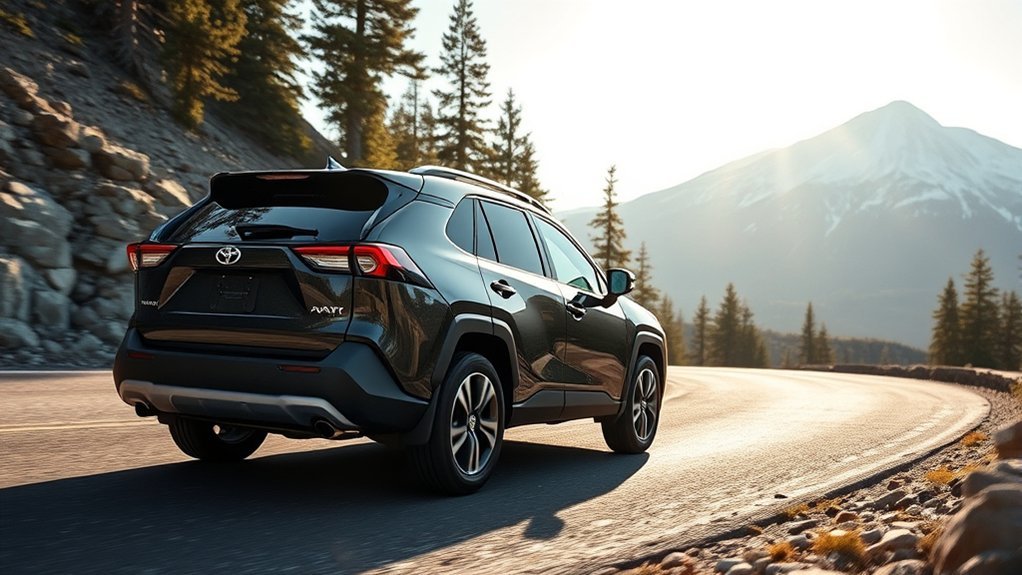
In your Toyota RAV4, Traction Control (TRC) and Vehicle Stability Control (VSC) are two related safety systems that help the tires keep grip and help the vehicle stay pointed where you intend to go. They should stay on for normal driving, especially in rain, snow, ice, gravel, or sudden maneuvers. The main exception is when the vehicle is stuck in mud, dirt, or snow and you need limited wheel spin to rock it free.
Quick Answer
Keep traction control and stability control on in your RAV4 for everyday driving. TRC limits wheel spin during acceleration, while VSC helps reduce skids during cornering or sudden steering. Turn TRC/VSC off only briefly when stuck in mud, dirt, or snow, then turn them back on.
Key Takeaways
- TRC helps reduce drive-wheel spin when you accelerate on slippery surfaces.
- VSC helps control skidding when the RAV4 swerves suddenly or turns on a slippery road.
- A flashing slip indicator usually means the system is actively helping, not that it has failed.
- Use the VSC OFF/traction-control button only when you need wheel spin to free the vehicle from mud, dirt, or snow.
- If a warning light stays on after restarting, drive gently and schedule a diagnostic check.
At a Glance
| Time Required | Less than 1 minute to switch TRC or VSC on/off |
| Difficulty | Easy, but use the override only in the right situation |
| Tools Needed | None for normal use; tire pressure gauge and OBD-II scan tool can help with troubleshooting |
| Cost | $0 to operate; diagnostic costs vary if a fault light stays on |
Understanding Traction Control and Vehicle Stability Control in the RAV4

TRC and VSC are part of your RAV4’s driving-assist systems. Toyota describes these systems as supplemental safety aids, which means they help in certain situations but do not replace careful steering, braking, tire maintenance, or speed control.
Traction Control (TRC) helps reduce drive-wheel spin when you start moving or accelerate on a slippery road. If one or more wheels begin to spin faster than the others, the system can reduce engine output and apply brake force to help restore grip. This is most useful on wet pavement, snow, ice, dirt, and loose gravel.
Vehicle Stability Control (VSC) helps reduce skidding when the RAV4 turns on slippery pavement or reacts to a sudden steering input. It works with sensors and the braking system to apply brake force to individual wheels and may reduce engine power to help the vehicle follow the driver’s intended path. Toyota’s current RAV4 owner information describes VSC as helping the driver control skidding when swerving suddenly or turning on slippery road surfaces.
In federal safety language, electronic stability control is designed to help when a driver loses directional control, including situations that can lead to rollover. The current Federal Motor Vehicle Safety Standard No. 126 defines ESC as a system that can adjust brake torque at individual wheels and modify engine torque to help the driver maintain control.
A 2025 NHTSA evaluation found electronic stability control was associated with a 47.7% relative risk reduction in single-vehicle, first-event rollover crashes after accounting for body type and travel speed.
TRC vs. VSC vs. ABS: What Each System Does
| System | What It Helps With | When You May Notice It |
|---|---|---|
| TRC | Limits drive-wheel spin during acceleration | Starting from a stop on wet pavement, snow, ice, mud, or gravel |
| VSC | Helps reduce skids and loss of directional control | Sudden steering, slippery turns, or evasive maneuvers |
| ABS | Helps prevent wheel lock during hard braking | Emergency braking or braking on a slick road |
| Trailer Sway Control | Helps reduce trailer sway by braking individual wheels and reducing torque | When towing, if the trailer begins to sway |
Note: System names and messages vary by model year, trim, market, and powertrain. Your RAV4 may show “TRAC OFF,” “VSC OFF,” “Traction Control Turned OFF,” or a slip-indicator icon. Always compare the indicator with your exact owner’s manual.
[Products Worth Considering]
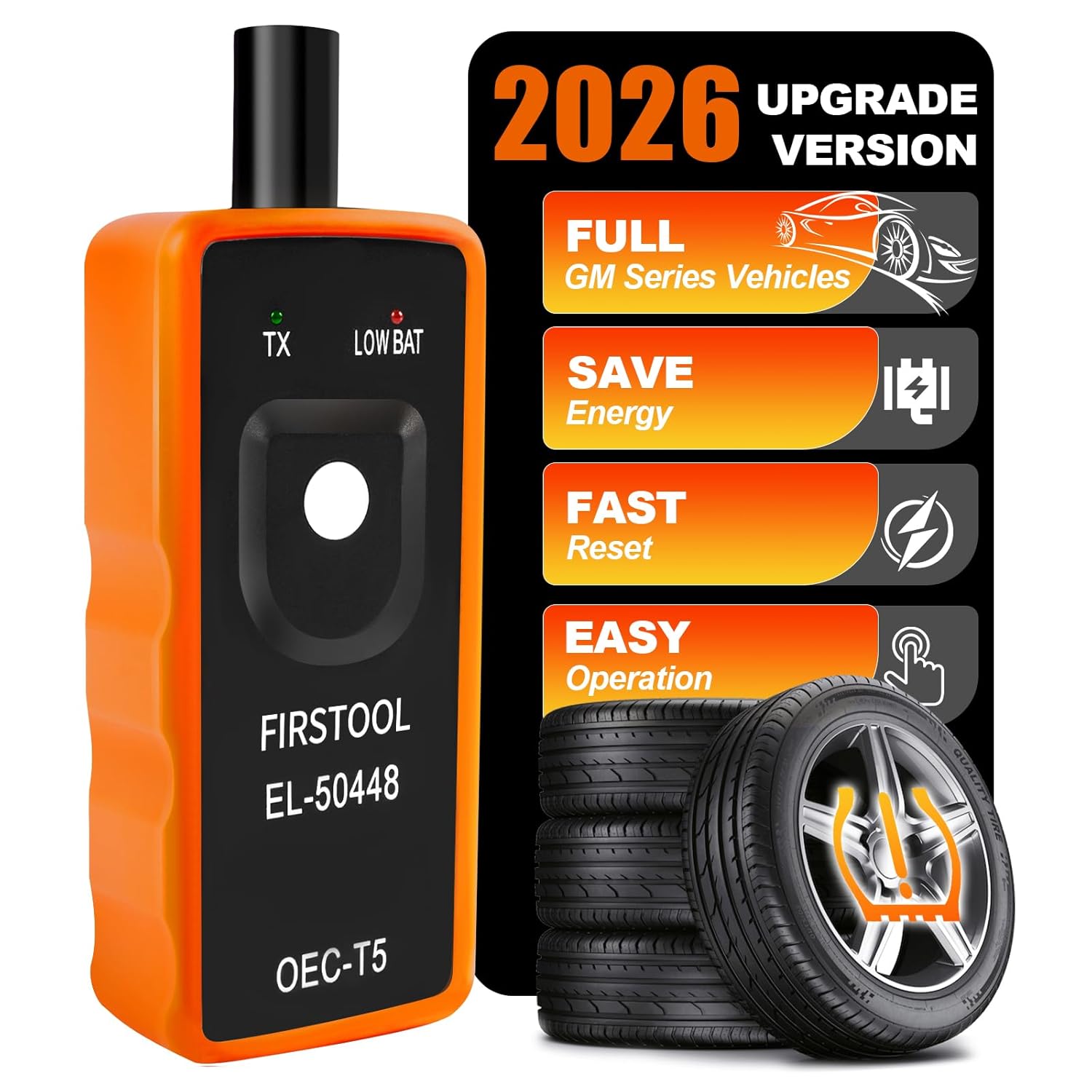
This EL-50448 TPMS relearn tool helps quickly activate and reset tire pressure sensors so your vehicle’s monitoring system stays accurate after tire rotations, sensor replacement, or seasonal tire changes. Designed for many GM-related vehicles and compatible with common 315 and 433 MHz TPMS systems, it offers simple one-button operation and reliable performance for clearing warning lights and relearning sensor positions.

This portable tire inflator delivers fast, convenient inflation for cars, bikes, motorcycles, and balls with dual power options from a rechargeable battery or a 12V car cord. Its digital LCD pressure gauge and automatic shutoff help prevent over-inflation, while multiple preset modes and a custom setting make it easy to use for different inflation tasks. Built-in flashlight and USB power ports add extra emergency utility on the road.

The ANCEL AD410 helps drivers quickly read and clear engine-related fault codes, view live data, and understand why the check engine light is on before heading to a repair shop. With built-in code definitions, readiness checks, and support for common OBD2 functions, it makes basic diagnostics straightforward for beginners and DIY users. Powered directly from the vehicle and easy to use with no app required, it offers practical value for everyday vehicle troubleshooting.
How to Use Traction Control for Safer Driving in Slippery Conditions
For normal driving, leave TRC and VSC switched on. That includes city driving, highway driving, rain, light snow, icy patches, loose gravel, and rough pavement. These systems are designed to react faster than a driver can when a tire starts to lose grip.
Use these habits to help TRC and VSC work properly:
- Accelerate smoothly: Hard throttle can overwhelm available grip before the system can settle the vehicle.
- Brake early on slick roads: TRC does not shorten stopping distance; tire grip and road conditions still matter.
- Avoid sharp steering inputs: VSC can help correct a skid, but it cannot overcome excessive speed.
- Keep tires in good condition: Worn tread, mismatched tires, or underinflated tires can reduce the effectiveness of every stability and traction system.
- Use the correct tires for the season: All-season tires may not perform like dedicated winter tires in deep snow or severe cold.
NHTSA’s TireWise safety guidance emphasizes checking tire pressure, tread, tire age, and tire recalls. That matters because TRC and VSC can only work with the grip your tires can provide.
Pro Tip: If the slip indicator flashes while you accelerate on a slick surface, ease off the gas instead of pressing harder. Smooth throttle gives the system more room to regain traction.
What Do Those Warning Lights Mean for Your RAV4?
RAV4 traction and stability warnings can be confusing because some lights mean “the system is helping,” while others mean “the system is off” or “the system needs attention.” The Toyota RAV4 owner manual driving-assist section notes that the slip indicator flashes while TRC, VSC, Multi-Terrain Select, or Trailer Sway Control is operating.
| Light or Message | What It Usually Means | What to Do |
|---|---|---|
| Flashing slip indicator | TRC, VSC, Multi-Terrain Select, or Trailer Sway Control is actively working | Drive smoothly and reduce speed if the road is slippery |
| “Traction Control Turned OFF” or “TRAC OFF” | TRC has been manually disabled or temporarily limited | Press the VSC OFF/traction-control button again to restore it, or check the manual if the message remains |
| VSC OFF indicator | VSC and related systems may be switched off | Turn the systems back on before returning to normal driving |
| Warning light stays on after restart | Possible system fault, low battery voltage, wheel-speed sensor issue, ABS concern, or calibration problem | Drive cautiously and schedule a diagnostic check |
Warning: Do not ignore a traction, stability, ABS, or brake warning light that stays on. These systems share sensors and brake-control hardware, so one fault can affect more than one safety feature.
When to Disable Traction Control and Vehicle Stability Control for Off-Roading

The main reason to turn TRC or VSC off is simple: sometimes a stuck vehicle needs limited wheel spin. Toyota’s support guidance says that if the front wheels get stuck in fresh snow or mud, you may need to turn off TRC and VSC so you can rock the vehicle free. This is a short-term recovery technique, not a setting for regular driving.
Use the override only in situations like these:
- Stuck in mud, dirt, or snow: TRC may reduce engine power when you actually need gentle wheel spin to move.
- Rocking the vehicle free: Alternating between drive and reverse may work better with TRC temporarily disabled.
- Slow off-road crawling: Some loose surfaces require controlled wheel slip, especially at low speed.
- Using off-road modes: If equipped, Trail Mode, Multi-Terrain Select, or AUTO LSD may be more appropriate than fully disabling stability systems.
Do not turn TRC or VSC off for “better performance” on public roads. On wet pavement, snow, ice, or gravel, disabling these systems can make the RAV4 easier to spin, slide, or lose control.
[Products Worth Considering]
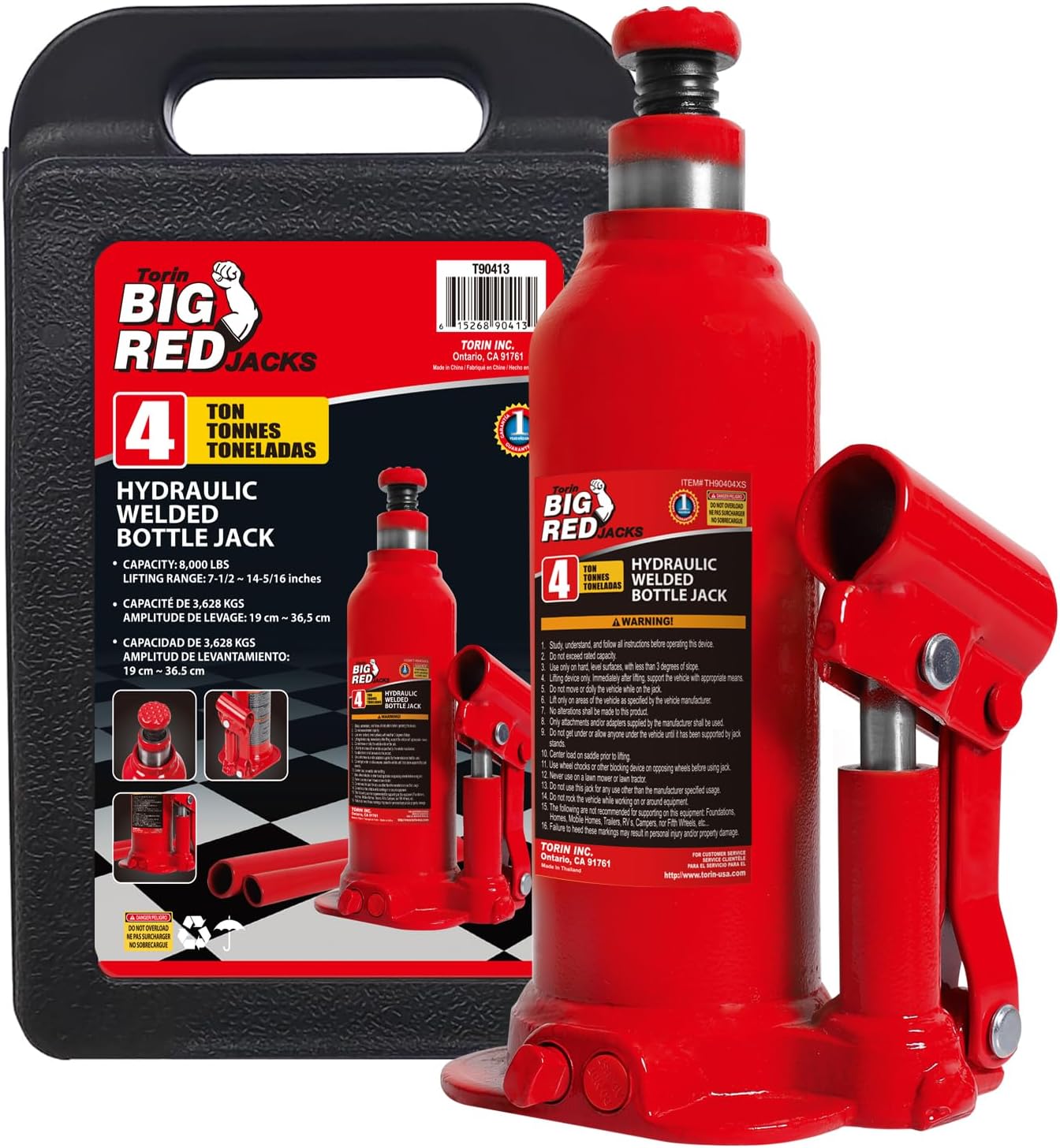
The Torin Big Red hydraulic bottle jack is built for residential and commercial lifting tasks, offering a stable wide base and rugged steel construction for dependable performance. Its smooth pressure pump, adjustable screw top extension, and serrated saddle make lifting easier and more secure, while the included carrying case simplifies storage and transport. Designed to meet ASME safety standards, it is ideal for vehicles, machinery, and other heavy-duty applications.

This smart color coded tire tread depth gauge makes it easy to check tread wear at a glance with clear red, yellow, and green ranges. Calibrated from 0 to 1 inch in 1/32 inch increments, it helps you quickly assess tire condition for safer driving and timely replacements. The pocket clip design makes it convenient to carry and use on trucks, motorcycles, cars, and other passenger vehicles.
How to Turn TRC and VSC Off
Button location and dashboard messages vary by model year, but Toyota’s general VSC OFF guidance is consistent:
| Action | How to Do It | Best Use |
|---|---|---|
| Turn off TRC only | Quickly press and release the VSC OFF/traction-control button | When the vehicle is stuck and TRC is cutting power |
| Turn off TRC and VSC | While stopped, press and hold the button for more than 3 seconds | When rocking the vehicle free from deeper mud or snow |
| Turn systems back on | Press the button again or restart the vehicle, depending on model behavior | Immediately after the vehicle is free |
| Use Trail Mode or Multi-Terrain Select | Select the mode if your RAV4 is equipped with it | Low-speed rough surfaces where managed traction is better than turning systems fully off |
On some RAV4 models, turning off VSC may also limit related safety systems such as Pre-Collision System intervention. That is another reason to restore TRC and VSC as soon as the recovery situation is over.
Note: If only TRC is turned off, some Toyota models may automatically restore traction control as vehicle speed increases. If both TRC and VSC are turned off, do not assume they will re-enable at a certain speed; press the button again or restart the vehicle according to your owner’s manual.
What to Do When Traction Control Fails
If the traction control, VSC, ABS, or brake warning light stays on, treat it as a safety issue. The RAV4 may still drive, but the system may not intervene normally during wheel spin, skidding, or hard braking.
- Stay calm and reduce speed. Avoid hard acceleration, sudden lane changes, and sharp turns.
- Check whether you turned the system off. Look for a TRAC OFF, VSC OFF, or “Traction Control Turned OFF” message.
- Press the VSC OFF/traction-control button once. If it was manually disabled, this may restore the system.
- Restart the vehicle in a safe place. A restart can clear a temporary message, but it will not fix a real fault.
- Check tire pressure and tire condition. Uneven tire sizes, low pressure, or worn tread can confuse traction and stability systems.
- Look for other warning lights. ABS, brake, check-engine, and tire-pressure warnings can be related.
- Schedule diagnostics if the light returns. A technician can scan for stored codes from wheel-speed sensors, steering-angle sensors, yaw sensors, ABS components, or powertrain systems.
[Products Worth Considering]

Replacement For - Suitable for Toyota RAV4 2019-2022. Function - It can be used by Installing directly to the original car interior button. Material - Handbrake Drive Mode...
Common Causes of RAV4 Traction Control Light Problems
- Dirty or damaged wheel-speed sensor: A common cause because TRC, VSC, and ABS all depend on wheel-speed data.
- Low or weak 12-volt battery: Low voltage can trigger temporary warning messages in modern vehicles.
- Mismatched tires: Different tire sizes or uneven tread depths can create unusual wheel-speed readings.
- ABS system fault: TRC and VSC often rely on ABS hardware to apply brake pressure.
- Steering-angle or yaw sensor issue: VSC needs accurate vehicle-motion and steering data.
- Recent alignment, suspension, or brake work: Some repairs may require inspection or calibration if warning lights appear afterward.
Warning: If the brake warning light is on, the brake pedal feels unusual, or the vehicle pulls when braking, stop driving as soon as it is safe and have the RAV4 inspected before continuing.
Best Practices for RAV4 Traction and Stability Control
The safest approach is to let the RAV4 manage traction unless you have a clear reason to override it. These rules cover most real-world situations:
- Leave TRC and VSC on for daily driving. This includes dry roads, wet roads, snow, ice, and highway driving.
- Turn TRC off briefly only when stuck. If the system is cutting power while you are trying to rock the vehicle free, a short override can help.
- Use off-road modes before full disablement. If your RAV4 has Trail Mode, Multi-Terrain Select, or AUTO LSD, try the correct mode first.
- Turn the systems back on immediately. Once you are back on a normal road, restore TRC and VSC.
- Do not use VSC OFF as a sport mode. It reduces a safety net that can help during sudden swerves or slippery turns.
- Maintain tires carefully. Tire grip is the foundation of every electronic safety system.
Frequently Asked Questions
What does traction control do on a Toyota RAV4?
Traction control helps reduce drive-wheel spin when you accelerate. If a wheel starts spinning on rain, snow, ice, mud, or gravel, the system can reduce engine output and apply braking to help the tire regain grip.
Should I drive with traction control on or off?
Drive with traction control on almost all the time. Turn it off only briefly when the RAV4 is stuck in mud, dirt, or snow and the system is cutting power you need to rock the vehicle free.
When should I turn off traction control in a RAV4?
Turn off traction control only when you need limited wheel spin, such as when stuck in mud, dirt, or deep snow. Once the vehicle is moving again, turn the system back on before normal driving.
How do I turn off TRC and VSC on a Toyota RAV4?
To turn off TRC only, quickly press and release the VSC OFF or traction-control button. To turn off both TRC and VSC, stop the vehicle and hold the button for more than 3 seconds. Press it again to turn the systems back on.
What does the flashing slip indicator mean?
A flashing slip indicator usually means the traction or stability system is actively working. Ease off the accelerator, steer smoothly, and reduce speed if road conditions are slippery.
Why does my RAV4 say “Traction Control Turned OFF”?
The message usually means TRC was manually disabled or temporarily limited. Press the VSC OFF/traction-control button again to restore it. If the message stays on after restarting, have the system scanned for diagnostic codes.
How does Toyota Vehicle Stability Control work?
Toyota VSC compares steering input with vehicle movement. If the vehicle begins to skid or does not follow the intended path, the system can apply brake force to individual wheels and reduce engine power to help regain control.
Can I keep driving if the traction control light stays on?
You may be able to drive cautiously, but the system may not work correctly. Avoid slippery roads and sudden maneuvers when possible, and schedule a diagnostic check if the light remains on after restarting.
Conclusion
TRC and VSC are two of the RAV4’s most useful safety helpers. TRC helps when the tires spin during acceleration, while VSC helps when the vehicle begins to skid or drift away from your intended path. Keep both systems on for normal driving, and use the OFF button only for short, low-speed recovery situations such as mud, dirt, or snow. Once the RAV4 is free, turn the systems back on and let them do their job.
Sources
- Toyota Owners: 2025 RAV4 Driving Assist Systems — backs up TRC, VSC, slip-indicator, and VSC OFF operation details.
- Toyota Support: When Should I Use the VSC OFF Button? — backs up when and how to turn TRC/VSC off when stuck in mud or snow.
- eCFR: 49 CFR § 571.126 Electronic Stability Control Systems — backs up federal ESC purpose and system-function definitions.
- NHTSA: Evaluation of Electronic Stability Control, FMVSS No. 126 Update — backs up ESC rollover-risk reduction data.
- NHTSA TireWise — backs up tire-pressure and tire-maintenance safety guidance.

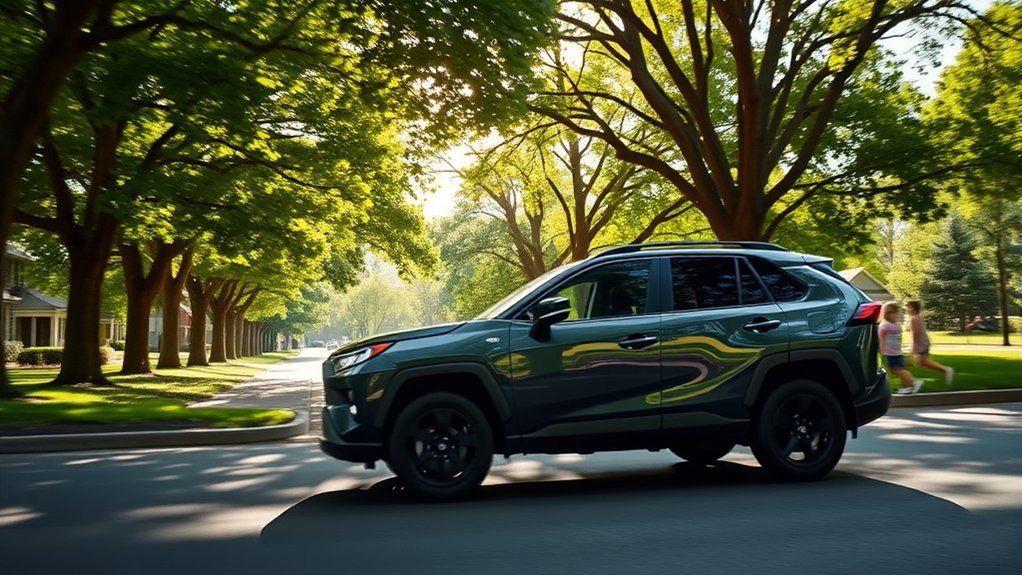


[…] a separate explanation of how the electronic systems respond on slick surfaces, see RAV4 traction and stability control. Those systems can assist the driver, but they do not create tire grip or override posted chain […]