
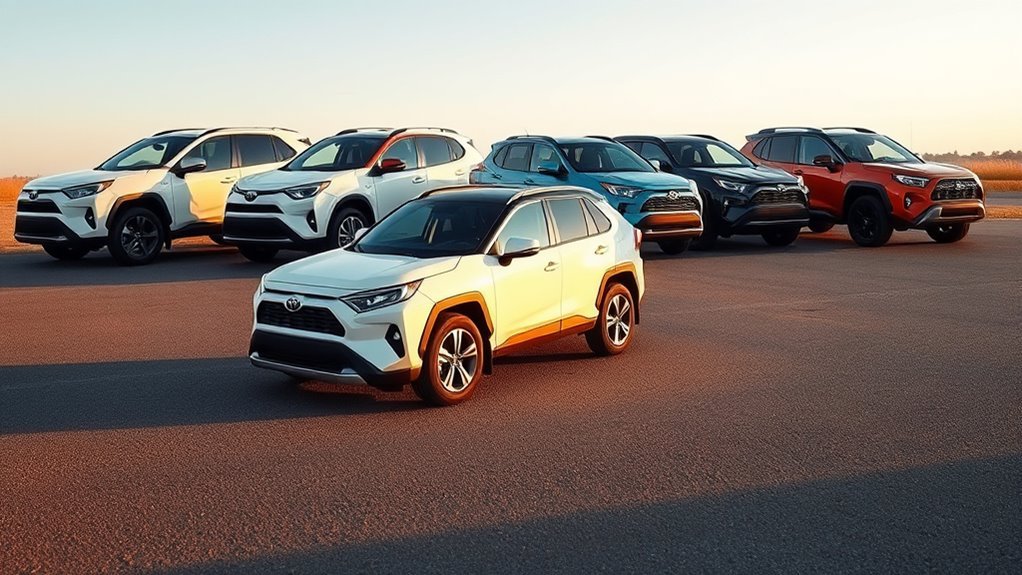
You’ll see the Toyota RAV4 evolve from a small, carlike crossover into a family-friendly SUV with gas, hybrid, and plug-in hybrid chapters. In the U.S., the RAV4 arrived for the 1996 model year; for 2026, Toyota begins the sixth generation with a fully electrified lineup made up of hybrid and plug-in hybrid models.
Quick Answer
The Toyota RAV4 has six U.S. generations: 1996–2000, 2001–2005, 2006–2012, 2013–2018, 2019–2025, and 2026–present. It started as a compact, car-based SUV and grew into a broader lineup with hybrids, plug-in hybrids, stronger AWD systems, and more advanced safety technology.
Key Takeaways
- The first RAV4 reached U.S. buyers for 1996, after Toyota introduced the model globally in the mid-1990s.
- The 2006–2012 third generation is the only U.S. RAV4 generation with the well-known 3.5-liter V6 option.
- The 2016 RAV4 Hybrid marked the model’s big shift toward electrification.
- The 2019–2025 fifth generation added the TNGA-K platform, RAV4 Prime plug-in hybrid, TRD Off-Road trim, and stronger AWD options.
- The 2026 RAV4 starts the sixth generation and moves the lineup to hybrid and plug-in hybrid powertrains only.
Quick RAV4 Generations Snapshot (1996–Present)
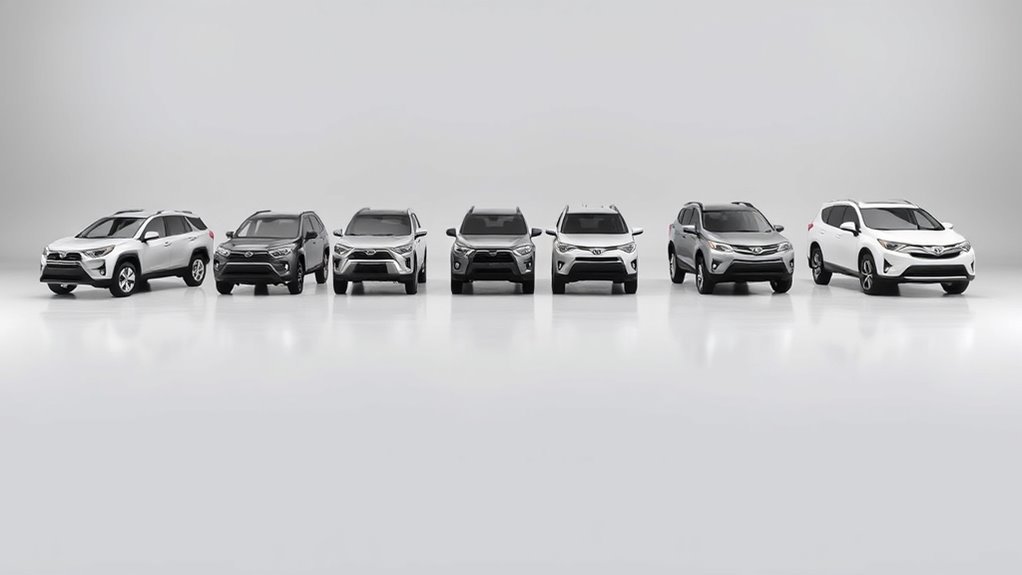
Although the RAV4 launched globally before it reached the U.S., most American shoppers track the model from its 1996 U.S. debut. Across six U.S. generations, Toyota steadily moved the RAV4 from a small, playful crossover into one of the most practical compact SUVs on the market.
| Generation | U.S. model years | Biggest change |
|---|---|---|
| 1st generation | 1996–2000 | Small, unibody crossover with two-door and four-door body styles |
| 2nd generation | 2001–2005 | More mature design, more room, and stronger four-cylinder power |
| 3rd generation | 2006–2012 | Larger body, available third row, and available 3.5-liter V6 |
| 4th generation | 2013–2018 | Cleaner liftgate design, no V6, and the first RAV4 Hybrid for 2016 |
| 5th generation | 2019–2025 | TNGA-K platform, Hybrid, Prime/PHEV, TRD Off-Road, and advanced AWD systems |
| 6th generation | 2026–present | Full redesign with hybrid and plug-in hybrid powertrains only |
The pattern is easy to follow: early RAV4s focused on light weight, city-friendly size, and simple utility. Middle generations added space, comfort, and stronger engines. Newer RAV4s shifted toward fuel economy, safety tech, AWD refinement, and electrification.
What “RAV4” Means and How Drivetrains Evolved
RAV4 is commonly expanded as “Recreational Active Vehicle with 4-Wheel Drive,” though not every RAV4 has four-wheel drive or all-wheel drive. The name fits the original idea: a practical vehicle that drove more like a car than a truck but still gave buyers SUV-style space, ride height, and available extra traction.
Meaning of RAV4
The first RAV4 helped define the compact crossover formula. Instead of using a traditional truck frame, it used a car-based unibody structure. That gave the RAV4 lighter, easier handling than many body-on-frame SUVs of the era.
The name also explains why drivetrain choice has always mattered. Some buyers wanted a simple front-wheel-drive RAV4 for commuting and fuel savings. Others wanted four-wheel drive or all-wheel drive for rain, snow, gravel roads, and light trail use.
Note: Toyota has used different AWD technologies across RAV4 generations. A 1990s selectable 4WD system is not the same as the electronic on-demand AWD used by many RAV4 Hybrid models or the Dynamic Torque Vectoring AWD used on select fifth-generation gas trims.
Drive System Timeline
The RAV4 drivetrain story shows how Toyota moved from simple mechanical choices to more specialized systems:
- 1996–2000: A 2.0-liter four-cylinder engine with front-wheel drive or available four-wheel drive, depending on model.
- 2001–2005: Continued front-wheel-drive and all-wheel-drive choices, with a stronger 2.4-liter engine arriving later in the generation for U.S. models.
- 2006–2012: A larger platform and available 3.5-liter V6 gave the RAV4 unusually strong power for a compact SUV.
- 2013–2018: Toyota dropped the V6 and focused on a 2.5-liter four-cylinder, then added the RAV4 Hybrid for 2016.
- 2019–2025: The fifth generation added the TNGA-K platform, a 203-hp gas engine, a 219-hp hybrid, and the 302-hp RAV4 Prime plug-in hybrid.
- 2026–present: The lineup moves to hybrid and plug-in hybrid powertrains only, with available front-wheel drive or electronic on-demand all-wheel drive depending on grade.
AWD vs. FWD Options
Front-wheel drive usually makes the most sense if you want a lower purchase price, simpler hardware, and strong fuel economy. All-wheel drive is the better match if you regularly deal with snow, steep driveways, loose gravel, wet roads, or camping roads.
For fifth-generation gas models, select trims used Dynamic Torque Vectoring AWD with Rear Driveline Disconnect, a system Toyota says can send up to 50 percent of engine torque to the rear wheels and distribute torque between the left and right rear wheels when needed. RAV4 Hybrid and RAV4 Prime models use electric AWD, with a rear electric motor powering the rear wheels when extra traction is needed.
First Generation (1996–2000): Key Specs and Trims
The first-generation RAV4 was small, light, and unusually fun for an SUV of its time. In the U.S., it used a 2.0-liter four-cylinder engine rated at about 120 horsepower, paired with either a manual or automatic transmission. Buyers could choose front-wheel drive or four-wheel drive, and the lineup included two-door and four-door versions.
Engine and Drivetrain
This generation is best for buyers who like simplicity. The 2.0-liter engine was not powerful by modern standards, but the early RAV4’s size and weight kept it nimble. It also made the vehicle easier to park and more city-friendly than many larger SUVs from the same era.
- Engine: 2.0-liter inline-four
- Output: About 120 horsepower in U.S. models
- Transmissions: 5-speed manual or 4-speed automatic
- Drivetrains: Front-wheel drive or available four-wheel drive
- Body styles: Two-door, four-door, and limited soft-top versions depending on year and market
Trim Levels and Options
The first RAV4 was not trying to be a luxury SUV. Its appeal came from size, visibility, cargo flexibility, and a playful shape. Higher trims and option packages could add comfort features such as air conditioning, upgraded audio, power accessories, and alloy wheels.
| Choice | What it meant |
|---|---|
| Two-door | Smallest, most distinctive version; less practical for families |
| Four-door | More usable rear seat and cargo area |
| FWD | Simpler and usually more efficient |
| 4WD | Better for slippery roads and light off-pavement use |
Today, first-generation RAV4s are most appealing as inexpensive runabouts, nostalgic “cute ute” collectibles, or simple winter vehicles. Rust, age, neglected maintenance, and parts availability matter more than trim level.
Second Generation (2001–2005): Safety and Redesign Highlights
The second-generation RAV4 grew up without losing its compact size. Toyota gave it cleaner styling, more interior room, and a stronger structure. U.S. models started with a 2.0-liter four-cylinder engine, while 2004–2005 models received a 2.4-liter four-cylinder that brought better everyday power.
This generation also dropped the two-door body style in the U.S., making the five-door layout the main practical choice. That helped the RAV4 feel more like a small family SUV and less like a niche lifestyle vehicle.
The 2001–2005 RAV4 is the generation where Toyota’s small crossover became more mature: still compact, but more useful for daily family duty.
- Best reason to buy: Simple size, practical cabin, and usually lower used prices.
- Best years to compare: 2004–2005, because of the stronger 2.4-liter engine.
- What to inspect: Oil leaks, suspension wear, rust, oxygen sensors, and maintenance history.
- Who it fits: Budget buyers who want a small, easy-to-drive SUV without modern complexity.
Third Generation (2006–2012): Bigger Platform and V6 Option
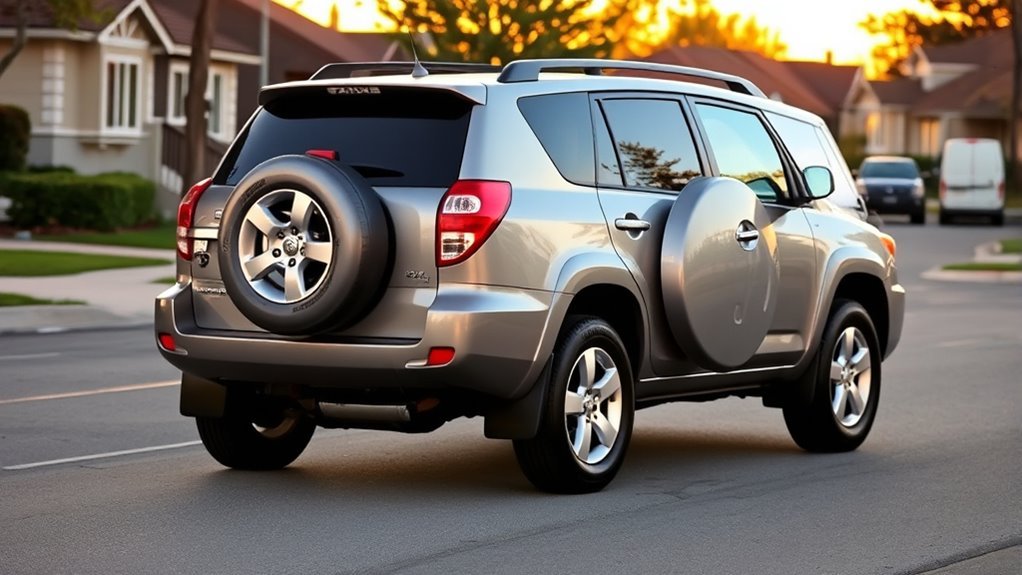
The third-generation RAV4 made the biggest jump in size. It became roomier, more powerful, and more family-oriented. In North America, this generation also offered an available third-row seat on some models, though that third row was small and best suited for children or occasional use.
The headline feature was the available 3.5-liter V6. With 269 horsepower, it made the RAV4 one of the quickest compact SUVs of its era. The four-cylinder remained the better choice for lower running costs, but the V6 is still popular with shoppers who want stronger acceleration.
Toyota also kept the rear-mounted spare tire and side-hinged rear door, which some owners love and others find inconvenient in tight parking spaces. This generation is a strong used buy when it has a clean service history, but age-related issues now matter. Have a mechanic check the suspension, brakes, exhaust, drivetrain seals, and any warning lights before buying.
Pro Tip: If you are shopping this generation, drive both the four-cylinder and V6. The V6 feels much stronger, but the four-cylinder can be cheaper to own and may be enough if you mostly drive in town.
Fourth Generation (2013–2018): Redesign and Hybrid Debut
The fourth-generation RAV4 changed the model’s personality again. Toyota removed the V6, dropped the rear-mounted spare tire, moved to a conventional top-hinged liftgate, and focused the lineup around a 2.5-liter four-cylinder engine with a six-speed automatic transmission.
This generation matters because it introduced the RAV4 Hybrid for the 2016 model year. The hybrid gave buyers better fuel economy and standard electronic all-wheel drive in a package that still felt familiar and practical. It also helped set up the RAV4’s later move toward broader electrification.
- 2013 redesign: Cleaner exterior, more conventional rear liftgate, and no V6 option.
- 2016 hybrid debut: The first RAV4 Hybrid joined the U.S. lineup.
- 2016 refresh: Updated styling, cabin improvements, and added technology features.
- 2017–2018 advantage: Later models are often better equipped with driver-assistance features than early fourth-generation examples.
Warning: Some 2013–2018 RAV4 vehicles were affected by major recalls, including battery-related recall activity. Always check the VIN for open recalls before buying any used RAV4, especially one from this generation.
Fifth Generation (2019–2025): TNGA-K, Hybrid/Prime, TRD Off-Road
The fifth-generation RAV4 arrived for 2019 and moved to Toyota’s TNGA-K platform. Compared with the previous generation, it brought a tougher look, improved driving feel, more technology, and a wider spread of powertrains.
The standard gas RAV4 used a 2.5-liter four-cylinder engine rated at 203 horsepower. The RAV4 Hybrid raised combined output to 219 horsepower. The RAV4 Prime, later renamed RAV4 Plug-in Hybrid for the next generation, delivered 302 combined net horsepower and a manufacturer-estimated 42 miles of EV-only range in 2024 form.
Toyota also expanded the RAV4’s personality with Adventure and TRD Off-Road trims, while select gas AWD models used Dynamic Torque Vectoring AWD with Rear Driveline Disconnect. For drivers who wanted efficiency, the hybrid became one of the strongest choices in the lineup. For drivers who wanted speed and electric commuting ability, the Prime stood out.
| Powertrain | Why buyers choose it |
|---|---|
| Gas 2.5-liter | Lower starting price and simple refueling |
| RAV4 Hybrid | Strong fuel economy, smooth everyday power, and standard electronic AWD in many U.S. configurations |
| RAV4 Prime | Plug-in electric driving for short trips plus gas-hybrid flexibility for long trips |
| TRD Off-Road | Rugged styling, off-road-tuned suspension, and all-terrain-focused equipment |
For many used-RAV4 shoppers, this is the sweet spot. It offers modern crash-test engineering, strong fuel economy options, newer infotainment, and better driver-assistance features than older generations. Just remember that early 2019 examples may feel less refined than later fifth-generation models, so compare model years and trims carefully.
[Products Worth Considering]
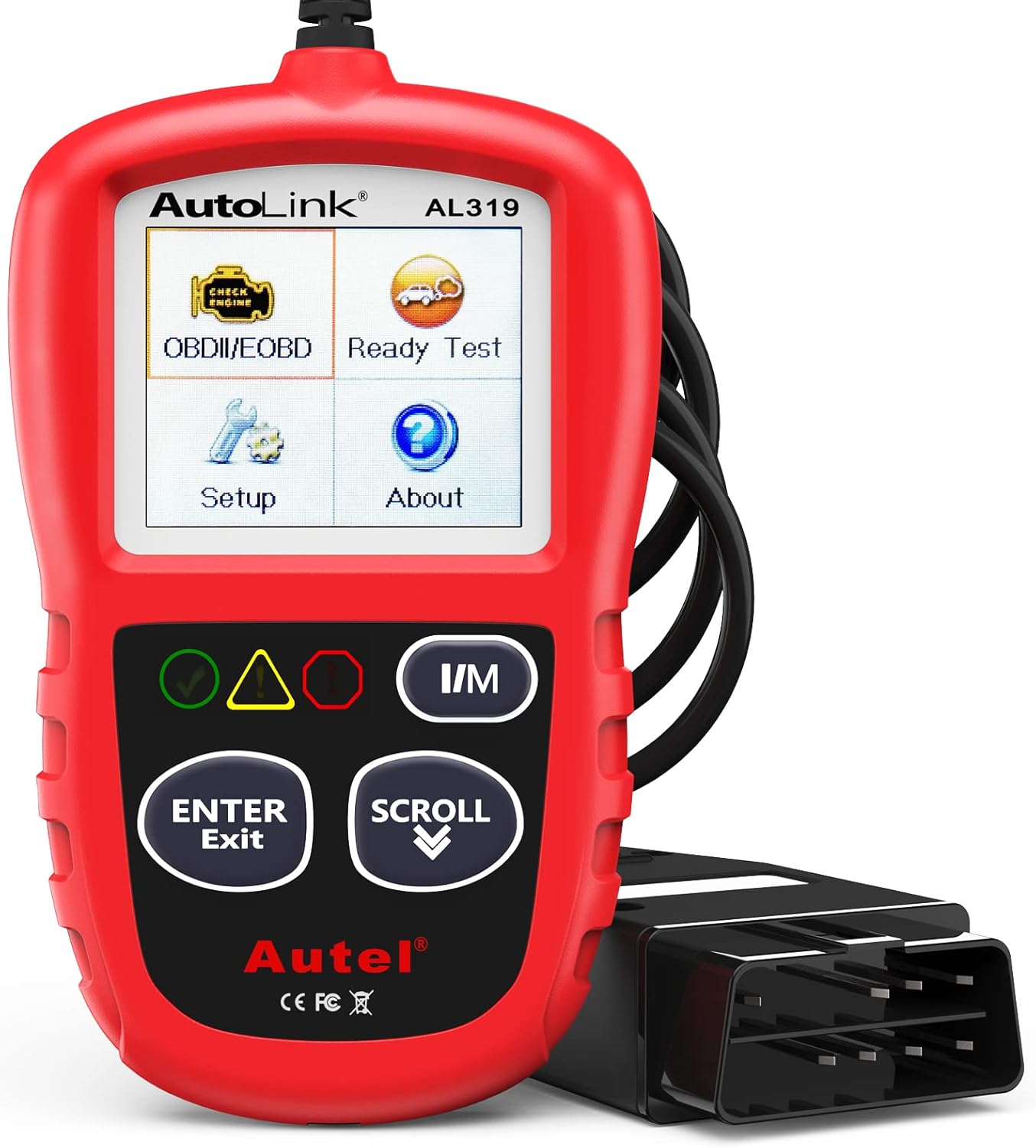
The Autel AL319 is a user-friendly OBD2 scan tool designed to help drivers quickly diagnose check engine light issues and understand vehicle fault codes. It supports reading and clearing DTCs, live data, freeze frame, I/M readiness, and vehicle information, making it a practical choice for DIYers and everyday car owners. With plug-and-play operation, a color display, built-in speaker, and broad vehicle compatibility, it delivers fast, reliable diagnostics without complicated setup.

EPAuto CP134 is a premium cabin air filter designed to help keep the air inside your vehicle cleaner and fresher. It includes activated carbon to help reduce odors and support a more comfortable ride for drivers and passengers. Built as a replacement option for many Honda and Acura models, it offers broad compatibility and dependable cabin air filtration.

AUTOBOO windshield wiper blades are designed for dependable all-season visibility with smooth, streak-free wiping in rain, snow, and heat. The bracketless aerodynamic design helps reduce noise and drag while the memory spring steel structure delivers even pressure for consistent windshield contact. Built for quick installation on compatible U/J hook arms, these blades offer a quiet, reliable upgrade for everyday driving.
Sixth Generation (2026–Present): Full Redesign and Electrified Lineup
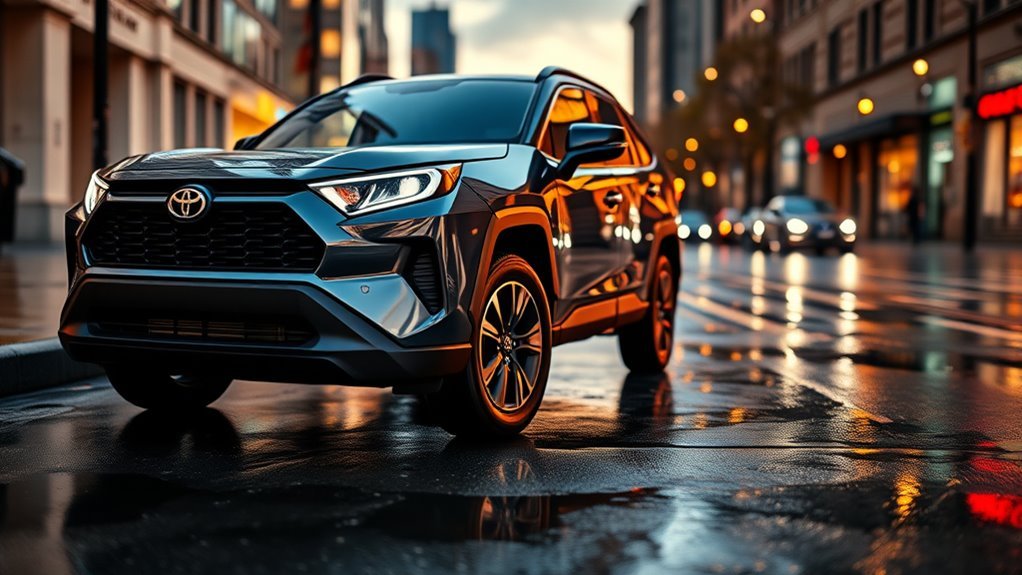
The 2026 RAV4 starts the sixth generation with a major redesign. Toyota says the 2026 lineup moves to hybrid and plug-in hybrid powertrains only, with available front-wheel drive or all-wheel drive depending on grade. The redesign also brings new Core, Rugged, and Sport styling directions.
The 2026 RAV4 Hybrid uses Toyota’s fifth-generation hybrid system with a 2.5-liter four-cylinder engine. The 2026 RAV4 Plug-in Hybrid uses a new plug-in hybrid system, and Toyota lists up to 324 net combined horsepower and up to a manufacturer-estimated 52 miles of all-electric driving range on select grades.
For 2026, the biggest RAV4 change is not just the styling. It is the move to a 100% electrified lineup with Hybrid and Plug-in Hybrid choices.
- Powertrain shift: No traditional gas-only RAV4 for the 2026 U.S. lineup.
- New styles: Core, Rugged, and Sport designs separate the lineup more clearly.
- PHEV improvements: Select plug-in hybrid grades offer up to 52 miles of manufacturer-estimated electric range.
- New GR SPORT: The first RAV4 GR SPORT grade adds a more performance-focused design and chassis tuning.
- Updated technology: Toyota says the redesigned RAV4 launches new versions of Toyota Audio Multimedia and Toyota Safety Sense.
[Products Worth Considering]
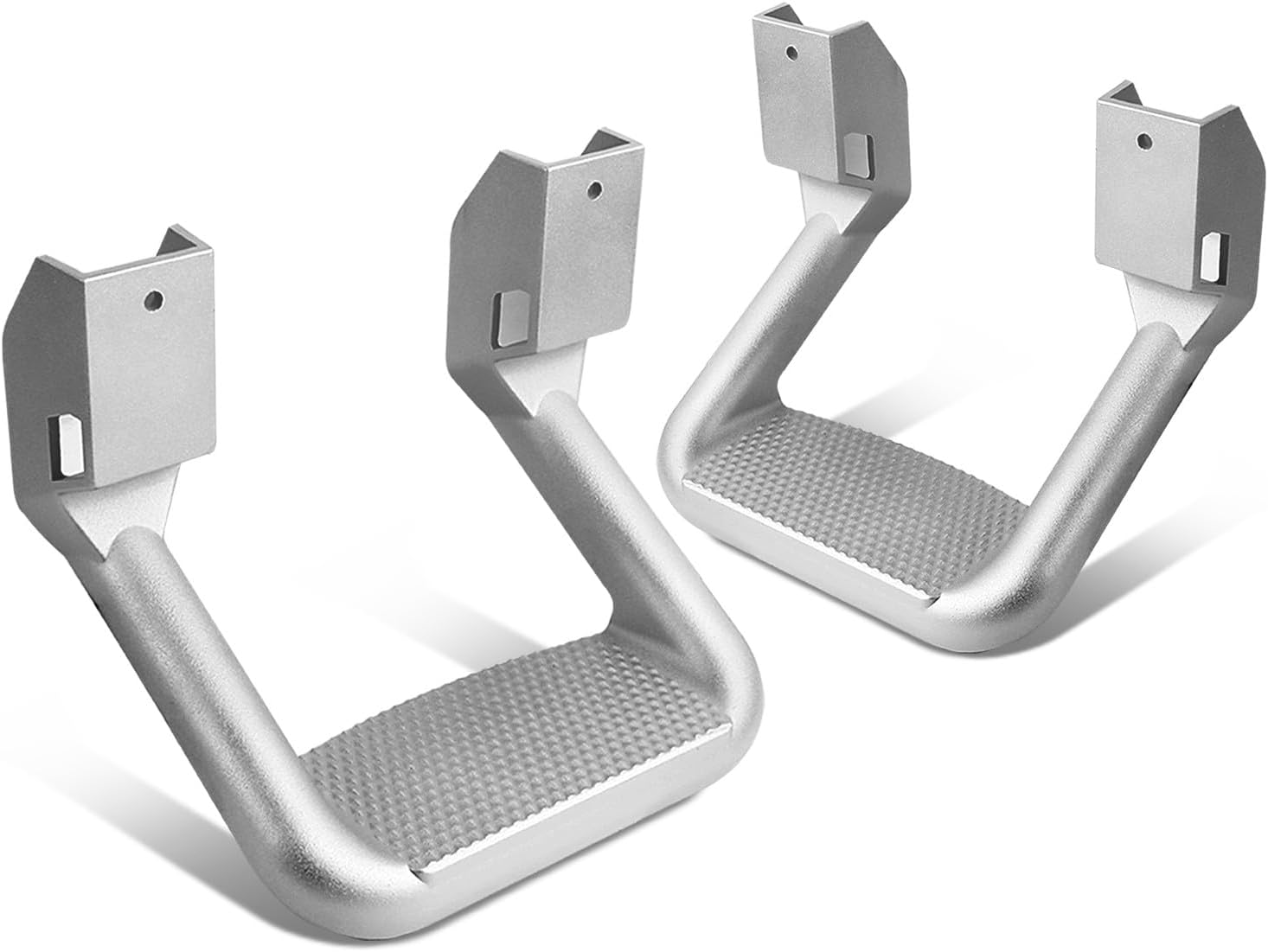
These universal aluminum side hoop steps provide a practical boost for easier entry and exit from pickup trucks and SUVs. Built with solid die-cast brackets and a non-slip step surface, they offer reliable support and a rugged look while helping improve everyday access. The silver powder-coated finish adds durability, and the pair is designed for driver and passenger side installation with included hardware.

This center console organizer tray is designed for a precise fit in the Toyota RAV4 2026, helping turn deep console space into practical everyday storage. It keeps small essentials like phones, cards, coins, and sunglasses neatly organized and easy to reach while reducing movement and noise with a non-slip mat. Built from durable ABS and made for simple tool-free installation, it offers a clean, convenient upgrade for your interior.

【Precise Fit for Refresh 2026 RAV4-Only for Left-hand Drive】Compatible with 2026 RAV4 Plug-in Hybrid (SE/Woodland/XSE/GR SPORT) and RAV4 Hybrid (LE/SE/XLE Premium/Woodland/XSE/Limited) center console cup holder location. Tailored to match updated interiors precisely.
RAV4 Model-Year Changes at a Glance
If you are comparing used RAV4 years, the generation matters more than small trim differences. Use this quick guide to narrow the search:
| Model years | Best for | Main caution |
|---|---|---|
| 1996–2000 | Collectors, simple commuting, small-SUV fans | Age, rust, parts, and safety tech are the main concerns |
| 2001–2005 | Budget buyers wanting compact size | Check maintenance records and engine condition carefully |
| 2006–2012 | Space, available V6 power, and practical used value | Older examples need close inspection for wear and leaks |
| 2013–2018 | Conventional crossover feel and available hybrid efficiency | Always check recall completion and battery-related service history |
| 2019–2025 | Modern safety, fuel economy, hybrid choices, and newer tech | Prices can stay high because resale demand is strong |
| 2026–present | Newest tech, hybrid-only lineup, and stronger PHEV capability | Early redesigned models may cost more and have less long-term ownership data |
How to Pick the Right RAV4 Year: Fuel Economy, Reliability, Resale
Want the best RAV4 year for your money? Start with your priority: low price, long-term reliability, fuel economy, power, or modern features. The “best” RAV4 generation changes depending on what you need.
| Priority | Best generation to start with | Why |
|---|---|---|
| Lowest purchase price | 2001–2005 or 2006–2012 | Older prices, simple layouts, and good availability |
| Strong acceleration | 2006–2012 V6 or 2021–2025 RAV4 Prime | The V6 and Prime are the performance standouts |
| Fuel economy | 2016–2018 Hybrid or 2019–2025 Hybrid | Hybrid models cut fuel use without giving up SUV practicality |
| Modern features | 2019–2025 | Better infotainment, safety tech, and trim variety |
| Newest design | 2026–present | Full redesign and hybrid/PHEV-only lineup |
Fuel economy also varies by drivetrain, trim, wheel size, and model year. For example, official EPA listings show 2025 gas RAV4 models around 30 mpg combined, while 2025 RAV4 Hybrid versions are generally higher and 2025 RAV4 PHEV models add electric driving capability. Check the exact year and trim on FuelEconomy.gov before you compare prices.
Note: Resale value can make newer RAV4s look expensive used, but it also helps owners when they sell. Compare the total cost of ownership, not just the purchase price.
[Products Worth Considering]

[Vehicle Fitment]: CA10677 Compatible with Toyota RAV4 GAS 2013-2018 2.5L, Camry FHEV 2012-2017 (Hybrid Models Only, Not for Gas Models), Avalon 2013-2018 2.5L; Lexus LS460 2007-2017, ES300h 2013-2018, HS250h 2010-2012, LS600h 2008-2016

OPTIMAL PROTECTION – Advanced filter media captures up to 99% of dirt and airborne particles, helping protect critical engine components from premature wear.

【Precision Fitment for Wide Compatibility】fit for 2018-2025 Camry Hybrid, 2019-2022 Avalon Hybrid, 2019-2025 Corolla (not fit for Hybrid), 2022-2024 Corolla corss, 2019-2025 RAV4 Hybrid, 2021-2024 RAV4 Prime, 2020-2025 Highlander Hybrid, 2024-2025 Grand Highlander Hybrid XLE/Limited 2.5L ,2021-2025 Sienna, 2021-2024 Venza, 2018-2022 C-HR,2023-2025 Crown
Frequently Asked Questions
What years are the different Toyota RAV4 generations?
For U.S. shoppers, the RAV4 generations are 1996–2000, 2001–2005, 2006–2012, 2013–2018, 2019–2025, and 2026–present. The model launched globally before its U.S. debut, so some global history guides list the first generation as starting in 1994.
What years are the fifth-generation RAV4?
The fifth-generation Toyota RAV4 covers the 2019 through 2025 model years in the U.S. It introduced the TNGA-K platform, a more rugged design, the 219-hp RAV4 Hybrid, the 302-hp RAV4 Prime plug-in hybrid, and select trims with more advanced AWD hardware.
What is the best generation of the RAV4?
For most used buyers, the fifth generation is the best overall balance because it offers modern safety features, strong fuel economy, hybrid and plug-in hybrid options, and broad trim availability. Budget buyers may prefer the third or fourth generation, while shoppers who want the newest tech should compare 2026 models.
Which RAV4 generation had the V6 engine?
The 2006–2012 third-generation RAV4 is the U.S. generation known for the available 3.5-liter V6. It made the RAV4 unusually quick for a compact SUV, but it uses more fuel than the four-cylinder and hybrid models.
When did the Toyota RAV4 Hybrid come out?
The Toyota RAV4 Hybrid joined the U.S. lineup for the 2016 model year during the fourth generation. The fifth generation expanded hybrid availability, and the 2026 sixth generation makes the RAV4 lineup fully electrified with hybrid and plug-in hybrid choices.
Is the 2026 Toyota RAV4 gas-only?
No. Toyota says the 2026 RAV4 moves to a 100% electrified lineup, with Hybrid and Plug-in Hybrid powertrains. That means the sixth-generation U.S. lineup does not include a traditional gas-only RAV4.
Conclusion
Across six generations, the Toyota RAV4 has stayed true to the same basic idea: practical SUV space with carlike manners. The early years are simple and compact, the middle generations add size and power, and the newest versions focus on safety tech, hybrid efficiency, plug-in capability, and stronger AWD options.
If you want the best used balance, start with the 2019–2025 fifth generation. If you want lower prices, compare well-maintained 2006–2018 models. If you want the newest RAV4 technology and an electrified-only lineup, the redesigned 2026 RAV4 is the generation to watch.
Sources
- Toyota UK Magazine: Toyota RAV4 History — backs up the model’s origin, early global launch, and generation history.
- Toyota USA Newsroom: 2025 Toyota RAV4 — backs up fifth-generation gas, AWD, and Dynamic Torque Vectoring AWD details.
- Toyota USA Newsroom: 2024 Toyota RAV4 Prime — backs up RAV4 Prime horsepower and EV-only range claims.
- Toyota USA Newsroom: All-New 2026 RAV4 Debut — backs up sixth-generation redesign, TNGA-K updates, and new hybrid/PHEV powertrains.
- Toyota USA Newsroom: 2026 RAV4 Arrives This Winter — backs up the 100% electrified 2026 lineup, PHEV range, horsepower, grades, and charging details.
- FuelEconomy.gov: 2025 Toyota RAV4 Fuel Economy — backs up EPA fuel-economy comparisons by powertrain.

[…] Toyota RAV4 ground clearance varies by model year, trim, and powertrain. For U.S.-market 2026 models, Toyota lists 8.1 inches for LE, XLE Premium, SE, XSE, and Limited; 8.5 inches for Woodland; and 7.5 inches for GR SPORT. For the 2019–2025 fifth generation, published figures generally range from 8.1 to 8.6 inches. […]
[…] the Toyota RAV4 generations guide for the broader differences between the fourth-, fifth-, and sixth-generation […]