To remove odors from a Toyota RAV4 cabin, first identify whether the smell comes from the interior or only appears when the fan or A/C runs. Then inspect the cabin air filter, clear debris from the cowl intake, dry wet carpet, confirm that A/C condensation can drain, and use only a cleaner specifically labeled for automotive HVAC use. Do not mask fuel, exhaust, burning, coolant, or strong chemical odors; stop using the vehicle as needed and arrange prompt inspection.
Last updated: July 23, 2026. Reviewed against current Toyota owner information and U.S. EPA and CDC safety guidance. [VERIFY: add the real author/byline and relevant automotive credentials in the CMS.]
Quick Answer
Start with a smell-and-timing check. If the odor appears only when the HVAC starts, inspect the cabin filter, cowl intake, evaporator area, and A/C drain. If it remains with the HVAC off, inspect mats, carpet, seats, cargo areas, and the spare-tire well. Before parking, switch to outside-air mode and, when practical, turn the A/C off while the fan runs briefly. Use only products labeled for automotive HVAC use. Fuel, exhaust, burning, coolant, or strong chemical odors require prompt diagnosis.
Key Takeaways
- A musty or sour smell is often linked to moisture near the evaporator, a damp cabin air filter, poor condensate drainage, or wet interior materials.
- Toyota directs owners to follow the maintenance guide for the exact model year and powertrain. The 2025 RAV4 and RAV4 Hybrid guides list cabin-filter service in the scheduled chart, with earlier attention in dusty or heavy-traffic conditions.
- Use only the HVAC mode and application method stated on the product label; do not assume every spray or fogger uses the same procedure.
- Do not ignore fuel, exhaust, electrical burning, coolant, or strong chemical smells. Those need prompt inspection, not air freshener.
At a Glance
| Time Required | 10–20 minutes for a cabin filter; 30–60 minutes for a basic HVAC odor treatment |
| Difficulty | Easy for filter replacement; moderate for A/C drain or evaporator cleaning |
| Tools Needed | New cabin air filter, flashlight, microfiber cloth, vacuum, and an automotive HVAC cleaner if needed |
| Cost | Low-cost DIY if only a filter or cleaner is needed; higher if a shop cleans the evaporator or repairs a leak |
Check Your RAV4 Model Year Before Starting
RAV4 filter access, glove-box clips, HVAC controls, and maintenance intervals can vary by model year and powertrain. Use the owner’s manual and maintenance guide for the VIN-specific vehicle before forcing trim or assuming a service interval. This is especially important when applying a general procedure to a different model year.
Hybrid note: A RAV4 Hybrid or plug-in model may also have a separate traction-battery cooling intake or filter. That component is not the cabin air filter behind the glove box. Follow the separate Toyota procedure for each filter.
How to Remove Odors From a Toyota RAV4 Cabin
Start with the simple fixes before paying for a deep HVAC service. Many RAV4 odor problems are caused by dampness, leaves, pollen, dust, or a clogged filter rather than a major A/C failure.
- Remove obvious odor sources. Check under seats, floor mats, the cargo area, cup holders, child-seat areas, and the spare-tire well for food, spilled drinks, wet gear, or pet odor.
- Check the cabin air filter. A dirty or damp filter can trap pollen, leaves, dust, and moisture. If it smells musty or looks gray, packed with debris, or wet, replace it.
- Clear the cowl intake. Leaves and debris near the windshield base can feed odors into the HVAC intake. Remove ordinary debris by hand or with a vacuum, but do not vacuum rodent droppings, urine, or nesting material.
- Reduce retained HVAC moisture. Before parking, switch to outside-air mode. When practical, turn the A/C off and keep the fan running briefly. This may help dry the evaporator instead of leaving it cold and wet.
- Use the right HVAC cleaner. Choose a product labeled for automotive HVAC or evaporator cleaning and follow the directions exactly.
Diagnostic clue: An odor that appears for only the first minute after the fan or A/C starts often points toward moisture or residue in the evaporator area. An odor that remains with the HVAC off points more strongly toward carpet, upholstery, cargo, food, pet, smoke, or water-intrusion sources. Treat this as a clue, not proof.
What Does the Smell in Your RAV4 Mean?
Use the odor, timing, and HVAC mode together. No single smell confirms a failed part, but the pattern can narrow the first inspection and help you explain the problem to a technician.
| Smell or Pattern | What It May Point To | First Check | Best Next Step |
|---|---|---|---|
| Musty, sour, or vinegar-like odor during the first minute of HVAC use | Moisture or residue near the evaporator, a damp filter, or poor drainage | Cabin filter, condensate drain, passenger carpet | Replace a contaminated filter, correct moisture problems, then use a labeled automotive HVAC cleaner if needed |
| Odor mainly in outside-air mode | Leaves, organic debris, smoke, or another source at the cowl intake | Windshield-base intake and filter housing | Remove debris without pushing it into the blower or ducts |
| Odor mainly in recirculation mode | Interior contamination or odor retained in the filter, blower, or ducts | Mats, carpet, seats, cargo area, filter | Clean and dry the cabin before treating the HVAC system |
| Rotten or animal-like odor | Rodent nesting, droppings, trapped debris, or spoiled food | Cowl, filter housing, blower area, spare-tire well | Avoid dry sweeping or vacuuming rodent waste; use CDC cleanup guidance or professional remediation |
| Sweet or syrupy odor, fogging, or damp front carpet | Possible coolant or heater-core leak | Coolant level when safe, windshield film, front carpet | Arrange prompt inspection; do not open a hot cooling system |
| Fuel, exhaust, burning plastic, electrical, or strong chemical odor | Potential fire, fume, leak, or electrical hazard | Do not continue a DIY odor treatment | Ventilate, stop driving when safety is uncertain, and obtain professional diagnosis |
Warning: Fuel, exhaust, burning, coolant, and strong chemical odors are not normal cabin-freshness problems. They can signal leaks, overheating, electrical faults, or exhaust intrusion. Do not cover them with fragrance.
Common Odor Triggers
Most RAV4 cabin odors come from one of these triggers:
- Moisture accumulation in the HVAC system. Water can remain on the evaporator after A/C use, especially in hot or humid weather.
- A dirty or damp cabin air filter. The filter can hold dust, pollen, leaves, and moisture, which can create stale or musty air.
- A clogged A/C drain. If condensation cannot drain out, stagnant water can cause mildew odors and damp carpet.
- Debris at the air intake. Leaves and organic debris near the windshield cowl can rot and send odor through the vents.
- Interior contamination. Spilled drinks, pet moisture, wet mats, smoke residue, and food crumbs can smell worse when the cabin heats up.
- Water intrusion unrelated to the A/C. Rainwater can enter through body, glass, door, hatch, or drain-path problems. A wet floor after rain or a car wash needs leak tracing, not only an A/C-drain check.
How Can You Tell Whether the HVAC System Is the Source?
Park outdoors, lower the windows, and note the odor with the HVAC off. Then run the fan without A/C, add A/C, and switch between outside-air and recirculation modes. Record which setting starts or strengthens the smell. A setting-dependent odor points toward the intake, filter, blower, evaporator, drain, or ducts. An unchanged odor points more strongly toward the cabin or cargo area.
Cabin Air Filter Check
The cabin air filter is one of the easiest parts to inspect. Toyota directs owners to inspect and replace it according to the maintenance schedule and to consider earlier replacement in dusty areas or heavy traffic. The 2025 RAV4 and RAV4 Hybrid maintenance guides place cabin-filter replacement at 30,000 miles under the normal schedule. Other years and operating conditions may differ, so confirm the exact schedule in the Toyota Owners manuals and warranty section.
How Do You Replace a Toyota RAV4 Cabin Air Filter?
On many RAV4 model years, the cabin air filter is reached through the glove-box area. The exact damper, cover, and filter-case design can differ, so compare these general steps with the owner’s manual for your model year before releasing clips.
- Empty and lower the glove box. Open the glove box, remove the contents, and release the side damper if your RAV4 has one.
- Press the glove box sides inward. This lets the glove box lower far enough to reach the filter cover behind it.
- Remove the filter cover. Squeeze the tabs and pull the cover straight out.
- Slide out the old filter. Note the airflow or “UP” marking before removing it. Toyota’s instructions say the “UP” marks on the filter should point up when installed.
- Remove ordinary loose debris. Use a small vacuum or clean cloth around the housing, but do not push debris deeper into the blower. Do not vacuum if rodent contamination is present.
- Install the new filter correctly. Match the airflow or “UP” direction printed on the filter, then reinstall the cover, glove box, and damper.
Orientation note: “UP” and “AIR FLOW” are not always the same instruction. Install a filter marked “UP” with that marking facing up. For an airflow arrow, follow the filter maker’s direction and your RAV4 manual. Do not force the filter or run the HVAC without one.
[Products Worth Considering]

This JADODE combo includes engine and cabin air filters designed to help keep passenger air cleaner while supporting efficient HVAC performance. The activated carbon layer helps absorb odors, exhaust fumes, and pollution, while filtration captures dirt, dust, and pollen for OE-comparable protection. It is compatible with a wide range of Toyota, Scion, Lexus, and Pontiac applications for convenient replacement maintenance.

This KAX HEPA cabin air filter is designed to help keep your vehicle interior air cleaner by capturing fine particles and reducing airborne contaminants. Its multi-layer structure with activated carbon supports strong filtration performance while helping improve HVAC airflow for more efficient heating and cooling. Built for a wide range of Toyota, Lexus, Subaru, and Mazda models, it offers a practical replacement option for maintaining fresher cabin air.

This CF10285 cabin air filter is designed to help keep your vehicle's interior air cleaner by capturing dust, pollen, soot, and road grime. It is compatible with a wide range of Toyota, Lexus, Jaguar, Land Rover, Subaru, Scion, and Pontiac models, making it a versatile replacement choice. The activated carbon design and easy glove-box installation make it a practical upgrade for fresher driving comfort.
DIY Cleaning Methods for Persistent Odors
If replacing the filter does not solve the smell, clean the parts of the system that collect moisture and debris. Do not simply spray perfume into the vents; it may hide the odor for a day while the cause remains.
- Clean the cabin first. Vacuum carpets, seats, mats, and the cargo area. Use an interior cleaner on hard surfaces and a fabric-safe cleaner on upholstery.
- Dry wet areas completely. Lift floor mats and check for damp padding, especially on the passenger side. Moist carpet can keep odor returning.
- Treat the HVAC intake correctly. For products designed for the exterior air intake, switch recirculation off, use fresh-air mode, and follow the product label for fan speed and A/C settings.
- Use recirculation only when directed. Interior foggers usually require recirculation mode, but exterior intake sprays usually do not.
- Run the fan after treatment. Let the system ventilate with the windows open so cleaner residue and loosened odors can clear out.
- Replace the cabin filter after cleaning. If the old filter absorbed odor or cleaner, do not reinstall it.
HVAC chemical warning: EPA guidance says a general hard-surface disinfectant label does not automatically authorize use in HVAC components. Use a product only when its label specifically permits the intended automotive HVAC or evaporator application. Follow ventilation, personal-protection, dosage, and re-entry directions; never mix cleaners or improvise a spray method.
Rodent-contamination warning: If you find droppings, urine, nesting material, or a dead rodent, do not dry-sweep or vacuum it. The CDC recommends wet-disinfection and controlled cleanup to avoid putting contaminated dust into the air. Heavy contamination inside the blower or ducts is a professional-cleaning job.
How Can You Check the RAV4 A/C Drain Without Damaging It?
Your RAV4’s A/C removes humidity from cabin air. That moisture becomes condensation on the evaporator and should drain under the vehicle. On a humid day, it is normal to see water dripping under the vehicle after the A/C has been running.
If the drain is blocked, water may collect in the HVAC case or leak into the passenger footwell. That damp environment can cause a musty odor and can also soak carpet padding, which is difficult to dry.
- Look for normal dripping. After the A/C has run long enough in humid conditions, condensation may drip under the front passenger-side area. No visible puddle by itself does not prove a clog; humidity, run time, temperature, and parking surface affect what you see.
- Check the passenger carpet. Damp carpet or a musty smell near the floor can indicate drainage or leak issues.
- Compare timing with weather. Wet carpet after A/C use suggests a condensate problem; wet carpet after rain or a car wash suggests body or drain-path water intrusion.
- Do not force tools into the drain. If you are unsure where the drain is or how to clear it, have a technician inspect it to avoid damaging the evaporator case.
Moisture control is the real odor fix. Air fresheners can make the cabin smell better for a short time, but drying the HVAC system and removing damp debris is what keeps odors from coming back.
Professional Cleaning Services for Your Toyota RAV4
If the odor keeps returning after filter replacement, cabin cleaning, and basic HVAC treatment, professional service may be worth it. A shop can inspect areas that are harder to reach, including the evaporator housing, blower area, drain tube, and hidden carpet padding.
Professional cleaning is especially helpful when you notice:
- Musty odor that returns within a few days of DIY cleaning
- Wet carpet or water leaking from under the dash
- Rodent smell, nesting material, or droppings around the filter or blower area; avoid dry vacuuming before professional advice
- Weak airflow even after installing a new cabin filter
- Sweet coolant odor, smoke, fuel smell, or electrical burning smell
Many shops can clean the evaporator and HVAC case, replace the cabin air filter, clear the cowl intake, and check whether the A/C drain is flowing properly.
[Products Worth Considering]

This cabin air filter replacement is designed to help keep your vehicle’s interior air fresher and cleaner by capturing dust, odors, and fine particles with a multi-layer filtration structure. The activated carbon layer helps reduce unwanted smells, while the extended service life makes it a practical maintenance part for many compatible Toyota, Lexus, Subaru, Scion, and Jaguar models.

ECOGARD XC10621C is a premium cabin air filter designed to help keep your vehicle’s interior air cleaner by trapping dust, pollen, pet dander, and other airborne debris. Its activated carbon layer also helps reduce common odors from traffic and outside air while supporting steady HVAC airflow for reliable climate system performance. It is engineered for a wide range of Toyota, Lexus, and Subaru applications.

Comprehensive Air Conditioner Cleaning Kit: This complete air conditioner fin cleaner set includes 1 Window Blind Cleaner Duster Brush, 1 stainless steel air conditioner fin cleaner, 1 air conditioner condenser fin cleaning brush, 1 double-sided air conditioner fin cleaning brush, 1 foldable cleaning brush, 1 straightener coil comb brush. These tools are designed to enhance cleaning efficiency
Preventive Tips for a Fresh Cabin
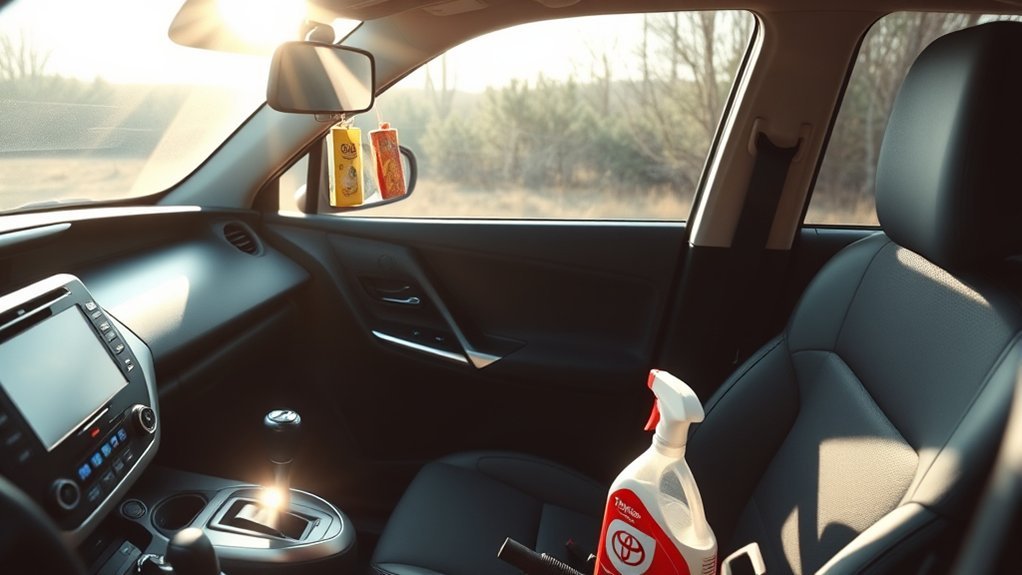
Once the odor is gone, a few habits can keep your Toyota RAV4 smelling clean.
- Switch to outside air before parking. When practical, turn the A/C off and keep the fan running briefly to reduce retained evaporator moisture.
- Use fresh-air mode regularly. Constant recirculation can trap humidity and stale air inside the cabin.
- Keep the cowl intake clear. Remove leaves, seed pods, and debris from the windshield base.
- Replace the cabin filter on schedule. Replace sooner if you drive in heavy traffic, dusty areas, wildfire smoke, pollen season, or humid conditions.
- Dry wet mats quickly. Do not leave soaked floor mats or beach gear in the RAV4 overnight.
- Clean spills immediately. Sugary drinks and milk-based spills can soak into carpet and create long-lasting odors.
- Use activated carbon if odor is a recurring issue. A carbon cabin filter can help reduce some odors, but it will not fix mold, moisture, or leaks.
Why Do RAV4 Cabin Odors Keep Coming Back?
Recurring odor means the source is still present or moisture is returning. Replacing a filter helps only when the filter itself is contaminated or restricted. It does not dry carpet padding, clear a blocked drain, remove a nest, repair a coolant leak, or clean residue on an evaporator.
Control Moisture, Not Just the Smell
The U.S. EPA explains that moisture control is the key to mold control. In a RAV4, that means checking condensate drainage, drying wet materials, clearing the cowl intake, and tracing rainwater leaks instead of repeatedly adding fragrance.
Restore Airflow and Remove the Source
A clean cabin filter can restore airflow and reduce incoming dust, pollen, and debris. If airflow remains weak after replacement, the restriction may be in the blower, evaporator, doors, or ducts. If the odor remains with the HVAC off, stop treating the ventilation system and inspect the cabin materials instead.
Signs Your Cabin Air Filter Needs Changing
Replace or inspect the cabin air filter if you notice any of these signs:
- Weak airflow: Less air from the vents even when the fan is on high.
- Dusty smell: A stale smell when the fan starts.
- Musty odor: A damp or sour smell from the vents, especially after rain or A/C use.
- Visible debris: Leaves, pollen, dirt, or dark buildup on the filter pleats.
- More allergy symptoms: Sneezing or irritation while driving, especially during pollen season.
- Noisy blower: Debris near the filter or blower can cause whirring or fluttering sounds.
[Products Worth Considering]

[COMPATIBlE WITH] Sienna (2021-2026), Venza (2021-2024), RAV4 Prime (2021-2024), RAV4 Hybrid (2019-2025), Highlander Hybrid (2020-2025), Grand Highlander 2.5L Hybrid (2024-2025), Camry Hybird (2018-2026)

[Vehicle Fitment]: Replacement for Toyota: Avalon (2019-2022), Camry (2018-2025), Corolla (2019-2025), Corolla Cross (2022-2025), CROWN (2023-2024), C-HR (2018-2022) [IMPORTANT: Fits Japan Built Models ONLY, VIN starts with 'J'],Highlander (2020-2025), Prius (2016-2025), Prius AWD-E (2019-2022), Prius Prime (2017-2024), RAV4 (2019-2025), RAV4 Prime (2021-2024), Sienna (2021-2025), Venza (2021-2024), Grand Highlander (2024-2025), GR Corolla (2023-2025).

[Vehicle Fitment]: For Toyota: 4Runner (2010-2024), Avalon (2005-2018), Camry (2007-2017), Corolla (2009-2019), Corolla iM (2017-2018), Highlander (2008-2019), Land Cruiser (2008-2011,2013-2021), Matrix (2009-2014), Mirai (2016-2020), Prius (2010-2015), Prius C (2012-2019), Prius Plug-In (2012-2015), Prius V (2012-2018), RAV4 (2006-2018), Sequoia (2008-2022), Sienna (2011-2020), Tundra (2007-2021), Venza (2009-2016), Yaris (2007-2018).
A Five-Minute Monthly RAV4 Odor Check
- Remove food, wet gear, and trash from the cabin and spare-tire well.
- Lift the mats and feel for damp carpet, especially on the front passenger side.
- Clear leaves and seed pods from the cowl without pushing debris into the intake.
- Compare the smell with HVAC off, fan only, A/C on, outside air, and recirculation.
- Check vent airflow and inspect the cabin filter early if airflow drops or odor begins at startup.
Use an air freshener only after the source is removed. Fragrance cannot correct a drain problem, damp filter, evaporator residue, water leak, coolant leak, or contaminated upholstery.
Frequently Asked Questions
Why does my Toyota RAV4 A/C smell bad?
A bad A/C smell usually comes from moisture on the evaporator, a dirty or damp cabin air filter, debris in the outside air intake, or a clogged A/C drain. If the smell is musty and appears when the A/C starts, the pattern often points toward the evaporator area, filter, or condensate drain.
How do I remove a foul odor from a car interior?
Remove trash and ordinary debris, vacuum normal dirt from seats and carpet, wash floor mats, clean hard surfaces, dry wet areas, and inspect the cabin air filter. If the odor comes from the vents, check drainage and use only a cleaner labeled for the intended automotive HVAC application. Do not vacuum rodent waste.
How often should I replace the Toyota RAV4 cabin air filter?
Follow the maintenance guide for the exact model year and powertrain. The 2025 RAV4 and RAV4 Hybrid guides list cabin-filter replacement at 30,000 miles under the normal schedule. Inspect sooner when airflow drops or the vehicle is used in dusty, smoky, high-pollen, desert, urban, or heavy-traffic conditions.
Can I spray disinfectant into my RAV4 vents?
Do not spray a general disinfectant into the dashboard vents. Use a product only when its label specifically permits the intended automotive HVAC or evaporator application, and follow its ventilation, dosage, protective-equipment, and re-entry directions.
Why does the smell come back after I replace the cabin filter?
A new filter cannot remove evaporator residue, clear a blocked drain, dry carpet padding, repair a water or coolant leak, remove a rodent nest, or clean contaminated upholstery. Identify and correct the remaining source.
Why does my RAV4 smell like vinegar when the A/C starts?
A brief vinegar-like or sour odor often points toward moisture or residue in the evaporator area, but a damp filter or poor condensate drainage can produce a similar pattern. Inspect the filter and carpet, confirm drainage, and use only a cleaner labeled for automotive HVAC use.
Does no water under my RAV4 mean the A/C drain is clogged?
Not by itself. Condensation depends on humidity, temperature, A/C run time, and the parking surface. A lack of dripping matters more when it appears with a musty odor, damp passenger carpet, or water retained in the HVAC case.
Will an activated-carbon cabin filter remove the odor?
A carbon filter can reduce some incoming and lingering odors, but it cannot remove wet carpet, mold-supporting moisture, a blocked drain, evaporator residue, coolant, exhaust, fuel, smoke contamination, or rodent waste. Fix the source first.
Conclusion
Remove a Toyota RAV4 cabin odor by matching the smell to when it appears, then correcting the source. Inspect the cabin filter and cowl, dry wet materials, compare outside-air and recirculation modes, and check for signs of poor condensate drainage. Use only a product specifically labeled for the intended automotive HVAC application. Arrange professional diagnosis for fuel, exhaust, burning, coolant, strong chemical, rodent, recurring water, or persistent HVAC odors. Once the source is gone, outside-air use, moisture control, filter service, and quick spill cleanup help keep it from returning.
Sources
Editorial method: This guide synthesizes Toyota owner-manual and maintenance information with U.S. EPA and CDC safety guidance. It does not claim a vehicle teardown, laboratory test, or hands-on evaporator inspection.
- Toyota Owners — Manuals & Warranties — use this hub to select the exact RAV4 model year and powertrain before following a filter or HVAC procedure.
- Toyota 2025 RAV4 Warranty & Maintenance Guide — supports the scheduled cabin-air-filter service and special-condition guidance for the 2025 gasoline model.
- Toyota 2025 RAV4 Hybrid Warranty & Maintenance Guide — supports the scheduled cabin-air-filter service and special-condition guidance for the 2025 hybrid model.
- U.S. EPA — Mold — supports moisture control as the core step in preventing recurring mold growth and musty odor.
- U.S. EPA — Disinfectants and Sanitizers in HVAC&R Systems — supports using antimicrobial products only when the label authorizes the intended HVAC application.
- CDC — Hantavirus Prevention — supports safe handling of rodent urine, droppings, nests, and contaminated vehicle areas.