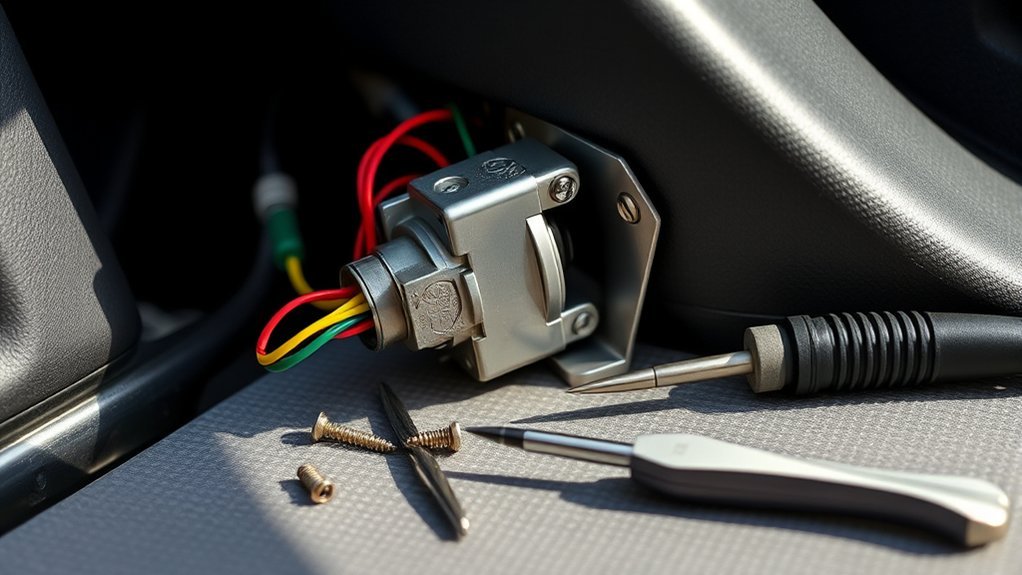
Your RAV4’s electronic parking brake replaces the old hand lever with a switch, control module, and electric actuator at the rear brake assembly. When the system applies the parking brake, the actuator turns a gear-and-spindle mechanism that pushes the rear brake piston and clamps the pads against the rotor. When it releases, the actuator backs the mechanism off so the pads can separate normally.
Quick Answer
A RAV4 electronic parking brake works by using an electric motor and actuator to apply clamping force at the rear brake calipers. Pulling the switch sets the brake; pressing it releases the brake. In automatic mode, Toyota says the system can apply or release based on shift position.
Key Takeaways
- The RAV4 EPB uses a switch, control unit, rear actuator motor, gears, spindle, pressure nut, piston, pads, and rotor to hold the vehicle when parked.
- Toyota’s owner information says the parking brake can be used manually or automatically, depending on model year and settings.
- A flashing parking brake light, yellow brake warning, warning message, grinding noise, or failure to hold/release needs prompt diagnosis.
- Do not force the rear piston back during brake service unless the EPB is in the correct service/maintenance state.
- A weak or discharged 12-volt battery can prevent the EPB from operating normally, so battery health matters.
At a Glance
| Time Required | 5-15 minutes for basic owner checks; longer for professional diagnosis |
| Difficulty | Easy for warning-light checks; advanced for actuator, wiring, and brake service |
| Tools Needed | Owner’s manual, flashlight, battery tester or multimeter, and a scan tool that can read brake/EPB codes |
| Cost | Often $0 for basic checks; diagnostic or repair cost varies by fault, parts, and labor |
How the RAV4 EPB Works: 60-Second Overview

When you pull the RAV4’s parking brake switch, the vehicle sends an electrical command to the EPB system. The rear brake actuator then uses an electric motor and reduction gears to turn a spindle. That spindle acts through a threaded pressure nut or adjuster mechanism, pushing the caliper piston so the brake pads clamp the rotor.
This is the same basic idea used in many caliper-integrated electronic parking brakes: an electric motor converts rotation into linear piston movement. Technical brake references describe common EPB designs as using a motor, gear mechanism, spindle, pressure nut, piston, pads, and rotor to create holding force.
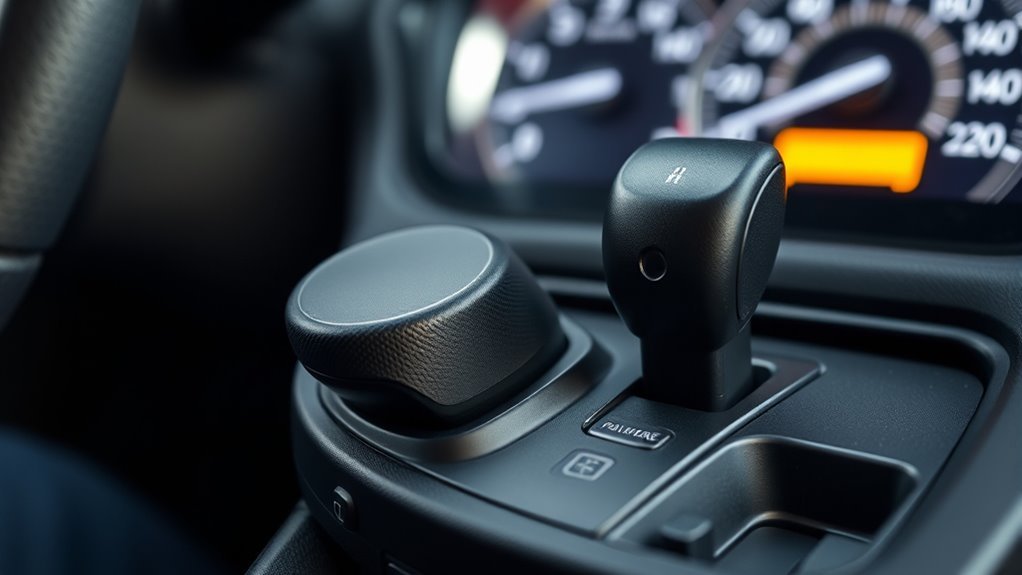
From the driver’s seat, Toyota keeps the process simple. In Toyota’s 2025 RAV4 parking brake instructions, the parking brake can be set or released manually, and automatic mode can set or release the brake according to shift-lever operation. On many RAV4 models, pulling the switch sets the brake, pressing the switch releases it, and the indicator lights confirm the current state.
Note: RAV4 model years and trims do not all display the same messages or use the exact same automatic-mode wording. Use your owner’s manual for the final procedure for your vehicle.
Manual Mode vs. Automatic Mode
The RAV4 EPB has two driver-facing jobs: it must hold the vehicle when parked, and it must release predictably when you are ready to drive. The system can do this in manual mode or, when enabled, automatic mode.
Manual Mode
In manual mode, you control the EPB with the parking brake switch:
- Stop the vehicle and depress the brake pedal.
- Pull the parking brake switch to set the parking brake.
- Confirm that the parking brake indicator and switch light are on.
- To release, depress the brake pedal and press the parking brake switch.
- Confirm that the indicator lights turn off before driving.
Automatic Mode
In Toyota’s quick-reference guidance for late-model RAV4 and RAV4 Hybrid vehicles, automatic mode is tied to shift-lever operation. The guide says shifting into P can automatically set the parking brake, while depressing the brake pedal and shifting out of P can release it when the mode is active.
That automatic function is convenient, but it does not replace good parking habits. Before leaving the vehicle, shift to P, set the parking brake, and make sure the RAV4 does not move.
Motor, Spindle, and Rotation: How They Engage the Brakes
Inside a caliper-style EPB, the electric motor does not squeeze the rotor directly. It turns a gear set, and the gear set turns a spindle or screw mechanism. The threaded spindle and pressure nut convert that rotation into straight-line force. That force moves the piston, and the piston presses the pads into the rotor.
Main EPB Parts
- Parking brake switch: The driver’s command input inside the cabin.
- EPB control logic: The system that checks inputs, warning states, and apply/release commands.
- Rear actuator motor: The electric motor mounted at or near the rear caliper assembly.
- Gear reduction: A compact gear set that increases usable torque at the spindle.
- Spindle and pressure nut: The threaded parts that turn rotation into piston movement.
- Caliper piston: The part that pushes the brake pad against the rotor.
- Pads and rotor: The friction parts that create the actual holding force.
What Rotation Direction Really Means
The motor must rotate one way to apply the brake and the opposite way to release it. However, the useful direction is not something most owners should diagnose by saying “clockwise always applies” or “counterclockwise always releases.” Motor orientation, actuator design, and side of the vehicle can change how that looks from the outside.
The safer rule is this: the EPB actuator uses reversible motor rotation to move the spindle in or out. One commanded direction increases piston clamping force; the opposite commanded direction backs the mechanism off so the brake can release.
Warning: Do not power the EPB motor with jumper wires, force the piston back, or spin the actuator by hand unless you are following the correct Toyota service procedure. A wrong move can damage the actuator, caliper, piston threads, or rear brake pads.
Pressure Nut and Piston: How Force Reaches the Brake Pads
The original term many people use for this part is “pressure knot,” but the more accurate term is usually pressure nut, adjuster nut, or threaded drive mechanism. Its job is simple: it receives torque from the spindle and turns that torque into axial pressure.
- The actuator motor receives the apply command.
- The gear set multiplies motor torque.
- The spindle turns inside the threaded pressure nut.
- The pressure nut moves the piston outward.
- The piston presses the brake pad into the rotor.
- The system holds clamping force until the release command backs the mechanism off.
This compact linkage is why an EPB can hold a parked vehicle without a long cable, lever, or pedal assembly. It also explains why EPB service is different from old-style rear disc brake service: the piston and actuator mechanism must be placed in the correct state before pads or calipers are serviced.
What the Driver Sees and Hears
A healthy RAV4 EPB usually gives a short motor sound when it applies or releases. You may also see the parking brake indicator, switch light, or a message on the multi-information display. Those signs help you confirm whether the system is applied, released, or asking for attention.
| What You Notice | What It May Mean | Best Next Step |
|---|---|---|
| Brief motor whir when applying or releasing | Normal actuator operation | No action if the brake holds and releases normally |
| Parking brake indicator stays on | Brake may still be applied or not fully released | Stop safely, depress the brake pedal, and operate the switch again |
| Indicator flashes | Toyota says the parking brake may not be fully engaged or released | Operate the switch once again; seek service if it continues |
| Yellow brake warning light or EPB warning message | Possible parking brake system malfunction | Have the vehicle inspected promptly |
| Red brake warning light | Low brake fluid or brake system malfunction may be present | Stop in a safe place and contact a Toyota dealer or qualified technician |
| Grinding, dragging, smoke, or burning smell | Brake may be stuck, overheated, or mechanically damaged | Do not continue driving; arrange professional diagnosis |
RAV4 EPB Problems: Common Symptoms, Severity, and Safe DIY Checks
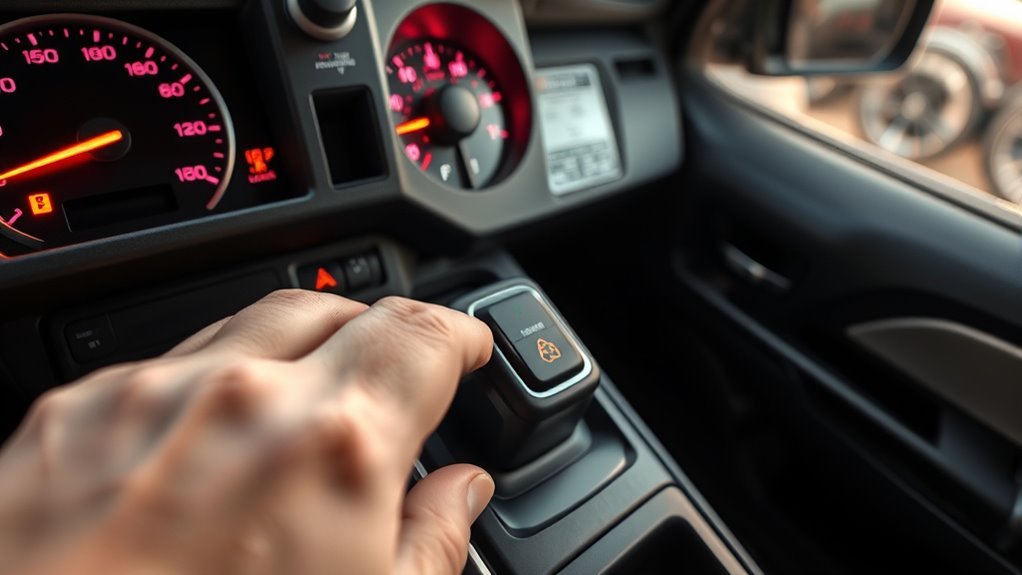
Although the RAV4’s electronic parking brake is designed for everyday convenience, it can still run into problems. The most common symptoms include warning lights, warning messages, slow or noisy actuator movement, a brake that will not hold, or a brake that will not release.
[Products Worth Considering]
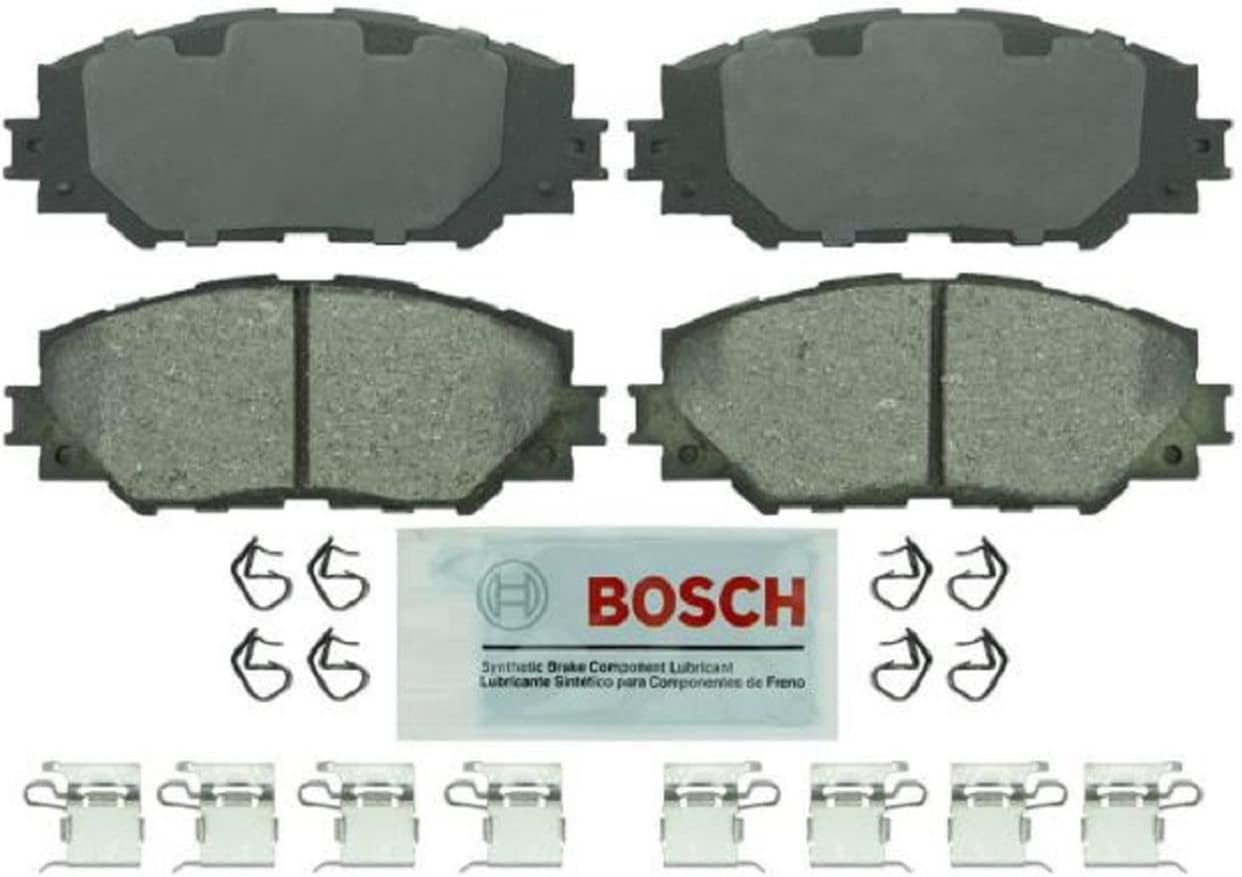
Bosch Blue ceramic front brake pads deliver dependable stopping power with platform-specific friction material designed for select Lexus, Pontiac, Scion, and Toyota vehicles. OE-style shims, slots, and chamfers help promote quiet braking, while the rust-inhibitive coating supports long-lasting performance and cleaner operation. The set includes hardware and synthetic lubricant for easier installation on one axle.

[Perfect Fitment-1]: Compatible with Toyota Camry 2018-2025, C-HR 2020-2022(Rear; Built in Japan), Corolla 2019-2025, Corolla Cross 2022-2025, Crown 2023-2025, Crown Signia 2025, Grand Highlander 2024-2025, Highlander 2020-2025, RAV4 2019-2025, RAV4 Prime 2021-2024, Sienna 2021, Sienna 2022(Rear), Sienna 2023-2025, Venza 2021-2023, Venza 2024(Rear), Avalon 2019-2022, bZ4X 2023-2025

Replace Part Number:46310-33010 4631033010.
Lower-Severity Symptoms
- A brief actuator noise with normal operation.
- A one-time warning that clears and does not return.
- Slight surface rust noise after rain, washing, or sitting overnight.
- Automatic mode confusion after someone changes the setting.
Higher-Severity Symptoms
- The vehicle rolls after the parking brake is applied.
- The parking brake will not release.
- The yellow brake warning light or EPB warning message remains on.
- The red brake warning light stays on after the parking brake is released.
- You smell hot brakes, see smoke, or feel the vehicle dragging.
- Multiple brake, ABS, stability-control, or hybrid-system warnings appear together.
Warning: If the red brake warning light stays on, Toyota’s warning-light guidance treats that as serious because it can indicate low brake fluid or a brake system malfunction. Stop safely and get help instead of continuing to drive.
Safe Owner Checks You Can Do First
Before assuming the actuator has failed, run through these simple checks:
- Confirm the switch action: With the vehicle stopped and the brake pedal depressed, pull to set and press to release.
- Check the message: Read the exact multi-information display warning instead of guessing from the light alone.
- Check 12-volt battery health: A weak battery can create confusing electronic brake symptoms.
- Check brake fluid level: If fluid is low, do not just top it off and ignore it. Low fluid may mean pad wear or a leak.
- Look at the rear brakes: Check for obvious damage, a hanging connector, packed mud, ice, road debris, or a stuck caliper.
- Scan for codes: A basic OBD-II reader may not read EPB data. Use a scan tool that can access ABS/brake/parking-brake modules when possible.
Pro Tip: Write down the exact warning message and when it happens: startup, shifting out of P, after rain, after a brake job, or after a dead battery. That pattern helps a technician separate battery, wiring, actuator, sensor, and mechanical causes.
RAV4 EPB Diagnostics: Quick Checks and When to See a Technician
Start with the least invasive checks, then move toward professional diagnosis if the warning returns. The goal is to avoid damaging the actuator while still catching safety problems early.
[Products Worth Considering]

[Easy to Use—Work Out of the Box] + [FOXWELL 2026 New Version] FOXWELL NT604 Elite scan tool is the 2026 new version from FOXWELL, designed for car owners who want to figure out the cause of issues before fixing car problems by scanning common systems like ABS, SRS, engine, and transmission. The NT604 Elite obd2 scanner diagnostic tool comes with the latest software—no need to waste time downloading software first. Plug the scanner into the OBDII port with OBDII cable to start the diagnosis.

Bi-Directional Control, Quickly Locate Problems: Turn your phone into a professional diagnostic tool. You can send commands from your phone to the ECU to test injectors, cooling fans, headlights, A/C clutch, windows, wipers, and more. See which one doesn't respond. Helps you quickly locate the problem and save time. No need to tear things apart, avoid blind disassembly.

✅ UPGRADED FROM NT604 – 5 RESETS, SAME 4-SYSTEM DIAGNOSTICS: The NT614 Elite builds on the NT604 with the same 4-system diagnostics (Engine, ABS, SRS, Transmission) PLUS 5 additional resets the NT604 doesn't have: ABS Bleeding, EPB Reset, SAS Calibration, Oil Reset, and Throttle Relearn. That's the difference between just reading codes and actually performing maintenance services that shops charge hundreds for. Whether you're upgrading or buying your first pro-grade scanner, the p-rice difference is small but the capability leap is huge.
Basic Diagnostic Sequence
- Park safely on level ground. Keep your foot on the brake pedal.
- Shift to P. Confirm the vehicle is stable before leaving the driver’s seat.
- Read the warning message. Note whether it mentions the parking brake, brake hold, brake system, ABS, or charging system.
- Try one controlled apply/release cycle. Do this only if the vehicle is safely stopped and there is no overheating, smoke, or dragging.
- Check battery voltage and connections. EPB systems depend on stable electrical power.
- Inspect visible wiring. Look near the rear calipers for damaged harnesses, loose plugs, corrosion, or road-debris damage.
- Check brake fluid. If the reservoir is below the minimum mark, stop and have the hydraulic brake system inspected.
- Scan the brake system. Read stored and current codes from the brake/ABS/EPB module, not just engine codes.
When Professional Service Is the Right Move
See a Toyota dealer or qualified technician if the brake will not hold, will not release, keeps flashing, shows a yellow brake-system warning, returns after clearing codes, or appears after rear brake work. A technician can command the actuator with a scan tool, check live data, test wiring, inspect the caliper, verify piston movement, and confirm whether the fault is electrical or mechanical.
Do not force the system. Driving with the parking brake stuck can overheat brake components, reduce braking performance, and accelerate pad and rotor wear.
Rear Brake Service and EPB Maintenance Mode
Rear brake service is where many EPB problems begin. On older manual parking brakes, a technician might retract the caliper piston with ordinary tools. On an EPB-equipped RAV4, the actuator has to be placed in the correct service state before the rear pads, rotor, caliper, or piston are serviced.
That service state is often called maintenance mode, service mode, or EPB release mode. The exact method depends on model year, trim, scan tool, and service procedure. The safest approach is to follow Toyota service information or have the work done by a shop that regularly services EPB-equipped vehicles.
Warning: Never compress the rear caliper piston on an EPB-equipped RAV4 while the actuator is still engaged. You can strip the internal screw mechanism, damage the motor, or create a brake that will not apply or release correctly.
[Products Worth Considering]
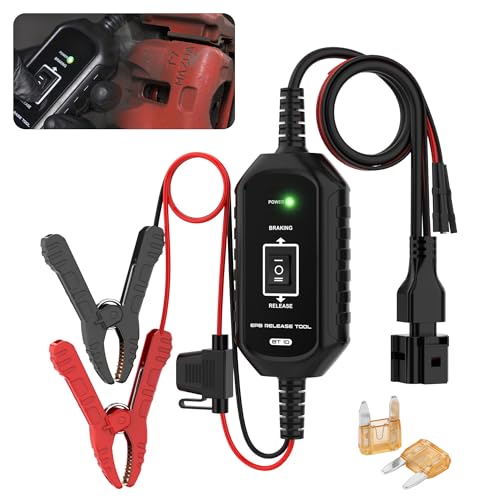
1.【Emergency EPB Release and Reset】 - Whether your vehicle has a dead battery, system failure, or requires maintenance, the Electronic Parking Brake Tool allows you to quickly, intelligently, and safely release or reset the brake. This enables you to move the vehicle and perform secure brake service and maintenance.

【Intelligent Emergency Brake Release and Reset Tool】Our EPB release tool is equipped with an advanced electronic parking brake emergency drive system with a core processor. Dual-channel forward and reverse bidirectional precise control allows for rapid release or application of the electronic parking brake (EPB), effectively resolving EPB malfunctions. Compared to forced disassembly or violent reset methods, using the EPB release tool significantly reduces repair costs and saves a lot of time.

【Emergency EPB Release & Reset Tool】Quickly resolve electronic parking brake (EPB) failures with dual-channel control for precise release and braking functions. Ideal for roadside emergencies, garage maintenance, and safe vehicle movement during power loss or system errors
Battery Power and the RAV4 Electronic Parking Brake
The EPB needs electrical power to respond to switch commands. Toyota’s owner information for RAV4 models warns that when the vehicle battery is discharged, the parking brake system cannot be activated. For hybrid models, the relevant supply is the vehicle’s 12-volt system, not the high-voltage hybrid battery.
If your RAV4 recently needed a jump-start, sat unused, or showed low-voltage symptoms, check battery health before replacing EPB parts. Low voltage can cause warning messages, incomplete actuator movement, and communication faults that look more serious than they are.
Brake Hold vs. Electronic Parking Brake
Brake Hold and the electronic parking brake are related, but they are not the same feature. Brake Hold helps keep the brakes applied while the vehicle is stopped in traffic with the system on. The electronic parking brake is the parking system meant to secure the vehicle when parked.
Do not rely on Brake Hold as a long-term parking brake. When parking, shift to P, set the parking brake, and confirm the vehicle does not move.
How to Prevent RAV4 EPB Problems
- Use the parking brake regularly. Regular use helps keep the mechanism moving instead of sitting unused for months.
- Keep the 12-volt battery healthy. Replace a weak battery before it creates electrical system faults.
- Wash out heavy road salt and mud. Buildup around the rear brakes can speed corrosion and interfere with connectors.
- Service rear brakes correctly. Make sure the EPB is in the correct service mode before any rear pad or caliper work.
- Do not ignore warning lights. A flashing or persistent parking brake warning can become an immobilizing problem.
- Use quality replacement parts. Poorly fitting pads, damaged calipers, or incorrect actuators can create noise, drag, and fault codes.
The best EPB repair is often the one you avoid: keep the battery strong, service the rear brakes correctly, and investigate warnings before the actuator is forced to fight a stuck or dragging brake.
Frequently Asked Questions
What are the disadvantages of an electronic parking brake?
An EPB is convenient, but it adds electrical parts, software control, an actuator motor, and special service steps. That can make rear brake work more complex and can make failures harder to diagnose than an old cable-operated handbrake.
Do electronic parking brakes work if the battery is drained?
Not reliably. The RAV4 EPB needs 12-volt electrical power to activate and respond to commands. Toyota’s owner information says that when the vehicle battery is discharged, the parking brake system cannot be activated.
What does “EPB malfunction” mean on a RAV4?
It means the parking brake system has detected a fault or abnormal operation. Possible causes include low voltage, damaged wiring, a stuck caliper, actuator trouble, a sensor or control-module issue, or a problem after rear brake service. Read the exact message and have persistent warnings diagnosed.
Can I drive with a RAV4 parking brake warning light on?
If the light flashes or a message says the parking brake is not fully engaged or released, stop safely and follow the owner’s manual instructions. If the red brake warning stays on, stop in a safe place and seek service because it may indicate low brake fluid or a brake system malfunction.
Do I need service mode to replace rear brake pads on a RAV4 with EPB?
Yes, use the correct Toyota service procedure or a capable scan tool before rear brake work. The EPB actuator must be in the proper service state so the piston and internal screw mechanism are not damaged during pad replacement.
Conclusion
The RAV4’s electronic parking brake turns a simple switch command into mechanical clamping force at the rear brakes. The actuator motor, gears, spindle, pressure nut, piston, pads, and rotor all have to work together for the vehicle to hold and release correctly.
For normal use, focus on the driver controls: pull to set, press to release, watch the indicators, and understand whether automatic mode is active. For problems, start with safe checks such as the warning message, battery condition, brake fluid level, visible wiring, and scan-tool codes. If the brake will not hold, will not release, or keeps warning you, stop guessing and get professional diagnosis before the problem becomes a safety issue.
Sources
- Toyota Owners: 2025 RAV4 Parking Brake — supports manual mode, automatic mode, switch operation, warning notices, and battery-discharge caution.
- Toyota Owners: 2026 RAV4 Hybrid Parking Brake — supports current RAV4 Hybrid EPB operation and 12-volt battery discharge guidance.
- Toyota 2024 RAV4 / RAV4 Hybrid Quick Reference Guide — supports automatic mode, manual mode, parking brake switch, and brake hold overview.
- Toyota Owners: 2025 RAV4 Warning Lights and Buzzers — supports brake warning-light meanings, low brake fluid warning, parking brake system malfunction warning, and flashing parking brake indicator guidance.
- HELLA Tech World: Electric Parking Brake — supports general EPB component design, including electric motor, gear mechanism, spindle, and brake piston movement.
- ZF Electric Park Brake Technical Information — supports spindle, pressure nut, piston, and caliper-style electric parking brake operation.