
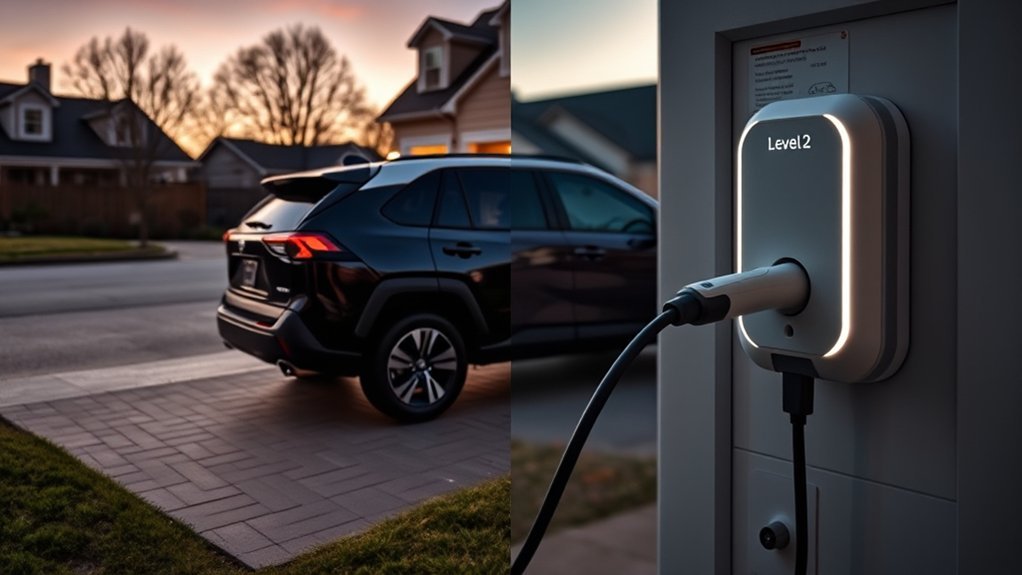
You do not automatically need a Level 2 charger for a Toyota RAV4 Prime, but it becomes worth it if you want the vehicle ready for full electric driving every day. A standard 120V outlet can work for short, predictable commutes, while a 240V Level 2 setup gives you faster, more reliable charging at home. For 2025 and earlier models, Toyota renamed the RAV4 Prime to the RAV4 Plug-in Hybrid, but many owners still use the Prime name.
Quick Answer
You need Level 2 charging for a RAV4 Prime if you often use most of the electric range, drive more than about 30–40 miles a day, or want a dependable full charge before every morning. If your commute is short and the car sits plugged in overnight, Level 1 can be enough.
Key Takeaways
- Level 1 charging is the low-cost choice: plug into a standard 120V outlet and expect a slow overnight refill.
- Level 2 charging is the convenience choice: a 240V setup can refill the RAV4 Prime much faster and makes daily EV driving easier.
- For 2025 and earlier models, Toyota lists a full charge in about 2.5 hours with 240V at 32A under ideal conditions.
- For the redesigned 2026 RAV4 Plug-in Hybrid, charging hardware varies by trim, so check your exact model before buying a charger.
- Use a licensed electrician for any new 240V circuit, outlet, or hardwired EV charger installation.
At a Glance
| Best For | Choosing between Level 1 and Level 2 home charging |
| Difficulty | Easy for Level 1; professional installation recommended for Level 2 |
| Tools Needed | Level 1 cord or Level 2 EVSE, compatible outlet/circuit, electrician for new 240V work |
| Typical Cost | Level 1: usually no added cost if a suitable outlet exists; Level 2: charger plus electrical installation |
Do You Need Level 2 for a RAV4 Prime? A Practical Answer
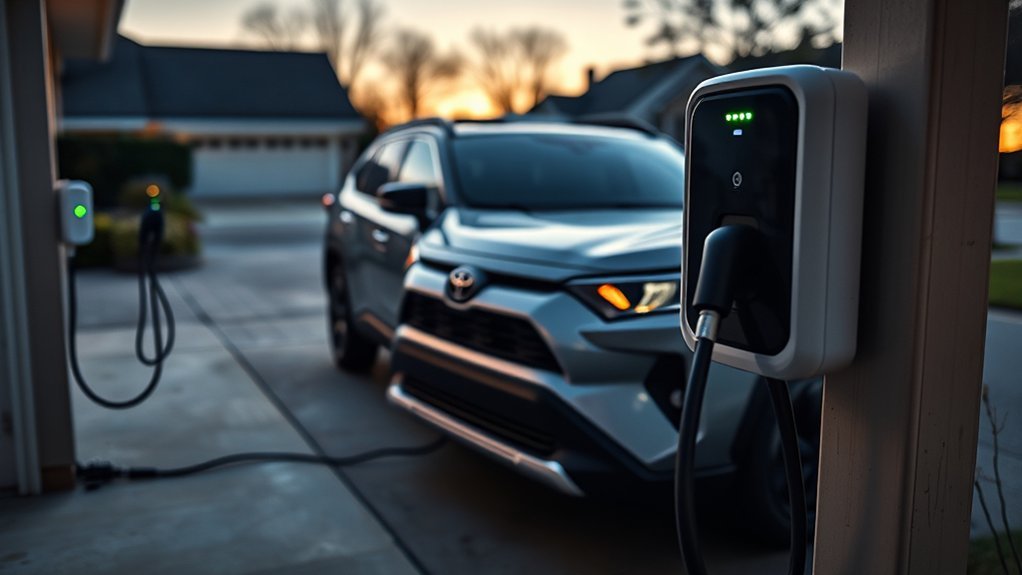
You probably do not need a Level 2 charger if your RAV4 Prime is mostly used for local errands, a short commute, and overnight parking. Level 1 charging can restore enough range for many owners because the RAV4 Prime is a plug-in hybrid, not a full battery-electric vehicle. When the electric range is depleted, the gasoline engine and hybrid system still keep the SUV usable.
Level 2 becomes the better choice when you want to use the plug-in system to its full potential. If you regularly come home with a low battery, need the full electric range again the next morning, or share the charger with another EV, the faster 240V setup removes a lot of planning.
The key is not “Level 1 versus Level 2” in the abstract. The real question is this: can your charger replace the electric miles you use before the next time you drive?
Note: Model year matters. Most 2021–2025 RAV4 Prime/RAV4 Plug-in Hybrid models use J1772 AC charging. Toyota’s 2026 RAV4 Plug-in Hybrid adds different charging hardware by trim, including an 11-kW onboard AC charger and CCS1 DC fast charging on XSE and Woodland trims.
Level 1 vs. Level 2 RAV4 Prime Charging Comparison
| Charging Type | Power Source | Best Use | Main Tradeoff |
|---|---|---|---|
| Level 1 | 120V household outlet | Short commutes, overnight parking, low-cost setup | Slow recovery after using most of the battery |
| Level 2 | 240V home or public charger | Daily EV-range use, faster top-ups, shared household charging | Requires charger hardware and electrical work |
| DC fast charging | Public DC charger | Only certain 2026 trims with CCS1 | Not available on most older RAV4 Prime models |
[Products Worth Considering]

This dual USB-C car charger delivers up to 45W from each port for rapid charging on the road, including support for Samsung Super Fast Charging 2.0 and other compatible devices. The included Type-C cables make it easy to power two phones or tablets at once, while the alloy body and built-in safety protections help ensure reliable everyday use. It is designed to fit most vehicle interiors and provide efficient charging for modern USB-C devices.

This LISEN retractable car charger keeps charging simple with two built-in USB-C cables that extend only as needed and retract neatly when not in use. With up to 75W total output, a USB-C port, and a USB-A port, it can power multiple devices at once for commutes, family trips, and long drives. The 180° adjustable design helps it fit tight console spaces while keeping cables organized and out of the way.

This custom-fit center console organizer adds a second level of storage to your Toyota RAV4, helping keep everyday items neatly separated and easy to reach. Its larger slot design accommodates wallets, cables, tissues, and phones with cases while non-slip mats and backing help prevent shifting and scratches. Made from durable ABS plastic with a matte finish, it is easy to clean and keeps the console tidy without blocking USB access.
How Fast Is Level 1 Charging for the RAV4 Prime?
Level 1 uses a standard 120V outlet and the portable charging cable that comes with the vehicle. For 2025 and earlier RAV4 Prime/RAV4 Plug-in Hybrid models, real-world Level 1 charging is usually an overnight routine rather than a quick refill. Owners commonly plan around roughly 12 hours from low to full on a normal household outlet, depending on battery state, temperature, outlet quality, and charging settings.
That sounds slow, but it can still be enough. If you drive 15–25 electric miles in a day and the SUV sits plugged in all evening and overnight, Level 1 may replace what you used before the next morning. It is also the simplest setup because it usually avoids new charger hardware.
Charging Rate Per Hour
A useful planning estimate for Level 1 is about 3–4 electric miles of range per hour on many RAV4 Prime use cases. That means an 8-hour overnight session may add roughly 24–32 miles, while a longer 12-hour session may be closer to a full refill on 2025 and earlier models.
| Metric | Typical Level 1 Outcome | What It Means |
|---|---|---|
| Power source | 120V outlet | No special charger install if a suitable outlet is available |
| Range added | About 3–4 miles per hour | Good for light daily driving |
| Full refill habit | Often overnight | Not ideal if you need rapid turnaround |
Practical Overnight Range
Level 1 works best when your driving is predictable. A driver with a 20-mile round-trip commute may plug in at dinner and recover that range before breakfast. A driver who uses the full electric range every weekday, gets home late, and leaves early may find Level 1 frustrating.
The other practical issue is outlet quality. Toyota’s portable cable should be plugged into a properly grounded outlet in good condition. Avoid worn receptacles, light-duty extension cords, or shared circuits with heavy appliances.
Warning: Do not use an undersized extension cord or a damaged outlet for EV charging. If the outlet feels hot, trips breakers, or looks worn, stop charging and have an electrician inspect it.
How Fast Is Level 2 Charging for the RAV4 Prime?
Level 2 charging uses 240V power and is much faster than a standard household outlet. For 2025 and earlier RAV4 Plug-in Hybrid models, Toyota says a professionally installed Level 2 setup can bring the vehicle to full charge in approximately 2.5 hours at 240V and 32A under ideal conditions. EPA data for the 2025 model lists a 240V charge time of 4.5 hours, so real-world results can vary based on equipment, settings, and conditions.
For the 2026 RAV4 Plug-in Hybrid, the answer changes by trim. Toyota says SE and GR SPORT Plug-in Hybrid trims have a 7-kW onboard charger and J1772 Level 1/Level 2 charging, while XSE and Woodland trims have an 11-kW onboard AC charger with a CCS1 port and DC fast-charging capability.
Charge Rate Estimates
For 2021–2025 RAV4 Prime/RAV4 Plug-in Hybrid models, a 32A Level 2 charger is generally enough to use the vehicle’s onboard AC charging capability. Buying a much higher-amperage wall unit will not make those older models charge beyond the vehicle’s onboard limit, though it may help future-proof your garage for another EV.
For the 2026 model, do not assume every trim charges the same way. The XSE and Woodland Plug-in Hybrid trims are the ones Toyota lists with the 11-kW onboard AC charger and CCS1 DC fast-charging capability. The SE and GR SPORT trims use J1772 for Level 1 and Level 2 charging.
Typical Overnight Times
With Level 2, “overnight” becomes easy rather than borderline. Even if you arrive home with a low battery after errands, a Level 2 charger can usually have the RAV4 Prime ready well before morning. That flexibility is the main benefit: you no longer need to think as carefully about when you plug in.
Level 2 is less about whether the RAV4 Prime can charge overnight and more about whether it can recover quickly when your schedule changes.
Factors Slowing Charging
Actual charging time can change because of the starting battery level, outside temperature, charger amperage, circuit limits, and the vehicle’s battery management system. The last part of a charge can be slower than the middle of the session, and cold or hot weather can reduce efficiency.
Do not judge your setup from one session. Track several normal charging nights, then decide whether the speed fits your routine.
Daily Driving Scenarios Where Level 1 Is Enough
Level 1 charging is enough when your RAV4 Prime is mostly a commuter and local-errand vehicle. If your round trip is under about 30 miles and the SUV is parked at home for 10–12 hours most nights, you may not gain much from paying for Level 2 right away.
Level 1 can also make sense for renters, apartment dwellers with access to a standard outlet, occasional drivers, and owners who mainly bought the RAV4 Prime for flexibility rather than all-electric commuting every day.
- Short commute: You use only part of the battery each day and plug in nightly.
- Long dwell time: The vehicle sits parked long enough to recover the miles you used.
- No urgent turnaround: You rarely need to recharge quickly between trips.
- Budget priority: You want to avoid charger hardware, permits, and electrician labor for now.
If those points match your routine, start with Level 1 and upgrade only if it becomes a constraint.
When to Upgrade to a Level 2 Charger for the RAV4 Prime
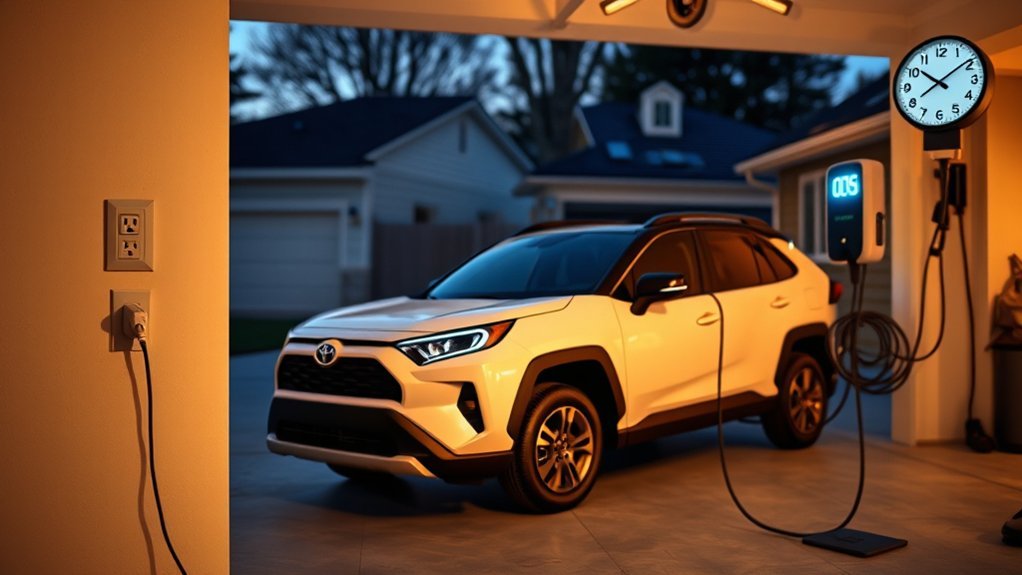
Upgrade to Level 2 when Level 1 starts shaping your schedule. If you catch yourself rationing EV mode, delaying trips, or leaving the house with less charge than you want, the faster setup is probably worth it.
Level 2 is especially useful if you drive more than 30–40 miles a day, use most of the battery before returning home, have time-of-use electricity rates, own more than one plug-in vehicle, or want a charger that will also support a future full EV.
Pro Tip: If you are installing Level 2 mainly for a 2021–2025 RAV4 Prime, a 32A J1772 charger is usually sufficient. If you want future-proofing for a full EV, ask your electrician whether your panel can safely support a higher-capacity hardwired charger.
How Much Does Home Level 2 Installation Actually Cost?
Home Level 2 cost depends more on your electrical panel and charger location than on the RAV4 Prime itself. A simple install near the main panel can be relatively straightforward. A detached garage, long wire run, trenching, panel upgrade, or load-management equipment can raise the price quickly.
Expect the total to include three pieces: the EVSE charger, electrical materials, and electrician labor. Some homes also need permits, a panel assessment, a subpanel, or utility approval. Before buying hardware, get at least one electrician quote that confirms your available panel capacity and the best location for the charger.
| Cost Item | What to Check | Why It Matters |
|---|---|---|
| Charger hardware | Amperage, plug type, cable length, outdoor rating | Must fit your vehicle and parking spot |
| Electrical work | Panel capacity, breaker size, wire run, permits | Usually the biggest variable |
| Rebates | Utility, state, local, and tax programs | May lower the installed cost |
The U.S. Department of Energy’s Alternative Fuels Data Center notes that many EV and PHEV owners can meet daily needs with Level 1 overnight charging, while Level 2 is useful for longer commutes, less regular schedules, or larger batteries. That is exactly the decision point for a RAV4 Prime owner.
[Products Worth Considering]

These custom-fit windshield wiper blades are designed as a direct replacement for Toyota RAV4 models from 2019 to 2025, including RAV4 Prime applications. They feature natural rubber with a PTFE coating for quiet, clean wiping, a metal base for added durability, and dual steel springs for a snug windshield fit in changing weather. Installation is quick and straightforward, making them a convenient upgrade for reliable visibility.

This windshield sun shade is designed to fit Toyota RAV4 models from 2019 to 2025 and RAV4 Prime models from 2021 to 2024. It helps block UV rays, reduce interior heat buildup, and protect your dashboard, seats, and steering wheel from sun damage. The accordion-folding design makes it easy to set up, store, and carry, while the durable triple-laminate construction adds long-lasting performance.

This 4-in-1 retractable car charger helps keep devices powered on the go with dual retractable cables plus USB-A and USB-C ports for convenient multi-device charging. Built-in safety protection helps guard against overcharging, over-current, and overheating, while the 180-degree rotating design and compact retractable cords help keep your car organized and clutter-free.
Smart Charging & Scheduling to Protect RAV4 Prime Battery
Smart charging helps you control cost and reduce unnecessary battery stress. You can schedule charging during off-peak electricity hours, delay charging until closer to departure, and avoid keeping the battery at a full state of charge longer than necessary.
Many RAV4 Prime owners simply plug in after the last drive of the day. That works. But if your utility charges less overnight, scheduled charging can save money. If your routine is consistent, set the vehicle or charger to finish shortly before you leave in the morning.
Battery life is usually affected more by heat, high state-of-charge dwell time, and charging habits than by Level 1 versus Level 2 alone. AC Level 2 charging within Toyota’s supported limits is normal use for the vehicle.
Real-World Costs: Electricity, Time, and Range Per Session
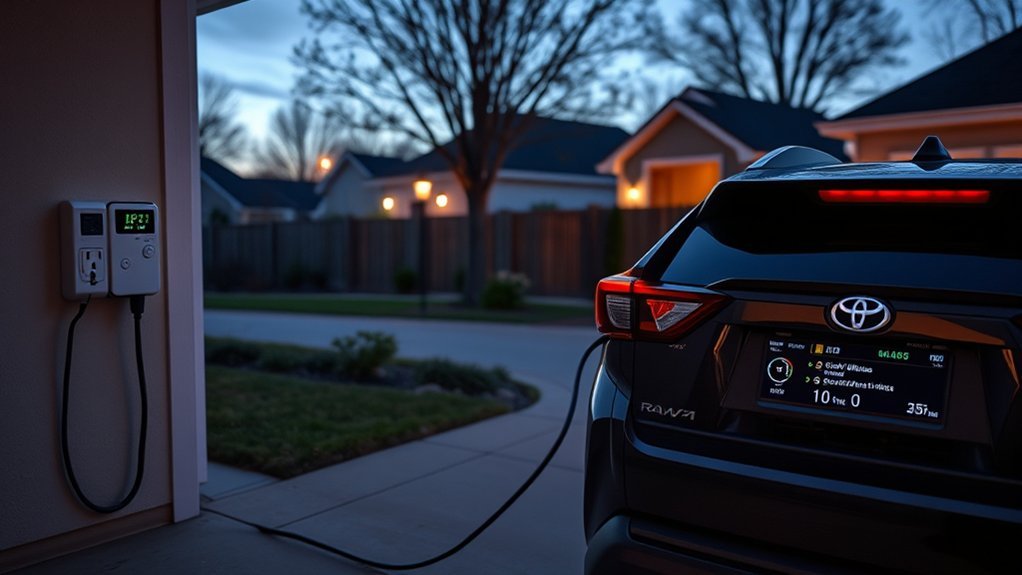
The cost of each charging session depends on your electricity rate and how much energy the battery accepts. To estimate a full charge cost, multiply the kilowatt-hours used by your electricity price per kWh. Your bill may be lower or higher depending on local rates, charging losses, and whether you use time-of-use pricing.
| Question | Level 1 Answer | Level 2 Answer |
|---|---|---|
| Will it cost less per kWh? | Usually the same utility rate | Usually the same utility rate, but easier to schedule off-peak |
| Will it charge faster? | No, slow overnight refill | Yes, much faster recovery |
| Will it add more electric range? | Same battery, slower delivery | Same battery, faster delivery |
| Best session window | Long overnight parking | Off-peak nights and quick evening top-ups |
Level 2 does not magically make electricity cheaper, but it gives you more control over timing. That matters if your utility offers lower overnight rates or if you want the battery ready before a second trip later the same day.
Best Level 2 Chargers for RAV4 Prime: Compatibility Tips and Rebates
The best Level 2 charger for a RAV4 Prime is one that matches your model year, your electrical panel, and your parking setup. For most 2021–2025 RAV4 Prime/RAV4 Plug-in Hybrid owners, look for a reputable J1772 Level 2 charger with enough cable length, outdoor rating if needed, and smart scheduling if you want app control.
For 2026 owners, check the exact trim before buying. Toyota says SE and GR SPORT Plug-in Hybrid trims use a J1772 port for Level 1 and Level 2 charging, while XSE and Woodland trims use a CCS1 port with DC fast-charging capability and an 11-kW onboard AC charger. That means the right equipment depends on the trim and where you plan to charge.
- Connector: Match the charger to your vehicle’s AC charging port or use only manufacturer-approved adapters where applicable.
- Amperage: Do not overbuy for an older RAV4 Prime if the vehicle cannot use the extra output, unless you are planning for a future EV.
- Installation style: Hardwired units can be cleaner and more secure; plug-in units may be easier to replace or move.
- Outdoor rating: Choose outdoor-rated equipment for carports, driveways, or exposed garages.
- Smart features: Wi-Fi, scheduling, energy tracking, and load management can be worth paying for if you use time-of-use rates.
- Rebates: Search your local utility and the Alternative Fuels Data Center incentive database before installation, because some programs require preapproval.
[Products Worth Considering]

This dual-port USB C car charger delivers fast charging for two devices at once, making it easy to power up phones on the go. It includes two chargers and two cables, soft blue LED lighting for easy nighttime use, and built-in safety protections for dependable everyday charging.

This USB panel mount car charger provides a clean flush-fit extension solution for compatible Toyota dashboards, delivering both charging and data transfer through a male to female USB connection. Designed for plug-and-play installation, it supports a wide range of Toyota models and helps replace broken or outdated USB ports while protecting devices from overcurrent, overheating, and overcharging. Its durable PVC and copper construction supports reliable use for phones, tablets, GPS units, and CarPlay or Android Auto accessories.

This ROADRESS car charger delivers fast power for up to three devices at once with dual USB-C ports and a USB-A port, making it ideal for road trips, commuting, and busy travel days. It supports a wide range of fast-charging protocols and offers strong safety protections, efficient heat dissipation, and an LED ambient light for easier nighttime use.
Common Mistakes to Avoid
The biggest mistake is assuming “more amps” always means faster RAV4 Prime charging. Your vehicle’s onboard charger sets the limit. A high-output wall unit can be useful for a future EV, but it will not force an older RAV4 Prime to charge above its supported AC rate.
Another mistake is installing the charger before checking the panel. A charger location that looks convenient may require a long wire run or expensive electrical work. Have the electrician inspect the panel, parking location, conduit path, and local code needs before you order the unit.
Finally, do not ignore your actual driving pattern. Level 2 is a great upgrade, but if Level 1 already covers your miles every night, you can keep things simple and spend the money elsewhere.
Frequently Asked Questions
Is Level 1 or Level 2 charging better for RAV4 Prime battery life?
Neither is automatically better in a way most owners will notice. Level 1 and Level 2 are both normal AC charging methods. Battery care depends more on heat, charging habits, state-of-charge dwell time, and following Toyota’s owner manual than on choosing Level 1 or Level 2 alone.
What is the main difference between Level 1 and Level 2 EV charging?
Level 1 uses a standard 120V household outlet and charges slowly. Level 2 uses 240V power and charges much faster. For a RAV4 Prime, Level 1 is often enough for short daily driving, while Level 2 is better when you want quick recovery and more predictable full-electric range.
Can you use a Level 2 charger on a RAV4 Prime?
Yes. RAV4 Prime and RAV4 Plug-in Hybrid models support Level 2 AC charging. For 2021–2025 models, a 240V Level 2 charger can cut charging time dramatically compared with a 120V outlet. For 2026 models, check your trim because Toyota uses different charging hardware by grade.
Does the RAV4 Prime support DC fast charging?
Most 2021–2025 RAV4 Prime/RAV4 Plug-in Hybrid models do not use DC fast charging. Toyota lists DC fast-charging capability for 2026 RAV4 Plug-in Hybrid XSE and Woodland trims with a CCS1 port, while SE and GR SPORT trims use J1772 for Level 1 and Level 2 charging.
Should I install Level 2 if I only drive 20 miles a day?
Probably not right away. If your RAV4 Prime sits plugged in overnight and Level 1 replaces your daily miles, you can keep using the standard setup. Upgrade when you need faster charging, share charging with another EV, or want a future-proof 240V home charging station.
Conclusion
Level 1 charging can be perfectly fine for a RAV4 Prime if your daily driving is short and predictable. It is simple, cheap, and often enough to wake up with the electric range you need. Level 2 is the upgrade for owners who want the plug-in system to feel effortless: faster recovery, easier off-peak scheduling, and fewer mornings with a partly charged battery.
Start with your actual miles, not the charger hype. If Level 1 keeps up, you are already set. If it makes you plan around the outlet, Level 2 is the practical move.
Sources
- Toyota Plug-In Hybrid Vehicles — 2025 RAV4 Plug-in Hybrid range and Level 2 charging information.
- Toyota 2026 RAV4 Plug-in Hybrid — current Toyota model overview and electric-range information.
- Toyota USA Newsroom: 2026 RAV4 Arrives This Winter — 2026 trim-specific charging hardware, J1772/CCS1 details, and charging-time notes.
- FuelEconomy.gov: 2025 Toyota RAV4 PHEV AWD — EPA fuel economy and 240V charge-time listing.
- Alternative Fuels Data Center: Charging Electric Vehicles at Home — home Level 1 and Level 2 charging guidance.
- U.S. Department of Transportation: Charger Types and Speeds — general Level 1, Level 2, and DC fast charging definitions.


[…] when you regularly use most of the electric range or need a faster turnaround. See the site’s RAV4 Prime Level 1 vs. Level 2 charging guide for a home-charging decision […]
[…] If you drive a typical daily commute, a 32-amp or 40-amp charger refills the battery overnight. Our Level 1 vs. Level 2 home charging guide breaks down how much faster Level 2 is than a standard […]