Hydroplaning in a Toyota RAV4 can feel sudden and scary: the steering gets light, the tires feel like they are floating, and the vehicle may not respond the way you expect. The safest response is simple: stay calm, ease off the accelerator, keep your eyes where you want to go, and make smooth steering corrections until the tires regain contact with the road.
Quick Answer
If your Toyota RAV4 hydroplanes, gently lift off the accelerator, avoid hard braking, and steer smoothly in the direction you want the vehicle to travel. Do not jerk the wheel. Once the tires regain traction, slow down, increase following distance, and pull over safely if the rain or standing water is too heavy.
Key Takeaways
- Hydroplaning happens when water separates your RAV4’s tires from the road, reducing steering and braking control.
- The first move is to ease off the accelerator; sudden braking or sharp steering can make the slide worse.
- Proper tire pressure, healthy tread depth, slower speeds, and extra following distance are the best prevention tools.
- Toyota recommends checking tire condition, pressure, and treadwear indicators as part of regular tire care.
- If hydroplaning keeps happening, have the tires, alignment, brakes, and suspension inspected by a professional.
At a Glance
| Time Required | A few seconds to react; 5–10 minutes to inspect tires afterward |
| Difficulty | Moderate, because calm steering and throttle control matter |
| Tools Needed | Tire pressure gauge and tread depth gauge for prevention checks |
| Cost | Usually free for safe driving habits; tire service or replacement varies by tire condition |
What Is Hydroplaning and How Does It Happen?

Hydroplaning happens when your RAV4’s tires ride on a thin layer of water instead of gripping the pavement. When that water layer builds faster than the tire tread can push it away, steering and braking response can drop quickly. Tire companies and safety organizations consistently list the same major risk factors: water depth, vehicle speed, tire tread depth, tire pressure, and road condition.
The risk rises when you drive through standing water, heavy rain, worn pavement, or ruts where water collects. According to AAA wet-weather driving guidance, hydroplaning can begin at speeds as low as 35 mph, so “I was not going that fast” does not always mean the road is safe.
Even good tires need time and tread depth to move water out from under the contact patch. In heavy rain, slower speed is your best traction tool.
Tire condition matters just as much as driving technique. The National Highway Traffic Safety Administration advises drivers to use the vehicle manufacturer’s recommended cold tire pressure and check tire condition regularly. Toyota’s RAV4 owner information also says to inspect treadwear indicators, uneven wear, tire condition, and pressure during tire checks.
How to Recognize Hydroplaning in Your RAV4
You can often feel hydroplaning before you fully lose control. The steering may suddenly feel light, the vehicle may drift, or the tires may seem to float over the road. These signs are most common when driving through standing water, highway spray, or the first part of a rainstorm when oil and grime can make pavement slick.
Signs of Hydroplaning
- Steering feels loose, light, or less responsive.
- The RAV4 drifts or slides even though you are holding the wheel steady.
- The engine revs or speed changes without normal tire grip.
- The vehicle feels like it is floating over water.
- Brake response feels weak because the tires are not firmly contacting the pavement.
- Tire noise suddenly changes as the tires skim across water.
Warning: Do not test traction by braking hard or making a quick steering move. If the vehicle feels light or floaty, assume traction is reduced and slow down smoothly.
Factors That Increase Hydroplaning Risk
Hydroplaning risk goes up when several conditions happen at once. Speed is one of the biggest factors because tires need time to evacuate water. Worn tires also have less groove depth to channel water away. Underinflated or overinflated tires can reduce the contact patch and make wet-road handling less predictable.
| Risk Factor | Why It Matters | Safer Action |
|---|---|---|
| Higher speed | Tires have less time to push water away. | Slow down before puddles, curves, and lane changes. |
| Low tread depth | Shallow grooves move less water from under the tire. | Replace tires when treadwear indicators show or wet traction feels poor. |
| Incorrect tire pressure | Improper inflation can reduce tire contact and stability. | Use the cold PSI on the driver-door placard, not the tire sidewall maximum. |
| Standing water | Deeper water makes it harder for tread to reach pavement. | Avoid puddles and drive in the tracks of vehicles ahead when safe. |
| Cruise control in rain | Cruise control can delay your speed adjustment on slick roads. | Turn cruise control off in heavy rain or standing water. |
Immediate Actions to Take When Hydroplaning
When your Toyota RAV4 starts hydroplaning, your goal is to let the tires regain grip without adding more sudden force. Smooth inputs matter more than quick reactions.
[Products Worth Considering]

The ANCEL AD410 PRO combines engine diagnostics and 12V battery testing in one easy-to-use tool, helping you read and clear check engine codes while checking battery health, cranking, and charging performance. It also provides live data, freeze frame details, and I/M readiness checks to help you diagnose issues faster and prepare for emissions testing. With plug-and-play operation, a clear screen, and broad vehicle compatibility, it is a practical solution for home mechanics and everyday drivers.

The JACO ElitePro Digital Tire Pressure Gauge delivers shop-grade accuracy with a clear digital readout, making it easy to maintain proper tire pressure for safer driving and better performance. Built with rugged brass and steel components, a protective guard, and a flexible air hose, it is designed for reliable use across cars, trucks, motorcycles, bikes, RVs, and trailers. The lock-on display, built-in bleeder valve, and bright backlit screen add convenience in any lighting condition.

This LUMITECO tire tread depth gauge set makes it easy to monitor tire wear and maintain safer driving performance. The color-coded scale provides quick, easy-to-read measurements, while the compact pocket-size design and included clip make it convenient to keep in your vehicle or toolbox. Suitable for cars, trucks, motorcycles, and more, it offers a simple reusable way to check tread depth whenever needed.
Key Immediate Actions
- Stay calm and look where you want to go. Your hands usually follow your eyes, so focus on the open path ahead.
- Ease off the accelerator. Let the vehicle slow naturally instead of forcing a sudden stop.
- Do not slam on the brakes. Hard braking can upset the vehicle when the tires already have limited grip.
- Hold the steering wheel steady. Make small, smooth corrections only as needed.
- Steer gently toward your intended path. If the rear of the vehicle slides, steer smoothly in the direction of the slide until the vehicle straightens.
- Wait for traction to return. Once the tires reconnect with the road, the RAV4 should begin responding normally again.
- Slow down and increase following distance. The road is still wet, so keep your speed lower after recovery.
Steering Techniques Explained
Steering during hydroplaning should be gentle and deliberate. If the back of your RAV4 slides left, steer slightly left. If it slides right, steer slightly right. This helps align the front wheels with the direction the vehicle is moving, which can help the tires regain traction without overcorrecting.
- Keep both hands on the wheel.
- Avoid sudden jerks or sharp turns.
- Make one small correction at a time.
- Do not fight the vehicle with large steering inputs.
- Once traction returns, straighten the wheel smoothly.
Pro Tip: In heavy rain, steer and brake as if you are carrying a full cup of coffee. Smooth inputs help keep the tires connected to the road.
Brake Application Tips
In most hydroplaning situations, the safest first step is to lift off the accelerator and avoid hard braking. If braking becomes necessary after the tires begin to regain traction, use light, steady pressure. Most modern Toyota RAV4 models have anti-lock brakes, but ABS cannot create traction if the tires are still riding on water.
If your RAV4 has ABS, press the brake pedal steadily and let the system pulse if it activates. Do not pump ABS brakes. If you are driving an older vehicle without ABS, use gentle brake pressure and avoid locking the wheels.
Mastering Steering Techniques to Regain Control
Good steering technique starts before the skid. Keep a relaxed grip, leave space around your vehicle, and avoid sudden lane changes on wet pavement. If the RAV4 begins to hydroplane, use these habits to recover control:
- Look ahead: Focus on the clear lane or shoulder area where you want the vehicle to travel.
- Keep the wheel steady: Sudden inputs can turn a mild slide into a bigger skid.
- Correct gently: Turn only enough to keep the vehicle aligned with its path.
- Let the tires reconnect: Recovery often happens as speed drops and water pressure under the tires decreases.
- Do not accelerate out of it: More throttle can keep the tires skimming on the water.
Tips for Safely Slowing Down When Hydroplaning
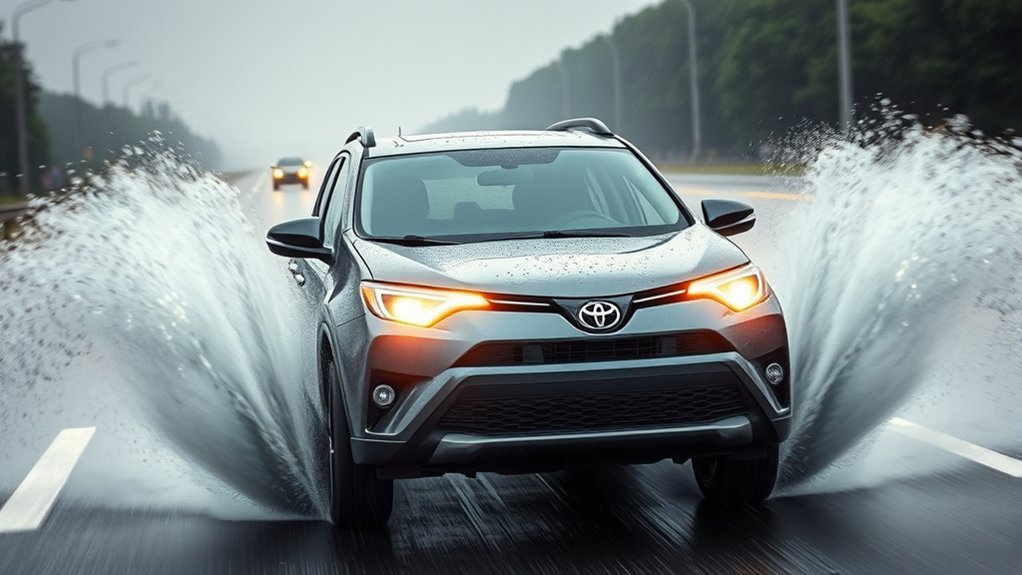
When your RAV4 hydroplanes, slowing down safely is more important than slowing down quickly. Abrupt braking, quick steering, or sudden throttle changes can make the vehicle harder to control.
Gradual Speed Reduction Techniques
- Lift your foot gently from the accelerator.
- Keep the steering wheel steady while speed drops.
- Use light, steady braking only when needed and only when the tires begin to grip again.
- Avoid downshifting aggressively, because it can jolt the drivetrain and tires.
- After recovery, drive below the posted limit if rain, spray, or standing water continues.
Steering Control Strategies
Small steering movements are safer than large ones. The goal is to keep the RAV4 balanced until the tires regain contact with the road. If you overcorrect, the vehicle may snap in the opposite direction once traction returns.
Note: All-wheel drive can help with acceleration traction in some conditions, but it does not prevent hydroplaning and does not shorten stopping distance when the tires are riding on water.
How to Prevent Hydroplaning Before It Happens

The best hydroplaning fix is prevention. Your RAV4’s tires, brakes, stability systems, and driver-assist features all work better when the tires have a clean, firm grip on the road.
- Check tire pressure monthly. Use the recommended cold tire pressure on the driver-side tire information placard. NHTSA explains that cold pressure means the vehicle has not been driven for at least three hours.
- Inspect tread depth. Toyota says to check treadwear indicators and replace tires when the indicators are showing. For frequent rain driving, many safety experts recommend shopping for replacement tires before they reach the legal minimum.
- Rotate tires on schedule. Rotation helps prevent uneven wear, which can reduce wet-road grip.
- Replace damaged tires. Bulges, cuts, cracks, punctures, or exposed cords need professional attention.
- Keep windshield wipers in good condition. Seeing standing water early gives you more time to slow down.
- Avoid cruise control in heavy rain. Keep full control of speed when traction may change suddenly.
- Leave more space. Wet stopping distance is longer, even before hydroplaning begins.
[Products Worth Considering]

This portable tire inflator delivers fast, reliable inflation with a high-pressure pump, digital pressure gauge, and automatic shut-off for safer use. Dual power support lets you run it from the built-in battery or a 12V car outlet, while the LED light and USB output make it a practical emergency tool for roadside and outdoor situations.
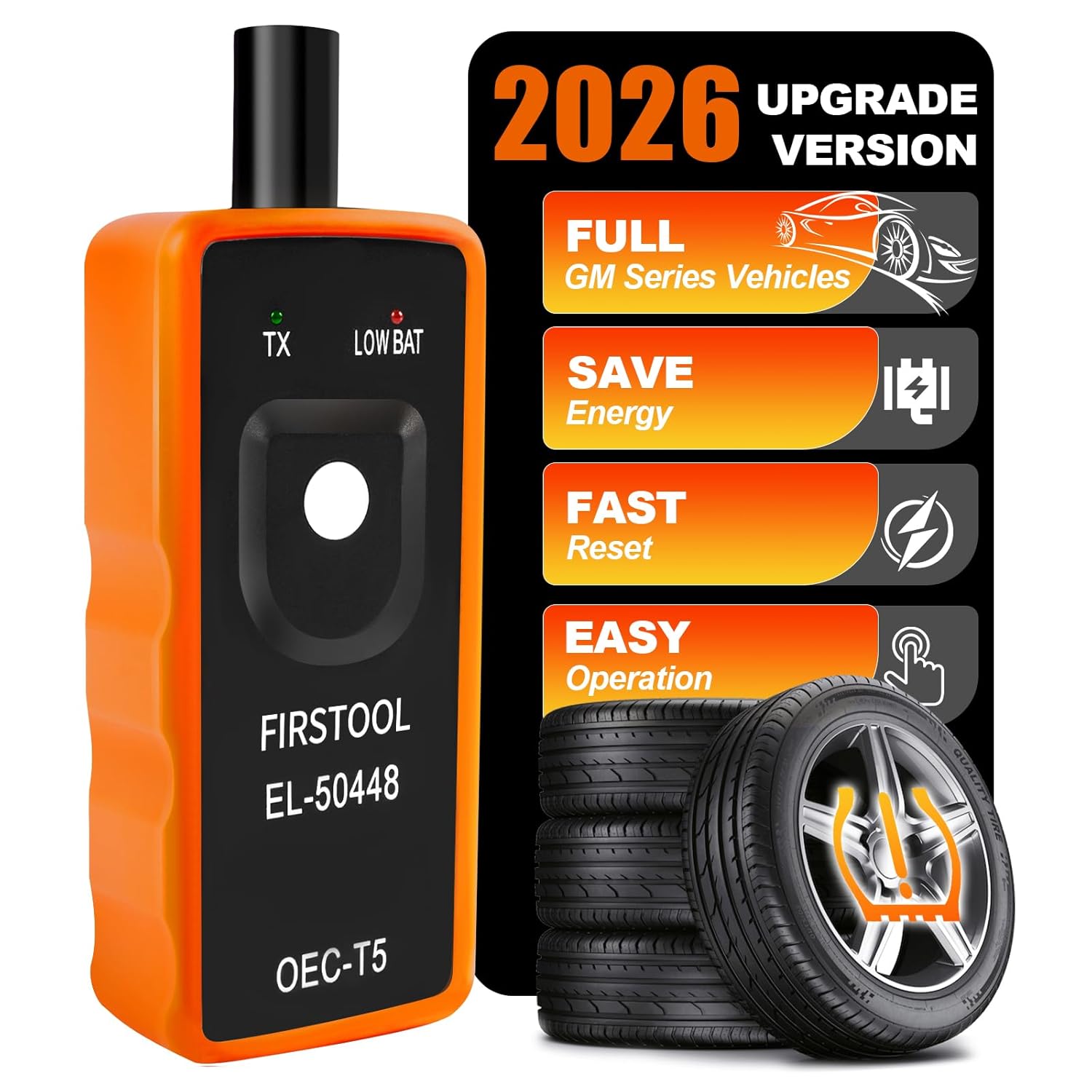
This EL-50448 TPMS relearn tool helps quickly activate and reset tire pressure sensors so your vehicle’s monitoring system stays accurate after tire rotations, sensor replacement, or seasonal tire changes. Designed for many GM-related vehicles and compatible with common 315 and 433 MHz TPMS systems, it offers simple one-button operation and reliable performance for clearing warning lights and relearning sensor positions.

1.Accurate and Efficient: Different colors on the bar represents different scopes, the red range on bar: 0 - 3/ 32; Yellow range on bar: 3/ 32 - 6/ 32; Green range on bar: 6/ 32 - 32/ 32, allowing you easy and fast to read and calibrated
Essential Driving Tips to Prevent Hydroplaning in Heavy Rain
Heavy rain demands a different driving style. The posted speed limit is for ideal conditions, not for water-covered pavement. In a downpour, the safe speed may be much lower.
| Tip | Why It Matters | Action to Take |
|---|---|---|
| Reduce Speed | Higher speed increases the chance that tires ride on water. | Slow down before puddles, curves, and highway spray. |
| Check Tire Pressure | Incorrect pressure can reduce wet-road stability. | Check cold PSI monthly with a gauge. |
| Maintain Tread Depth | Adequate tread channels water away from the tire. | Inspect treadwear indicators and use a tread depth gauge. |
| Avoid Standing Water | Deep water can cause hydroplaning or flood damage. | Change lanes safely or choose another route when water pools. |
| Increase Following Distance | Wet roads require more time to slow or stop. | Leave several extra seconds behind the vehicle ahead. |
| Drive in Existing Tire Tracks | The vehicle ahead may have pushed some water aside. | Use the tracks only when it is safe and legal to do so. |
RAV4 Features That Help, but Do Not Replace Safe Driving
Your Toyota RAV4 may include systems such as anti-lock brakes, vehicle stability control, traction control, dynamic torque control AWD, or Toyota Safety Sense features depending on model year and trim. These systems can help manage braking, power delivery, and stability, but they all depend on tire grip.
If the tires are floating on water, electronic systems have limited grip to work with. That is why tire maintenance and speed control remain the main defenses against hydroplaning.
Note: The tire pressure warning system is a backup alert, not a substitute for monthly pressure checks. Toyota’s owner information says the system must be set to the specified cold tire inflation pressure to operate properly.
[Products Worth Considering]
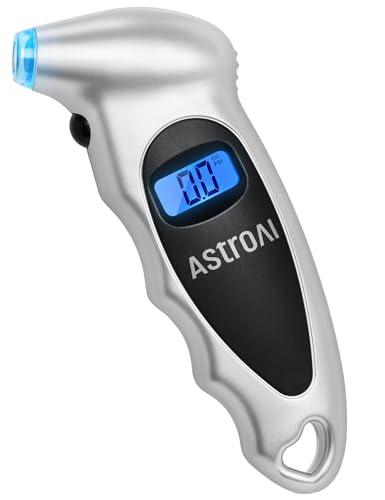
Accurate, Dependable Readings: Factory‑calibrated to ±1 PSI, so you can confidently match your vehicle’s recommended PSI (check the door jamb sticker). Ideal for monthly checks and road trips — consistent results every time, cold or warm.

PROCESS LEVEL ACCURACY: Each ETENWOLF’s digital tire pressure gauge is calibrated manually to ANSI B40.7 Grade 2A(plus-minus 1 PSI).Presta valve adapter not included, if used for bicycles, it must be purchased separately

Application: Marsflex tire sensors are compatible for Toyota 4 Runner, Avalon, Camry, Corolla, FJ Cruiser, Highlander, Land Cruiser, Matrix, Prius, Prius V, RAV4, Sequoia, Solara, Tacoma, Tundra, Venza, Yaris
Steps to Take After Hydroplaning
After a hydroplaning scare, do not simply speed back up. Take a moment to confirm the road and vehicle are still safe.
- Reduce speed for the rest of the trip. The same water, rain, and pavement conditions may continue ahead.
- Pull over only if it is safe. Use a parking lot, rest area, or wide shoulder away from traffic.
- Check for warning lights. Look for tire pressure, ABS, traction control, or brake warnings.
- Inspect the tires visually. Look for low pressure, uneven wear, cuts, bulges, or obvious damage.
- Measure pressure when practical. Use a gauge and compare it with the cold PSI listed on the RAV4’s driver-door placard.
- Check tread depth soon. If tread is low or uneven, schedule tire service.
- Get professional help after a hard slide or impact. A curb strike, pothole hit, or off-road slide can damage alignment, tires, wheels, brakes, or suspension.
When to Seek Professional Help for Hydroplaning Issues
One hydroplaning incident can happen to any driver in heavy rain. Repeated hydroplaning, unstable handling, or unusual tire wear is a sign that the vehicle needs inspection.
| Sign to Seek Help | What to Check |
|---|---|
| Hydroplaning happens often at reasonable speeds | Tread depth, tire type, tire age, and tire pressure |
| RAV4 pulls left or right after the incident | Alignment, steering, suspension, and tire damage |
| Tires show abnormal or uneven wear | Rotation history, alignment, suspension, and inflation habits |
| Brake pedal feels different afterward | Brake system inspection |
| Warning lights appear | TPMS, ABS, traction control, or stability system diagnostics |
If your tires are near the wear bars, older, mismatched, or poor in wet weather, a tire professional can help you choose replacements with better wet traction. For the safest results, use tires that match Toyota’s required size, load rating, and speed rating for your exact RAV4.
Understanding the Impact of Flooding on Vehicle Safety
Hydroplaning and flooding are related, but they are not the same problem. Hydroplaning is loss of tire contact on wet pavement. Flooding can damage the engine, brakes, wheel bearings, sensors, electrical connectors, interior, and hybrid components.
Floodwater can hide potholes, debris, washed-out pavement, and depth changes. If you cannot tell how deep the water is, do not drive through it.
- Water entering the engine intake can cause severe engine damage.
- Electrical connectors and sensors may fail after water exposure.
- Brake performance may be reduced until components dry.
- Interior moisture can cause mold and odor.
- Hybrid and electrical components should be inspected by a qualified technician after significant water exposure.
Warning: Never drive into moving floodwater. Turn around and choose another route. Vehicle height and all-wheel drive do not make floodwater safe.
Frequently Asked Questions
What is the best technique to avoid hydroplaning in a Toyota RAV4?
The best technique is to slow down before you reach standing water, avoid sudden braking or steering, keep tires properly inflated, and maintain healthy tread depth. In heavy rain, turn off cruise control and leave extra following distance.
What two things should you avoid when your car first hydroplanes?
Avoid slamming on the brakes and jerking the steering wheel. Both can make the vehicle harder to control. Instead, ease off the accelerator and steer smoothly toward your intended path.
Should I brake if my RAV4 hydroplanes?
Do not brake hard. First, lift off the accelerator and keep the steering smooth. If braking is necessary after the tires begin to regain traction, use light, steady pressure. If ABS activates, keep steady pressure on the pedal.
Does all-wheel drive prevent hydroplaning?
No. All-wheel drive can help distribute power during acceleration, but it cannot stop tires from riding on water. Hydroplaning prevention still depends on slower speed, good tires, proper pressure, and avoiding standing water.
How much tire tread is safe for driving in rain?
Toyota says to replace tires when treadwear indicators are showing, and NHTSA notes that tires should have at least 2/32 inch of tread. For frequent wet-weather driving, many safety experts recommend replacing tires earlier because wet traction declines before the legal minimum.
Conclusion
Hydroplaning in your Toyota RAV4 is a traction problem, not a power problem. The right response is to stay calm, ease off the accelerator, avoid hard braking, and steer smoothly until the tires reconnect with the road. The best prevention is even simpler: slow down in heavy rain, keep your tires properly inflated, inspect tread regularly, and avoid standing water whenever you can. With smooth driving habits and well-maintained tires, your RAV4 is much better prepared for wet roads.
Sources
- AAA Exchange — Wet Weather Driving Tips — hydroplaning prevention, slower speeds, avoiding hard braking, and extra following distance.
- NHTSA TireWise — Tire Safety Ratings and Awareness — cold tire pressure guidance, tire inspections, tread care, and tire safety basics.
- Toyota Owners — RAV4 Tires — RAV4 tire inspection, treadwear indicators, uneven wear, and replacement guidance.
- Toyota Owners — RAV4 Tire Pressure Warning System — TPMS and tire pressure warning system information.
- Bridgestone — Hydroplaning Preparation for Driving in Rain — causes of hydroplaning, including water depth, speed, tread depth, and vehicle weight.
- U.S. Tire Manufacturers Association — Tire Care Essentials — tread depth, wear bars, monthly tire checks, and tire maintenance basics.