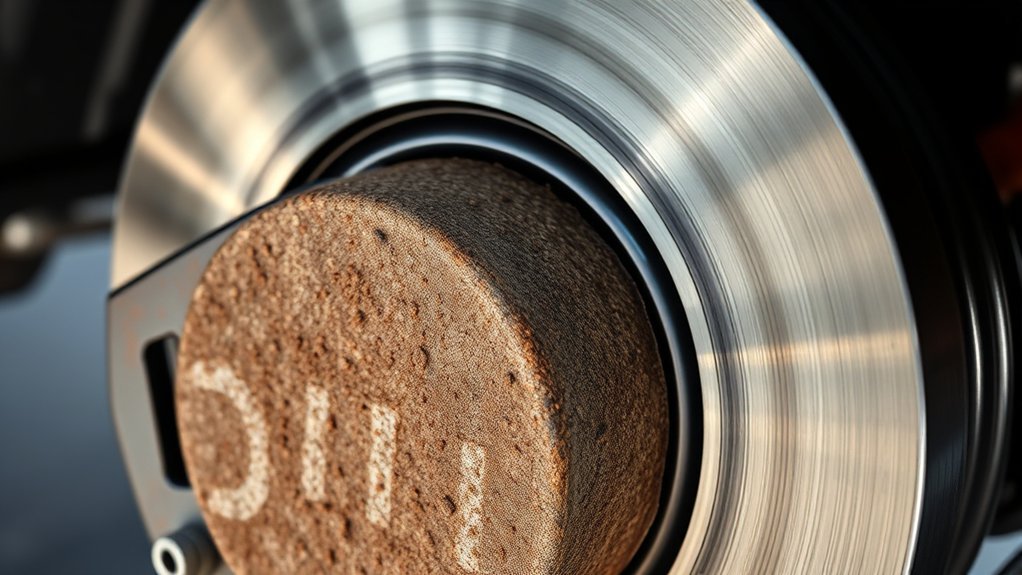
Understanding brake rotor thickness is one of the simplest ways to keep your Toyota RAV4’s brakes safe, quiet, and predictable. The key number is the rotor’s minimum thickness, sometimes called the discard thickness or replacement limit. Some RAV4-related service data lists a 25.0 mm standard thickness and 22.0 mm minimum thickness for a φ275 disc, but rotor specs can vary by model year, trim, market, and whether you are checking the front or rear brakes. Always confirm the number stamped on the rotor or listed in the correct Toyota repair information for your VIN.
Quick Answer
A Toyota RAV4 brake rotor should be replaced when it measures at or below its stamped minimum thickness, has deep grooves, cracking, heavy rust pitting, excessive runout, or causes brake pulsation. For a φ275 disc, a common service spec is 25.0 mm new and 22.0 mm minimum, but you should verify the exact spec for your RAV4.
Key Takeaways
- Do not rely on one universal RAV4 rotor thickness number; front and rear rotors can have different limits.
- Use a micrometer, not a ruler, and measure several points around the swept braking surface.
- Replace rotors that are below the minimum thickness, cracked, heavily grooved, badly rusted, or causing vibration.
- Toyota maintenance guides call for visual inspection of brake pads, discs, linings, and drums during scheduled service intervals.
At a Glance
| Time Required | 15–30 minutes for a basic wheel-off inspection |
| Difficulty | Moderate; safe lifting and accurate measuring are required |
| Tools Needed | Jack, jack stands, wheel chocks, lug wrench, micrometer, flashlight, service manual or rotor spec |
| Cost | Inspection is usually free if DIY; replacement cost depends on parts, labor, axle, and rotor type |
Why You Should Care About Brake Rotor Thickness
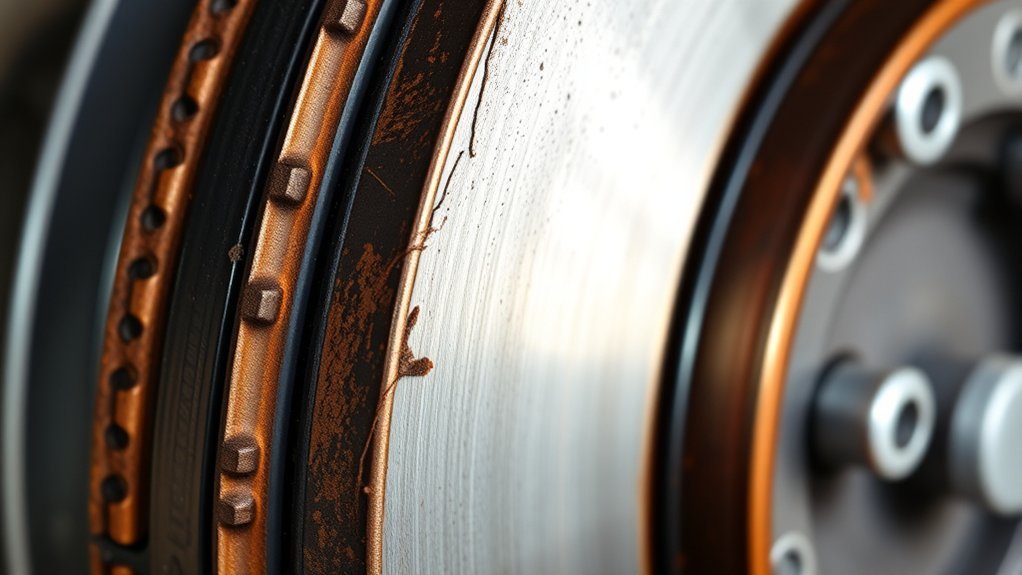
Your RAV4’s brake rotors turn motion into heat every time you slow down. As the rotor wears thinner, it has less metal available to absorb and release that heat. That can make the brakes more prone to fade, pulsation, cracking, and uneven pad wear.
The rotor’s minimum thickness is the lowest safe working thickness set by the vehicle or rotor manufacturer. A helpful rule is simple: if a rotor is at or below that limit, it should be replaced instead of reused or machined. NHTSA-hosted service bulletins note that the stamped minimum thickness is used to determine whether brake discs or rotors require replacement during brake service, and Toyota’s service information portal is the right place to verify model-specific repair data for your vehicle.
Warning: Never keep driving on rotors that are below their minimum thickness, cracked, or grinding metal-to-metal. Brakes are a safety system. If the pedal feels soft, the vehicle pulls hard, the brake warning light is on, or stopping distance suddenly increases, have the RAV4 inspected before driving farther.
RAV4 Brake Rotor Thickness Specs: What Number Should You Use?
The safest answer is: use the specification for your exact RAV4. Rotor thickness can change by generation, market, brake package, hybrid or gas model, and front versus rear axle. The number may be stamped on the outer edge or hat area of the rotor, and it should also be available in Toyota repair information or a quality parts catalog.
| Spec or Label | What It Means | Why It Matters |
|---|---|---|
| Standard thickness | Approximate thickness when the rotor is new | Useful for judging how much wear has occurred |
| Minimum thickness | Lowest allowed service thickness | Replace the rotor at or below this number |
| Machine-to thickness | Minimum thickness after resurfacing, when resurfacing is allowed | A rotor must still be safely above its limit after machining |
| Discard thickness | Another name for the replacement limit | Do not reuse the rotor once it reaches this limit |
For the φ275 disc mentioned in many RAV4 rotor-thickness discussions, the commonly cited numbers are 25.0 mm standard thickness and 22.0 mm minimum thickness. Treat that as an example, not a universal RAV4 rule. Before ordering parts or judging a rotor, check the rotor stamping, Toyota service data, or a trusted repair source for your exact year and axle position.
Note: Owner’s manuals usually cover operation and maintenance schedules, while repair manuals provide detailed brake service specifications. Toyota’s official manuals and warranties portal can help you find the right owner information, and Toyota service information is the better source for exact repair specs.
[Products Worth Considering]

The KONNWEI KW208 is a versatile 12V battery tester designed to quickly analyze battery health, cranking performance, and charging system status for cars, trucks, boats, motorcycles, and more. It supports multiple battery types and provides clear guidance on whether a battery should be recharged or replaced, helping you diagnose issues before they become failures. With plug-and-play use, high accuracy, and multilingual support, it offers a convenient way to test batteries in-vehicle or out-of-vehicle.

Upgrade your vehicle interior with Skechers Work seat covers designed for comfort, protection, and a clean custom look. Reinforced webbing helps the covers maintain shape and durability, while the cushioned design adds comfort for daily drives and long trips. The form-fitting front seat design works with many cars, trucks, vans, and SUVs, and advanced stitching supports airbag compatibility for added peace of mind.

This cabin air filter combines MERV 13 filtration with activated carbon to help trap fine particles and reduce unwanted odors inside your vehicle. Built with four-layer filtration and OEM-sized fitment, it supports cleaner airflow and straightforward installation for a wide range of compatible Hyundai, Kia, GMC, Chevy, and Saturn models. Replace it on schedule to help maintain fresh, comfortable air for everyday driving.
Signs Your RAV4 Needs New Brake Rotors
Brake rotors do not always fail in a dramatic way. Often, the first clues are vibration, noise, visible wear, or a change in how the pedal feels. Use this chart as a starting point before measuring rotor thickness.
| Sign | What It Can Mean | What To Do |
|---|---|---|
| Brake pedal pulsing | Rotor thickness variation, runout, uneven pad deposits, or heat distortion | Measure thickness at multiple points and check runout |
| Steering wheel shake while braking | Often points to front rotor or front suspension issues | Inspect front rotors, pads, hubs, tires, and suspension |
| Visible grooves or scoring | Pad material, debris, or worn pads have damaged the rotor face | Replace if grooves are deep or the rotor is near minimum thickness |
| Grinding noise | Possible metal-to-metal contact from worn brake pads | Stop driving when safe and have the brakes inspected immediately |
| Longer stopping distance | Worn pads, overheated rotors, fluid issues, tires, or other brake faults | Inspect the complete brake system, not only the rotors |
| Rust lips or heavy pitting | Corrosion has reduced the usable braking surface | Replace if the surface is flaky, deeply pitted, or uneven |
If you notice any of these symptoms, inspect the rotors before assuming the pads alone are the problem. A new set of pads installed against a damaged or under-thickness rotor can wear quickly, make noise, or create poor pedal feel.
[Products Worth Considering]

This oil filter wrench set makes removing and installing canister oil filter caps faster and cleaner with a 3/8-inch drive wrench and multiple common-size sockets. The low profile design helps reach tight engine spaces, while clear size markings simplify selection for quick service. Built from durable steel and aluminum with corrosion-resistant coating, it is designed for reliable use across a wide range of compatible vehicles.

This EL-50448 TPMS relearn tool helps quickly activate and reset tire pressure sensors so your vehicle’s monitoring system stays accurate after tire rotations, sensor replacement, or seasonal tire changes. Designed for many GM-related vehicles and compatible with common 315 and 433 MHz TPMS systems, it offers simple one-button operation and reliable performance for clearing warning lights and relearning sensor positions.
How to Measure Rotor Thickness Accurately
Measuring rotor thickness is straightforward, but accuracy matters. A brake rotor may look fine at a glance and still be too thin or uneven across the braking surface.
- Park safely. Use a flat surface, set the parking brake as appropriate, chock the wheels, and loosen the lug nuts before lifting.
- Lift and support the RAV4 correctly. Use the jacking points in the owner’s manual and support the vehicle with jack stands. Never rely on a jack alone.
- Remove the wheel. This gives you clear access to the rotor face and edge.
- Find the minimum thickness marking. Look for “MIN TH,” “MIN THK,” “discard,” or a millimeter value stamped or cast into the rotor.
- Use a micrometer. Measure the swept area where the pads contact the rotor. Avoid the raised outer lip because it does not show the true worn thickness.
- Measure several locations. Check multiple points around the rotor, ideally near the same distance from the outer edge each time, and compare the readings.
- Record the thinnest measurement. The thinnest point is the number that matters for replacement decisions.
- Inspect both faces. Check the inner and outer sides for uneven wear, grooves, cracks, hard spots, rust, or heat checking.
Pro Tip: Measure rotor thickness whenever you replace brake pads, feel brake pulsation, or see uneven pad wear. Toyota maintenance guides also call for visual brake pad and disc inspections during scheduled service, so rotor checks fit naturally into regular maintenance.
What to Check Besides Thickness
Rotor thickness is important, but it is not the only pass-or-fail test. A rotor can be thick enough and still need replacement if its surface or shape is no longer serviceable.
- Runout: Side-to-side wobble can cause pedal pulsation and uneven pad contact.
- Disc thickness variation: Uneven thickness around the rotor can create vibration as the rotor passes through the caliper.
- Surface condition: Deep grooves, cracks, heavy rust pitting, and heat spots can reduce braking quality.
- Pad wear pattern: Uneven inner and outer pad wear may point to sticking slide pins, caliper issues, or hardware problems.
- Brake fluid and hoses: A rotor problem can feel worse if the hydraulic system also has old fluid, leaks, or swelling hoses.
- Hub surface: Rust or debris between the hub and rotor can create runout even with a new rotor.
Rotor minimum thickness is a safety limit, not a target. If a rotor is close to the limit before a new set of pads is installed, replacement is usually the smarter choice.
The Consequences of Ignoring Worn Rotors
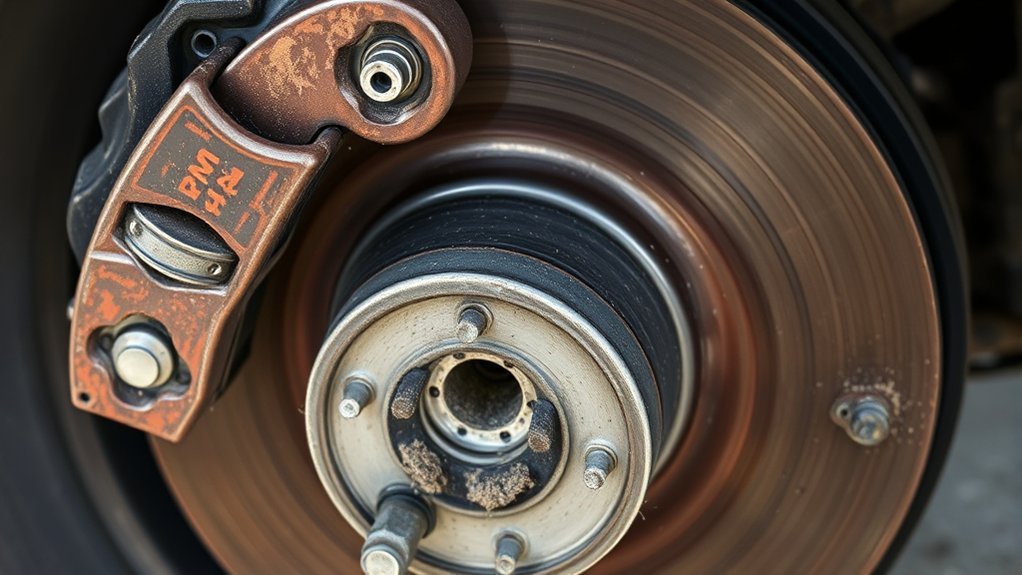
Ignoring worn rotors can seriously compromise your RAV4’s braking performance. Thin rotors have less heat capacity, and heat is one of the biggest enemies of consistent braking. As rotor thickness drops, the brakes may become more likely to fade on long descents, vibrate during stops, or develop cracks and surface damage.
Worn rotors can also damage other brake parts. If a rotor is deeply grooved or uneven, new pads may not bed in correctly. If the rotor is too thin, the caliper piston may sit farther out in its bore as the pads wear, which can add stress to the braking system. The result can be noise, uneven wear, reduced stopping confidence, and more expensive repairs later.
If you hear grinding noises, feel a pulsating brake pedal, smell burning near a wheel, or see cracks on the rotor face, schedule an inspection right away. Brake issues rarely improve on their own.
Should You Resurface or Replace RAV4 Rotors?
Resurfacing, also called machining or turning, removes a thin layer of metal to make the rotor faces smooth and even again. It is only an option when the rotor will remain safely above the required thickness after machining and when the rotor has no cracks, severe rust, or structural damage.
| Rotor Condition | Best Choice |
|---|---|
| Smooth surface, above minimum thickness, no vibration | May be reused with compatible pads after inspection |
| Light scoring but enough thickness remains after machining | Resurfacing may be possible if allowed by service data |
| At or below minimum thickness | Replace |
| Cracked, heavily pitted, deeply grooved, or heat-damaged | Replace |
| Persistent pedal pulsation from runout or thickness variation | Diagnose hub, caliper, and rotor; replace or machine only if within spec |
On many modern vehicles, replacement is often more practical than resurfacing because rotors may not have much extra usable thickness. If you are paying for labor, compare the cost of machining with the cost of quality replacement rotors.
Brake System Maintenance Tips for Your RAV4
To keep your RAV4’s brake system performing at its best, combine regular inspections with smart driving habits. Toyota’s maintenance information for newer RAV4 models includes visual inspections of brake linings, drums, brake pads, and discs as part of scheduled service, and severe driving conditions may require closer attention.
- Check rotor thickness during brake pad replacement. New pads should not be installed on rotors that are under spec or badly damaged.
- Inspect the brakes at routine service visits. If you rotate tires every 5,000 miles or 6 months, that is a convenient time for a visual brake check.
- Clean the hub face when replacing rotors. Rust or debris behind the rotor can create runout and future pulsation.
- Service caliper slide pins and hardware. Sticking slide pins can cause uneven pad and rotor wear.
- Use the correct wheel lug nut torque. Uneven or excessive torque can contribute to brake vibration and rotor distortion.
- Bed in new pads and rotors properly. Follow the brake pad or rotor manufacturer’s break-in procedure so the pad material transfers evenly.
- Do not ignore small changes. Squeaks, scraping, vibration, pulling, or a low pedal should be checked before they become bigger problems.
Note: Hybrid RAV4 models use regenerative braking, so the friction brakes may wear differently than gas-only models. That does not mean the rotors can be ignored. Rust, uneven pad contact, and corrosion can still develop, especially in wet or salty climates.
When to Have a Professional Inspect the Brakes
A careful DIY inspection can tell you a lot, but some brake problems require proper tools and experience. Have a qualified technician inspect your RAV4 if you notice any of these problems:
- Brake pedal feels soft, sinks, or travels farther than normal
- ABS, brake, or stability-control warning light stays on
- Vehicle pulls to one side while braking
- Grinding continues after the brakes cool down
- One wheel is much hotter than the others after normal driving
- Brake fluid is low, dark, leaking, or contaminated
- Rotor thickness is close to the minimum and you are unsure whether to replace it
Brakes are not the place to guess. If you are not comfortable lifting the vehicle, removing wheels, or using a micrometer, let a professional measure the rotors and inspect the full system.
Frequently Asked Questions
What is the minimum rotor thickness for a Toyota RAV4?
It depends on the RAV4 year, market, trim, and whether you are checking the front or rear rotor. For a φ275 disc, a common service spec is 25.0 mm standard thickness and 22.0 mm minimum thickness. Always verify the exact number stamped on the rotor or listed in Toyota repair information for your vehicle.
What is the acceptable thickness of brake rotors?
An acceptable rotor thickness is any measurement safely above the manufacturer’s minimum thickness, with enough material left for the rotor to last through the next pad service. If the rotor is at the minimum, below the minimum, cracked, heavily grooved, or badly rusted, it should be replaced.
How much wear is acceptable on rotors?
Wear is acceptable only while the rotor remains above its minimum thickness and the braking surface is smooth, even, and free from serious cracks or damage. If the rotor is close to the limit before installing new pads, replacement is usually the better long-term choice.
Can I measure rotor thickness without removing the wheel?
You may be able to see the rotor through the wheel, but accurate measurement usually requires removing the wheel. You need room to place a micrometer on the swept braking surface and measure multiple points around the rotor.
Should I replace pads and rotors together?
Not always. If the rotors are smooth, above specification, and free from vibration or damage, they may be reused with new pads. Replace the rotors if they are below spec, deeply grooved, cracked, heavily rusted, or likely to cause noise or uneven pad wear.
Why does my RAV4 brake pedal pulse even if the rotors look fine?
Brake pulsation can come from rotor runout, disc thickness variation, uneven pad deposits, hub rust, loose or unevenly torqued wheel nuts, or worn suspension parts. A visual check is not enough; thickness variation and runout need to be measured.
Conclusion
Keeping an eye on your RAV4’s brake rotor thickness is a practical safety habit, not just a technical detail. The commonly cited 22.0 mm minimum thickness for a φ275 disc is useful only when it matches the rotor on your vehicle. For the final call, use the stamped rotor limit or the correct Toyota repair specification for your exact RAV4.
Measure with a micrometer, check more than one spot, inspect both rotor faces, and pay attention to vibration, grooves, cracking, rust, and brake noise. If the rotor is at or below minimum thickness, do not try to stretch its life. Replace it and keep your RAV4’s stopping power reliable.
Sources
- Toyota Manuals and Warranties — official Toyota owner manual and warranty information portal.
- Toyota Service Information and Repair Manuals — official Toyota Australia service and repair information portal for model-specific repair data.
- 2024 Toyota RAV4 Warranty & Maintenance Guide — scheduled maintenance references for visual brake pad and disc inspections.
- NHTSA-hosted Brake Rotor Minimum Thickness Bulletin — explains the role of stamped minimum rotor thickness during brake service.
- NHTSA-hosted Brake Disc Resurfacing Guidelines — supports replacing or reusing rotors based on measured thickness and service limits.
- ACDelco Disc Rotor Catalogue — background on rotor minimum thickness, heat dissipation, disc thickness variation, and rotor inspection practices.