
RAV4 steering wheel vibration is easiest to diagnose by identifying exactly when it occurs. A shake at road speed usually points first to a tire or wheel problem. Vibration during braking directs the inspection toward the brakes, hubs, and wheel bearings. A shake under acceleration can involve CV axles, mounts, or the model-specific powertrain. If the wheel vibrates while the RAV4 is stopped, focus on engine operation, accessory load, and mounts instead of wheel balance. Vibration or noise during low-speed steering requires a separate check for steering-system faults, tire contact, or CV-joint symptoms.
By: Merrick Vaughn · Last updated: July 31, 2026
How this guide was checked: This guide synthesizes Toyota owner information, Toyota model-year powertrain documentation, NHTSA tire guidance, wheel-balancing equipment guidance, and current repair estimates. It does not claim hands-on testing across every RAV4 generation.
Quick Answer
A RAV4 steering wheel usually vibrates because of an out-of-balance or out-of-round tire and wheel assembly, tire damage, a bent wheel, uneven brake force, worn steering or suspension parts, or drivetrain vibration under load. If it shakes only at speed, start with tires, wheel balance, centering, and runout. If it shakes while braking, measure the rotors and inspect the pads, calipers, hubs, and wheel bearings. If it shakes while accelerating, identify the model year and powertrain before checking CV axles, mounts, and transmission or hybrid-transaxle behavior. If it vibrates while stopped, check engine operation and mounts. If steering input triggers it, reproduce the symptom at low speed and inspect the model-specific steering system.
Key Takeaways
- Speed-related vibration usually points first to tire or wheel imbalance, tire damage, incorrect centering, an out-of-round assembly, or a bent wheel.
- Check alignment when the RAV4 also pulls, the steering wheel sits off-center, or the tread wears unevenly.
- Brake-only vibration can come from rotor runout, rotor thickness variation, uneven pad deposits, sticking calipers, worn pads, hub problems, or wheel-bearing movement.
- Acceleration vibration can come from CV joints, axles, engine or transaxle mounts, or model-specific transmission and hybrid-transaxle faults.
- Vibration while stopped is not caused directly by wheel imbalance because the wheels are not rotating. Compare engine operation, gear position, accessory load, and mount movement.
- The 2026 U.S. RAV4 lineup is Hybrid or Plug-in Hybrid only. Do not apply a conventional gas-model automatic-transmission diagnosis to a 2026 RAV4.
- Do not keep driving normally if the vibration is sudden, severe, paired with pulling, or followed by grinding, clunking, smoke, brake fade, loose steering, or a warning light.
At a Glance
| Time Required | 10–30 minutes for basic home checks; professional diagnostic time varies with the symptom and required measurements |
| Difficulty | Easy for pressure and visual checks; moderate to advanced for brake, suspension, steering, and drivetrain work |
| Tools Needed | Tire-pressure gauge, flashlight, tread-depth gauge, torque wrench, wheel chocks, gloves, and properly rated jack stands if the vehicle must be lifted |
| Typical Cost | Basic checks may cost nothing. Current national planning examples range from about $98–$143 for a suspension inspection to $971–$1,125 for engine-mount replacement on many 2019–2025 RAV4 models. Model year, location, taxes, fees, and related repairs change the final price. |
Warning: Pull over safely and avoid highway driving if the vibration starts suddenly, becomes violent, or appears with a burning smell, grinding noise, brake fade, loose steering, visible tire damage, wheel wobble, or a tire-pressure warning. A tire, wheel, brake, bearing, or steering failure can become unsafe quickly.
Why Is My RAV4 Steering Wheel Vibrating? Quick Urgency Checklist

Start with tire pressure, tire condition, wheel weights, and lug-nut security. Toyota says the correct cold tire pressure is listed on the Tire and Loading Information Label in the driver-side door area or in the owner’s manual. NHTSA also recommends checking pressure when the tires are cold and inspecting tires for tread wear, damage, and aging.
Use this condition-based checklist before you keep driving:
| What You Feel | Most Likely Area | What to Do First |
|---|---|---|
| Vibration mainly at highway speed | Tires, wheel balance, centering, tire or wheel runout, bent wheel | Check cold pressure and damage, then request dynamic balancing and radial and lateral runout measurements. |
| Vibration remains after conventional balancing | Tire uniformity, wheel runout, centering error, bead seating | Request a road-force test, centering verification, and printed assembly results. |
| Vibration only when braking | Brake rotors, pads, calipers, hubs, wheel bearings | Inspect the pads and measure rotor runout, rotor thickness variation, and hub condition. |
| Vibration when accelerating | CV joints, axles, mounts, conventional transmission, or hybrid transaxle | Identify the model year and powertrain, then inspect CV boots, axle condition, mounts, and stored diagnostic codes. |
| Vibration while stopped or idling | Engine operation, mounts, gear engagement, accessory load, hybrid engine start or stop | Compare Park or Neutral with Drive, switch the A/C off and on, note engine speed and warning lights, and schedule engine or mount diagnosis if it persists. |
| Vibration or noise while turning at low speed | Model-specific steering system, steering column, wheel installation, tire contact, or CV joint | Note whether it occurs while stationary or moving, whether clicking is present, and whether the symptom appears only near full lock. |
| Shake with clunking or loose steering | Tie rods, ball joints, control arms, steering linkage, wheel bearings | Reduce speed and arrange a professional front-end inspection. |
| Vibration after tire service | Improper centering, balance, torque, bead seating, or tire uniformity | Return to the shop for a centering, mounting-surface, torque, balance, and runout check. |
| Vibration after a pothole or curb hit | Bent wheel, damaged tire, alignment shift, suspension damage | Inspect the wheel and tire immediately, then check runout, steering and suspension condition, and alignment. |
Note: A tire-pressure monitoring system warns about significant pressure loss, but it does not replace manual checks. Use a gauge when the tires are cold and compare the reading with the RAV4’s door placard, not the maximum pressure printed on the tire sidewall. If the warning light remains on after the pressures are corrected, review the RAV4 tire-pressure-light guide.
Use this article as the all-condition diagnostic hub when you do not yet know the source. If the shake occurs only at road speed, see the focused guide to RAV4 shaking at highway speed. If the vehicle also pulls or wears tires unevenly, review the guide to RAV4 alignment symptoms.
How Can You Tell Whether the Vibration Comes From Tires, Brakes, the Drivetrain, or the Engine?
Match the symptom to the driving condition before replacing parts. Record the speed, road surface, braking force, throttle position, engine speed, steering angle, gear position, accessory use, weather, and whether the RAV4 was recently serviced. These details help a technician reproduce the vibration and choose the correct measurement.
Where Do You Feel the Vibration?
A vibration felt mainly through the steering wheel often directs the first inspection toward the front tires, wheels, brakes, bearings, and steering parts. A shake felt more strongly through the seat or floor can originate from a rear wheel, rear brake, mount, axle, or another drivetrain area. Treat vibration location as a clue, not proof, because forces can travel through the body and suspension.
Why Does My RAV4 Vibrate at Highway Speed?
If the steering wheel shakes mainly at highway speed and the vibration fades as you slow down, suspect tire or wheel imbalance first. Missing weights, uneven wear, temporary flat spots, out-of-round tires, bent wheels, incorrect mounting, centering errors, and pressure differences can all create vibration.
Alignment is a separate issue. Check alignment when the RAV4 pulls, the steering wheel is off-center, or the tread shows one-sided or feathered wear. Michelin distinguishes balancing, which corrects uneven rotating mass, from alignment, which adjusts wheel angles. A vehicle can be correctly aligned and still vibrate because of tire or wheel imbalance.
Why Does My RAV4 Steering Wheel Shake When Braking?
If the steering wheel shakes only when you press the brake pedal, focus on the brake and hub assemblies. Common causes include rotor runout, rotor thickness variation, uneven pad deposits, worn pads, sticking calipers, loose hardware, hub-face contamination, or wheel-bearing movement.
Do not approve rotor replacement based only on the word “warped.” A technician should measure rotor thickness and lateral runout, compare pad wear, inspect caliper operation, clean and inspect the hub face, and check the bearing before recommending parts. See the dedicated guide to RAV4 brake pedal pulsation for a brake-only diagnostic path.
Why Does My RAV4 Vibrate During Acceleration?
If vibration grows when you accelerate and eases when you lift off the throttle, inspect the drivetrain after ruling out tire and wheel faults. Worn inner CV joints, damaged axle shafts, torn CV boots, loose engine or transaxle mounts, and model-specific transmission or hybrid-transaxle problems can transmit vibration into the body and steering wheel.
Why Does My RAV4 Steering Wheel Vibrate While Stopped or Idling?
If the RAV4 is stationary, wheel imbalance and wheel runout are not the direct cause because the wheels are not rotating. Compare the vibration in Park or Neutral with the vibration in Drive. Note whether it changes when the A/C compressor or other electrical loads operate, whether the gasoline engine starts or stops on a hybrid, and whether the engine speed is steady.
Possible areas include rough engine operation, an ignition or fuel fault, engine or transaxle mounts, exhaust contact, loose brackets, or a model-specific hybrid-system condition. A mount can transmit normal engine movement into the steering wheel, but a mount should not be replaced until the engine is confirmed to be running correctly. Read stored and pending diagnostic codes before clearing warning lights.
Why Does My RAV4 Steering Wheel Vibrate When Turning?
First determine whether the symptom occurs while the vehicle is stationary or while it is moving. Vibration or noise while turning the wheel at a stop or near full lock can require inspection of the model-specific power-steering system, steering column, steering-wheel installation, steering gear, or nearby components. Tire contact can also occur after a wheel, tire, suspension, or ride-height change.
Clicking or popping during a moving tight turn points more strongly toward an outer CV joint, while an acceleration shudder in a straighter line can involve an inner joint or axle. Do not assume every turning vibration is a CV axle problem. Record the steering direction, vehicle speed, throttle input, and whether the symptom disappears when you move away from full lock.
Why Does My RAV4 Vibrate at Most Speeds?
If the shake remains at most speeds, check for a damaged tire, bent rim, loose wheel, severe runout, wheel-bearing roughness, brake drag, suspension looseness, or steering-linkage wear. Toyota maintenance guidance includes periodic inspections of steering linkage, brakes, ball joints, and protective boots for looseness, wear, leaks, or damage.
What RAV4 Tire, Wheel, and Suspension Checks Can You Do at Home?
Start with checks that do not require disassembly. Work on level ground, set the parking brake, chock the wheels, and never crawl under a vehicle supported only by a jack. Use properly rated jack stands at approved lifting and support points if you lift the vehicle. Review the RAV4 jack-point safety guide before lifting it.
Check Tire Pressure
Use a reliable tire-pressure gauge before driving, when the tires are cold. Compare each reading with the RAV4’s Tire and Loading Information Label or owner’s manual. Correct the pressure to the listed cold specification. Then inspect the tire tread for alignment-related wear and check the sidewalls for cuts, bulges, cracking, nails, exposed cords, separation, cupping, scalloping, feathering, or one-sided wear.
Pressure and wear patterns provide useful clues:
- Center wear: can occur with overinflation, unsuitable tire or load combinations, or other operating factors.
- Both-edge wear: can occur with underinflation or sustained overloading.
- One-edge wear: commonly warrants an alignment and suspension inspection.
- Cupping or scalloping: can accompany imbalance, tire uniformity problems, worn dampers, or loose suspension parts.
Inspect Wheel Weights
Look along the inner and outer rim edges for clipped weights or adhesive-weight marks. A clean rectangle where an adhesive weight once sat suggests that a weight may have detached. Missing weights can cause a shake that becomes more noticeable as road speed rises.
Inspect the wheel for bends, cracks, corrosion at the mounting surface, and packed mud, snow, or ice. If the RAV4 began shaking after new tires, a rotation, wheel removal, a pothole strike, or winter driving, request a centering check, dynamic balance, and radial and lateral runout measurements.
Screen for Suspension or Bearing Play
With the front safely lifted and supported, grasp each tire and gently check for movement. Side-to-side or top-to-bottom play is only a screening clue. It does not identify one failed part by itself. A technician may need to watch the tie rods, ball joints, control arms, bearing, and mounting points while the wheel is moved.
Spin the wheel by hand and listen for grinding or roughness. Remember that brake-pad contact can create light rubbing noise, and some bearing faults become apparent only when the bearing is loaded during a road test.
| DIY Observation | What It Means |
|---|---|
| Side-to-side movement | Possible steering, bearing, ball-joint, bushing, or mounting play; professional isolation is required |
| Top-to-bottom movement | Possible bearing, ball-joint, control-arm, or mounting play; follow the model-specific inspection procedure |
| Rough or noisy wheel rotation | Possible bearing roughness, brake drag, shield contact, or debris |
| Torn CV boot or grease spray | Loss of joint lubrication and likely contamination; inspect the joint and axle promptly |
| Repeated bouncing, fluid leakage, or damaged strut hardware | Possible damper or mount problem; a simple bounce test is not a final diagnosis |
Pro Tip: During a safe test drive, record the exact speed, road surface, braking force, throttle position, engine speed, steering angle, gear position, accessory use, and temperature when the vibration appears. Also note whether it changes after the tires warm up. This record can shorten shop diagnostic time.
Why Did the Vibration Start After Tire Service, a Pothole, or a Curb Hit?
After New Tires or Wheel Balancing
Return to the installer if the vibration began immediately after new tires or balancing. Ask the shop to verify that each wheel was centered correctly on the balancing machine and vehicle hub, that the beads seated evenly, and that the weights remain attached. A conventional balance can show zero imbalance even when tire stiffness variation or assembly runout still creates a ride disturbance.
If a second conventional balance does not solve the problem, request a road-force test and printed results. Hunter’s Road Force equipment uses a load roller to help identify tire uniformity problems, rim runout, centering errors, improper bead seating, and assemblies that may improve when the tire is repositioned on the wheel.
After Tire Rotation or Wheel Removal
If the shake began after a rotation, wheel removal, or brake service, return promptly for a lug-nut torque and mounting check. The shop should inspect the hub and wheel mounting surfaces, verify correct centering, and rebalance any suspect assembly. Do not continue driving if a wheel appears loose or the vehicle wobbles at low speed.
After a Pothole or Curb Strike
Inspect the tire sidewall for a bulge, cut, exposed cord, or pressure loss. A tire can also suffer internal impact damage that is not visible from the outside. Ask the shop to measure tire and wheel runout and inspect the steering and suspension before performing an alignment. An alignment alone will not repair a bent wheel or damaged tire.
After Snow, Ice, Mud, or Off-Road Driving
Packed material inside a wheel can create a temporary imbalance. Remove visible buildup safely and recheck the vehicle. If the vibration remains after the wheels are clean, continue with pressure, damage, balance, centering, and runout checks.
Which Tire and Wheel Repairs Can Stop RAV4 Steering-Wheel Vibration?
Tires and wheels are the best starting point for speed-related steering vibration because they are common sources, can be measured directly, and are often less expensive to correct than suspension or drivetrain faults.
[Products Worth Considering]
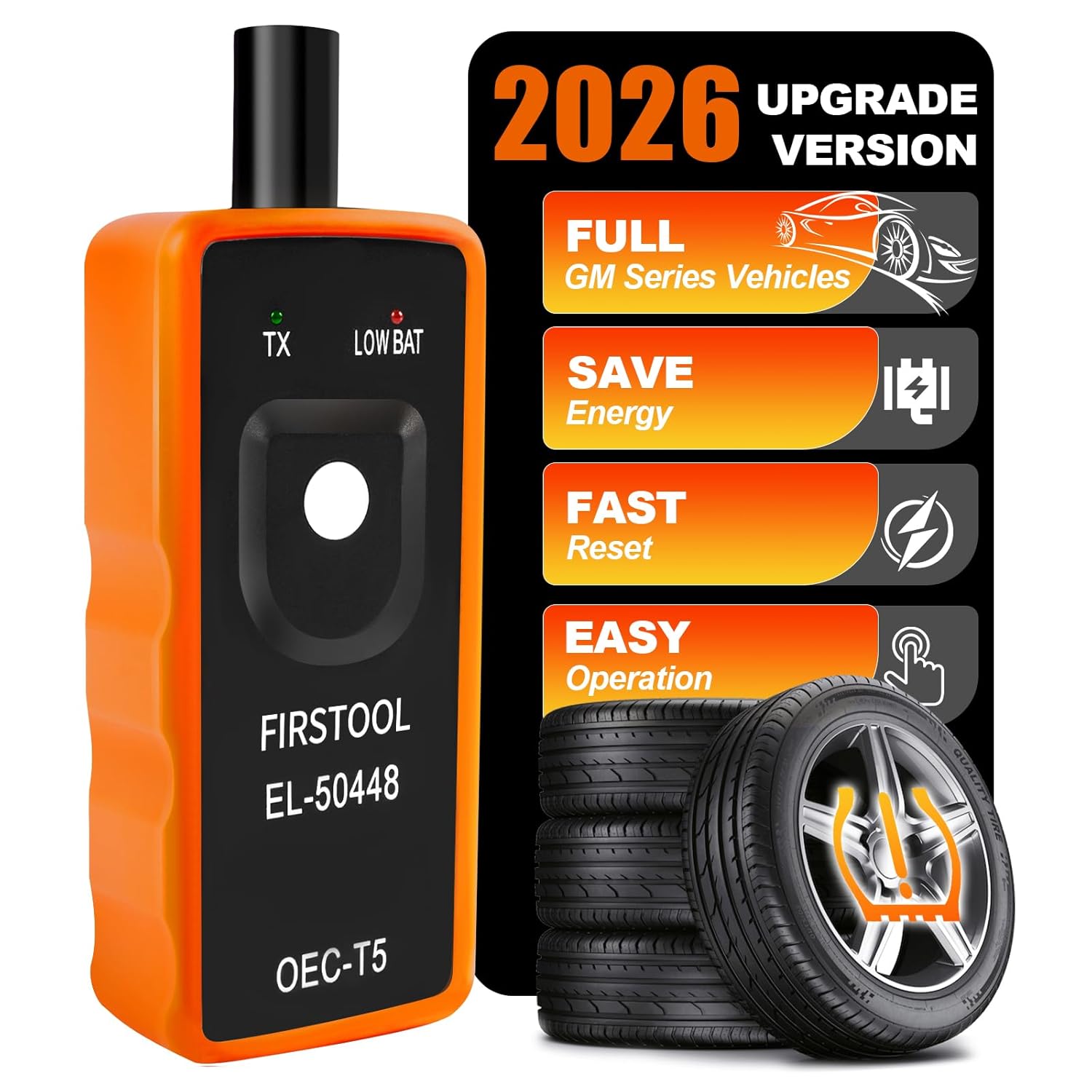
This EL-50448 TPMS relearn tool helps quickly activate and reset tire pressure sensors so your vehicle’s monitoring system stays accurate after tire rotations, sensor replacement, or seasonal tire changes. Designed for many GM-related vehicles and compatible with common 315 and 433 MHz TPMS systems, it offers simple one-button operation and reliable performance for clearing warning lights and relearning sensor positions.

The OXILAM jump starter delivers powerful emergency starting performance for gas engines and up to 12L diesel engines, helping revive dead batteries in seconds. It also doubles as a portable power bank and LED flashlight, with USB and Type-C ports for convenient device charging. Built with multiple safety protections, a clear LED display, and a rugged portable design, it is a reliable roadside companion for cars, trucks, motorcycles, and more.

This portable 12V tire inflator delivers quick, reliable inflation with up to 150 PSI for cars, motorcycles, bicycles, RVs, and more. A built-in pressure gauge and bright LED light help you inflate accurately in low-light conditions, while the compact design and extended hose setup make it easy to reach all areas of your vehicle. Quiet operation and durable construction make it a practical choice for travel, home use, and emergency roadside needs.
Rebalance and Measure the Wheels
Dynamic balancing corrects uneven weight distribution in the tire and wheel assembly. Ask the shop to balance all four wheels rather than guessing which one causes the shake. If vibration remains, request tire and wheel runout measurements or a road-force test. These checks can reveal an out-of-round assembly, tire stiffness variation, wheel damage, bead-seating problems, or incorrect centering that a basic balance may miss.
Rotate Tires on the Correct Schedule
Follow the maintenance guide for your exact model year, market, and tire setup. Toyota owner information tells owners to rotate tires according to the maintenance schedule and treadwear. Directional tires, replacement-tire warranties, staggered sizes, and nonstandard wheel packages may require a different pattern or interval.
If the vibration moves or changes after rotation, one tire or wheel assembly may be responsible. Rotation is a diagnostic clue, but it does not correct imbalance, structural tire damage, excessive runout, or a bent wheel.
Replace Damaged or Unsafe Tires
Replace tires with bulges, exposed cords, severe cracking, tread separation, rapid pressure loss, or wear that has reached the legal or manufacturer replacement limit. Check the DOT tire identification code and follow the tire maker’s inspection and replacement guidance. Tire age alone is not the only factor, but older tires deserve closer inspection even when tread remains.
Check Wheel Integrity
A bent wheel can mimic imbalance. Ask the shop to measure radial and lateral runout if the RAV4 hit a pothole, curb, or road debris. Replace a cracked wheel or a wheel that exceeds service limits. Do not rely on balancing weights to compensate for structural damage.
- Rebalance wheels after mounting tires or when vibration appears at speed.
- Request road-force and runout measurements when repeated balancing does not work.
- Rotate tires according to the exact model and tire configuration.
- Replace tires with structural damage, severe wear, or signs of separation.
- Repair or replace wheels with excessive runout, bends, or cracks.
- Check for open vehicle and tire recalls when the symptom appears abnormal.
NHTSA reports that 511 people died in tire-related traffic crashes in 2024. Its TireWise guidance recommends checking cold pressure and tread condition and using rotation, balancing, and alignment when appropriate.
Which Brake, Steering, and Suspension Repairs Stop the Shake?
Inspect the braking, steering, and suspension systems promptly when the shake happens under braking, when the steering feels loose, or when the vibration appears with clunks, creaks, pulling, or uneven tire wear.
[Products Worth Considering]

The KONNWEI KW208 is a versatile 12V battery tester designed to quickly analyze battery health, cranking performance, and charging system status for cars, trucks, boats, motorcycles, and more. It supports multiple battery types and provides clear guidance on whether a battery should be recharged or replaced, helping you diagnose issues before they become failures. With plug-and-play use, high accuracy, and multilingual support, it offers a convenient way to test batteries in-vehicle or out-of-vehicle.

Veepeak OBDCheck BLE+ is a Bluetooth OBD-II scanner designed to help drivers read and clear check engine codes, view freeze frame data, check readiness monitors, and monitor live sensor data. It works with compatible third-party apps on iOS and Android, making it a versatile tool for standard vehicle diagnostics and routine car health checks. Advanced features may be available through supported apps on select vehicles, but special service functions are not supported.

🚕【Wide Application】:This Steering Wheel Level Alignment Tool fits for steering wheels with an internal diameter of between 7.5" (190mm) to 14.5" (370mm), ideally suitable for passenger cars, vans and trucks. A must-have tool to level the steering wheel accurately and quickly
Brake Repairs That Can Stop the Shake
Brake-related steering vibration means the front brake, hub, bearing, or suspension assemblies may be transferring uneven force through the steering system. Ask for an inspection that includes:
- Rotor thickness and minimum-thickness check
- Rotor runout measurement with a dial indicator
- Rotor thickness-variation measurements at multiple points
- Pad wear comparison from side to side
- Caliper slide-pin movement and piston operation
- Hub-face cleanliness and corrosion inspection
- Wheel-bearing play and roughness check
- Lug-nut torque verification after service
If the rotors are below specification, cracked, deeply grooved, heat-damaged, or outside runout or thickness-variation limits, replacement may be required. Pads should generally be serviced in axle pairs. Inspect the matching rotor and caliper on the other side so braking remains consistent. For replacement considerations, see the RAV4 brake rotor replacement guide.
Suspension and Steering Fixes
If vibration continues outside braking, inspect the front steering and suspension. Worn tie rods, ball joints, control-arm bushings, struts, mounts, wheel bearings, steering linkage, and steering-column components can allow movement or amplify tire and brake vibration.
Get an alignment after replacing parts that affect wheel position. Alignment should also be checked if the RAV4 pulls, the wheel is off-center, or the tires wear unevenly. Do not use alignment as a substitute for balancing, runout measurement, or replacement of damaged components.
Warning: Do not ignore vibration with brake pulsation, steering play, or clunking. Severely worn ball joints, tie rods, bearings, tires, wheels, or brake parts can affect directional control and stopping performance.
Why Does a RAV4 Vibrate Under Acceleration?
If tire, wheel, brake, and suspension checks do not explain the vibration, move to the drivetrain. This is especially important when the shake grows during acceleration, climbing, or steady load and fades when you release the accelerator.
Identify the RAV4 Powertrain First
Give the technician the model year, market, engine or hybrid type, and whether the vehicle is FWD or AWD. U.S.-market 2019–2025 gas RAV4 models use a conventional eight-speed automatic, while RAV4 Hybrid and Prime models use Toyota hybrid transaxles. The redesigned 2026 U.S. RAV4 lineup is Hybrid or Plug-in Hybrid only.
Older generations and non-U.S. vehicles may use different engines, transmissions, steering systems, and AWD layouts. Do not apply a gas-model torque-converter diagnosis to a hybrid transaxle, and do not assume a 2026 RAV4 has the previous gas-only drivetrain. Use VIN-specific Toyota service information.
What Are the Signs of CV Joint or Axle Wear?
CV joints transfer power while allowing the wheels to steer and the suspension to move. An outer CV joint often clicks or pops during tight turns when worn. An inner joint or damaged axle can create a vibration that becomes stronger under acceleration.
Inspect for:
- Clicking or popping during low-speed turns
- Torn, cracked, or loose CV boots
- Grease around the inner wheel, axle, or suspension
- Axle shaft looseness or visible damage
- Shudder that grows under throttle and eases while coasting
Replace a worn joint or axle after confirming the fault. Once a boot tears and grease escapes, dirt and moisture can accelerate joint wear, but a torn boot alone does not prove that every joint has already failed.
Can Engine or Transaxle Mounts Cause Vibration?
Loose, collapsed, cracked, or leaking mounts can let the engine or transaxle move excessively and transmit vibration through the body. A technician can inspect the rubber or hydraulic sections, brackets, fasteners, and surrounding contact points. Any loaded-movement test must be performed with proper safeguards.
Confirm engine operation before condemning a mount. A misfire, unstable idle, exhaust contact, or accessory problem can create vibration that a healthy mount cannot completely isolate.
Can the Transmission or Hybrid Transaxle Cause Shudder?
On gas RAV4 models with a conventional automatic transmission, steady-throttle shudder may involve torque-converter lockup, fluid condition, transmission control, valve-body operation, mounts, or axle loading. The symptom may appear within a narrow road-speed or engine-speed range and change when the throttle moves.
RAV4 Hybrid and RAV4 Prime or Plug-in Hybrid models use hybrid transaxles rather than the same conventional gas-model automatic. Hybrid vibration diagnosis may involve engine operation, motor-generator control, the transaxle, mounts, axles, wheel-speed inputs, or hybrid-system faults. The 2026 U.S. RAV4 lineup requires this electrified diagnostic path because Toyota no longer offers the previous gas-only version for that model year.
Do not flush or service either system blindly. Confirm the exact powertrain, maintenance history, fluid specification, fluid condition, stored codes, software information, and the conditions that reproduce the shudder before authorizing work.
When Should You Stop Driving a Vibrating RAV4?
Some mild vibrations allow a cautious trip to a nearby repair facility. Stop driving and arrange assistance when you notice any of these signs:
- The steering wheel suddenly shakes violently.
- The RAV4 pulls hard to one side.
- You hear grinding, banging, repeated popping, or metal-on-metal noise.
- The brake pedal pulses severely, sinks, or braking performance changes.
- A tire has a bulge, exposed cord, rapid pressure loss, or visible separation.
- A wheel appears loose or the vehicle wobbles at low speed.
- You smell overheated brakes or see smoke near a wheel.
- A steering, brake, ABS, tire-pressure, AWD, transmission, or hybrid-system warning appears with the vibration.
- The vibration began after a severe pothole impact, curb strike, or collision.
If the vibration could involve a safety defect, check the VIN with NHTSA’s recall lookup. The current NHTSA tool identifies open recalls associated with the entered vehicle and also provides searches for tires and equipment.
What Should You Ask the Mechanic, and What Can Repairs Cost?

Ask the shop to diagnose the vibration by condition and measurement, not by replacing the most common part. A useful repair order should state when the vibration occurs, how it was reproduced, what was inspected, what measurements were recorded, and which repair is recommended first.
[Products Worth Considering]

Good materials: This electric power steering is carefully made of nylon materials, with excellent wear resistance, durability and corrosion resistance, long-term use is still...
Questions to Ask
- Did you road-test the RAV4 at the speed, load, braking force, or steering angle where the vibration occurs?
- Were all four tires checked for pressure, damage, balance, centering, runout, cupping, feathering, and irregular wear?
- Did you inspect the wheels for bends, cracks, corrosion, mounting problems, and missing weights?
- If conventional balancing did not solve it, did you perform a road-force test and provide the results?
- If it shakes while braking, did you measure rotor runout, rotor thickness variation, and hub condition?
- Did you inspect tie rods, ball joints, control-arm bushings, struts, mounts, steering linkage, and wheel bearings for play?
- If it shakes while stopped, did you compare gear positions, engine operation, accessory load, and mount movement?
- If steering input triggers it, did you identify whether it occurs while stationary, moving, or only near full lock?
- If it shakes under acceleration, did you identify the model year and powertrain before inspecting CV joints, axles, mounts, and transmission or transaxle behavior?
- Are any recalls or Toyota service communications relevant to the VIN?
- Can you provide the measurements and a written parts, labor, tax, fee, alignment, and warranty breakdown?
Current Planning Estimates
The following RepairPal national estimates were reviewed on July 31, 2026. The source pages were most recently updated in June or July 2026. They exclude taxes and fees, do not account for every location or model year, and may not include related work. Use them only for early planning.
| Repair or Service | Current Planning Estimate | Scope Note |
|---|---|---|
| Cold pressure and visual tire check | Often free or included with tire service | Balancing, road-force testing, repairs, and replacement tires cost extra. |
| Suspension-system inspection | About $98–$143 | Related steering, bearing, alignment, or suspension repairs are not included. |
| Wheel alignment | RAV4 model average: about $289–$424; 2019–2025 estimate: about $244–$358 | Bent or worn parts must be repaired before an alignment can hold. |
| Brake-pad replacement | About $320–$384 | Rotors, calipers, bearings, brake fluid, and related work cost extra. |
| Wheel-bearing replacement | About $318–$572 | Hub design, axle condition, model year, and affected corner change the final cost. |
| Control-arm replacement | RAV4 model average: about $481–$620; 2019–2025 estimate: about $285–$382 | Ball-joint inspection and alignment may add cost. |
| Axle-shaft replacement | About $643–$785 | The estimate varies by axle position, drivetrain, seals, and related hub or bearing work. |
| Engine-mount replacement | RAV4 model average: about $709–$798; 2019–2025 estimate: about $971–$1,125 | The mount location, powertrain, surrounding access, and related transaxle mounts change the estimate. |
Request a written breakdown of diagnostic time, measurements, parts, labor, alignment needs, taxes, fees, completion time, warranty, and urgency. This lets you prioritize safety repairs and reduces the chance of replacing parts that did not cause the vibration.
Frequently Asked Questions
How do I get rid of steering wheel vibrations in a RAV4?
First identify when the vibration occurs. At road speed, start with cold tire pressure, tire condition, wheel balance, centering, and runout. During braking, measure the rotors and inspect pads, calipers, hubs, and bearings. Under acceleration, identify the model year and powertrain before checking CV joints, axles, mounts, and transmission or hybrid-transaxle behavior. While stopped, check engine operation and mounts.
Why does my RAV4 steering wheel shake at highway speeds?
Highway-speed steering shake most often points to tire or wheel imbalance, tire damage, incorrect centering, an out-of-round assembly, or a bent rim. Check cold pressure and visible damage first, then request dynamic balancing and radial and lateral runout measurements. Ask for road-force testing if conventional balancing does not solve it.
Why does the steering wheel shake only when I brake?
Brake-only vibration can come from rotor runout, rotor thickness variation, uneven pad deposits, worn pads, sticking calipers, hub-face contamination, loose hardware, or wheel-bearing movement. Ask the technician to measure the rotors and inspect the hub, pads, calipers, and bearing before replacing parts.
Why does my RAV4 steering wheel vibrate while stopped?
A stationary vibration is not caused directly by wheel imbalance because the wheels are not rotating. Compare Park or Neutral with Drive, switch the A/C off and on, note engine speed and warning lights, and observe whether the gasoline engine is running on a hybrid. Rough engine operation, mounts, exhaust contact, accessory load, or a hybrid-system condition may be involved.
Why does my RAV4 steering wheel vibrate when turning?
Determine whether it happens while stationary or while moving. Vibration or noise during stationary or near-full-lock steering can involve the model-specific steering system, steering column, steering-wheel installation, steering gear, or tire contact. Clicking during a moving tight turn can point toward an outer CV joint. Record the steering direction, speed, and throttle input before diagnosis.
Can low tire pressure cause steering wheel vibration?
Incorrect pressure can worsen ride disturbance, handling, heat buildup, and uneven wear. It may not be the only cause of a speed-specific vibration, so inspect the tire and wheel if correcting pressure does not stop the shake. Use the RAV4’s door placard or owner’s manual for the correct cold pressure.
Can wheel alignment cause steering-wheel vibration?
Alignment more commonly causes pulling, an off-center steering wheel, or uneven tire wear. Wheel or tire imbalance is a more direct cause of speed-related vibration. Alignment-related tire wear can later contribute to a rough or vibrating ride, so check alignment when those additional symptoms are present.
Why did my RAV4 start vibrating after tire rotation or new tires?
Possible causes include incorrect wheel centering, improper balance, missing weights, uneven bead seating, inconsistent lug-nut torque, tire uniformity variation, or a bent wheel. Return to the installer for a mounting, torque, balance, centering, and runout check. Request road-force testing if repeated conventional balancing does not solve it.
Is it safe to drive with a vibrating steering wheel?
A mild, stable vibration may allow a cautious trip to a nearby repair facility, but do not ignore it. Stop driving if the vibration is sudden, severe, paired with pulling, clunking, grinding, brake problems, smoke, tire damage, wheel wobble, loose steering, or a warning light.
Conclusion
You can narrow a RAV4 steering-wheel vibration by matching it to the condition that triggers it. Speed-related shake points first to tire balance, tire uniformity, centering, mounting, and wheel runout. Brake-only shake points to measured rotor, pad, caliper, hub, and bearing faults. Acceleration vibration calls for CV axle and mount checks followed by a diagnosis matched to the exact gas or hybrid powertrain.
A vibration while stopped requires an engine-operation and mount diagnosis rather than another wheel balance. A vibration triggered by steering input requires a model-specific steering inspection and a clear distinction between stationary steering noise, tire contact, and CV-joint symptoms while moving.
Check the simple safety items first, document exactly when the symptom appears, and ask the shop for measurements rather than guesses. Stop driving when the vibration is severe or appears with tire damage, brake trouble, steering looseness, smoke, wheel wobble, or a warning light.
Sources
- Toyota — How to Check Tire Pressure — supports using the driver-side placard or owner’s manual and checking tire pressure manually.
- Toyota — 2025 RAV4 Hybrid Warranty and Maintenance Guide — supports model-specific maintenance and inspection guidance.
- Toyota Pressroom — 2025 RAV4 Powertrains — supports the 2025 gas model’s conventional eight-speed automatic and the separate hybrid configuration.
- Toyota Pressroom — 2026 RAV4 Lineup — supports the move to a fully electrified U.S. lineup with Hybrid and Plug-in Hybrid powertrains.
- NHTSA TireWise — supports cold-pressure checks, tire inspection, maintenance guidance, and the 2024 tire-related fatality figure.
- NHTSA Recall Lookup — supports checking open vehicle, tire, and equipment recalls.
- Michelin — Wheel Alignment and Balancing Explained — supports distinguishing alignment symptoms from wheel-balance vibration.
- Hunter Engineering — Road Force Wheel Balancing — supports road-force, centering, tire uniformity, bead-seating, and runout diagnostics.
- Delphi — Diagnosing a Shaking Steering Wheel — supports symptom-based tire, brake, bearing, and suspension diagnosis.
- RepairPal — RAV4 Suspension Inspection Estimate — supports the current inspection planning range.
- RepairPal — RAV4 Alignment Estimate — supports current model-average and model-year alignment planning ranges.
- RepairPal — RAV4 Brake Pad Estimate — supports the brake-pad planning range.
- RepairPal — RAV4 Wheel Bearing Estimate — supports the wheel-bearing planning range.
- RepairPal — RAV4 Control Arm Estimate — supports current model-average and model-year control-arm ranges.
- RepairPal — RAV4 Axle Shaft Estimate — supports the axle-shaft planning range.
- RepairPal — RAV4 Engine Mount Estimate — supports current model-average and model-year engine-mount ranges.




[…] on different pavement or moves after a tire rotation, suspect tire noise. Use the separate RAV4 steering-wheel vibration guide for tire, wheel, balance, and alignment […]