

What’s in This Article
- Why Does Your RAV4 Shake at Highway Speed?
- What Should You Check First?
- Safety Checks Before You Test Drive
- Is the Vibration Coming From the Wheels or the Tires?
- Could Your Brakes or Hubs Cause the Shimmy?
- How to Check Drivetrain and Suspension Parts
- Easy At-Home Tests to Isolate the Shake
- Low-Cost Fixes to Try Before You Book a Shop
- When Should You See a Shop?
A RAV4 that shakes at highway speed usually points to a rotating part that no longer turns smoothly. Start with tires and wheels: cold pressure, tread wear, visible tire damage, missing wheel weights, bent rims, and loose lug nuts. Then check brakes, hubs, wheel bearings, CV joints, U-joints on equipped models, motor mounts, and suspension parts for heat, noise, play, or damage. Stop driving if the shake appears suddenly, gets stronger, or comes with a tire bulge, burning smell, grinding noise, smoke, or loose steering. Keep notes on speed, road feel, service dates, and test results so you can fix simple causes first and give a shop clear facts if the shake remains.
Quick Answer
Your RAV4 usually shakes at highway speed because a tire, wheel, brake part, hub, bearing, axle, or drivetrain part rotates unevenly. Check cold tire pressure, tread damage, missing wheel weights, bent rims, and loose lug nuts first because these are the fastest, lowest-cost checks. Stop driving and get help if you see a tire bulge, smell hot brakes, hear grinding, see smoke, or feel the shake grow fast.
Key Takeaways
- Check tires, wheels, and balance first because they cause many highway-speed vibrations.
- Stop driving if you find a tire bulge, tread separation, loose lug nuts, or severe shaking.
- Test whether the shake changes with speed, braking, turns, gear, or load.
- Inspect brakes, hubs, bearings, CV joints, and suspension if tire checks do not solve it.
- Give the shop your speed notes, service dates, and test results before approving repairs.
What Should You Check First?
Use this order before you spend money on parts. It keeps the diagnosis safety-first and prevents random replacement.
- Stop and inspect tires: Look for bulges, exposed cords, tread separation, nails, cuts, and a tire that looks low.
- Check cold pressure: Use the driver-door placard, not the maximum pressure molded into the tire sidewall.
- Check the wheels: Look for missing balance weights, bent lips, packed snow, mud, ice, or fresh curb damage.
- Note the pattern: Write down the speed, whether the steering wheel or seat shakes, and whether braking changes it.
- Escalate when needed: Ask for tire runout, road-force balance, brake, hub, bearing, CV axle, and suspension checks if basic tire work does not fix it.
Why Does Your RAV4 Shake at Highway Speed?
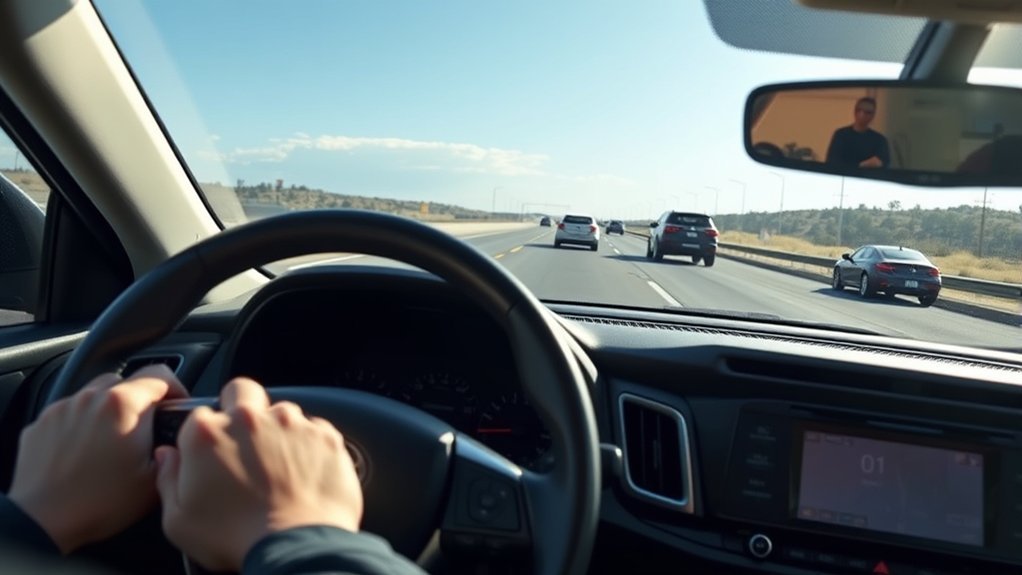
When your RAV4 starts vibrating at highway speeds, check the rotating parts first. A tire or wheel imbalance often sends a rhythmic shake through the steering wheel, seat, or floor. Verify tire pressure, inspect the tread, and look for cuts, cracks, bulges, uneven wear, or a missing wheel weight.
If tire pressure looks correct and the tires show no clear damage, ask for a dynamic balance or road-force balance. This type of test can catch a tire or wheel problem that a basic balance may miss. Toyota recommends regular tire rotation because tires do not wear evenly on their own.
Next, check alignment issues. Poor alignment can create uneven wear, steering pull, and repeat vibration after you rebalance the tires. Schedule an alignment if the wheel sits off-center, the RAV4 pulls, or the tread shows feathering on one side.
Do not ignore brakes. A dragging caliper, stuck pad, uneven rotor surface, or worn hub can make the shake worse when you slow down. On all-wheel-drive or four-wheel-drive models, a worn U-joint, CV joint, axle, or rear driveshaft can also create a steady vibration near highway speed.
Warning: Pull over safely and stop driving if the shake starts suddenly, feels severe, or comes with a tire bulge, burning smell, grinding noise, or loose wheel feel.
Safety Checks Before You Test Drive
Before you reproduce the shake, make sure the RAV4 feels safe enough to drive. Check all four tires while they are cold. Look for low pressure, exposed cords, sidewall bubbles, nails, cuts, or tread that looks lifted from the tire body.
The National Highway Traffic Safety Administration (NHTSA) tells drivers to check tire pressure at least monthly, check tires when they are cold, and replace tires when tread reaches 2/32 inch. NHTSA also reported 511 fatalities in tire-related crashes in 2024, so treat tire damage and sudden highway vibration as safety issues, not comfort problems.
If you plan to lift a wheel, park on level ground and use jack stands. Never rely on the jack alone. Tighten loose lug nuts to the proper Toyota torque specification before any road test.
Symptoms That Point to the Source
Use the pattern of the shake to decide where to inspect first. This table does not replace a real inspection, but it helps you avoid random parts replacement.
| What you feel | Most likely area | First check |
|---|---|---|
| Shake at one speed range | Tires or wheel balance | Pressure, tread, weights, balance |
| Shake while braking | Brakes or hubs | Rotors, pads, calipers, bearings |
| Clicking on slow turns | CV joint or axle | Boots, grease leaks, axle play |
| Humming or growling | Wheel bearing | Bearing noise and wheel play |
| Shake under load | Drivetrain or mounts | CV joints, U-joints, motor mounts |
Is the Vibration Coming From the Wheels or the Tires?
After you check balance, alignment, and brakes, narrow the source by how and when the vibration appears. Drive at the speed where shaking feels worst. If the vibration grows with steady speed, suspect tire condition, wheel balance, or a bent rim.
Visually inspect tires for bulges, cuts, cracks, exposed cords, or signs of separation. Run your hand lightly over the tread when the tire is cool and the vehicle stays parked. A raised spot, dip, or rough patch can point to uneven wear or an out-of-round tire.
Lift each wheel safely and spin it by hand. Listen for thumps and watch for wobble. Missing wheel weights, bent wheel lips, and out-of-round tires can all cause a repeat shake after balancing.
If the vibration shifts after you rotate tires, the tire or wheel you moved likely carries the problem. Toyota recommends tire rotation every 5,000 to 8,000 miles for many vehicles, but your owner’s manual gives the best interval for your exact RAV4. Keep a service record so you can spot patterns across rotations.
Could Your Brakes or Hubs Cause the Shimmy?
A brake or hub issue can hide behind what feels like a tire problem. Begin with a focused brake inspection. Look for rotor scoring, uneven pad wear, stuck hardware, and signs that one pad drags against the rotor.
If you feel vibration mainly when you brake, ask the shop to check rotor runout, pad movement, and caliper slide pins. A dragging brake may also create a hot wheel and a burning smell. Compare wheel temperatures only after you park safely and let parts cool.
Next, perform a basic hub evaluation. Lift the corner safely, hold the tire at the 12 and 6 o’clock positions, and rock it gently. Wheel bearing play, humming, growling, or roughness while spinning can point to bearing or hub wear.
Remove the wheel only if you have the right tools and experience. Inspect the rotor surface, pad seating, caliper hardware, and hub noise. If a bearing shows play or noise, replace the hub or bearing assembly instead of continuing highway tests.
[Products Worth Considering]

The AICEL TPMS Relearn Tool helps quickly reset and relearn tire pressure sensors on compatible GM vehicles after tire rotation, sensor replacement, or warning light issues. Designed for easy handheld use, it works with most cars, SUVs, and pickup trucks and can save time by eliminating unnecessary trips to the auto store. Its durable ABS housing and simple activation process make it a practical tool for keeping the tire pressure monitoring system operating properly.

Masoll’s TPMS sensor set includes four advanced sensors and a relearn tool to help GM vehicle owners replace factory tire pressure sensors at home. Designed for broad compatibility with GM vehicles after 2006, it supports dual-frequency operation for easier fitment across Chevy, GMC, Buick, Cadillac, Pontiac, and select trucks. With low power use, high accuracy, and DIY installation, it offers a convenient way to clear TPMS warnings and restore proper tire pressure monitoring.

The Masoll M13 Tire Pressure Monitoring System helps monitor tire pressure for sedans, SUVs, pickup trucks, RVs, and travel trailers with four tires. It features automatic reference pressure calibration, alerting you when pressure changes fall outside the set range, while solar charging and auto wake-up support convenient everyday use. With precise pressure detection, an easy-to-read color LCD, and adaptive backlighting, it is designed to improve driving safety and help protect tire life.
How to Check Drivetrain and Suspension Parts
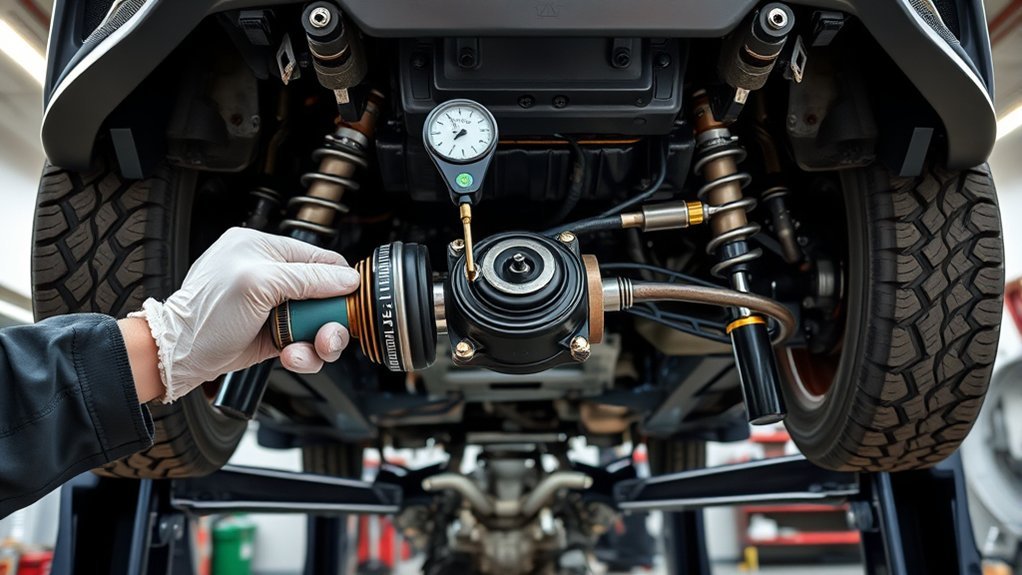
Check the drivetrain and suspension after you rule out obvious tire, wheel, and brake problems. Focus on CV joints, U-joints, motor mounts, ball joints, tie rods, control arm bushings, and sway bar links. These parts can send vibration through the body when they wear or loosen.
For a CV joint inspection, look for torn boots, grease splatter, clicking during slow turns, or vibration under acceleration. A torn boot lets grease escape and dirt enter the joint. That damage can turn a small noise into a failed axle.
For a U-joint check on equipped models, secure the vehicle and inspect the driveshaft for play. Any looseness, clunk, or rough movement needs a professional inspection. A worn U-joint can transmit vibration at speed, especially on models with a rear driveshaft.
For a motor mount check, look for cracks, separation, fluid leaks, or excessive engine movement. Have an assistant shift between drive and reverse with the brake held firmly while you watch from a safe spot. Do not stand in front of or behind the vehicle during this test.
Finish with the suspension. Check ball joints, tie rods, bushings, and linkage ends for play or torn boots. Loose steering or suspension parts can make a balanced tire feel unstable at highway speed.
Easy At-Home Tests to Isolate the Shake
Start by reproducing the shake at the same highway speed on a flat, straight road. Use a safe route with light traffic. Note whether the shake begins near 90 km/h, about 56 mph, or another repeatable speed.
Check whether the vibration changes in drive, during gentle acceleration, while coasting, and during light braking. A shake that follows vehicle speed often points to tires, wheels, hubs, or driveline parts. A shake that changes with engine load may point toward mounts, axles, or drivetrain parts.
After a short drive, park safely and let parts cool. Compare wheel areas carefully without touching rotors or calipers. One wheel that feels much hotter than the others can point to a dragging brake or stuck caliper.
Speed and Gear Checks
Test at steady speeds across a safe highway range and note whether the vibration changes or stays constant. Speed-dependent behavior often points to tires, wheel balance, hubs, or driveline parts. Write down the speed, road surface, steering feel, and where you feel the shake.
If your owner’s manual allows it and conditions are safe, briefly coast in neutral at the same speed. If the vibration stays the same, the issue likely follows wheel speed. If it changes right away, ask a technician to inspect engine load, transmission behavior, mounts, and drivetrain parts.
- Record the speed, gear, road surface, and vibration location.
- Compare steady speed, gentle acceleration, coasting, and braking.
- Stop the test if the shake grows, the steering feels loose, or warning lights appear.
Wheel and Brake Touch
If you feel a highway shake, check each wheel and brake area after the vehicle cools enough to inspect safely. Do not touch the rotor or caliper. Use a careful hand-near test around the wheel area to compare heat, and stop if you smell burning. A much hotter wheel can point to brake drag, bearing trouble, or a stuck caliper that needs prompt inspection.
Perform a quick wheel inspection and simple brake assessment to isolate the source. Raise the vehicle only on level ground with jack stands. Spin each wheel by hand, listen for noises, and watch for wobble.
| Test | What to look for |
|---|---|
| Heat check | One wheel much hotter than the others means possible brake drag |
| Spin test | Wobble points to an out-of-round tire or bent rim |
| Noise check | Grinding, humming, or grumbling points to bearing, brake, or CV trouble |
| Fastener check | Loose lug nuts or missing wheel weights need correction before driving |
Low-Cost Fixes to Try Before You Book a Shop
Because many highway shudders start at the tires or wheels, try low-cost checks before you approve major repairs. Park safely, inspect all four rims, and look for ice, packed snow, mud, or missing wheel weights. Clean buildup from the inside of the wheel because it can throw the wheel out of balance.
- Set tire pressure to the door-placard value when the tires are cold.
- Swap tires front-to-back or use a known good set to see whether the shake moves.
- Check for missing balancing weights, bent rims, and uneven tread wear.
- Rotate tires if you have passed the recommended interval and the tires remain safe.
- Remove ice or packed snow from the wheel carefully before retesting.
These steps can save you from replacing good parts. If the vibration stays after pressure correction, cleaning, rotation, and balancing, you have narrowed the problem beyond simple tire service. Bring your notes to a shop and ask for a targeted inspection.
Pro tip: Ask for road-force balancing if normal balancing does not fix a shake that follows one tire or wheel.
[Products Worth Considering]

This EL-50448 TPMS relearn tool helps quickly activate and reset tire pressure sensors so your vehicle’s monitoring system stays accurate after tire rotations, sensor replacement, or seasonal tire changes. Designed for many GM-related vehicles and compatible with common 315 and 433 MHz TPMS systems, it offers simple one-button operation and reliable performance for clearing warning lights and relearning sensor positions.

This heavy-duty car ramp set provides a stable, reliable lift for routine maintenance like oil changes, tire rotations, brake work, and undercarriage inspections. Built from high-impact poly with a non-skid tread and rubber feet, it helps keep vehicles secure while offering a lightweight, corrosion-resistant alternative to steel ramps. The wide, gradual design supports a broad range of vehicles, from compact cars to trucks, SUVs, and vans.

Specification: 1 segment: 1/2 oz ,1 strip=6 segments, 1 box=4 strips=24 segments=12oz in total
When Should You See a Shop?
See a shop if the shake feels severe, repeats after tire balancing, appears during braking, or comes with noise, heat, tire damage, or loose steering. Tell the technician exactly when the shaking happens. Include speed range, steering input, road surface, braking, turning, and whether it changes under acceleration.
Ask the shop to check tire balance/alignment, tire runout, brakes, wheel bearings, hubs, suspension, CV joints, and the driveshaft on equipped models. Request a written diagnostic plan before repairs begin. Then ask which finding proves the repair, not just which part they want to replace.
Cost depends on model year, location, labor rate, and part choice. As of RepairPal estimates last updated June 18, 2026, RAV4 wheel alignment averages $289 to $424, brake pad replacement averages $320 to $384, wheel bearing replacement averages $318 to $572, and axle shaft replacement averages $643 to $785 before taxes, fees, location adjustments, and related repairs. Use a local estimate before you approve any repair.
[Products Worth Considering]

High Quality: Zinc plated to resist rust and corrosion, not easy to break or fade, sturdy, and durable for long time use

✅HIGH QUALITY - Made of quality zinc plated carbon steel with high hardness, wear resistance and rust resistance. Zinc plated surface makes it more durable, anti-corrosion and anti-oxidation.

【High Quality Material】: Made of high quality galvanized steel material, our GM alignment body gaskets are corrosion and rust resistant, strong and durable, not easy to break or fade, and can be used for a long time.
What to Tell the Technician
Tell the technician exactly what you feel and when. State the speeds, such as consistent shaking near 90 km/h, and where the vibration shows up. Mention the steering wheel, seat, floor, brake pedal, or whole body.
Describe recent service and your own checks. Share tire pressure, wheel temperature notes, lug nut concerns, rotation dates, brake work, and any pothole or curb hit. Clear notes help the technician test the right area first.
- Ask for dynamic balance or road-force balance if tires remain suspect.
- Request tire inspection for runout, separation, cupping, and uneven wear.
- Ask for brake, hub, bearing, alignment, suspension, driveshaft, and CV joint checks.
- Share whether the vibration changes with speed, braking, turns, load, or gear.
Expected Repairs and Costs
If your RAV4 shakes consistently at highway speed, ask for a clear diagnostic plan and written estimate before any work starts. Tell the shop you want a tire balance, tire runout check, brake check, hub check, and suspension inspection. Ask what caused the vibration and what test proves it.
| Likely repair | Typical cost pattern | Urgency |
|---|---|---|
| Tire pressure, cleaning, or rotation | Low cost or routine service; pressure correction and cleaning may cost little if no damage exists | High |
| Wheel balancing or road-force balancing | Usually lower than hub, axle, or suspension repair; ask the shop for road-force pricing first | High |
| Wheel alignment | RepairPal average: $289 to $424 before taxes, fees, and location adjustments | High |
| Brake pads, rotors, or caliper service | Brake pads average $320 to $384; rotors or calipers can add more | High |
| Wheel bearing or hub assembly | RepairPal wheel bearing average: $318 to $572 before taxes, fees, and location adjustments | Critical |
| Suspension, CV axle, or driveline repair | Axle shaft average: $643 to $785; suspension costs vary by failed part | Critical |
Get a written estimate, ask for the failed part if possible, and approve only the work you understand. If the shop cannot explain the test result, ask for a second opinion before a costly repair.
Frequently Asked Questions
Why is my RAV4 shaking while driving?
Tire imbalance, uneven tread wear, damaged tires, bent wheels, worn suspension, or brake problems can make your RAV4 shake while driving. Start with tire pressure, tire damage, wheel balance, and lug nuts. Then check brakes, hubs, bearings, CV joints, and suspension if the shake remains.
Can I drive my RAV4 if it shakes at highway speed?
You can drive a short distance to a safe repair location if the shake feels mild and no tire damage, noise, heat, or loose steering appears. Do not keep driving at highway speed if the vibration gets worse. Stop safely and get help if you see a bulge, smell hot brakes, or hear grinding.
Does a bad wheel bearing cause highway vibration?
Yes, a bad wheel bearing can cause vibration, humming, growling, loose steering, or uneven tire wear. The noise may change when weight shifts during a turn. A worn bearing needs prompt inspection because it can create a serious safety risk.
Will wheel balancing fix a RAV4 shake?
Wheel balancing can fix the shake if tire or wheel imbalance causes it. If the shake returns, ask for tire runout, road-force balance, bent-rim checks, and tire separation checks. Balance will not fix a bad bearing, stuck brake, worn CV axle, or loose suspension part.
Why does my RAV4 shake only when braking?
A shake that appears mainly during braking often points to brake rotors, pads, calipers, hubs, or suspension movement. Ask a shop to check rotor runout, pad wear, caliper slide pins, and hub play. Do not ignore brake-related vibration because stopping control matters more than ride comfort.
Why does my RAV4 shake around 60 mph?
A shake that appears around one highway speed often points to wheel balance, tire runout, a bent wheel, or a tire with uneven wear. The problem may feel strongest when wheel speed reaches the vibration point. Start with pressure, tread, wheel weights, rim damage, tire rotation history, and road-force balancing.
How do I know if it is balance or alignment?
Balance problems usually create a repeat shake at a certain speed. Alignment problems often create steering pull, an off-center wheel, feathered tread, or uneven tire wear. You may need both checks because Toyota notes that tire balance and wheel alignment help keep tires and wheels working correctly.
Safety Disclaimer: This article gives general information only and does not replace a qualified mechanic’s inspection. Do not perform road tests, brake checks, or under-vehicle inspections unless you can do them safely with the right tools. Stop driving and seek professional help if your RAV4 shakes severely, pulls, makes grinding noises, smells hot, or shows tire damage.
Conclusion
A RAV4 shake at highway speed usually starts with tires, wheels, brakes, hubs, or drivetrain parts. Begin with the safest and lowest-cost checks: tire pressure, visible tire damage, missing wheel weights, lug nuts, and wheel balance. If the shimmy remains, use your notes to guide a shop toward brakes, hubs, bearings, CV joints, mounts, and suspension. A steady diagnosis helps you fix the real fault and get your RAV4 back to smooth, safe highway driving.
References
- Tire Safety Ratings and Awareness, TireWise – National Highway Traffic Safety Administration, accessed 2026
- Basic Car Maintenance Tips and Services Checklist – Toyota, accessed 2026
- Wheel Bearing: How Do I Know if I Need a Replacement? – Kelley Blue Book, updated 2026
- Toyota RAV4 Wheel Alignment Cost – RepairPal, estimates last updated June 18, 2026
- Toyota RAV4 Wheel Bearing Replacement Cost – RepairPal, estimates last updated June 18, 2026
- Toyota RAV4 Brake Pad Replacement Cost – RepairPal, accessed 2026
- Toyota RAV4 Axle Shaft Replacement Cost – RepairPal, estimates last updated June 18, 2026


[…] you do not yet know the source. If the shake occurs only at road speed, see the focused guide to RAV4 shaking at highway speed. If the vehicle also pulls or wears tires unevenly, review the guide to RAV4 alignment […]