Merrick Vaughn, Founder, AutoReviewNest · Reviewed against Toyota product and support sources · Last updated: July 31, 2026
What’s in This Article
- Match the Sound to the Most Likely Source
- Tell Wind Noise From Road Noise With Repeatable Tests
- Run a Five-Minute Parked Inspection
- Find Common Toyota RAV4 Wind Noise Sources
- Try Safe DIY Checks for Seals, Mirrors, Trim, and Roof Racks
- Know When to Involve the Dealer or Toyota
- Decide When Further Noise Reduction Is Worth It
- Frequently Asked Questions
Toyota RAV4 wind noise at highway speed usually comes from airflow around a side mirror, A-pillar, door or window seal, windshield trim, moonroof, or roof accessory. Tire roar can sound similar, so diagnose the source before adding weather stripping, sealant, or sound-deadening material. A low-frequency thumping sound that occurs only with a rear window open is usually wind buffeting rather than a failed seal. Diagnose an air leak only when the unwanted noise occurs with every window and the moonroof fully closed.
Use the same safe route, legal speed, weather conditions, and cabin settings for every comparison. Change only one item at a time. A repeatable whistle from one side points more toward a gap or loose trim, while noise that changes sharply with pavement points more toward tires and road texture.
Quick Answer
First, close every window and the moonroof, switch the cabin fan off, and compare the noise on smooth and rough pavement at the same legal speed. If the sound changes with pavement, check tire pressure, tread wear, and wheel-related noise first. If it remains tied to vehicle speed and comes from one window, mirror, windshield edge, moonroof, or roof area, inspect seals, trim, crossbars, and recent glass or body work. Test one suspected exterior seam at a time with removable automotive masking tape applied while parked. Ask a dealer, body shop, or qualified automotive glass shop to inspect loose glass, water leaks, door alignment, or a repeatable noise you cannot isolate safely.
Key Takeaways
- Confirm every window and the moonroof are fully closed before diagnosing a seal leak.
- Compare the same route, speed, weather, and cabin settings before and after each test.
- Use the sound pattern to separate aerodynamic hiss from tire roar, HVAC noise, loose trim, and open-window buffeting.
- Check mirrors, door seals, window trim, windshield edges, moonroof trim, roof racks, and recent glass work first.
- Use temporary, reversible tests before adding permanent sealant, extra weather stripping, or sound-deadening materials.
- Document the exact speed, location, weather, road surface, and repair attempts before dealer service.
What Does Your RAV4 Wind Noise Sound Like?
The sound pattern often narrows the search faster than replacing parts. Use this table as a first-pass diagnosis, not a final repair decision.
| What you hear | Likely area | Best first check |
|---|---|---|
| Sharp whistle or hiss near one front window | Door seal, window run channel, mirror base, or A-pillar trim | Inspect for gaps, dirt, flattened rubber, loose trim, or recent body work. |
| Buffeting or humming after a rack or carrier was installed | Crossbars, rubber strips, fairing, cargo box, or accessory mounts | Confirm position and orientation against the installation guide, then remove unused accessories for a comparison drive. |
| Broad roar that changes with pavement | Tires, inflation, tread wear, wheel bearing, or road surface | Compare smooth and rough pavement at the same speed, then inspect pressure and tread condition. |
| Noise that changes when the cabin fan speed changes | HVAC blower, vents, cabin filter area, or cabin air path | Repeat the test with the fan off and then at fixed settings while parked. |
| New whistle, water leak, or loose trim after windshield replacement | Windshield molding, glass position, urethane bond, or A-pillar trim | Return to the installer or use a qualified automotive glass shop. Do not apply household caulk. |
| Low-frequency thumping with one rear window open | Cabin-pressure resonance, also called wind buffeting | Close the rear window or crack a front window slightly. Do not treat this as a seal failure unless it also occurs with every opening closed. |
| Flutter or whistle near the roof with the moonroof closed | Moonroof glass position, perimeter seal, wind deflector, roof trim, or crossbars | Inspect for debris, lifted trim, an uneven glass edge, or a noise that began after roof work. Do not block drains. |
| Front-center whistle or flutter rather than one-sided window noise | Hood-edge seal, cowl trim, windshield molding, or loose exterior clips | Inspect the hood seal, cowl panel, and visible trim while parked. Have loose or misaligned parts repaired before driving. |
| Whirring or fluttering from the grille area that changes when you tuck behind a larger vehicle | Active grille shutter, on RAV4 models equipped with the feature [VERIFY: confirm which RAV4 model years/trims include an active grille shutter] | Follow behind a larger vehicle and note whether the sound changes with the different airflow. Do not attempt to disable, block, or tape over the shutter yourself. |
Open-window buffeting is not the same as a closed-cabin air leak. If a rhythmic pressure pulse stops when you close the rear window or crack a front window, the cabin pressure has changed. Do not add door seals or windshield sealant for that symptom.
Is It Wind Noise or Road Noise? Run Repeatable Tests
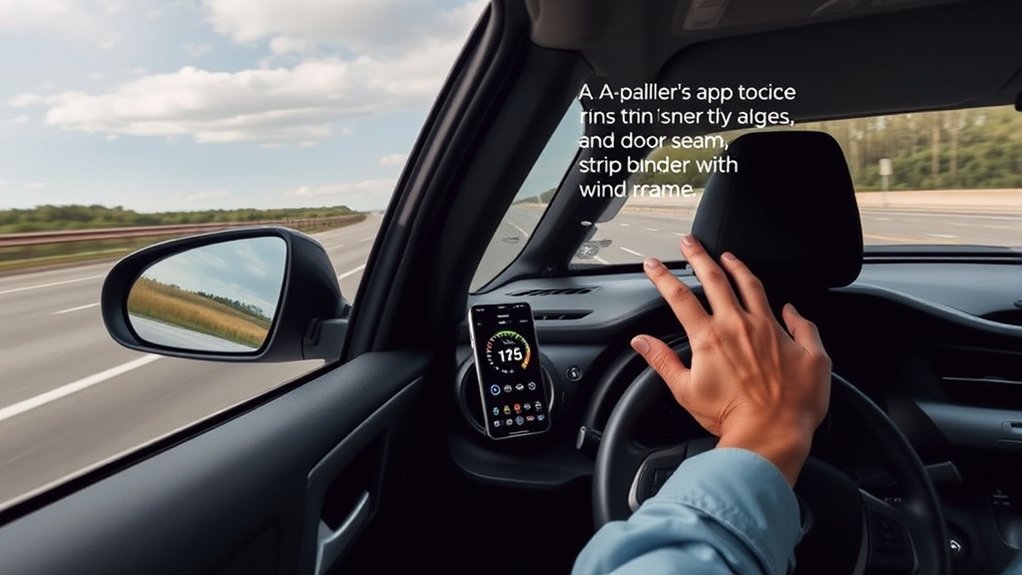
Start with a short, repeatable test drive before you buy parts. Choose a safe route where you can maintain steady speeds without exceeding the posted limit. Keep the fan speed, windows, moonroof, audio, drive mode, cargo load, and tire pressure the same for each pass.
Wind noise usually rises with vehicle speed even when the road surface stays similar. Road and tire noise often change more when pavement changes from smooth asphalt to coarse concrete. Crosswinds may make mirror, pillar, and seal noise louder on one side. Record the wind direction when possible so you do not mistake a weather change for a successful repair.
A phone sound-meter app can help you compare before-and-after results, but it is not calibrated laboratory equipment. Use the same phone, app, microphone orientation, mounting position, speed, and route each time. Treat the number as a comparison value, not a certified cabin-noise measurement.
Do not handle a phone, tape, trim, window seal, or roof accessory while driving. Have a passenger record observations, or stop in a safe place before changing the test setup.
- Close: Confirm every window, door, liftgate, and the moonroof are fully closed.
- Listen: Note whether the sound is a sharp hiss, whistle, flutter, hum, pressure pulse, or broad tire roar.
- Compare: Drive smooth and rough pavement at the same safe, legal speed.
- Separate HVAC noise: Compare the sound with the fan off and then at one fixed fan setting.
- Localize: Have a passenger compare the driver side, passenger side, windshield edge, roof area, and cargo area.
- Test one gap: While parked, cover one suspected exterior seam with removable automotive masking tape. Keep tape off glass viewing areas, sensors, cameras, drains, latches, and moving parts.
- Check roof equipment: Remove unused attachments or crossbars only as directed by their installation instructions, then repeat the same route.
If the sound drops after a mirror, trim, moonroof, or roof-rack test, you likely found an aerodynamic path. If it changes more with pavement, inspect tire wear, tire pressure, wheel-bearing noise, and suspension-related sounds before you chase door seals.
What Can You Check in Five Minutes While Parked?
Complete this inspection with the RAV4 parked, switched off, and secured. The goal is to find visible changes or loose components before a road test, not to adjust glass, doors, latches, or body alignment.
| Check | What to look for | Next action |
|---|---|---|
| Windows and moonroof | Glass not fully seated, uneven upper edge, debris, or a seal folded inward | Clean accessible debris. Seek professional adjustment if the glass closes unevenly. |
| Door weather stripping | Tears, flattened areas, dirt, displaced corners, or inconsistent contact marks | Clean the seal and compare compression. Do not stack universal weather stripping over it. |
| Mirror housing and base | Loose cap, visible gap, missing fastener, movement, or recent replacement | Do not drive with a loose mirror. Have the mounting or trim inspected. |
| Windshield and A-pillars | Lifted molding, loose pillar trim, water marks, or a change after replacement | Return to the glass installer or use a qualified automotive glass shop. |
| Roof rails and crossbars | Loose hardware, missing rubber strip, reversed placement, or unused carrier | Follow the accessory instructions. Remove unused equipment only when the instructions permit it. |
| Hood edge and cowl | Loose seal, raised cowl trim, damaged clip, leaf debris, a loose wiper-cowl tray, or visible misalignment | Secure or replace parts through the correct model-specific repair procedure. |
Write down what you found before the next drive. A simple note such as “passenger mirror seam taped, whistle unchanged” is more useful than changing several seals at once.
[Products Worth Considering]

This custom-fit car cover is designed for Toyota Tacoma models from 2016 to 2026, offering dependable outdoor protection against sun, UV exposure, rain, snow, dust, leaves, and bird droppings. Its tailored shape, mirror pockets, paint-safe lining, and wind-resistant securing system help reduce rubbing, improve stability, and keep the cover in place during everyday parking. A driver-side zipper and breathable design make it easier to access the cabin and support regular outdoor use.

This windshield sun shade is designed to fit Toyota RAV4 models from 2019 to 2025 and RAV4 Prime models from 2021 to 2024. It helps block UV rays, reduce interior heat buildup, and protect your dashboard, seats, and steering wheel from sun damage. The accordion-folding design makes it easy to set up, store, and carry, while the durable triple-laminate construction adds long-lasting performance.

This front windshield sunshade is designed to help keep your Toyota RAV4 cooler by reducing heat buildup after parking in direct sunlight. It blocks most UV rays to help protect your dashboard, seats, and steering wheel from sun damage, while the accordion folding design makes it easy to set up, store, and transport. Built with a durable triple-laminate construction and a silver reflective surface, it offers practical everyday sun protection for compatible RAV4 models.
Where Does Toyota RAV4 Wind Noise Usually Come From?
Focus on parts that shape airflow around the cabin. Side mirrors, A-pillars, door seals, window run channels, windshield molding, moonroof trim, roof rails, crossbars, hood-edge seals, cowl panels, and loose exterior trim can all create highway noise. Recent windshield, door, mirror, roof, or collision repair also matters because a small fit change can create a new air path.
- Side mirrors: Look for loose caps, uneven mirror-base fit, missing fasteners, or trim that moves by hand.
- Door seals: Check for flattened rubber, tears, dirt buildup, folds, and sections that do not leave an even contact mark.
- Window channels: Inspect the upper frame and run channel for debris, distortion, or glass that does not close evenly.
- Windshield area: Look for lifted molding, loose A-pillar trim, water entry, or noise that began after glass replacement.
- Moonroof area: Check for debris, uneven glass position, damaged perimeter seals, loose wind-deflector parts, and blocked-drain symptoms.
- Roof racks: Check crossbar position, rubber infill strips, loose hardware, fairings, and unused accessories against the installation guide.
- Hood and cowl: Inspect visible hood-edge seals, cowl trim, the wiper-cowl tray, and exterior clips if the sound comes from the center of the windshield rather than one door.
- Active grille shutters: On RAV4 models equipped with an active grille shutter, airflow through the closed shutter can create a whirring or fluttering sound at highway speed. Compare the sound behind a larger vehicle, where airflow changes, before assuming a seal or trim problem. [VERIFY: confirm which RAV4 model years/trims use an active grille shutter]
Toyota describes its genuine RAV4 crossbars as aerodynamically styled to help minimize wind noise [VERIFY: reconfirm current Toyota Genuine Parts product-page wording]. That does not mean every installed rack will be silent. Incorrect placement, missing rubber infill, loose hardware, or an attached carrier can still change airflow. Confirm the exact setup against the installation instructions for your accessory.
Noise-control hardware varies by model year, trim, and market. Toyota described the 2013 U.S. RAV4 as having a standard acoustic noise-reducing windshield. Toyota Europe later documented acoustic glass for the windshield and front side windows on a RAV4 Plug-in Hybrid [VERIFY: reconfirm current wording on this page]. These statements apply to specific generations and markets, not every RAV4.
Use the Toyota model-year brochure, the glass markings, or a VIN-specific equipment lookup to confirm what your RAV4 originally used before ordering replacement glass.
The all-new 2026 European RAV4 uses a different body generation. Toyota Europe says its mirror shape, A-pillar profile, and door sealing were revised to reduce wind noise. Those changes explain why a 2026 model may not sound or diagnose the same way as an earlier RAV4.
Note: Compare the same generation, trim, tire type, roof setup, glass type, and road surface. Another RAV4 may have different seals, tires, glazing, roof equipment, and noise-control materials.
How Can You Reduce RAV4 Wind Noise Safely?
Start with cleaning, inspection, and reversible tests. Fix only the area that changes the sound. Permanent sealant and broad sound-deadening work can hide the symptom without correcting the air path.
[Products Worth Considering]

This custom-fit windshield sun shade is designed for Toyota RAV4 models from 2013 to 2026, helping block sunlight and reduce interior heat for a more comfortable cabin. Its double-layer construction reflects UV rays and protects your dashboard and seats, while the foldable design makes it easy to install, remove, and store. Made with eco-friendly, odor-free materials, it offers a practical everyday solution for parking, camping, and hot-weather driving.

This windshield sunshade is designed for Toyota RAV4 models from 2013 through 2018 to deliver full front-window coverage and help keep the cabin cooler. Its reflective multi-layer construction blocks harmful UV rays and reduces heat buildup, while the foldable design makes it quick to install and easy to store. Reinforced stitched edges add durability for reliable everyday use.

High Quality Material: Made of excellent rubber material, soft and flexible, can easily adapt to the car curve. Strong sealing to ensure a complete and tight fit. Wear-resistant and durable, long service life. Strong 3M backing, weather resistant, stick firmly without falling off.
Check door-seal compression before adding material
Clean the seal and body contact surface with products suitable for automotive weather stripping. While parked, place a thin strip of paper between the seal and door, close the door normally, and compare the pull resistance at several points. A section that releases much more easily may have uneven compression, but door alignment and seal replacement should be confirmed before you add material.
Do not install universal weather stripping around the entire door as a first repair. Extra material can change door-closing effort, fold the original seal, obstruct drainage, create a new leak path, and hide a glass or body-alignment problem.
Use temporary tape to isolate exterior seams
Apply removable automotive masking tape to one suspected exterior seam while the vehicle is parked. Test only one area at a time, then remove the tape after the comparison drive. Do not cover mirror glass, driver-assistance sensors, cameras, drains, movable glass, door latches, airbag areas, or emergency-exit paths.
Tape that begins lifting must be removed before the vehicle is driven again. Do not use loose tape, foam, cord, or trim as a permanent exterior repair.
Correct roof-rack and trim problems
Tighten loose trim and rack hardware only to the manufacturer’s instructions. Some crossbars and rubber strips are position-specific, so do not assume front and rear parts are interchangeable. Never drive with a partially removed or loosely secured rack component.
Know what sound-deadening can and cannot fix
Door, floor, and cargo-area damping can reduce panel resonance and some road or tire noise. It will not stop a sharp whistle caused by air passing through a mirror, glass, trim, or seal gap. Diagnose and repair the air path before adding damping material.
Remove interior trim only if you can protect wiring, clips, moisture barriers, side-impact components, drainage paths, and airbag areas. Improperly resealed moisture barriers can allow water into the door or cabin.
Warning: Do not seal drain holes, windshield bonding areas, moonroof drains, airbag zones, sensors, latches, or moving parts. Stop and seek professional inspection if you find loose glass, a loose mirror, a door-latch problem, damaged roof hardware, or water entering the cabin.
After each change, write down the speed, road surface, weather, wind direction, seat position, test change, and result. Clear notes prevent repeat work and give the dealer a stronger starting point.
When Should a Dealer Inspect RAV4 Wind Noise?
Involve a Toyota dealer, body shop, or qualified automotive glass shop when the noise remains repeatable after basic checks, began after repair work, includes water entry, or points to door, mirror, glass, moonroof, or body alignment. Ask the shop to reproduce the concern on the same type of road and at the same legal speed.
Some dealers will initially describe highway wind noise as normal for the model rather than diagnose it. That response does not necessarily mean nothing can be found — it often means the visit needs more documented evidence, a technician ride-along, or a second opinion before a specific cause gets isolated.
Toyota explains that a Technical Service Bulletin updates Toyota publications used by dealers. A TSB is not the same as a recall and does not automatically make a repair free. Ask the service advisor to search by VIN, model year, build date, warranty status, and exact symptom rather than assuming a bulletin for another RAV4 applies to yours.
Do not describe every mirror-area sound as a known bulletin issue. A bulletin addressing mirror vibration, for example, may not diagnose a whistle caused by a cap, seal, crosswind, or windshield molding. The symptom and applicable vehicle range must match.
Build a simple evidence packet before your visit. Include short recordings, exact speeds, weather and wind direction, road type, the seat where the sound is loudest, recent repairs, and a list of temporary tests. Ask for a technician ride-along when the noise happens only under specific conditions.
Describe the sound, location, speed, and conditions in repeatable terms, then ask for the diagnosis and repair plan in writing.
- Prepare: Save notes, recordings, warranty details, repair history, and the suspected area.
- Reproduce: Request a drive with the technician or provide a route where the sound occurs consistently.
- Document: Ask the repair order to state the exact complaint, test conditions, findings, and work performed.
- Compare: When practical, ask whether the shop can compare another RAV4 of the same generation, similar trim, tire type, and roof setup.
- Verify bulletins: Ask the advisor to search Toyota information by VIN rather than relying on a bulletin number found for another model year.
- Escalate: Contact Toyota customer support if a repeatable concern remains unresolved after documented visits.
Keep every repair order, including visits where the shop reports that the noise is normal or cannot be reproduced. A complete paper trail helps if you return for the same concern or request manufacturer assistance. See our RAV4 warranty guide for what is and is not covered before you ask for a repair under warranty.
When Is Further Noise Reduction Worth the Cost?
Use an escalation ladder instead of buying several products at once. Begin with no-cost comparisons and cleaning. Move to a damaged seal, loose trim, or rack correction only after a test points to that area. Use professional diagnosis for glass bonding, door alignment, moonroof alignment, mirror mounting, water leaks, and body fit.
- No-cost diagnosis: Repeatable route, pavement comparison, fan-off test, closed-window confirmation, visual inspection, and removal of unused cargo accessories.
- Low-complexity maintenance: Cleaning seals, securing approved trim, and replacing visibly damaged weather stripping through the correct procedure.
- Targeted professional repair: Glass, door, mirror, roof, rack, or body work based on a reproduced fault.
- Noise-control upgrade: Damping or quieter replacement tires only when the remaining sound is road or panel noise rather than an air leak.
Measure value by the change you can hear on the same route, not by the number of parts installed. A small repair that removes a whistle is more useful than extensive damping that barely changes the cabin.
Consider a different trim or newer generation only after a back-to-back highway test on the road surface that bothers you. Glass, tires, roof equipment, weather, and model generation can change the result, so a specification sheet alone cannot tell you whether another RAV4 will feel quiet enough.
[Products Worth Considering]

Noise Reduction - Compared with ordinary car door rubber seal strip, our car door seal backing is embedded design, which can better fit the surface of the car, effectively insulate you from wind noise and road noise, greatly reduce the noise inside the car, improve driving comfort, so that you can enjoy a quieter driving environment.

【Material】Automotive weather stripping is durable rubber and self-Adhesive, non-toxic, thick and flexible, plyable to hold up to compression.
Frequently Asked Questions
How do you fix wind noise from the windshield while driving?
Inspect the windshield molding, A-pillar trim, and upper glass edge for loose pieces, damage, water entry, or a change after glass replacement. A windshield is a bonded safety component, so use a qualified automotive glass shop or Toyota dealer for glass-position or urethane-bond concerns. Do not apply household caulk around the glass.
Can roof racks cause wind noise on a Toyota RAV4?
Yes. Crossbars, rubber infill strips, fairings, cargo boxes, and unused mounts can create humming, whistling, or buffeting. Confirm each part’s position and orientation against its installation instructions, secure all hardware correctly, and remove unused accessories for a comparison drive when the instructions permit it.
Why is my RAV4 loud only at highway speed?
Aerodynamic noise rises as speed increases, so highway-only hiss often points to mirrors, A-pillars, seals, roof equipment, moonroof trim, or exterior molding. Tire noise also rises with speed and changes with pavement. Compare two road surfaces at the same speed before assuming the sound is an air leak.
Why does my RAV4 thump when a rear window is open?
A rhythmic pressure pulse with a rear window open is usually wind buffeting. Airflow across the opening causes cabin pressure to rise and fall. Close the rear window or crack a front window slightly to change the airflow. This does not normally indicate a failed door or windshield seal when the sound disappears with the windows closed.
Should you use caulk to stop car wind noise?
Do not use household caulk as a first repair. It can hide the leak path, trap water, interfere with trim removal, and complicate proper glass or body repair. Use temporary tape only for diagnosis, then follow a Toyota repair procedure or use a qualified shop for permanent sealing.
Can sound deadening fix RAV4 wind noise?
Sound-deadening material can reduce panel resonance and some tire or road noise, but it will not close an exterior air path. A sharp whistle from a mirror, seal, window, windshield, or roof gap must be diagnosed and repaired at its source before damping material is considered.
When should a dealer check RAV4 wind noise?
Ask for professional inspection when the noise is new, one-sided, repeatable, linked to water entry or recent repair, or remains after safe basic checks. Bring recordings and test notes so the technician can reproduce the concern faster.
Is wind noise normal in a Toyota RAV4?
Some wind and road noise is normal at highway speed. A sharp new whistle, sudden increase, loose trim, water leak, or sound from only one door or window deserves inspection because it may point to a fit or sealing problem.
Which RAV4 trims have acoustic side glass?
Acoustic-glass equipment varies by generation, model year, trim, and market. Toyota has documented acoustic glazing on selected RAV4 and RAV4 Plug-in Hybrid models, but that does not mean every RAV4 uses the same windshield or side glass. Check the model-year brochure, glass markings, or VIN-specific equipment information for your vehicle.
Can tires sound like wind noise?
Yes. Tire and road noise can create a broad roar that seems to come from the doors or floor. If the sound changes noticeably between smooth asphalt and coarse concrete at the same speed, inspect tire pressure, tread wear, tire type, and wheel-related noise before replacing seals.
Conclusion
The fastest way to solve Toyota RAV4 wind noise is to confirm the cabin is fully closed, match the sound to a likely source, repeat the same safe test, and change one item at a time. Begin with pavement, fan, mirror, seal, windshield, moonroof, hood/cowl, and roof-rack checks. Treat rear-window-open pressure pulsing as wind buffeting unless the noise also occurs with every opening closed.
Use temporary tape only to isolate one exterior seam, not as a permanent repair. If you find water entry, loose glass or trim, damaged roof hardware, a door-latch problem, or a repeatable noise you cannot isolate safely, stop the DIY work and request a written professional diagnosis.
References
- What is a Technical Service Bulletin? — Toyota Support
- 2012 Los Angeles Auto Show — 2013 Toyota RAV4 Reveal — Toyota USA Newsroom, 2012
- 2024 Toyota RAV4 eBrochure — Toyota, 2024
- The New Toyota RAV4 Plug-in Hybrid — Toyota Europe Newsroom
- All-new Toyota RAV4 brings new technology and rugged style to every adventure — Toyota Europe Newsroom, 2026
- Toyota RAV4 Roof Rack Cross Bars — Toyota Genuine Parts