
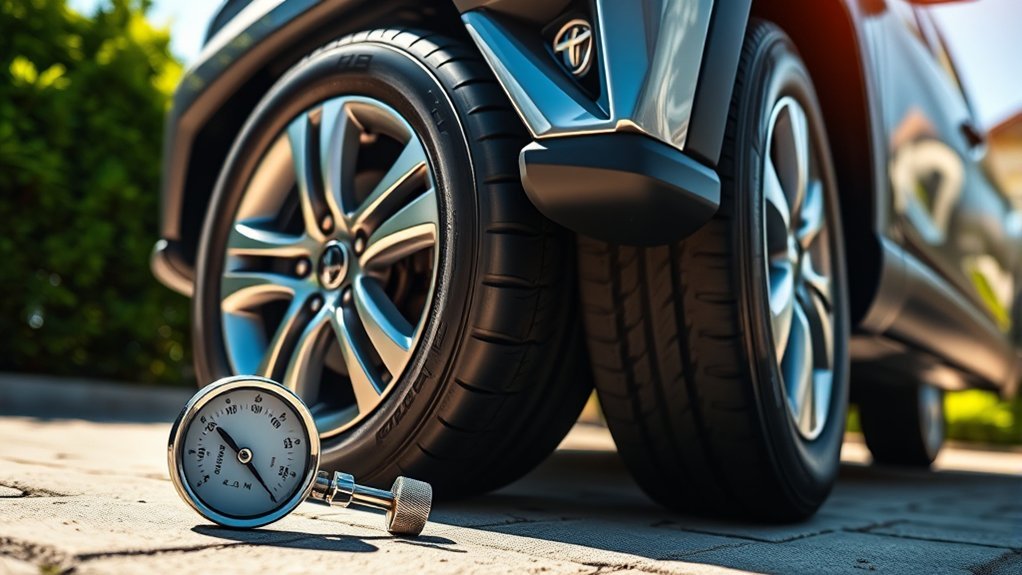
Maintaining the right tire pressure in your Toyota RAV4 is one of the easiest ways to improve safety, fuel economy, tire life, and ride comfort. The correct PSI is not the number printed on the tire sidewall. It is the cold tire pressure listed on your RAV4’s driver-side door jamb label and in the Toyota owner’s manual for your exact model year, trim, tire size, and load setup.
Quick Answer
Most Toyota RAV4 models use a cold tire pressure in the low-to-mid 30 PSI range, often around 33–36 PSI depending on model year, trim, and tire size. Always use the driver-side door jamb label as the final authority, check the tires when cold, and do not rely only on the TPMS light.
Key Takeaways
- Use the Toyota tire and loading label on the driver’s door jamb for your exact RAV4 PSI.
- Check tire pressure when the tires are cold, ideally before driving or after the vehicle has been parked for at least three hours.
- Cold weather can lower tire pressure, so check more often during seasonal temperature swings.
- TPMS is a warning system, not a replacement for a manual tire pressure gauge.
- Check the spare tire separately because its required pressure may be much higher than the road tires.
At a Glance
| Time Required | 5–10 minutes |
| Difficulty | Easy |
| Tools Needed | Tire pressure gauge and air compressor |
| Cost | Free if you already have a gauge; usually low cost if you need to buy one |
Why Proper Tire Pressure Matters for Your RAV4
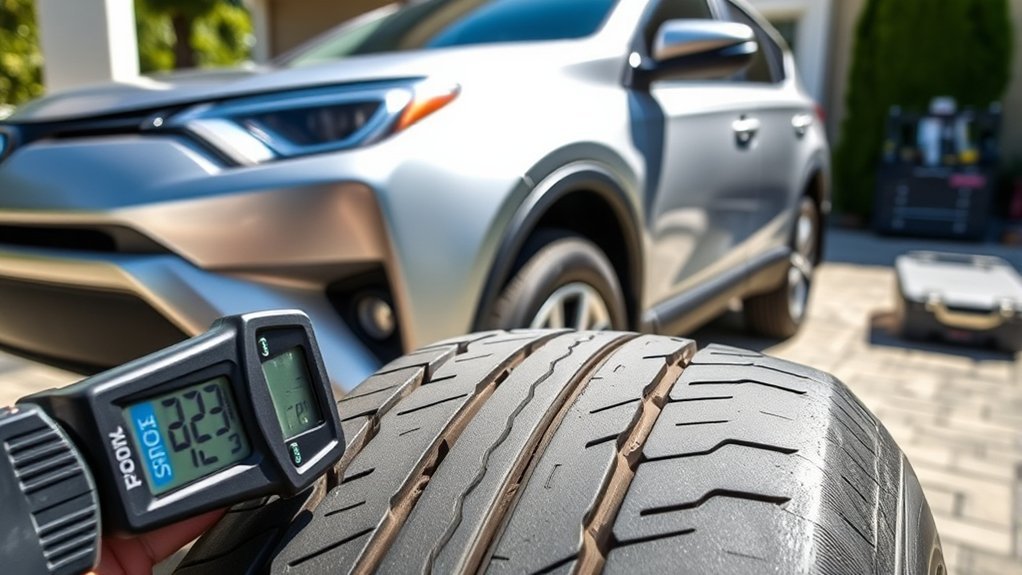
Correct tire pressure helps your RAV4 brake, steer, and ride the way Toyota designed it to. Underinflated tires can flex too much, build heat, wear unevenly, reduce fuel economy, and increase the risk of tire damage. Overinflated tires can make the ride harsher, reduce the tire’s contact patch, and cause uneven center tread wear.
Toyota notes that incorrect tire inflation can reduce fuel economy, comfort, handling, tire life, and safety. The U.S. government’s fuel economy guidance also says underinflated tires can lower gas mileage and that the proper pressure is usually found on the driver-side door jamb label or in the owner’s manual, not on the tire sidewall.
Even a small pressure drop across all four tires can reduce fuel economy, increase tire wear, and make the RAV4 feel less stable.
Finding the Right Tire Pressure for Your RAV4
The right tire pressure for your Toyota RAV4 depends on the model year, trim, tire size, wheel package, and load rating. Many modern RAV4 models fall around 33–36 PSI for the road tires, but that range is only a general guide. Your exact cold PSI is printed on your vehicle’s tire and loading information label.
Where to Find the Recommended PSI
Use these sources in this order:
| Location | What It Tells You | How to Use It |
|---|---|---|
| Driver-side door jamb label | Front and rear cold tire PSI for your exact RAV4 setup | Treat this as the main source of truth |
| Owner’s manual | Pressure-checking steps, TPMS guidance, and tire care notes | Use it to confirm the correct procedure |
| Tire sidewall | Maximum tire pressure, not the normal operating pressure | Do not use this as your daily driving PSI |
| Spare tire sidewall and vehicle label | Spare tire inflation requirement | Check separately because temporary spares often use a much higher PSI |
Note: If you installed aftermarket wheels, a non-original tire size, or replacement tires with different load ratings, ask a Toyota dealer or qualified tire professional to confirm the correct pressure.
Recommended PSI Locations
Open the driver’s door and look for the tire and loading information label on the door jamb or pillar. It lists the original tire size and the recommended cold tire inflation pressure for the front and rear tires. You can also check Toyota’s official manual resources for your model year through the Toyota Owners manuals and warranties page.
If your RAV4’s tire pressure warning light is on, do not guess. Measure each tire with a gauge, inflate to the label’s cold PSI, and inspect for damage, punctures, or a slow leak if one tire is repeatedly low.
Adjusting for Seasonal Changes
Tire pressure rises and falls with temperature. A common rule of thumb is about 1 PSI for every 10°F temperature change. That means a RAV4 set correctly on a warm afternoon may read several PSI lower on a cold morning.
In cold weather, check tire pressure more often and inflate the tires to the door-jamb PSI while they are cold. In hot weather, avoid bleeding air from hot tires just because the reading looks higher after driving. Tires warm up as you drive, and the pressure reading naturally increases.
Pro Tip: The best time to check RAV4 tire pressure is in the morning before driving, especially after a major weather change.
Step-by-Step Guide to Checking Tire Pressure
Checking your RAV4’s tire pressure is simple, but the order matters. Follow these steps for the most accurate reading:
- Park safely and let the tires cool. For a true cold reading, check before driving or after the vehicle has been parked for at least three hours.
- Find the correct PSI. Read the tire and loading information label on the driver’s door jamb.
- Remove the valve cap. Keep it somewhere clean so it does not pick up dirt.
- Press the gauge straight onto the valve stem. A hiss usually means the gauge is not seated correctly.
- Compare the reading with the recommended cold PSI. Add air if the pressure is low.
- Release air carefully if overinflated. Press the center valve briefly, then recheck.
- Repeat for all four tires. Front and rear pressures may differ on some vehicles.
- Check the spare tire separately. The spare may not be monitored by TPMS and may require a different PSI.
- Replace every valve cap. Caps help keep dirt and moisture out of the valve stem.
Warning: Do not inflate your RAV4 tires to the maximum PSI printed on the tire sidewall unless that number matches Toyota’s specified pressure for your vehicle. The sidewall number is a limit, not the recommended daily driving pressure.
[Products Worth Considering]

The JACO ElitePro Digital Tire Pressure Gauge delivers shop-grade accuracy with a clear digital readout, making it easy to maintain proper tire pressure for safer driving and better performance. Built with rugged brass and steel components, a protective guard, and a flexible air hose, it is designed for reliable use across cars, trucks, motorcycles, bikes, RVs, and trailers. The lock-on display, built-in bleeder valve, and bright backlit screen add convenience in any lighting condition.

The NOCO GENIUS5 is an all-in-one battery charging and maintenance solution for 6V and 12V lead-acid and lithium batteries. It features temperature compensation, dead-battery recovery, desulfation, and safe long-term maintenance to help extend battery life and performance. Compact and versatile, it works with a wide range of vehicles and comes with mounting accessories and a warranty.

This portable tire inflator delivers fast, convenient inflation for cars, bikes, motorcycles, and balls with dual power options from a rechargeable battery or a 12V car cord. Its digital LCD pressure gauge and automatic shutoff help prevent over-inflation, while multiple preset modes and a custom setting make it easy to use for different inflation tasks. Built-in flashlight and USB power ports add extra emergency utility on the road.
Busting Myths About Tire Pressure Maintenance
Many tire pressure mistakes come from using the wrong source or relying too much on warning lights. Here are the most common myths RAV4 owners should avoid.
Common Misconceptions Explained
| Myth | Reality |
|---|---|
| “The PSI on the tire sidewall is the correct pressure.” | That is the tire’s maximum pressure limit. Use the Toyota door-jamb label for normal driving. |
| “If the TPMS light is off, my tires are perfect.” | TPMS warns about significant underinflation. It may not alert you to small pressure changes that still affect tire wear and fuel economy. |
| “I can check pressure right after a highway drive.” | Hot tires read higher. Check cold tires whenever possible. |
| “The spare tire does not matter.” | A low spare can leave you stranded. Check it regularly and follow the spare’s listed pressure. |
| “More PSI always improves MPG.” | Overinflation can reduce traction, comfort, and tire life. Use the recommended pressure instead. |
Importance of Regular Checks
Check RAV4 tire pressure at least once a month, before long trips, and whenever the weather changes sharply. A slow leak, damaged valve stem, nail puncture, or seasonal temperature drop can lower pressure before the tire looks visibly flat.
A monthly pressure check is also a good time to inspect tread depth, look for uneven wear, and check for sidewall bulges, cracks, nails, or cuts.
TPMS Isn’t Foolproof
Your Toyota RAV4’s Tire Pressure Monitoring System is helpful, but it is not a substitute for a gauge. Federal TPMS requirements are designed around warnings for significant underinflation. That means a tire can be below the ideal pressure before the system warns you.
If the TPMS light comes on, check the tire pressure manually as soon as it is safe. If the light flashes, the system may have a malfunction or sensor issue that needs diagnosis.
Seasonal Changes and Their Impact on Tire Pressure

Seasonal temperature swings can change tire pressure quickly. When the temperature drops, the air inside the tire contracts and the PSI falls. When temperatures rise, the air expands and the PSI increases. This is why TPMS lights often appear during the first cold mornings of fall or winter.
During cold months, check more often and inflate the tires to the recommended cold pressure. During hot months, measure pressure before driving when possible. If you check after driving, remember that warm tires normally read higher than cold tires.
Note: Do not automatically add “extra” PSI for winter unless your owner’s manual, door label, or tire professional recommends it for your exact tire setup. The safest baseline is the cold PSI printed on the vehicle label.
Getting to Know Your RAV4’s TPMS
The RAV4’s TPMS watches for low tire pressure and alerts you with a dashboard warning light. Depending on your model year and equipment, your display may also show individual tire pressure readings. Even when pressure readings are displayed, always set tire pressure based on a cold manual reading and the door-jamb label.
| TPMS Signal | What It Usually Means | What to Do |
|---|---|---|
| Steady tire pressure light | One or more tires may be significantly low | Check all tires with a gauge and inflate to the recommended cold PSI |
| Flashing light, then steady | Possible TPMS malfunction or sensor issue | Have the system inspected if it does not clear |
| Light after a cold night | Pressure may have dropped with temperature | Check and adjust cold tire pressure |
| Light returns after inflation | Possible leak, puncture, bad valve stem, or sensor issue | Inspect the tire and schedule service if needed |
[Products Worth Considering]
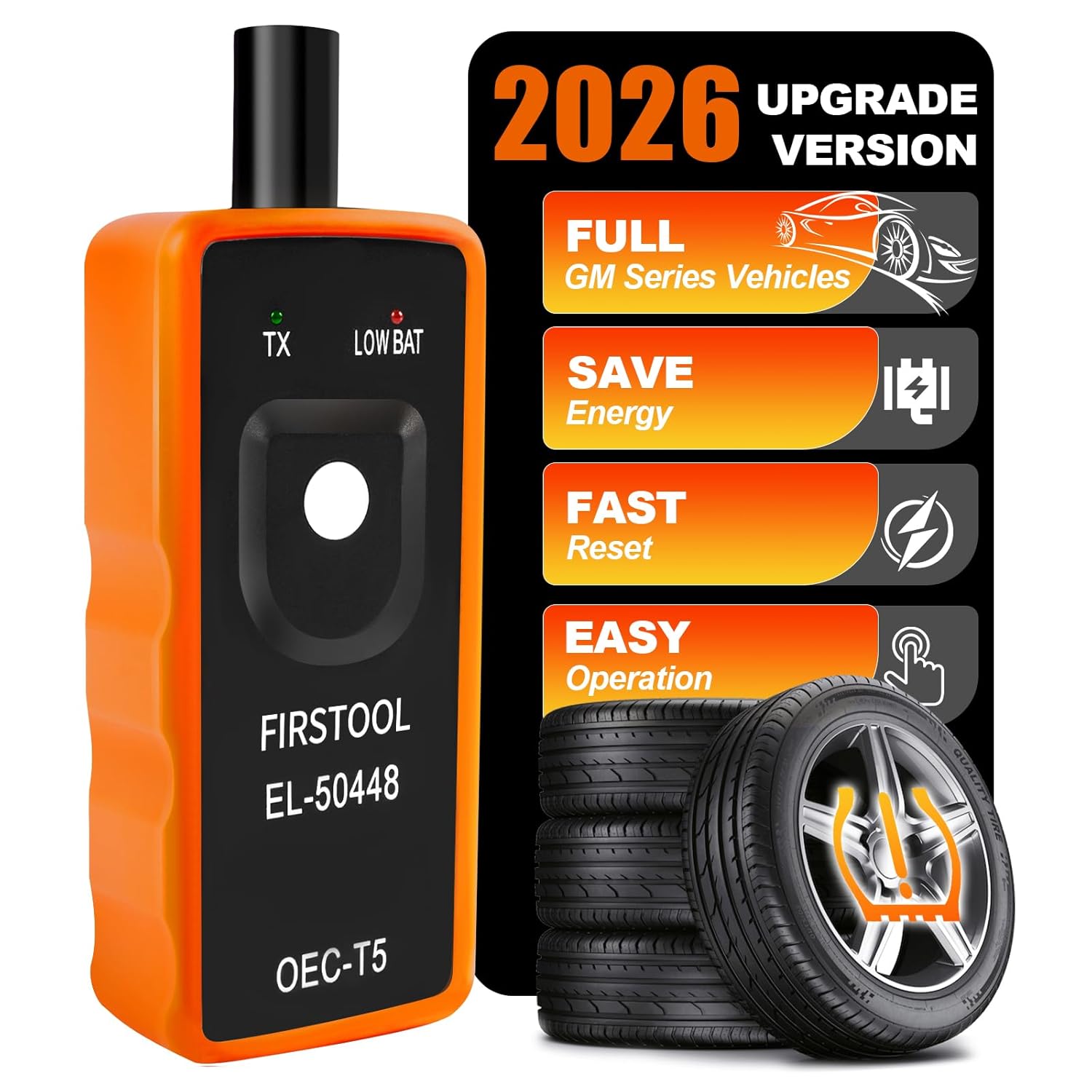
This EL-50448 TPMS relearn tool helps quickly activate and reset tire pressure sensors so your vehicle’s monitoring system stays accurate after tire rotations, sensor replacement, or seasonal tire changes. Designed for many GM-related vehicles and compatible with common 315 and 433 MHz TPMS systems, it offers simple one-button operation and reliable performance for clearing warning lights and relearning sensor positions.

This custom full-set liner system is molded for Toyota 4Runner models to deliver a precise fit with complete interior coverage. It includes floor mats, cargo liner, and backrest mat to help protect against dirt, spills, mud, and daily wear while staying securely in place. Made from odorless TPE material, these mats are easy to install, simple to clean, and built for all-weather use.

HIGH QUALITY: Marsflex tire pressure sensors include a CR2450 battery and a cutting-edge technology chip. The upgraded battery improves the operating temperature range to -40℃~+125℃, and has 5-8 years lifespan. The chip provides best signal strength, real-time reading the condition of your tire
What to Do When Your TPMS Light Comes On
When the TPMS light comes on, treat it as a safety warning. Pull over when safe, visually inspect the tires, and avoid high speeds if a tire looks low or damaged.
- Check all four road tires with a gauge. Do not rely only on the dashboard display.
- Inflate to the door-jamb cold PSI. If the tires are warm, use care and recheck when cold later.
- Inspect for damage. Look for nails, screws, cuts, bulges, or a cracked valve stem.
- Drive normally for a short distance if the manual allows it. Some systems need a short drive to update.
- Get service if the light stays on or flashes. A persistent warning may mean a leak or TPMS fault.
Warning: If one tire is far lower than the others, do not simply inflate and ignore it. A repeated pressure loss usually means a leak or tire damage that needs repair.
[Products Worth Considering]

TPMS RELEARN TOOL FOR GM: This tire pressure monitor system relearn tool is compatible with most General Motors equipped with 315 MHz or 433 MHz sensor, including Chevy, Buick, GMC, Opel, Cadillac, etc, from 2006-2024, Cars, SUV, Pickup, Not for Heavy Truck

🌟KEEP YOUR TIRES IN TOP SHAPE: VXDAS GM TPMS Relearn Tool Plus is a 2 in 1 tool that resets your sensor and maintains tire pressure. Works for GM vehicles (Chevy / Buick / GMC / Opel /Cadillac etc)equipped with 315/433 MHz.

【CUSTOMIZED for FORD】This TPMS Sensor Training Tool is customized for all Ford Lincoln Mercury vehicles that has a Tire Pressure Sensor. Train the TPMS sensors and activate Tire Pressure Programming on new vehicles or after a tire rotation(Tip: You can refer to the second vehicle compatibility diagram and the A+ content to check if your vehicle is compatible with this reset tool.)
How to Maintain Spare Tire Pressure
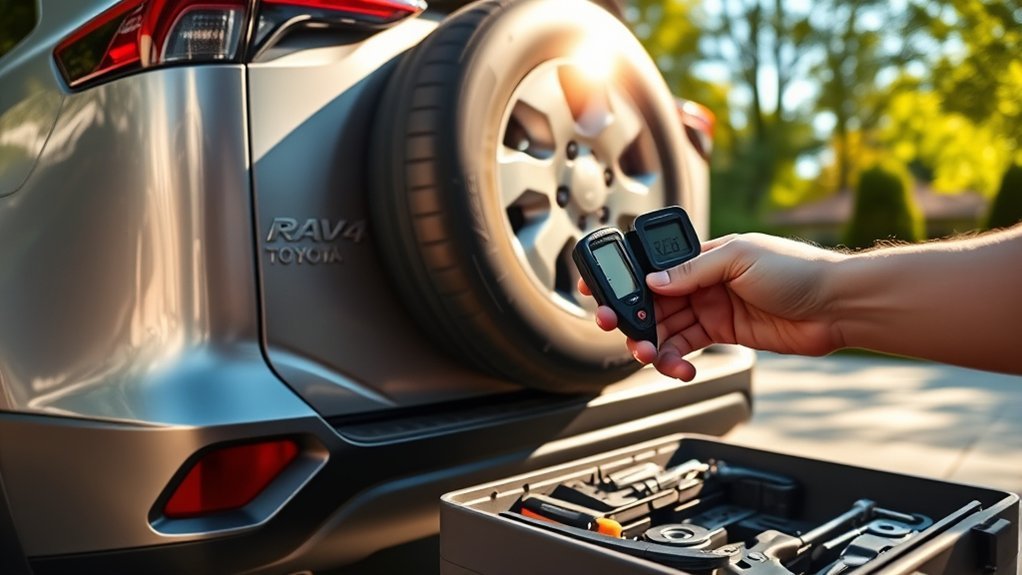
The spare tire is easy to forget because it is hidden under the cargo floor, but it matters most when you need it. Check your RAV4 spare tire at least every few months, before road trips, and whenever you check the rest of the tires.
Do not assume the spare uses the same PSI as the four road tires. Compact temporary spare tires often require much higher pressure than standard tires. Read the spare tire sidewall, the vehicle label, and your owner’s manual for the correct number.
While checking the spare, confirm that the jack, lug wrench, wheel lock key if equipped, and other tire-change tools are present and accessible. Also inspect the spare for cracking, aging, or visible damage.
How Regular Tire Maintenance Boosts Performance
Tire pressure is only one part of tire care. For the best ride, handling, and tire life, combine proper inflation with regular inspections and rotation according to your Toyota maintenance guide.
- Check pressure monthly. Use the recommended cold PSI on the door label.
- Inspect tread and sidewalls. Look for uneven wear, cracks, punctures, bulges, or exposed cords.
- Rotate tires on schedule. Follow the interval in your Toyota maintenance guide because timing can vary by model year and driving conditions.
- Check alignment if wear looks uneven. Feathering, cupping, or one-sided wear can point to alignment, suspension, or balance problems.
- Replace damaged tires promptly. A tire with a sidewall bulge, deep cut, or exposed structure is not safe to keep using.
Pro Tip: Keep a small digital gauge in the glove box or cargo area. Gas-station gauges are convenient, but they can be worn, dropped, or inaccurate.
Frequently Asked Questions
What PSI should my Toyota RAV4 tires be at?
Many RAV4 models use a cold tire pressure around 33–36 PSI, but the exact number depends on your model year, tire size, trim, and load setup. Use the tire and loading information label on the driver-side door jamb for the correct front and rear PSI.
How often should I check my RAV4 tire pressure?
Check your RAV4 tire pressure at least once a month, before long trips, and after major temperature changes. Always check when the tires are cold for the most accurate reading.
Why did my RAV4 tire pressure light come on in cold weather?
Cold air lowers tire pressure because the air inside the tire contracts. A drop of about 1 PSI for every 10°F is common, so a sharp overnight temperature change can trigger the TPMS light even if the tire is not punctured.
Can I use the PSI number printed on the tire sidewall?
No. The tire sidewall usually shows the maximum pressure the tire can handle, not the recommended operating pressure for your RAV4. Use the Toyota door-jamb label instead.
Does TPMS mean I do not need to check tire pressure manually?
No. TPMS is designed to warn you when pressure becomes significantly low or when there is a system issue. It may not alert you to smaller pressure changes that still affect tire wear, comfort, and fuel economy.
What PSI should the RAV4 spare tire be?
Check the spare tire sidewall, vehicle label, and owner’s manual. Do not assume it uses the same PSI as the road tires. Compact temporary spares often require much higher pressure than standard tires.
Conclusion
Keeping your Toyota RAV4 tires properly inflated is a small maintenance habit with a big payoff. Use the driver-side door jamb label for the correct cold PSI, check pressure monthly, watch for seasonal temperature changes, and remember that TPMS is only a backup warning system. A few minutes with a tire gauge can help your RAV4 ride better, use fuel more efficiently, and stay safer on the road.
Sources
- Toyota Owners Manuals and Warranties — official owner manual access for Toyota RAV4 model-specific tire and maintenance information.
- Toyota RAV4 Tire Inflation Pressure — official Toyota guidance on checking and adjusting tire inflation pressure.
- NHTSA TireWise — tire safety guidance, cold tire pressure checks, and tire maintenance basics.
- FuelEconomy.gov: Keeping Your Vehicle in Shape — fuel economy impact of proper tire inflation and where to find recommended pressure.
- 49 CFR § 571.138 Tire Pressure Monitoring Systems — federal TPMS performance requirements.
- AAA: How Temperature Changes Affect Your Tire Pressure — practical explanation of tire pressure changes during temperature swings.


[…] test, you likely found an aerodynamic path. If it changes more with pavement, inspect tire wear, tire pressure, wheel-bearing noise, and suspension-related sounds before you chase door […]