
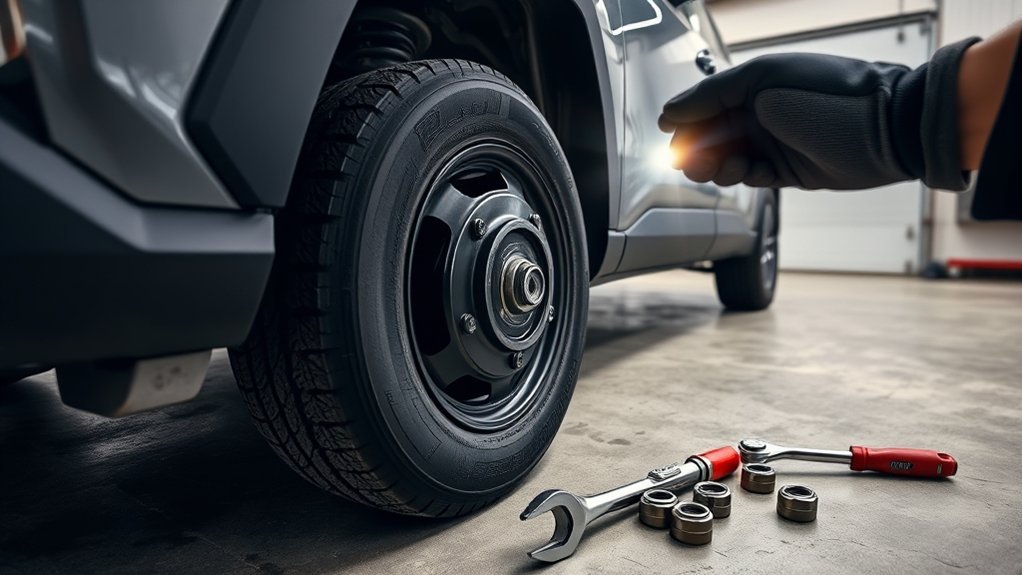
A Toyota RAV4 clunk when turning usually comes from play or movement in the steering or front suspension. A single knock when you first turn points more toward the intermediate shaft, steering rack mounts, tie rods, ball joints, strut mounts, or control-arm bushings. A repeating click during a tight turn, especially under acceleration, points more toward an outer CV joint. Do not continue normal driving if the steering feels loose, binds, wanders, or triggers an EPS warning.
By AutoReviewNest Editorial Team · Sources reviewed: Toyota and NHTSA service documents · Last updated: July 15, 2026
Use the sound pattern, whether the RAV4 is stationary or moving, and where you feel the impact to narrow the cause. The checks below help you separate a steering-shaft clunk from a CV-axle click, suspension pop, or wheel-bearing hum. This guide supports diagnosis, but it cannot identify a failed part without inspecting the vehicle.
Quick Answer
A single RAV4 clunk at turn-in usually points to movement in the steering linkage, intermediate shaft, rack mounts, tie rods, ball joints, strut mounts, or control-arm bushings. Repeated clicking during a tight turn is more consistent with an outer CV joint. Do not use grease as a universal fix. Toyota specifically told technicians not to apply lubricant or water to the intermediate shaft or seal for 2019–2020 RAV4 and RAV4 Hybrid squeak/groan complaints.
Key Takeaways
- A single knock at turn start usually points to play in a steering, suspension, or mount component.
- A repeating click while turning is more likely to involve an outer CV joint, especially if it is worse under acceleration.
- Toyota Tech Tip T-TT-0255-13 covers 2006–2008 RAV4 clunk, pop, or knock complaints, but it is a service-parts clarification that directs technicians to a separate bulletin, VIN range, and steering-gear date code.
- Toyota’s 2019–2020 guidance covers a squeak or groan, not every clunk. It says not to apply lubricant or water to the intermediate shaft or seal.
- If steering feels loose, binds, does not return smoothly, or the EPS warning appears, stop driving and have the RAV4 inspected.
At a Glance
| Initial Check | Usually under 30 minutes for listening and a visual inspection |
| Difficulty | Basic observation is straightforward; under-vehicle and steering repairs require proper support and service procedures |
| Tools Needed | Flashlight, wheel chocks, gloves, and a helper; jack stands and a torque wrench only when the repair procedure requires them |
| Repair Cost | Varies widely with the failed part, model year, corrosion, alignment needs, and local labor rate |
Warning: Steering parts are safety-critical. If the steering wheel has excessive free play, the vehicle wanders, the clunk is heavy, the wheel binds, or a steering or suspension joint is visibly loose, avoid driving and arrange a qualified inspection. Never work under a vehicle supported only by a jack.
What Should You Check First When a RAV4 Clunks While Turning?

Skip the fast “grease fix” until you know which part is making the noise. Lubrication may be appropriate only for a serviceable contact point when Toyota or the part manufacturer specifies the exact product and location. It cannot repair a loose tie rod, worn ball joint, damaged CV joint, failed strut mount, or shifting steering rack.
The safest first move is a stationary listening check: park on level ground, set the parking brake, chock the wheels, and have a helper move the steering wheel gently left and right. Watch only from a safe position. Match the sound to one of these patterns:
- Clunk while stationary: focus on the intermediate shaft, steering column area, strut mounts, steering gear, and rack mounts.
- Repeated click while rolling: inspect the outer CV joint and axle boot, especially if the noise gets louder under acceleration.
- Clunk over bumps or during braking: inspect tie rods, ball joints, sway-bar links, control-arm bushings, strut mounts, and loose fasteners.
Toyota Tech Tip T-TT-0582-19 applies specifically to 2019–2020 RAV4 and RAV4 Hybrid vehicles with a squeak or groan from the steering intermediate shaft area. It says not to apply lubricant or water to the intermediate shaft or seal because that could damage the seal or lead to a repeat repair. Toyota instead tells technicians to isolate the noise and replace the affected component.
Note: A Technical Service Bulletin or Tech Tip is not a recall. The two Tech Tips cited here are historical documents with expiration dates, so confirm current information for your VIN through the official NHTSA recall lookup, Toyota owner resources, or Toyota service information.
How Do You Diagnose a RAV4 Clunk When Turning?
Diagnose the noise by combining three clues: sound pattern, vehicle movement, and where you feel it. A steering-shaft clunk often feels like one knock through the steering wheel when you reverse steering direction. A CV-joint click repeats as the wheel rotates and often becomes clearer under power. A strut-mount pop may occur once as the spring loads and releases. Tie rods, ball joints, sway-bar links, or control-arm bushings may clunk when steering, braking, or bumps shift the front suspension.
[Products Worth Considering]

This master ball joint removal kit gives you the tools needed to remove and install ball joints, tie rod ends, Pitman arms, and other front-end components. It is designed for broad compatibility with many GM, Chevrolet, Ford, and Dodge vehicles, including a range of light trucks, vans, and SUVs. Built from forged steel and stored in a molded ABS case, it offers durable performance and organized portability for garage or shop use.

This all-in-one front end service kit is designed to help remove stubborn ball joints, tie rod ends, and pitman arms on a wide range of vehicles. Built from hardened alloy and organized in a portable ABS case, it offers reliable performance for both professional mechanics and DIY repairs.

This steering clock spring is designed to restore reliable steering wheel controls across a wide range of Toyota models. It supports audio, cruise control, and other multifunction commands while matching OEM part numbers for confident replacement fitment. Built for dependable signal transfer and straightforward installation, it is an effective solution for repairing steering column control issues.
Listen for the Pattern
| Noise pattern | Most likely area to inspect | What to look for |
|---|---|---|
| Single clunk when starting a turn | Intermediate shaft, rack mount, tie rod, ball joint | Free play, delayed movement, loose fasteners, worn joint |
| Repeated clicking during a tight turn | Outer CV joint or axle shaft | Torn axle boot, grease sling, clicking under throttle |
| Pop from upper front corner | Strut mount or spring seat | Spring wind-up, rough mount rotation, broken spring end |
| Clunk over bumps and while turning | Sway-bar links, control-arm bushings, ball joints | Loose link, cracked bushing, torn dust boot |
| Growl or hum that changes with speed | Wheel bearing or tire wear | Noise changes when weight shifts; roughness at hub |
Perform a Safe Static Test
With the RAV4 parked on level ground, ask a helper to move the steering wheel gently left and right through a short range. Do not crank the wheel against the stops. Keep your hands, clothing, and tools clear of moving joints. Do not crawl under the vehicle for this check. If a later inspection requires lifting the RAV4, follow the owner’s manual lifting points and use rated jack stands on a solid surface.
Feel and watch the steering shaft and linkage. A good joint moves smoothly with the steering input. A worn or loose joint may pause, jump, click, or shift before the wheels respond. Toyota’s 2024 RAV4 Warranty & Maintenance Guide also lists steering gear, steering linkage, boots, ball joints, and dust covers as inspection items, and says damaged parts should be replaced by a qualified technician.
Check Model-Year Service Information
Model year matters. Toyota Tech Tip T-TT-0255-13 covers 2006–2008 RAV4 vehicles whose owners report a clunk, pop, or knock when turning left or right. The document is not a complete repair procedure. It supplements T-SB-0318-08 and tells technicians to confirm the VIN range and the steering-gear date code before ordering parts. Newer generations use different parts and procedures, so check service information for the exact model year and VIN.
What Causes a RAV4 to Clunk When Turning?
A RAV4 front-end clunk can travel through the body and steering column, so the part that sounds guilty may not be the failed part. Use the sections below as a cause map, not a probability ranking. Confirm movement, damage, or play before replacing anything.
Steering Intermediate Shaft
The steering intermediate shaft connects the steering column to the steering gear. Wear, looseness, corrosion, or a damaged universal joint can create a knock when steering load reverses. On older RAV4 models with known clunk/pop/knock complaints, the intermediate shaft and steering gear should be considered during diagnosis. On some newer RAV4 models, do not spray the shaft or seal with lubricant unless approved service information says to do so.
Tie Rod Ends and Steering Linkage
Tie rod ends transfer steering movement from the rack to the wheels. A worn tie rod can clunk during turning, braking, or low-speed parking maneuvers. Look for torn boots, rust powder, looseness, or wheel movement that does not match steering input. Because tie rods affect alignment and steering control, replacement should be followed by an alignment check.
Ball Joints, Control-Arm Bushings, and Strut Mounts
Lower ball joints and control-arm bushings carry heavy steering and suspension loads. A worn ball joint can clunk, creak, or shift when turning. A torn control-arm bushing can allow the wheel to move rearward or sideways during steering. A strut mount can pop when the spring twists instead of rotating smoothly.
CV Axles and Drive Shaft Boots
If the sound is a rhythmic click-click-click during tight turns, especially under throttle, inspect the outer CV joint and axle boot. A torn boot can throw grease onto nearby parts and let dirt into the joint. Toyota maintenance guidance includes inspecting drive shaft boots and replacing damaged parts when needed.
Rack Mounts and Fasteners
Loose or deteriorated rack mounts can let the steering gear shift under load. That movement can feel like a steering clunk even when the tie rods and shaft are still tight. Check for witness marks, shiny metal around mounting points, missing hardware, damaged bushings, or movement at the rack while a helper turns the wheel gently.
What Can You Safely Check Yourself?
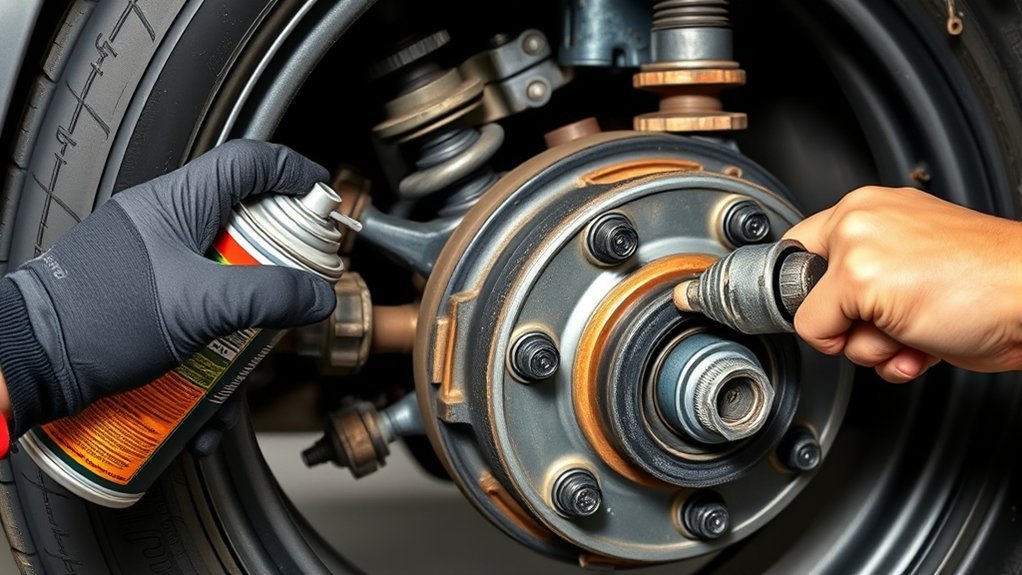
Before replacing parts, handle the low-risk checks first: confirm the tires are properly inflated, wheel lug nuts are correctly tightened, no underbody shield is loose, and the driver’s floor mat is secured and clear of the pedals. Then inspect the steering and suspension components that can actually create a clunk.
Tighten Steering and Suspension Fasteners Correctly
Loose fasteners can create a clunk, but “tighten everything” is not a repair plan. Use the correct torque specification for your exact RAV4 and fastener location. A calibrated torque wrench matters because under-tightening can leave play, while over-tightening can damage threads, crush bushings, or distort a joint.
Pro Tip: A paint mark across a fastener and bracket can reveal visible movement, but it does not prove the joint is safe. If the marks shift, stop the test and have the mounting point inspected rather than tightening an unknown fastener by feel.
Lubricate Only Where Service Information Allows
Do not choose a lubricant by brand name alone. Use only the lubricant, amount, and application point specified by Toyota service information or the replacement-part manufacturer. Sealed steering joints and dust boots are not general-purpose grease points, and lubricant cannot correct looseness, binding, torn boots, or damaged splines.
If your RAV4 is a 2019–2020 model with a squeak or groan from the steering intermediate shaft area, Toyota’s Tech Tip says not to apply lubricant or water to the intermediate shaft or seal. In that case, isolate the noise and replace the affected component as directed by service information.
Do Not Use the “Spline Trick” as a Shortcut
Some DIY guides describe compressing or repositioning the intermediate shaft splines to remove and reinstall the shaft quickly. That can go wrong if the steering wheel is not centered, the clock spring is over-rotated, matchmarks are ignored, or the shaft is installed off-index. A mistake here can damage the steering angle sensor, airbag clock spring, or steering feel.
If you remove an intermediate shaft, lock the steering wheel as specified, mark the shaft positions, use the correct tools, replace one-time-use hardware if required, and torque every fastener to specification. If you are not comfortable with that, this is a technician job.
When Should You Replace the Intermediate Shaft or Steering Linkage?
Replace parts when diagnosis shows actual looseness, binding, torn boots, corrosion damage, or movement that cannot be corrected by proper fastener torque. Do not replace the intermediate shaft just because the internet says it is common; confirm the source first.
[Products Worth Considering]

This 2-piece suspension tool set combines a compact strut spreader with a high-leverage lower control arm prying tool to help speed up safe suspension service. Designed for many FWD, import, and domestic vehicles, it supports strut, hub, ball joint, and control arm work while helping reduce the risk of damage to surrounding components. Heavy-duty steel construction makes it a dependable choice for mechanics and serious DIY suspension repair.

This dash clock spring replacement is designed for a wide range of Toyota vehicles and helps restore reliable steering wheel control functions. It supports audio controls, cruise control, and other multi-function commands while using vehicle-specific connectors for easier installation. Built with durable materials and OEM-referenced part compatibility, it is a practical solution for repairing steering wheel signal issues.
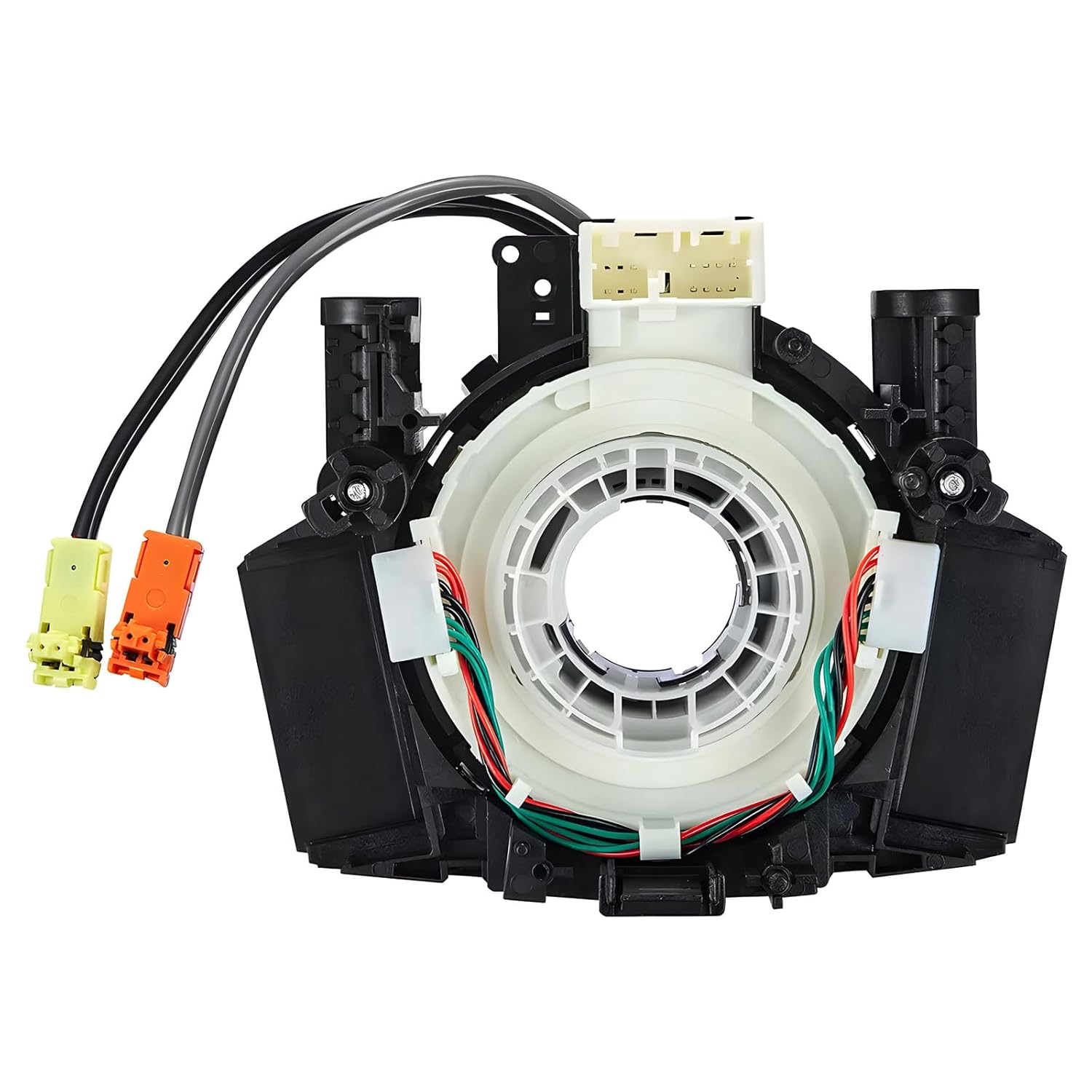
This steering clock spring assembly is an OEM-style replacement designed to restore steering wheel controls and related electronic functions in compatible Nissan vehicles. It supports audio, cruise control, and multi-function button operation while matching multiple factory part numbers for a reliable fit. Built for direct installation with vehicle-specific connectors, it helps return steering column electronics to proper working order.
Step 1: Confirm the Source
Reproduce the noise at low speed in a safe area. Note whether it happens turning left, turning right, reversing, braking, accelerating, or going over bumps. Then repeat the static steering test while watching the suspected joint. The best clue is movement that happens at the exact same time as the clunk.
Step 2: Inspect for Excess Play
Check the steering wheel for excessive free play with the vehicle stopped. Inspect the steering linkage for bending or damage and the boots for cracks, deterioration, or grease loss. Toyota’s maintenance explanation for steering linkage and boots specifically calls for checking excessive free play, bent or damaged linkage, and deteriorated or cracked dust boots.
Step 3: Rule Out Nearby Parts
Before condemning the shaft, inspect tie rods, lower ball joints, strut mounts, sway-bar links, control-arm bushings, axle boots, wheel bearings, and rack mounts. Many of these parts can mimic a steering shaft clunk. Replacing the wrong part wastes money and leaves the safety issue in place.
Step 4: Replace the Failed Component
If the intermediate shaft, tie rod, ball joint, linkage, or mount is worn, replace the failed component with a quality part that matches your VIN and model year. Follow factory service information for steering-wheel position, matchmarks, fastener replacement, and torque specs. After steering or suspension work, road-test at low speed first and get an alignment if tie rods, control arms, struts, or other alignment-related parts were disturbed.
What Determines the Repair Cost, and What Should You Check Before Driving?
Repair cost depends on the model year, failed component, access, corrosion, parts choice, alignment needs, and local labor rate. A visual inspection is usually the least expensive step. Steering-gear, strut, control-arm, CV-axle, or wheel-bearing repairs involve more labor or larger assemblies, so diagnosis should come before parts ordering.
| Item | Action | Typical cost level |
|---|---|---|
| Inspection | Listen, check play, inspect boots and mounts | Lowest cost level; a shop may charge diagnostic labor |
| Approved lubricant | Use only on approved external contact points | Low only when the application is approved |
| Tie rod or sway-bar link | Replace if loose, torn, or knocking | Lower to moderate; tie-rod work normally adds an alignment check |
| Intermediate shaft | Replace if confirmed loose, worn, or binding | Moderate to higher depending on access and part availability |
| Steering gear, strut, control arm, CV axle, wheel bearing | Replace only after confirmed diagnosis | Moderate to higher |
Before you drive normally, confirm the steering wheel is centered, the front wheels respond smoothly, there is no binding, all fasteners are torqued, all boots are seated, and no brake hose, ABS wire, or axle boot was damaged during inspection. Start with a slow parking-lot test, then recheck the repair area.
A steering clunk is not a diagnosis by itself. The real fix is finding the part that moves, clicks, binds, or shifts at the exact moment the noise happens.
[Products Worth Considering]
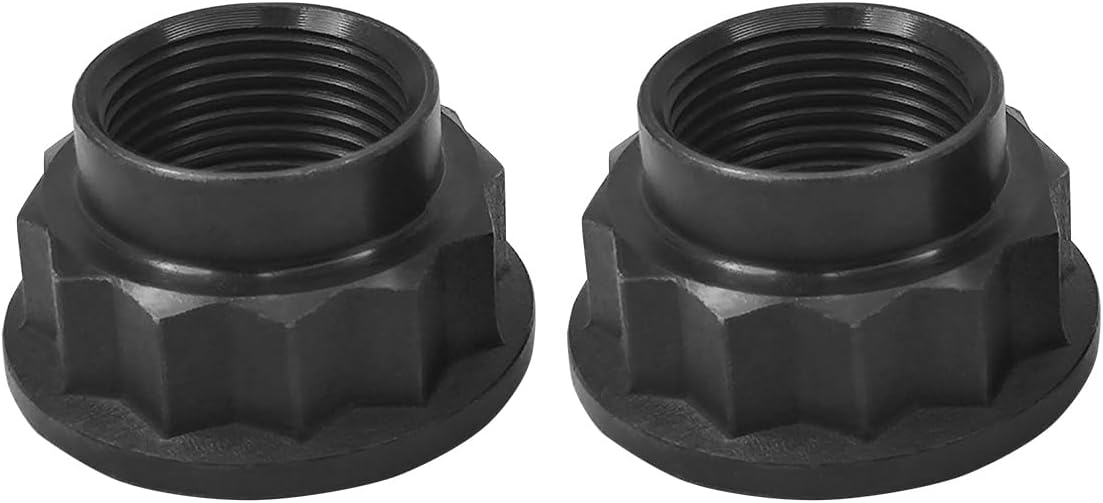
This pair of front axle shaft nuts is designed to secure CV joints and wheel bearings on compatible Toyota and Lexus front drive axles. Built from heat-treated carbon steel for durability and corrosion resistance, it helps maintain proper torque and reliable power transfer. It is a direct replacement for several factory part numbers and is recommended for paired replacement.

This heavy-duty ball joint press kit makes it easier to remove and install press-fit components like ball joints, U-joints, and brake anchor pins on many 2WD and 4WD vehicles without removing the control arm. Built from forged steel with corrosion-resistant black oxide adapters, it is designed for reliable performance and long service life. The included 4WD adapter and organized carrying case make it a practical choice for automotive suspension and steering repairs.

This front stabilizer sway bar link set is designed to restore smooth, controlled handling and reduce clunking noises caused by worn suspension components. Built with a zinc-nickel alloy coating, carbon steel, and reinforced ball studs, it offers strong corrosion resistance and durable performance for a wide range of Toyota, Lexus, and Scion models. It is engineered for straightforward installation and reliable OE-style fitment.
Frequently Asked Questions
Why does my RAV4 clunk only at low speed or while parking?
Low-speed steering puts noticeable load through the intermediate shaft, steering gear, tie rods, ball joints, strut mounts, and control-arm bushings. A single knock as you reverse steering direction points toward play or movement in those areas. A repeated click while the RAV4 is rolling points more toward an outer CV joint.
What would cause a clunking noise when I turn?
Common causes include a worn steering intermediate shaft, loose rack mount, bad tie rod end, worn ball joint, cracked control-arm bushing, noisy strut mount, loose sway-bar link, damaged CV axle, or loose hardware. The pattern of the sound matters: one clunk, repeated clicking, popping, and grinding point to different areas.
Can a bad CV axle make a RAV4 clunk or click when turning?
Yes. An outer CV joint commonly makes a repeating click during a tight turn, especially under acceleration. Inspect the axle boot for tears, grease loss, or grease thrown onto nearby parts. A single clunk as you first move the steering wheel is less typical of an outer CV joint.
Do tie rods clunk when turning?
Yes. A worn or loose tie rod end can clunk when turning because the joint has play before it moves the wheel. It can also cause wandering, uneven tire wear, and poor alignment. Replace a faulty tie rod promptly and have the alignment checked afterward.
Is it safe to drive a RAV4 with a steering clunk?
It depends on the cause, but do not ignore it. Avoid driving if the steering feels loose, binds, pulls, wanders, makes a heavy knock, or shows an EPS warning. A light trim noise may be harmless, but a worn steering or suspension joint can affect control.
Should I spray grease on the RAV4 intermediate shaft?
Not as a universal fix. Some older DIY repairs involve lubricating accessible joints, but Toyota’s 2019–2020 RAV4/RAV4 Hybrid Tech Tip for squeak/groan noise specifically says not to apply lubricant or water to the intermediate shaft or seal. Always check service guidance for your exact year and VIN.
Conclusion
A RAV4 clunk when turning needs a diagnosis, not a universal grease fix. Start by identifying whether the noise is a single clunk, a repeating click, or a pop over bumps. Then check the steering linkage, boots, tie rods, ball joints, strut mounts, rack mounts, control-arm bushings, and CV axles for movement or damage that matches the sound. Use Toyota service information for the exact model year and VIN. Arrange a qualified inspection before driving normally if steering feels loose, binds, wanders, or behaves unpredictably.
Sources
- Toyota 2024 RAV4 Warranty & Maintenance Guide — scheduled maintenance guidance for steering gear, steering linkage, boots, ball joints, and dust covers.
- Toyota Owners Manuals and Warranties — official owner resources for model-specific manuals and maintenance information.
- Toyota Tech Tip T-TT-0582-19 via NHTSA — 2019–2020 RAV4/RAV4 Hybrid steering intermediate shaft squeak/groan guidance, including the no-lubricant warning.
- Toyota Tech Tip T-TT-0255-13 via NHTSA — 2006–2008 RAV4 steering gear/intermediate shaft service-part clarification for clunk/pop/knock complaints.
- NHTSA Recalls Lookup — official VIN-based recall and safety campaign lookup.



[…] the sound also appears while turning, compare the pattern with the site’s RAV4 clunk and steering-noise guide before blaming the stabilizer […]
[…] the RAV4 clunk-when-turning guide and check for steering […]