Last updated: July 12, 2026
Reviewed by: [VERIFY: add the real author or reviewer name and relevant automotive or insurance credentials in the CMS author box]
Toyota RAV4 safety features may qualify for vehicle-equipment discounts or improve the vehicle’s overall insurance risk profile, but no feature guarantees a lower total premium. The strongest features to verify are factory-installed airbags, anti-lock brakes, anti-theft equipment, automatic emergency braking, blind-spot monitoring, rear cross-traffic alert, and rear automatic braking. Eligibility depends on your insurer, state, model year, VIN, coverage, driving record, and claim history.
Quick Answer
RAV4 safety features that may affect insurance include automatic emergency braking, forward-collision warning, airbags, ABS, stability control, approved anti-theft equipment, blind-spot monitoring, rear cross-traffic alert, and rear automatic braking. Ask your insurer which features it recognizes, which coverage receives the credit, and whether its equipment record matches your VIN. A backup camera or warning-only sensor may improve safety without earning a separate discount.
Key Takeaways
- The 2025 U.S. RAV4 has Toyota Safety Sense 2.5 as standard. The redesigned 2026 RAV4 has Toyota Safety Sense 4.0 as standard.
- A feature can reduce crash risk without creating a separate discount. Insurers may already account for it in the vehicle’s base loss rating.
- Current insurer pages show that discounts often apply to specific coverages. GEICO cites a possible 5% credit on certain coverages for factory ABS, while State Farm cites up to 40% on medical-related coverage for qualifying passive restraints.
- Blind Spot Monitor, Rear Cross-Traffic Alert, parking assistance, and Panoramic View Monitor depend on model year, grade, and package. Verify them with the VIN, window sticker, build data, or service records.
- Sensor-equipped vehicles can have higher repair and calibration costs, so fewer claims do not always mean a lower total premium.
Model-year check: Do not use one generic RAV4 feature list for every vehicle. The 2025 model uses Toyota Safety Sense 2.5, while the sixth-generation 2026 model uses Toyota Safety Sense 4.0. Match the feature name and system version to the exact VIN before requesting a discount.
At a Glance
| Time Required | 15–30 minutes to gather records and call your insurer |
| Difficulty | Easy |
| Tools Needed | VIN, insurance policy, window sticker or build sheet, owner’s manual, service records |
| Cost | Usually free unless a sensor inspection or calibration is needed |
Which Toyota RAV4 Safety Features May Affect Insurance?
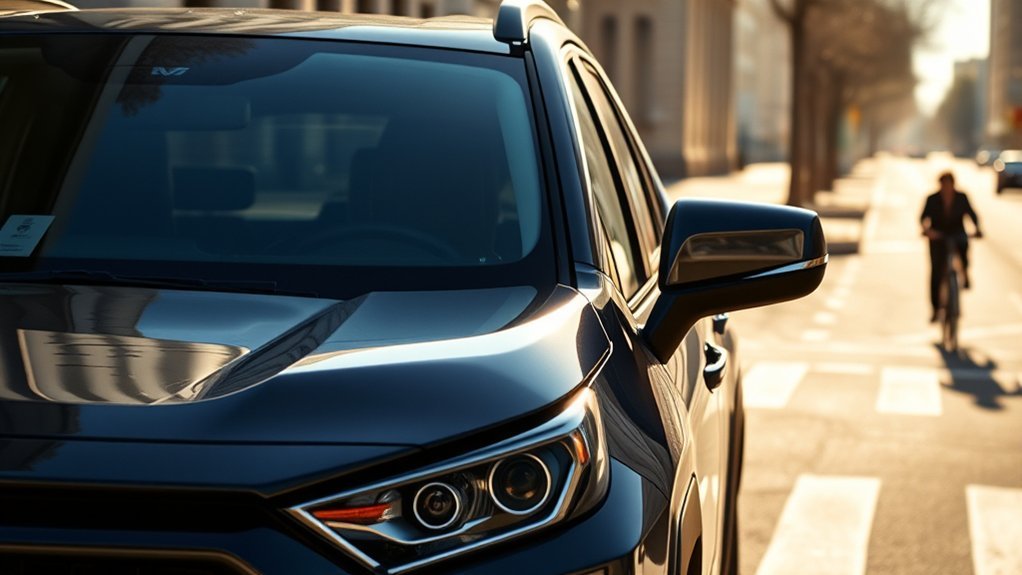
Insurers care most about safety features that can reduce either crash frequency, injury severity, theft risk, or claim cost. On a RAV4, that usually means a mix of active driver-assistance systems and passive crash-protection systems.
| Feature | Why insurers may care | Best proof to keep |
|---|---|---|
| Pre-Collision System with automatic emergency braking | May help prevent or reduce the severity of frontal crashes | VIN build sheet, owner’s manual, inspection record |
| Lane Departure Alert and Lane Tracing Assist | May reduce lane-drift and run-off-road risk when used correctly | Window sticker, Toyota equipment list |
| Dynamic Radar Cruise Control | Helps maintain following distance on highways | Owner’s manual and trim documentation |
| Blind Spot Monitor and Rear Cross-Traffic Alert | May reduce lane-change and backing collisions | Trim sheet, feature settings, service inspection |
| Airbags, ABS, stability control, traction control | Well-established systems that can reduce injury severity or help maintain control | VIN decode, owner’s manual, insurer equipment screen |
| Factory alarm, immobilizer, or approved anti-theft device | May qualify for a comprehensive-coverage credit with some insurers | Window sticker, dealer record, installer invoice, insurer-approved device list |
| Parking sensors, rear camera, rear automatic braking, Panoramic View Monitor | May help avoid low-speed parking and backing claims; intervention systems differ from warning-only aids | Window sticker, owner’s manual, photos, calibration records after repairs |
The key is model-year accuracy. The 2025 RAV4’s standard package is Toyota Safety Sense 2.5. It includes Pre-Collision System with Pedestrian Detection, Full-Speed Range Dynamic Radar Cruise Control, Lane Departure Alert with Steering Assist, Lane Tracing Assist, Road Sign Assist, and Automatic High Beams. Toyota says every 2026 RAV4 instead has Toyota Safety Sense 4.0, with updated detection capabilities for systems such as Pre-Collision Detection and Lane Tracing Assist.
[Products Worth Considering]

This center console armrest cover is designed to fit the 2026 Toyota RAV4 for added comfort and a cleaner interior look. Made with breathable vegan leather and a thick cushioned feel, it helps reduce arm fatigue on long drives while protecting the console from pet paws, dirt, and sticky fingerprints. The band-secured design installs easily with no tools required and blends with the OEM-style interior.

These round blind spot mirrors add a wider viewing angle to help improve lane changes, passing, and everyday driving safety. The frameless convex HD glass design offers a slim, clear rear view while the adjustable swivel mount makes positioning quick and easy. Compatible with cars, SUVs, vans, and trucks, this two-pack is a simple upgrade for reducing blind spots.

This frameless convex blind spot mirror helps expand your field of view for safer lane changes, passing, and merging. The HD glass design offers a clear, wide-angle rear view, while the swivel mount supports flexible positioning for cars, SUVs, trucks, vans, and RVs. Easy to install and built for all-weather use, it is a practical upgrade for everyday driving confidence.
What Do Current Insurer Discount Pages Actually Say?
| Insurer example | Published vehicle-equipment language | What it means for a RAV4 owner |
|---|---|---|
| GEICO | Factory ABS may qualify for a 5% discount on certain coverages; availability is state- and fact-specific. | Ask which coverage receives the credit instead of assuming the full premium drops by 5%. |
| State Farm | Vehicle safety savings can depend on make, model, and driver-assist technology; qualifying passive restraints may receive up to 40% off medical-related coverage. | Airbag savings may affect only medical-related coverage, and the exact amount depends on the policy and state. |
Note: Published examples are not promises for your policy. Ask the insurer to confirm your exact RAV4 model year, grade, safety package, eligible coverage, and discount amount.
How Can Toyota Safety Sense Affect RAV4 Insurance Risk?
Toyota Safety Sense bundles several crash-avoidance technologies instead of relying on one warning system. The 2025 RAV4’s Toyota Safety Sense 2.5 uses camera- and radar-supported functions for forward-collision warning, automatic emergency braking, lane support, adaptive cruise control, road-sign display, and automatic high beams. The 2026 RAV4 moves to Toyota Safety Sense 4.0, so feature names and capabilities must be checked by model year.
From an insurance viewpoint, the value is lower crash exposure, not autonomous driving. NHTSA distinguishes warning systems from intervention systems: forward-collision warning alerts the driver, while automatic emergency braking can apply the brakes when a forward crash is imminent. NHTSA also states that the driver remains responsible for steering, braking, accelerating, and monitoring the road.
A 2026 HLDI study of 2015–2023 Mazda vehicles provides useful context, although it is not a RAV4-specific insurance study. Front AEB with forward-collision warning was associated with a 13% reduction in property-damage-liability claim frequency. The most comprehensive driver-assistance bundle was associated with a 39% reduction. HLDI also found that repair severity could rise because sensors and related parts cost more, which helps explain why fewer claims do not guarantee a lower total premium.
- Forward crash support: Pre-Collision System may warn and brake when conditions are met.
- Lane support: Lane Departure Alert and Lane Tracing Assist help with lane awareness and centering support.
- Speed and distance support: Dynamic Radar Cruise Control helps maintain a preset following distance.
- Night visibility: Automatic High Beams can switch between high and low beams when conditions allow.
- Sign awareness: Road Sign Assist can display certain signs on the multi-information display.
The strongest insurance argument is not “my RAV4 has technology.” It is “my exact VIN has documented, functioning safety equipment that may reduce crash frequency or injury severity.”
Does the RAV4 Pre-Collision System Help With Insurance Risk?
The Pre-Collision System is one of the most important RAV4 safety features to mention to an insurer because it is tied directly to forward-collision warning and automatic emergency braking. In Toyota Safety Sense 2.5, the system is designed to help detect a vehicle, pedestrian, or bicyclist under certain conditions, warn the driver, and provide automatic emergency braking if the driver does not react.
That matters because the system can warn earlier, support braking, or reduce impact speed when conditions are met. On its 2025 RAV4 rating page, IIHS rates the standard vehicle-to-vehicle front crash prevention system Acceptable and the pedestrian front crash prevention system Good. These ratings support the safety case, but they do not show that a specific insurer will apply a separate discount.
When you speak with your insurer, use the official Toyota wording. Say “Pre-Collision System with Pedestrian Detection” and “automatic emergency braking,” not just “collision avoidance.” Ask whether the company gives a credit for forward-collision warning, AEB, or advanced driver-assistance systems.
Pro Tip: If your insurer says the discount is automatic, still ask the agent to read back the vehicle equipment tied to your VIN. Incorrect trim or missing package data can keep a credit from appearing.
How Do RAV4 Lane-Departure and Lane-Tracing Systems Work?
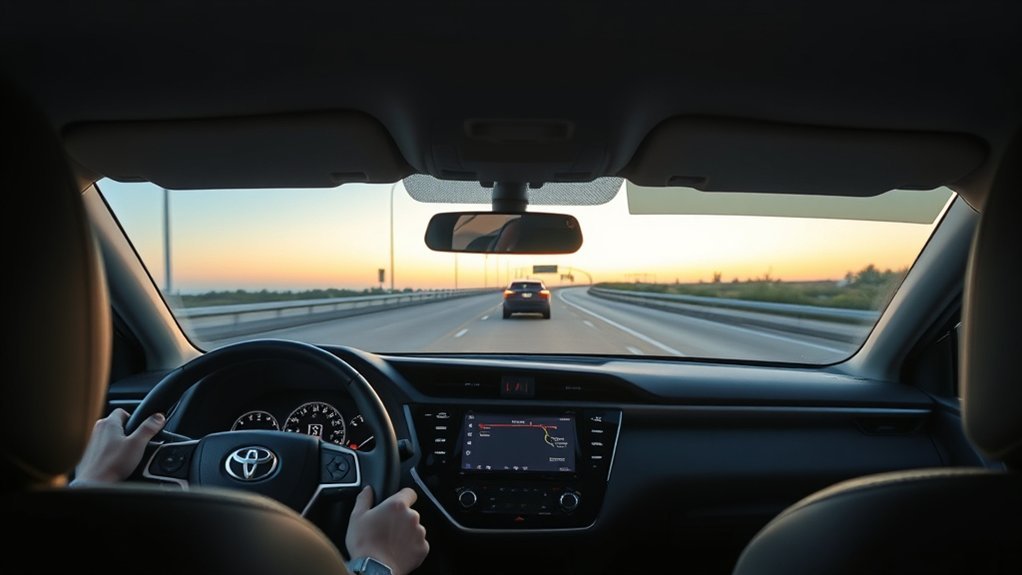
The RAV4’s lane-support systems are useful, but the names matter. Toyota commonly uses Lane Departure Alert with Steering Assist and Lane Tracing Assist. Some insurers may use broader terms such as “lane-keeping assist” or “lane-departure prevention,” but you should still document the Toyota feature names from your owner’s manual or build sheet.
- Lane Departure Alert with Steering Assist: Warns when the vehicle may unintentionally leave its lane and can provide gentle steering support under certain conditions.
- Lane Tracing Assist: Works with Dynamic Radar Cruise Control when lane markings or a preceding vehicle are detected to help keep the vehicle centered.
- Road-edge awareness: Toyota Safety Sense 2.5 can use lane markings and certain road-edge boundaries, depending on conditions.
- Insurance relevance: These systems may help reduce side-swipe, lane-drift, and run-off-road exposure when the driver remains attentive.
Be careful not to oversell these systems. They are driver-assistance features, not hands-free driving. Road markings, weather, glare, construction zones, snow, camera blockage, and sensor issues can limit performance. The driver remains responsible for steering, braking, and watching the road.
Can Dynamic Radar Cruise Control Lower RAV4 Insurance Risk?
Dynamic Radar Cruise Control can make highway driving smoother by helping maintain a preset distance from the vehicle ahead. On the 2025 RAV4, Toyota describes Full-Speed Range Dynamic Radar Cruise Control as an adaptive cruise control system intended for highway use and designed to maintain vehicle-to-vehicle distance when conditions are met.
From an insurance perspective, the main benefit is more consistent following distance. Rear-end crashes often begin with late braking, traffic waves, or a driver following too closely. Adaptive cruise control cannot remove that risk, but it can support better spacing when used correctly.
Do not list curve-speed management or any other adaptive-cruise function unless the owner’s manual or build data confirms it for your exact RAV4. Toyota Safety Sense versions differ, and an insurer needs the factory equipment tied to the VIN rather than a feature found on another Toyota model.
Warning: Never rely on Dynamic Radar Cruise Control in place of attentive driving. It may not react the way you expect to stopped vehicles, cut-ins, sharp curves, bad weather, faded lane markings, or blocked sensors.
Do RAV4 Brakes and Stability Systems Earn Insurance Credit?
The RAV4’s foundational safety systems matter because they are familiar to insurers and easier to verify by VIN. Toyota’s Star Safety System traditionally includes features such as Vehicle Stability Control, Traction Control, Anti-lock Brake System, Electronic Brake-force Distribution, Brake Assist, and Smart Stop Technology. These systems are not flashy, but they can be important in underwriting.
- Anti-lock Brake System: Helps the driver maintain steering control during hard braking.
- Electronic Brake-force Distribution: Helps distribute braking force based on load and conditions.
- Brake Assist: Can add braking force during panic stops when the system detects emergency braking.
- Vehicle Stability Control: Helps reduce loss of control in certain situations.
- Traction Control: Helps limit wheel spin during acceleration on slippery surfaces.
These systems may not always show up as a large separate discount because many are required or common on modern vehicles. Still, they support the RAV4’s overall risk profile and should be correctly listed on your policy.
Do RAV4 Parking Cameras and Sensors Affect Insurance?
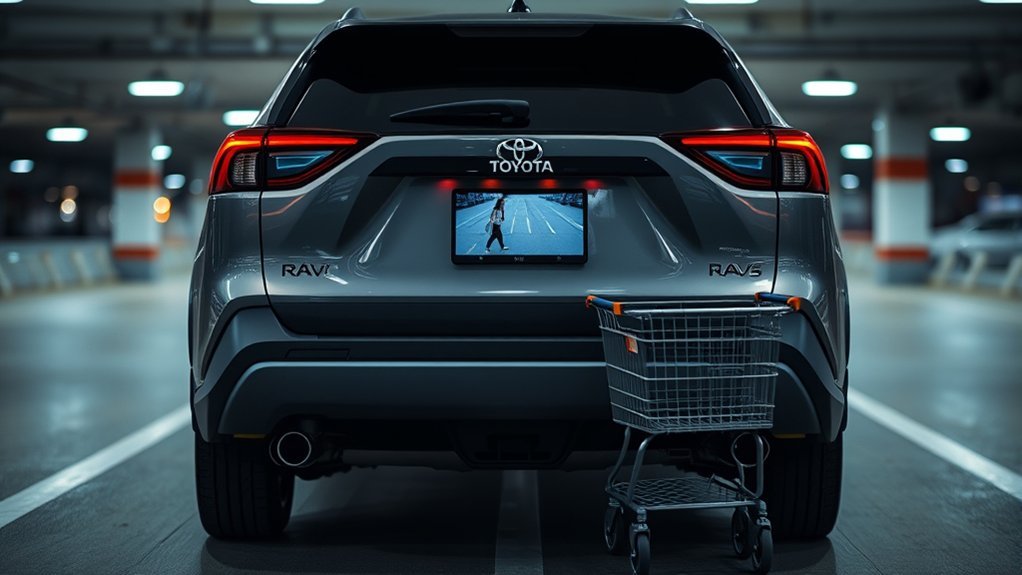
Parking and backing claims are usually lower-speed events, but they still affect premiums because bumpers, sensors, cameras, paint, and calibration can be expensive. RAV4 parking aids can help reduce these incidents when the vehicle is properly equipped and the driver uses them consistently.
Parking Cameras Overview
A rearview camera is standard on modern vehicles, but higher RAV4 trims and packages may add more helpful parking technology. Depending on model and equipment, this can include front and rear parking assist, Rear Cross-Traffic Alert, Blind Spot Monitor, Intelligent Clearance Sonar, and Panoramic View Monitor.
- Backup camera: Helps show the area behind the vehicle when reversing.
- Panoramic View Monitor: Provides a stitched overhead-style view on equipped models.
- Front and rear parking assist: Uses sensors to warn of nearby obstacles on equipped models.
- Rear Cross-Traffic Alert: Helps warn of traffic approaching from the side while backing up.
- Intelligent Clearance Sonar or automatic braking support: May help reduce contact risk at low speeds on equipped models.
Low-Speed Collision Prevention
Low-speed safety technology is most useful in parking lots, driveways, garages, and tight city spaces. These are the places where a small mistake can still create a claim: a scratched bumper, damaged liftgate, cracked sensor, or parking-lot backing crash.
The insurance benefit is not automatic. A backup camera, parking warning, Rear Cross-Traffic Alert, and rear automatic braking do different jobs. Warning-only systems alert you, while rear automatic braking can intervene. HLDI’s strongest low-speed claim evidence concerns rear automatic braking, not a camera alone. Sensor-equipped bumpers can also cost more to repair and calibrate, so better crash avoidance can coexist with higher repair severity.
How Do Airbags, LATCH, and Crash Ratings Matter?
Passive safety features protect occupants when a crash happens. These include airbags, seat belts, head restraints, crash structure, and child-seat anchors. Insurers may value these because they can reduce injury severity, medical payments, and personal injury protection exposure.
- Airbags: Front, side, curtain, knee, and seat-cushion airbags vary by vehicle design and model year.
- LATCH anchors: Help secure compatible child restraints when installed according to the child-seat and vehicle manuals.
- Seat belts and pretensioners: Work with airbags to help manage occupant movement during a crash.
- Crash-test ratings: Third-party ratings can affect consumer confidence and sometimes insurer risk models.
The IIHS 2025 Toyota RAV4 rating page shows a mixed, more useful picture than a generic “safe SUV” label. IIHS rates the small-overlap front test Good, the updated moderate-overlap test Marginal, the updated side test Acceptable, headlights Good, seat-belt reminders Good, and LATCH ease of use Good. Several ratings apply to 2019–2025 models. Use these ratings as supporting context, while recognizing that insurers rely on their own loss data, VIN data, coverage rules, and driver profile.
How Do You Prove Which RAV4 Safety Features You Have?
Most insurers start with your VIN. The VIN can identify the year, make, model, body style, and often the trim or factory equipment. However, VIN data is not perfect. Dealer-installed accessories, packages, repairs, disabled features, and calibration problems may not be obvious from a basic policy screen.
Keep these records in a single folder:
- VIN and trim: Your registration, policy declaration page, and Toyota build sheet or window sticker.
- Factory equipment: Documentation showing Toyota Safety Sense, airbags, ABS, stability control, anti-theft equipment, and driver-assistance features.
- Available package proof: Window sticker or dealer paperwork for Blind Spot Monitor, Rear Cross-Traffic Alert, Panoramic View Monitor, parking sensors, or premium safety packages.
- Service records: Repairs, windshield replacement, bumper repair, sensor replacement, and ADAS calibration invoices.
- Software or recall work: Dealer records showing completed updates or safety-related service campaigns.
- Photos: Clear photos of sensors, camera locations, dashboard warning lights off after startup, and feature menus if your insurer requests evidence.
Also verify your policy information. The National Association of Insurance Commissioners advises consumers to check the information used to determine the premium and ask about discounts for safety equipment and anti-theft devices. Treat this as general consumer guidance, then confirm current eligibility directly with your insurer.
[Products Worth Considering]

This anti-glare matte tempered glass screen protector is designed for compatible 2026 Toyota RAV4 and RAV4 Hybrid models with a 12.9-inch touchscreen. It helps reduce glare, resists scratches and fingerprints, and maintains responsive touch performance for a clearer, cleaner driving experience.

Designed for Toyota RAV4 models from 2013 through 2018, this three-piece windshield wiper set delivers clear, quiet performance for dependable visibility in changing weather. The precision-fit blades provide streak-free wiping, simple installation, and durable all-season use with reduced wind noise and consistent pressure across the windshield.

This ANRDDO wiper blade set is designed as a direct replacement for compatible Toyota RAV4 and Mazda 5 models, delivering reliable front and rear windshield coverage. The precision-tensioned springs and asymmetrical spoiler help maintain even pressure for a cleaner wipe, while the rubber compound is engineered for smooth, quiet performance in all seasons. It installs easily with U/J hook arms for a convenient fit and dependable visibility.
How Can You Maximize Eligible RAV4 Insurance Discounts?
The best way to maximize an eligible RAV4 safety discount is to help the insurer rate the correct vehicle and coverage. Use this order:
- Confirm the model year and system version. A 2025 RAV4 uses Toyota Safety Sense 2.5, while a 2026 RAV4 uses Toyota Safety Sense 4.0.
- Collect factory proof. Use the VIN, window sticker, Toyota build information, owner’s manual, and dealer paperwork.
- Confirm the systems work. Keep repair and calibration invoices after windshield, bumper, grille, camera, radar, or sensor work.
- Ask feature-specific questions. Name AEB, ABS, airbags, anti-theft equipment, blind-spot monitoring, rear cross-traffic alert, and rear automatic braking.
- Ask which coverage changes. Compare the dollar premium before and after the credit, not only the advertised percentage.
- Compare identical quotes. Use the same limits, deductibles, drivers, mileage, and optional coverages so the comparison is meaningful.
[Products Worth Considering]
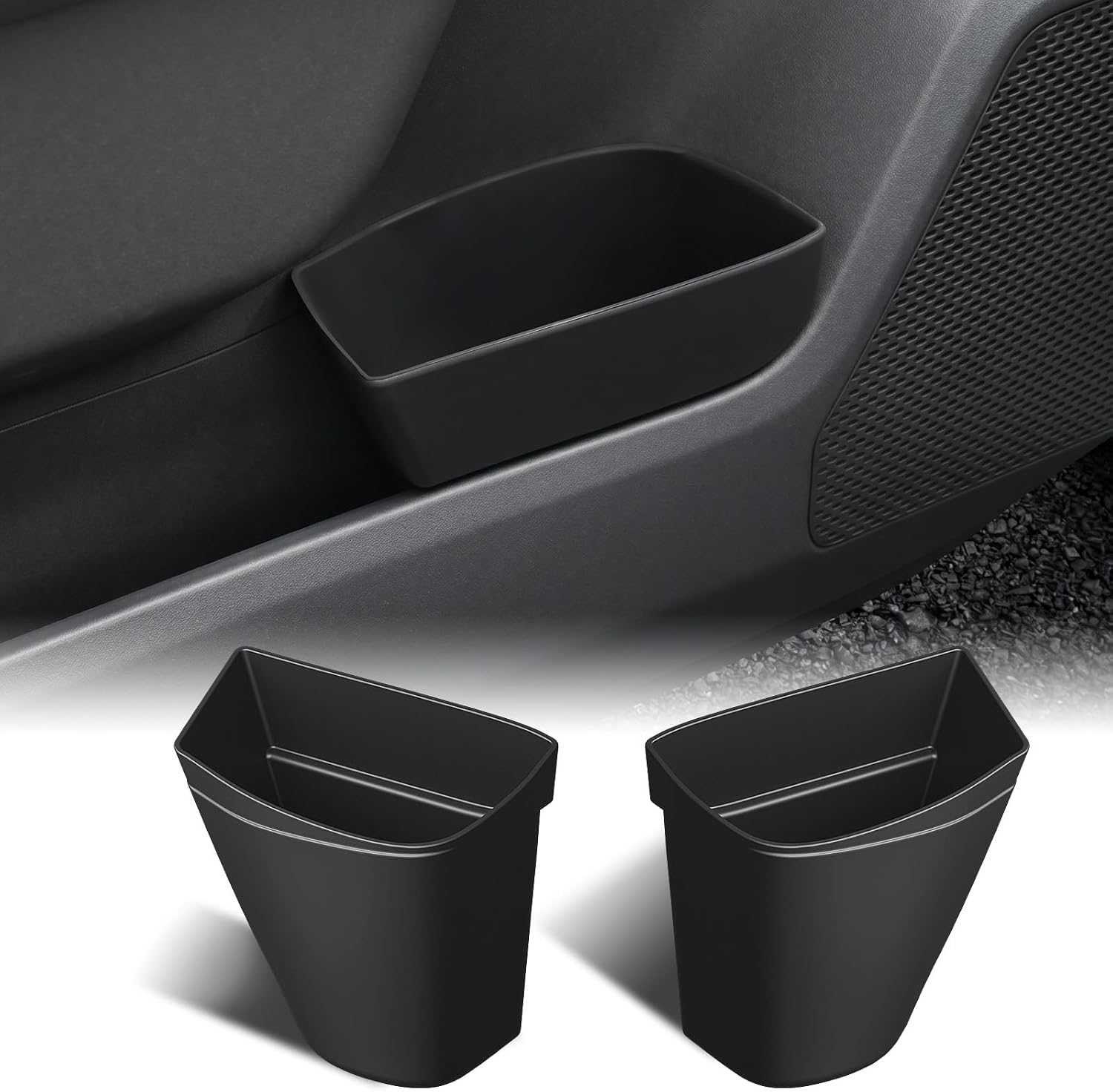
This custom-fit two-piece door side trash can set is designed for the front doors of the 2026 Toyota RAV4, helping keep the cabin organized while adding convenient extra storage. The open-top design allows quick, one-handed disposal of trash and other small items, while the snug silicone construction stays secure without glue and is easy to remove and rinse clean.

This custom-fit cargo net is designed for the 2026 Toyota RAV4 to help keep your trunk organized and secure during everyday driving. It helps hold groceries, tools, and smaller items in place while reducing rolling and shifting, and the heavy-duty carabiners support reliable installation. The net also offers convenient storage and easy access for SUVs and other compatible vehicles.

This passenger storage organizer mat is designed to fit the 2026 Toyota RAV4 for a clean, factory-style look with no gaps. It helps protect the original console area from scratches and daily wear while giving you a handy place to store phones, sunglasses, wallets, coins, and cards. Made from durable silicone, it stays in place, reduces rattling, and is easy to remove and clean.
Maintain Active Safety Systems
Safety features only help if they work. Cameras, radar sensors, parking sensors, and blind-spot sensors can be affected by damage, dirt, misalignment, windshield replacement, bumper repairs, lift kits, aftermarket accessories, and certain weather conditions.
- Keep the windshield area in front of the camera clean.
- Clean radar and parking sensor areas after mud, snow, or road salt.
- Do not ignore warning lights or “system unavailable” messages.
- Ask for ADAS calibration documentation after windshield, bumper, grille, or sensor repairs.
- Use Toyota-approved service information or a qualified repair facility when sensors are repaired or replaced.
- Keep receipts for completed recalls, service campaigns, and safety-system repairs.
Document Safety Upgrades
Factory-installed systems are usually easiest to verify. Dealer-installed or aftermarket upgrades require better documentation. If you added a dash camera, parking sensor, alarm, tracking device, or other equipment, keep the invoice, installer information, model number, and installation date. A dash camera may help document an incident, but do not assume it qualifies for a vehicle-equipment discount unless the insurer confirms it.
When you call your insurer, ask direct questions:
- “Do you show my exact RAV4 trim and safety package?”
- “Do you offer a credit for automatic emergency braking or forward-collision warning?”
- “Do you offer a discount for airbags, ABS, electronic stability control, or anti-theft equipment?”
- “Do Blind Spot Monitor, Rear Cross-Traffic Alert, or parking sensors affect my rate?”
- “Would proof of ADAS calibration or factory equipment change the premium?”
- “Are these credits applied to the full premium or only to certain coverages?”
Note: Insurance discounts often apply only to certain coverages. For example, anti-theft equipment may affect comprehensive coverage, while airbags may affect injury-related coverages. Ask where the credit appears on your policy.
Frequently Asked Questions
What RAV4 safety features may affect insurance?
Features that may affect insurance include automatic emergency braking, forward-collision warning, airbags, ABS, electronic stability control, approved anti-theft equipment, blind-spot monitoring, rear cross-traffic alert, and rear automatic braking. A backup camera or parking warning may improve safety without earning a separate discount. Exact eligibility depends on the insurer, state, model year, VIN, and coverage.
How much can RAV4 safety features lower insurance?
There is no universal RAV4 discount. Published insurer examples show why coverage matters: GEICO says factory ABS may qualify for 5% off certain coverages, while State Farm says qualifying factory passive restraints may receive up to 40% off medical-related coverage. Your insurer, state, policy, and vehicle data determine the actual dollar savings.
What is the difference between 2025 and 2026 RAV4 safety systems?
The 2025 U.S. RAV4 has Toyota Safety Sense 2.5 as standard. The redesigned 2026 RAV4 has Toyota Safety Sense 4.0 as standard, with updated detection capabilities. Optional equipment still varies by grade and package, so verify the exact system and features with the VIN, window sticker, build data, and owner’s manual.
Does the RAV4 have collision avoidance?
Many late-model RAV4s include Toyota’s Pre-Collision System, which can warn the driver and provide automatic emergency braking under certain conditions. Blind Spot Monitor, Rear Cross-Traffic Alert, parking assistance, and rear automatic braking may be available depending on model year, grade, and package. These are driver-assistance systems, not autonomous driving.
Does Toyota Safety Sense guarantee an insurance discount?
No. Toyota Safety Sense can improve the vehicle’s risk profile, but an insurer may include that benefit in the base vehicle rate instead of showing a separate discount. Ask whether the company recognizes forward-collision warning, automatic emergency braking, lane-departure prevention, adaptive cruise control, or a bundled ADAS package, and ask which coverage receives any credit.
Is a Toyota RAV4 expensive to insure?
A RAV4 premium depends on location, driver age, driving record, claims history, annual mileage, coverage limits, deductibles, model year, grade, repair costs, insurer, and credit-based insurance score where permitted. Safety features are only one rating factor, so compare quotes with identical drivers, limits, deductibles, and optional coverages.
How do I prove my RAV4 has the right safety features?
Use the VIN, registration, window sticker, Toyota build information, owner’s manual, dealer paperwork, and service records. Keep calibration invoices after windshield, bumper, grille, camera, radar, blind-spot sensor, or parking-sensor repairs. Ask the agent to correct the policy’s equipment record if it does not match your vehicle.
Can ADAS repair costs offset insurance savings?
Yes. Cameras, radar units, parking sensors, blind-spot sensors, and related bumper or windshield parts can raise repair and calibration costs. HLDI data show that some driver-assistance systems reduce claim frequency while increasing average claim severity. That tradeoff is one reason a safety feature may not reduce every owner’s total premium.
Conclusion
RAV4 safety technology can reduce crash exposure, but accurate model-year and VIN documentation is what makes the insurance conversation useful. Confirm whether your vehicle has Toyota Safety Sense 2.5 or 4.0, then verify AEB, airbags, ABS, anti-theft equipment, blind-spot monitoring, rear cross-traffic alert, rear automatic braking, and other package-dependent features.
Ask the insurer to read back the equipment on the policy, identify every eligible credit, and explain which coverage changes. Keep calibration invoices after glass, bumper, grille, camera, radar, or sensor repairs. Finally, compare quotes using the same limits and deductibles. The goal is not to claim that every RAV4 should be cheaper; it is to make sure your exact vehicle receives every credit for which it qualifies.
Sources
- Toyota USA Newsroom: 2025 Toyota RAV4 — confirms Toyota Safety Sense 2.5 as standard on the 2025 RAV4.
- Toyota USA Newsroom: 2026 Toyota RAV4 — confirms the sixth-generation model and Toyota Safety Sense 4.0 as standard.
- Toyota Safety Sense Vehicle Safety Features — explains the 2025 RAV4’s Toyota Safety Sense feature names and functions.
- NHTSA Driver Assistance Technologies — distinguishes warning, intervention, and driving-control assistance systems.
- IIHS 2025 Toyota RAV4 Ratings — provides RAV4 crashworthiness, crash-avoidance, headlight, restraint, and LATCH ratings.
- IIHS-HLDI: Safety Benefits Stack Up From Driver Assistance Features — provides 2026 insurance-claim evidence on bundled driver-assistance systems and repair-severity tradeoffs.
- GEICO Car Insurance Discounts — provides a current example of a factory ABS discount on certain coverages and warns that availability is state- and fact-specific.
- State Farm Auto Insurance Discounts — provides current examples for vehicle-safety, passive-restraint, and anti-theft savings.
- NAIC: Tips for Saving on Auto Insurance — offers general consumer guidance on checking rating information and asking about safety-equipment discounts.