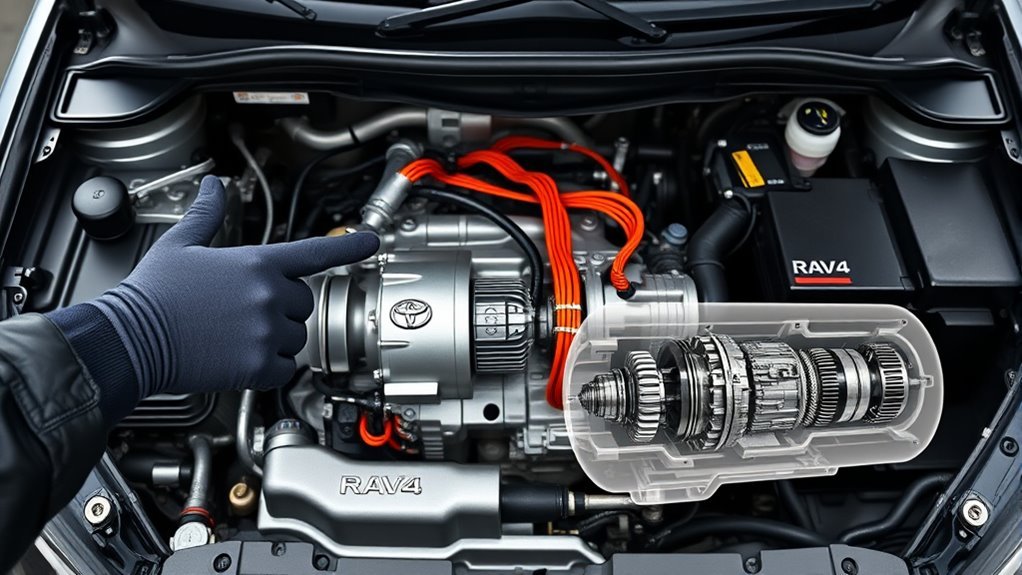
Last updated: July 15, 2026
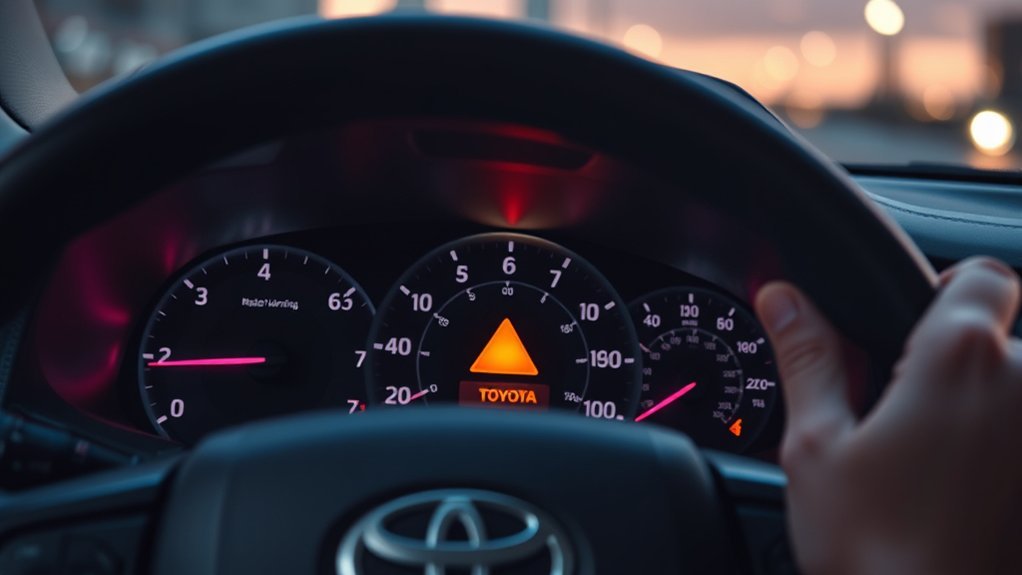
On a 2006 Toyota RAV4, a steady VSC warning light means the vehicle has detected a fault in a system used by Vehicle Stability Control. Do not confuse it with the flashing slip indicator, which shows that traction or stability control is actively intervening. Check the warning-light pattern, brake lights, brake fluid, tires, battery condition, and engine codes, then use a scanner that can read the ABS/VSC module.
Quick Answer
A steady VSC warning on a 2006 Toyota RAV4 usually means the monitored stability-control systems are unavailable because a fault was detected. Check the parking brake, brake fluid, brake lights, tire condition, and battery condition. Tighten the fuel cap only when the check-engine light is also on. Then scan both the engine and ABS/VSC modules before clearing codes or replacing parts.
Key Takeaways
- A flashing slip indicator shows active traction or stability-control intervention. A steady VSC warning after startup indicates a monitored fault.
- If the ABS light is on but the red BRAKE warning is off, conventional braking may remain, but ABS, brake assist, traction control, and VSC may be unavailable.
- A basic engine-code reader may miss the cause. Use a scanner that reads ABS/VSC and chassis codes.
- Start with brake lights, brake fluid, tires, related fuses, visible wheel-speed sensor wiring, battery condition, and any engine codes.
- Stop driving if the red BRAKE warning is on with ABS, the pedal feels abnormal, the brake lights fail, or the vehicle feels unstable.
At a Glance
| Warning Pattern | Flashing slip indicator means active intervention; steady VSC warning means a fault |
| First Checks | Other warning lights, brake lights, brake fluid, parking brake, tires, battery condition, and engine codes |
| Scanner Needed | A tool that reads engine, ABS/VSC, chassis, and communication codes |
| Stop Driving When | The red BRAKE warning is on with ABS, the pedal feels abnormal, brake lights fail, or the vehicle feels unstable |
What the VSC Light on a Toyota RAV4 Means
VSC stands for Vehicle Stability Control. Toyota describes the 2006 RAV4 system as integrated control of anti-lock braking, brake assist, traction control, engine control, and electric power steering. Its purpose is to help limit skidding when the vehicle corners or the driver steers abruptly. See the official Toyota 2006 RAV4 manuals page and owner’s manual PDF.
For this model year, Toyota states that a VSC warning that remains on or appears while driving indicates a problem in one or more monitored systems. Braking may still be available, but the affected electronic assistance may not work. If the ABS light is also on, expect conventional braking only unless the red BRAKE warning is present.
Warning: If the red brake warning light is on, the brake pedal feels soft or hard, the vehicle pulls during braking, the brake lights do not work, or the RAV4 feels unstable, stop in a safe place and arrange professional service. Do not treat that as a simple VSC reset.
Quick Checks Before You Open the Hood
Before removing parts, work through the simple checks that can trigger or accompany VSC, ABS, and check-engine warnings:
- Identify the exact indicator. A flashing slip indicator means the system is responding to wheel slip. A steady VSC warning after the startup self-check indicates a monitored fault.
- Tighten the fuel cap only if the check-engine light is also on. Toyota notes that a loose cap can trigger the malfunction indicator lamp. Scan the engine codes rather than assuming the cap caused the VSC warning.
- Release the parking brake fully. Confirm the lever or pedal is fully released and the brake warning light is not staying on.
- Check brake fluid. The fluid should be between MIN and MAX in the reservoir. Low fluid may indicate worn brake pads or a leak.
- Test the brake lights. Ask a helper to watch the rear lamps while you press the pedal. If the brake lights do not respond correctly, inspect the stop-light switch circuit before chasing wheel sensors.
- Check tire pressure and tire match. Incorrect pressure, mismatched tire sizes, uneven wear, or a temporary spare can affect wheel-speed comparisons.
- Look for recent work. If the warning appeared after brake, wheel-bearing, suspension, tire, or battery work, recheck disturbed connectors, tire sizes, and system voltage.
- Check battery and charging condition. Do this when several warning lights appeared together, the engine cranks slowly, or low-voltage and communication codes are stored.
Pro Tip: Write down exactly which lights are on: VSC, ABS, BRAKE, check engine, 4WD, tire pressure, or traction control. That pattern helps narrow the fault before parts are replaced.
Read OBD-II and ABS/VSC Codes, Including Stop-Light Switch Codes
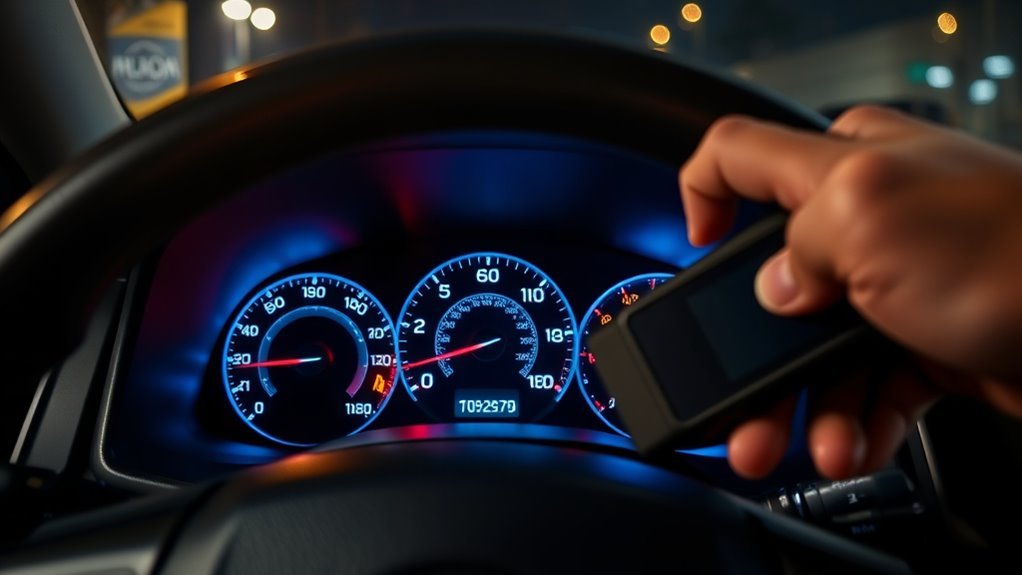
Use a scan tool that can read ABS, VSC, traction-control, and chassis codes. A cheap engine-only OBD-II reader may show P-codes such as misfires or evaporative-emissions faults, but it may miss C-codes stored in the skid-control/ABS module.
Record every code before clearing anything. Save any available freeze-frame or live data, note system voltage, and record whether the warning returns immediately or only after the vehicle moves. Use the code and data to choose the first circuit to test.
| Example Code or Symptom | Likely Area | What to Check First |
|---|---|---|
| C1249/49 [VERIFY] | Stop-light switch circuit | Brake lights, stop-light switch, STOP fuse, switch wiring, skid-control ECU input |
| Wheel-speed sensor code | ABS/VSC sensor input | Sensor connector, wiring harness, hub/bearing tone ring, debris or corrosion |
| Check-engine P-code with VSC | Engine or emissions fault | Fix the engine code first, then retest VSC |
| Low-voltage or communication code | Power, ground, network, or module communication | Battery, alternator output, fuses, grounds, connectors |
Note: [VERIFY: confirm the C1249/49 definition for the vehicle’s VIN and drivetrain in Toyota Technical Information System.] Do not replace a part until the code definition and circuit test are confirmed. A stop-light switch fault path can include the switch, STOP fuse, wiring, connectors, and skid-control ECU input.
[Products Worth Considering]
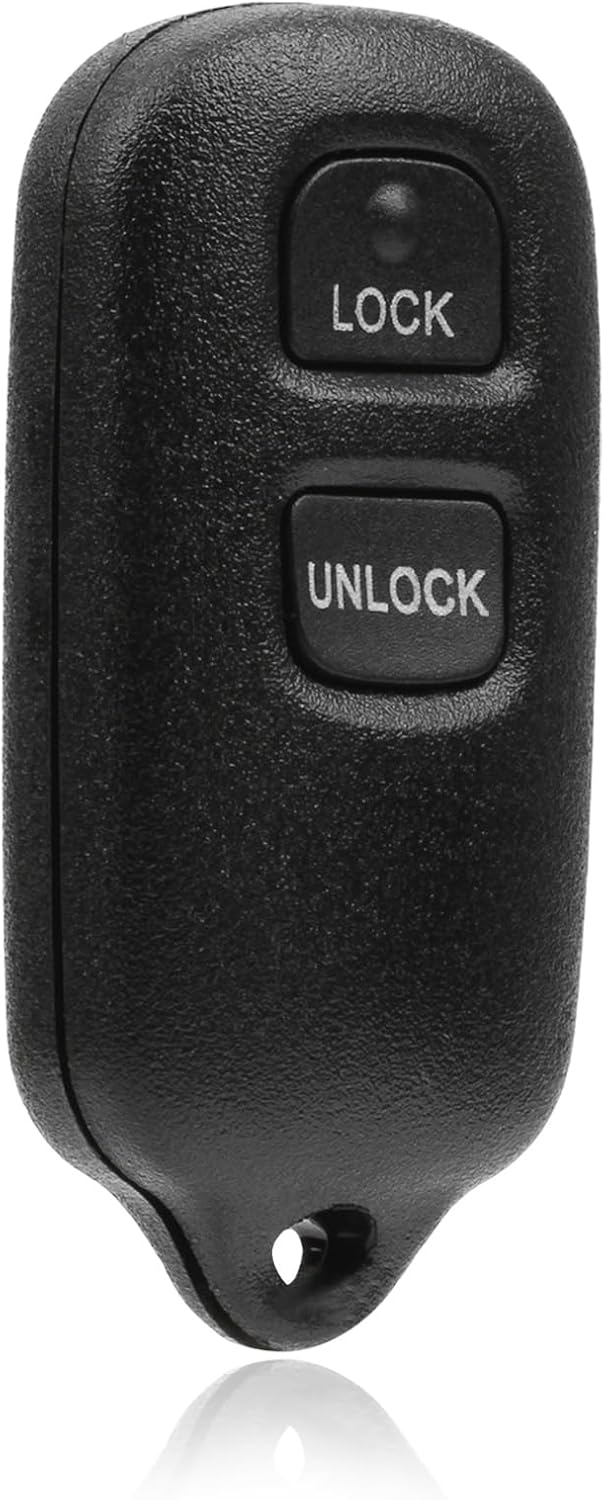
This USARemote key fob replacement provides convenient keyless entry for a wide range of Toyota and Scion vehicles. It is programmable, ready to use, and designed to help restore remote locking and unlocking functionality for compatible models. The compact black remote offers dependable everyday use for drivers needing a simple replacement solution.

This front left door lock actuator assembly is a direct replacement for select Toyota and Lexus models, helping restore reliable power door locking and latch operation. Built as an OEM-quality aftermarket part, it includes the latch assembly and is factory tested for dependable performance. It is designed for driver-side front door fitment across a wide range of compatible vehicles and comes with replacement support for added peace of mind.

This oxygen O2 sensor set is designed for select Toyota Camry and RAV4 models with 2.4L engines, providing upstream and downstream replacement coverage in one package. Built to OEM specifications for plug-and-play installation, it helps improve fuel efficiency, support accurate air-fuel monitoring, and restore reliable engine performance. The stainless steel and heat-resistant construction is made for long-lasting durability and stable operation.
Clear Codes Safely With a Scanner
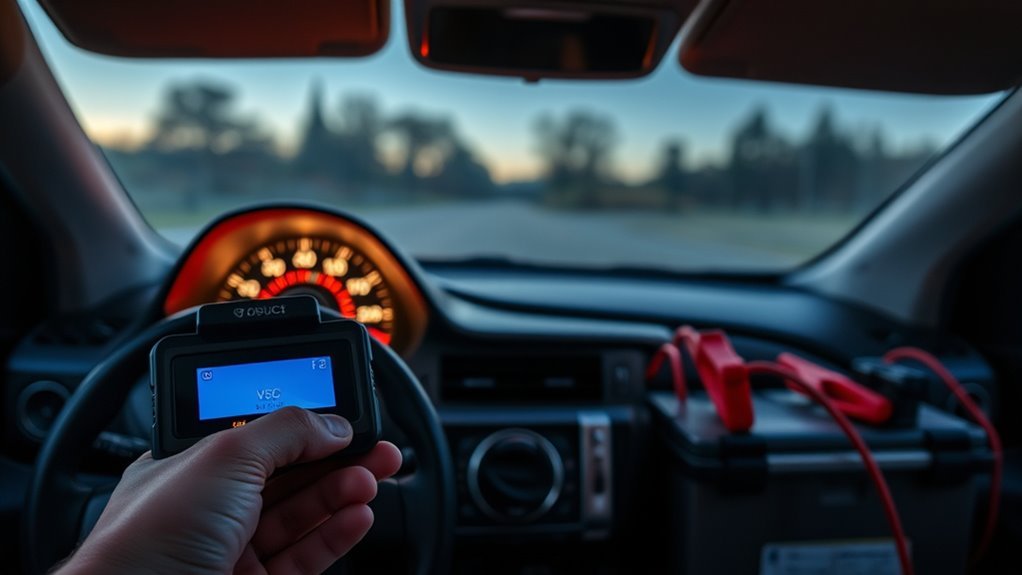
Clear codes only after you have recorded them and fixed the likely cause. If you clear the codes first, you may erase the information needed to diagnose the fault.
The safest method is to use an ABS/VSC-capable scanner:
- Read and save all engine, ABS, VSC, and communication codes.
- Repair the confirmed fault or complete the basic checks.
- Clear codes with the scan tool.
- Restart the vehicle and confirm which lights return.
- Road-test at low speed in a safe area.
- Rescan to confirm no pending or stored codes returned.
Disconnecting the battery may erase some engine memory and radio settings, but it does not repair the fault and may not clear ABS/VSC codes. Avoid jumper-wire reset methods unless you are following the exact Toyota service procedure for the vehicle.
Common Causes of VSC/ABS Warnings on a 2006 RAV4
The VSC system depends on several other systems. That is why the warning may appear even when the stability-control computer is not the failed part. Start with the cheapest and most visible checks, then move to scan-tool diagnosis.
Brake Pedal Switch and Stop-Light Circuit
The stop-light switch tells the skid-control system when the brake pedal is pressed. If that signal is missing or implausible, the system may disable ABS-related assistance and store a stop-light switch circuit code. Test the circuit before replacing the switch.
Check the following:
- Do the rear brake lights turn on when the pedal is pressed?
- Do they turn off when the pedal is released?
- Is the STOP fuse intact?
- Is the switch connector loose, corroded, or damaged?
- Has the switch backed out of adjustment near the brake-pedal bracket?
- Does a multimeter show the switch opening and closing correctly?
Wheel-Speed Sensors
Wheel-speed sensors report the speed of each wheel to the ABS/VSC system. If one sensor drops out, reads erratically, or has damaged wiring, the system may not know whether a wheel is slipping or locking.
Inspect each wheel area for:
- Broken or stretched sensor wiring
- Loose or corroded connectors
- Rust, debris, or damage at the sensor mounting area
- Hub or bearing damage affecting the tone ring or magnetic encoder
- Sensor damage after brake, bearing, or suspension work
Tires, Wheels, and Pressure
VSC can be confused when the tires do not behave evenly. Check all four tires for correct pressure, matching size, similar tread depth, and correct load rating. A temporary spare, mismatched tires, or very uneven wear can affect ABS and traction-control calculations.
Engine or Emissions Faults
If the check-engine light is on with the VSC warning, read the engine codes as well as the ABS/VSC codes. Toyota’s 2006 RAV4 owner information confirms that an empty fuel tank or loose fuel cap can cause a temporary malfunction-indicator-lamp condition. Other engine or throttle faults may also affect the torque-control information used by stability control, so diagnose the stored codes instead of guessing.
Battery, Fuses, and Ground Connections
Low system voltage or poor power and ground connections can produce multiple electronic codes. Test the battery and charging system when low-voltage or communication codes are present. Also inspect the STOP fuse, ABS-related fuses, body grounds, and connectors near the brake actuator and wheel wells.
ABS Actuator, Skid-Control ECU, or Calibration Issues
If the scan tool points to internal actuator faults, communication faults, steering-angle/yaw-rate calibration, or zero-point calibration, this is usually no longer a simple driveway repair. Some repairs require Toyota Techstream or equivalent professional equipment.
Do not replace wheel sensors, brake switches, or ABS modules by guesswork. Read the codes, test the named circuit, repair the fault, then clear and verify.
Why a Brake Pedal Switch Fault Can Trip VSC
The brake pedal switch is more than a brake-light part. It helps the ABS/VSC system know whether you are braking. When the switch signal is missing, stuck, or electrically implausible, the skid-control ECU may disable stability-related functions because it cannot make safe control decisions.
A stop-light-switch circuit fault can be caused by:
- A failed brake-light switch
- A switch that is out of adjustment
- A blown STOP fuse
- Damaged wiring between the switch and skid-control ECU
- Corrosion or looseness in the connector
- A less common internal ABS/skid-control ECU issue
That is why the first test is simple: confirm whether the brake lights work normally. If they do not, repair that circuit before replacing wheel sensors.
Test and Replace the Brake Pedal Switch: Step-by-Step
If codes and brake-light behavior point to the brake pedal switch, use this process:
- Park safely. Set the parking brake, shift to Park, and turn the ignition off.
- Check brake-light operation. Have a helper watch the rear lights while you press and release the brake pedal.
- Inspect the switch. Look under the dash near the brake pedal arm. Check that the connector is seated and the switch is mounted firmly.
- Check the fuse. Inspect the STOP fuse before replacing the switch.
- Test the switch. Use the Toyota wiring diagram to identify the correct terminals, then confirm that continuity changes as the plunger moves. Do not guess at terminal functions.
- Replace only if confirmed faulty. Follow the model-specific service procedure for removal, installation, and clearance adjustment. Confirm that the brake lights switch on and off with the correct pedal movement.
- Verify the repair. Confirm brake lights work, clear codes with an ABS/VSC-capable scanner, and road-test carefully.
Warning: Incorrect brake-switch adjustment can leave brake lights stuck on, prevent brake lights from working, affect shift-lock operation, or keep ABS/VSC faults active. Test the lights before driving.
[Products Worth Considering]

This engine water pump kit is designed to help maintain reliable cooling performance across a wide range of compatible Toyota, Lexus, Scion, and Pontiac vehicles. Built with aluminum and tested for leak-free operation, it offers a direct replacement solution that supports engine efficiency and long-term service life. The kit includes a professional water pump and gasket for a convenient installation-ready repair.
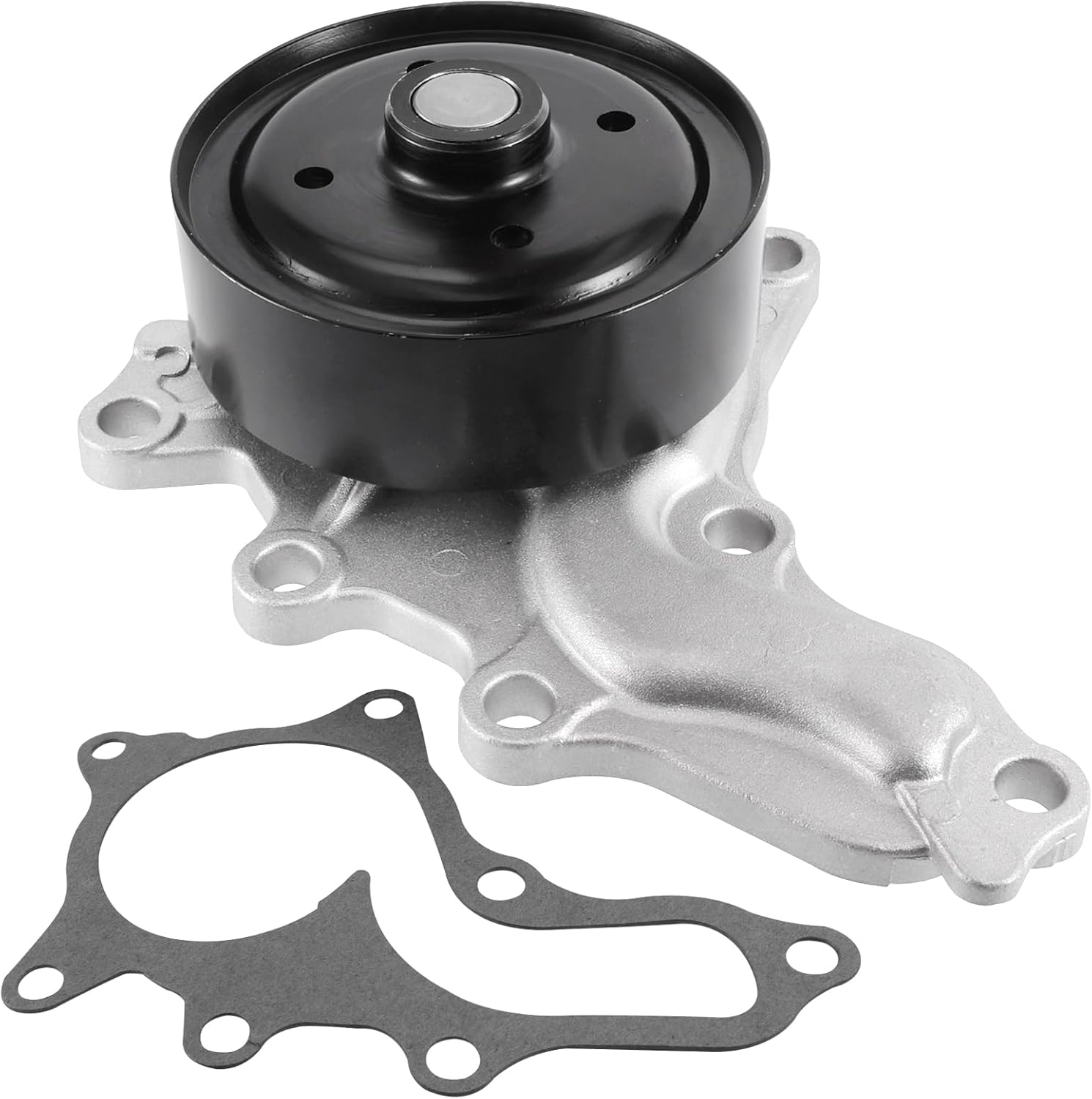
This AW6252 water pump is designed for a wide range of Toyota, Scion, and Lexus applications, helping maintain reliable engine cooling across compatible models. It features case hardened bearings for durability, a graphite-impregnated gasket for a secure seal, and 100% function and leakage testing for dependable performance. Built in TS16949 certified facilities, it offers a strong replacement option backed by service support.

Application:The brake rubber stopper can be replaced by the part number 90541-06036, 9054106036, which is suitable for Toyota Avalon 1995-2002, for Camry 1987-2011, for MR2 1990-1995, for Lexus ES330 2004-2006, for LS500 2018-2022, for RX400h 2006-2000, for Scion iM 2016, for TC 2005-2016 and other models. Please check your OEM number and car model before purchasing to ensure proper use
Check Wheel-Speed Sensors, Wiring, and Connectors
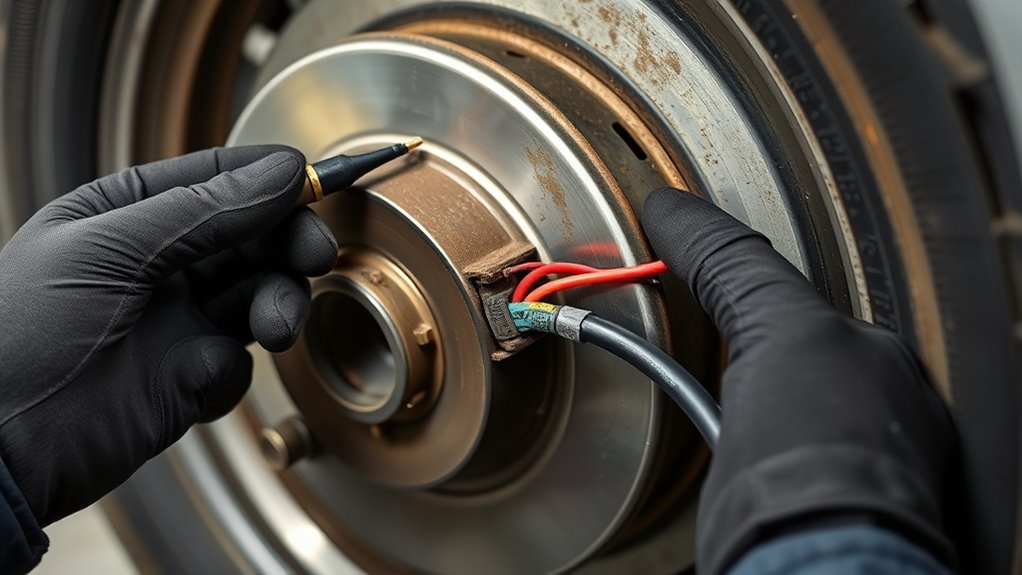
If your scan tool identifies a specific wheel-speed sensor, inspect that corner before buying parts. Many sensor faults are caused by damaged wires, corrosion, poor connections, or hub/bearing issues rather than the sensor alone.
- Raise the vehicle safely. Use a level surface and jack stands. Never rely on a jack alone.
- Find the sensor harness. Follow the wire from the hub area to the body connector.
- Inspect the wire. Look for rubbing, cracking, stretching, or damage from road debris.
- Open the connector. Check for water, corrosion, bent pins, or loose locking tabs.
- Inspect the sensor mounting area. Rust, debris, or bearing play can affect the signal.
- Compare live data. If your scanner supports it, compare wheel-speed readings while the wheels rotate at low speed.
- Replace only the confirmed fault. Clear codes and road-test after repair.
If the live-data reading drops out only while turning or going over bumps, suspect an intermittent harness or connector problem.
When to DIY vs. When to Visit a Mechanic or Dealer
Some VSC causes are reasonable DIY jobs. Others require professional diagnostic tools, lift access, wiring diagrams, and calibration procedures.
When to DIY
You can usually handle the first round of checks yourself if the vehicle brakes and steers normally:
- Tighten or replace a loose fuel cap when the check-engine light is related to an evaporative-emissions fault
- Check brake fluid, tire pressure, and tire match
- Confirm brake-light operation
- Inspect the brake pedal switch connector
- Inspect visible wheel-speed sensor wiring
- Check fuses related to STOP, ABS, and brake control
- Replace a confirmed faulty brake-light switch or accessible wheel-speed sensor if you are comfortable with the repair
When to See a Dealer or Qualified Mechanic
Get professional help when:
- The red brake warning light is on
- The brake pedal feels soft, hard, low, or inconsistent
- The RAV4 pulls, skids, or feels unstable
- Brake lights do not work and you cannot repair the circuit immediately
- Codes point to the ABS actuator, skid-control ECU, yaw-rate sensor, steering-angle sensor, or calibration
- Multiple communication or low-voltage codes return after battery and charging checks
- The VSC, ABS, and 4WD lights return immediately after clearing
- You do not have an ABS/VSC-capable scanner
| Situation | Best Action |
|---|---|
| VSC only, no driveability symptoms | Perform basic checks and scan ABS/VSC codes |
| VSC + check engine | Diagnose and repair engine codes first |
| VSC + ABS | Scan ABS/VSC module and inspect brake switch, wheel sensors, fuses, and wiring |
| VSC + ABS + red BRAKE light | Stop driving and arrange service |
| Actuator, ECU, calibration, or communication code | Use a qualified shop or Toyota dealer |
Verify the Repair and Prevent the VSC Light From Returning
A repair is not complete just because the light turns off for a moment. Confirm that the system stays clear after a restart and road test.
- Clear codes with an ABS/VSC-capable scanner.
- Restart the vehicle and check whether the lights return immediately.
- Test brake lights again.
- Drive at low speed in a safe area and confirm no warning lights return.
- Rescan for pending, history, or current codes.
- Recheck the repaired connector or part after the road test.
To reduce repeat warnings, keep all four tires at the specified pressure and matching size, repair brake-light and brake-fluid problems promptly, protect wheel-speed sensor wiring during brake or suspension work, and diagnose check-engine lights instead of clearing them without repair.
Frequently Asked Questions
Why is the VSC light on in my RAV4?
On a 2006 RAV4, a steady VSC warning after the startup check indicates a fault in a monitored stability-control system. A flashing slip indicator shows active intervention. Check the other warning lights, then scan the ABS/VSC module.
How do you fix the VSC light on a Toyota RAV4?
Fix the stored fault rather than resetting the light. Check the parking brake, brake fluid, brake lights, tire match, and battery condition. If the check-engine light is on, check the fuel cap and read engine codes. Then scan the ABS/VSC module and test the circuit named by the code.
Can I drive my Toyota with the VSC light on?
You may be able to drive cautiously if the red brake warning light is off and braking feels normal, but electronic assistance may be unavailable. Stop driving if the red BRAKE warning is on with ABS, the pedal feels abnormal, the brake lights do not work, or the vehicle feels unstable.
Will disconnecting the battery reset the VSC light?
Disconnecting the battery may temporarily erase some memory, but it does not repair the fault and may not clear ABS/VSC codes. Read and save the codes first, repair the cause, then clear and verify the system with a compatible scanner.
What does C1249/49 mean on a Toyota?
[VERIFY: confirm the C1249/49 definition for the exact vehicle in Toyota TIS.] If it identifies the stop-light switch circuit, check brake-light operation, the STOP fuse, switch, wiring, connectors, and skid-control ECU input.
Why did the VSC light come on with the check-engine light?
The stability system uses engine-torque information, so an engine-control fault can appear with a VSC warning. Read both the engine and ABS/VSC modules. A loose fuel cap can explain the check-engine light, but it does not explain every warning.
Conclusion
A steady VSC warning is a system-level fault message, not the name of a failed part. On a 2006 RAV4, identify the warning pattern, check the simple safety items, scan the engine and ABS/VSC modules, test the named circuit, and clear codes only after repair. If the red BRAKE warning is on with ABS, the pedal feels abnormal, the brake lights fail, or the vehicle feels unstable, stop driving and arrange qualified service.
Sources
- Toyota Owners: 2006 RAV4 manuals and warranties: official owner-manual access and Toyota owner documentation.
- Toyota 2006 RAV4 Owner’s Manual PDF: VSC, ABS, warning-light, tire, and safety information for the 2006 RAV4.
- Toyota Technical Information System: model-specific service information, wiring diagrams, diagnostic code definitions, and test procedures.
- NHTSA FMVSS No. 126 Final Rule: federal background on electronic stability control systems and warning indicators.
- Toyota 2006 RAV4 Scheduled Maintenance Guide: maintenance and inspection guidance relevant to brakes, tires, and safe operation.