Last updated: July 31, 2026 | Scope: U.S.-market Toyota RAV4 models. Equipment names and availability can differ in other markets.
Toyota RAV4 AWD torque distribution is automatic and depends on the model year and powertrain. On 2013–2025 gas AWD models, the system can favor the front wheels in light driving and send as much as 50 percent of engine torque to the rear axle when needed. Select 2019–2025 gas models add left-to-right rear torque distribution. RAV4 Hybrid, RAV4 Prime, and current RAV4 Plug-in Hybrid AWD models instead use a separate rear electric motor, with no mechanical driveshaft connecting the front and rear axles.
Quick Answer
A gas RAV4 with Dynamic Torque Control AWD can vary its front-to-rear torque distribution from front-wheel drive to as much as a 50:50 split. Dynamic Torque Vectoring AWD can also vary the rear torque between the left and right wheels. Hybrid and plug-in-hybrid AWD models power the rear axle with an independent electric motor rather than a conventional front-to-rear driveshaft.
Key Takeaways
- RAV4 AWD is not one system. Gas, hybrid, and plug-in-hybrid models use different rear-drive hardware.
- Dynamic Torque Control AWD manages front-to-rear torque but does not independently vector engine torque between the rear wheels.
- Dynamic Torque Vectoring AWD can send up to 50 percent of engine torque rearward and vary that rear torque from left to right.
- Electronic On-Demand AWD uses a dedicated rear electric motor and has no traditional driveshaft between the front and rear axles.
- The dashboard torque display is a relative activity indicator, not a calibrated percentage meter.
- AWD improves drive traction, but tires, speed, braking distance, ground clearance, and driver judgment still set the limits.
2026 update: The U.S. RAV4 lineup now uses hybrid and plug-in-hybrid powertrains only. Front-wheel drive remains available on selected hybrid grades, but every 2026 RAV4 equipped with AWD uses Electronic On-Demand AWD and a dedicated rear electric motor. Mechanical Dynamic Torque Control and Dynamic Torque Vectoring systems mainly apply to 2025-and-earlier gas RAV4 models.
How this guide was checked: System names, model applications, torque limits, and fuel-economy figures were compared with Toyota U.S. technical materials, Toyota owner information, and FuelEconomy.gov. Trim availability can change by model year, so use the original window sticker or VIN-based build record for a specific vehicle.
Which AWD System Does Your RAV4 Have?
Start with the model year and powertrain. An AWD badge confirms that the vehicle can drive the rear wheels, but it does not identify whether the rear axle uses a basic mechanical coupling, torque-vectoring clutches, or an electric motor.
| Model Example | AWD System | Rear-Drive Hardware | Torque-Control Summary |
|---|---|---|---|
| 2013–2018 gas RAV4 AWD | Dynamic Torque Control AWD | Transfer unit, driveshaft, electromagnetic coupling, and rear differential | Can vary from front-wheel drive to a 50:50 front/rear split. Many models also have a low-speed AWD Lock request. |
| 2019–2025 standard gas RAV4 AWD | Standard mechanical AWD / Dynamic Torque Control AWD | Mechanical front-to-rear driveline and rear coupling | Can send up to 50 percent of engine torque to the rear axle but does not independently vector engine torque between the rear wheels. |
| 2019–2025 select gas Limited, Adventure, or TRD Off-Road models, depending on year | Dynamic Torque Vectoring AWD with Rear Driveline Disconnect | Mechanical AWD, disconnect clutches, and rear left/right torque-control clutches | Can send up to 50 percent of engine torque rearward and vary the rear torque between the left and right wheels. |
| 2016–2025 RAV4 Hybrid and 2021–2025 RAV4 Prime | Electronic On-Demand AWD | Independent rear motor-generator | The controller adds rear-motor torque during starts, acceleration, cornering, and reduced-traction conditions. There is no front-to-rear driveshaft. |
| 2026 RAV4 Hybrid AWD and RAV4 Plug-in Hybrid | Electronic On-Demand AWD | Dedicated rear electric motor | All current U.S. AWD models use motor-driven rear traction. Selected standard hybrids are also offered with front-wheel drive. |
Trim availability varies. For example, Toyota did not offer the gas Adventure or TRD Off-Road grades for 2025, while the AWD-equipped 2025 gas Limited used Dynamic Torque Vectoring AWD. Do not rely on a trim name without confirming the model year.
How to Identify Your RAV4 AWD System
- Check the powertrain: A Hybrid, Prime, or Plug-in Hybrid AWD model uses an electric rear motor.
- Confirm the model year: The same trim name may use different equipment in different generations.
- Read the original window sticker or build record: Look for “Dynamic Torque Vectoring AWD,” “Rear Driveline Disconnect,” or “Electronic On-Demand AWD.”
- Check the owner’s manual: The drive-mode and AWD-display sections identify features fitted to the vehicle.
- Do not rely on the rear badge alone: A basic AWD emblem does not identify the internal torque-control hardware.
How Does the Toyota RAV4 AWD System Work?
The Toyota RAV4 AWD controller monitors vehicle speed, wheel speed, throttle input, steering angle, yaw, and other driving information. It then changes rear-wheel assistance automatically. The system can engage the rear axle before major wheelspin develops, such as during acceleration, cornering, or uphill driving.
In light, steady driving, a mechanical gas AWD system can favor the front wheels to reduce driveline losses. When more traction or stability is useful, an electronically controlled coupling sends engine torque through the driveshaft to the rear differential.
Hybrid and plug-in-hybrid systems use a different torque path. The engine and front motor-generators power the front axle, while a separate motor powers the rear axle. Because the two axles are not joined by a conventional driveshaft, the hybrid controller can command rear-motor torque electronically.
How Much Torque Can a RAV4 Send to the Rear Wheels?
On Toyota’s mechanical Dynamic Torque Control AWD systems, the documented front-to-rear distribution can range from 100:0 to 50:50. A 100:0 split means the front axle is providing the drive torque. At the other end of the range, as much as half of the engine torque is directed to the rear axle.
Dynamic Torque Vectoring AWD has the same documented maximum of 50 percent engine torque to the rear axle. Its added capability is control within the rear axle: clutch packs can vary how the available rear torque is shared between the left and right wheels.
The 50-percent figure applies to Toyota’s documented mechanical gas AWD systems. Toyota does not present the Hybrid’s dashboard bars as a calibrated front/rear percentage readout.
Pro Tip: When shopping used, verify the exact trim, model year, and original equipment. “AWD” does not guarantee Dynamic Torque Vectoring AWD.
What Does Dynamic Torque Vectoring AWD Do?
Toyota’s Dynamic Torque Vectoring AWD was the most advanced mechanical AWD system offered on select fifth-generation gas RAV4 models. It manages front-to-rear torque and can also vary the available rear torque between the two rear wheels.
Toyota documents the system as sending up to 50 percent of engine torque to the rear axle and then directing more rear torque toward the side that can best support traction or handling. The system also includes Rear Driveline Disconnect on applicable RAV4 models.
How It Supports Traction
If one rear tire has less usable grip, the rear torque-control clutches can reduce the system’s dependence on brake intervention alone. This can help the vehicle continue moving on uneven gravel, slippery pavement, or a mild trail where the rear tires are not carrying equal loads.
Toyota’s technical explanation of Dynamic Torque Vectoring AWD describes independent left/right rear torque distribution according to driving conditions.
How It Supports Cornering
During cornering, rear torque distribution can help the RAV4 follow the driver’s intended path with less reliance on front-tire traction alone. Toyota designed the system to support line-tracing response by changing rear-wheel torque according to steering input, vehicle movement, and available grip.
The effect depends on speed, throttle input, road surface, tire condition, and how much intervention the controller requests. It does not provide a low-range gear, locking center differential, or the hardware of a dedicated four-wheel-drive vehicle.
What Rear Driveline Disconnect Does
When rear drive is unnecessary, Rear Driveline Disconnect uses clutches to stop unnecessary rotation in parts of the rear driveline. This reduces mechanical drag during low-demand driving. When rear torque is needed again, the system reconnects the driveline automatically.
What Does the RAV4 AWD Torque Distribution Display Show?
Toyota’s owner information describes the AWD system display as showing the drive status of each wheel in six steps from 0 to 5. As the bars rise and fall, they indicate relative drive activity at the wheels.
The display should not be read as a calibrated percentage meter. For example, a bar at half height does not establish that exactly 50 percent of total torque is reaching that wheel. Use it to see when the controller is adding or reducing wheel drive, not to calculate drivetrain output.
The display may show more rear activity during a launch, stronger acceleration, uphill driving, cornering, or reduced-traction conditions. During steady cruising, the rear indication may fall as the vehicle reduces rear-wheel assistance.
See Toyota’s RAV4 Hybrid multi-information display guidance for the display used on applicable models.
How Does RAV4 AWD Compare With Four-Wheel Drive?
Toyota’s RAV4 AWD systems are designed for automatic traction support, predictable road behavior, and reasonable efficiency. They are different from driver-selected four-wheel-drive systems used in many body-on-frame trucks and off-road SUVs.
| Feature | RAV4 AWD | Traditional 4WD |
|---|---|---|
| Driver operation | Mostly automatic | Often requires selecting 2H, 4H, or 4L |
| Low-range gearing | No | Common on off-road-focused systems |
| Primary purpose | Rain, snow, gravel, dirt roads, cornering support, and light trails | Loose terrain, steep climbs, towing traction, and more demanding off-road use |
| Rear-drive design | Mechanical coupling or separate electric motor, depending on model | Usually a mechanical transfer case and driveshafts |
The RAV4 does not have a low-range transfer case or a locking center differential. Its limits remain those of a crossover, including tire grip, suspension travel, cooling capacity, approach angles, and ground clearance.
[Products Worth Considering]

The AICEL TPMS Relearn Tool helps quickly reset and relearn tire pressure sensors on compatible GM vehicles after tire rotation, sensor replacement, or warning light issues. Designed for easy handheld use, it works with most cars, SUVs, and pickup trucks and can save time by eliminating unnecessary trips to the auto store. Its durable ABS housing and simple activation process make it a practical tool for keeping the tire pressure monitoring system operating properly.
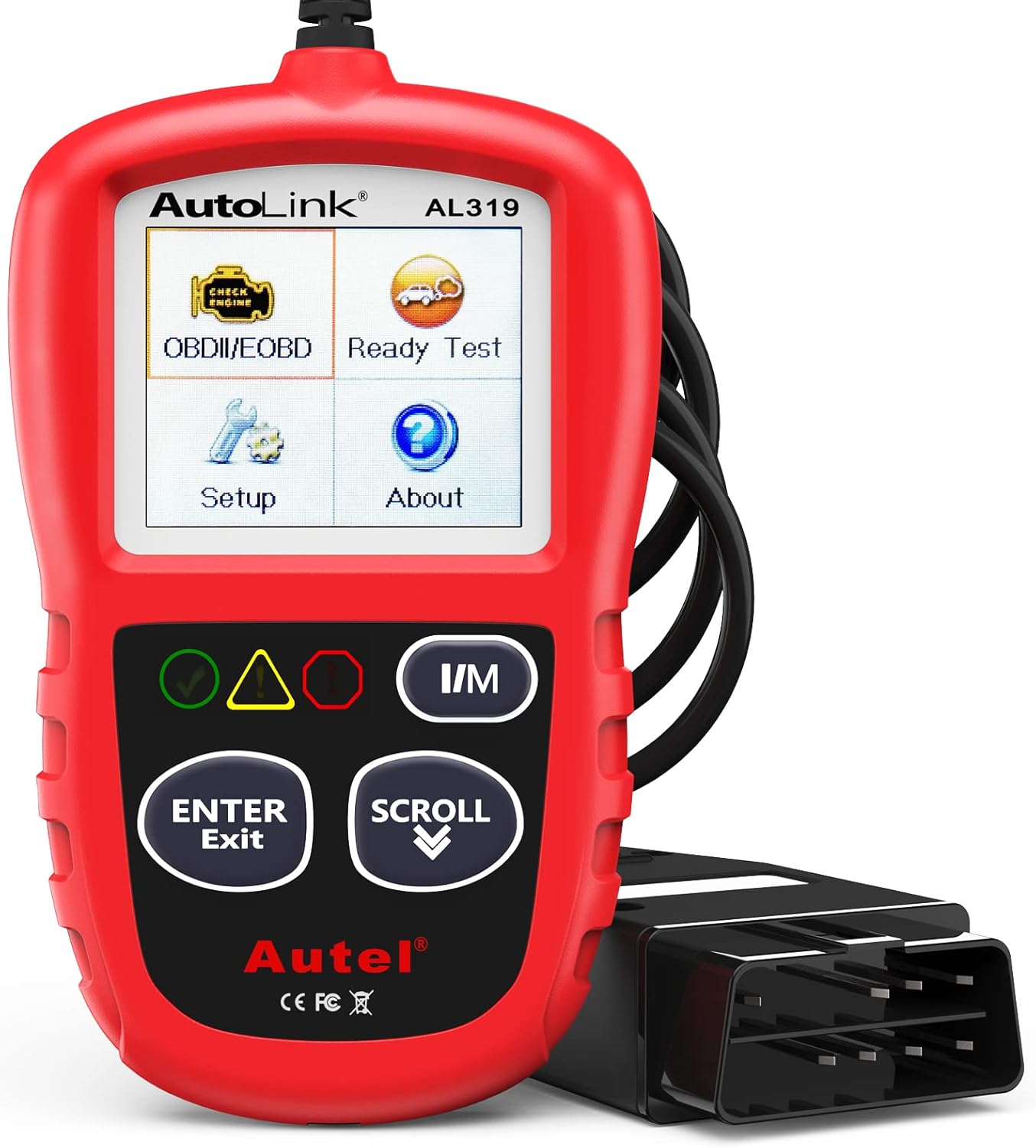
The Autel AL319 is a user-friendly OBD2 scan tool designed to help drivers quickly diagnose check engine light issues and understand vehicle fault codes. It supports reading and clearing DTCs, live data, freeze frame, I/M readiness, and vehicle information, making it a practical choice for DIYers and everyday car owners. With plug-and-play operation, a color display, built-in speaker, and broad vehicle compatibility, it delivers fast, reliable diagnostics without complicated setup.

Veepeak OBDCheck BLE is a Bluetooth LE OBD-II scanner designed to read and clear check engine codes, view live sensor data, and access freeze frame and readiness information through a compatible third-party app. It works with most 1996+ gas vehicles and many light trucks for standard diagnostics, with broader features depending on the app and vehicle support. This compact adapter is built for iOS and Android users who want a simple wireless way to monitor vehicle health without WiFi pairing.
Where Does RAV4 AWD Help Most?
AWD is most useful when the tires have different levels of available grip or when front-wheel traction alone is insufficient. It supports acceleration and directional stability, but it cannot create grip that the tires do not have.
- Rain: Rear-wheel assistance can reduce front-wheel spin when accelerating from a stop or joining traffic.
- Snow: AWD can help the RAV4 start moving and climb, especially with suitable winter or all-weather tires.
- Gravel: Adding rear drive can make the vehicle less dependent on the front tires for both steering and acceleration.
- Cornering: Torque-vectoring models can vary rear-wheel torque to support the intended path.
- Light trails: AWD and traction modes can help on dirt, shallow mud, sand, or uneven surfaces within the vehicle’s clearance and cooling limits.
- Steep paved driveways: Rear-wheel assistance can reduce front-tire spin during low-speed climbs.
Warning: AWD helps a vehicle accelerate, but it does not shorten braking distance on ice. Tire grip, speed, visibility, and stopping distance remain more important than the AWD badge.
What Do Multi-Terrain Select and Trail Mode Change?
Some gas RAV4 AWD models include Multi-Terrain Select, while applicable hybrid models include Trail Mode. These systems coordinate drive force and brake intervention for low-traction surfaces. They do not add low-range gearing or increase ground clearance.
Multi-Terrain Select changes AWD, throttle, and brake-control behavior for conditions such as mud, sand, rock, dirt, or snow, depending on the model. Trail Mode can use brake intervention and drive-force control as a virtual limited-slip function, helping direct usable drive force toward wheels with grip.
Select the appropriate mode before the vehicle becomes deeply stuck. Use steady throttle, avoid abrupt steering, and allow the traction system time to control wheelspin. For a broader explanation of the available settings, see the RAV4 drive modes guide.
[Products Worth Considering]
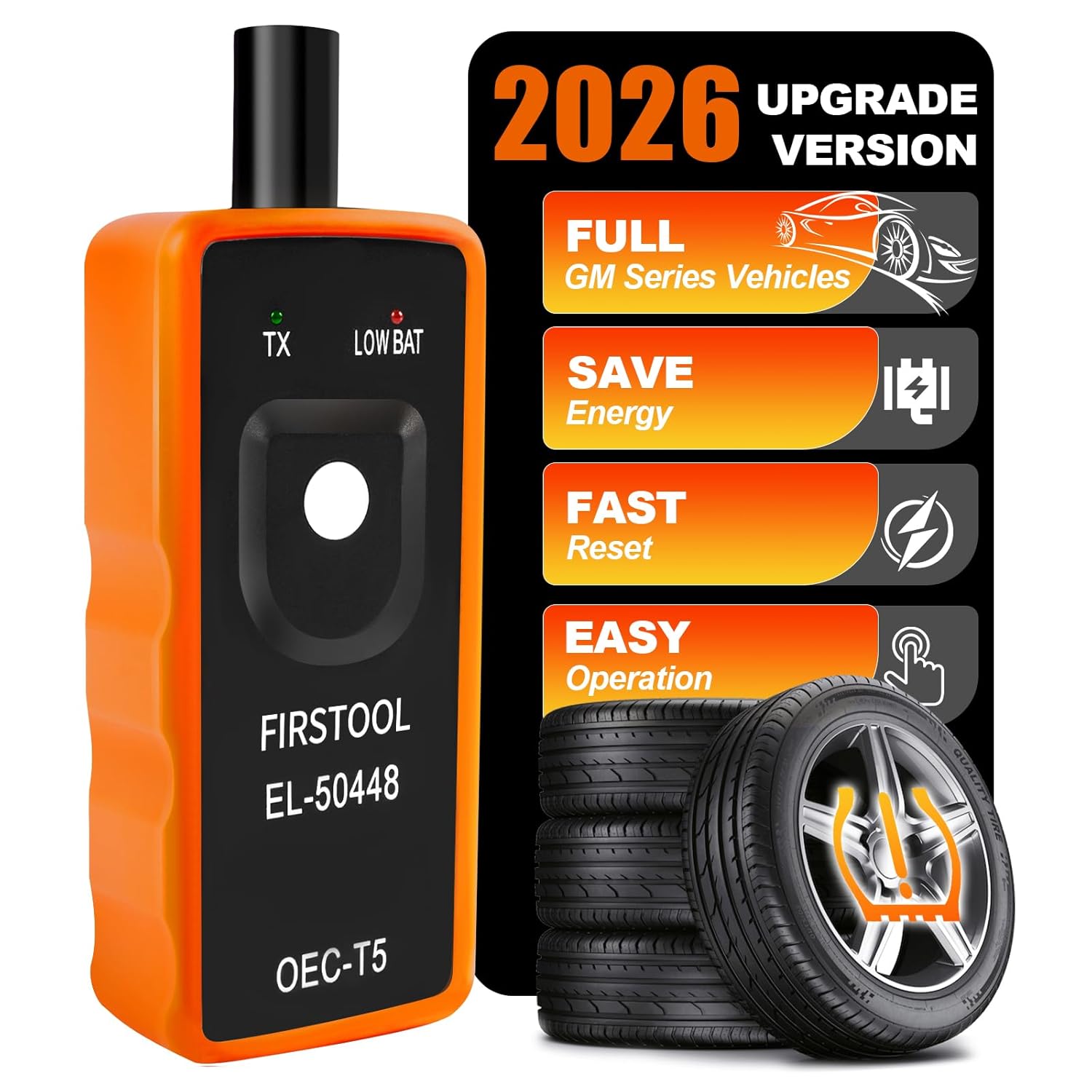
This EL-50448 TPMS relearn tool helps quickly activate and reset tire pressure sensors so your vehicle’s monitoring system stays accurate after tire rotations, sensor replacement, or seasonal tire changes. Designed for many GM-related vehicles and compatible with common 315 and 433 MHz TPMS systems, it offers simple one-button operation and reliable performance for clearing warning lights and relearning sensor positions.

This automotive circuit tester checks low-voltage DC systems from 3-65V, making it useful for diagnosing headlights, taillights, fuses, sockets, and other vehicle wiring issues. The digital backlit display provides clear voltage readings with fine accuracy, while the bidirectional polarity indicator helps you test from either ground or positive. Built with a durable probe, insulated tip, and extra-long spring wire, it is designed for dependable everyday use in automotive and household electrical work.

Vehicle Specific
How Does AWD Affect RAV4 Fuel Economy?
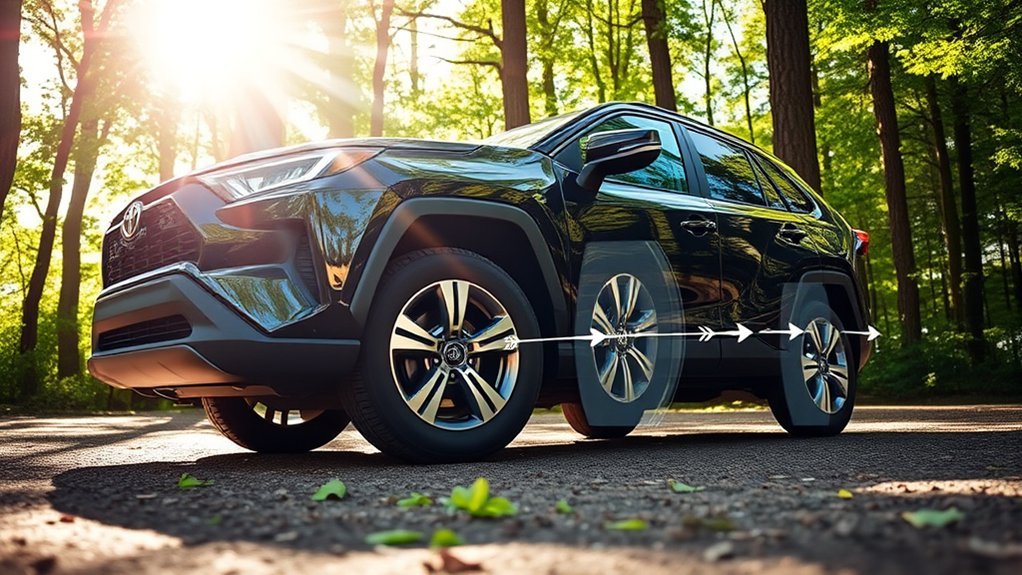
Mechanical AWD can reduce fuel economy because it adds weight, rotating components, and friction. Toyota limits that penalty by reducing rear-drive activity during light-load driving. Dynamic Torque Vectoring AWD with Rear Driveline Disconnect can also stop unnecessary rear-driveline rotation when AWD is not needed.
Electronic On-Demand AWD avoids a mechanical driveshaft between the front and rear axles. The rear electric motor contributes when the controller requests rear traction and can also participate in regenerative operation on applicable models.
For 2025 models, the EPA lists the RAV4 Hybrid AWD at 41 mpg city, 38 mpg highway, and 39 mpg combined. The Woodland Edition is rated at 38 city, 35 highway, and 37 combined. The 2025 RAV4 Plug-in Hybrid is rated at 94 MPGe combined on electricity and 38 mpg combined on gasoline only.
Current Toyota specifications list the 2026 RAV4 Hybrid at up to 43 mpg combined with front-wheel drive. AWD hybrid ratings range from 38 to 42 mpg combined, depending on grade. Toyota lists the 2026 AWD hybrid at 236 net combined horsepower and equips it with an 89-lb-ft rear motor.
For a purchase-focused comparison, see the RAV4 AWD versus FWD guide.
How to Protect Real-World MPG
- Inflate the tires to the door-jamb specification when the tires are cold.
- Remove an unused roof box or other high-drag accessory.
- Use smooth throttle inputs, especially before the engine and battery reach normal temperature.
- Avoid aggressive tire upsizing that adds weight and rolling resistance.
- Follow the maintenance schedule for tires, fluids, brakes, and the exact drivetrain fitted to the vehicle.
Does Mechanical AWD Need Different Maintenance From Hybrid AWD?
Yes. A gas RAV4 with mechanical AWD has a transfer unit, driveshaft, rear differential, couplings, seals, and model-specific fluids. A Hybrid or Plug-in Hybrid AWD model uses an electric rear motor-generator and rear transaxle assembly instead of a conventional front-to-rear driveshaft.
Follow the maintenance guide for the exact model year and powertrain. Investigate new vibration, binding, fluid leaks, warning messages, or driveline noise promptly. Do not assume that a fluid or service procedure for a gas AWD model applies to a Hybrid AWD model.
Which RAV4 AWD System Fits Your Use?
The best system depends on whether you are buying new or used and what you expect the vehicle to do.
- New 2026 RAV4 shopper: Choose between a front-wheel-drive hybrid and Electronic On-Demand AWD. The AWD version adds a dedicated rear motor.
- Used gas RAV4 for commuting and bad weather: Standard mechanical AWD is suitable for rain, snow, gravel, and normal road use.
- Used gas RAV4 with more detailed rear control: Look for the exact phrase “Dynamic Torque Vectoring AWD with Rear Driveline Disconnect.”
- Efficiency-focused AWD buyer: A Hybrid AWD model combines rear-motor traction with strong EPA fuel-economy ratings.
- Frequent mild-trail use: Consider the tires, suspension, ground clearance, drive modes, and underbody exposure in addition to the AWD system.
- Severe off-road use: A vehicle with low-range four-wheel drive, greater suspension articulation, and suitable recovery points is a better tool.
Frequently Asked Questions
What is all-wheel-drive torque distribution?
All-wheel-drive torque distribution is the way a vehicle divides engine or motor drive force between its front and rear wheels. In a RAV4, the distribution changes automatically according to acceleration, steering input, vehicle movement, wheel grip, and road conditions.
How does torque vectoring AWD work?
Dynamic Torque Vectoring AWD can send engine torque from the front axle to the rear axle and then vary the available rear torque between the left and right wheels. Toyota documents a maximum of 50 percent engine torque to the rear axle on applicable RAV4 gas models.
Is Toyota RAV4 AWD always on?
The AWD controller remains active, but that does not mean all four wheels receive equal drive torque all the time. The system can favor the front wheels during light driving and add rear-wheel assistance when acceleration, cornering, or traction conditions require it.
Which RAV4 AWD system is best?
Electronic On-Demand AWD is the current choice for an efficient new RAV4 with rear-wheel assistance. Among used gas models, Dynamic Torque Vectoring AWD provides the most detailed rear torque control. The better choice still depends on model year, tires, price, efficiency, and intended use.
Is RAV4 AWD good in snow?
RAV4 AWD can improve starting and climbing traction in snow by adding rear-wheel drive. It does not improve tire grip by itself, so winter or capable all-weather tires remain more important for braking and turning on snow and ice.
Does RAV4 AWD use more gas?
Mechanical AWD can use more fuel because it adds weight and driveline friction. Hybrid AWD reduces mechanical drag by using a separate rear electric motor instead of a conventional driveshaft between the front and rear axles.
What does the RAV4 AWD torque distribution display show?
Toyota describes the display as showing each wheel’s drive status in six steps from 0 to 5. The bars indicate relative drive activity. They should not be treated as exact torque percentages.
Does RAV4 Hybrid AWD have a driveshaft?
No conventional driveshaft connects the front powertrain to the rear axle in a RAV4 Hybrid AWD. A separate electric motor-generator powers the rear wheels when the control system requests rear assistance.
Does the RAV4 have an AWD Lock button?
Many 2013–2018 gas AWD RAV4 models have an AWD Lock button that requests a 50:50 front/rear split at speeds up to about 25 mph. Above that speed, the system returns to automatic control. Later RAV4 systems generally manage torque automatically through drive and terrain modes instead.
Conclusion
Toyota RAV4 AWD torque distribution is not a fixed 50:50 arrangement. Mechanical gas AWD systems can favor the front axle and send as much as half of the engine torque rearward. Dynamic Torque Vectoring AWD adds left-to-right control at the rear axle. Hybrid and plug-in-hybrid AWD models use a separate rear electric motor instead of a conventional front-to-rear driveshaft.
Before comparing two RAV4s, confirm the model year, powertrain, trim, and exact AWD description on the original build record. Then judge the system together with the tires, fuel economy, drive modes, ground clearance, and the conditions you actually drive in.
Sources
- Toyota USA Newsroom: 2025 Toyota RAV4 — 2025 gas, hybrid, standard AWD, Dynamic Torque Vectoring AWD, Trail Mode, and rear-motor details.
- Toyota 2024 RAV4 eBrochure — up-to-50-percent rear torque and left/right rear distribution for Dynamic Torque Vectoring AWD.
- Toyota Global: Dynamic Torque Vectoring AWD and E-Four Systems — left/right rear torque distribution and driveline-disconnect operation.
- Toyota USA Newsroom: 2017 RAV4 — Dynamic Torque Control sensors and 100:0 to 50:50 front/rear distribution.
- Toyota USA Newsroom: 2016 RAV4 — low-speed AWD Lock behavior and fourth-generation torque control.
- Toyota USA Newsroom: 2026 RAV4 — current hybrid-only powertrain lineup, Electronic On-Demand AWD, rear-motor output, and grade-dependent fuel economy.
- Toyota: 2026 RAV4 Specifications — current U.S. grade, drivetrain, and fuel-economy specifications.
- FuelEconomy.gov: 2025 Toyota RAV4 — EPA fuel-economy figures for gas, hybrid, Woodland, and plug-in-hybrid models.
- Toyota Owners: RAV4 Hybrid Multi-Information Display — six-step AWD torque-distribution display description.