
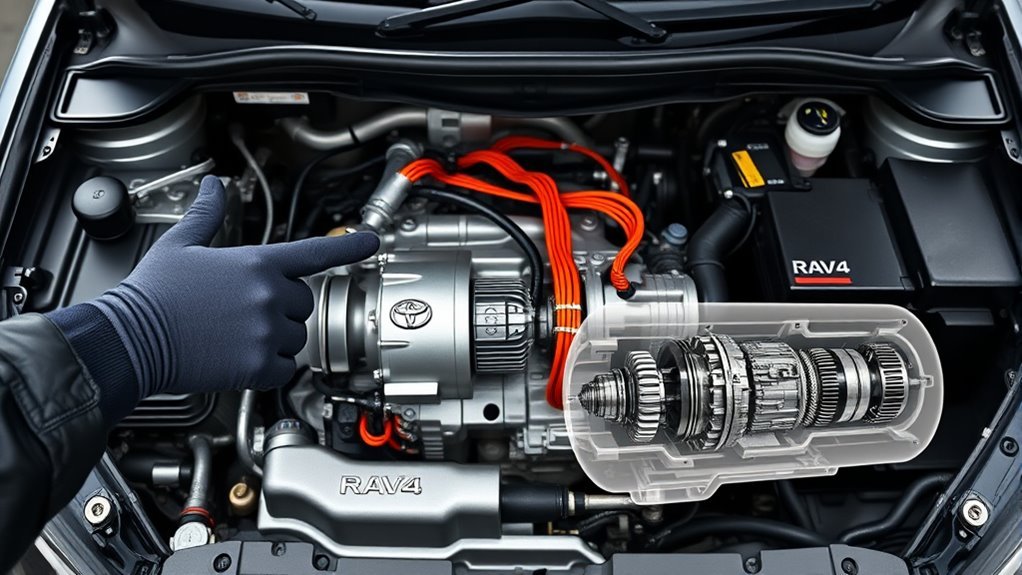
The RAV4 Hybrid’s eCVT is not a belt-and-pulley CVT. It is Toyota’s electronically controlled, power-split hybrid transaxle: a gasoline engine, MG1, MG2, power electronics, a hybrid battery, and a planetary gearset work together to move the vehicle without conventional gear shifts. This guide explains what each part does, how power flows in real driving, why regenerative braking matters, and what owners should know about maintenance and safety.
Quick Answer
The Toyota RAV4 Hybrid eCVT uses a planetary gearset and electric motor-generators instead of fixed gears or a drive belt. MG2 drives the wheels and recovers braking energy, while MG1 starts the engine, generates electricity, and helps control engine speed for smooth, efficient power delivery.
Key Takeaways
- The RAV4 Hybrid eCVT is a gear-based hybrid transaxle, not a rubber-belt CVT.
- MG1 mainly starts the engine, generates electricity, and helps control the continuously variable effect.
- MG2 is the main front traction motor and also handles much of the regenerative braking.
- EV drive mode is for short, low-speed use when the battery, temperature, and load conditions allow it.
- AWD RAV4 Hybrid models add a separate rear electric motor, so there is no traditional driveshaft to the rear axle.
Quick Overview: What the RAV4 eCVT Does
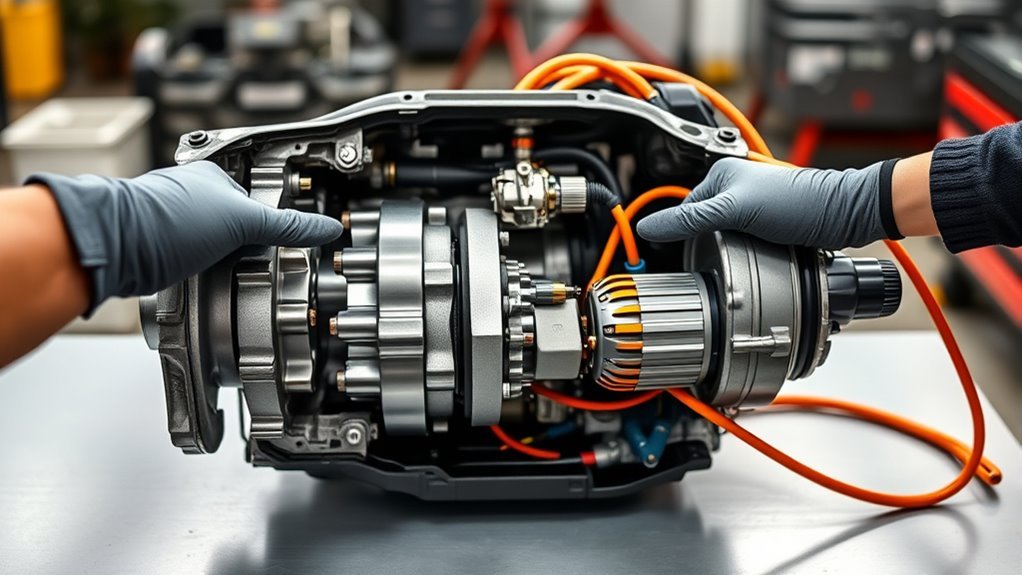
The RAV4 Hybrid’s eCVT blends power from the gasoline engine and electric motors so the vehicle can launch smoothly, cruise efficiently, and recharge the hybrid battery while slowing down. Toyota describes the 2026 RAV4 Hybrid system as using a 2.5-liter engine with MG1 and MG2 through a planetary-type continuously variable transmission.
Unlike a conventional automatic, there are no stepped gear changes. Unlike many traditional CVTs, there is no belt running between variable pulleys. The continuously variable effect comes from how the planetary gearset and motor-generators manage engine speed, motor speed, and wheel speed.
In low-speed, light-load driving, the RAV4 Hybrid may move on electric power alone for short periods. When more power is needed, the gasoline engine starts automatically and blends with electric torque. During deceleration, the system uses regenerative braking to convert some vehicle motion back into electrical energy for the hybrid battery.
Note: A standard RAV4 Hybrid is not a plug-in vehicle. Its hybrid battery charges through the engine and regenerative braking. The RAV4 Plug-in Hybrid/PHEV is the version designed for longer electric-only driving from external charging.
Key Parts Inside the RAV4 eCVT: Engine, MG1, MG2, and Planetary Gear
Think of the RAV4 Hybrid eCVT as a power-split system. Its main front-drive components are the gasoline engine, MG1, MG2, an inverter/converter, the hybrid battery, and a planetary gearset.
- Gasoline engine: Supplies efficient cruising power and extra output when acceleration, hills, or higher speeds require it.
- MG1: Acts as a starter-generator. It starts the gasoline engine, generates electricity, and helps control the speed relationship inside the power-split device.
- MG2: Provides primary electric traction at the front axle and becomes a generator during regenerative braking.
- Planetary gearset: Links the engine, MG1, and MG2 so power can be divided between mechanical drive and electrical generation.
- Hybrid battery: Stores recovered and generated electrical energy for later motor assist or low-speed electric driving.
- Inverter/converter: Manages high-voltage electrical flow between the battery and motor-generators.
On AWD RAV4 Hybrid models, Toyota adds a dedicated rear electric motor, often identified as MGR, to power the Electronic On-Demand AWD system. That means the rear axle is driven electrically when needed rather than through a mechanical driveshaft from the front transaxle.
The RAV4 Hybrid eCVT creates its “continuously variable” feel by controlling engine speed and motor-generator speed through a planetary gearset—not by shifting gears or squeezing a belt between pulleys.
How Power Flows: Normal Driving, Electric-Only, and Hard Acceleration
Power flow changes constantly, but the driver does not need to manage it. The hybrid control system decides when to use electric drive, engine drive, motor assist, battery charging, or a blend of all of them.
Normal Driving
During gentle acceleration and steady cruising, MG2 can help move the vehicle while the gasoline engine operates in an efficient range. MG1 may generate electricity, help maintain the battery state of charge, or adjust the engine speed relationship through the planetary gearset.
This is why the RAV4 Hybrid can feel smooth even when engine RPM does not rise and fall like a traditional automatic transmission. The system is matching engine output to efficiency and demand, not chasing fixed gear ratios.
Electric-Only Driving
In EV drive mode, Toyota says electric power is supplied by the traction battery and only the traction motor is used to drive the vehicle. This mode is intended for quiet, low-speed situations such as residential areas or parking lots.
EV drive mode is limited. It may not turn on if the hybrid battery charge is low, the engine is warming up, the hybrid system is too hot or too cold, vehicle speed is high, or the driver asks for too much power. Toyota’s hybrid driving-mode guidance describes EV Mode as short-distance operation at speeds up to about 25 mph, depending on conditions.
Pro Tip: Use light accelerator inputs, steady speed, and early braking if you want to maximize electric assist and regenerative energy recovery. Hard acceleration will bring the gasoline engine in quickly.
Hard Acceleration and Hills
When you merge onto a highway, climb a grade, or press the accelerator firmly, the gasoline engine starts and adds power. MG2 supplements torque at the wheels, while MG1 manages engine starting and electrical generation. The result is a quick blend of engine and electric torque rather than a downshift.
The higher, steady engine sound some drivers notice under heavy acceleration is normal for this type of hybrid transaxle. The eCVT is holding the engine near an efficient power-producing range while the electric side fills in torque.
Regenerative Braking and How Battery Charging Works
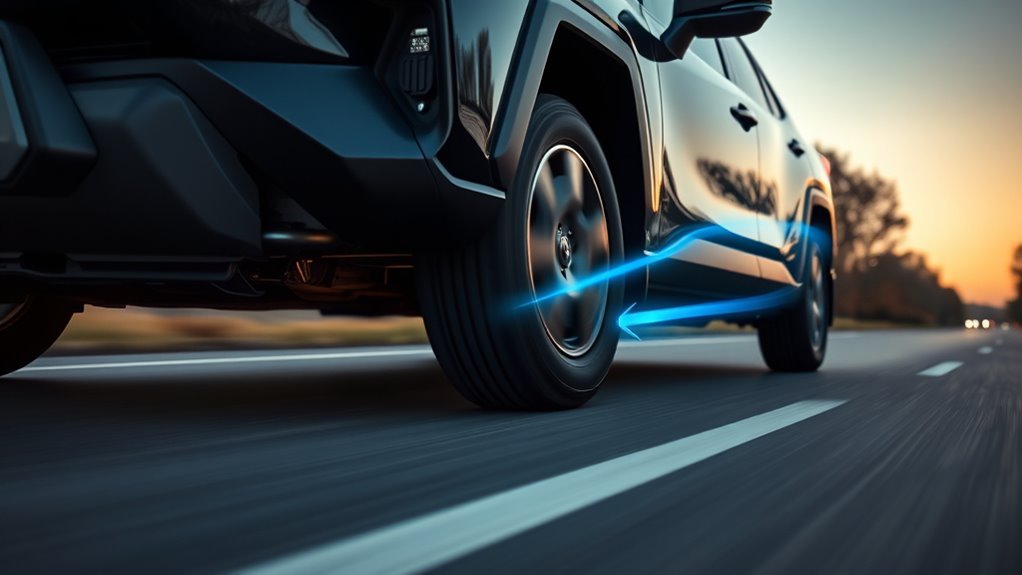
Regenerative braking is one of the biggest advantages of the RAV4 Hybrid system. When you lift off the accelerator or press the brake pedal lightly, MG2 can act as a generator. Instead of turning all motion into heat at the brake pads, the system converts some kinetic energy into electrical energy and stores it in the hybrid battery.
Toyota’s owner information notes that the hybrid system can manage battery charge before long downhill sections to help preserve room for regenerative braking. In normal driving, the brake system blends regenerative braking with the friction brakes so the pedal feels predictable.
Regeneration does not replace the friction brakes. Hard stops, very low-speed stops, full battery conditions, cold conditions, or stability-control events can all increase friction-brake use. Still, regular regenerative braking can reduce brake wear compared with a vehicle that relies only on pads and rotors.
How the eCVT Starts and Stops the Gas Engine: MG1’s Role
MG1 is one of the reasons Toyota hybrids can start and stop the gasoline engine so smoothly. Instead of using a conventional starter motor in the traditional way, the hybrid system uses MG1 to spin the engine up quickly and precisely when power demand calls for it.
MG1 also generates electricity and helps control the continuously variable function of the transaxle. By changing MG1 speed and electrical load, the system can influence engine speed without a normal stepped gearbox. That is why the eCVT can keep the engine in an efficient operating range while wheel speed changes.
When the vehicle is moving slowly or coasting, the engine may shut off. When the battery needs charge, cabin heat is needed, or the driver asks for more torque, MG1 restarts the engine automatically. Most of the time, this happens without the driver doing anything or feeling a harsh engagement.
RAV4 Hybrid vs. RAV4 Plug-in Hybrid: Why the eCVT Behavior Feels Different
Many eCVT questions come from mixing up the standard RAV4 Hybrid with the RAV4 Plug-in Hybrid, formerly known in the U.S. as RAV4 Prime. Both use Toyota hybrid technology, but they are built for different electric-driving expectations.
| Feature | RAV4 Hybrid | RAV4 Plug-in Hybrid/PHEV |
|---|---|---|
| External charging | No | Yes |
| Electric-only driving | Short, low-speed use when conditions allow | Designed for longer EV driving after charging |
| Battery role | Assists efficiency and captures regen energy | Supports both EV driving and hybrid operation |
| Best use case | High fuel economy without plugging in | Electric commuting plus gasoline backup |
If your goal is long electric-only driving, the standard RAV4 Hybrid is not the right comparison point. Its eCVT is designed to blend gasoline and electric power automatically for efficiency, not to behave like a battery-electric vehicle.
[Products Worth Considering]

These custom-fit mud flaps are designed for Toyota RAV4 and RAV4 Hybrid models across multiple years to help protect your vehicle from snow, salt, sand, rocks, and road debris. Made from durable black ABS plastic, they offer strong resistance to wear, cold, and aging while helping keep your lower body panels cleaner. The set includes front and rear splash guards for a complete exterior protection upgrade.

This replacement filter set is designed for a range of Toyota hybrid vehicles, including popular models like RAV4 Hybrid, Camry Hybrid, Highlander Hybrid, Sienna, Venza, and more. It combines cabin and engine filtration to help support cleaner airflow, reduce dust and odors, and protect your HVAC and engine systems. Built for easy installation and extended service life, it offers a convenient maintenance upgrade for compatible hybrid and gas-only Corolla models.
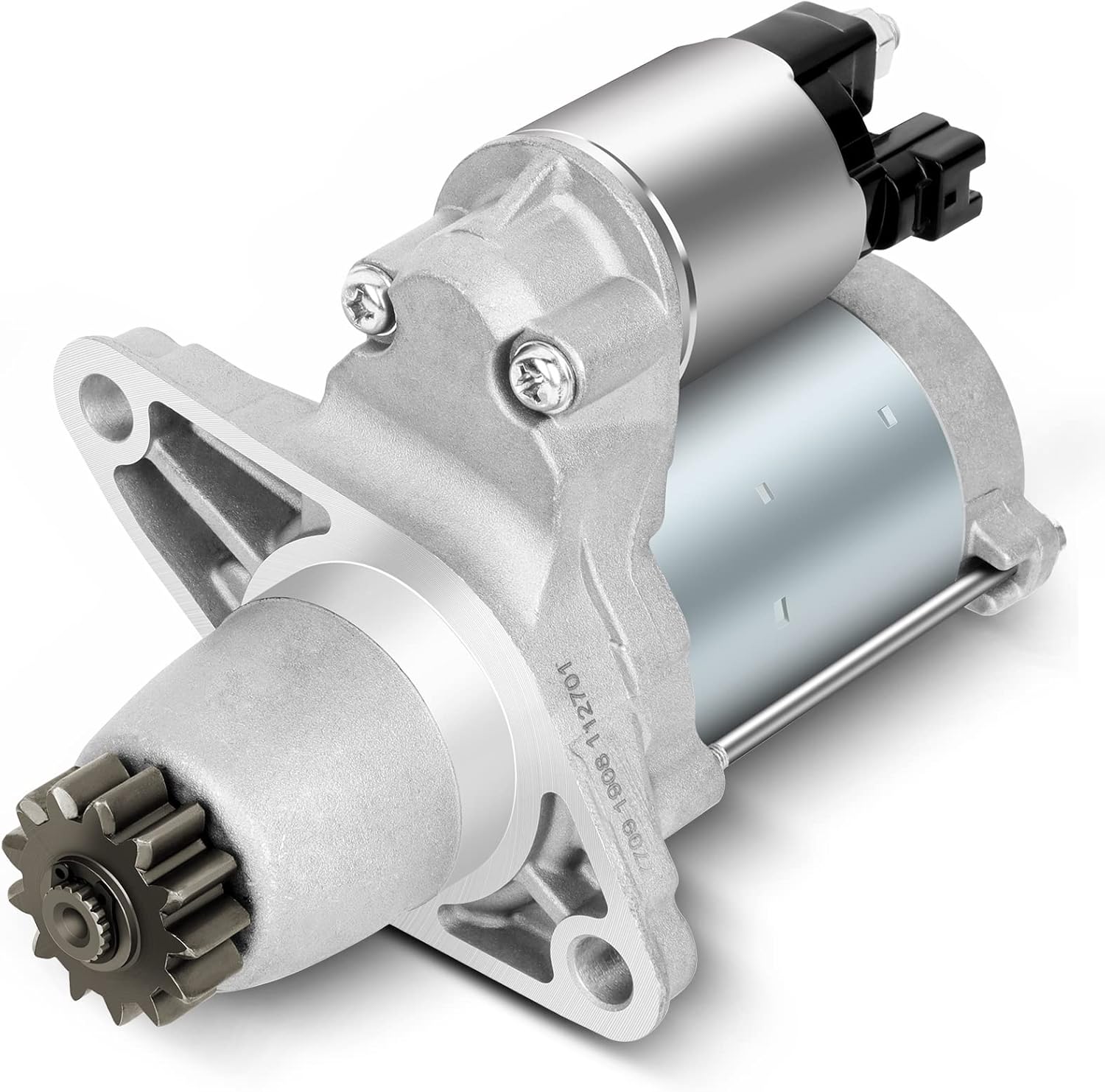
This replacement starter motor is designed for a wide range of Toyota, Lexus, and Scion vehicles, helping restore reliable engine cranking and dependable daily starting performance. It features a 12V PMGR design with a 10-tooth pinion, clockwise rotation, and durable internal components engineered for efficient flywheel engagement, low noise, and consistent operation. Built to match multiple OEM part numbers and vehicle applications, it offers a practical solution for replacing a failing starter.
What’s New on 2026 RAV4 Hybrid and How Older Models Differ
The wording around RAV4 generations can be confusing. The 2026 RAV4 starts the sixth generation of the RAV4 vehicle line, while Toyota describes the 2026 RAV4 Hybrid as using its 5th-generation hybrid powertrain. That is different from saying “third-generation RAV4 Hybrid.”
For 2026, Toyota says the RAV4 lineup is hybrid-only in the U.S., with Hybrid Electric Vehicle and Plug-in Hybrid Electric Vehicle choices. The standard 2026 RAV4 Hybrid uses a 2.5-liter inline-four engine with MG1 and MG2 through a planetary-type CVT, and AWD models add a dedicated rear electric motor for Electronic On-Demand AWD.
Compared with older RAV4 Hybrid models, the newer system focuses on improved output, efficiency, software control, and smoother integration. The basic principle remains familiar: engine power, electric motor torque, battery charging, and regenerative braking are blended by the hybrid control system instead of handled through fixed gear shifts.
Common Maintenance Checks and Technician Tasks for the eCVT
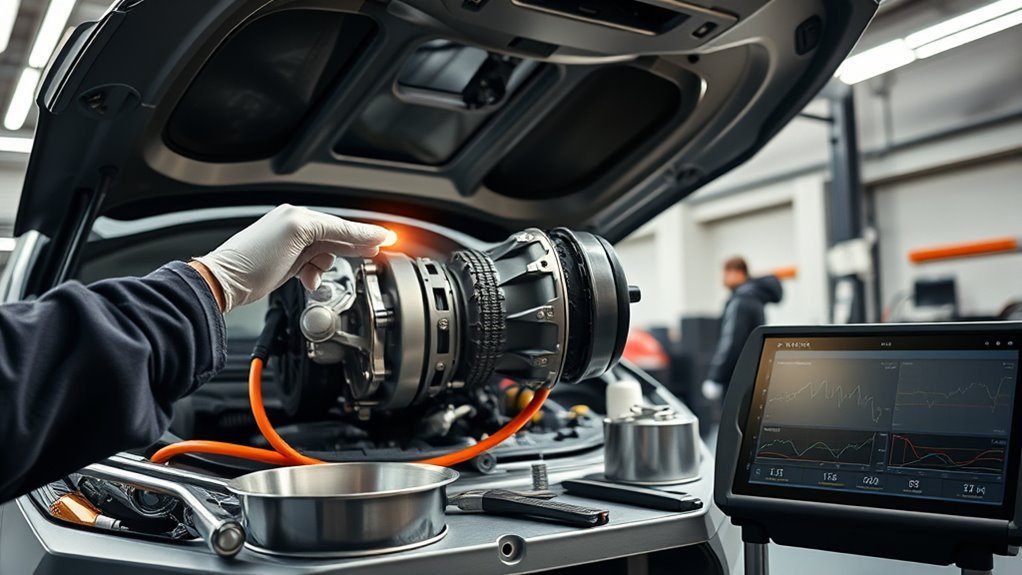
The RAV4 Hybrid eCVT is generally low-maintenance compared with many conventional transmissions, but it is not maintenance-free. Toyota’s Warranty & Maintenance Guide points owners to scheduled maintenance plus ongoing fluid checks and visual inspections in the owner’s manual.
For owners, the main rule is simple: follow the maintenance schedule for your model year, mileage, climate, and driving conditions. For technicians, the focus is on inspection, correct fluid handling, cooling, electrical safety, and diagnostic trouble-code review.
- Check for leaks: Inspect the hybrid transaxle case, axle seals, drain/fill areas, and nearby underbody components.
- Use the correct fluid procedure: Hybrid transaxle fluid level and fill procedures are service-manual tasks. Overfilling, underfilling, or using the wrong fluid can cause damage.
- Inspect cooling-related items: Hybrid components depend on proper thermal management. Overheating symptoms should be diagnosed quickly.
- Check wiring and connectors: High-voltage and sensor connectors must be inspected only by qualified personnel using proper safety procedures.
- Scan for codes: Hybrid control, inverter, motor-generator, brake, and battery codes can reveal problems before drivability symptoms become obvious.
- Keep the hybrid battery intake clean: A restricted battery cooling intake can reduce hybrid performance and battery life.
Warning: Do not probe, unplug, or service orange high-voltage cables or hybrid transaxle components unless you are trained and equipped to work on hybrid vehicles. Toyota’s emergency response guidance treats high-voltage components as a serious electrical hazard.
[Products Worth Considering]
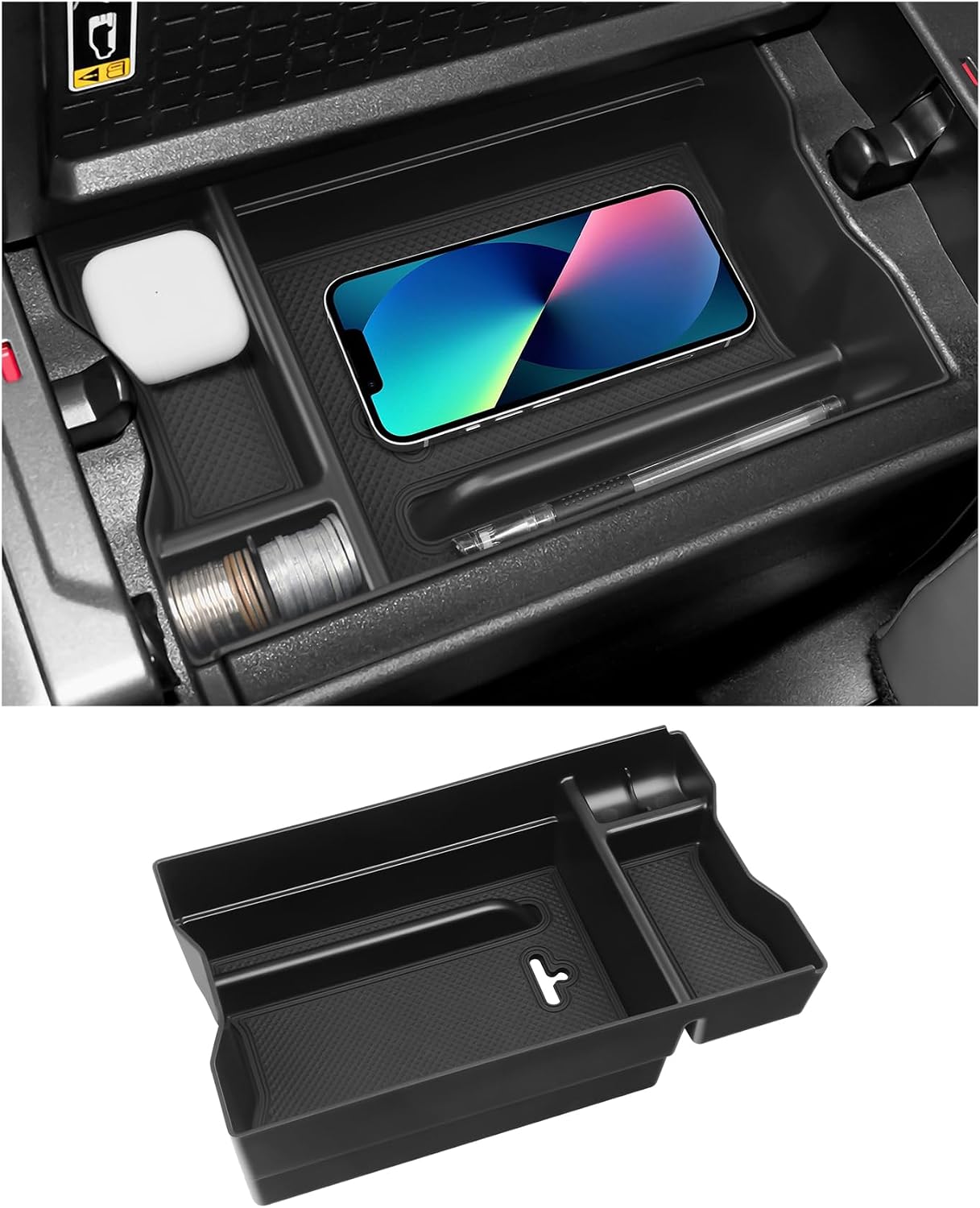
This center console organizer adds a convenient secondary storage layer to compatible Toyota RAV4 hybrid models, helping keep sunglasses, keys, coins, phones, and other small items neatly arranged. Built from durable ABS plastic with a matte finish, it fits directly into the armrest area for quick, tool-free installation and easy removal. Non-slip rubber mats help reduce sliding and noise while maximizing usable storage space inside the console.

This custom-fit cargo net is designed for the 2026 Toyota RAV4 to help keep your trunk organized and secure during everyday driving. It helps hold groceries, tools, and smaller items in place while reducing rolling and shifting, and the heavy-duty carabiners support reliable installation. The net also offers convenient storage and easy access for SUVs and other compatible vehicles.

This passenger storage organizer mat is designed to fit the 2026 Toyota RAV4 for a clean, factory-style look with no gaps. It helps protect the original console area from scratches and daily wear while giving you a handy place to store phones, sunglasses, wallets, coins, and cards. Made from durable silicone, it stays in place, reduces rattling, and is easy to remove and clean.
Practical Driving Tips: When You’ll Feel Electric vs Gas Power
In everyday driving, the RAV4 Hybrid decides when to use electric power, engine power, or both. You can influence the system with smooth inputs, but you do not manually control the eCVT like a normal transmission.
Electric-Only Driving Feel
When conditions allow electric-only operation, the RAV4 Hybrid feels quiet and immediate. MG2 can move the vehicle without engine noise, which is useful in parking lots, driveways, and slow residential traffic. You may hear the pedestrian alert sound at low speed, which is normal.
Do not expect EV drive mode to last long in a standard RAV4 Hybrid. The gasoline engine can start if the battery charge drops, vehicle speed rises, the cabin needs heat, the system is warming up, or you press the accelerator more firmly.
Engine Assist Zones
The gasoline engine usually steps in when the system needs more power or better overall efficiency. Common engine-assist moments include:
- Highway merging
- Climbing hills
- Hard acceleration
- Cold starts and warm-up periods
- Low hybrid battery state of charge
- Higher-speed cruising
- Heavy air-conditioning or heating demand
That engine behavior is normal. The eCVT is not “slipping”; it is coordinating engine RPM, MG1 speed, MG2 torque, and battery demand.
How to Drive More Smoothly With the eCVT
- Accelerate progressively: Smooth throttle input lets the system use electric assist efficiently.
- Brake early and evenly: Gentle braking gives regenerative braking more opportunity to recover energy.
- Use Eco mode when appropriate: Eco mode softens accelerator response and can reduce climate-control load.
- Do not force EV mode: Let the hybrid system choose the best blend when speed, load, or battery level changes.
- Watch the energy monitor: It helps you learn when the engine, motor, and battery are active.
Common eCVT Myths and Troubleshooting Signs
[Products Worth Considering]

This custom-designed cargo net helps keep the rear trunk of a 2026 Toyota RAV4 neat, secure, and organized. Its stretchable elastic mesh construction helps prevent groceries, tools, and sports gear from sliding around, while the built-in bottom pocket and smart clips add extra storage control. A top pull tab makes installation and removal quick and easy for everyday convenience.

This center console armrest cover is designed to fit the 2026 Toyota RAV4 for added comfort and a cleaner interior look. Made with breathable vegan leather and a thick cushioned feel, it helps reduce arm fatigue on long drives while protecting the console from pet paws, dirt, and sticky fingerprints. The band-secured design installs easily with no tools required and blends with the OEM-style interior.

This ALLWELL engine air filter is designed to help maintain clean airflow for compatible Toyota, Lexus, and Subaru vehicles, supporting engine performance and efficient operation. It serves as a direct replacement for multiple OE part numbers and fits a wide range of hybrid and standard models across several years. Built for broad compatibility, it is a practical maintenance part for keeping your vehicle’s intake system protected.
Myth: The RAV4 eCVT Has a Belt Like a Regular CVT
It does not. The RAV4 Hybrid eCVT uses a planetary power-split arrangement with motor-generators. That is why Toyota hybrid eCVTs are often viewed differently from belt CVTs in conventional gasoline vehicles.
Myth: High Engine RPM Means the Transmission Is Failing
Not necessarily. During hard acceleration, the engine may hold a higher RPM while the vehicle speed catches up. That is normal eCVT behavior. However, warning lights, new grinding noises, fluid leaks, burning smells, or sudden loss of power are not normal and should be diagnosed.
Signs That Need Service Attention
- Hybrid system warning light or “Check Hybrid System” message
- Visible transaxle fluid leaks
- Grinding, whining, or clunking that is new or getting worse
- Sudden drop in fuel economy with warning lights
- Harsh engagement when shifting into Drive or Reverse
- Overheating warnings or repeated reduced-power operation
If these symptoms appear, avoid guessing. A Toyota dealer or hybrid-qualified technician can scan the hybrid control systems and follow the correct service procedures.
Frequently Asked Questions
How does the Toyota RAV4 Hybrid eCVT work?
The RAV4 Hybrid eCVT uses a gasoline engine, MG1, MG2, and a planetary gearset to split and blend power. MG2 drives the wheels and recovers braking energy, while MG1 starts the engine, generates electricity, and helps control the continuously variable ratio effect.
Does the Toyota RAV4 Hybrid eCVT use a belt?
No. The RAV4 Hybrid eCVT is not a belt-and-pulley CVT. It uses motor-generators and a planetary gearset to create smooth, continuously variable power delivery.
Can a RAV4 Hybrid drive on electric power only?
Yes, but only for short, low-speed situations when conditions allow. EV drive mode depends on battery charge, vehicle speed, temperature, engine warm-up status, and accelerator demand.
Why does the RAV4 Hybrid engine sound loud during acceleration?
Under heavy acceleration, the eCVT may hold the engine at a higher RPM while MG2 adds electric torque. This can sound different from a stepped automatic transmission, but it is normal unless warning lights, harsh noises, or drivability problems appear.
Does regenerative braking replace normal brakes?
No. Regenerative braking recovers energy during many slowdowns, but the RAV4 Hybrid still uses friction brakes for stronger stops, very low-speed stopping, emergency braking, and situations where regeneration is limited.
Does the AWD RAV4 Hybrid use the same eCVT for the rear wheels?
No. The front hybrid transaxle contains the engine, MG1, MG2, and planetary gearset. AWD models add a separate rear electric motor that powers the rear axle when extra traction is needed.
Conclusion
The RAV4 Hybrid eCVT is best understood as a power-split hybrid transaxle, not as a conventional automatic or a belt-style CVT. MG1 starts the engine, generates electricity, and helps manage the continuously variable effect. MG2 provides front electric drive and regenerative braking. The planetary gearset ties everything together so the gasoline engine and electric motors can work smoothly in changing traffic, hills, and cruising conditions.
For owners, the practical takeaway is simple: smooth inputs help the system work efficiently, regenerative braking rewards early gentle stops, EV drive mode is useful but limited, and hybrid transaxle service should follow Toyota procedures. Treat high-voltage components with caution, keep maintenance current, and the eCVT should deliver the smooth electric-gas blending Toyota hybrids are known for.
Sources
- Toyota USA Newsroom: 2026 RAV4 Arrives This Winter — 2026 RAV4 hybrid-only lineup, MG1/MG2, planetary-type CVT, AWD rear motor, and powertrain updates.
- Toyota Owners: 2025 RAV4 Hybrid EV Drive Mode — EV drive mode operation and conditions that can prevent EV mode.
- Toyota Support: Hybrid Driving Modes — Toyota’s general EV Mode explanation, including short-distance, low-speed use.
- Toyota Owners: 2025 RAV4 Hybrid System Features — Hybrid system behavior and regenerative-braking charge management.
- Toyota 2025 RAV4 Hybrid Warranty & Maintenance Guide — scheduled maintenance and general inspection guidance.
- Toyota Emergency Response Guide — high-voltage hybrid safety information for Toyota vehicles.


[…] a deeper mechanical explanation, see the Toyota RAV4 eCVT guide and the overview of how a RAV4 hybrid system blends engine and motor […]
[…] and motor-generators, not the belt-and-pulley design used by many conventional CVTs. Read the RAV4 hybrid eCVT guide for a focused explanation of normal […]