Last updated: September 1, 2026
What changed: Rechecked Toyota owner guidance, tightened ABS and SRS safety advice, clarified model-year differences, and replaced a non-RAV4 tire-pressure link with RAV4-specific guidance.
A Toyota RAV4 master warning light is a general alert, not a diagnosis. Read the exact message on the multi-information display and note any second warning light before deciding what to do. Stop driving for an “Oil Pressure Low” or “Braking Power Low” message, overheating, unsafe braking, severe steering difficulty, smoke, major power loss, or a flashing Check Engine light with rough running. The icon, color, message, and buzzer behavior vary by model year, market, display, and powertrain, so follow the owner’s manual for your exact RAV4.
Quick Answer
On RAV4 model years that use it, the master warning may appear as a triangle with an exclamation mark and may accompany a message on the multi-information display. Pull over safely, photograph the display, read the full message, and check for another warning light. If the display identifies a simple condition, correct only what the message or owner’s manual directs. Stop and arrange assistance for low oil pressure, overheating, unsafe braking, severe steering difficulty, smoke, major power loss, or a flashing Check Engine light with rough running. An SRS warning calls for immediate inspection because crash protection may be limited, although it does not automatically mean the engine must be shut down.
Key Takeaways
- Use the exact dashboard message, paired warning light, and physical symptoms to judge urgency.
- Check the owner’s manual for your exact model year because RAV4 gas, hybrid, plug-in-hybrid, and redesigned instrument clusters can present warnings differently.
- Photograph the warning before restarting, especially when the alert is intermittent.
- Use a basic OBD-II reader for Check Engine codes, not as proof that ABS, SRS, steering, hybrid, or body systems have no faults.
- Call for a tow if the RAV4 overheats, loses oil pressure, brakes poorly, smokes, loses major power, or feels unsafe to control.
At a Glance
| Time Required | 5 to 15 minutes for safe basic checks; longer when a full-module scan or professional diagnosis is needed. |
| Difficulty | Easy for reading messages, checking closures, inspecting tires, and checking approved fluid levels; professional level for ABS, SRS, steering, hybrid, brake, charging, or module faults. |
| Tools Needed | Tire pressure gauge, flashlight, exact model-year owner’s manual, and a suitable scan tool when diagnostic codes are needed. |
| Scanner Scope | A basic reader may retrieve Check Engine codes. ABS, SRS, steering, TPMS, hybrid, body-control, and network faults may require a Toyota-capable scan tool. |
| Cost | Visual checks require no replacement parts. Diagnostic and repair costs vary by the warning, system, location, and labor rate. |
What’s in This Article
- What Does the RAV4 Master Warning Light Mean?
- What Should You Check First?
- What Do Paired Warning Lights Mean?
- Can Cold Weather Trigger the Warning?
- Likely Causes and Typical Fixes
- How Should the Warning Be Diagnosed?
- DIY, Independent Shop, or Dealer?
- When Should You Stop Driving?
- Frequently Asked Questions
What Does the Toyota RAV4 Master Warning Light Mean?
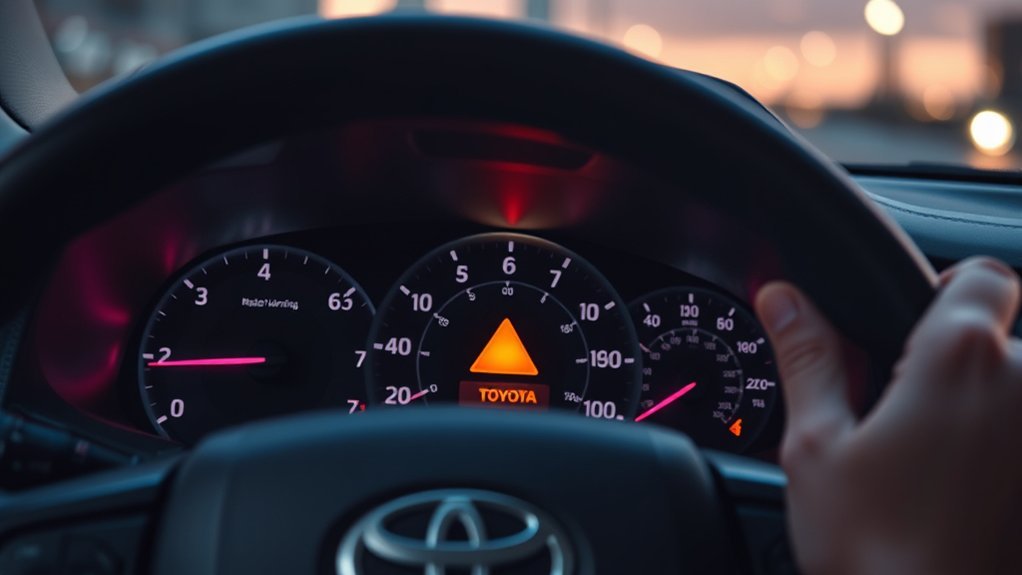
Toyota describes the master warning as a general system alert: on vehicles that use it, the warning light can illuminate or flash with a buzzer when the master warning system detects a malfunction, while the multi-information display provides the message or corrective instruction. The master warning light does not identify the failed part by itself. On some RAV4 generations it appears as a triangle with an exclamation mark; other model years and instrument clusters may present warnings differently.
Toyota explains that dashboard colors vary by system. Yellow indicators mark an important condition but do not always mean a malfunction. Red indicators require immediate attention, although the required action still depends on the message. Check Toyota’s manual portal for your exact model year instead of relying on the triangle alone.
Is the Triangle Always the Master Warning Light?
No single icon description covers every RAV4 year, market, gas model, hybrid, plug-in hybrid, or instrument cluster. Treat a triangle with an exclamation mark as a prompt to read the display, but confirm its meaning in the exact owner’s manual. This is especially important on newer digital clusters, where Toyota may present the warning primarily through the multi-information display. Do not confuse the triangle with the separate TPMS symbol, which resembles a tire cross-section with an exclamation mark.
Why Does It Come On?
The warning may appear after startup or while driving, but the master icon alone does not tell you which system caused the alert. The accompanying message may identify a malfunction, an incorrectly performed operation, a maintenance-related item, or another condition that needs attention. Separate lights such as TPMS, low fuel, ABS, SRS, Check Engine, brake, steering, or temperature warnings can also appear, so do not assume one of those systems is the cause until the display or diagnostic data points to it.
The dashboard message is more useful than the master icon. Record the complete wording, the warning color, any second symbol, the mileage, and what the RAV4 was doing when the alert appeared.
How Do Other Warning Lights Change the Urgency?
A yellow master alert with normal vehicle behavior may allow time for careful checks or prompt diagnosis. A red oil-pressure warning, high-temperature warning, serious brake warning, or severe steering warning requires a safer and faster response. A maintenance reminder is normally a scheduled-service notice, not the same thing as a critical master warning, but confirm the message in your manual.
Can You Drive With the RAV4 Master Warning Light On?
Sometimes, but only after you read the exact message and check how the RAV4 is behaving. Do not continue normal driving if the display says to stop, if an “Oil Pressure Low” or “Braking Power Low” message appears, or if the vehicle is overheating, braking poorly, steering abnormally, smoking, stalling, losing major power, or running roughly with a flashing Check Engine light. If the message only directs inspection and the vehicle remains stable, move it only as needed to reach a safe place or obtain the inspection the manual calls for. A simple message can sometimes be corrected on the spot, but the master warning symbol by itself is never enough to decide that driving is safe.
What Should You Check First?
Pull over where you are protected from traffic. Before restarting, photograph the full dashboard and message. On a hybrid or plug-in-hybrid RAV4, turn the vehicle fully off and confirm that the READY indicator is off before opening the hood or performing checks.
- Park safely: Move away from traffic, set the parking brake, and use hazard lights when needed.
- Preserve the evidence: Photograph the exact message, all illuminated icons, and the odometer before switching the vehicle off.
- Check for critical warnings: Look for “Oil Pressure Low,” “Braking Power Low,” high-temperature, red brake, charging, severe steering, hybrid-system, or flashing Check Engine alerts.
- Check closures: Confirm that every door, the hood, and the rear hatch are fully latched.
- Inspect the tires: Look for visible damage or a flat tire and measure pressure with an accurate gauge when safe.
- Check simple message items: Review fuel level, washer fluid, and any specific maintenance or fluid message shown by the display.
- Check engine fluids safely: Follow the owner’s manual, keep the vehicle off, allow hot components to cool, and never remove a hot coolant cap.
- Restart only when appropriate: After correcting a minor condition, one restart may confirm whether the alert clears. Do not disconnect the 12-volt battery merely to erase the warning.
Warning: Do not restart an engine with a continuing oil-pressure warning. Do not keep driving with overheating, poor braking, severe steering difficulty, smoke, or a strong burning smell. Arrange roadside assistance when the RAV4 is not safe to control.
What Do Paired Warning Lights Mean?
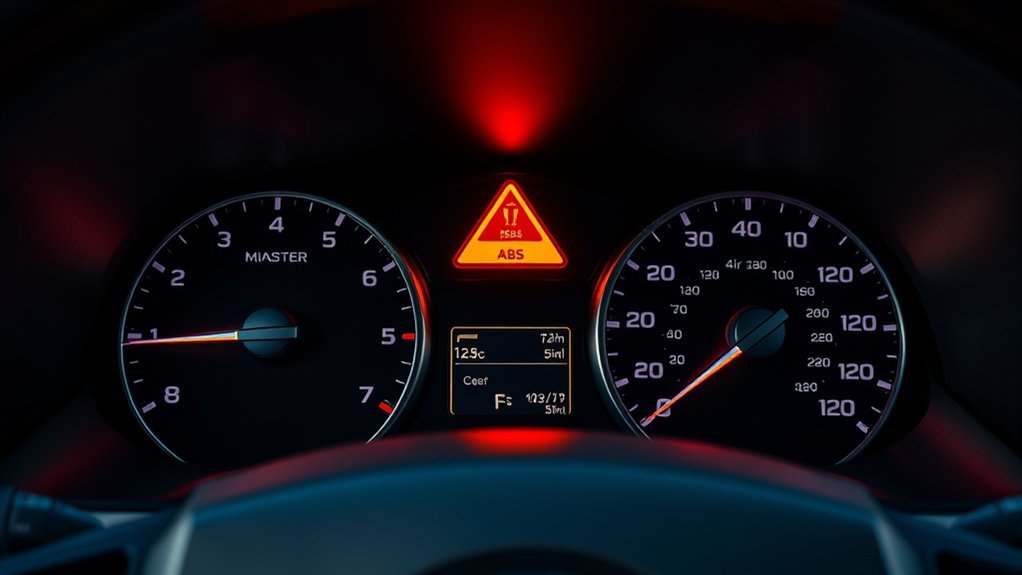
The safest response depends on the message, the second warning light, and how the RAV4 feels. Use this table as a triage guide, then follow the instructions in your exact owner’s manual.
| Paired Warning or Symptom | What It May Affect | Safest Next Step |
|---|---|---|
| Oil-pressure warning | Engine lubrication | Stop safely, shut the vehicle off, do not restart while the warning remains, and arrange assistance. |
| High-temperature warning, steam, or overheating message | Engine or hybrid cooling | Stop safely, shut down as directed by the manual, and never open a hot coolant cap. |
| Red brake warning, soft pedal, grinding, leaking fluid, or poor stopping | Primary braking system | Do not continue driving. Arrange a tow or roadside assistance. |
| ABS warning without a red brake warning | Anti-lock braking assistance | Toyota directs immediate inspection for an ABS or brake-assist malfunction. If braking feels normal and no red brake warning appears, move the vehicle only as needed to reach a safe place or service; avoid hard braking. Stop if braking feels abnormal. |
| Flashing Check Engine light with shaking or power loss | Engine combustion or another serious powertrain fault | Stop when safe and arrange diagnosis. Continued driving may worsen damage. |
| Steady Check Engine light with normal operation | Engine or emissions system | Check the fuel cap if the manual identifies it as relevant, avoid hard acceleration, and scan the codes soon. |
| SRS or airbag warning | Airbags and related occupant-protection systems | Toyota directs immediate inspection because the SRS airbag or related restraint system may not provide its intended protection. Follow any more urgent displayed instruction. |
| Steady TPMS warning | Low tire pressure | Inspect every tire and set cold pressure to the driver-door placard specification. |
| TPMS flashes for 60–90 seconds, then stays on | TPMS sensor or system operation | Check pressure manually and schedule system inspection. |
| Charging, severe steering, hybrid-system, smoke, or major power-loss warning | Electrical supply, steering assistance, or propulsion | Stop safely and follow the displayed instruction. Arrange a tow when control, power, or safe operation is affected. |
What Should You Do When the ABS Light Appears?
An ABS warning means Toyota has detected a malfunction in the anti-lock braking or brake-assist system and directs immediate inspection. If the brake pedal feels normal and no red brake warning appears, conventional braking may still be available, but anti-lock or brake-assist functions may not work as intended. Reduce speed, leave extra stopping distance, avoid aggressive braking, and move the RAV4 only as needed to reach a safe place or obtain service.
Do not continue driving if the ABS warning appears with a red brake warning, a soft or sinking pedal, grinding, leaking fluid, or increased stopping distance. Those signs can indicate a more serious braking problem that warrants roadside assistance or towing.
What Does the TPMS Warning Mean?
The TPMS light signals low tire pressure or a monitoring-system fault. Inspect all four tires and use an accurate gauge. Match the pressure to the Tire and Loading Information Label on the driver’s doorjamb or the owner’s manual, not the maximum pressure printed on the tire.
NHTSA recommends checking pressure when the tires are cold, meaning the vehicle has not been driven for at least three hours. Its guidance also states that a TPMS light flashing for 60–90 seconds before remaining illuminated indicates a system malfunction. Review the full NHTSA tire-safety guidance.
What Do SRS and Check Engine Alerts Mean?
An SRS warning means the airbag, seat-belt pretensioner, or related occupant-protection system needs immediate inspection. The engine may continue to operate normally, but the restraint system may not provide its intended crash protection. Follow the owner’s manual and any more urgent warning shown on the display.
When the Check Engine light appears, an OBD-II scanner may retrieve emissions-related powertrain codes. A loose or damaged fuel cap, misfire, sensor fault, emissions fault, or another engine problem may trigger it. Record every code and any available operating data before clearing anything. For a RAV4-specific workflow, see the RAV4 Check Engine light diagnosis guide.
Note: A basic code reader may not access Toyota ABS, SRS, TPMS, steering, body-control, hybrid, or network modules. A “no codes” result from a basic reader does not prove that those systems are fault-free.
Can Cold Weather Trigger the RAV4 Warning?
Cold weather can lower tire pressure and reduce 12-volt battery output. A marginally low tire may cross the TPMS warning threshold overnight and rise again as the tire warms. That can create a tire-pressure warning, while low system voltage can contribute to electrical warning behavior that needs diagnosis. NHTSA says TPMS does not replace checking the tires with an accurate gauge.
Moisture, ice, road salt, or debris may also affect exterior sensors, door switches, and closures. A warning that disappears after warm-up still deserves attention if it returns. Weather can explain when an alert appears, but it does not prove that the underlying condition is harmless.
Likely Causes and Typical Fixes
Use three evidence sources before replacing anything: the exact display message, the paired warning light, and physical symptoms. This approach is more reliable than guessing that every group of warning lights comes from a weak battery or failed sensor.
- Open closure or simple message: If the multi-information display specifically identifies an open closure or another simple condition, fully latch or correct the named item and confirm whether the message clears.
- Low tire pressure: Inspect for damage and set cold pressure to the driver-door placard specification.
- TPMS malfunction: Check pressure manually and have the sensors and system inspected if the light flashes before staying on.
- Low or unstable 12-volt voltage: Have the battery and charging condition tested, especially when several unrelated warnings appear together after startup.
- Engine or emissions fault: Read the Check Engine codes and diagnose the cause. A fuel-cap or EVAP system fault is only one possibility; use the RAV4 Check Engine guide for the broader diagnosis order.
- ABS or wheel-speed fault: Scan the ABS module and inspect the related sensor circuits instead of replacing a wheel-speed sensor from a code alone.
- SRS, steering, hybrid, body, or network fault: Use a Toyota-capable scan tool and follow the exact dashboard instruction. For a hybrid-specific warning, see the RAV4 Hybrid System Malfunction guide.
- Oil pressure, overheating, brake, smoke, or severe power-loss condition: Stop safely and arrange professional assistance. See the RAV4 oil-warning guide or RAV4 overheating guide when those specific warnings are present.
Repair the condition identified by the message and diagnostic evidence. The master warning icon alone is not enough information to choose a replacement part.
[Products Worth Considering]

These Click&Fit windshield washer nozzles are designed to replace worn or damaged sprayers on a wide range of Toyota models, helping restore reliable windshield cleaning performance. The dual spray outlets provide broad fluid coverage for improved visibility and more efficient washer fluid use. Built for easy installation, they offer a quick way to refresh your vehicle's washer system and maintain clear driving conditions.

This A-Premium windshield washer pump is designed to restore reliable windshield cleaning performance across a wide range of compatible vehicles. It supports numerous Toyota, Honda, Lexus, Mazda, Ford, Lincoln, and other models, making it a versatile replacement choice for maintaining clear visibility in all driving conditions. Built for straightforward fitment, it helps ensure consistent washer fluid delivery when you need it most.

This replacement fuel gas cap is designed to fit a wide range of Toyota and Lexus vehicles, making it a practical solution for a lost, worn, or damaged original cap. It helps restore a secure fuel tank seal and supports proper vehicle operation while offering broad compatibility across many popular model years. The package includes one gas cap, and buyers should confirm fitment before ordering.
How Should the Warning Be Diagnosed?
Start by preserving the original evidence. Record the dashboard message, all warning lights, mileage, symptoms, and the conditions present when the fault occurred. Scan every relevant module with equipment that supports the affected RAV4 system.
For a Check Engine warning, save the diagnostic trouble codes and available freeze-frame or operating data. For ABS, SRS, steering, TPMS, hybrid, body-control, or communication alerts, use a tool with Toyota-specific module coverage. Test the circuit, power supply, wiring, sensor, and related components before replacing a part named in a code description.
A technician may also test the 12-volt battery and charging condition when several unrelated warnings appear together. Low voltage can be one cause of multiple alerts, but it should be measured rather than assumed.
[Products Worth Considering]
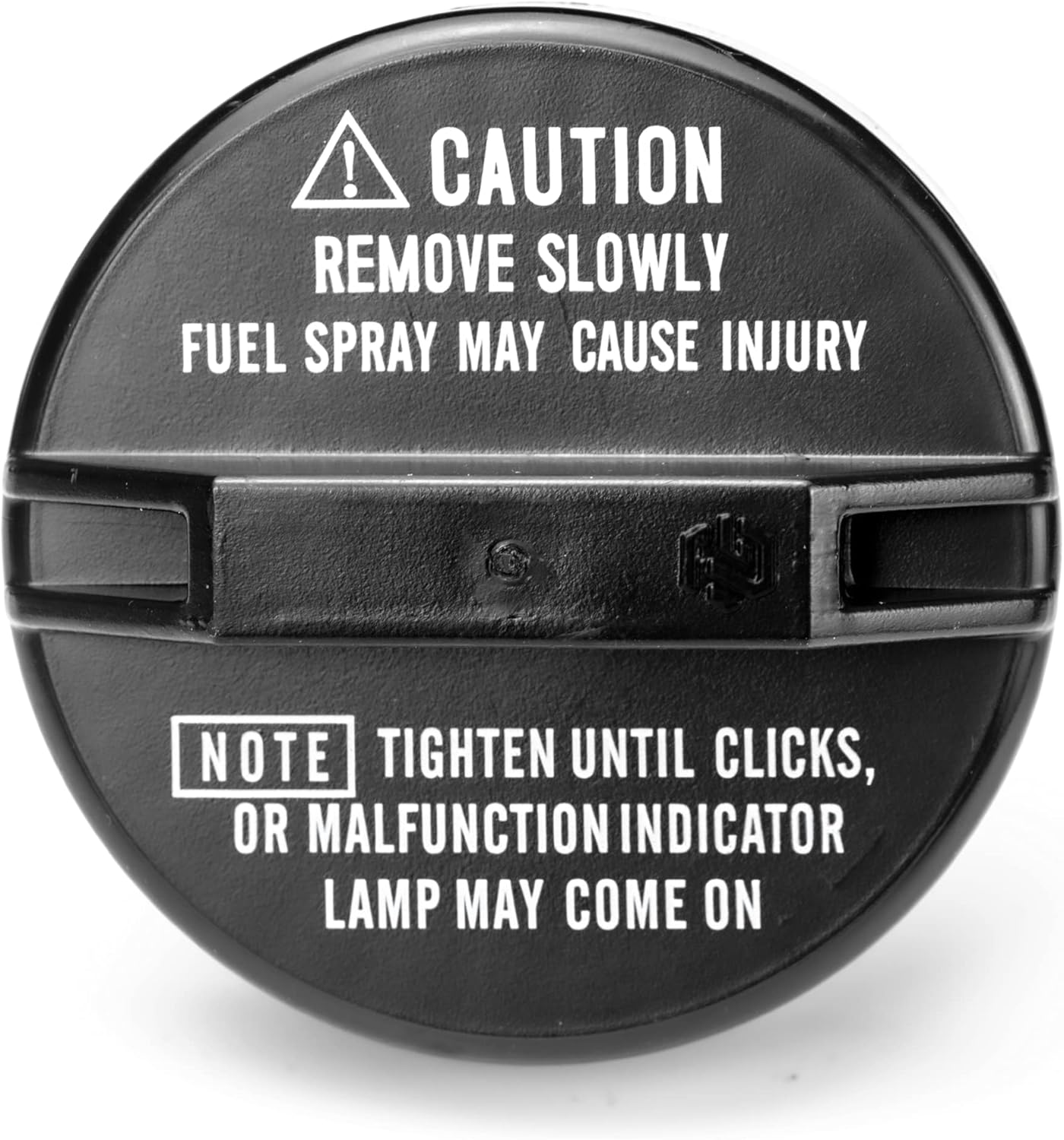
This replacement fuel cap is designed to restore a secure seal for a wide range of Toyota and Lexus vehicles. Built for direct fit compatibility, it helps maintain proper fuel system function while offering easy installation and dependable everyday performance. It is a practical solution for replacing a worn or missing gas cap with confidence.

ECOGARD X5608 is a premium cartridge oil filter designed for a wide range of Toyota, Lexus, and Scion vehicles. It helps protect your engine by screening out harmful contaminants and is built for use with both synthetic and conventional oils. Included O-rings support a proper housing seal for dependable maintenance between oil changes.
What Should You Record Before Service?
- The exact dashboard message and a clear photograph.
- The color and shape of the master warning indicator.
- Every second warning light, including ABS, SRS, TPMS, brake, temperature, charging, steering, hybrid-system, or Check Engine.
- The model year, powertrain, mileage, and whether the vehicle was in READY mode.
- When the warning appeared, such as startup, a cold morning, acceleration, braking, charging, or highway driving.
- Any shaking, power loss, smoke, smell, noise, heavy steering, poor braking, or temperature change.
- All module codes and saved operating data from the scan.
DIY, Independent Shop, or Toyota Dealer?
DIY checks make sense when the display specifically identifies a simple condition that the owner’s manual allows you to correct, such as an open closure, low washer fluid, low tire pressure, or a fuel-cap issue. A basic reader can also help when a steady Check Engine light appears and the vehicle otherwise operates normally. If the display says “Maintenance Required,” use the separate RAV4 maintenance-reminder guide instead of treating it as a fault reset.
Choose a shop with Toyota-capable diagnostic equipment for ABS, SRS, TPMS, steering, body-control, hybrid, or network faults. A Toyota dealer may be the practical choice when the repair requires model-specific software, programming, warranty coverage, a service campaign, or access to factory diagnostic information.
Use roadside assistance instead of driving to a shop when the RAV4 has low oil pressure, overheating, unsafe braking, severe steering difficulty, smoke, major power loss, repeated stalling, or another condition that makes it unsafe to control.
Pro Tip: Keep the dashboard photographs and scan results. Do not clear codes or disconnect the battery before service unless a repair procedure specifically requires it.
[Products Worth Considering]
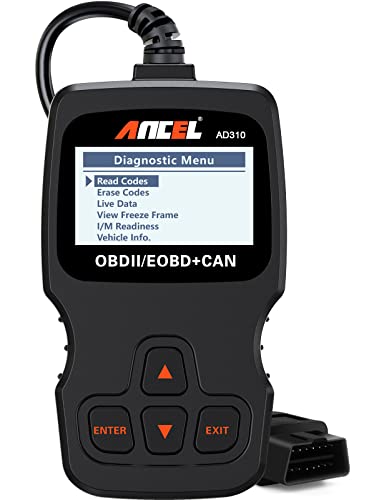
CEL Doctor: The ANCEL AD310 is one of the best-selling OBD II scanners on the market and is recommended by Scotty Kilmer, a YouTuber and auto mechanic. It can easily determine the cause of the check engine light coming on. After repairing the vehicle's problems, it can quickly read and clear diagnostic trouble codes of emission system, read live data & hard memory data, view freeze frame, I/M monitor readiness and collect vehicle information.

UNDERSTAND YOUR CHECK ENGINE LIGHT – The ANCEL AD410 OBD2 scanner helps everyday drivers quickly read and clear engine-related fault codes, view code definitions, and understand why the check engine light is on before visiting a repair shop. With 42,000+ built-in DTC lookups, this car code reader helps reduce guesswork and makes basic vehicle diagnostics easier for beginners and DIY users

[Easy to Use—Work Out of the Box] + [FOXWELL 2026 New Version] FOXWELL NT604 Elite scan tool is the 2026 new version from FOXWELL, designed for car owners who want to figure out the cause of issues before fixing car problems by scanning common systems like ABS, SRS, engine, and transmission. The NT604 Elite obd2 scanner diagnostic tool comes with the latest software—no need to waste time downloading software first. Plug the scanner into the OBDII port with OBDII cable to start the diagnosis.
When Should You Stop Driving and Call a Tow?
Stop driving when the warning appears with low oil pressure, overheating, a red brake warning and abnormal braking, severe steering difficulty, smoke, a strong burning smell, major power loss, repeated stalling, or a flashing Check Engine light with shaking. Move away from traffic only when you can do so safely.
Do not restart the engine while an oil-pressure warning remains. Do not open a hot coolant cap. Turn on the hazard lights, keep occupants away from moving traffic, and contact roadside assistance.
An isolated SRS warning does not automatically require an engine shutdown, but Toyota directs immediate inspection because occupant-protection functions may be unavailable. An isolated ABS warning also calls for immediate inspection. If the brake pedal feels normal and no red brake warning appears, move the vehicle only as needed to reach safety or service; stop and arrange assistance if braking feels abnormal or another critical warning appears.
Safety Reminder: The master warning light is not a diagnosis. Base your decision on the full message, paired light, symptoms, model-year manual, and module scan results.
Frequently Asked Questions
How do you reset the Toyota RAV4 master warning light?
There is no universal reset for every RAV4 master warning. Correct the cause first. The alert may clear immediately, after a restart or drive cycle, after tire-pressure correction, or after a technician repairs the fault and clears the relevant module.
Can you diagnose the RAV4 master warning light yourself?
You can read and photograph the message, check closures, inspect the tires, measure tire pressure, and review approved fluid checks in the owner’s manual. Use a basic reader for Check Engine codes. ABS, SRS, steering, TPMS, hybrid, body-control, and network alerts may require Toyota-capable equipment.
What is the master warning light on a Toyota RAV4?
It is a general alert telling you to read the display and check for another warning. Some RAV4 model years use a triangle with an exclamation mark, but the exact icon, color, wording, and buzzer behavior vary. Confirm it in the manual for your exact vehicle.
Can you drive with the Toyota RAV4 master warning light on?
Only after reading the exact message and checking for unsafe symptoms. Do not continue normal driving if the display tells you to stop, if “Oil Pressure Low” or “Braking Power Low” appears, or if the RAV4 overheats, brakes or steers abnormally, smokes, stalls, loses major power, or runs roughly with a flashing Check Engine light. If the message only calls for inspection and the vehicle is stable, move it only as needed to reach a safe place or obtain service.
Can cold weather trigger the RAV4 master warning light?
Cold weather can lower tire pressure, reduce 12-volt battery output, and expose marginal switches or sensors. Check the actual message and tire pressure instead of assuming the warning is harmless because the weather is cold.
Can you drive with the master warning light and Check Engine light?
A steady Check Engine light with normal operation and no red warning may allow cautious travel for prompt diagnosis. Stop if the light flashes, the engine shakes, power drops sharply, the vehicle overheats, smoke appears, or another critical warning turns on.
Why is the RAV4 master warning light on when no message is visible?
The message may have disappeared after a restart, may only appear under certain conditions, or may be stored in a vehicle module. Photograph future alerts and request a full-module scan if the warning returns, especially when several lights appear together.
Should you disconnect the battery to clear the warning?
No. Disconnecting the 12-volt battery may erase useful evidence, reset learned settings, and temporarily hide an unrepaired fault. Record the messages and codes first, then repair the cause using the correct procedure.
Safety Disclaimer: This article is for informational purposes only and does not replace the owner’s manual for your exact RAV4 or a professional vehicle diagnosis. Stop safely and contact a qualified technician or roadside assistance when a warning appears with low oil pressure, overheating, poor braking, severe steering difficulty, smoke, major power loss, repeated stalling, or another unsafe symptom.
Conclusion
The RAV4 master warning tells you to inspect the full alert rather than guess from one symbol. Photograph the display, identify the paired warning, check for unsafe symptoms, and use the correct model-year manual. Correct only the simple condition the display or manual identifies, and use a suitable scan tool for system faults. Stop and arrange assistance whenever oil pressure, temperature, braking, steering, smoke, stalling, or major power-loss symptoms make the vehicle unsafe.
Sources
- Toyota Owners: Dashboard Warning Lights Explained — supports Toyota’s master-warning definition, general warning-color guidance, and ABS/SRS descriptions; accessed September 1, 2026.
- Toyota 2025 RAV4 Hybrid Owner’s Manual: If a Warning Message Is Displayed — supports following the exact multi-information-display instruction and the stop-now wording for “Oil Pressure Low” and “Braking Power Low”; accessed September 1, 2026.
- Toyota Owners: Manuals and Warranties — provides access to model-year and vehicle-specific owner information, including current 2026 RAV4 materials; accessed September 1, 2026.
- National Highway Traffic Safety Administration: TireWise — supports cold tire-pressure checks, driver-door placard guidance, TPMS limitations, and the 60–90-second malfunction sequence; accessed September 1, 2026.