Quick Answer
If your RAV4’s oil warning light turns on, pull over safely and shut the engine off right away. Check the dipstick on level ground and add the correct oil grade if the level is low. Inspect under the car and around the filter and drain plug for visible leaks. If the oil level reads normal but the light stays on, you likely have a faulty sensor or oil pressure issue — get it diagnosed before driving further.
Key Takeaways
- Pull over and shut the engine off the moment the oil warning light appears — even a brief drive on low oil pressure can cause permanent engine damage.
- Check the dipstick on level ground with a cool engine; add the factory-recommended oil grade if the level falls below the safe mark.
- Inspect the oil pan, valve cover gaskets, filter, and drain plug for visible leaks after every oil warning.
- A normal oil level with a persistent warning light points to a faulty oil pressure sensor or wiring — a shop diagnosis is the right next step.
- Checking your oil monthly and following Toyota’s maintenance schedule prevents most low-oil emergencies before they start.
Emergency Action: What to Do If the Oil Warning Lights Up on Your RAV4
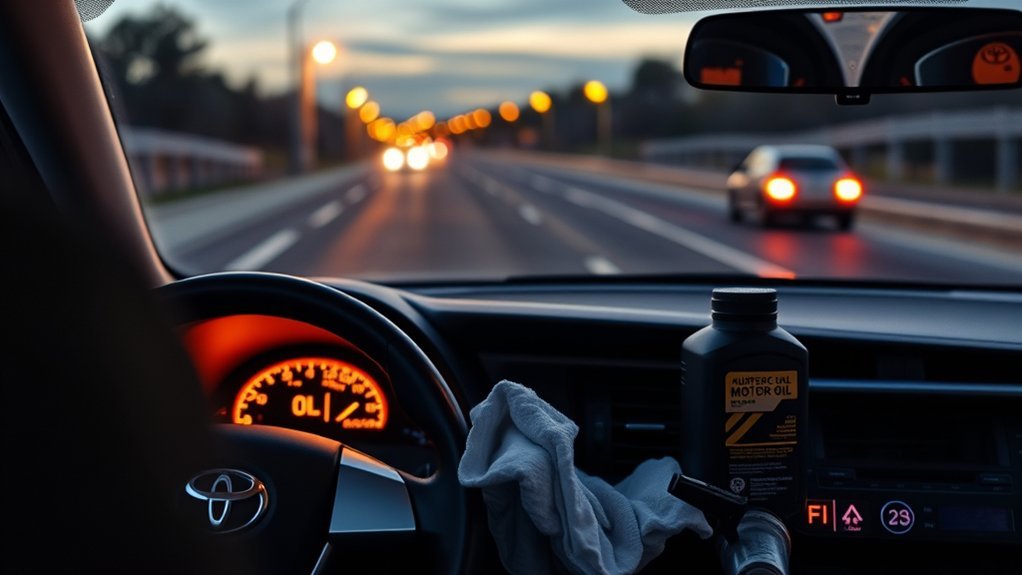
Warning: Don’t restart the engine repeatedly after an oil warning — each restart without adequate oil pressure raises the risk of permanent engine damage.
If the oil warning light turns on while you’re driving, pull over at the first safe spot and cut the engine. Don’t wait to find a parking lot — stop as soon as road and traffic conditions allow.
Once stopped, check the dipstick and look for visible leaks or a burning oil smell. If the oil is low, add the correct grade and see if the light clears. Only run the engine briefly to move to safety if you absolutely must.
If the oil level reads normal but the warning stays on, suspect a faulty oil pressure sensor or wiring fault. Get a professional diagnosis to rule out a real pressure problem before you drive again.
Fast Checks to Confirm Low Oil: Dipstick, Visible Leaks, Filter, and Drain Plug
Park on level ground and let the engine cool for a few minutes. Pull the dipstick, wipe it clean, reinsert it fully, then pull it again and read the level against the marks. If it reads low, add the manufacturer-recommended oil grade until the level reaches the full mark.
Next, scan under the engine for fresh oil drips or wet spots. Check the oil pan seam and valve cover gaskets closely. Press a rag or tissue under any suspicious area — oil will show up fast.
Confirm the oil filter and drain plug are snug. A loose filter or drain plug is a common cause of rapid oil loss. Use a wrench to check both — tight, but not over-tightened. If the dipstick keeps reading low after topping up, track consumption monthly and book a mechanic visit.
DIY vs. Shop Diagnostics: Sensor, Oil Pressure Test, and When to Tow
A flickering oil warning light doesn’t always mean serious trouble. Start by checking the dipstick and looking for sludge or unusual color in the oil. Top up if low. If the warning continues, test the oil pressure sensor wiring with a multimeter to check for a false alarm before paying for shop diagnostics.
| DIY Step | Shop Step |
|---|---|
| Check oil level and condition | Professional oil pressure test |
| Multimeter sensor testing | Replace sensor or inspect oil pump |
| Basic drive check (gentle) | Tow if shutdowns or severe symptoms occur |
A DIY mechanical oil pressure test confirms whether the oil pump is working if you’re comfortable with tools. Key signs of a failing oil pump include a knocking engine noise, very low pressure gauge readings, and oil that looks frothy or milky on the dipstick.
Tow the RAV4 if you experience repeated shutdowns, confirmed low pressure, or any symptoms you can’t verify yourself. Driving on low oil pressure risks permanent engine damage — a tow costs far less than an engine rebuild.
Repair Options and Costs: What to Fix First (Leak, Filter, Pump, or Engine)
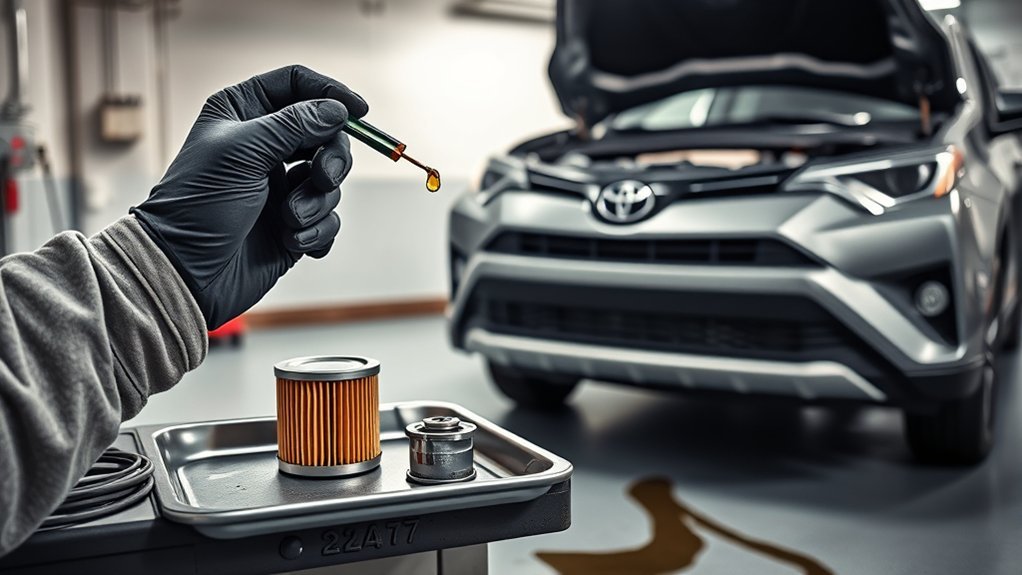
Start with the simplest and cheapest fixes first. Inspect for visible leaks at the oil pan and valve cover gaskets, do an oil change and fit a new filter, then monitor consumption over a few fill-ups to check whether levels keep dropping.
- Oil on the driveway? Prioritize gasket or pan seal repair — costs range from $100 to $1,000 or more depending on severity, but fixing it stops ongoing damage.
- New oil and filter clears the pressure warning? Cheapest fix at $30–$70 for the filter alone.
- Oil consumption continues after the fix? Schedule a compression test or oil pump inspection.
- High consumption with no visible external leak? Budget for pump or internal engine work — oil pump replacement starts around $500.
Work from least invasive to most expensive. Fix leaks and swap the filter first, then escalate to pump or internal diagnostics only if the problem continues.
Preventing Future Low-Oil Emergencies: Checks, Oil Grade, and Maintenance Plan
Check the dipstick on a level surface every month or before long trips. Top off if the level drops below the safe mark, and log each reading so you can spot a consumption trend early. Small drips under the car add up — scan for leaks every few checks.
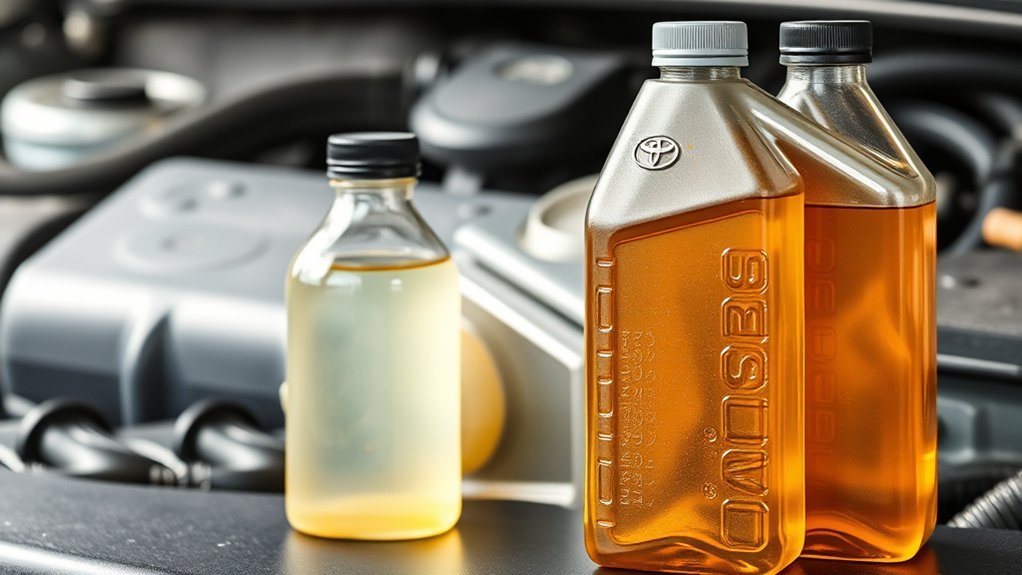
Pro tip: Always use the oil grade your owner’s manual specifies. According to Toyota’s factory specification, the 2010 RAV4 calls for SAE 5W-30 — some owners of high-mileage engines switch to a slightly heavier grade, but only do this on a mechanic’s recommendation.
Follow Toyota’s maintenance schedule: change oil every 5,000 miles or 6 months for conventional oil, replace the filter at the same interval, and keep a log with dates and mileage. If you notice repeated low readings or faster consumption between changes, book a mechanic visit to check for worn seals, piston rings, or pump issues.
Frequently Asked Questions
How Long Can You Drive After a low oil warning?
Stop as soon as it’s safe to do so — don’t try to reach a destination. Even a short drive on critically low oil pressure can cause permanent engine damage. Pull over, check the dipstick, and add oil before driving any further.
What Is the Oil Warning Light on a Toyota RAV4?
The oil warning light signals low oil pressure in the engine. Don’t treat it as minor. Check the dipstick right away, add oil if the level is low, and stop driving until you confirm the cause — ignoring it risks catastrophic engine failure.
What Should I Do if My Engine Oil Level Is Low?
Stop driving, check the oil with the dipstick on level ground, and add the correct oil grade until the level reaches the full mark. Monitor for leaks after topping up. If the level keeps dropping between checks, schedule a mechanic inspection to find the source.
Can I Drive My RAV4 With the Oil Light On to a Gas Station?
Only if the station is very close and the drive is extremely short. A minute at low speed carries far less risk than several miles at highway speed. If you’re unsure how serious the issue is, call for roadside assistance instead of guessing.
Conclusion
The RAV4’s oil warning light demands immediate action. Pull over, shut off the engine, and check the dipstick before anything else. Add the correct oil grade if the level is low, and inspect for leaks under the car. If the level looks fine but the warning stays on, have the pressure sensor tested at a shop rather than guessing.
Regular oil checks and a consistent maintenance schedule keep this light from appearing in the first place. Check your dipstick monthly, change your oil on schedule, and log your consumption. A small habit now prevents an expensive repair later.
References
- 2010 Toyota RAV4 Owner’s Manual — Toyota Motor Corporation (Section 7-2, Engine Oil Specifications)
- Vehicle Health Index: Oil Pressure Warning Diagnostics — CarMD