
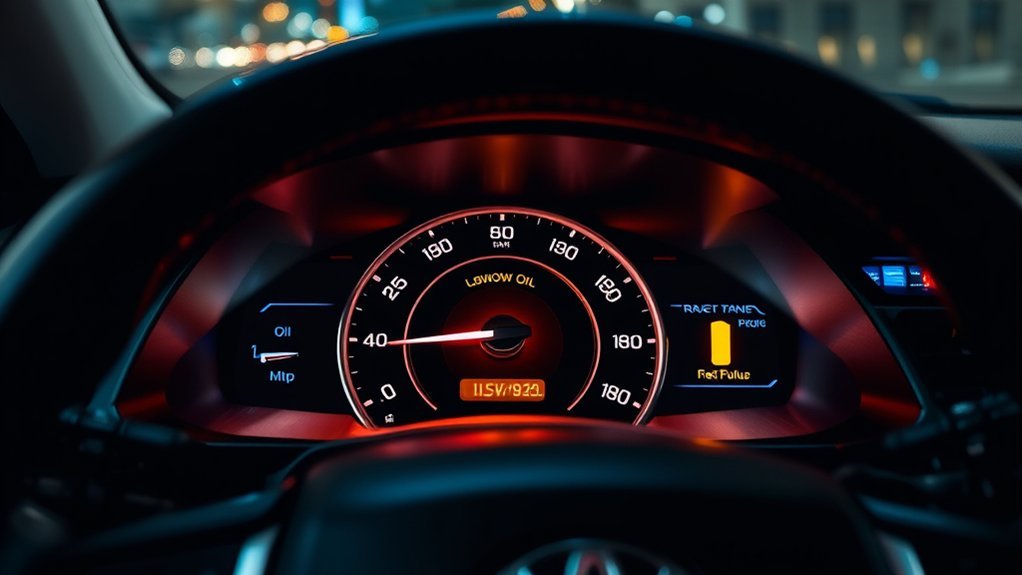
Toyota Camry Low Oil Warning Light: What It Means
Last updated: July 22, 2026. This guide was revised using current Toyota warning-light guidance and the 2025 Camry Warranty & Maintenance Guide.
Do not keep driving a Toyota Camry with the red oil-pressure warning on. Pull over as soon as it is safe, switch off the engine, and check the dipstick on level ground. Add the exact oil grade listed for your Camry only if the level is low. If the oil level is normal, the warning stays on, oil is leaking, or the engine makes a knocking or rattling sound, do not restart or drive the car. Arrange a tow for diagnosis.
Quick Answer
The red oil-can warning in a Toyota Camry primarily means engine oil pressure may be too low. Low oil level can cause pressure loss, but a full dipstick does not prove that pressure is safe. Stop the engine, let the oil settle for several minutes, and check the dipstick. Add the correct oil grade for your Camry only if the level is low. If the warning remains or returns, tow the car instead of driving it.
Key Takeaways
- Treat a red oil-pressure warning as an urgent engine warning, not a routine service reminder.
- Pull over safely, shut off the engine, and check the dipstick before adding oil.
- A normal oil level does not guarantee that the engine has safe oil pressure.
- Do not restart if the dipstick is dry, oil is leaking rapidly, or the engine made an abnormal mechanical noise.
- If the warning stays on or returns, arrange a tow and have the actual oil pressure tested.
| Dashboard Alert | What It Usually Means | What You Should Do |
|---|---|---|
| Red oil-pressure warning | Engine oil pressure may be too low for safe lubrication | Stop safely, switch off the engine, check the oil level, and tow the car if the warning remains |
| Oil-level message, when equipped | The quantity of oil in the engine may be low | Check the dipstick on level ground and add the specified oil only if needed |
| Maintenance or oil-service reminder | Scheduled maintenance is due or approaching | Arrange the required service and reset the reminder only after the work is completed |
What’s in This Article
- What Does the Toyota Camry Low Oil Warning Mean?
- How to Check Your Oil Level Properly
- What Causes a Low Oil-Pressure Warning?
- Oil-Pressure Warning vs. Maintenance Reminder
- What to Do When the Warning Comes On
- Can You Reset the Oil Warning?
- What Happens If You Ignore It?
- When Should You Call a Mechanic?
- How to Prevent Repeat Warnings
- How the Oil Pump Works
- What Intermittent Warning Patterns Mean
- Frequently Asked Questions
[Products Worth Considering]

【Replace Part Number】This oil dipstick replaces: 15301-28031, 1530128031.

Replacement Part Number: 917-396; 153010H012
What Does the Toyota Camry Low Oil Warning Mean?
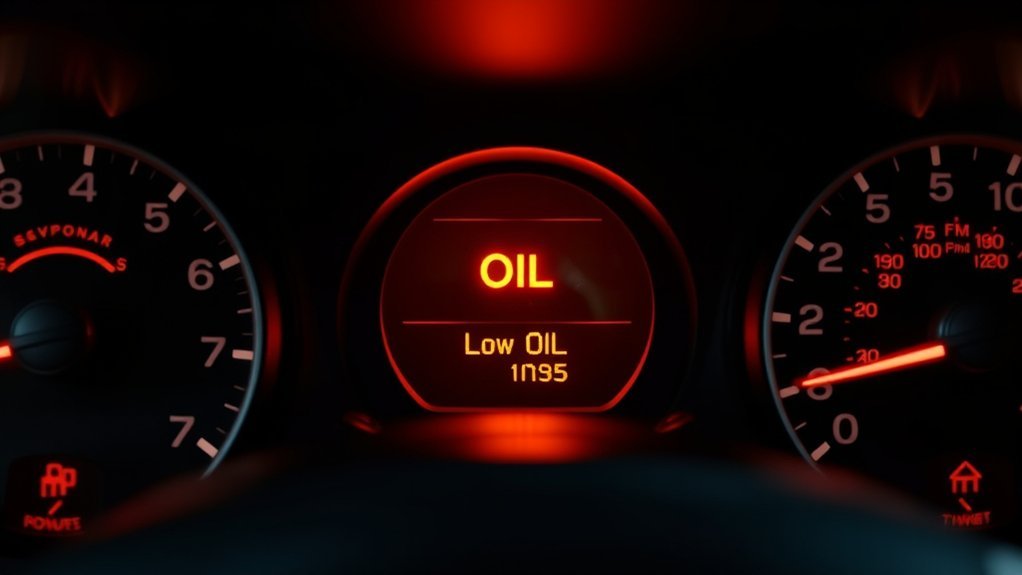
The red oil-can symbol primarily warns that engine oil pressure is too low. Toyota classifies low engine oil pressure as a red condition that needs immediate attention. The safest response is to stop the vehicle in a safe place and switch off the engine.
Oil level and oil pressure are related, but they are not the same. A very low oil level can prevent the pump from supplying enough oil. However, the dipstick can read full while pressure remains low because of a sensor or wiring fault, an incorrect or restricted oil filter, a blocked pickup screen, an oil-pump problem, or internal engine wear.
Dashboard messages can vary by Camry model year and market. Some vehicles may also display a separate oil-level message. Confirm the exact symbol and wording in the owner’s manual for your model rather than assuming every oil-related message has the same meaning.
Warning: Do not continue driving to see whether a red oil-pressure warning clears by itself.
How to Check Your Oil Level Properly
Park on level ground, set the parking brake, and switch off the vehicle. Let the oil drain back into the pan for several minutes, or follow the exact waiting period in your owner’s manual. Checking too quickly or while the car is on a slope can produce a misleading reading.
Pull the dipstick out, wipe it with a clean lint-free cloth, insert it fully, and pull it out again. Read both sides and use the clearer result. The oil should sit between the lower and upper marks. If it is below the lower mark, add the specified oil in small amounts and check the level again.
Here’s a quick reference for the full checking process:
| Step | Action | Why It Matters |
|---|---|---|
| Park on level ground | Find a flat and safe surface | A slope can distort the reading |
| Switch off the vehicle | Set the parking brake and turn the vehicle fully off | Prevents moving engine parts from operating while you check |
| Let the oil settle | Wait several minutes or follow the manual | Allows circulating oil to return to the pan |
| Clean the dipstick | Wipe it with a clean lint-free cloth | Removes the first smeared reading |
| Reinsert fully | Push it all the way in before removing it again | Provides a repeatable reading |
| Read the level | Keep the oil between the lower and upper marks | Shows whether a careful top-up is needed |
Do not judge the oil by color alone. Oil can darken during normal use. Look for more serious warning signs such as a gritty texture, visible metal particles, a strong fuel or burnt smell, foam, or a milky appearance. Milky oil can indicate contamination, while foam can occur when oil becomes aerated or the crankcase is overfilled.
Warning: Do not overfill the crankcase. Excess oil can become aerated, increase crankcase pressure, and interfere with reliable lubrication.
[Products Worth Considering]

【Replace Part Number】This oil dipstick replaces: 153010H012, 153010H010, 917-396.

[Vehicle Fitment]: Compatible with Lexus ES350 2007-2013 V6 3.5L; Compatible with Toyota Avalon 2008-2019 V6 3.5L, Camry 2007-2018 V6 3.5L, Venza 2009-2016 V6 3.5L
What Causes a Low Oil-Pressure Warning in a Toyota Camry?
A Camry oil-pressure warning can come from a low oil level, a recent service problem, an electrical fault, or real mechanical pressure loss. Start with the oil level and visible leaks, but do not assume the sensor is at fault until actual pressure has been tested.
| Possible Cause | Typical Clue | Safe Next Step |
|---|---|---|
| Low oil level | Dipstick below the lower mark or warning during turns and braking | Add the specified oil, inspect for leaks, and arrange prompt service |
| Leak or oil consumption | Puddles, burning smell, blue smoke, or repeated top-ups | Find and repair the cause before the oil drops again |
| Recent oil-change problem | Warning began immediately or soon after service | Check the oil level, cap, filter, drain plug, grade, filter application, and fresh leaks |
| Sensor or wiring fault | Mechanical pressure tests normal while the warning remains | Test the sender, connector, wiring, and related circuit |
| Incorrect oil or restricted filter | Warning began after an oil or filter change | Verify the exact oil grade and correct filter for the engine |
| Blocked pickup, pump fault, or internal wear | Low gauge pressure, knocking, rattling, or visible metal in the oil | Stop running the engine and arrange professional diagnosis |
Can a Faulty Sensor Cause the Warning?
A faulty oil-pressure sensor, damaged connector, corroded terminal, or wiring problem can create a warning even when actual pressure is normal. The engine sounding quiet does not prove that the sensor is the cause.
A mechanic can install a mechanical pressure gauge and compare the reading with Toyota’s specification for the exact engine, oil temperature, and engine speed. Normal mechanical pressure points toward the sensor or electrical circuit. Low mechanical pressure confirms that the lubrication system needs further diagnosis.
How Do Oil Leaks and Consumption Cause the Warning?
Leaks and oil burning reduce the amount of oil available to the pump. Watch for these signs:
- Oil puddles under the car: Fresh spots can come from a gasket, seal, oil filter, oil pan, or drain plug.
- Frequent top-ups: Repeated oil loss can indicate an external leak or internal oil consumption.
- Blue exhaust smoke: Blue or blue-gray smoke can indicate that the engine is burning oil.
- Burning-oil smell: Oil may be reaching a hot engine or exhaust surface.
- Sludge or pickup restriction: Deposits can limit oil flow through the pickup screen and passages.
If the level drops again after a top-up, record the mileage and amount added. That information helps a mechanic measure the rate of oil loss.
What Is the Difference Between the Oil-Pressure Warning and the Oil-Change Reminder?
The oil-change or maintenance reminder tells you that scheduled service is due or approaching. It does not measure engine oil pressure. Arrange the listed maintenance and reset the reminder only after the service has been completed.
The red oil-pressure warning means the engine may not be receiving safe lubrication. Pull over as soon as it is safe, switch off the engine, and check the oil level. Do not treat the red warning like a routine maintenance message.
Warning: Low oil pressure can cause rapid bearing and engine damage. Do not keep driving while the warning remains on.
What Should You Do When the Low Oil-Pressure Light Comes On?
Follow these steps in order:
[Products Worth Considering]

[Replace Part Number] Engine Oil Dipstick for 917-396,153010H012 153010H010

Replacement Part Number: 917-398; 15301-28041; 1530128041; 917398

[Vehicle Fitment-1]: Compatible with Lexus HS250h 2010-2012 L4 2.4L; Compatible with Scion tC 2006-2010 L4 2.4L, xB 2008-2015 L4 2.4L
Check the Oil Level Right Away
- Pull over safely: Move out of traffic and stop on level ground when possible.
- Switch off the vehicle: Set the parking brake and turn the vehicle fully off.
- Look for a major leak: If oil is pouring or dripping rapidly, do not restart the engine.
- Check the dipstick: Let the oil settle for several minutes, then wipe, reinsert, and read the dipstick.
- Top up only if low: Add the exact oil grade listed for your model year and engine. Add small amounts and stay below the upper mark.
Decide Whether a Brief Restart Is Safe
Do not restart if the dipstick is dry, oil is leaking rapidly, the oil contains visible metal, the engine made a knocking or rattling sound, or the vehicle overheated.
If the level was low, you corrected it with the specified oil, no major leak is visible, and the engine made no abnormal noise, restart only briefly to check the warning. Shut the engine off immediately if the light stays on or returns. Even if it clears, arrange prompt inspection before returning to normal driving.
When Should You Tow the Camry?
Arrange a tow when the warning remains after the oil level is corrected, the dipstick reads normal but the warning is on, the engine ticks, rattles, or knocks, oil is leaking quickly, the warning began after service and the cause is unclear, or you cannot obtain a dependable dipstick reading.
Can You Reset the Toyota Camry Oil Warning Light?
You should not reset or ignore a true low oil-pressure warning. It should turn off only after safe pressure has been restored and the underlying fault has been repaired. Clearing a code, disconnecting the battery, or resetting the maintenance menu does not correct low oil pressure.
The oil-change or scheduled-maintenance reminder works differently. Reset that reminder after the required maintenance has been completed. The procedure varies by model year and display, so use the owner’s manual for your exact Camry.
If you cannot identify the alert, treat it as an oil-pressure warning first. Switch off the engine, check the dipstick, and confirm the dashboard wording before driving.
What Happens If You Ignore a Low Oil-Pressure Warning?
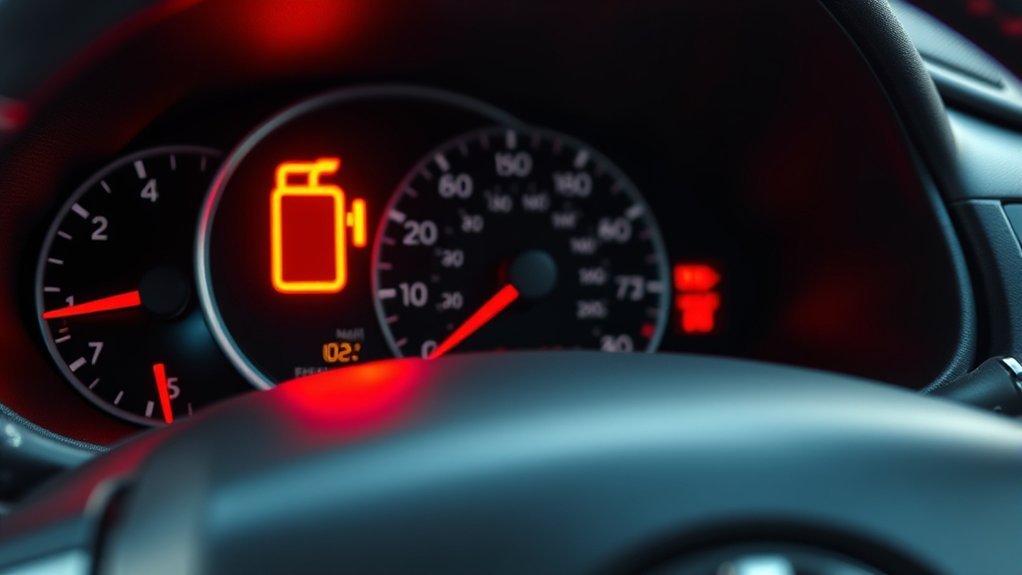
Oil pressure maintains a protective film between moving engine parts. When pressure becomes too low, bearings, camshafts, timing components, and other surfaces can lose that protection.
- Rapid engine wear: Moving parts can make direct metal contact.
- Bearing or timing-component damage: These parts depend on a steady oil supply.
- Excess heat: Oil also carries heat away from loaded engine surfaces.
- Engine seizure: Severe lubrication loss can lock internal components.
- Warranty complications: Missing maintenance records or continued driving after a serious warning can make a claim harder to support.
Stopping early also preserves evidence of the original fault before further engine damage makes diagnosis more difficult.
When Should You Call a Mechanic for Low Oil Pressure?
Get Immediate Help for These Warning Signs
- The oil-pressure warning remains after the oil level is corrected.
- The dipstick reads normal, but the red warning is still displayed.
- The engine knocks, rattles, ticks loudly, stalls, or loses power.
- Oil leaks rapidly from the filter, drain plug, oil pan, or engine.
- The warning began immediately after an oil or filter change.
- The oil looks milky, foamy, gritty, or metallic.
How Does a Mechanic Confirm the Cause?
A technician should verify the oil level, oil grade, filter application, and visible leaks before replacing parts. The key test is a mechanical oil-pressure reading compared with Toyota’s specification for the exact engine, oil temperature, and engine speed.
If mechanical pressure is normal, the technician can test the sensor, connector, wiring, and related circuits. If pressure is low, the diagnosis moves to the filter, pickup screen, oil pump, pressure-control components, sludge, bearing clearance, and internal engine condition.
For a more detailed mechanical testing sequence, see the Camry oil-pressure troubleshooting guide.
Why Is a Pressure Test Better Than Guessing?
A mechanical gauge test prevents replacing a sensor when pressure is truly low. It also prevents replacing an oil pump or opening the engine when the fault is only in the sensor circuit. Confirming the condition first makes the repair safer and more targeted.
How Can You Prevent Repeat Oil Warnings?
Toyota’s 2025 Camry Warranty & Maintenance Guide says to check the engine-oil level once a month. It uses a 5,000-mile or six-month scheduled-maintenance rhythm. For that model year, oil and filter replacement is listed after 10,000 miles or 12 months under normal use. Listed special operating conditions shorten the oil and filter interval to 5,000 miles or six months. Other Camry model years can use different requirements.
- Check the oil level monthly. Do not wait for a dashboard warning before using the dipstick.
- Follow the correct schedule. Match the service interval to your model year and driving conditions. See the Toyota Camry maintenance schedule guide.
- Use the specified oil and filter. Confirm the viscosity and capacity for the exact engine. See the Camry oil capacity and grade guide.
- Inspect after an oil change. Check the dipstick and look for fresh leaks around the filter and drain-plug area.
- Fix leaks and oil consumption early. Record each top-up so you can identify how quickly the level is falling.
- Keep maintenance records. Save the date, mileage, oil grade, filter information, and warning events.
Pro tip: Keep a sealed quart of the exact oil required by your Camry in the trunk. Store it upright and add only small amounts while checking the dipstick.
How Does the Camry Oil Pump Work?
The oil pump draws oil from the pan through a pickup screen. It sends the oil through the filter and engine passages to bearings, camshafts, timing components, and other moving parts.
Pressure can fall when the oil level is too low, the pickup screen or filter is restricted, the oil becomes aerated, the pump or pressure-control system wears, or internal engine clearances become excessive. Several faults can produce the same dashboard warning, which is why pressure should be measured before expensive parts are replaced.
What Do Intermittent Camry Oil-Warning Patterns Mean?
The timing of the warning can guide the first checks, but it does not prove the cause.
| Warning Pattern | Possible Explanation | Safe Response |
|---|---|---|
| Appears during turns, braking, or hills | Oil may be low enough to move away from the pickup | Stop on level ground and check the dipstick immediately |
| Appears only after the engine is hot | A sensor fault, wrong viscosity, pump wear, or excessive internal clearance may become more noticeable | Do not continue driving; have actual pressure tested at the specified conditions |
| Appears immediately after an oil change | Incorrect level, leaking filter or drain plug, wrong filter, wrong oil, missing cap, or disturbed wiring | Switch off the engine and inspect the recent service points before restarting |
| Appears with a full dipstick and no noise | A sensor or electrical fault is possible, but true low pressure is not ruled out | Tow the car or confirm pressure with a mechanical gauge |
| Appears with knocking or metallic noise | The engine may already be losing lubrication | Shut it off and tow it without another restart |
Record the date, mileage, road conditions, engine temperature, oil level, dashboard wording, recent service work, and any sound or smell. This record can help a dealer or mechanic reproduce an intermittent fault.
Frequently Asked Questions
Does the Toyota Camry Alert You When Oil Is Low?
A Camry has a low engine oil-pressure warning, but that warning is not a precise oil-level gauge. Some Toyota models, years, displays, or markets may also show a separate oil-level message. Check the exact wording in your owner’s manual and continue checking the dipstick monthly.
Can You Just Add Oil If the Level Is Low?
Yes. Add the exact specified oil in small amounts when the dipstick is below the lower mark. Keep the level below the upper mark and recheck it. Topping up does not repair the leak or oil consumption that caused the level to fall.
How Long Can You Drive With the Oil-Pressure Light On?
Do not keep driving. Pull over as soon as it is safe and switch off the engine. If the warning stays on after the oil level is correct, tow the Camry for diagnosis.
Why Does the Oil-Pressure Light Come On When the Oil Level Is Full?
A full dipstick confirms oil quantity, not pressure. A faulty sensor, damaged wiring, incorrect oil or filter, blocked pickup, oil-pump fault, pressure-control problem, or internal engine wear can still trigger the warning.
What If the Oil Light Came On After an Oil Change?
Switch off the engine and check the dipstick and the ground under the car. Inspect the oil cap, filter area, and drain-plug area for fresh oil. Confirm that the correct oil grade, amount, and filter were used. If the warning remains or the cause is unclear, tow the car back for inspection.
Why Does the Oil Light Come On When Turning or Braking?
The oil level may be low enough that oil moves away from the pickup during vehicle movement. Stop on level ground and check the dipstick. If the level is normal, do not assume the warning is harmless; arrange pressure and sensor diagnosis.
How Often Should You Change Oil in a Toyota Camry?
The interval depends on model year and operating conditions. Toyota’s 2025 Camry guide lists oil and filter replacement after 10,000 miles or 12 months under normal use and 5,000 miles or six months under listed special operating conditions. Follow the guide for your exact model year.
Does the Oil-Pressure Light Reset Itself?
The pressure warning should turn off only when safe pressure is restored and the fault is corrected. There is no maintenance-style reset that makes a real pressure problem safe. A separate scheduled-maintenance reminder can be reset after service.
Safety Disclaimer: This article gives general information and does not replace model-specific owner-manual instructions or diagnosis by a qualified technician. If the oil-pressure warning stays on, switch off the engine and arrange professional help.
Conclusion
A Toyota Camry low oil warning requires fast action. Pull over safely, switch off the vehicle, check for a major leak, and read the dipstick on level ground. Add the correct oil only when the level is low. A normal dipstick reading does not rule out dangerous pressure loss.
If the warning stays on or returns, the engine sounds abnormal, or the alert began after service and you cannot identify the cause, tow the Camry. A mechanical pressure test can separate a sensor or wiring problem from a filter, pickup-screen, pump, or internal-engine fault. Review the complete Camry oil-pressure troubleshooting guide for the deeper diagnostic process.
References
- Dashboard Warning Lights Explained — Toyota Motor Sales, U.S.A.; accessed July 22, 2026.
- 2025 Camry: If a Warning Light Turns On or a Warning Buzzer Sounds — Toyota Owners; accessed July 22, 2026.
- 2025 Camry Warranty & Maintenance Guide — Toyota Motor Sales, U.S.A.
- What Are the Oil-Change Intervals Using Synthetic Oil? — Toyota Customer Service; accessed July 22, 2026.
- Oil Warning Light: Causes and What to Do — RAC Drive; accessed July 22, 2026.



[…] the locks whenever young children ride in the back, and check both switches as part of your regular maintenance routine. A quick check every few months is enough to keep the mechanism working […]