When your Toyota Camry heater stops working, first separate the problem into one of two paths: air is blowing but not getting warm, or no air is coming from the vents at all. That difference matters because weak heat usually points to coolant flow, thermostat, heater core, or blend-door issues, while no airflow usually points to the blower motor, fuse, relay, resistor, cabin filter, or HVAC controls.
Quick Answer
A Toyota Camry heater usually stops working because of low coolant, air trapped in the cooling system, a stuck thermostat, a clogged or leaking heater core, a faulty blend door actuator, or an electrical problem such as a blown A/C-control fuse or failed blower motor.
Key Takeaways
- If air blows but stays cold, check coolant level, engine temperature, thermostat operation, heater-core flow, and the blend door.
- If no air comes from the vents, focus on the blower motor, fuses, relay, resistor, cabin air filter, and HVAC control panel.
- On many 2015–2017 Camry models, interior fuses labeled PANEL, A/C-IG1, and AC-B are worth checking, but always verify the fuse-box lid or owner’s manual for your exact year and trim.
- A sweet coolant smell, greasy windshield film, wet passenger carpet, or repeated coolant loss can point to a heater-core leak.
- Do not open the radiator cap or work on hot coolant. Let the engine cool fully before checking the cooling system.
At a Glance
| Time Required | 15–60 minutes for basic checks |
| Difficulty | Easy for fuses/coolant/cabin filter; moderate to advanced for thermostat, heater core, or actuator repairs |
| Tools Needed | Flashlight, gloves, fuse puller, multimeter, infrared thermometer, OBD-II scanner, basic hand tools |
| Cost | Usually low for fuses/coolant/filter; higher for heater core, blower motor, thermostat, or blend door actuator replacement |
Warning: Never remove the radiator cap or coolant reservoir cap while the engine is hot. Pressurized coolant and steam can cause serious burns. Let the Camry cool completely before checking coolant, hoses, or heater-core lines.
Common Symptoms of a Toyota Camry Heater Not Working

Camry heater problems usually show up in a few clear ways. The exact symptom tells you where to start:
- Air blows from the vents but stays cold: Look first at coolant level, trapped air, thermostat operation, heater-core flow, and the blend door actuator.
- No air comes from the vents: Check the blower motor, blower fuse, relay, resistor, HVAC control panel, and cabin air filter.
- Heat works on one side but not the other: A blend door or actuator may be stuck or out of calibration.
- Clicking behind the dashboard: This often points to a failing blend door actuator or stripped actuator gear.
- Sweet smell inside the cabin: Coolant vapor may be leaking from the heater core.
- Foggy windshield with greasy film: A leaking heater core can leave a slick residue that smears when wiped.
- Engine takes too long to warm up: A thermostat stuck open can keep the engine too cool and reduce cabin heat.
- Temperature gauge climbs high: Stop driving and diagnose the cooling system before engine damage occurs.
Start With the Symptom: Cold Air or No Air?
Before replacing parts, use this quick split to avoid wasting money:
| What You Notice | Most Likely Area | Start Here |
|---|---|---|
| Airflow is normal but air is cold | Cooling system or temperature door | Coolant level, thermostat, heater-core hoses, blend door |
| No airflow from vents | Blower/electrical system | Blower fuse, blower motor, relay, resistor, control panel |
| Weak airflow only | Air restriction or blower issue | Cabin air filter, blower motor, debris in HVAC box |
| Warm air changes to cold while driving | Coolant flow or air pocket | Coolant level, leaks, heater-core flow, trapped air |
Check Coolant Level and Leaks First
Your Camry’s heater depends on hot engine coolant passing through the heater core. If coolant is low, the engine may still run, but there may not be enough hot coolant moving through the heater core to warm the cabin.
With the engine completely cold, check the coolant reservoir level. It should be between the low and full marks. Toyota specifies Toyota Super Long Life Coolant or an equivalent coolant for this generation, and plain water alone should not be used as a normal fill.
Look for these leak clues:
- Coolant puddles under the front of the car
- Crusty pink, red, white, or green residue around hoses or the radiator
- A sweet smell near the engine bay or inside the cabin
- Wet passenger-side carpet
- Coolant level dropping again soon after topping it off
- Engine temperature rising above normal
Note: If the coolant level drops again quickly after you refill it, do not keep topping it off without finding the leak. A cooling-system leak can turn a heater complaint into an overheating problem.
Why You Should Check Fuses When the Blower or Controls Are Dead
Fuses are worth checking early when the climate-control panel is dead, the blower will not run, or no air comes from the vents. A blown fuse can interrupt power to the HVAC controls or blower circuit. However, if the blower works normally and only the temperature is cold, a fuse is less likely than coolant flow, thermostat, heater core, or blend-door trouble.
Common Fuse Issues on 2015–2017 Camry Models
Fuse layouts can vary by model year, engine, market, and trim, so always verify your fuse-box lid and owner’s manual. For many 2015–2017 Toyota Camry models, these A/C-related fuses are commonly checked:
| Fuse Label / Number | Typical Location | What It Relates To |
|---|---|---|
| PANEL / 3 | Interior fuse box | Switch illumination and air-conditioning system controls |
| A/C-IG1 / 10 | Interior fuse box | Air-conditioning system ignition power |
| AC-B / 25 | Interior fuse box | Air-conditioning system battery power |
| HTR multi-block fuse | Engine compartment fuse block | High-current heater/air-conditioning circuit |
Do not assume the same number applies to every Camry. If your car is a hybrid, a different market version, or a different generation, check the proper manual before pulling fuses.
How to Test Fuses Correctly
- Turn the ignition off.
- Open the correct fuse box and compare the fuse labels with the fuse-box lid.
- Use a fuse puller to remove small blade fuses without damaging them.
- Inspect the metal strip inside the fuse. If it is broken, the fuse is blown.
- Use a multimeter for a continuity test if the fuse looks good but you still suspect it.
- Replace a blown fuse only with the same amperage rating.
Warning: Never install a higher-amp fuse to “fix” a fuse that keeps blowing. A fuse that blows again is protecting the wiring from an overload or short, and the circuit needs diagnosis.
Understanding Your Toyota Camry’s Fuse Boxes
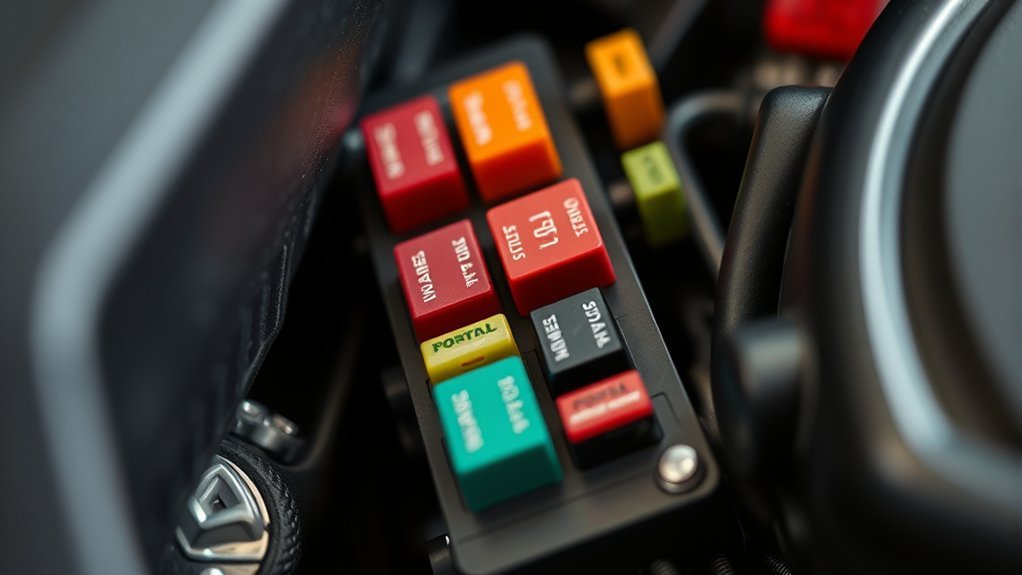
Most 2015–2017 Camry models have an interior fuse box under the driver-side dashboard and an engine-compartment fuse block. Interior fuses are usually easier to check. Engine-compartment multi-block fuses can be harder to inspect and may not be designed for quick DIY replacement.
If a small fuse is blown and the replacement works normally, the problem may have been a simple fuse failure. If the new fuse blows again, stop replacing fuses and inspect the circuit. Repeated fuse failure can point to a shorted blower motor, damaged wiring, a stuck component, or a control fault.
Check the Thermostat if the Engine Runs Too Cool or Too Hot
A stuck thermostat can cause weak heat in two different ways:
- Stuck open: Coolant circulates too soon, the engine takes too long to warm up, and the cabin heater may only blow lukewarm air.
- Stuck closed: Coolant cannot circulate properly, the engine may overheat, and hot coolant may not move through the system correctly.
Watch the temperature gauge after a cold start. A healthy engine should gradually reach normal operating temperature and stay fairly stable. If the gauge stays low for a long time and the heater is weak, suspect a thermostat stuck open. If the gauge climbs high or warning lights appear, stop driving and diagnose the cooling system immediately.
Pro Tip: An OBD-II scanner that reads live coolant temperature is more useful than guessing from the dashboard gauge. It can show whether the engine is actually reaching operating temperature.
Diagnosing Heater Core Issues

The heater core is a small radiator inside the dashboard. Hot coolant passes through it, and the blower fan pushes air across it to warm the cabin. If the heater core is clogged, leaking, or not getting hot coolant, the heater may blow cold or lukewarm air.
Common heater-core warning signs include:
- Sweet coolant smell inside the cabin
- Foggy windshield that leaves a greasy film
- Wet or sticky passenger-side carpet
- Coolant level dropping with no obvious outside leak
- One heater hose hot and the other much cooler
- Steam or mist from the vents
For a simple flow check, let the engine reach operating temperature, set the heater to full hot, and carefully compare the two heater hoses at the firewall. Use an infrared thermometer if possible. If one hose is hot and the other is much cooler, the heater core may be restricted. If both hoses are hot but the cabin air stays cold, the blend door may not be directing air through the heater core.
A leaking heater core is not just a comfort problem. Coolant inside the cabin can create visibility problems, leave slippery residue, and lower the coolant level enough to risk overheating.
Blend Door Actuator: What You Need to Know
The blend door controls whether cabin air passes through the heater core or bypasses it. The actuator is the small motor that moves that door when you change the temperature setting. If the actuator fails or the door sticks, your Camry may have airflow but no heat.
Symptoms of Blend Door Issues
- Clicking or tapping from behind the dashboard
- Temperature does not change when you move from cold to hot
- Heat works on one side but not the other on dual-zone systems
- Airflow changes direction, but temperature stays the same
- Both heater-core hoses are hot, but the cabin still gets cold air
Testing the Actuator Function
Turn the key on, set the fan low, and slowly move the temperature setting from full cold to full hot. Listen for movement behind the dash. A light motor sound can be normal; repeated clicking usually is not. If you have access to the actuator, check whether it moves when the temperature command changes.
Actuator replacement can be simple on some vehicles and frustrating on others, depending on location. If the part is buried behind the dash or you are not sure which actuator controls temperature, a professional diagnosis can save time.
Blower Motor, Cabin Filter, Relay, and Resistor Checks
If your Camry has no airflow or very weak airflow, focus on the air-moving side of the system instead of the heater core.
Cabin Air Filter
A clogged cabin air filter can reduce airflow and make the heater feel weak even if the heater core is hot. If airflow is poor on all fan speeds, inspect the cabin filter first. It is usually one of the easiest and cheapest checks.
Blower Motor
If the fan does not run on any speed, the blower motor may not be receiving power, the motor may have failed, or the blower wheel may be jammed with debris. A multimeter can confirm whether power and ground are present at the blower connector.
Blower Resistor or Fan Control Module
If the blower works only on high speed, or some fan speeds are missing, the blower resistor or fan control module is a likely suspect. This is different from a heater-core problem because the temperature may be fine when the fan actually runs.
Relay and Control Issues
A relay or HVAC control issue can interrupt power to the blower or climate-control system. Check relays only after you confirm the proper fuse is good and the symptom matches an electrical failure. Relay locations vary, so use the fuse-box lid, wiring diagram, or repair manual for your exact Camry.
Affordable Tools for Heater Troubleshooting
You do not need a full repair shop to narrow down most heater problems. These tools are enough for basic troubleshooting:
- Flashlight: Helps inspect coolant level, leaks, and fuse boxes.
- Gloves and safety glasses: Protect you from coolant, sharp edges, and hot parts.
- Fuse puller: Removes small fuses without damage.
- Multimeter: Tests fuses, voltage, continuity, and blower power.
- Infrared thermometer: Compares heater-core hose temperatures.
- OBD-II scanner: Reads coolant temperature and fault codes.
- Basic socket set and screwdrivers: Useful for cabin filter, blower, and actuator access.
A cooling-system pressure tester can also help find leaks, but use it only if you know the correct procedure and pressure limit for your vehicle.
When to Call in the Pros for Heater Problems
Call a qualified mechanic or Toyota service department if:
- The temperature gauge rises high or the engine overheats.
- Coolant keeps disappearing after you refill it.
- You smell coolant inside the cabin or find wet carpet.
- A fuse blows again immediately after replacement.
- The blower motor has no power and you are not comfortable tracing wiring.
- The heater core needs flushing or replacement.
- The blend door actuator is deep behind the dashboard.
- You recently had cooling-system work done and suspect trapped air.
It is also smart to check for open safety recalls or service campaigns by VIN using the Toyota recall lookup or the NHTSA recall lookup. Recalls are not the most common cause of heater failure, but VIN-specific checks are free and can reveal open repairs.
Frequently Asked Questions
Why is the heat not working in my Toyota Camry?
The most common reasons are low coolant, trapped air in the cooling system, a stuck thermostat, a clogged or leaking heater core, a stuck blend door, a bad blend door actuator, or a blower/electrical problem. Start by checking whether the fan blows air. If air blows but stays cold, focus on coolant flow and temperature control. If no air blows, focus on the blower circuit.
Can low coolant make a Camry heater blow cold air?
Yes. The heater core needs hot coolant to warm the cabin air. If the coolant level is low, the heater core may not receive enough hot coolant, so the vents can blow cool or lukewarm air. Always check coolant only when the engine is cold.
Which fuses should I check for a 2015–2017 Toyota Camry heater problem?
For many 2015–2017 Camry models, check A/C-related interior fuses such as PANEL, A/C-IG1, and AC-B, plus the HTR multi-block fuse in the engine compartment if the manual points you there. Always confirm the fuse label and amperage on your fuse-box lid or owner’s manual before replacing anything.
How do I know if the thermostat or heater core is the problem?
If the engine takes too long to warm up and the temperature gauge stays low, suspect a thermostat stuck open. If the engine reaches normal temperature but one heater-core hose is hot and the other is much cooler, suspect restricted heater-core flow. If both hoses are hot but cabin air is cold, suspect a blend door or actuator problem.
Is it safe to drive with no heat in a Toyota Camry?
It depends on the cause. If the engine temperature is normal and only the blower or blend door is faulty, the car may still drive, but poor defrosting can be unsafe. If coolant is low, the engine overheats, or you smell coolant inside the cabin, stop driving and diagnose the cooling system before engine damage or visibility problems occur.
Conclusion
A Toyota Camry heater problem is much easier to solve when you follow the symptom. If air blows cold, start with coolant level, leaks, engine temperature, thermostat operation, heater-core flow, and blend door movement. If no air blows, check the blower motor, fuses, relay, resistor, cabin filter, and HVAC controls. Stay safe around hot coolant and electrical circuits, and get professional help if the car overheats, coolant keeps dropping, or a fuse blows repeatedly.
Sources
- Toyota Owners Manuals and Warranties — owner’s manual access, maintenance guidance, coolant information, and fuse-checking reference.
- 2017 Toyota Camry fuse box diagram — fuse labels and locations for 2017 Camry, sourced from the owner’s manual.
- AutoZone heater core leak symptoms — heater-core warning signs such as sweet coolant smell, foggy windshield, wet mats, and poor heat.
- AutoZone thermostat symptoms — stuck-open and stuck-closed thermostat symptoms, including poor cabin heat and overheating.
- NHTSA recall lookup — official VIN-based recall and safety issue lookup.
- Toyota recall lookup — Toyota safety recall and service campaign lookup by VIN or license plate.