

RAV4 Hybrid System Malfunction: What It Means and What to Do
By Merrick Vaughn · Founder, AutoReviewNest
Published: May 19, 2026 · Last updated: July 31, 2026
Technical basis: This guide was checked against Toyota owner-manual warning guidance, Toyota Limited Service Campaign 25TD01, Customer Support Program 22TE09, Toyota bulletin T-SB-0026-22, and the 2024 U.S. RAV4 Hybrid maintenance guide. It explains safe triage and evidence collection, not a vehicle-specific diagnosis.
What changed in this update: Added current campaign coverage terms, clarified Toyota’s warning-message wording, strengthened the stop-or-drive decision guide, and added GTS+ diagnostic context.
Quick answer: A RAV4 Hybrid System Malfunction message means the vehicle stored a fault in the hybrid controls or in a system those controls depend on. It does not prove that the high-voltage traction battery has failed.
Follow the exact dashboard instruction and the owner’s manual for your model year. Toyota’s 2025 U.S. RAV4 Hybrid manual says a “Hybrid System Malfunction” requires immediate inspection. Stop safely and arrange professional help if the display tells you to stop, READY mode is lost, propulsion drops, the vehicle overheats, or you notice smoke, a burning odor, or abnormal electrical noise.
If the RAV4 operates normally and the display only tells you to visit a dealer, do not treat that as permission for routine driving. Move it only as needed to reach safety, arrange a prompt Toyota-compatible scan, keep away from orange high-voltage parts, and record codes before anyone clears them.
What Should You Do First?
| What You See | What It May Mean | Safest Next Step |
|---|---|---|
| Stop-now message, no READY mode, loss of propulsion, overheating, smoke, burning odor, or abnormal electrical noise | A fault requiring immediate professional diagnosis | Stop safely, power the vehicle off, and arrange appropriate roadside assistance or towing |
| “Visit Your Dealer” or inspection message with normal steering, braking, temperature, and power | A fault is stored, but the warning alone does not identify the failed part or establish that continued driving is safe | Follow the model-year manual, avoid routine or long-distance driving, move only as needed to reach safety, and arrange a prompt scan |
| Dim or unstable dash, clicking, several unrelated warnings, or no READY mode after the vehicle sat | Low 12V charge, poor terminal contact, or another low-voltage problem is possible | Inspect the 12V terminals and request a battery-health test before replacing hybrid components |
| Certain 2019–2024 RAV4 Hybrid AWD vehicles, especially with AM-radio static or isolation-related codes | Toyota’s rear traction-motor cable campaign or coverage program may apply | Ask a Toyota dealer to check the VIN for 25TD01 and 22TE09; do not inspect the high-voltage connector yourself |
What’s in This Article
What Does RAV4 Hybrid System Malfunction Mean?
The message means a control module has stored a fault affecting hybrid operation or a system the hybrid controls rely on. It is a broad warning, not a failed-part diagnosis. For a component-level overview, see our hybrid system explanation.
The RAV4 Hybrid coordinates the gasoline engine, motor-generators, inverter and converter, traction battery, relays, cooling circuits, sensors, wiring, communications, brake controls, and 12V electrical supply. A fault in an engine, sensor, power supply, wiring circuit, cooling system, or control module can therefore create a hybrid warning even when the traction battery is healthy.
Follow the exact instruction shown on the multi-information display. Toyota’s 2025 U.S. RAV4 Hybrid warning-message guidance says to have the vehicle inspected immediately for “Hybrid System Malfunction” and reserves explicit stop-now language for some other critical messages. Toyota also notes that displayed wording can vary with vehicle specifications and operating conditions, so review the manual for your exact year and market.
Can I Drive a RAV4 With a Hybrid System Malfunction?

Do not continue routine driving until the warning has been diagnosed. The exact dashboard instruction, the model-year manual, and the vehicle’s behavior determine whether you should stop immediately, move only far enough to reach safety, or arrange prompt service.
Move the RAV4 only as needed to leave traffic or reach a safer location when the display calls for inspection. The vehicle should still have normal propulsion, steering, braking, and temperature, with no other critical warning present. Do not use that limited movement as permission for a long trip, ordinary commuting, highway driving, towing, or heavy acceleration.
Stop and arrange towing if you notice any of these conditions:
- A message instructing you to stop the vehicle
- Reduced power, unstable acceleration, or sudden limp mode
- The READY indicator turns off or will not illuminate
- A burning smell, smoke, or unusual electrical odor
- An overheating warning or visible coolant leak
- Abnormal electrical buzzing, arcing, grinding, or repeated loud fan operation
- Brake-system warnings, charging warnings, or several critical warnings together
If the vehicle has been flooded, involved in a collision, or has visible orange-cable damage, do not try to restart or inspect it. Keep away from damaged high-voltage parts and contact emergency or roadside services.
What Can You Check Safely After the Warning Appears?
After stopping safely, inspect only low-voltage and externally visible items. These checks may reveal useful evidence, but they do not replace code-based diagnosis.
- Inspect the 12V battery connections: Look for a loose clamp, corrosion, physical damage, or a terminal that moves by hand. Do not allow a tool to bridge the terminals or contact grounded metal.
- Test the 12V battery correctly: Measure it after the vehicle has been off and allowed to rest. A low reading supports further testing, but one voltage reading cannot prove battery health or confirm the cause of the hybrid warning. Charge it when needed and request a load or conductance test.
- Inspect user-serviceable low-voltage fuses: Use the owner’s manual to identify the correct fuse box, circuit, and amperage. Never substitute a higher-rated fuse or remove a high-voltage service plug.
- Look at the engine and inverter coolant reservoirs when cold: Note a low level, stains, or visible leakage. Do not open a hot cooling system, use an unapproved coolant, or assume that topping up a low reservoir fixes the underlying leak or flow problem.
- Keep the traction-battery air intake clear: Remove bags, fabric, or cargo blocking the visible intake. Clean a user-serviceable filter only by the method specified for your model year.
- Record the warning: Photograph the exact text and lights. Note the mileage, speed, weather, fuel level, recent service, jump-starts, accessory installations, water exposure, and whether the vehicle entered READY mode.
How Should You Read and Clear RAV4 Hybrid Codes?
Read the diagnostic trouble codes before clearing them or disconnecting the 12V battery. Clearing a code can remove evidence without repairing the fault.
A basic OBD-II scanner may show generic engine or emissions codes but miss Toyota-specific hybrid-control, battery, brake, body, or communication faults. Use a Toyota-compatible scanner or diagnostic application confirmed to access the required modules for your RAV4’s model year. Toyota’s 25TD01 technical procedure uses a GTS+ Health Check, which illustrates why a generic powertrain-only scan is not enough for campaign or isolation-fault diagnosis.
Record the following information:
- Every DTC, including suffixes and information codes or subcodes
- The control module that stored each code
- Whether each code is current, pending, permanent, or history
- Freeze-frame or failure-record data
- 12V system voltage reported by the scan tool
- Engine, inverter, and battery temperature data when available
- Battery state of charge and block-voltage data when supported
- The conditions under which the code returns
Clearing codes does not reset a repaired hybrid system by itself. It only removes the warning until the control module detects the fault again. Clear codes after the cause has been repaired and the relevant Toyota confirmation procedure has been completed.
Do not disconnect the 12V battery merely to hide the message. That can erase useful diagnostic evidence and may require windows, steering, multimedia, or other learned settings to be initialized again.
[Products Worth Considering]

The KONNWEI KW208 is a versatile 12V battery tester designed to quickly analyze battery health, cranking performance, and charging system status for cars, trucks, boats, motorcycles, and more. It supports multiple battery types and provides clear guidance on whether a battery should be recharged or replaced, helping you diagnose issues before they become failures. With plug-and-play use, high accuracy, and multilingual support, it offers a convenient way to test batteries in-vehicle or out-of-vehicle.

The AICEL TPMS Relearn Tool helps quickly reset and relearn tire pressure sensors on compatible GM vehicles after tire rotation, sensor replacement, or warning light issues. Designed for easy handheld use, it works with most cars, SUVs, and pickup trucks and can save time by eliminating unnecessary trips to the auto store. Its durable ABS housing and simple activation process make it a practical tool for keeping the tire pressure monitoring system operating properly.

This battery terminal cleaning and repair kit helps restore worn or damaged top-post battery connections for cars, RVs, boats, and other vehicles. It includes lead shims for improving fit, stainless steel brushes for removing corrosion and debris, and fiber washers to help reduce future buildup and maintain a reliable electrical connection.
Could Toyota’s Rear Traction-Motor Cable Campaign Apply?
Certain U.S.-market 2019–2024 RAV4 Hybrid AWD vehicles are included in Toyota Limited Service Campaign 25TD01 for the rear traction-motor cable connection. Toyota’s 25TD01 technical instructions direct an authorized dealer to inspect the vehicle and apply a protector seal or perform the applicable campaign remedy at no charge when the VIN is eligible.
Toyota states that the limited service campaign is available through September 30, 2028. The updated Customer Support Program 22TE09 provides 10-year, unlimited-mile coverage for the specified cable-corrosion condition when 25TD01 is completed by that deadline. If the campaign is not completed by the deadline, applicable coverage returns to 8 years or 100,000 miles from the date of first use, whichever comes first. VIN eligibility, production date, previous repairs, exclusions, and the official program terms control the final decision.
Toyota’s earlier T-SB-0026-22 bulletin applies to specified 2019–2021 RAV4 Hybrid vehicles. It identifies DTCs P0AA649 and P1C8049 and notes possible AM-radio static or distortion in applicable cable-corrosion cases. These symptoms and codes do not prove that the cable has failed on every RAV4. A Toyota technician must follow the current campaign, support-program, or repair-manual procedure for the VIN.
If the cable was replaced before the 25TD01 campaign began, ask the dealer whether your VIN still requires inspection, sealing, or confirmation that the latest part is installed. Do not crawl under the vehicle or disconnect the rear motor cable yourself.
What Can Cause a RAV4 Hybrid System Malfunction?
The warning can originate from the hybrid system or from another system required for hybrid operation. Use the table as a triage guide, not as a diagnosis.
| Possible Fault Category | What You May Notice | Safe First Step |
|---|---|---|
| Low or unstable 12V supply | Dim display, clicking, several unrelated warnings, no READY mode after parking | Inspect terminals, charge when needed, and obtain a battery-health test |
| Engine, emissions, or sensor fault | Check-engine light, rough running, misfire, poor acceleration, or normal hybrid operation with a stored warning | Read codes from the engine and hybrid-control modules before replacing parts |
| Engine or inverter cooling fault | Temperature warning, reduced power, low coolant, leakage, or abnormal pump or fan behavior | Stop for overheating and visually check coolant only after the vehicle is cold |
| Restricted traction-battery airflow | Loud cooling fan, battery-temperature warning, restricted intake, or reduced hybrid assistance | Clear visible obstructions and follow the model-specific filter procedure |
| Wiring, connector, communication, or rodent damage | Intermittent warnings, communication codes, recent accessory work, water exposure, or visible damaged low-voltage wiring | Photograph visible damage without unplugging connectors and request circuit testing |
| High-voltage isolation or rear cable condition | Isolation-related DTC, no-start, AM-radio static, or warning on an eligible AWD model | Ask Toyota to check the VIN for 25TD01 and 22TE09 |
| Inverter, traction battery, system main relay, motor-generator, power-management control ECU, or related control-unit fault | Persistent warning, no READY mode, reduced propulsion, repeat Toyota-specific DTCs, or abnormal live data | Use professional hybrid diagnosis and the Toyota test procedure linked to the code |
What Can You Safely Check or Fix at Home?
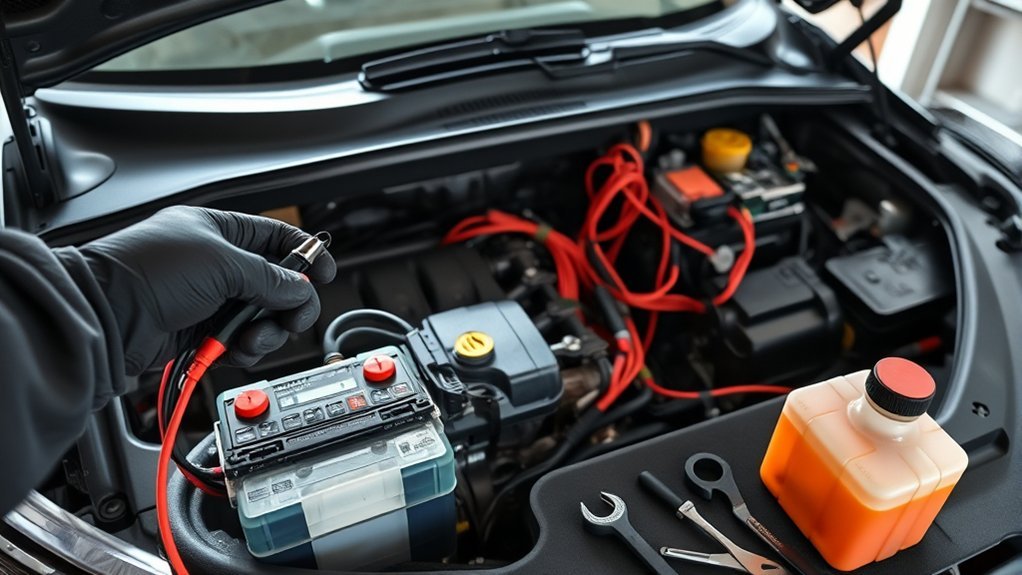
Safe home repairs are limited to clearly identified low-voltage or maintenance items. Stop if a procedure requires removing high-voltage covers, unplugging unfamiliar connectors, lifting the vehicle near orange cables, or bypassing a safety interlock.
12V Battery and Terminal Actions
Use an appropriate battery-service procedure to clean light corrosion from the 12V terminals. Tighten a loose clamp to the correct specification, and charge a discharged battery with compatible equipment. Replace the battery only when testing confirms it cannot meet its required capacity or conductance specification.
If the battery repeatedly discharges, investigate the cause. Repeatedly charging or jump-starting it can hide a parasitic draw, damaged battery, loose connection, or charging-control problem.
Low-Voltage Fuse Actions
Replace only a user-serviceable fuse identified in the owner’s manual and use the same amperage rating. If the replacement fuse fails again, stop replacing it. The circuit may have a short, damaged component, or incorrect accessory wiring.
Cooling Intake and Filter Actions
Keep the visible traction-battery cooling intake free from bags, clothing, pet hair, and dust. Clean or replace a user-serviceable filter only by the method specified for the exact model year. Do not remove battery panels or clean an installed internal fan unless Toyota’s service procedure assigns that work to the owner.
Do not unplug or reseat orange connectors, touch the service plug, apply chemicals to high-voltage terminals, or attempt a rear traction-motor cable inspection. Those tasks require trained hybrid personnel. If the 12V battery needs a jump-start, follow the exact model-year owner-manual procedure and designated terminals rather than improvising a connection point.
When Do You Need Professional Hybrid Diagnostics?
Arrange professional diagnosis when the warning stays on or returns after a restart. Stop driving sooner if it appears with reduced power, overheating, leaking coolant, abnormal electrical noises, a burning odor, a no-start condition, or a stop-now instruction.
A qualified technician may need to perform:
- A full GTS+, Techstream, or equivalent Toyota-capable scan of the engine, hybrid-control, battery, brake, body, and communication modules
- A 12V battery-health, power-supply, fuse, ground, and voltage-drop test
- Freeze-frame, failure-record, and information-code analysis
- Traction-battery state-of-charge, block-voltage, temperature, and resistance review
- Engine and inverter cooling-system temperature, pressure, pump, and flow checks
- High-voltage isolation and insulation testing
- Wiring-harness, connector, water-intrusion, impact, and rodent-damage inspection
- A VIN check for recalls, 25TD01, 22TE09, technical bulletins, and warranty coverage
Do not approve a traction battery, inverter, motor-generator, or wiring-harness replacement based only on the dashboard message. Ask which code, subcode, live-data result, physical inspection, and Toyota test procedure confirmed the failed part.
[Products Worth Considering]

The TOPDON BT100 helps you quickly check the health and charge status of 12V lead-acid batteries with clear analytical results, including state of health, state of charge, voltage, and cranking performance. It supports a wide range of battery types and vehicles, making it a practical tool for diagnosing starting and charging issues at home or in the shop. Compact and easy to use, it provides fast, reliable testing without needing to charge the device first.

This all-in-one roadside emergency kit is designed to help drivers handle common breakdowns, minor repairs, and first aid needs with confidence. It includes a portable air compressor with tire pressure measuring and memory settings, safe jumper cables, and a versatile 14-in-1 pliers tool set, all organized for easy trunk storage. With a wide range of emergency supplies packed into one compact case, it is a practical choice for new drivers, daily commuters, and anyone preparing for unexpected roadside situations.

CEL Doctor: The ANCEL AD310 is one of the best-selling OBD II scanners on the market and is recommended by Scotty Kilmer, a YouTuber and auto mechanic. It can easily determine the cause of the check engine light coming on. After repairing the vehicle's problems, it can quickly read and clear diagnostic trouble codes of emission system, read live data & hard memory data, view freeze frame, I/M monitor readiness and collect vehicle information
Which Service Option Should You Choose?
The correct service option depends on whether the fault involves a low-voltage battery, an open Toyota program, specialized high-voltage testing, or an out-of-warranty repair. Get the DTCs and VIN coverage result before relying on a repair-price estimate.
| Option | Best For | Questions to Ask |
|---|---|---|
| Toyota Dealer | VIN campaigns, warranty decisions, software, cable programs, and complex Toyota-specific faults | Is 25TD01, 22TE09, a recall, TSB, warranty, or emissions provision applicable? |
| Independent Hybrid Specialist | Out-of-warranty diagnosis, second opinions, and component-level testing | Can the shop access Toyota modules, information codes, service data, and high-voltage safety equipment? |
| Roadside or Mobile Battery Service | 12V testing, charging, jump-start assistance, and basic low-voltage checks | Can the technician perform a battery-health test rather than relying only on open-circuit voltage? |
| Towing Service | No READY mode, power loss, overheating, smoke, a burning odor, or a stop-now warning | Can the vehicle be transported by the method specified in the owner’s manual? |
For U.S.-market Toyota hybrids beginning with model year 2020, Toyota provides 10-year or 150,000-mile limited warranty coverage for the hybrid battery. Coverage ends at whichever limit comes first from the original date of first use. Other hybrid components, older vehicles, emissions warranties, campaign coverage, exclusions, and non-U.S. terms can differ.
Before approving work, request a written estimate. It should show the codes, confirmed failed part, diagnostic procedure, parts, labor, taxes, warranty decision, and whether the diagnosis charge will be credited toward the repair.
[Products Worth Considering]

Catch Battery Problems Early: Featured in two videos by Project Farm, a popular YouTube channel with millions of subscribers, the ANCEL BA101 helps you quickly spot battery issues before they leave you stranded. It provides easy-to-understand readings for State of Health (SOH), State of Charge (SOC), voltage, current, CCA, plus cranking and charging system tests, so you can better understand your battery and help avoid unexpected breakdowns

【Reliable Car Battery Tester】: The alternator tester can accurately determine whether the car battery needs to be replaced or if there is a power outage, and at the same time evaluate the output status of the alternator, clearly presents real-time voltage data, battery health and charging status. It can effectively prevent the battery from being damaged due to overcharging or undercharging, and extend the battery's service life.
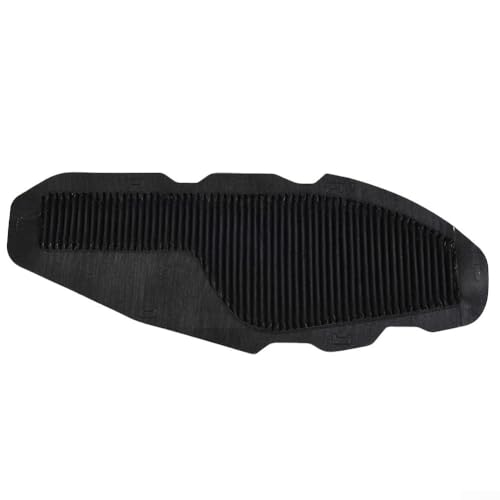
【Direct Replacement】The Air Filter Screen G92DH-42010 is designed as a direct replacement for your original unit. No modifications or additional parts are required for installation.
How Can You Reduce Avoidable Hybrid Warnings?
Maintenance cannot prevent every sensor, inverter, wiring, motor-generator, or traction-battery fault. It can reduce avoidable low-voltage, airflow, contamination, fluid, and visible-damage problems.
Regular Battery and Coolant Checks
Have the 12V battery and terminals inspected during routine service, especially after a deep discharge, jump-start, long storage period, repeated short trips, or several unrelated warning messages. Use a compatible maintainer during storage only when the owner’s manual permits it.
Inspect the engine and inverter coolant levels only when the vehicle is cold. Look for a falling level, stains, damaged hoses, or leakage. A low reservoir should lead to leak and flow diagnosis rather than repeated topping up.
Keep the traction-battery cooling intake unobstructed. Toyota’s 2024 U.S. RAV4 Hybrid maintenance guide calls for a visual filter check every 5,000 miles and cleaning when necessary. It also lists cleaning at 20,000-mile intervals. Follow the schedule and cleaning method for your exact model year and market.
Check the filter more often when you carry shedding pets or regularly drive in dusty conditions. Do not direct compressed air into battery openings unless Toyota’s model-specific procedure permits it.
Use Compatible Replacement Parts and Fluids
Use the battery type, fuse rating, coolant, connectors, wiring repairs, and replacement components specified for the vehicle. An incorrect battery, oversized fuse, unapproved coolant, poor splice, or improperly installed accessory can create new faults and make diagnosis harder.
For hybrid-system repairs, choose a technician who can verify compatibility, follow Toyota service information, use the required high-voltage protection, and document the completed confirmation test.
What Should You Tell the Mechanic?
Bring clear evidence so the technician can reproduce the condition and avoid replacing parts by guesswork.
- The exact dashboard message and a photograph of every warning light
- Whether the READY indicator illuminated and stayed on
- Every DTC, suffix, information code, and originating module
- Freeze-frame or failure-record data
- The 12V battery voltage and battery-health test result, if available
- Coolant-level, leakage, odor, noise, or fan observations
- Recent repairs, jump-starts, battery replacement, accessory work, collision, flooding, or rodent activity
- The speed, temperature, weather, and driving conditions when the warning appeared
- Whether AM-radio static or distortion occurred on an AWD model
- A request to check the VIN, production information, and date of first use for recalls, 25TD01, 22TE09, TSBs, and warranty coverage
Frequently Asked Questions
How Do You Fix a RAV4 Hybrid System Malfunction?
Record the warning and diagnostic codes first. Then test the 12V power supply, inspect user-serviceable fuses and visible cooling items, and follow the Toyota diagnostic procedure linked to the stored code. The dashboard message alone cannot identify the repair.
Is It Safe to Drive With a Hybrid System Malfunction?
Do not continue routine driving. Follow the exact dashboard instruction. Stop and arrange towing for a stop-now message, no READY mode, loss of propulsion, overheating, smoke, a burning odor, or abnormal electrical noise. If the vehicle operates normally and only says to visit a dealer, move it only as needed to reach safety and arrange prompt diagnosis.
What Does “Hybrid System Malfunction Visit Your Dealer” Mean?
It means the vehicle stored a fault that requires prompt inspection, but the message alone does not identify the failed part. Follow the exact dashboard wording and model-year manual. If steering, braking, temperature, and propulsion remain normal and no stop-now instruction appears, move only as needed to reach safety and arrange a Toyota-compatible scan. Stop and arrange professional help if power drops, READY mode is lost, the vehicle overheats, or you notice smoke, a burning odor, or abnormal electrical noise.
Can a Weak 12V Battery Cause a Hybrid System Malfunction Warning?
A weak or discharged 12V battery can contribute to unstable control-module voltage, several unrelated warnings, or a no-start condition. One voltage reading cannot prove that the battery caused the hybrid warning, so charge it when needed and request a proper battery-health test.
Should You Clear the Code to Reset the Warning?
Do not clear the code before recording it. Clearing codes or disconnecting the 12V battery can erase useful evidence without repairing the fault. Clear codes after the cause has been fixed and the required confirmation procedure has been completed.
Does the Warning Mean the Hybrid Battery Has Failed?
No. The warning can come from the 12V supply, engine, emissions system, sensor, wiring, communication network, cooling circuit, high-voltage isolation system, inverter, motor-generator, or traction battery. Require code-based testing before approving a battery replacement.
What Is the Most Common Cause of a RAV4 Hybrid System Malfunction?
No single cause applies to every RAV4 Hybrid year and warning pattern. Low 12V voltage may accompany multiple warnings or a no-start, while certain 2019–2024 AWD vehicles should be checked by VIN for Toyota’s rear traction-motor cable campaign. Other cases require engine, sensor, cooling, wiring, inverter, isolation, or traction-battery diagnosis.
Which RAV4 Hybrid Model Years Have the 25TD01 Cable Campaign?
Toyota’s U.S. Limited Service Campaign 25TD01 applies to certain 2019–2024 RAV4 Hybrid AWD vehicles. Eligibility depends on the VIN and production information, so use Toyota’s campaign lookup or ask an authorized dealer to check the vehicle.
Is Toyota Campaign 25TD01 a Safety Recall?
No. Toyota identifies 25TD01 as a Limited Service Campaign. Customer Support Program 22TE09 provides specified coverage for a defined cable-corrosion condition. A safety recall is a different type of program, so check the VIN for all open recalls and campaigns.
What Codes Are Linked to RAV4 Hybrid Cable Corrosion?
Toyota bulletin T-SB-0026-22 identifies P0AA649 and P1C8049 in applicable cases and also notes possible AM-radio static or distortion. The codes do not prove cable corrosion on every vehicle. Toyota’s inspection procedure must confirm the condition.
Will Toyota Cover a RAV4 Hybrid System Malfunction Repair?
Coverage depends on the failed part, model year, VIN, production date, in-service date, mileage, market, warranty terms, emissions coverage, recalls, and Toyota programs. Ask a dealer to provide a written VIN-specific coverage decision before approving an expensive repair.
Sources and Further Reading
- Toyota 2025 RAV4 Hybrid Warning-Message Guidance
- Toyota 2024 RAV4 Hybrid Warranty and Maintenance Guide
- Toyota Electrified Vehicle Warranty Information
- Toyota Safety Recall and Service Campaign Lookup
- NHTSA VIN Recall Lookup
- Toyota Limited Service Campaign 25TD01 Technical Instructions via NHTSA
- Toyota Customer Support Program 22TE09 Coverage Update via NHTSA
- Toyota T-SB-0026-22 for 2019–2021 RAV4 Hybrid Cable Corrosion via NHTSA
- Toyota HV Battery Cooling System Maintenance Bulletin via NHTSA
Conclusion
A RAV4 Hybrid System Malfunction message confirms that a fault was stored, but it does not identify the failed component. Follow the exact dashboard instruction and model-year manual, stop for serious symptoms, protect the stored diagnostic evidence, and stay away from orange high-voltage parts.
Start with a proper 12V battery-health check, user-serviceable fuses, visible coolant and airflow observations, and a Toyota-compatible full-module scan. Owners of certain 2019–2024 RAV4 Hybrid AWD vehicles should also ask Toyota to check the VIN, production information, and date of first use for 25TD01 and 22TE09.
Before approving an expensive repair, require the exact codes, information codes or subcodes, freeze-frame data, test results, failed-part confirmation, and a written warranty or campaign decision.


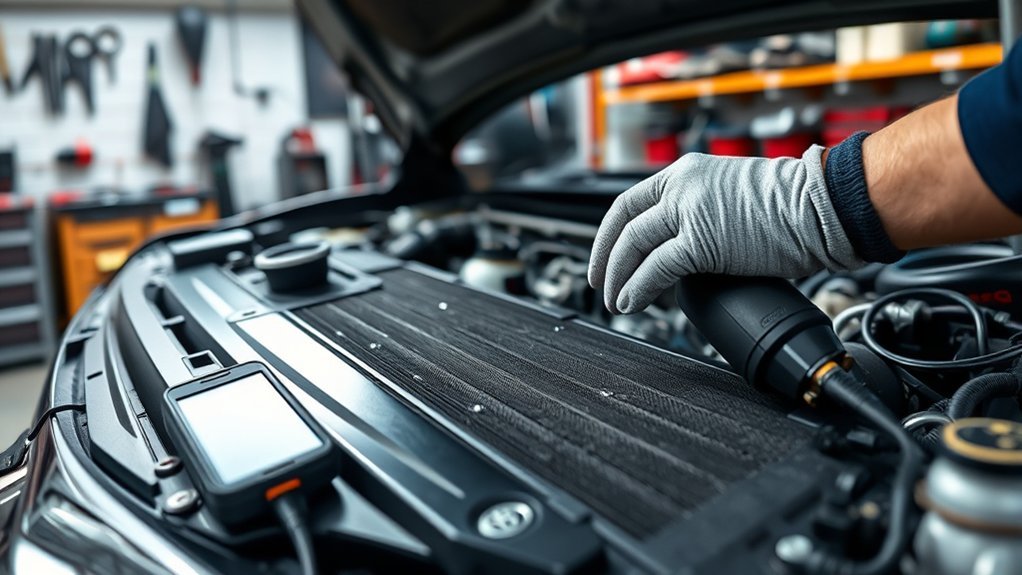
[…] For a deeper warning-message diagnostic path, see the RAV4 Hybrid system malfunction guide. […]